The End of an Era at Chengkungling
Chang Meng-jui / photos Diago Chiu / tr. by John Murphy
February 1999


In this picture of then-Premier Chiang Ching-kuo, taken in the 1970s, he looks pleased by the healthy appearance of the university cadets. When was it that eyeglasses became standard-issue equipment? (courtesy of the Chengkungling Training Center)
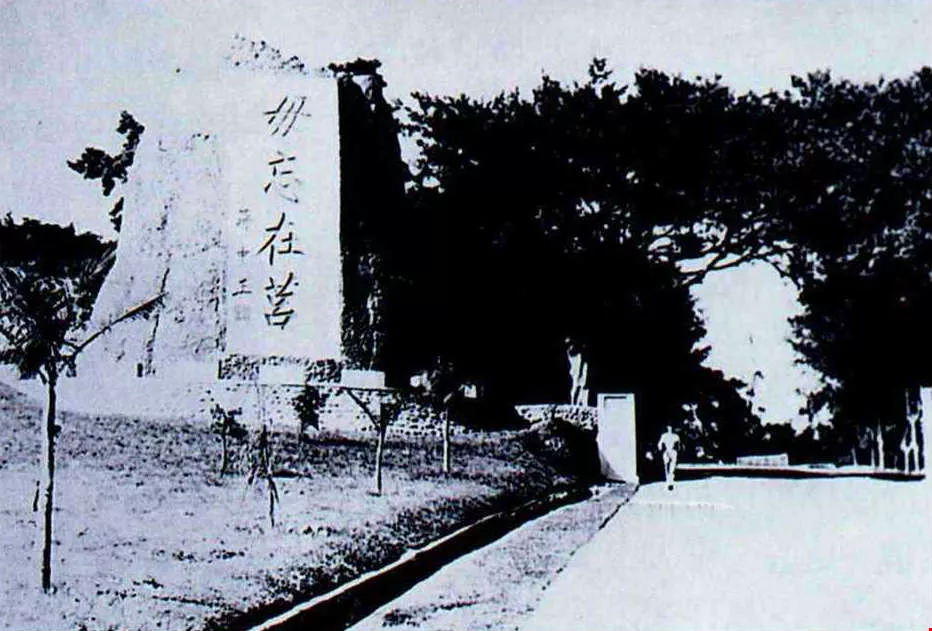
Cohorts after cohort of university and college men have undergone rigorous military training through Chengkungling, leaving them with indelible memories. (courtesy of the Chengkungling Training Center)
Of the nearly 200 countries in the world, it is unlikely any has an institution like the ROC's Chengkungling intensive military training camp for university and college students. Why was the program created, what has it taught, and what has been its significance for its graduates?
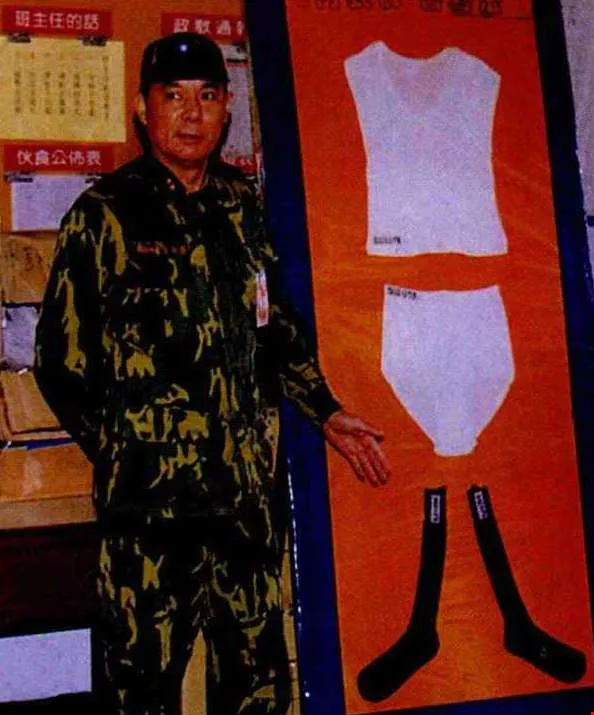
Collective life was perhaps the first shock for many students. An instructor here demonstrates how to label their clothes. One person who was in an early class at Chengkungling, upon looking at this photo, commented: "We wore oversized rough cloth underwear. Students today are really well dressed!" (courtesy of the Chengkungling Training Center)
After 40 years, the intensive training program at Chengkung-ling will close its doors on February 4, at the end of the current winter session. Over these last four decades it has trained over 1.3 million young people, who have left behind them sweat, tears, and no small number of smiles.
"The national flag is flying high, revered and strong/ We are here at Chengkungling/ Iron regulations mold us into steel/ Loving education cultivates our minds and hearts/ Surprises, shocks, and tension prepare us for life/ Unity, cooperation, and creativity allow our intelligence to reach its potential."
The sound of strong male voices in song rings out from all sides at Chengkungling. More than 12,000 rather pale-looking "university babies," having finished their two weeks of basic training, wearing ROC army field gear, look filled with energy and high morale.
In Chiehshou Square, the well ordered rectangles of the student units look like rows of cut-up dry tofu. Whichever way you look, nothing is out of place. The students' movements are clean and precise, with "attention" and "at ease" already much improved over when they reported. The air is imbued with a strong masculine atmosphere, from the presenting of weapons, to the swearing of oaths, to the reading of training regulations, to singing the Chengkungling song and chanting slogans. Standing amidst the students, one feels completely electrified.
This was one of the impressive scenes at the ceremony marking the opening of the intensive training class for university and college students on January 18. This is also the last class of intensive training for university and college students.
Virtually everyone in Taiwan is familiar with the name Chengkungling. Young men in college or university are even more filled with curiosity and longing about it. Countless young students who received their revolutionary baptism in its embrace were apprehensive when arriving, but found it difficult to leave. It somehow became the most memorable period of their lives.
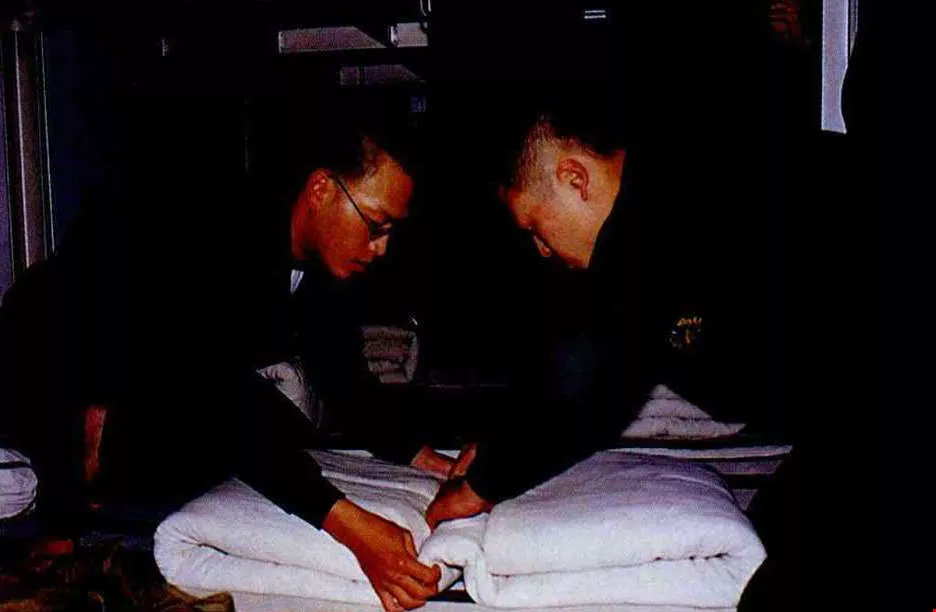
The most demanding housekeeping task was folding a quilt into a perfect square; this takes a lot of practice! (photo by Li Chi-kang)
"I'll never forget Chengkungling. Besides teaching us military skills, it rekindled the determination and will that we should have by nature, and strengthened our bodies," says Lu Juei-chung, a professor of political science at National Taiwan University who attended Chengkungling in 1966 and subsequently accompanied his students there twice. The baptism of military training given at Chengkungling is a challenge and test for inexperienced youths.Not just military training
There are many cases of fathers and sons both having gone to Chengkungling. When the writer Hsiao Yeh tested into the department of biology at National Taiwan Normal University more than 20 years ago, he then went to Chengkungling for training. This year his son Li Chung, also a writer, has also gone to Chengkungling to receive a revolutionary baptism. Hsiao Yeh feels that it is very helpful for his son's physical fitness and character development to be able to go to Chengkungling for rigorous military training. Indeed, it is a rare opportunity in a person's life.
Each era has its own special characteristics. The Cheng-kungling intensive training for college and university students was a natural product of historical progress, and met the needs and filled the mission appropriate to its era.
Back in July of 1958, on the eve of artillery duels between Taiwan and mainland China, with tension running high in the Taiwan Strait, the Ministry of Education organized a meeting with the aim of realizing the vision of President Chiang Kai-shek that young students should have military training to go with their civil educations. The meeting brought together the Ministry of Defense, China Youth Corps, Taiwan Provincial Government, and other relevant agencies, and produced guidelines for intensive training of college and university students to be undertaken at various army training centers.
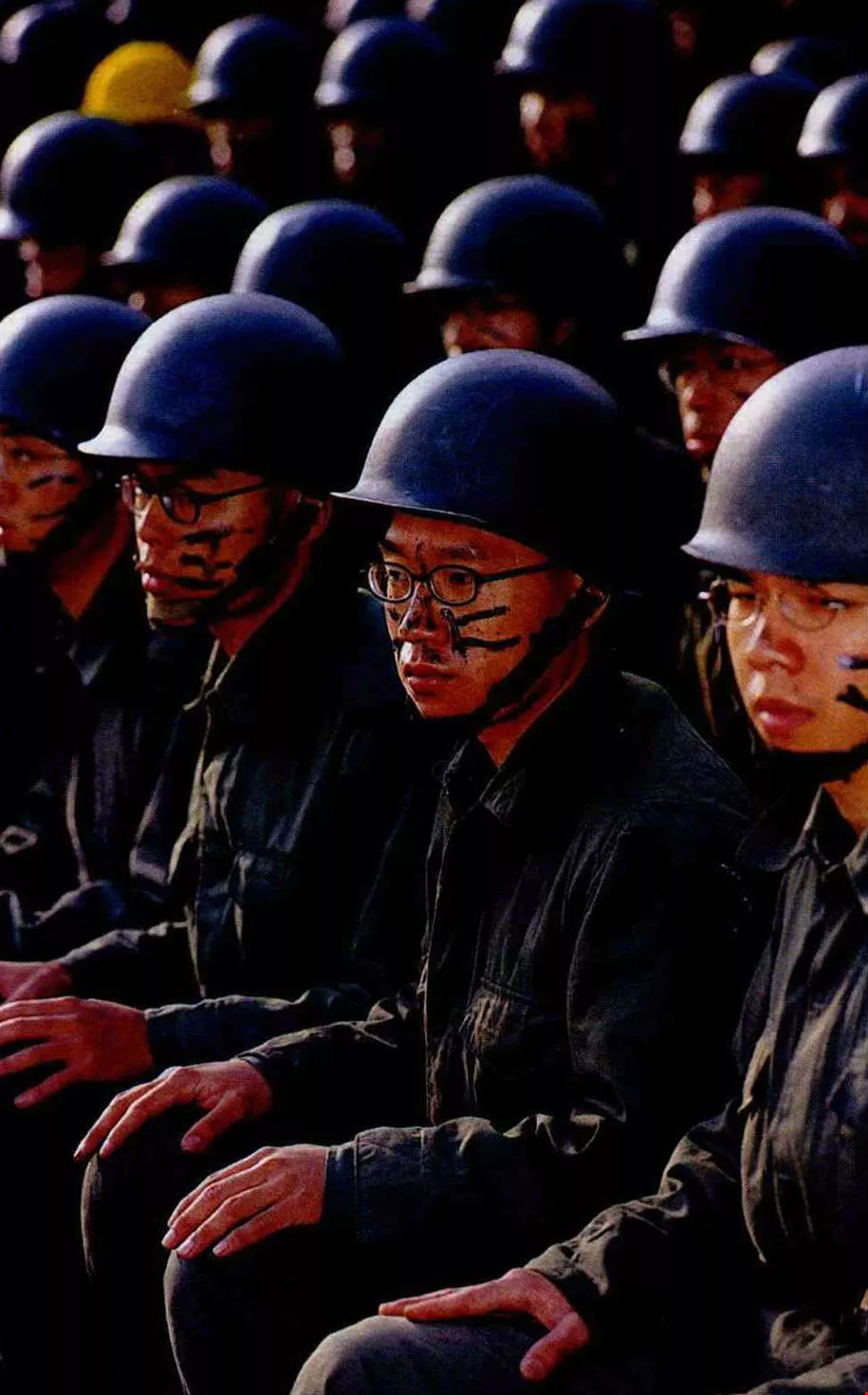
Four short weeks, but lots to learn; incoming students look a little worried.
The guidelines stipulated that all college and university students should spend 12 weeks in training in the summer prior to their year of graduation in order to complete reserve officer training for their entry into military service after graduation. The ones qualified by tests received reserve officer training upon graduation, then did not have to undergo further training upon entering the military. You could say that in the early period, the intensive training session was for education of reserve officers. It's worth noting that there was one especially tough rule: Those who flunked their military training courses in college had to retake the exams before summer training began, and if they still did not qualify, they could not participate in summer training, and lost their right to be reserve officers.Shrinking training
The program lacked uniformity because of the dispersion of training centers. So on December 16, 1964, the MOD established the "Army Reserve Training Command" in Taichung County. In 1989 the name was changed to the "Chengkungling Training Center Command."
Later, the annual summer training session proved inadequate to absorb the growing number of university and college students. Ultimately the number of sessions was increased to three, one in winter and two in summer. At that time, the sessions were shortened from 12 weeks to eight. Since then, the number has fallen steadily, to six weeks in 1972, five in 1993, and four in 1996.
In the early days, university students only needed to have good grades in campus military lecture classes, and pass the pre-session tests at Chengkungling, then after graduating they could be commissioned as reserve officers. But, due to the increase in student numbers, this system was abandoned in 1966. Since then, Chengkungling has been simply responsible for the training of tertiary levels students, and training has not been as rigorous as it was in the early years.
"When it's reasonable, it's training, when it's unreasonable, it is torture." Every student of Chengkungling can understand the implicit meaning in this sentence.
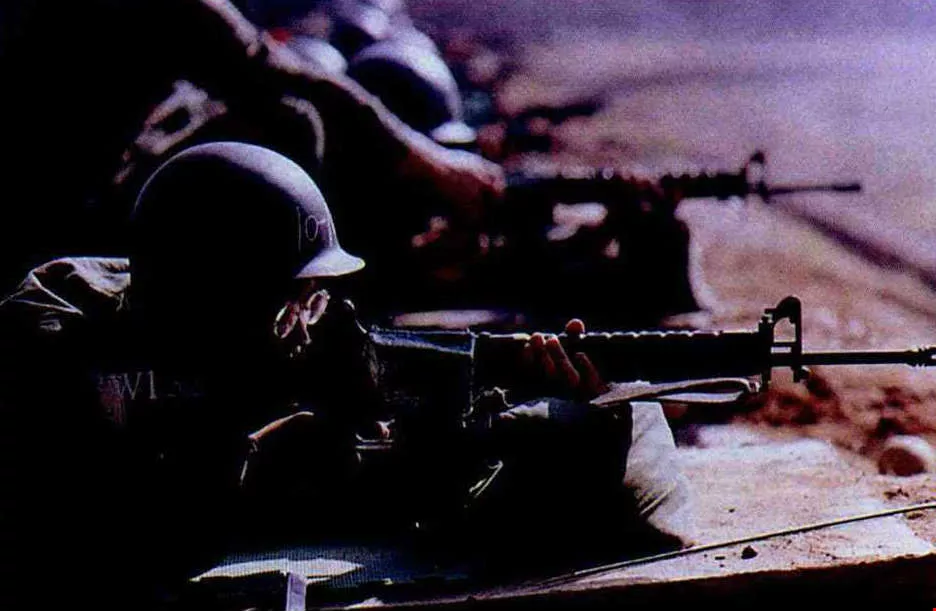
Target practice. Let's hope the next generation won't need such a high state of military readiness. (photo by Li Chi-kang)
The main areas in the training program included patriotic, life, and military education. Life education began as soon as the students entered the gates, from sewing on their name patches and keeping their living area tidy to folding perfectly square blankets. The latter task in particular put countless heroes to the test, and it was common to have people get up in the middle of the night to practice blanket folding, or even to not use the blanket so it didn't need to be refolded.Shock education
In classes that followed, students were taught to keep a neat appearance, to straighten their posture, and to eradicate bad habits. Many students who had been coddled at home could not cope, and there were certainly cases of students crying in the dark. In addition, the training instructors, deliberately or not, let it be known that those who failed the end-of-session tests would have to stay for further training, frightening students into not daring to slack off. Because of the tense atmosphere, there were even many cases of students being unable to go to the bathroom for a week.
Of course military education was the most exhausting. It covered everything from basic training, combat training, and weapons training to live fire exercises and "shock education" that the students both feared and looked forward to: machine gun bullets swept over their heads as they had to crawl forward underneath a low wire net. Though the length of the training has been shortened in recent years, the main core of the curriculum has been retained.
Thirty or forty years ago Chengkung-ling was a stretch of empty wasteland, without buildings, roads, or even water. At that time the country was poor, and so was the military, while the people were even poorer. Self-reliance was essential, and the roads, trees, and lawns at Chengkungling are all the result of hard work by the officers and soldiers digging one shovelful at a time.
The hardest part was that there was no water to drink. Imagine how much water was needed for drinking and washing for the thousands of students in training in the hot summer sun everyday. General Miao Jung-jing, who was then leader of the third regiment of the First Division, recalls: "Every day we had to draw water up the mountain. Not only did this waste electricity, within two hours there was not a drop of water left. The students complained constantly!" To meet the enormous demand for water, the only thing to do was build an underground water storage tank. It was not until after 1970 that the base switched over to piped-in running water.
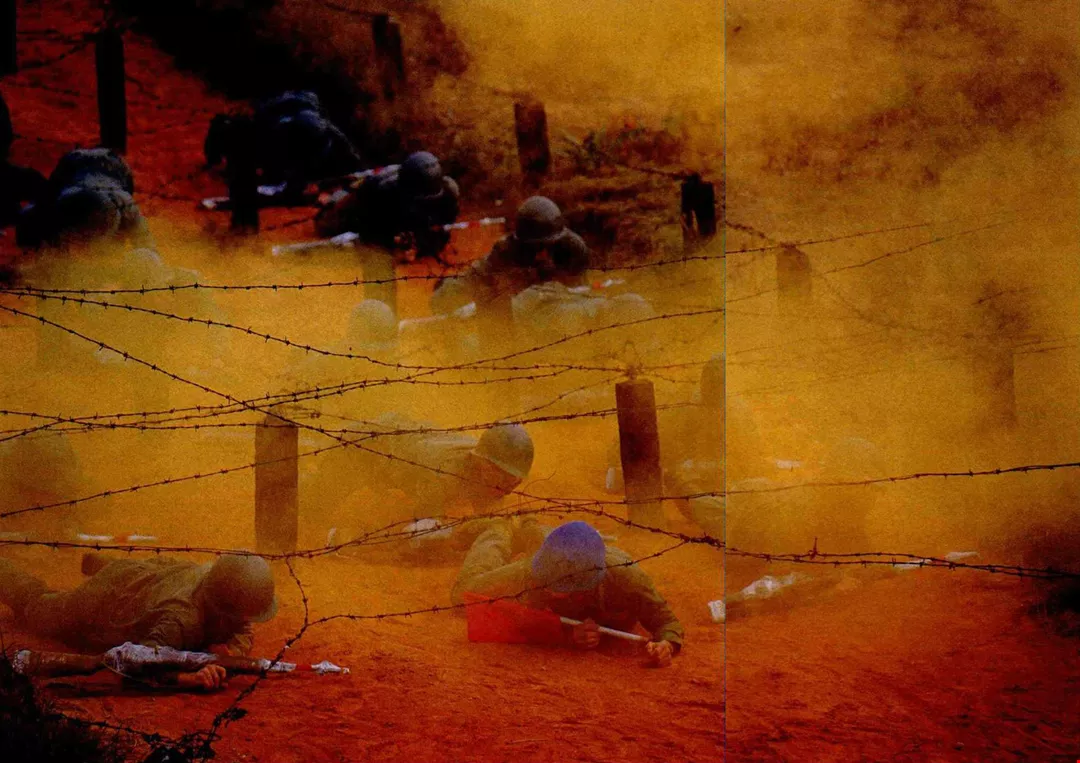
Shock training is a major event at the end of training. It's not easy to get through, and this year 93 students withdrew for fear they were not in condition to make it!
Those who have been at Chengkungling all remember that the officers were constantly telling everyone to save water. Because Taiwan is semi-tropical, there were often incidents of students exercising in the hot sun suffering heat stroke. In 1991, three students died from heat stroke because of insufficient drinking water. Since then, Chengkungling has implemented an "irrigation plan," compelling students to drink 10 liters of water, spread over fixed times, in the course of each day.The end of the combat shower
Taking a "combat shower" was the most tense time for students. When the platoon leader signaled, the more than 100 students in the platoon had to rush frantically into the shower and douse themselves from the water tank using hand basins. When three minutes was up, they had to rush outside-even if they were covered in soap or had not had time to put their underwear on. Many a time were students caught looking ridiculous as they lined up with their units with only a hand basin to cover their vital parts!
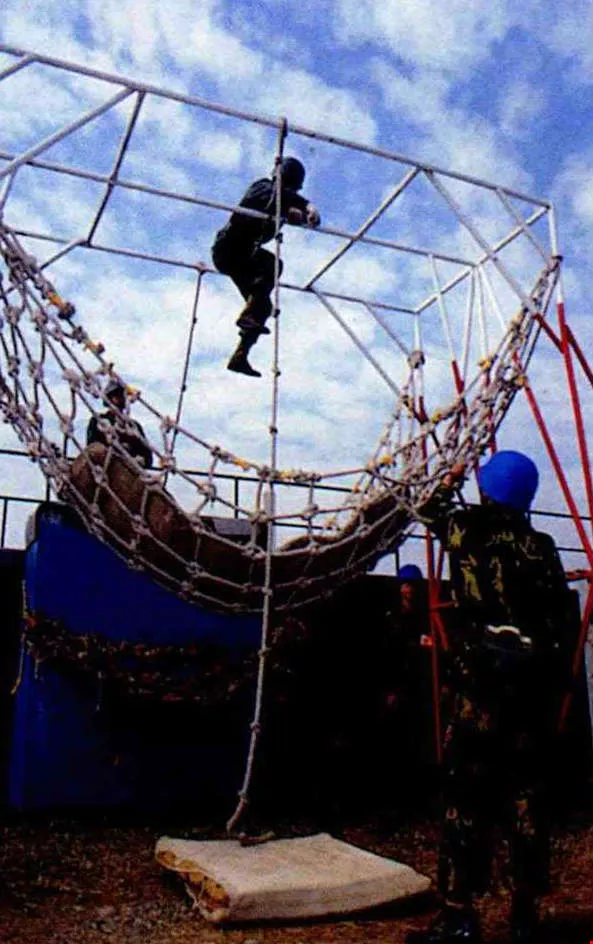
Obstacle course? This photo is turned upwards, but these soldiers only go forward.
Life has gotten easier over time.The barracks were ventilated and fans installed for summer, for fear that the students would be unable to sleep because of the heat. And shower time became much more humane. According to Tung Han-lin, information officer at Chengkungling, by the 1990s no one was taking combat showers, for fear that the students might slip and injure themselves. Showering was divided into three steps. First one platoon washed up, while the other two ate and organized their clothes, respectively. In addition, hikes were canceled because, given the large number of students involved these days, there were concerns about safety on the roads.Boot camp or summer camp?
Chengkungling became increasingly humane, which was inevitable given these changing times. According to Major Yang, who has been supervising the university babies at Chengkungling for over a decade, modern families often have only one or two children, and parents can't bear to see their children suffer. Also, children today don't cope so well with indignities and frustrations. It is difficult for them to adapt to the uniformity of army life. So the military has also had to adapt its training methods. But this has drawn criticism that Chengkungling increasingly has come to resemble "summer camp" and training cannot be compared to the early years.
In the early days, there were few students, and if a family had someone going to Chengkungling for military training this was seen as an honor. So that parents could understand the training process and see how their children were adapting, at each stage of training Chengkungling arranged a family visitation day. This allowed parents to spend time with their beloved sons and see how things were progressing in camp.
In that bygone era, parents came to Chengkungling by train. But as Taiwan has grown wealthier, virtually all families now drive to the camp. This has created terrible traffic problems around Cheng-kungling on visitation days. Back in July of 1991, when training was still six weeks, for visitation day for the camp's 12,000 trainees, there were 60,000 visitors, 20,000 cars, and 400-plus buses. This created a tremendous traffic jam on the highway. Since then, the training period has been shortened, so the number of visitors has dropped considerably.
Early on, the point on which Chengkungling came in for the most criticism was that it cost freshmen one month of classes. This led to question: "Is training at Chengkungling more important than classes at school?" Wu Hui-lin, a researcher at the Chung-Hua Institution for Economic Research, noted in an article that freshman university students, having just left high school and entered a completely new environment in university, most need time to adjust. Moreover, in freshman year many of the classes are basic, fundamental classes. Professors frequently worry that there's not enough time in the semester to teach everything, so how could students afford to lose a month of time?
There are also many who argued that while every year 50-60,000 students participated in the training sessions, after graduation only about one in ten was able to become reserve officers. The short few weeks of training in fact was virtually no help to their future military service.
Under the circumstances, the Ministry of Defense has decided that the university student intensive training system is of limited value to the country's efforts to streamline the military and raise its combat readiness. Thus it announced that after the winter session of 1999, it will terminate the Chengkungling intensive training course, ending this 40-year tradition. To date, Chengkungling has trained more than 1,336,000 young people. Of these, 210 were women. The latter group took part in the first and only training session for female university students, the brainchild of former Minister of Education Wu Ching, but the idea was abandoned when that first women's session, held in January of 1997, proved controversial.
For those who have been through the baptism of Chengkungling, the termination of the intensive course there symbolizes "the death of a collective experience." But there's no force that does not eventually disband, and the wheel of history continues to roll forward. The bittersweet experiences of Chengkungling will just have to remain the unique memories of the generations who passed through its gates.
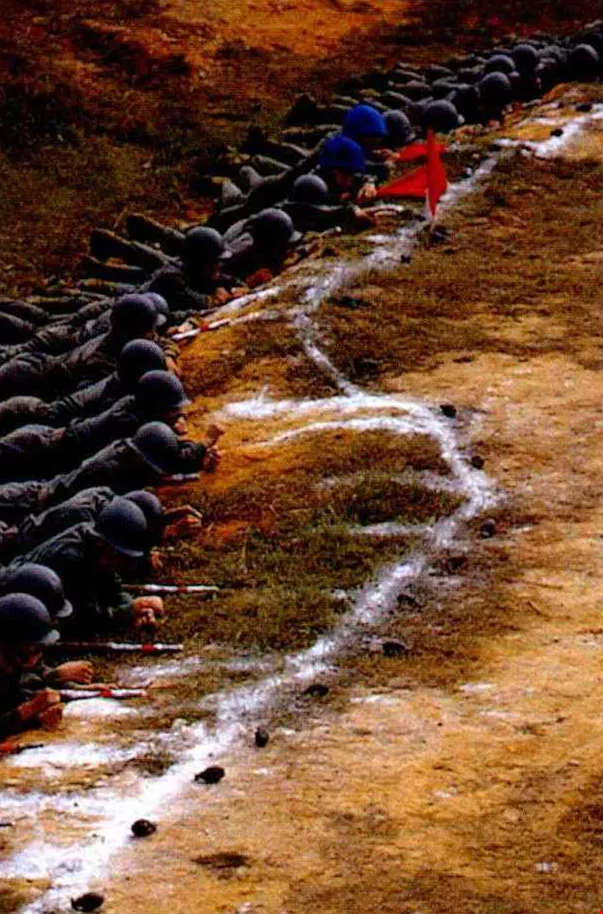
Hand grenade practice was nerve-wracking, even though the grenades were disarmed.
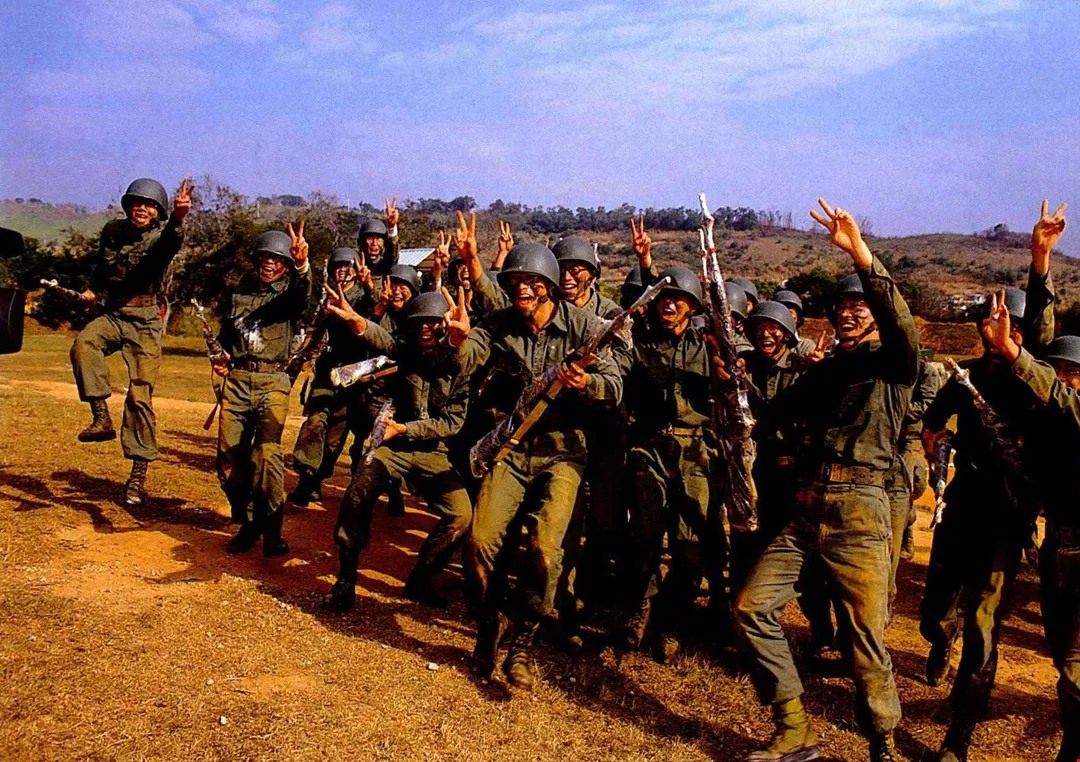
"I did it!" Chengkungling turned callow boys into confident men.


@List.jpg?w=522&h=410&mode=crop&format=webp&quality=80)


