The Golden Age of Taiwanese Tea Exports
Cathy Teng / photos Jimmy Lin / tr. by Scott Williams
December 2016


Taiwanese tea enjoyed a star turn in the late 19th and early 20th centuries with domestic tea merchants and foreign traders exporting it around the globe. “Formosa Oolong Tea” was the first of Taiwan’s teas to claim international recognition, but others soon followed. Britain’s Queen Victoria was so taken with the unique flavor of a particular Taiwanese oolong tea that she named it “Oriental Beauty.” Nearer to home, for a time black tea grown in Guanxi Township was selected for the use of the Japanese imperial household.
Taiwan’s tea industry was one of the island’s early export sectors and an important source of foreign exchange earnings. It helped Taipei flourish, and was integral to the northward migration of Taiwanese business. The more than 200 tea merchants based in Taipei’s Dadaocheng area during the industry’s most prosperous period were a potent force driving Taiwan’s booming tea exports.

Women stemming tea in Dadaocheng. (courtesy of Wang Tea)
Dadaocheng’s century of tea
Though no longer in business, the Sin Hong Choon Trade Company was once one of Taipei’s largest tea merchants and occupied three adjacent three-story buildings along Taipei’s Minsheng West Road. Its founder, Wang Lianhe, immigrated to Taiwan from Fujian Province with his father Wang Fangqun at the age of 16. Wang and his father bought and processed raw tea leaves before reselling them to Southeast Asia. The Wang family bought land and built Sin Hong Choon’s facilities in 1934. Those facilities became a waystation for tea-industry workers and entrepreneurs who had just immigrated to Taiwan to make their fortunes, a place they could enjoy a meal and a break before leaping back into the fray. “In its heyday, the company would go through a sack of rice [about 60 kg] every three days.... [Formosa Plastics founder] Wang Yung-ching’s father often used to come by to sell us rice,” recalls Wang Lianhe’s son Wang Guozhong, who is now in his eighties.
Wang Tea founder Wang Jinghui was also Fujianese. One of many natives of Anxi, the home of tieguanyin tea, to relocate to Taiwan during Taiwanese tea’s export heyday, he opened Wang Tea in Dadaocheng in 1890. Now run by his fifth-generation descendant, Jason Wang, Wang Tea is still in business today.
The Luo family pooled its resources to found the “Formosa Black Tea Company” in 1937, to address a problem particular to Hsinchu’s Guanxi Township. The township had a long history of making tea, but its farmers struggled to profit from their labors because the area lacked its own export channels. The Formosa Black Tea Company integrated Guanxi’s tea-leaf production, then arranged to export leaves directly to buyers in the US and Europe.

“Formosa Tea” was Taiwan’s first internationally recognized brand.
Producing fine teas
In the old days, tea merchants purchased raw tea leaves, then processed them prior to export. This processing involved a number of steps, from grading, stemming, and roasting, to blending, winnowing, and packaging.
Tea experts and merchants sampled and tasted the tea leaves purchased from each growing area, then graded them based on their shape, scent, and flavor. Wang Guozhong says: “The evaluation process was taken very seriously. Only a few people were allowed near the tasting table.”
The next step was “stemming,” which involved removing stems and other unwanted debris from the raw leaves. After that came “roasting,” which reduced the water content, aided preservation, and created a sweeter-tasting beverage when the leaves were ultimately brewed. It was a fine art, in which a master roaster’s control over the time and temperature of the roast was critical to the tea’s flavor. The old roasting rooms used by Sin Hong Choon and Wang Tea still exist, packed with double rows of roasting ovens—depressions set 60 centimeters deep in brick. The roasting bins were woven from bamboo. Roughly cylindrical in shape, they also had a slight waist in the middle. Workers packed tea leaves on top of a filter seated inside the bins to keep the leaves from direct contact with the heat source.
Anxi tea makers began their traditional roasting process by packing their ovens with roughly 60 kilograms of charcoal, which was broken into small chunks to minimize the space between pieces. They then placed a layer of previously cooked rice husks on top of the charcoal, and set the charcoal alight. The husks and charcoal were burned down to ash, which helped moderate the temperature of the roast, and then the tea leaves were packed into the bins, placed on top of the ash, and turned every three hours to ensure that they cooked evenly. This roasting process was integral to the development of the tea’s flavor.
During “blending,” master tea makers applied their skills and senses to eliminating the peculiarities of individual batches of tea leaves, mixing them to match the tea merchant’s own flavor profiles. Jason Wang says this was necessary because Taiwanese tea growers had small plantations, and merchants were unable to source their leaves from a single grower. Merchants also used the roasting and blending processes to create their own signature flavors and differentiate their products from those of other merchants.
Tea exporters had to be able to produce reliable quantities at a given quality, and the blending and roasting processes were at the heart of their quality control efforts. Their ability to produce tea of consistent quality helped usher in a golden age of Taiwanese tea exports.

“Wang Tea” and “Sin Hong Choon” were once major exporters of Taiwanese pouchong tea to Southeast Asia.
A golden age
In the late 18th century, mainland Chinese merchants dominated the Southeast-Asian export market for paochong tea. In an effort to claim some of that market for his company, Jason Wang’s grandfather Wang Chengqing, the third-generation head of Wang Tea, processed tea leaves in Taiwan, then sold them to his own father, Wang Xiaojin, in Thailand, where Xiaojin was attempting to develop the local market.
Sin Hong Choon utilized a similar model, with Wang Lianhe handling the family’s business in Thailand when he was in his 20s. When his father, Wang Fangqun, came across a particularly good batch of tea, he roasted it and sent it to Lianhe to sell. The tea was of such good quality that Lianhe was able to negotiate an exclusive deal with Thailand’s largest tea merchant, and begin the spread of Taiwanese paochong tea through Thailand.
Luo Ching-shih, the elegant and aristocratic-looking managing director of the Formosa Black Tea Company, leads us to the second floor of the company’s production facility. Among the first things we see there are hundreds of metal stencils covering one wall. Luo explains that these are the stencils with which the company printed export information onto the sides of the wooden crates in which it shipped its tea.
“We may be a small company, but we’ve exported to 85 ports. And that’s just our company, not all of Taiwan’s tea merchants,” says Luo with a hint of pride in his voice.
Three of the stencils on the wall highlight the changes to Taiwan’s international status over the years: “Republic of China,” “Taiwan Free China,” and, in Chinese, “Made in Taiwan, ROC.” After Taiwan withdrew from the United Nations, the company could no longer print “ROC” on exports destined for nations with which Taiwan did not have formal diplomatic relations. But government regulations stated that export products had to be clearly marked with the location at which they were produced. Luo says that the company used a workaround: meeting the ROC government’s requirement in Chinese, which officials in the destination ports were unable to read.

“Wang Tea” and “Sin Hong Choon” were once major exporters of Taiwanese pouchong tea to Southeast Asia.
New ideas
But the heyday of the international tea trade eventually came to an end. Changes to the business climate and to Taiwan’s own tea industry, together with the government’s 1982 withdrawal of its regulations governing tea manufacturers, led to small farmers processing their tea leaves themselves. This had the dual effect of making it much harder for tea merchants to obtain raw tea and removing them from their central position in the industry. When the tea merchants went into decline, the golden age of Taiwanese tea ended.
Wang Tea saw the writing on the wall. It opened its first retail outlet on Taipei’s Jinan Road in 1976 in an effort to raise its profile and begin a transition from exports to domestic sales. “My father personally drove a small delivery van to markets to sell our tea. He ran it something like a modern-day coffee truck,” says Jason Wang. Wang Tea’s efforts happened to coincide with the rise of Taiwan’s economy and tea’s emergence as an everyday beverage, enabling the company to establish a solid footing in the new market.
The Formosa Black Tea Company responded to the changes differently. Recognizing that the company’s black tea production was no longer competitive with that of major international manufacturers, Luo shifted its focus to Japan in the 1970s. He imported Japanese sencha processing techniques and equipment, and began selling tea there. Luo also developed his own process for making green tea powder: steaming the tea flushes, baking them dry, then crushing them into a powder that is mixed with water and drunk. The tea contains catechin, a powerful antioxidant, and is marketed as a health drink.
Formosa Black Tea recently rebuilt its old factory to repair damage suffered in the Jiji Earthquake of 1999 and to get out of the way of a road widening project. It also took advantage of the reconstruction to convert some of its floor space into the Formosa Tea Industry and Culture Gallery and house precious portions of the factory’s 80-year history there.
Sin Hong Choon was less fortunate than either Wang Tea or Formosa Black Tea. Although the company avoided physical damage during World War II, it couldn’t adapt to the decline in Taiwan’s tea industry and closed in 2004.
After designating Sin Hong Choon’s facilities a historic site in 2009, the Taipei City Government used a transfer of development rights to preserve its main building, and hired a construction company to restore it.
Four years of renovation work transformed the Sin Hong Choon building back into the gorgeous and frequently visited hotspot it had once been. The city government commemorated its reopening with a special Sin Hong Choon exhibition on the first floor that recaptured Dadaocheng’s glory days and enabled visitors to experience the old company’s magnificence for themselves.
The Wang family ancestral shrine was moved back into the building just a few days before we met with Wang Guozhong to talk about Sin Hong Choon. In fact, he had to first run up to the shrine on the third floor to light some incense in front of the ancestral tablets before we spoke. He explained that he had been doing this routinely for years in a different location, but was pleased to see the tablets returned to the site of the family business because now his ancestors can continue protecting their descendants.
Just as Sin Hong Choon’s history has been preserved, we too can continue to pass along the wonders of Taiwanese tea. For all that the heyday of Taiwanese tea exports has ended and we now import roughly 30,000 tons of tea per year, we are fortunate to still have with us many old tea merchants who remember and are willing to share the story of how things used to be. The next time you enjoy a cup of tea, savor the taste, but also take a moment to reflect on the glory days of yore.

Grading and tasting raw tea leaves. (courtesy of Wang Tea)
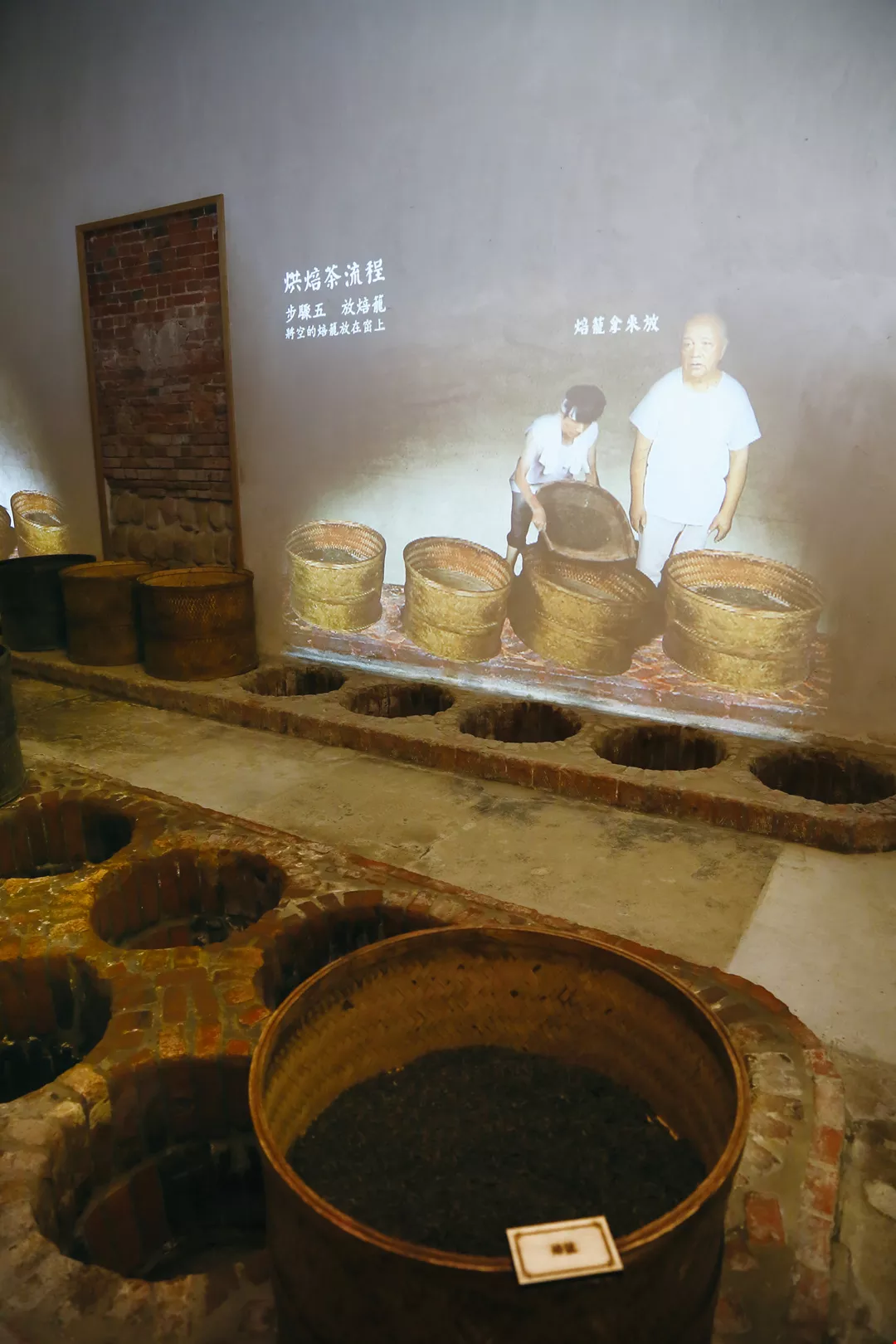
Sin Hong Choon’s roasting room delivers a new media experience in a very old space, with screenings of a film in which Wang Guozhong explains the roasting process.
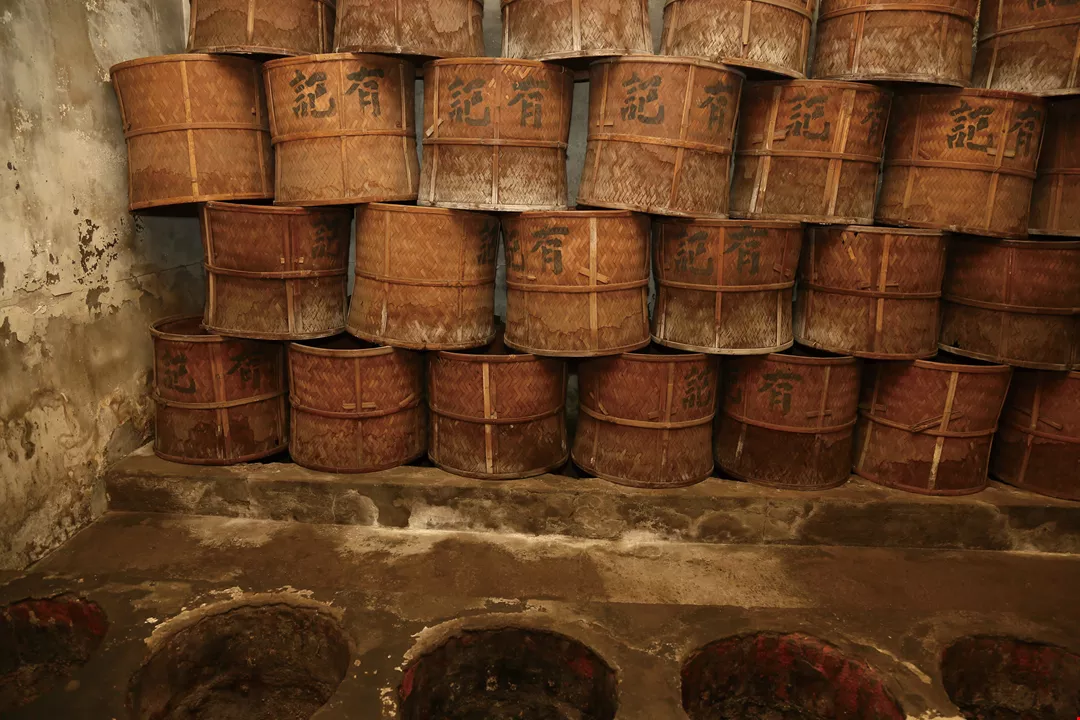
Wang Tea’s roasting bins have seen hard use over the years.
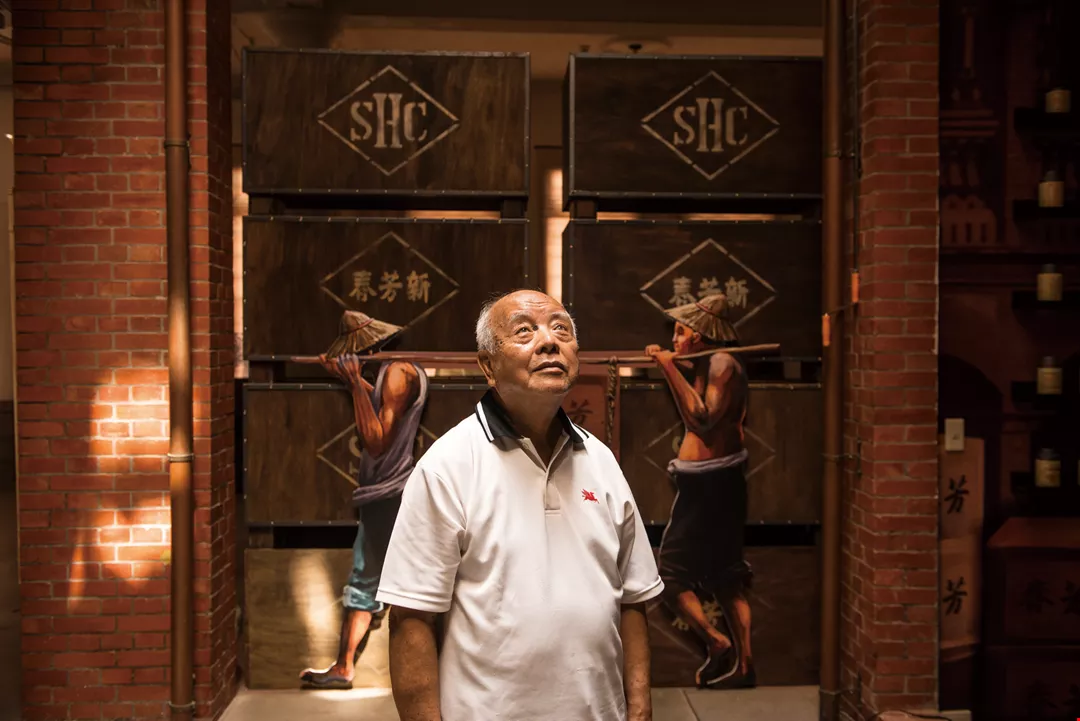
Wang Guozhong lived through the glory days of Taiwanese tea. Although his family’s Sin Hong Choon tea company has closed, its facilities have been preserved. Now renovated, they tell the story of Taiwanese tea. (photo by Chuang Kung-ju)
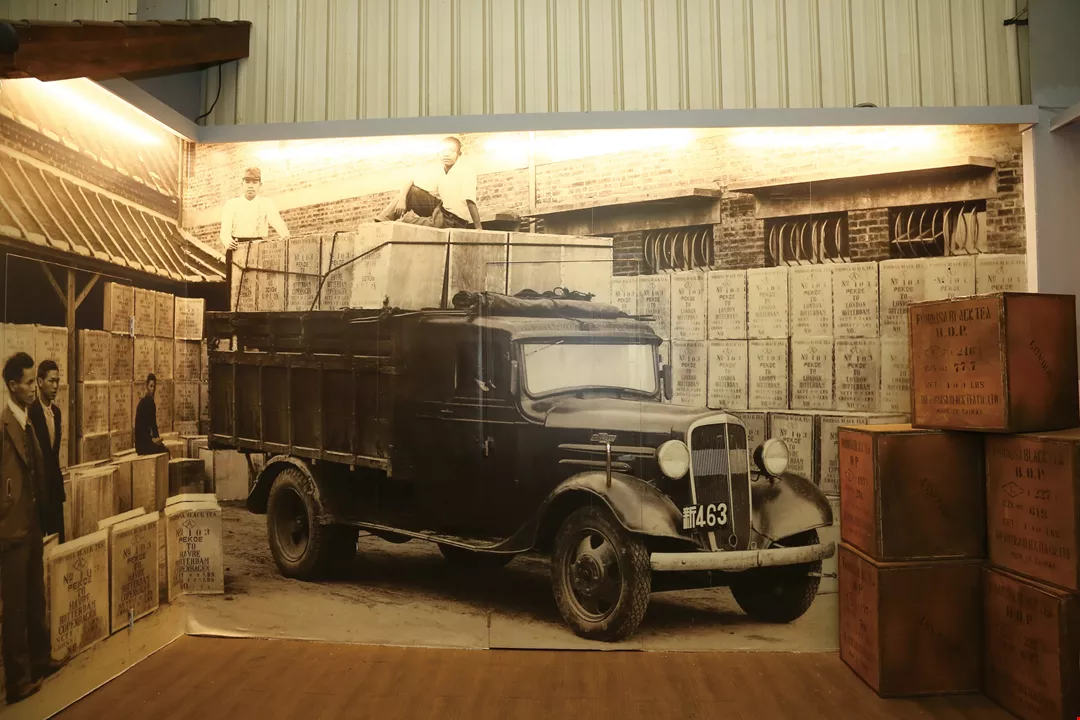
A photo showing a truck filled with crates of tea, from the collection of the Formosa Tea Industry and Culture Gallery.
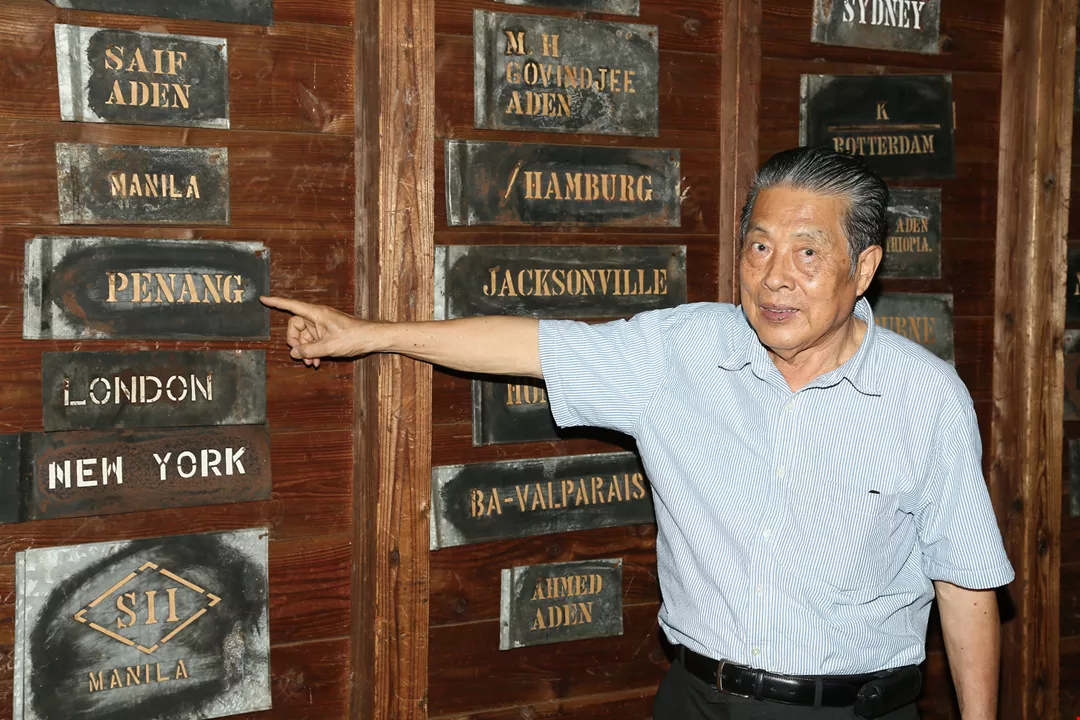
Luo Ching-shih says proudly that Formosa Black Tea has exported its products to some 85 international ports.
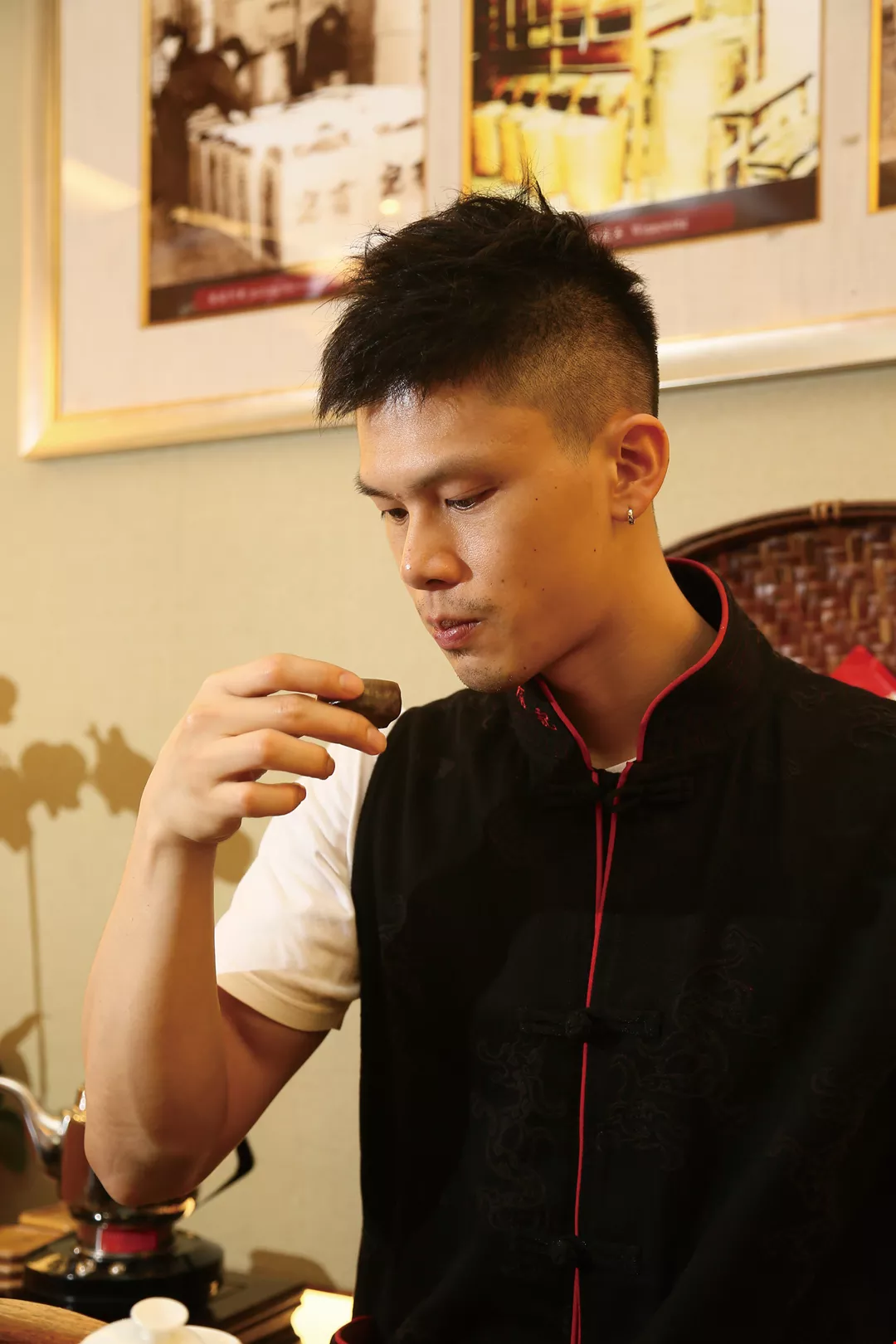
Jason Wang, the fifth-generation head of Wang Tea, has applied the creativity of youth to the task of revitalizing the old brand.

The second floor of the Sin Hong Choon building includes an exhibit on the historic structure’s restoration.
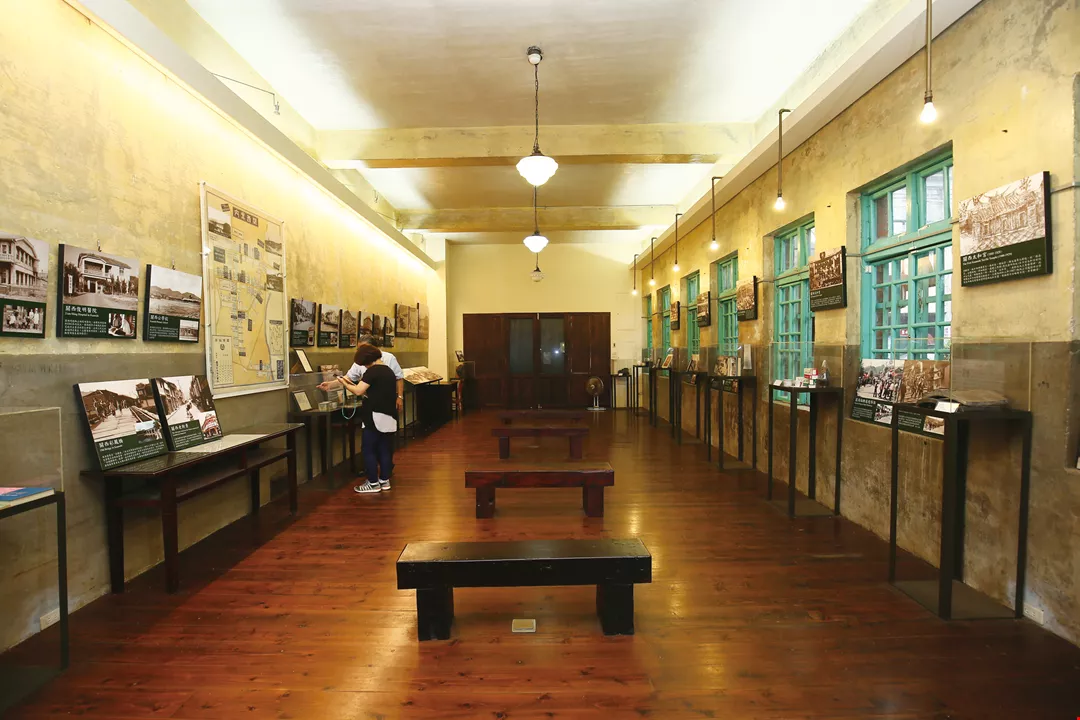
The Formosa Tea Industry and Culture Gallery is a converted warehouse that now displays many precious historical photos.
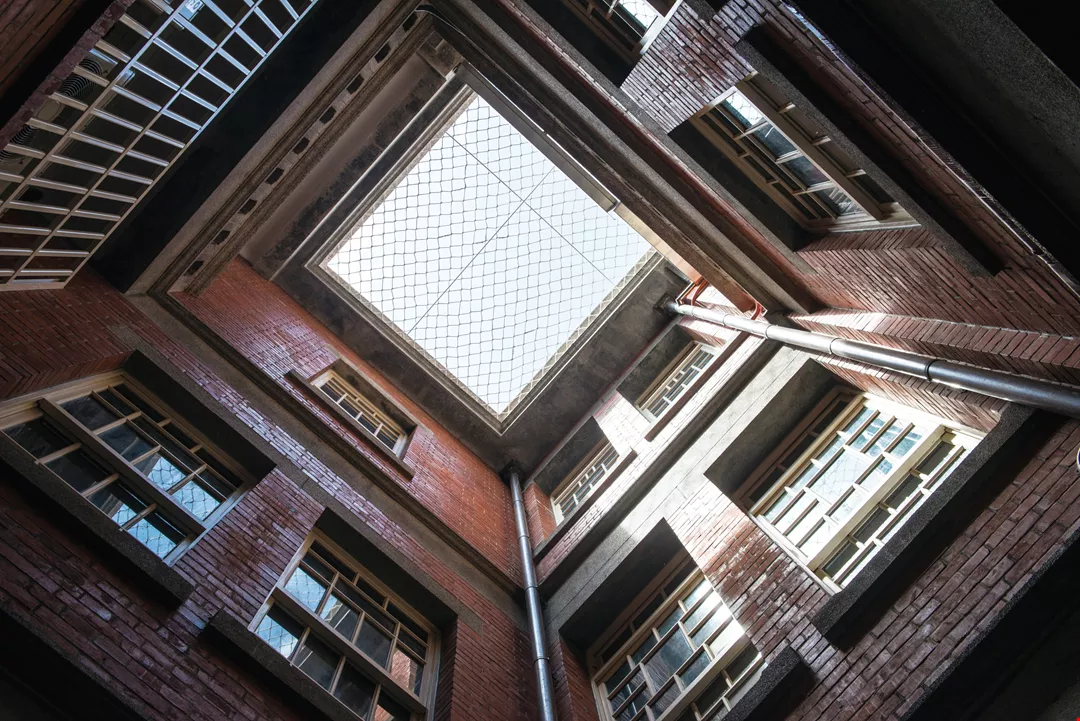
The interior of the Sin Hong Choon building includes an atrium that lets in light and air. (photo by Chuang Kung-ju)
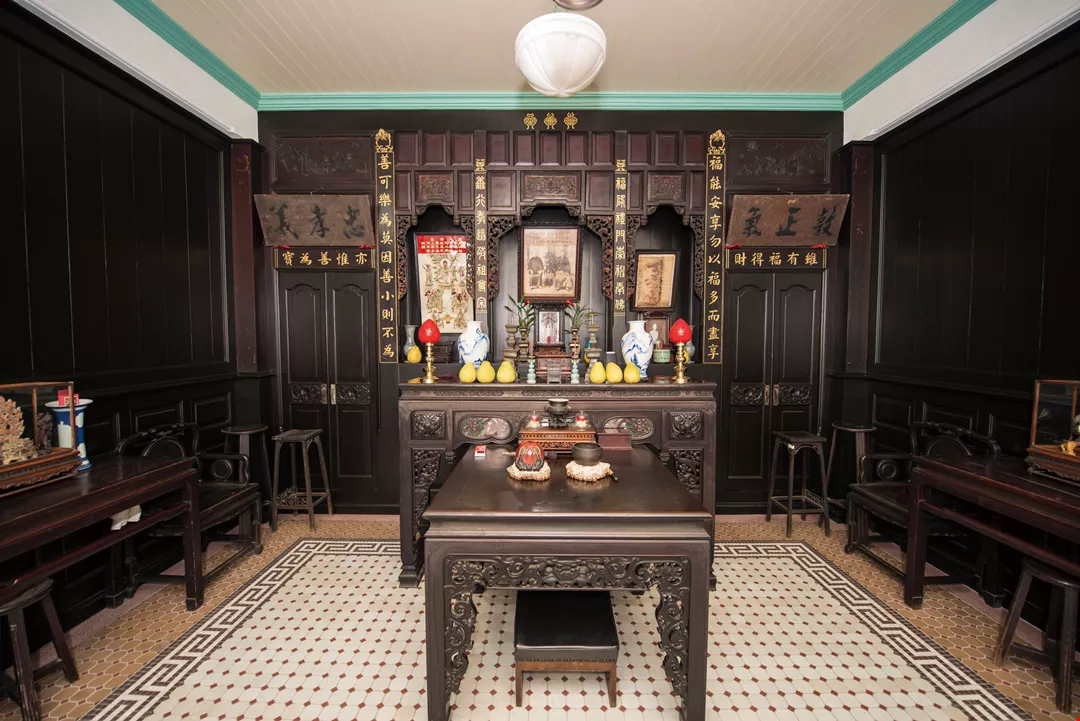
The family shrine on the third floor of the Sin Hong Choon building includes the Wang family’s ancestral tablets in the center, with deities on either side. (photo by Chuang Kung-ju)
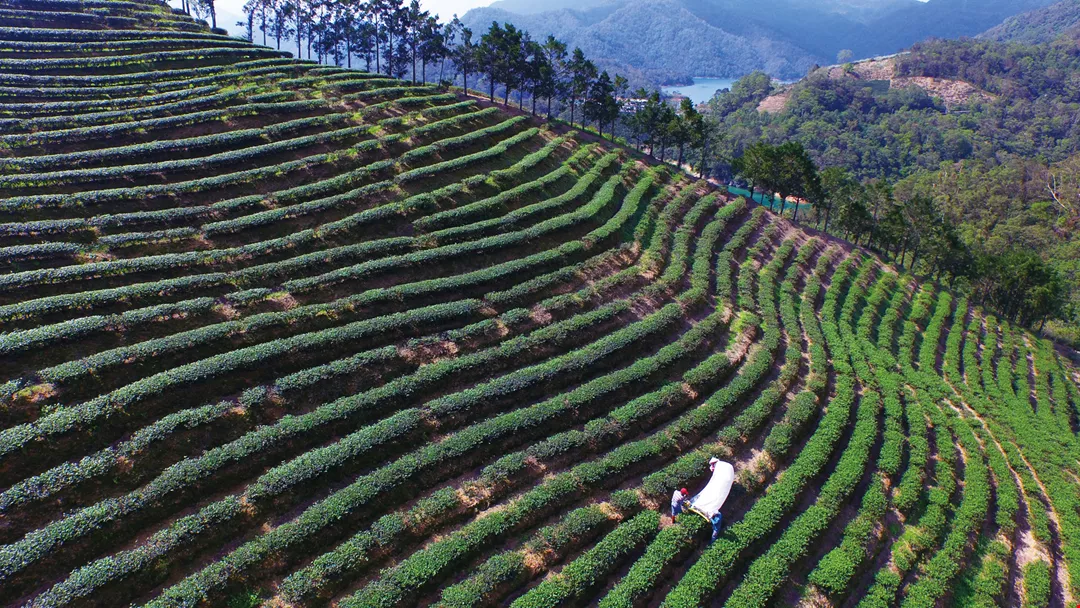
Even though Taiwan’s tea industry has declined, it has become an integral part of our culture. Local tea farmers, processors, and retailers continue to work tirelessly to bring us each cup of our beloved beverage.


@List.jpg?w=522&h=410&mode=crop&format=webp&quality=80)

