

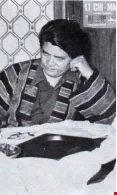
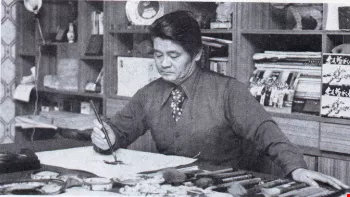
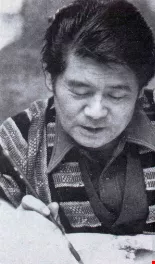
Li Chi-mao, the chairman of the arts department of the National Taiwan Academy of Arts, owes his success as a Chinese artist to many years of practice and dedication. His journey to the forefront of the local arts scene started 20 years ago, when Chang Ta-chien, one of the most famous traditional Chinese painters, held an art exhibition Taipei. Li Chi-mao, then an unknown, but talented painter, was among the admiring spectators. He was so fascinated with Chang's paintings that he stayed too late at the exhibition and missed the last bus. As he walked from Taipei to his home at Linkou, he dreamed of how he might hold his own art exhibition one day. Twenty years later, he has fulfilled his wishes by holding successful art exhibitions in the U.S., Spain, Italy, France, Thailand, Singapore, Korea, Japan and Hong Kong. Last year, at one of his art exhibitions in Taipei he finally won his most cherished accolade: words of praise from his idol, Chang Ta-chien. Li says he owes much of his success to his wife. Mrs. Li remembers how the first time she met her future husband, he was wearing a torn shirt, a pair of old shoes, while his hair was uncombed and he sported several days' growth of beard--"just like a pirate," she recalls. Today, after 18 years of marriage, Mrs.
Li has succeeded in "training" her husband to dress like a gentleman, instead of like an absent-minded artist.
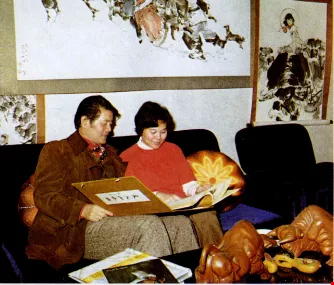
Mrs. Li is not only Li's wife, but also his housekeeper, secretary and translator. But she never complains, since all her sacrifices are worthwhile now that Li has become a successful painter. As a young man, Li was particularly interested in traditional Chinese art and received his early grounding from his first teacher, Lu Hua-shih. Lu disliked merely imitating old Chinese paintings, and instead used the ancient techniques to create something new.
Lu's influence was so strong that the young Li decided to follow his teacher's style. When the Chinese Communists took over the mainland, Li came to Taiwan and continued his studies at the arts department of the Political Warfare College of the Ministry of National Defense, where he made great progress in painting. After graduating, he was sent to Kinmen, an offshore island near the mainland, to paint political warfare handbills. He liked this job, because it was an important part of the anti-Communist struggle.
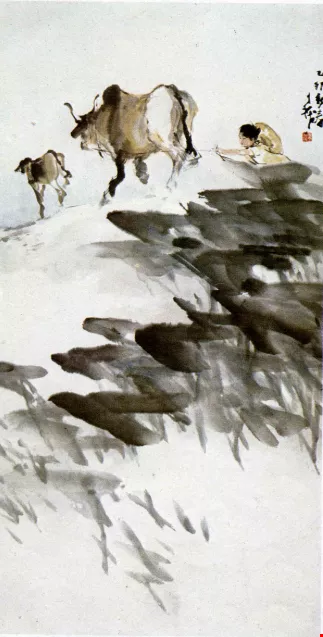
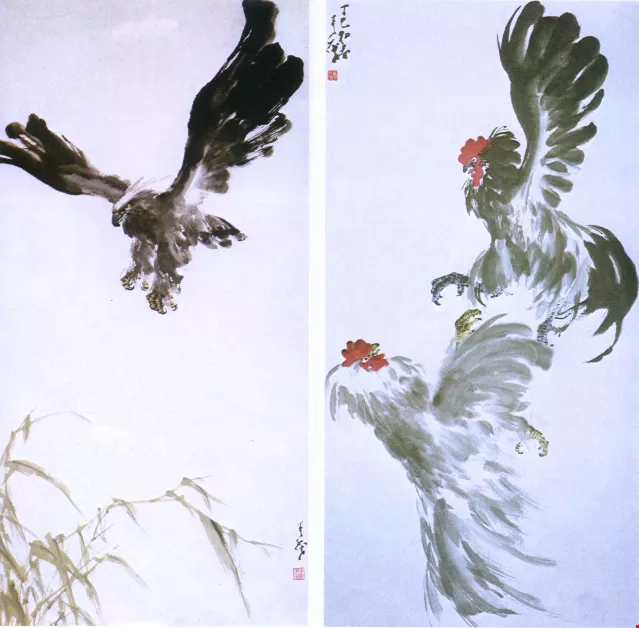
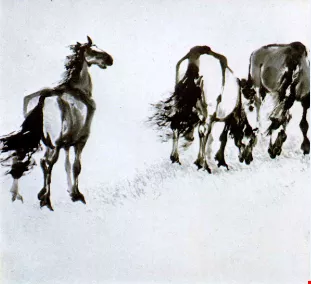
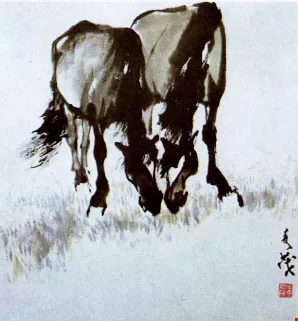
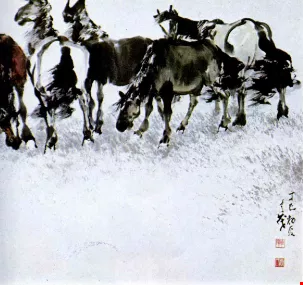
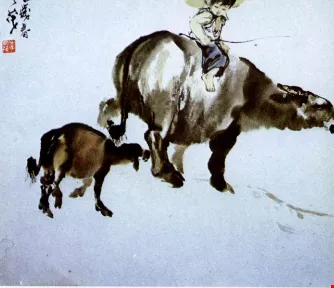
During the 1958 Battle of the Taiwan Straits, instead of hiding from the danger, Li often went out to face the rain of bullets and artillery shells so he could paint pictures of the brave soldiers fighting against the Chinese Communists. Despite the exposure to danger, he was not injured, and was able to create a pictorial record of the fierce 1958 Battle. Li's success lies in his dedication to the simple task he has set himself--to paint well. He chooses ordinary people and rural scenes as his subjects. Frequently found in his paintings are a herd of cattle or flock of sheep being tended by shepherds, hunters and galloping horses in the snow, or scenes from his native town on the mainland. In traditional Chinese paintings, still lives occupy an important place, but Li is more inspired by life in motion.
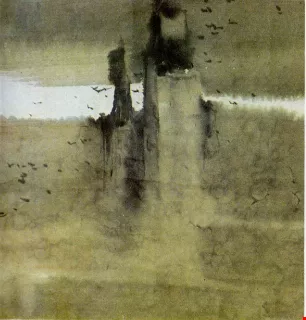
As a Chinese saying goes: "It is easy to use the Chinese brush, but is is hard to use black ink, and even harder to use water ink." To mix the proper ratios of water and black ink is as hard as mixing water with colored paint in western style paintings. After years of endless practice, Li is thoroughly at home with water black ink. In the past when he was too poor to buy painting paper, he just used any kind of paper he could lay his hands on. Despite his current success, Li is not satisfied, and continues to practice every day. He said: "Creativity in art demands constant practice to perfect techniques and to elevate the spirit. An artist who hopes to succeed must practice every day."

@List.jpg?w=522&h=410&mode=crop&format=webp&quality=80)


