

The roots of group-orientation in Chinese culture run deep. The functions group dinners serve in using friendship for favors and in making connections are the major reasons these gatherings have had such an enduring popularity. (drawing by Lee Su-ling)
Old Chang recently lost his job in the States, and his relationship with his wife has grown stormy. You see, three years ago he was given a good offer in Taiwan, but his wife was fervently against going back. She had heard that men in Taiwan come home late from all-night merrymaking with their business buddies and often have affairs. When Chang now looks at his friends who returned to Taiwan to build successful careers and he sees how he was tied down by his wife's preposterous assumption of wrongdoing, he feels embittered and at loss for what to do. . . .
It's 8:00 at night, and the neon lights on Linsen North Road are glowing. In a Hunan Restaurant, Mr. Wang and his friends are happily drinking away. The host Mr. Liu and the guest of honor Mr. Li were classmates in a business program. Mr. Li has recently accepted an offer to become an assistant manager at a major company, and so they are meeting in celebration. During the meal the host repeatedly makes toasts, and everyone engages in idle chitchat or tells dirty jokes. At several moments, Wang thinks of asking Li about how he got his break, but just as he is about to broach the topic, someone else says something first.
Five hours later, it's still Wang and the same crowd. Only the venue has changed: They've moved to a piano bar on Hsinsheng South Road. The same question is on Wang's mind, but the waiters and waitresses keep shuttling back and forth and the room throbs from the noise of the band outside the door. Sitting or reclining, everyone appears a little drunk. "It's already so late," he says to himself as he envisions his wife's nagging when he gets home. "If I had known it was going to be like this," he can't help but think, "I never would have come."
How sorry indeed is the state of entertaining in Taiwan! When Li plays host to Liu three months later, Wang, with his questions unanswered, is still very interested in attending. "I wonder what new news there will be this time?" he thinks.
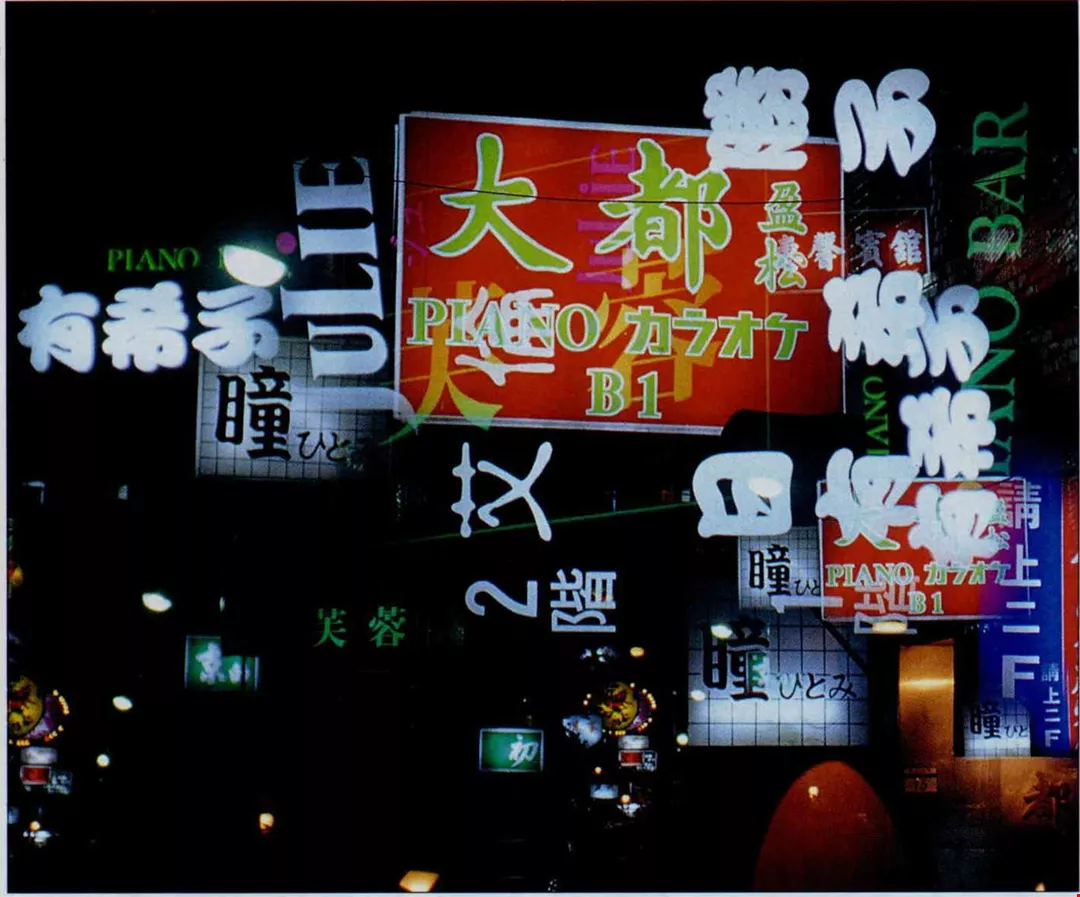
Ah, night Taipei! What debaucheries occur in this city that never sleeps! It's just too bad that so many children won't see their fathers before they go to sleep tonight.
The advantages of being "one of us":
Why do Chinese love this kind of entertaining so much? You could write a three-volume treatise expounding upon the reasons.
Hwang Kwang-kuo, a professor of psychology at National Taiwan University, has performed in depth research into the Chinese culture of entertaining. It has its origins, he says, in the Chinese belief that "courtesy emphasizes reciprocity." Standing on ceremony was a guiding principle of the Confucians. The Chinese character meaning "courtesy" is composed of instruments of sacrifice being put out to pay respects to heaven. Later, as Confucian beliefs took hold, courtesy became a central tenet of the laws governing the relations between people. The Confucians praised those who were thorough in the performing of courtesies as knowing the ways of the world.
Unfortunately, though originally great pains were taken to ensure that courtesies were performed properly, they gradually became only social expediencies, flowery and superficial gestures empty of their original meaning. Another key question is, why do the Chinese put so much emphasis on social contacts?
"The Chinese are cliquish and unusually conscious of 'our crowd,'" Hwang says. Whether the rallying point is a result of coming from the same home town, working together, attending the same school or being friends, there is immediately a strong sense of common identity, of not distinguishing between oneself and the group, a feeling that any matter is easy to talk about. But when facing the "otherness" of strangers, the Chinese are given to haggling and coldheartedness, stingy about extending even the most common of courtesies.
This principle of "discriminating against outsiders" makes people fear being left out, and so everyone is constantly running around forming new groups or joining any existing one with which they may have some connection. They figure that these will help them get things done and bolster their own prestige. And taking turns at playing host is the customary way of maintaining good feelings within the group. It is said that connections cultivated for l,000 days are used in an instant. If you normally refuse to attend these gatherings and then send out invitations as soon as you need something, not only will you feel embarrassed but those receiving the invitation may be on to you.
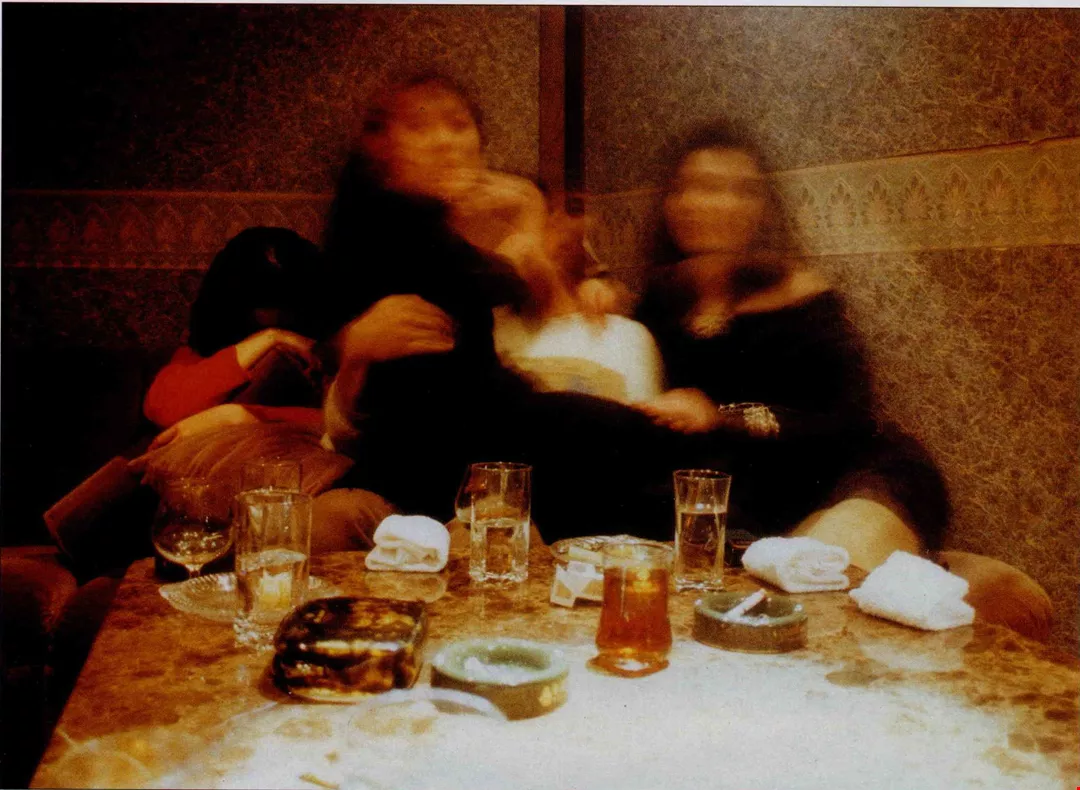
Are these business gatherings a hot bed for affairs? A look at these attentive bar girls lends credence to a wife's worst fears. (photo by Huang Fu)
Profundity on a plate:
Of course, conveying one's sentiments by phone or touring together on holidays are among the numerous other methods available to maintain these feelings of good will, but wining and dining remains most popular because "the people take food as God." "On normal days, everyone is busy with their own things. Using the phone to get in touch with people doesn't convey enough respect. Special activities are hard to fit into everyone's schedule," says Wang Hsing-ching, the chief editorial writer at The Journalist. With the principle that "everyone has to eat so you don't need to make time," people invited to these dinners are given an offer they can scarcely refuse.
The Chinese, moreover, take regimen seriously. When eating, it's taboo to discuss serious matters because such talk might disturb the digestion. Thus the eating, drinking, talking and laughing at these gatherings serve to wash away any ill will lingering between those at the table.
And the marvel of these dinners doesn't stop here. "These gatherings make use of the power of the group to obtain personal ends," Hwang points out. For example, if I privately ask for a favor on some matter, you may refuse me on the spot. But when a legislator and some high-ranking official are eating at my table, I am conveying that we are all on the same side. Refusing me will be like refusing them too, and doing so threatens your future standing. There's no such thing as a free lunch, and the same thing can be said about a Chinese business dinner.
The importance of these dinners cannot be denied. In fields where networking is important, attending them is a required course for newcomers. It is most people's impression that these meetings are linked to booze, sex, money and power--particularly in private business, which is dominated by men.
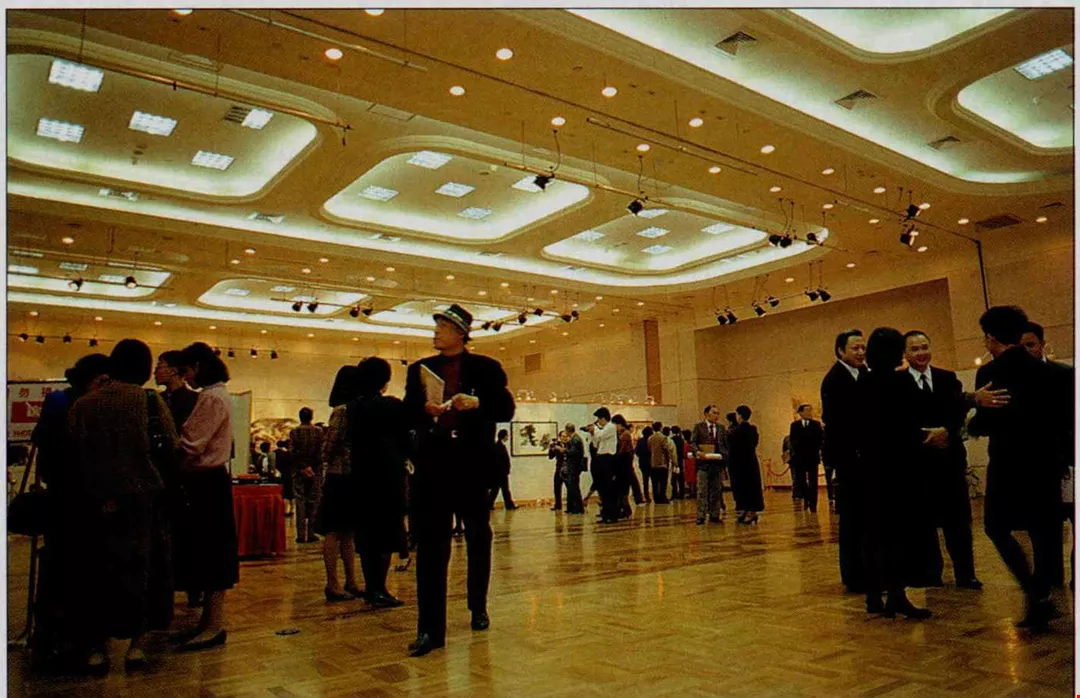
Going together with friends to a concert or art exhibit is representative of a new kind of socializing that many have taken to happily.
First make friends, then do business:
Indeed, there are numerous varieties of this kind of social networking. If you're a manufacturer of a new line of clothing and you want to get a counter in a department store, then you've got to get in touch with the manager in charge of allotting the counters. If a salesman wants to get a pile of orders, then he's got to build bridges with buyers. If two companies want to form an alliance, several meetings will be necessary to chat about things. People say that traditionally the Chinese have made 70 percent of their business deals in girlie bars. While this may be an exaggeration, there's a bit of truth in it.
In the old days a business dinner wasn't considered sincere and complete without the scent of rouge and lipstick. Wang Hsing-ching believes that this is partly due to the influence of the Japanese in Taiwan but is also connected to deeply rooted Chinese ideas about making friends.
C.C. Lee, the chairman of the National Association of Small and Medium Enterprises, points out that on normal days businessmen are busy with their work. When they get in touch with people, it's usually for business. Occasionally getting together with friends or associates to chat about things in an easy and relaxed atmosphere where business matters are cast aside and the character of your normal relationship is forgotten, adds a little spice to life.
Wen C. Ko, chairman of the WK Technology Fund, asks, "Is it not better to make friends as well as money? "Sometimes, if both sides become friends before doing business, it makes for an even happier partnership. For new clients or business connections, for instance, these social gatherings can be used to establish a personal relationship, so that both parties understand the other's background, personality and values and are clear about what to expect. Only by getting to know each other can people build mutual trust and acknowledgement, and these lead to the kind of tacit understanding wherein people feel that the other is "one of us."
Lin Ching Chih, owner of Tahsin, which does business in Osaka, notes that when the Chinese or Japanese have been doing business for a long time, they become more than just friends. They know even when the others' sons are getting married and when their grandsons have turned one month old. With "friendship through three generations," their business connections will naturally grow very tight, and they can help each other get through any little crisis.
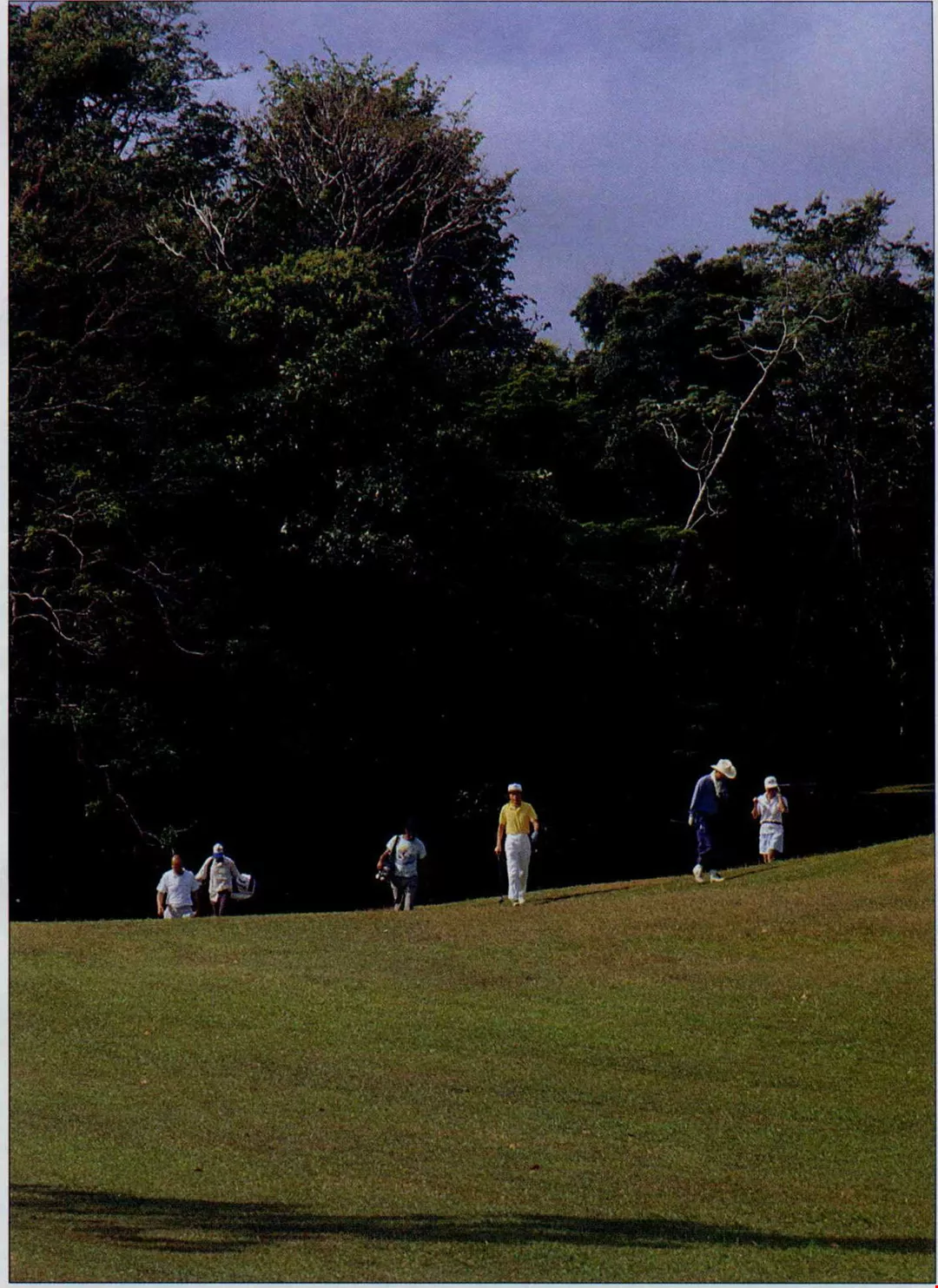
Golf courses are the play grounds of the elite, and playing with an important official shows that one is exceptionally well connected. (photo by Vincent Chang)
A "productive investment"?
Outside of the business world, in government, this kind of socializing is also very common. Because the strata of Chinese bureaucracy are extremely well delineated, there is a strict code of courtesy. If you are not thorough enough about extending these courtesies, it can lead to unnecessary misunderstandings. For example, although freshman legislator Wang Chien-hsuan hates being host of these dinners, when he was minister of finance, he didn't dare not do what courtesy demands and invite legislators to dinner two or three times a year. Otherwise, he says,"regardless of what explanation you gave they would say 'you're stuck up' and refuse my invitations if I had serious business to discuss. "
These gatherings occur in every field. Wang Hsing-ching gives an example. Reporters in days gone by would jump at any invitation hoping to get leads. They all became well skilled at glib repartee. If your skills at carousing could get some important person to confide in you, your value in the profession would rise. "Partying in these kinds of professions is a kind of productive investment," says Wang, who at one stage of his long career as a journalist went out every night.
With business socializing so popular, there is ever more study of it. Wen C. Ko, who has long done business with American companies, points out that Westerners mostly separate these gatherings into those for business and those for just having a good time. When business matters are front and center, discussing private affairs is impolite. Similarly, it would be in bad taste to discuss sensitive business matters at a gathering more purely social in nature. Comparatively speaking, Taiwan's business socializing is less rigidly defined. Sometimes those who come will have an intuitive understanding about what is appropriate, and at other times they will be at a loss.
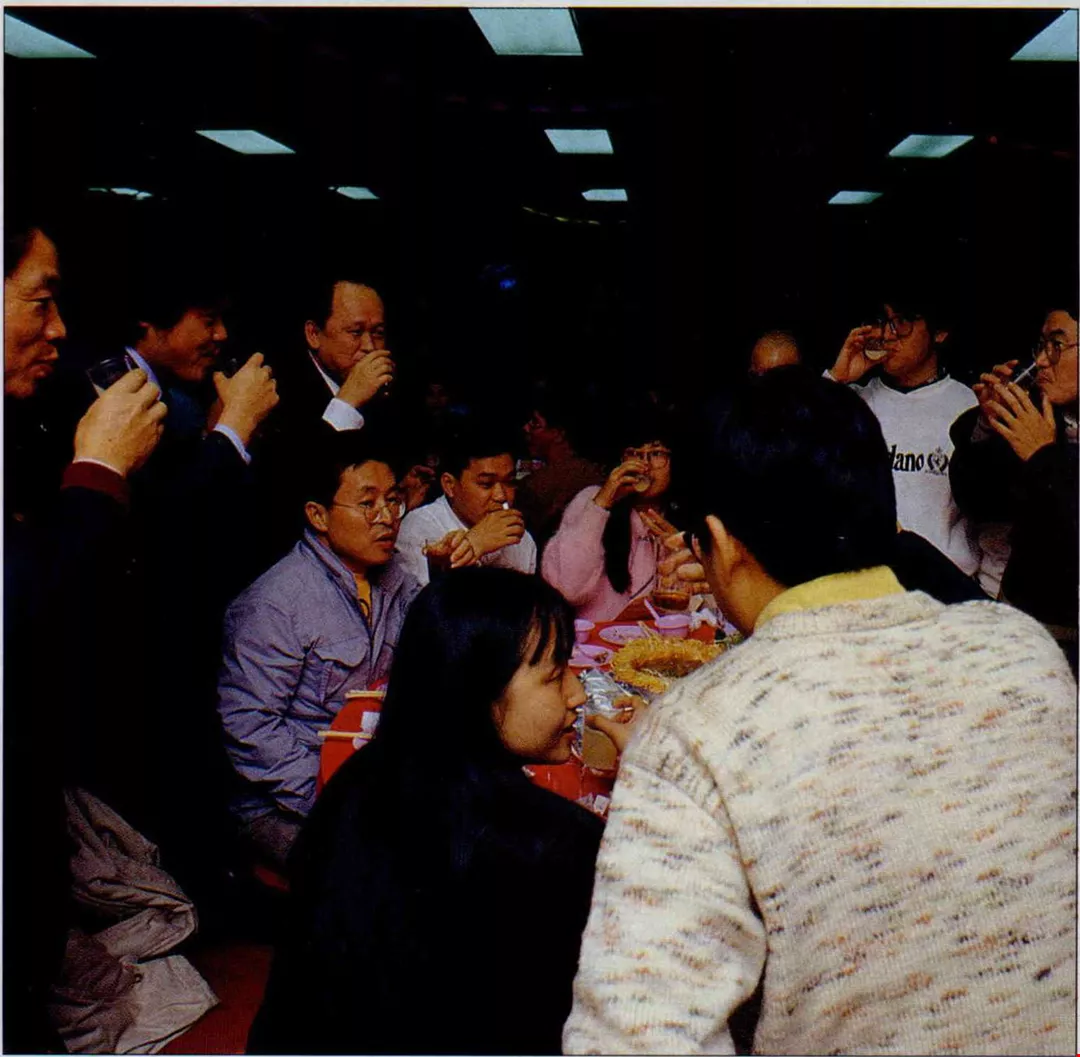
At these business dinners, meaningless chitchat and boisterous toasts take up most of the time. Those who really want to discuss something can't get a word in edgewise and end up just wasting time.
Hard to eat:
It's a good thing if two parties involved in business can eat and chat and thus build mutual trust and understanding, says Wen C. Ko, but for this kind of thing only a few people are really necessary. Unfortunately, because the Chinese want to fill up a table, these dinners often involve "innocent parties" who are invited to attend despite having no connection to the matter at hand. The result is that the two sides have no real chance to talk about anything in detail. Eventually, they have to make another appointment at one of their offices, and the dinner turns out to have been one great big waste of time and money.
And there are many people who shout "In this world there is nothing harder to eat than a business dinner!" Wang Chien-hsuan, a legislator who has long dreaded business socializing, holds that back in the age of material want, an occasional business dinner provided a chance for a big meal, but today, when swallow's nest or shark fin soup are spinning on lazy Susans everywhere, what suffering these meals dish out! Wen C. Ko points out that the Chinese make distinctions as to where the host and guests in order of importance sit. Everything is arranged. You can't decide for yourself to sit next to a neighbor whose company you enjoy, and because it is very important that Chinese-style round tables are full, it is very difficult to get up and leave in the middle. Big meals like these abroad are typically serve-yourself affairs. Not only can you choose your partner in conversation, you can get up and go whenever you feel like it, and there's nothing wrong with leaving a little bit early. There's so much more freedom.
Of course these Chinese-style business meals are at their worst when you have some special duties to attend to--like when the boss has invited some business guest out and as an underling you have been dragged along to provide a little extra companionship. Underlings' presence, on the one hand, highlights the boss's position of prominence--as when they intervene in the rounds of toasts to drink on his behalf. On the other hand, the underlings also have their regular responsibilities and at any time may be called upon for data or information. And they can't refuse these evenings out but must attend to them like their regular duties in the office. "At the same time as paying close attention to the course of the conversation between the two main parties, they also force themselves to try to be witty and interesting, so as to make the scene more festive," says Li Tao, director of external affairs at Ford Lio Ho Motors, speaking from personal experience.
What's more, everything is hard at the beginning. For instance, if you're having a business dinner with a new client, both you and he will try to present yourselves in your best light, so as to obtain the other's approval and acknowledgement. You want to prevent him from bringing up conditions that you can't meet, and even more you want to prevent a competitor from getting an opening at stealing his business. Tiptoeing through this minefield while trying to eat a meal truly makes attending these dinners like going to battle.
In order to prevent attendance at these meetings from leading to the burden of favors owed, many companies strictly prohibit their staff from casually accepting an invitation to a business dinner. A former employee of the Taiwan branch office of Citibank who now works for a new bank as the assistant manager of credit evaluation, has come to this conclusion after many years of experiences with these dinners: "You can't just accept every invitation. When you really can't turn it down, it's best to bring a colleague so as not to feel isolated."
Many people have acquired experience in learning how to politely to refuse invitations to business dinners. Whether to accept or decline, how to refuse an invitation politely--these are tests to the whole way you handle your business relationships. They involve making instant strategic assessments: If I go what do we talk about? What will happen if I don't go? What excuse can I use not to go? It's most important that the tone of voice is modest and sincere. "You've got to make it clear that you're not looking down on them."
Those out in society struggling to pull themselves up will naturally want to make use of these business dinners to do networking. On the other hand, for someone who already has established himself, there's a lot more room to pick and choose. C. C. Lee stresses measuring a person's importance. "You can refuse someone of no importance 100 times without it making any difference. Usually, after someone is refused two or three times, he will naturally get the picture and not make another invitation."
Act two--male temptation:
Going to these business dinners may be a pain in the neck, but if the evening isn't called happily to a close when the table is cleared, a serious headache may ensue. In order to show sincerity, often a second act at a karaoke or piano bar can't be done without, and the festivities can go on to the middle of the night or even the early morning. "My wife keeps me on a short leash, " frankly admits a department chief in the Executive Yuan, "and so if I can, I avoid going to the second act. But if there's no way out, I'll go and help fill up the sofa."
Li Tao uses the term "inner struggle" to describe his feelings before "the second act." "The dinner is usually over about 9:00, and if I go home then I'll still have time to play with my kid and chat with my wife, but if I go to the second act, everyone will be asleep by the time I get home." Of course, in the male-dominated arena of business entertainment, only those with a lot of confidence and conviction dare to withstand the derisive laughter brought by mention of mother or wife.
Is this nighttime socializing really the Chinese wonder drug for straightening out any business networking problem?
"The truth is that with progress, the functions of these gatherings are ever fewer!" holds C. C. Lee. In today's competitive society, things hinge on one's actual talents. The market place is a battlefield. Giving way just a bit may mean that the company loses money. And so, "Making deals at these business dinners represents the small business of the agricultural age, " Lee says rather bluntly. "Today a deal can easily involve US$ 1 million. If you really want to make the deal over dinner, your business is going bankrupt fast. " Li Tao also holds that discussions at these business dinners are just a part of the process of making a decision; they can't be the deciding factor. The true keys to doing business successfully are the preparation before making the deal and the continued hard work after it.
When does papa dine at home?
What's more, in comparison with the agricultural society of years past, the networks of relationships that people have today are much more complicated. They have grown immensely. People with resources are always being smothered by requests for favors. In the final analysis, handling everyone fairly is probably the best way not to offend people. And the people who have public power or special financial resources should have the good sense to know that the channels through which the resources are distributed are ever more in the spotlight of public scrutiny. Using public resources for personal gain is ever more difficult.
Business dinners are not as effective as people think, but habits die hard. Wang Hsing-ching uses the terms "oral-phase culture" and "group-type culture" to explain why the Chinese wine and dine for business' sake: "When you get right down to it, these gatherings reflect people's values and their attitudes about life. They also reflect how the Chinese have decided to deal with their newfound abundance of money and leisure."
He believes that the Chinese have yet to raise their awareness about quality of life. When people would rather spend NT$50,000 for a painting than on hosting one of these dinners, these get-togethers will naturally fall from favor. With the same logic, when men value the joys of the family over making more money and getting a promotion or when they think that reading a book at home is better than hanging out with their business buddies all day mouthing inanities, then these kinds of business gatherings will go out of style. Inner understanding of this ilk takes time to crystallize. It can't be pushed.


@List.jpg?w=522&h=410&mode=crop&format=webp&quality=80)