

"Sunken ship artifacts are open to the public!" Beginning on the first of this year there was a very special exhibition in the Ching Kuang Hall in Penghu: Artifacts collected from sunken ships on the ocean floor. Yet, these old bits of pottery, ship's masts, and copper strips, corroded and faded by sea water, some bits with shellfish still clinging to them, drew little attention at the time.
In fact, it was only this April that the old artifacts became the focus of a new round of media attention. In that month, Huang Chia-chin, the diver who discovered the artifacts, was arraigned in Penghu District Court, where he stood accused of violating the "Cultural Assets Preservation Act."
When you think about it, it's no longer really news. It was in 1987, after Typhoon Wayne passed Taiwan, that lobster fisherman Huang Chia-chin discovered an old ship as he was trying to salvage a fishing boat.
He first discovered mast-like objects on the ocean floor. Then he came upon "artifacts" like cups, plates, and bowls in the surrounding sand. "When I first sighted them, I thought to myself that these might very well be an important slice of history," he recalls. Huang grew up in an old house and has always been fond of porcelain and other knick-knacks. He learned in his history class that Penghu had developed even earlier than Taiwan proper and that historical evidence of its development was all around. And now here he was face-to-face with such objects.
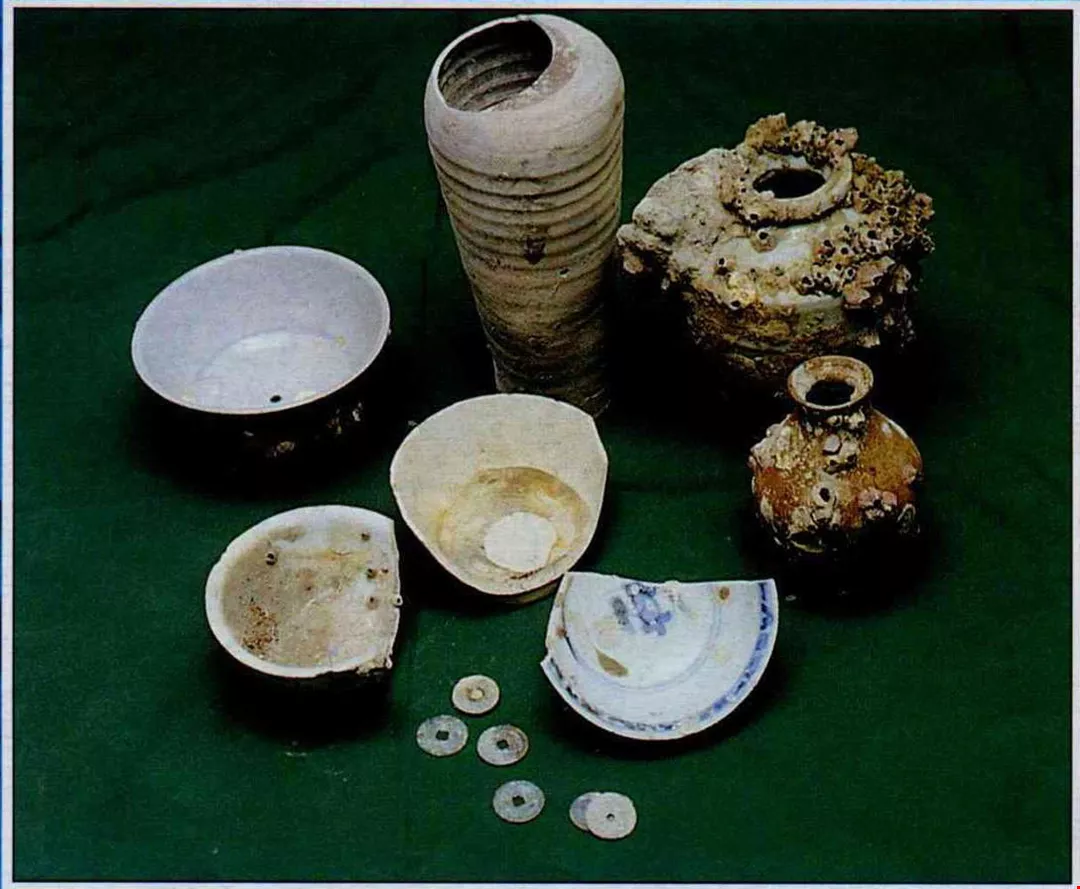
(left) A display of porcelain and coins recovered from sunken ships in Penghu.
Winds of fortune
After discovering the old craft, Huang often returned to the site to take photos, make notes, and collect artifacts and debris. He says that as of the present he has discovered two ships in the area. Moreover, he adds, aside from masts and bits of wood, there are also old coins, utensils, jars, oil lamps, and other such common objects scattered across a 30-meter long stretch of sand. He surmises that these are objects originally in the ships' holds which were churned up by the typhoon, and that there are other objects buried in the sand. Besides these, he has also found some fish net sinkers; various animal bones including horns from deer, cattle, and rams; and even some knives, explosives, and other weapons.
In addition, while doing his lobster fishing, Huang continued to search for signs of other old wrecks around Penghu. After six or seven years of searching, he says that he has come across four or five other spots around the islands where there are signs of old sunken ships.
International treasure hunting groups have long been interested in stories of old sunken ships around Penghu. A few years ago, Asiaweek magazine predicted that the waters from the Sea of Japan to the South China Sea would become a hot spot for treasure seekers by the end of this century. It was thought that Penghu and the Pratas Islands would get particular attention.
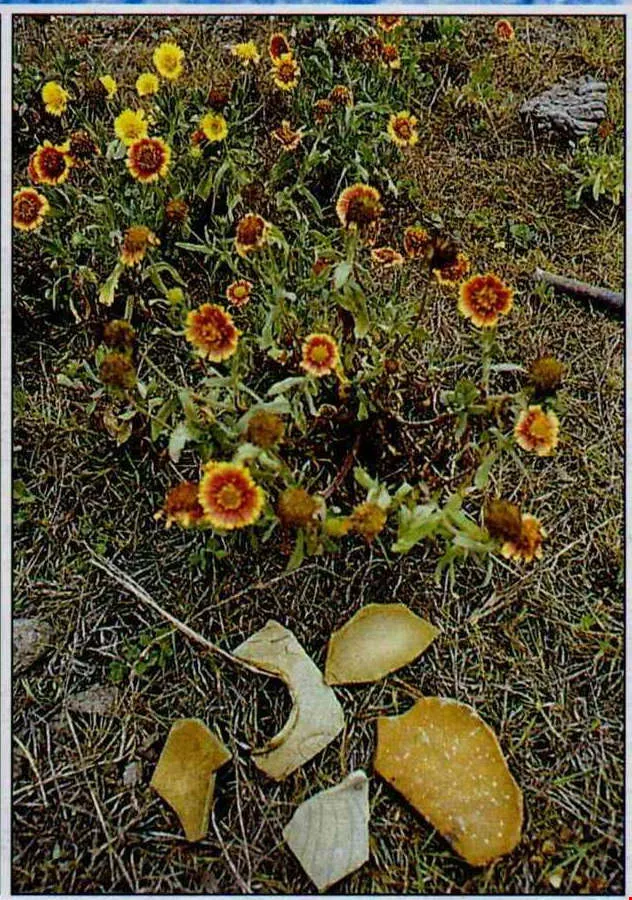
(right) A great quantity of Yue kiln potsherds (dating back to the 10th century) have been found in Penghu. Some specialists think they may come from shipwrecks.
Maritime highway
The Penghu Islands are located off the southwest coast of Taiwan, in the southeast quadrant of the Taiwan Strait. Whether looked at from Taiwan or mainland China, the islands are remote and barren. Yet, their geographic position made them a key jumping off point for early travelers from the mainland to Taiwan. Moreover, the islands served as an important marker for both Chinese an Western ships sailing China's southeast coast. Ships often put in here for fresh water or to take refuge from storms, and the islands became a key stopover on maritime routes.
The traces of old sea routes can be discovered through old charts and documents. Archaeological evidence suggests that there had been maritime activity in Penghu as early as four or five thousand years ago.
During the Tang (670-907 AD) and Sung (960-1280 AD) dynasties, Penghu served as a temporary base for fishermen from mainland China. There was even a greater burst of maritime activity in the Yuan dynasty (ended 1368). Moreover, with the flourishing of trade between China and the outside world in those days, the waters around Penghu became an important sea lane for merchant vessels.
Around the middle of the Ming dynasty (1368-1644), Penghu was officially named as a key point in the trading route to the Philippines. Much Chinese porcelain and silk made its way to Southeast Asia along this route.
Beginning around the end of the Ming era, large numbers of commercial ships and fishing boats began passing through the waters around Penghu en route to the southwest coast of Taiwan, where they traded with the indigenous peoples. After the Dutch occupied Taiwan and Penghu in the mid-17th century, the islands became a key transshipment point for trade between China, Japan, and Southeast Asia, bringing even more traffic into the local sea lanes. Finally, after the Ming dynasty general Zheng Chenggong expelled the Dutch, opening the way for the first large-scale migration of Han Chinese from mainland China to Taiwan during the late 17th and early 18th centuries (at the beginning of the Qing dynasty), ships passed through Penghu in an uninterrupted stream.
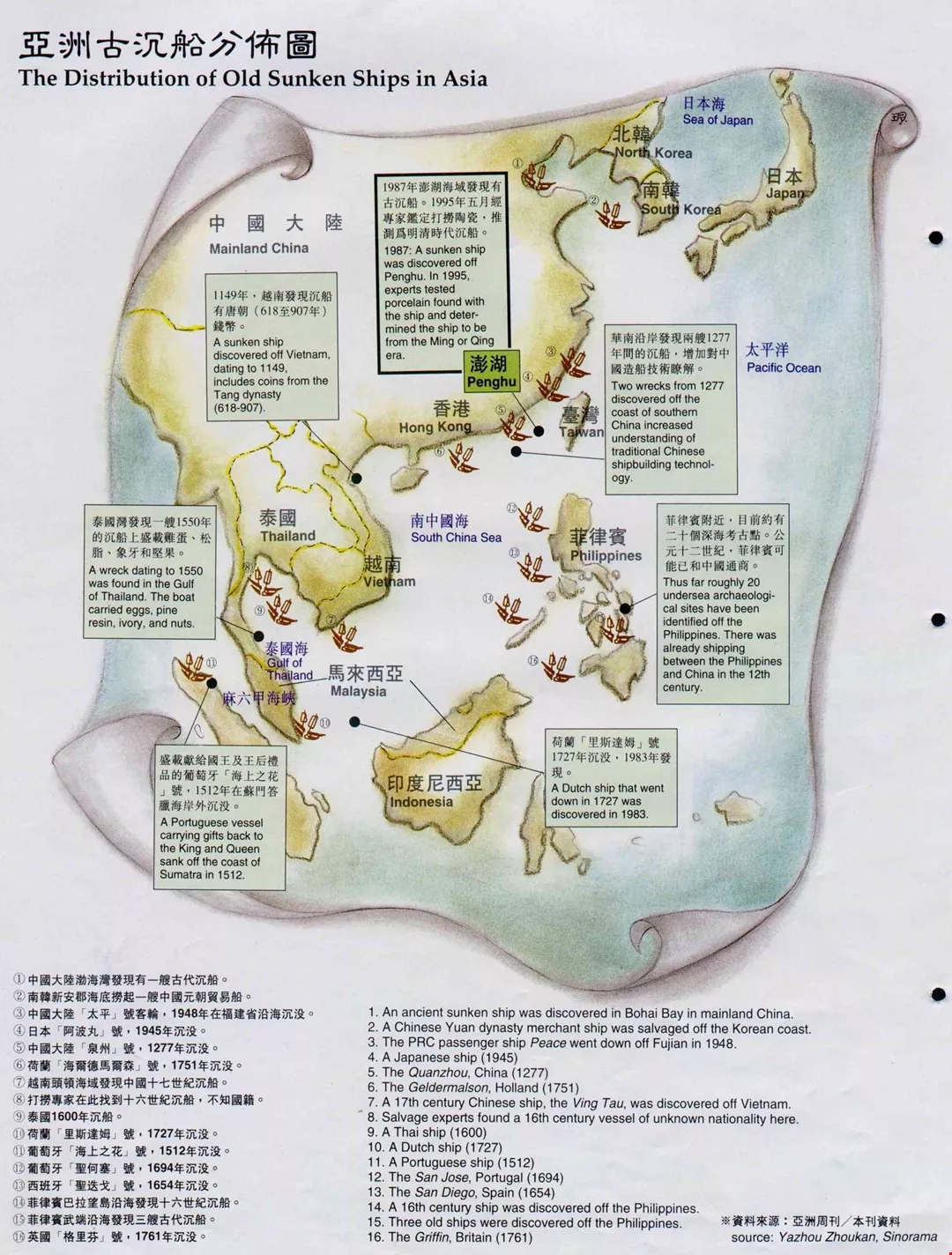
The Distribution of Old Sunken Ships in Asia.
Three dangers
In fact, though ships were obliged to pass through the seas surrounding Penghu, these were not easy waters to voyage through. Old local gazetteers report the existence of "black gulches" to both the west and east of Penghu. The former-nicknamed "the Larger Sea"--separated Penghu from Fujian Province, while the latter ("the Lesser Sea") marked the boundary between Penghu and Taiwan. It was vital for ships trying to cut across these "gulches" to catch a strong wind in the right direction, otherwise they would be carried away by the current and placed in severe danger if they should hit a typhoon.
In local legends, there are three great dangers in the seas around Penghu: "first a peak, second a roar, and third a westerly current." Kuo Chin-lung, a teacher of geography at Makung Senior High School, relates that the "peak" refers to the northern side of Mutou Island, where there is a great deal of hidden coral around the "Main Peak" and "Secondary Peak" coral reefs, and the currents are treacherous, making it a well-known high-risk zone in international shipping lanes. The "roar" refers to the "Roaring Passage" in the vicinity of the great modern bridge linking the Penghu islands. One of Zheng Chenggong's generals, Liu Guoxuan, escaped through here from pursuing forces of the Qing dynasty. The "current" refers to a current running south to north past where the lighthouse is on today's Yuwong Island; it collides with the flow of water emerging from the "Roaring Passage," creating riptides.
Data from the Qing dynasty indicates that between 1665 and 1892, there were over 100 recorded incidents of Chinese and foreign ships being lost at sea in this area. These included commercial vessels, pirate ships, troop transports, and supply ships carrying rice and other commodities. The main reasons for these incidents were listed as "ran into a storm" and "ran aground on a coral reef."
Today commemorative markers of these disasters have become tourist attractions. There is an upright marker set on the crest of Kupo Island, the largest uninhabited island in the northern part of the Penghu chain, whose worn-down English text describes the capsizing of a British craft in the vicinity in 1892. On Shamao Hill, which is on the coast of Makung Island, behind a marker indicating the landing site of French troops, there is a Western style headstone for an English ship's captain lost at sea. The words state very simply that the captain was drowned in a violent storm on a passage from Taiwan to Jiangsu.
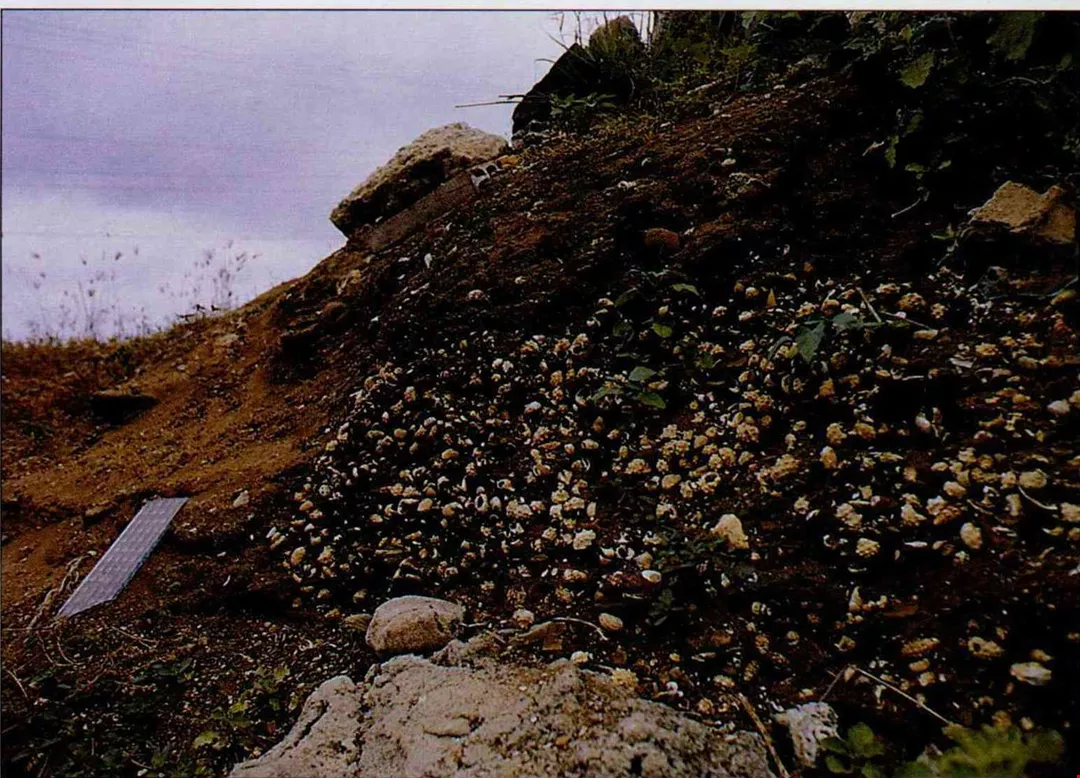
Archaeologists believe that shell tombs found at the Suokang site in Penghu indicate human activity four to five thousand years ago.
Beware of Chinese pirates!
No one put up statues to mark the sinking of Chinese vessels, but there are many "Ko Kung" ("Lordly Guest") temples all along the coast where people make offerings to roaming souls of those lost at sea. It would be equally fair to say that these offerings are given out of sympathy for these lost spirits who have no one to worship them, or out of fear that the ghosts would otherwise meander inland. Either way, the temples are one way of memorializing maritime disasters. There is one Ko Kung Temple on the Chungtun shore, which documents indicate was built by local residents in the 1850s (the Xianfeng reign period of the Qing dynasty); it was built on the burial site of those killed when their trading vessel, out of Xiamen, was caught in a severe storm off Chipei and grounded at Chungtun. The temple couplet, reading "The waters mercilessly swallow up the white bones; This mountain will be the abode of your souls," reveals the thinking that lay behind these "Lordly Guest" temples.
The most detailed descriptions of maritime disasters off Penghu can be found in Western ships' logs. Steve Shieh, an expert diver, recalls that several years ago a friend of his working in an undersea archaeological site in Europe told him that Western nautical records state that between 1620 and 1665, more than 20 ships were lost in the waters around Penghu and Taiwan. This friend came to Taiwan to explore, only to discover to his regret that many of the wrecks have been buried by siltation along the coast.
The story of the foundering in 1639 of the Sonne, a ship registered to the Dutch East India Company, even once came up in a session of the Legislative Yuan. A legislator used it in an interpellation inquiring as to whether the seas around Penghu were not a "treasure trove."
The Sonne was a merchant ship carrying 400 crates of silver coinage, 24 blocks of stone intended for use in constructing the Dutch fortress in Tanshui, and commodities purchased in Burma. It set out for Taiwan, but was carried astray by strong northeasterly winds and powerful currents. It eventually sank in waters off Chipei Island.
The Dutch East India Company immediately dispatched additional craft to salvage the ship, but numerous attempts to do so were interrupted by high winds and heavy seas. Records from the time state that the 400 cases of silver coinage were recovered from the vessel, but that those in charge did not want to store the money on board ship for fear of pirates.
"The 400 crates were placed amidst the coral for 20 days. They only appeared at low tide, and were covered over at high tide." Before the ship with soldiers had arrived to guard the cache, the crew and officers rotated keeping watch on the salvaged goods.
The owners of the Sonne were relatively lucky. "Except for the ship itself and a few small items from Burma, losses were not severe." It seems clear that most of the valuables in the ship were salvaged long ago. But what about other vessels? How many ships, Chinese and foreign alike, have sunk without a trace in these seas? Their artifacts seem to call out to the daring to take the challenge and venture into deep waters.
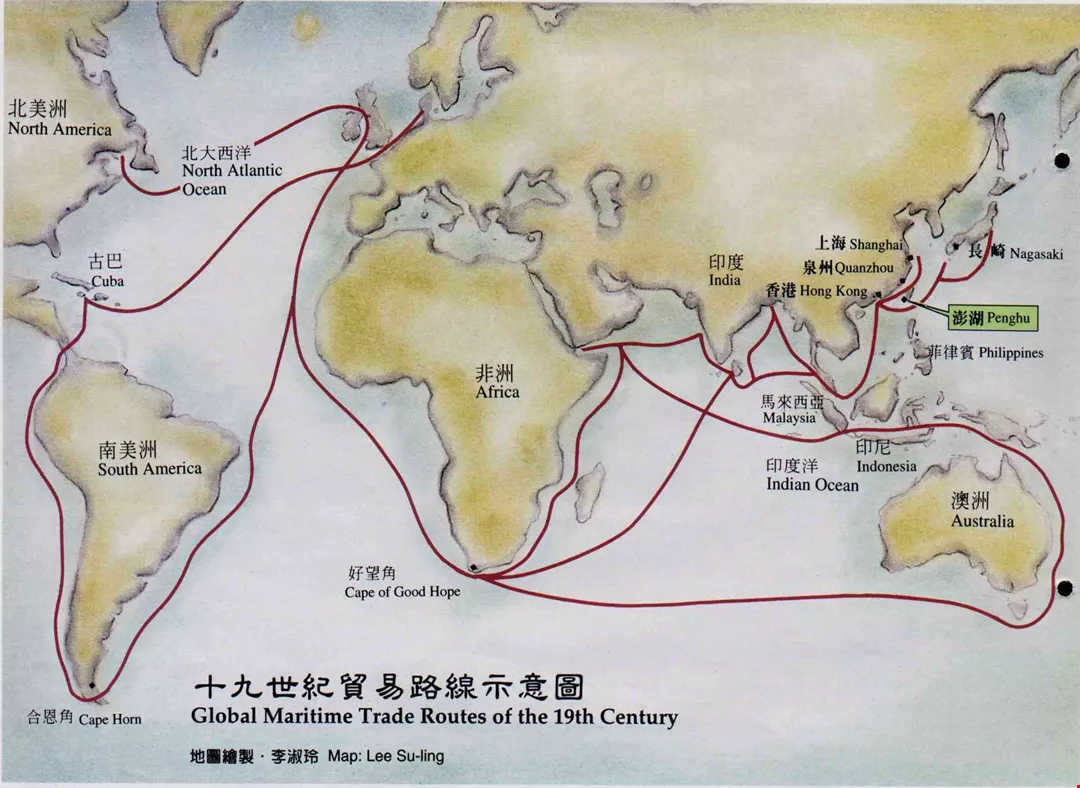
Global Maritime Trade Routes of the 19th Century Map: Lee Su-lign.
The fearless explorer?
Huang Chia-chin is just such an intrepid man. A graduate of the military academy, he is known among all the local folks as a first-rate diver with over 20 years of experience. After finding that first sunken ship back in 1987, he collected information about lost vessels wherever he could, and did research into old porcelain. He often brought old pieces he had found to specialists for verification. According to a report in the media, since finding the first ship "he often lets lobsters he sees go by unhindered, but doesn't pass up anything to do with porcelain." Indeed, going to sites to take photographs and collect evidence has become his most important day-to-day task.
He was nearly run down by a huge passenger ship while searching for wrecks. And he almost lost his life after stumbling into a riptide. To make a record of relics between 10 and 50 meters below the surface, he goes against his expertise and stays at 50 meters for up to 40 minutes (usually it is inadvisable to exceed 15 minutes), just to get a few extra photographs. "If I don't take advantage of my opportunities, and have to wait for the next favorable currents, I would have to hang around for three or four hours," explains Huang. The price for seizing his opportunities is severe "bends," for which he must periodically go to the hospital for treatment.
He is clearly willing to suffer for his work, but people have different appraisals of him. The bottom line is that he remains a controversial figure.
The crux of the problem is that Huang has refused to divulge the sites where he has found sunken ships. His reason is that "the artifacts will be destroyed if the site is revealed." But others say that he is simply trying to monopolize the resources for personal profit. The Ministry of Education, which has jurisdiction over sunken ships, argues that Huang has always been trying to get commissioned to do the work of recovering the artifacts. However, due to academic considerations, the Ministry cannot sign a contract with a single individual. Thus plans for exploring and salvaging the ships have been delayed for eight years.
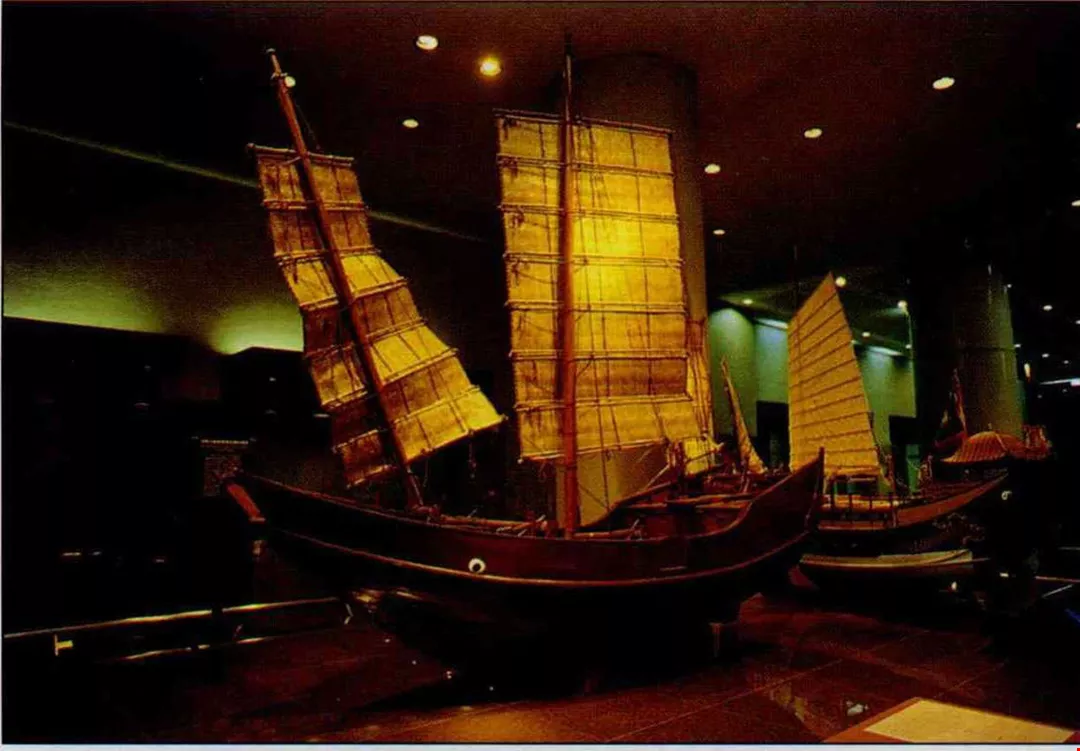
Ships from the Song dynasty plied distant seas like those in Southeast Asia. Records indicate that vessels such as these reached the Persian Gulf. The photo is of a model copied from a wreck found near Quanzhou, in Fujian.
Virgin territory
Exploring old sunken ships is considered one of the most important aspects of a new field of study created in the 20th century: undersea archaeology. Salvage work has been carried on in the West for many years now. Among the great success stories have been recoveries of ancient Greek and Roman ships, of one of the fast frigates Columbus used on his voyage to America, and of a 17th century Spanish man-of-war. Using Western techniques, explorers in Korea, Japan, mainland China, and Southeast Asia have recovered such wonders as a Yuan dynasty boat from Liaoning, a Korean ship from the same era, and a Vietnamese trading vessel from the Ming period.
In Taiwan, undersea archaeology is still virgin territory. Taiwan is lacking in experience and technology in all related fields, including archaeology, diving, and oceanography. In recent years a number of divers have adopted an idiosyncratic hit-or-miss approach to "recreational treasure hunting" around Taiwan. They have stumbled quite accidentally into--and even recovered artifacts from--some historic sunken ships.
Once Steve Shieh followed up on a local legend and explored a certain spot where he found a Qing dynasty wreck. "Ten divers worked for five days. Just the airplane tickets and the room and board cost NT$200,000," he says. At present, all the coins, iron plates, copper nails, and wood planks from the ship are still kept in his office.
The behavior of the divers gives archaeologists heart attacks. Academia Sinica Institute of History and Philology researcher Tsang Chen-hua says that the Cultural Assets Preservation Law dictates that all artifacts found on the sea bottom belong to the state, and that it is profoundly wrong for individuals to go digging these up just because they feel like it. He emphasizes that the most important thing about sunken ships is not "salvaging" them, but systematically studying them. They should be treated just like archaeological sites on land, and be catalogued in a planned way.
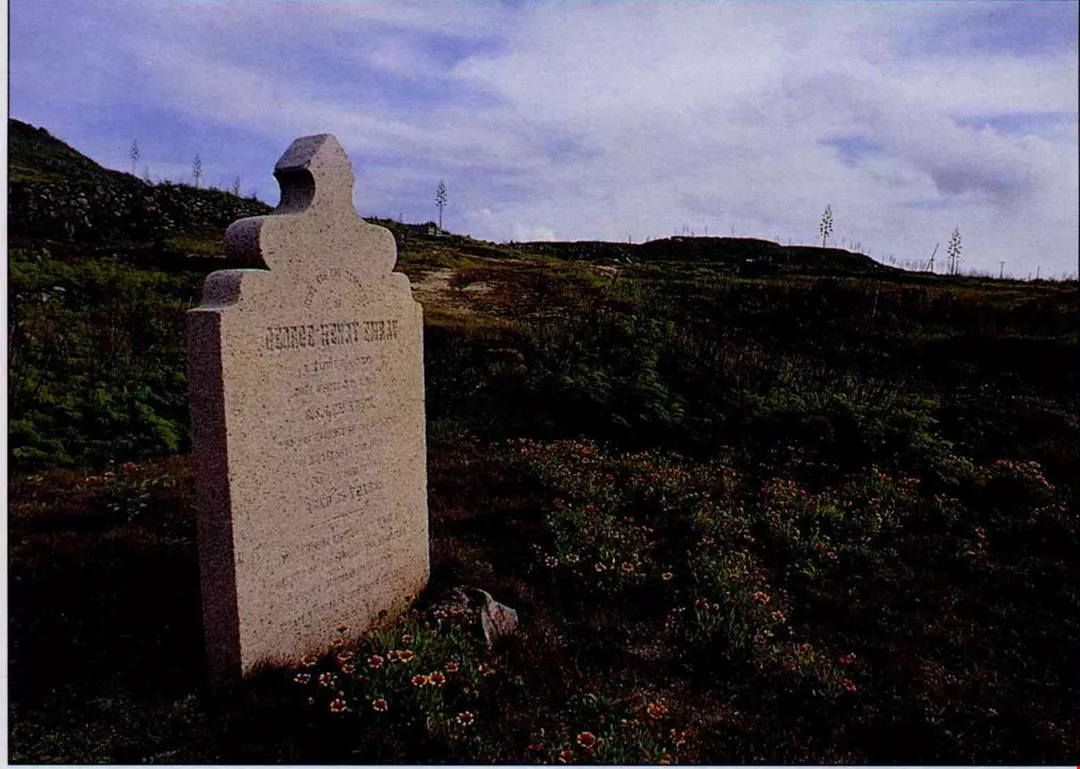
It is rumored that this stone commemorating an English ship's captain lost at sea was brought over from Hong Kong.
Archaeology or treasure hunt?
How should sunken relics be handled? A see-saw battle erupted between archeology and treasure-hunting after the announcement of the discovery of the sunken ship in Penghu. Ho Jin-tsair, the director of the Department of Social Education in the Ministry of Education, says that the relevant government agencies have been under intense pressure since the discovery of the sunken ship off Penghu. Public opinion is inclined to see such wrecks as cultural resources. Many critics say that the MoE is not doing its job because, though it is aware that "national treasures" fall clearly within its purview, it is not actively moving to "rescue" the artifacts. But the Ministry has to take into account that there is little or no experience with undersea archaeology in Taiwan, and that rigorous scholarly standards should be observed, so that the Ministry does not dare to rush in blindly to reclaim the ships.
Undersea archaeology is not like its landed counterpart: It is certainly far more dangerous and requires much more technology. In order to explore the ocean floor, it's not enough to have documentary records and legends; one must also have sonar, magnetic generators, and metal detectors. But even with all these, success is far from assured. This is because the ocean floor is littered with artillery shell fragments and other metallic junk that create numerous obstacles to searching, so it is still necessary to have divers go over the ocean floor using the naked eye and a fine tooth comb.
Moreover, maritime research is not the romantic sail in the ocean breeze that many might imagine. Climatic and temperature changes, as well as temperamental equipment, can all affect the progress and efficiency of the work. Moreover, with the least bit of carelessness, divers can face life-threatening situations from underwater pressure, currents, and dangerous creatures.
That is why many people stand with Huang Chia-chin, and feel that his request for "proprietary compensation" is not unreasonable. Steve Shieh argues that one should not underestimate the efforts of the divers who bring these old relics back into the world. And legislator Chen Kuei-miao argued in favor of "compensation for discoverers" when he made his proposals about the handling of old sunken ships.
But there is another school of thought that points out that thus far all sunken ships found near Taiwan have been stumbled upon accidentally. And even where the finders have followed up by making records and exploring, they have done so primarily out of personal interest. Though they have obviously made some efforts, how are these "contributions" to be translated into material rewards?
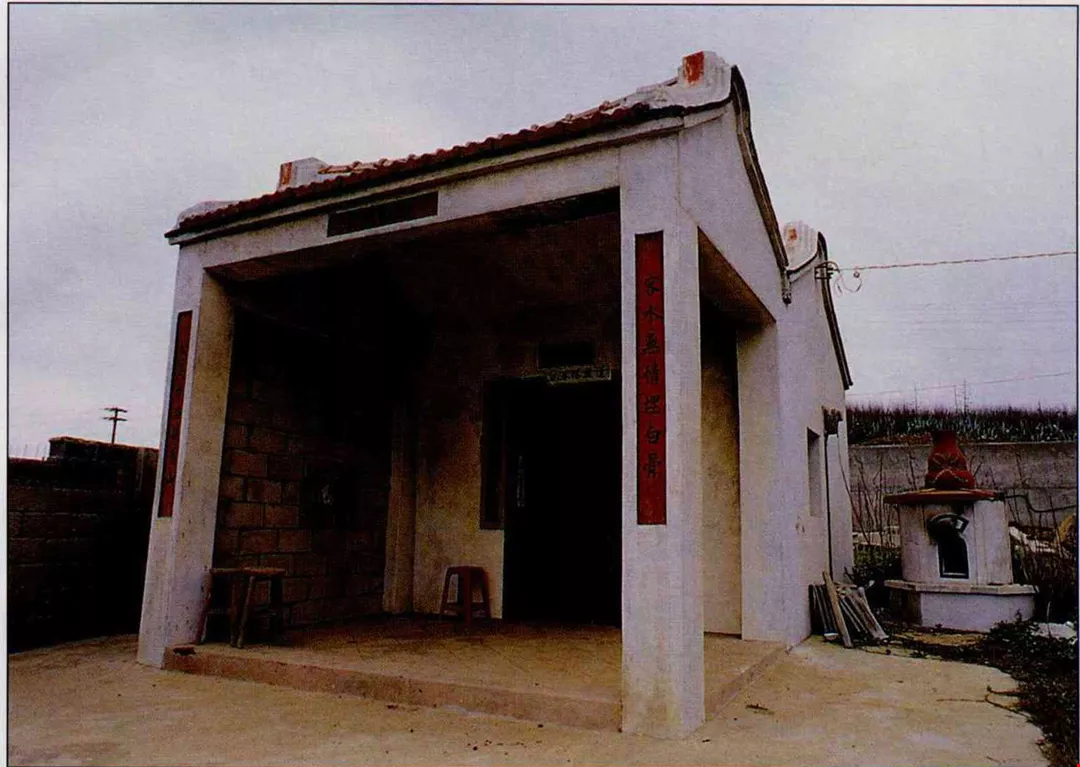
"The Twelve Lordly Guests" Temple faces out to sea; one can feel the sense of desolation associated with death at sea far away from one's home.
Treasure Island
The Ministry of Education has turned over full responsibility for old ships to the National Museum of History. The Museum has undertaken intensive discussions and essentially completed plans defining the direction of salvaging. With the assistance of relevant academic institutions, private diving companies will take charge of salvage operations. However, it is not yet certain when the first operation will take place.
When most people think of sunken ships, they think of tales like Treasure Island. And indeed, there have been several cases of treasure-seekers in the West who have struck it rich. In 1986, "the treasure of the century" was located off the coast of Florida in the United States. This find of a 17th century Spanish galleon loaded with 40 tons of gold, silver, and emeralds continues to fire the imaginations and ambitions of fortune-hunters.
This Spanish ship had set off from Cuba in 1622. Within two days it had been blown well off course, and no one knew exactly where it finally went down. In 1970, a scholar of Spanish colonial history stumbled upon documents which he suspected were related to the incident and suggested a site off the coast of Florida in the United States. Thus did 16 years of searching begin.
A native Floridian, diver Mel Fisher, was in charge of the salvage operation. Originally a chicken farmer, he became a worldwide legend after finding the wreck. In the course of the 16-year search, he lost his beloved son and daughter-in-law due to shipboard equipment failures. He also was sued by the US government over the ownership of his discovery. he later sold the gold, silver, and emeralds that he recovered, generating a huge wave of objections. There is no shortage of controversial figures like Fisher in the annals of ship salvaging in the West.
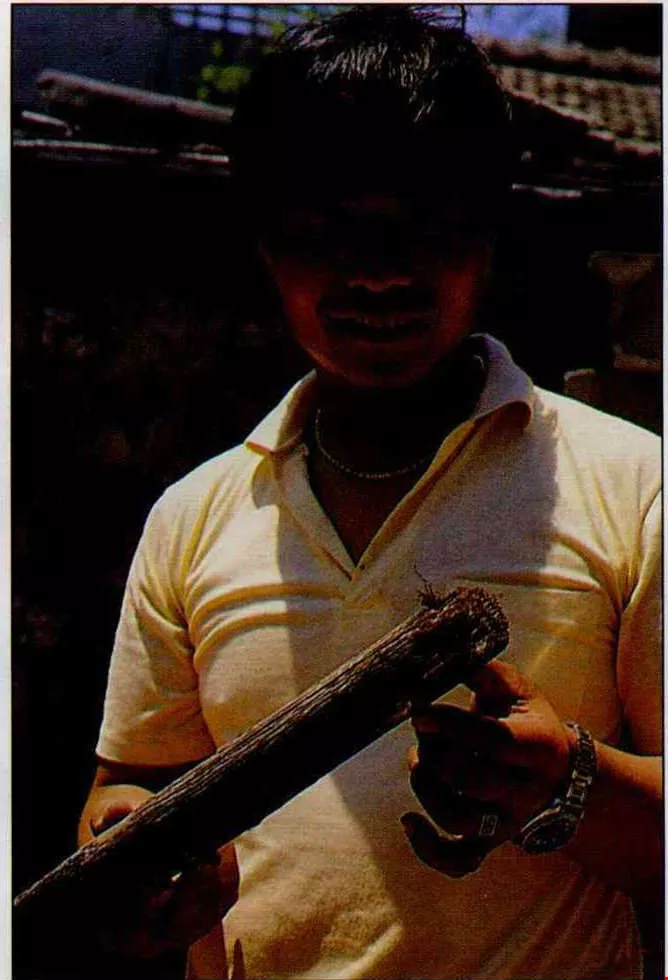
Sunken ship discoverer Huang Chia-chin says he is interested in neither fame nor fortune, but only wants to do all he can for local culture. (photo by Li Chih-wei)
Frozen in time
Tsang Chen-hwa of the Academia Sinica notes that most people assess the value of a sunken ship by the treasure aboard. But from a historical point of view, every object surrounding a wreck--from the largest (the hull, cargo) to the smallest (porcelain cups, bits of wood, even seeds and spices)--as well as the location and function of every item, all are valuable historical threads to be followed. "History is frozen in time in a sunken ship," is how he describes it. These threads can compensate for gaps in our knowledge of navigation, trade, shipbuilding, and handicrafts left behind by inadequacies in the documentary record. Herein lies the true significance of a sunken ship.
How do the things Huang Chia-chin has found in Penghu measure up in terms of their value as historic artifacts? Specialists have determined that most porcelain objects date to the Ming and Qing periods; although some pieces resemble Song porcelain, these are probably imitations made in the Ming dynasty. As for the copper strips, some experts argue that the exceptional purity of the metal indicates that they are of the same type imported from Japan into China in those days.
Despite all this, argues Tsang Chen-hwa, no reasonable assessment of the find's value can be based on only a few artifacts. On the other hand, it would be a great boost for Taiwan's heretofore-backward undersea archaeology techniques to undertake salvage operations on the ships.
National Taiwan University history professor Tsao Yung-ho suggests that perhaps future exploration not only of the Penghu ships but of other wrecks as well will settle several long-standing controversies within the community of historians. For example, did trading vessels go through Penghu on a large scale as early as the northern Sung dynasty, before the earliest records of such trading? Chen Hsin-hisung, an associate professor of history at National Chengkung University, adds that though many Ming and Qing ships have already been uncovered in the seas around Asia, it would be historically significant if Sung or Yuan era ships could be recovered from around Penghu.
Obviously, the revelation that there are sunken ships off of Penghu is only one clue in understanding mysteries that stretch far back into history. And it was also only the first act in a drama that continues to unfold day by day....
[Picture Caption]
p.112
A diver found this Qing dynasty wreck by following up on a local legend. You can see wood pieces from the bottom of the ship buried in the sand. The finder has not divulged the location of his discovery. (photo courtesy of Steve Shieh)
p.112
(left) A display of porcelain and coins recovered from sunken ships in Penghu.
p.112
(right) A great quantity of Yue kiln potsherds (dating back to the 10th century) have been found in Penghu. Some specialists think they may come from shipwrecks.
p.114
The Distribution of Old Sunken Ships in Asia
1. An ancient sunken ship was discovered in Bohai Bay in mainland China.
2. A Chinese Yuan dynasty merchant ship was salvaged off the Korean coast.
3. The PRC passenger ship Peace went down off Fujian in 1948.
4. A Japanese ship (1945)
5. The Quanzhou, China (1277)
6. The Geldermalson, Holland (1751)
7. A 17th century Chinese ship, the Ving Tau, was discovered off Vietnam.
8. Salvage experts found a 16th century vessel of unknown nationality here.
9. A Thai Ship (1600)
10. A Dutch Ship (1727)
11. A Portuguese ship (1512)
12. The San Jose, Portugal (1694)
13. The San Diego, Spain (1654)
14. A 16th century ship was discovered off the Philippines.
15. Three old ships were discovered off the Philippines.
16. The Griffin, Britain (1761)
source: Yazhou Zhoukan, Sinorama
p.115
Archaeologists believe that shell tombs found at the Suokang site in Penghu indicate human activity four to five thousand years ago.
p.116
Global Maritime Trade Routes of the 19th Century
Map: Lee Su-lign
p.117
Ships from the Song dynasty plied distant seas like those in Southeast Asia. Records indicate that vessels such as these reached the Persian Gulf. The photo is of a model copied from a wreck found near Quanzhou, in Fujian.
p.118
It is rumored that this stone commemorating an English ship's captain lost at sea was brought over from Hong Kong.
p.119
"The Twelve Lordly Guests" Temple faces out to sea; one can feel the sense of desolation associated with death at sea far away from one's home.
p.120
Sunken ship discoverer Huang Chia-chin says he is interested in neither fame nor fortune, but only wants to do all he can for local culture. (photo by Li Chih-wei)
p.121
One can often see ships run aground in the waters around Chipei Island in Penghu. This foreign vessel crashed into a coral reef nearly a year ago; the hulk still awaits shipbreakers to take care of it.
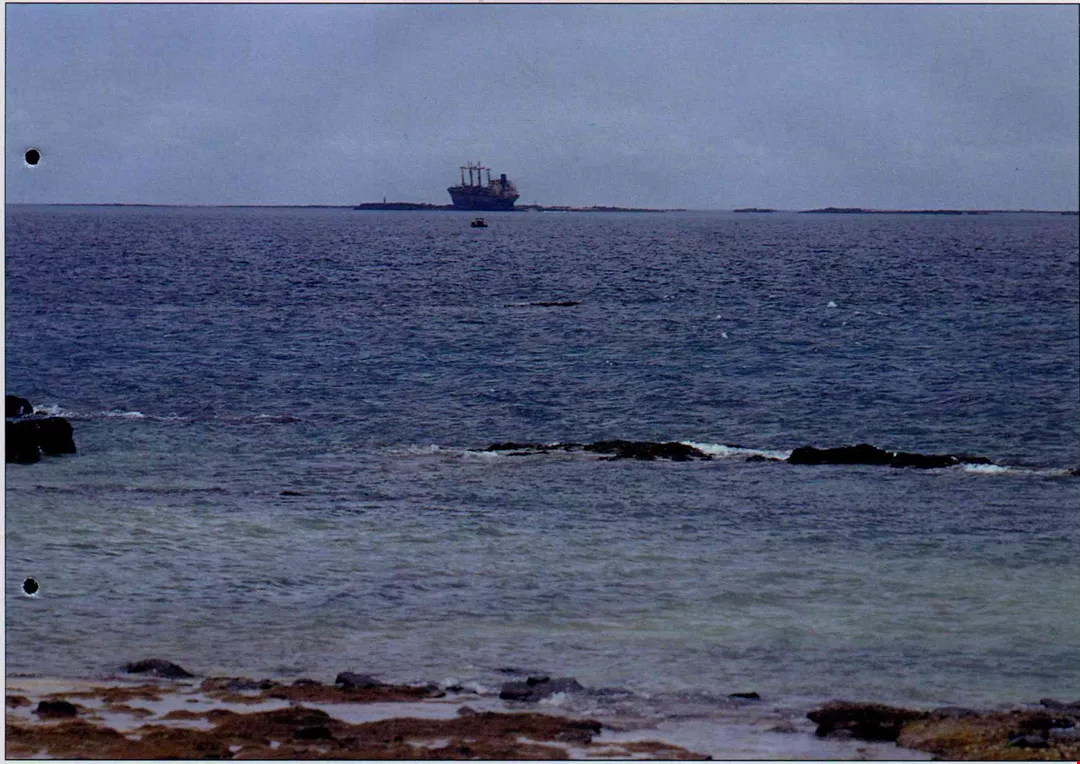
One can often see ships run aground in the waters around Chipei Island in Penghu. This foreign vessel crashed into a coral reef nearly a year ago; the hulk still awaits shipbreakers to take care of it.


@List.jpg?w=522&h=410&mode=crop&format=webp&quality=80)


