Xu Yaru: Coming to Terms with a Radish Pit
Wang Wan-chia / photos Jimmy Lin / tr. by Geoff Hegarty and Sophia Chen
December 2010
Is living in a remote corner of the peaceful countryside or mountains your dream for retirement? Many people ponder the joys of such an idyllic lifestyle, but when they actually come face to face with the practical side of saying goodbye to the city and dealing with the economic realities of a rural lifestyle, the idea is often (temporarily of course) shelved.
A Japanese writer, Naoki Shiomi, has recently made popular his simple-living concept of "half-farmer, half-X." Shiomi's basic idea is that people can pursue farming, not so much as a business but to grow enough food for their own needs, while also realizing their own personal passion-something Shiomi calls their "X" factor-and earning a reliable income at the same time by remaining constructively involved in society. The concept of "half-farmer, half-X" has resonated strongly with many. Xu Yaru, born in 1966, is one person who has tried to put Shiomi's ideas into practice.
On a small farm of just under one hectare located on Mt. Taomi 600 meters above sea level in Puli, Nantou County, the landscape is a lush green. Standing here overlooking downtown Puli and the multiple peaks of Mt. Qilai with a small elegant Japanese-style house nearby, it is quite incredible to imagine that this land was deserted until about six or seven years ago. The soil had been ruined by a radish farmer who had overused chemical fertilizers and pesticides, so the new owner named his farm "the Radish Pit."

Unlike the yuppie dream of buying a piece of lush forest land and clearing it to build a luxury mansion, Xu thought differently. Although living in a forest is a very attractive idea, when trees are cut down to create driveways and clear a space for a home, the landlord, who often claims to be a lover of nature, has in fact become an intruder: a destroyer of the forest.
Xu wanted to be a healer of the land, rather than a destroyer. He bought a piece of ravaged land in order to make it fertile again with his own hands. "If you want to have a piece of lush land, start by planting a seed!" says Xu.
Xu grew up in Houbi Township, Tai-nan County and is a graduate of the Department of Civil Engineering at National Cheng Kung University. After graduating from the Urban Planning Institute of the same university, he gave up the opportunity to make a good income in the building industry. To get in touch with nature, he passed the civil-service exam in nature conservation, and subsequently worked at Yushan National Park and National Taiwan University's Highland Experimental Farm. He is currently director of the Tai-chung Metropolitan Park Management Center.
From ecological conservation and teaching agriculture to public park maintenance, Xu's "X" has had a close connection with the land and its flora. He has always had a strong desire to have his own piece of land, but even though he has the professional skills to put his ideals into practice, making the Radish Pit fertile again, capable of supporting crops, was an enormous challenge, like fighting an eternal war. The human struggle to tame nature is a never-ending one.

Securing a reliable source of water was the first hurdle. Originally, he had planned to borrow water from his neighbor. But, because the neighbor had a large family, all of whom had a different opinion on the matter, agreement was clearly impossible. Knowing how important a secure water supply would be, in the end he decided to employ an expert to dig a well.
Before the event, Xu thought that digging a well was a simple process whereby one dug a hole and continued to dig until one day, water was found. But he soon realized that groundwater is not present everywhere, and the quality of water has also to be considered. The farm was a piece of land in the mountains totally lacking any obvious source of water, so the possibility of finding groundwater was even smaller. After 10 months and an outlay of NT$400,000 to dig a well to a depth of 126 meters, finally water was found, and Xu now has plenty of good-quality water flowing into his storage tanks.
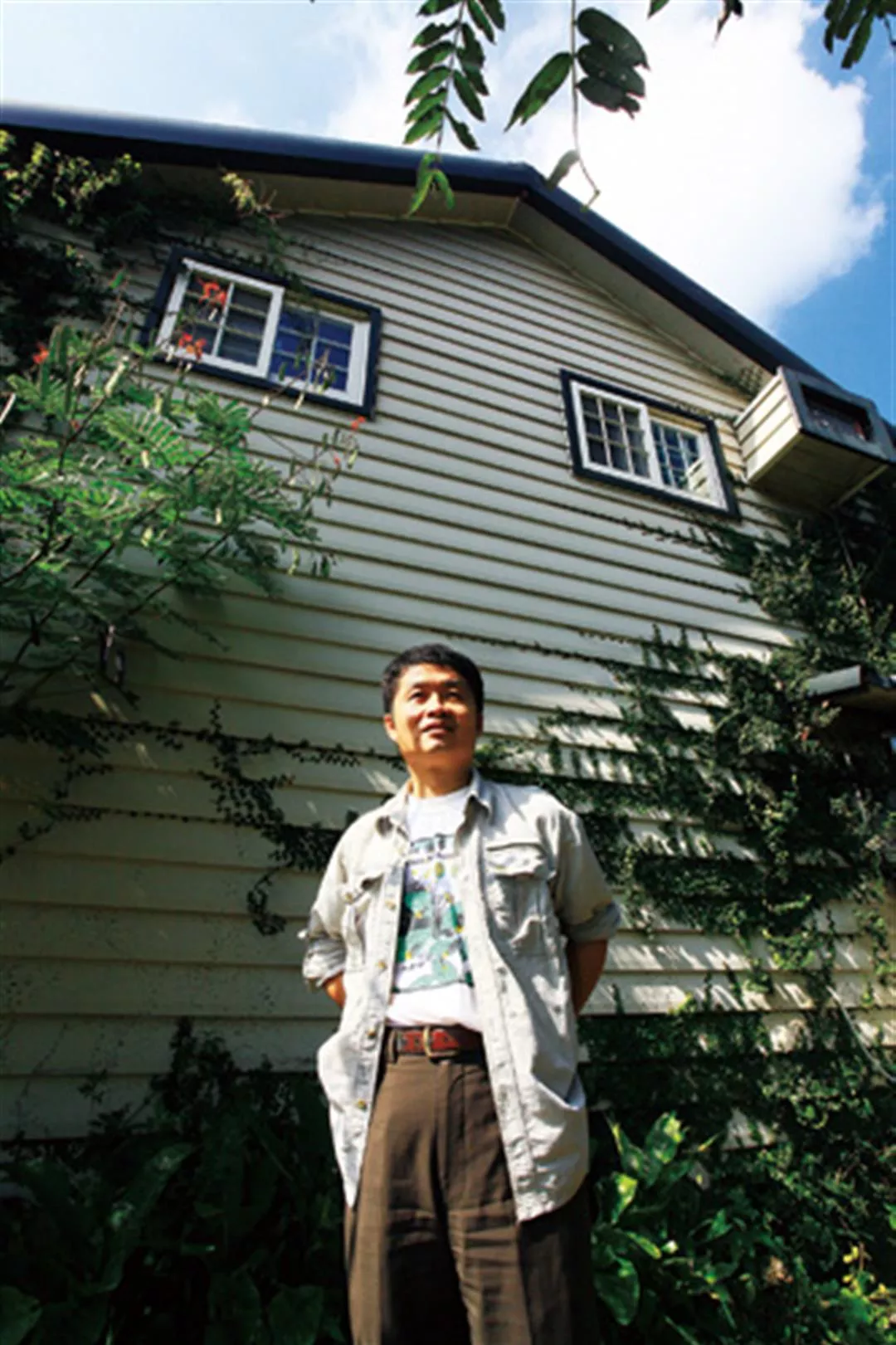
His small, old-Japanese-style cabin on the farm was originally not in the plans until he came to the farm and realized that it would be necessary to provide shelter after working hard out in the sun. He also had a family to think of. When his wife and two kinder-garten-age children visited at weekends, they needed a place to shelter and sleep. But the process of building a house on the isolated mountain proved extremely difficult, even more difficult than digging the well.

According to the local laws and regulations, except for necessary agricultural facilities, a farmhouse can be built on agricultural land only when the land has been held for at least two years. This rule was put in place to ensure that agricultural land was used only for agricultural purposes, and to avoid excessive construction. Xu thus built a greenhouse for no particular farming purpose, and a cozy little "studio." In practice, the studio became a two-level cabin six meters high, but with a floor area of only 23 square meters.
It wasn't a problem to buy a genuine greenhouse and have it delivered to the farm, but building the "studio" in a form that was suitable as a home was a different matter.
Xu refused to use handy but lifeless concrete for the foundations. He chose instead an old-fashioned method that uses natural stone but takes much more time. Starting with larger stones and gradually building up the base, it not only provides excellent drainage and ventilation, but can also be a home for plants and small wild animals.
When the foundations were complete, for the sake of efficiency of construction and seismic endurance, he had intended to build the main structure of steel, but he also wanted to retain the texture of a rural cabin. He looked at lots of different types of wood for the external walls, but none met his requirements. Eventually he discovered a painted-steel material imported from Japan, and built a dormer window in the roof to provide extra lighting and add a nice style to the external look of the cabin.
As a nature lover, his farming philosophy is basically to follow nature. This small plot is more like his private laboratory. He doesn't really need the food to keep him alive, so he is free to experiment, growing his crops without chemical fertilizers, pesticides or insecticides. Unless it's really necessary he won't even cut the grass, to avoid disturbing smaller animals and insects. He allows all varieties of fruit trees and weeds to coexist, leaving only one path to reach all corners of the farm.

"If you want to have a piece of lush land, start by planting a seed!" says Xu Yaru. This is the wisdom that the new owner of the "Radish Pit," lives his life by.
Under his attentive care, nature has indeed demonstrated its magical ability to recover, providing many surprises.
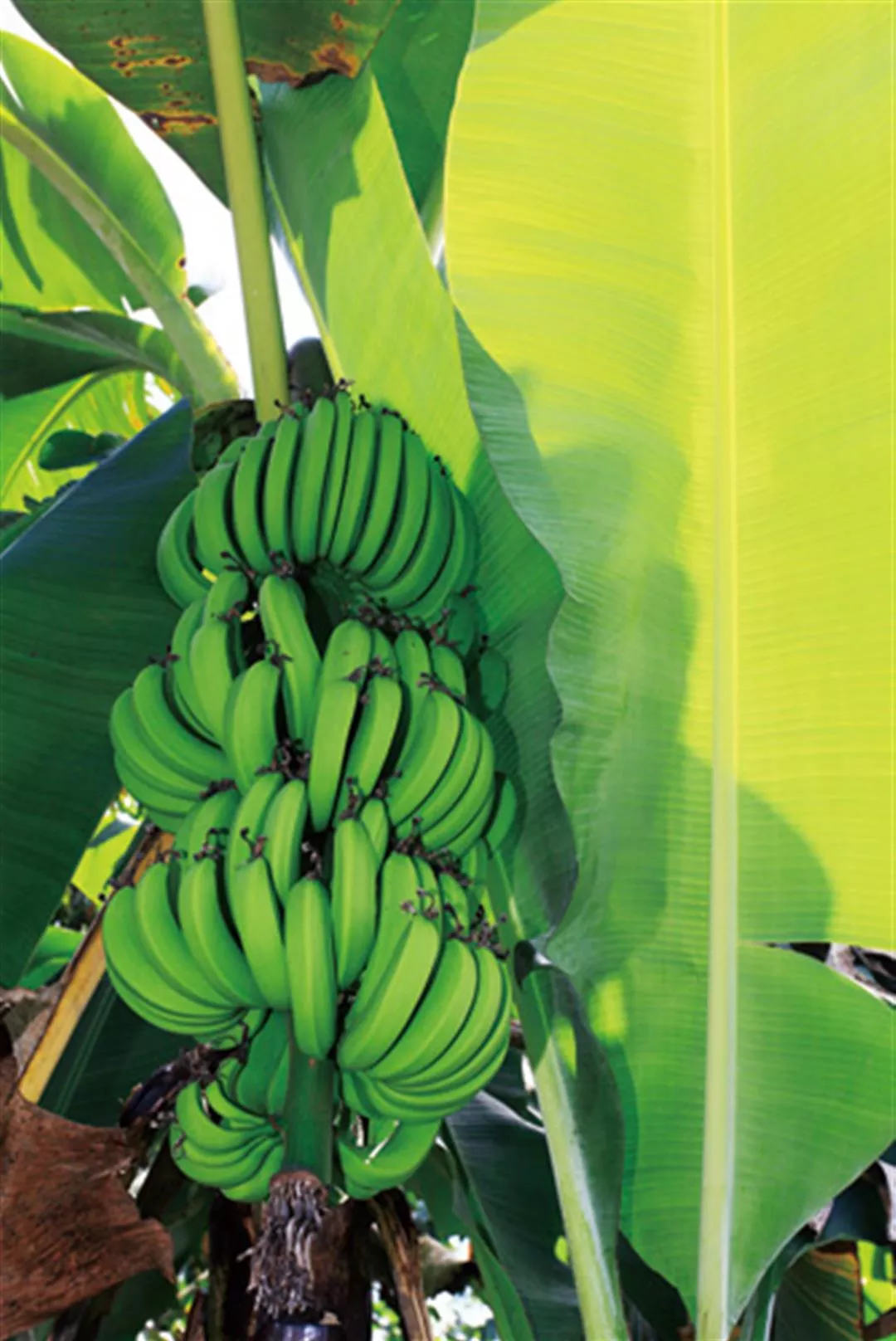
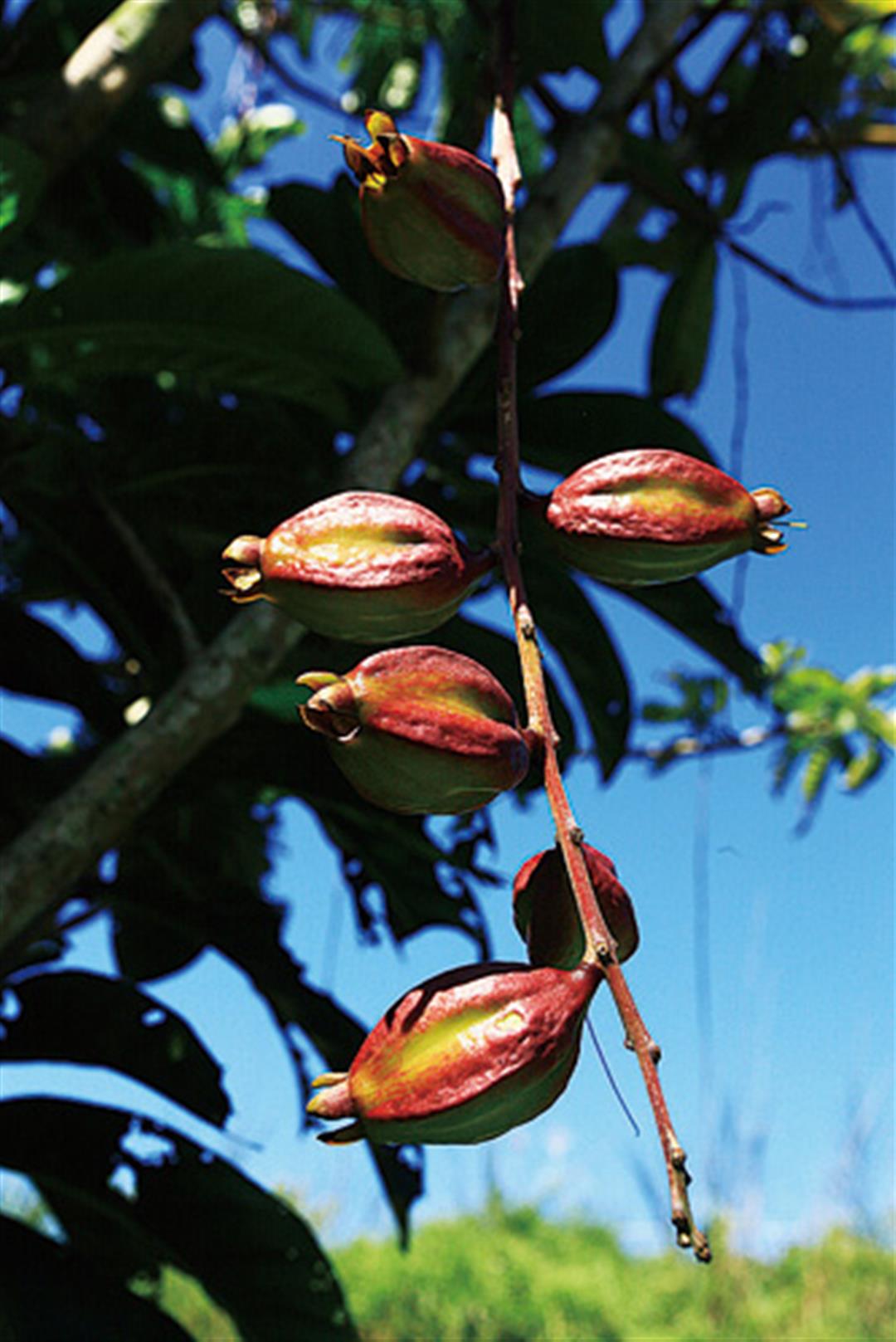
At present, around 250 kinds of plants are grown on the farm; about half were planted by Xu, and the others are wild. They include araguaney (Ta-be-buia chrysantha) and tropical hydrangea, which are the two birthday trees planted for his daughters' birthdays. There is a climbing Entada whose fruit can be made into a scraping plate for a type of traditional massage, a sago palm-the second generation of a palm that was mistakenly cut down, but was saved by Xu-and a lemon eucalyptus that originally grew on the balcony of his Shuili home. A number of the trees have been damaged by typhoons, and some are misshapen with enormous branches and only a thin trunk, but they survive and grow even after storms break off some of their branches. Taking a stroll around the farm, every plant is a valued member of the family with its own story.
Though the farm is blooming in its own natural, organic way, it is facing a new challenge. Because of the shortage of labor and abundant summer rainfall, giant sensitive plant (Mimosa diplotricha) has spread all over the land, mile-a-minute weeds (Mikania micrantha) have reached the treetops, plants are tangled with vines, and the walking paths are covered by tenacious weeds. Unfortunately he may have to use an excavator to save the farm.
Xu says that for him managing the farm is more like an experiment in adapting to nature. If the farm eventually became overrun by weeds, then it would be just returning the land to nature. People would lose the pleasure of being close to the land and benefiting from its use. But the land belongs to nature, and the goal is always to discover harmony in the relationship. Maintaining a balance between human needs and what nature can comfortably provide is forever a challenge.
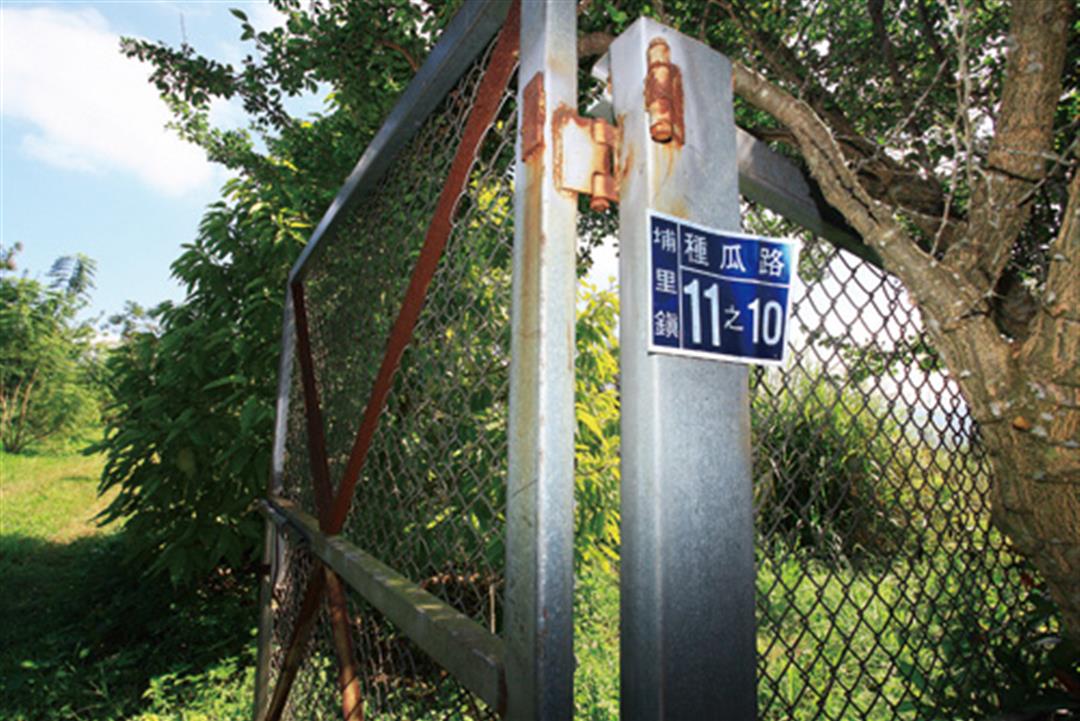
Xu has written the detailed story of his "Radish Pit" on his blog: Starting from Nothing-The Song of the Land. The story has twice been selected for the Global Chinese Blog Award, and a publisher has offered to publish the work under a title taken from Xu's address: 10/11 Melon Road. If you are still pondering whether you would enjoy communing with nature, living a carefree existence in the beautiful countryside, Xu's story will be worth the read.


Xu says that his children enjoy playing pirates, climbing the stairs and looking far into the distance over wild, imaginary seas from the dormer window.
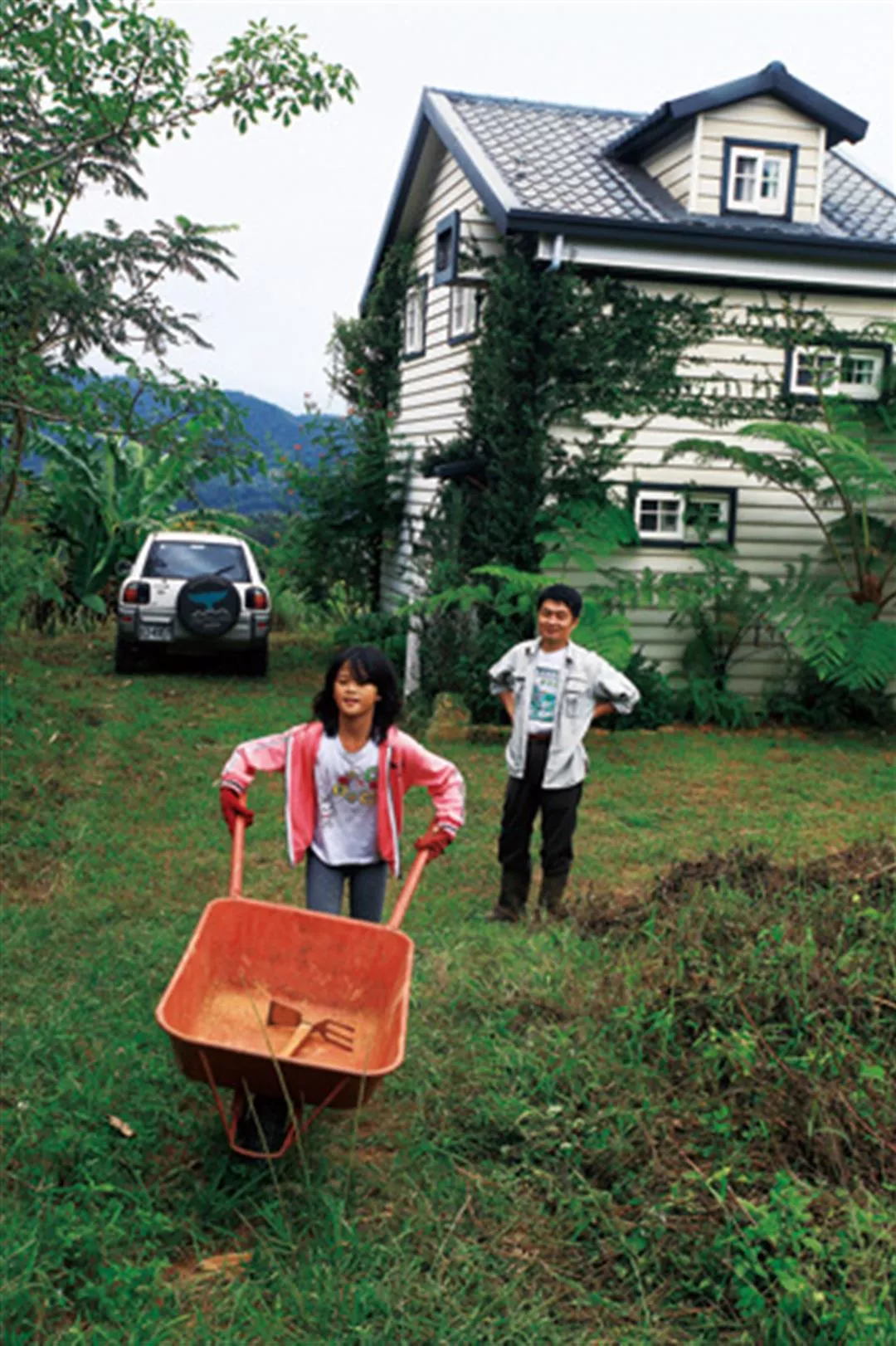
"The Radish Pit" is a fun playground for Xu's two princesses, Xinping and Xintian.
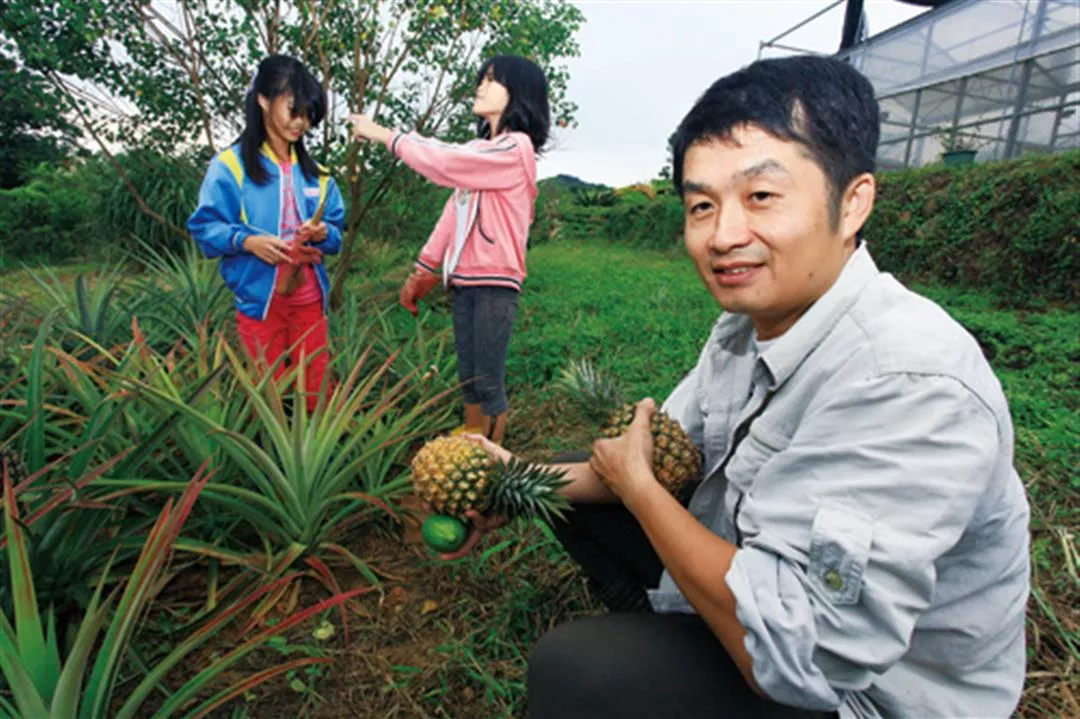
"The Radish Pit" is a fun playground for Xu's two princesses, Xinping and Xintian.
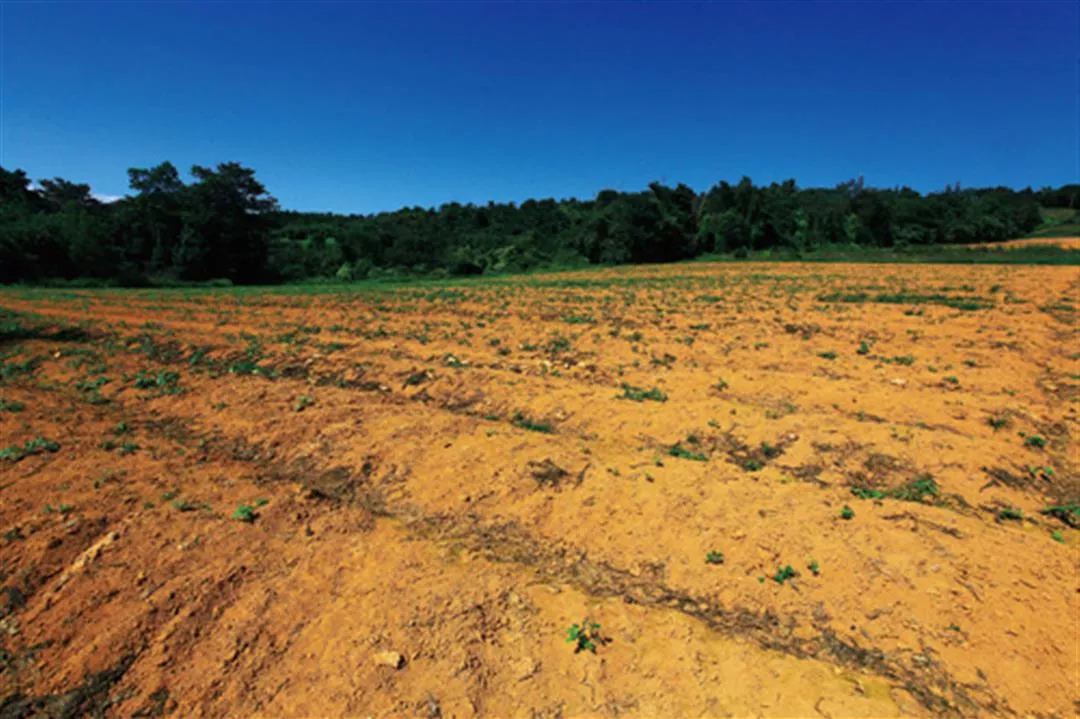
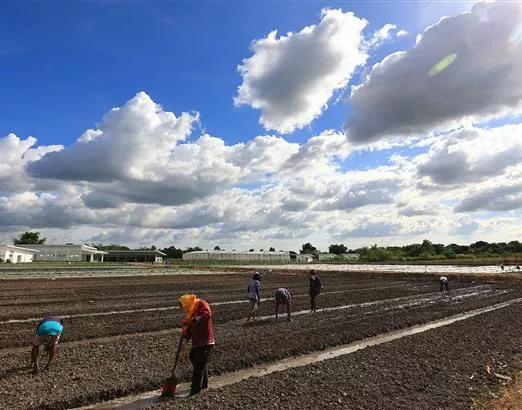
This is what "The Radish Pit" looked like originally: a barren, ruined landscape destroyed by pesticides and chemical fertilizers.