Building a Taiwanese Broadway: Eugene Yang’s Fantastic Journey
Chen Hsin-yi / photos Jimmy Lin / tr. by Scott Williams
April 2015
Technical design for the stage rarely makes headlines, but its technically and aesthetically skilled professionals are a crucial part of the backstage infrastructure creating the effects that enable circus aerialists, pop stars, and experimental theaters to make audiences “ooh” and “aah.”
Eugene Yang teaches in the Department of Theatrical Design and Technology at the Taipei National University of the Arts (TNUA) and is one of the few scholars in Taiwan versed in both engineering and theatrical design. Over the last few years, Yang has been devoting himself to fostering cooperation between academia and industry, doing R&D for theatrical organizations, and developing young talent.
When you peek backstage and see the designers at work, you quickly realize how much effort goes in behind the scenes to make a play good.
The bookish Eugene Yang stands in a corrugated steel facility that produces scenery, working with five or six experienced machinists to meet a looming deadline. They are assembling a piece of stage machinery that uses three computer-controlled actuators to manipulate a movable stage. The device is capable of raising, lowering, and rotating through a full 360 degrees a round stage up to five meters in diameter, and tilting it to boot.

Technical designers for the stage bring imagined worlds to vivid life.
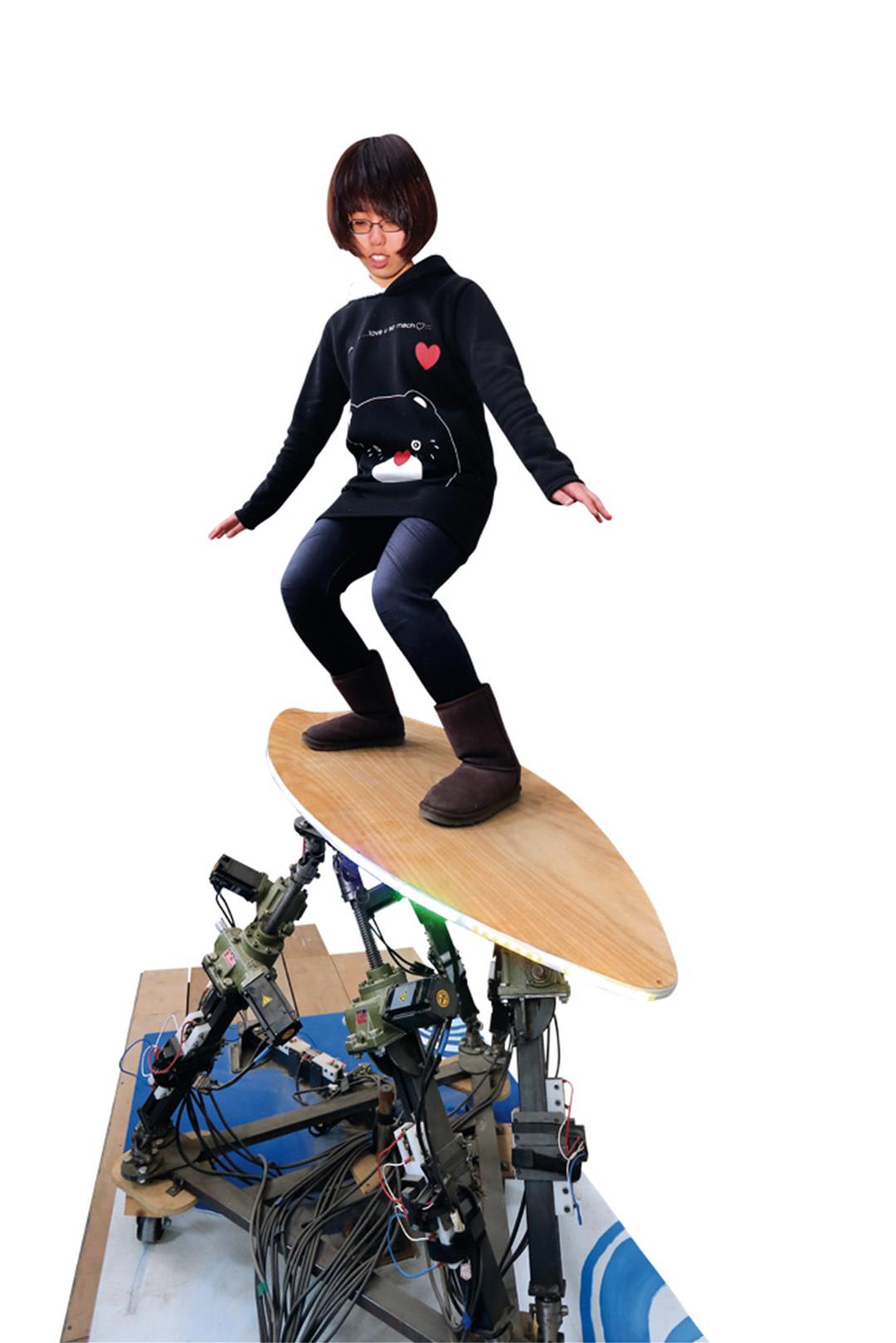
The tilting, rotating stage was custom built for an awards ceremony. Yang says it grew out of a surfing simulator he designed with four students as a class project last year. The simulator sits one meter above the floor and can move forwards and backwards, as well as tilt and rotate. It’s as much fun as its name suggests.
Yang explains that their “surfboard’s” design was derived from the “Stewart platform” familiar to industry. Such platforms have six extendable actuators arranged in triangles and are commonly used in flight simulators. Filmmakers even used one when shooting Life of Pi, attaching it to the bottom of the lifeboat to create wave-like motions.
“Neither the students nor I had ever built such a device. They spent two months developing designs, creating blueprints, welding, assembling, and testing.” Meanwhile, Yang used flyingV, a crowdfunding platform, to raise the money they needed to buy materials. The fundraising campaign ultimately brought in NT$230,000, which was put towards making their dream a reality.
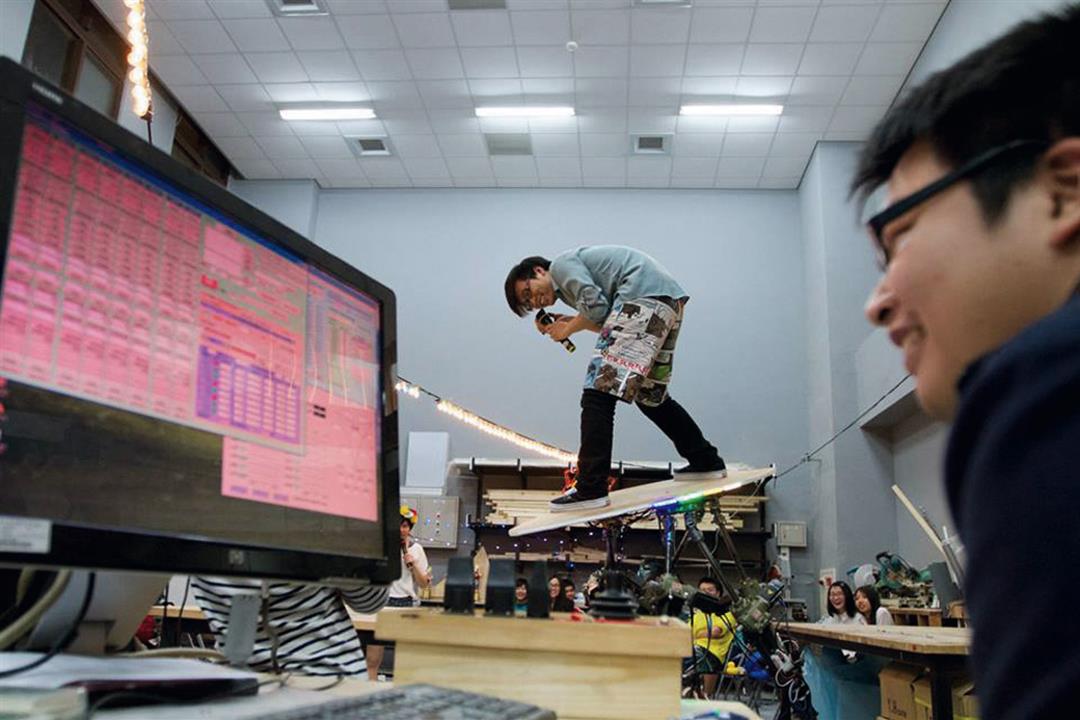
When the machine was complete, the students invited their backers and their classmates in the theatrical design program to take part in a “surfing competition” in the lab. Attendees drew lots to participate in events that ranged from keeping a basket of ping pong balls balanced on one’s head to calling a girl or boyfriend to whisper sweet nothings, all naturally performed while “surfing.”
In the performing arts, divisions of labor tend to be sharply defined. Stage technology is therefore viewed as its own distinct professional field, the mission of which is to bring the bold and imaginative ideas of the director or stage designer to life.
Yang earned a master’s degree in technical design and production from Yale University in 2001, then returned home as Taiwan’s first academically trained technical stage designer. He founded the Stage Machine Lab at TNUA eight years ago and has gone on to initiate a series of joint academic–industrial endeavors, turning the lab into the go-to partner for many of Taiwan’s theaters.
Yang says that companies that build sets rarely develop breakthrough stage machinery technologies because most are old-school. They aren’t used to innovating and aren’t familiar with computer technology. Instead, they simply apply tried-and-true methods to their work. Academia, on the other hand, spends a large amount of time and money on technological experimentation and development.
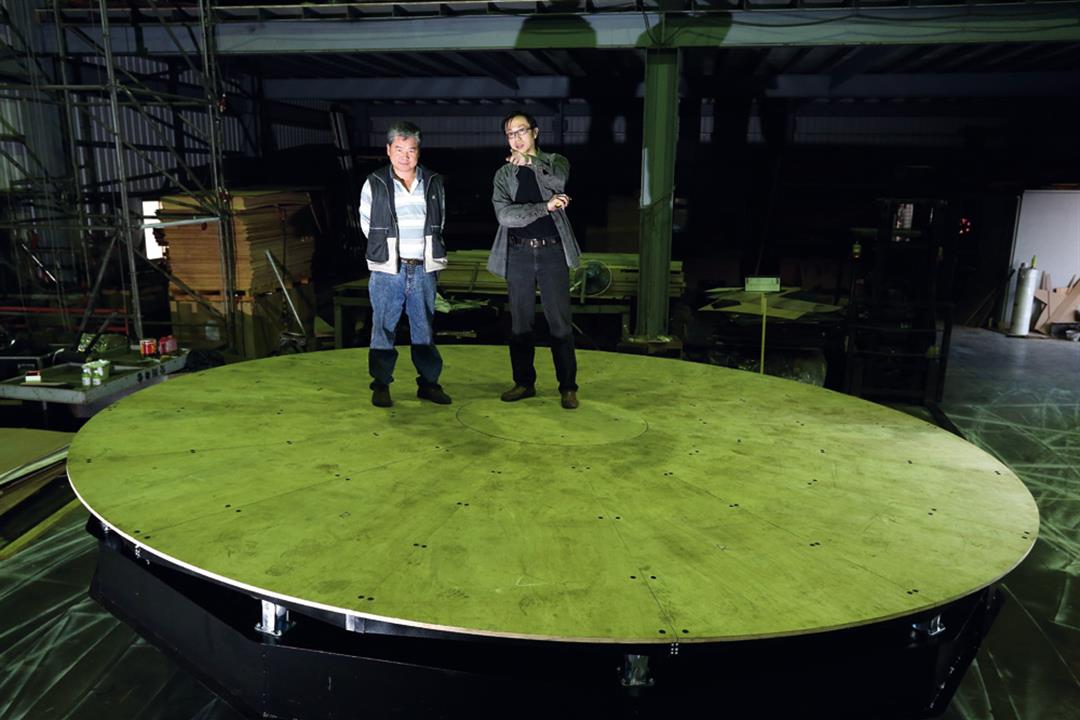
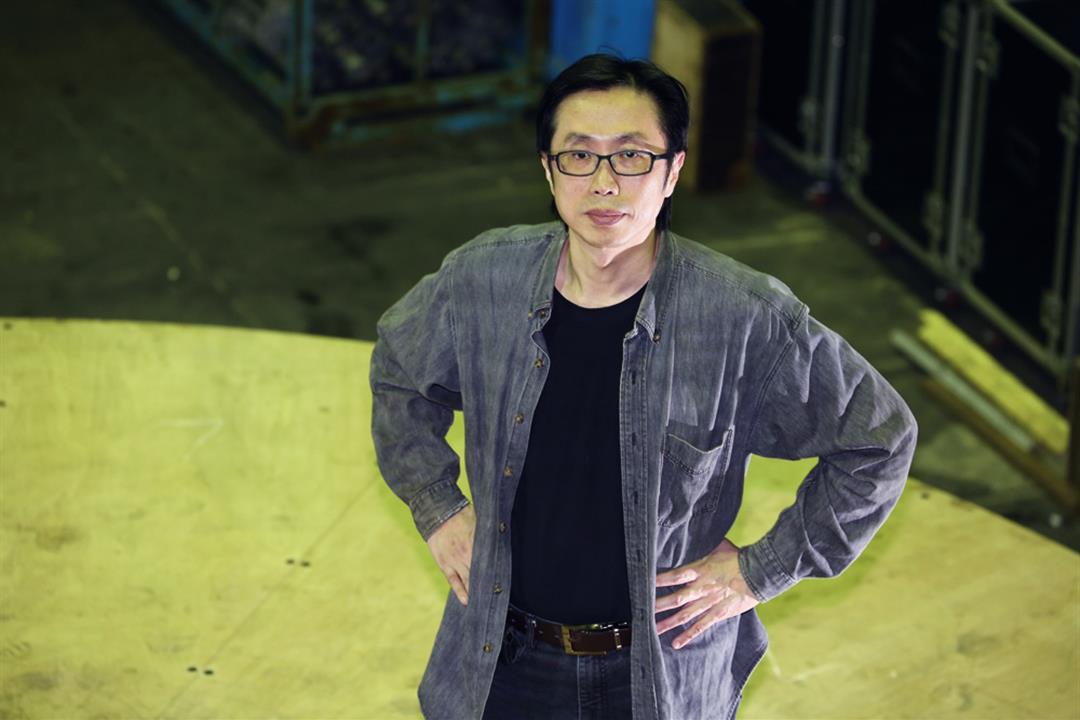
Eugene Yang (right) is always comparing notes with other frontline theatrical professionals. In the photo, Yang and a colleague stand on a platform that can be raised, lowered, tilted, and rotated through 360 degrees.

Yang didn’t set out to work in the theater.
He was a good student, did well on his entrance exams, and won admission to National Taiwan University’s Department of Electrical Engineering, earning both undergraduate and graduate degrees there. But at the age of 24, on the eve of his military service, he realized that he’d been following social and parental expectations rather than his own heart. He didn’t want an academic career, and had no interest in working as an engineer at one of Taiwan’s science parks.
While wondering what to do about his future, he remembered his first experience with the theater: seeing Secret Love in Peach Blossom Land in high school. “I recalled the peach blossoms falling from the trees and the light reflecting off of Chin Shih-chieh’s tears. The emotions it stirred were still fresh.” He roused his best friend and roommate, dragged him onto his motorcycle, and rode up into the mountains around Guandu. As the dawn light flickered on the Danshui River in the distance, he pointed to the TNUA (then still known as the National Institute of the Arts) campus below them and vowed that he would study there and have a career in the theater.
When Yang took the arts institute admissions exam just before completing his military service, he tasted failure for the first time in his life. He would spend a full year taking theater-related classes before he finally gained admission to NTU’s graduate program in theater.
He soon began to enjoy success in his new field. He won a Ministry of Education fellowship for study abroad during his second year in the program, and earned admission to a graduate program at Yale during his third. It was at Yale that he began studying technical design and production for the theater.
Yang’s studies at Yale resulted in severe culture shock: “Who knew there was more to learning than sitting in a classroom listening to a teacher lecture? Students in the program were also expected to participate in practicums.” He spent three grueling but fruitful years training in the US. He had classes from 8:30 a.m. to 2 p.m. every day, covering topics ranging from architecture and machinery to electricity and physics. With no break for lunch, he stuffed a sandwich into his mouth whenever he had a spare moment.
He worked beside experienced carpenters, welders, and prop masters in the afternoon building stages and sets, then dragged his exhausted body back to the dorms to spend his evenings on the homework from his morning classes. The theater program also put on performances every term, with students expected to take turns serving as technical directors, lighting directors, and prop masters, as well as serving as each others’ assistants.

Yang has guided students in designing and building a variety of fun devices. They once even arranged a “surfing” contest in their lab. (courtesy of TNUA)
Yang’s baptism by fire at Yale transformed him from a good student into a theatrical jack of all trades. His engineering background also provided him with certain advantages. “I was able to apply the chemistry and physics I’d learned previously to the theater, and came to love them for being so useful in my everyday life.”
After returning to Taiwan, Yang began integrating what he learned at Yale into his theatrical design classes at TNUA, encouraging students to develop their independent thinking and problem solving capabilities.
Du Minjing, a graduating senior, is one of Yang’s most promising students. She recently created an automatically horizontally aligned slanted lift for the play Richard III and His Underground Parking Lot, basing the design on a small semester project on which she had worked previously.
Du says that when Yang evaluates design assignments, he always fills the margins of every page with notes, pointing out shortcomings and the kinds of problems that may result. But, she adds, “He doesn’t provide us with a ‘correct answer.’ He wants us to work one out for ourselves.”

Yang has guided students in designing and building a variety of fun devices. They once even arranged a “surfing” contest in their lab. (courtesy of TNUA)
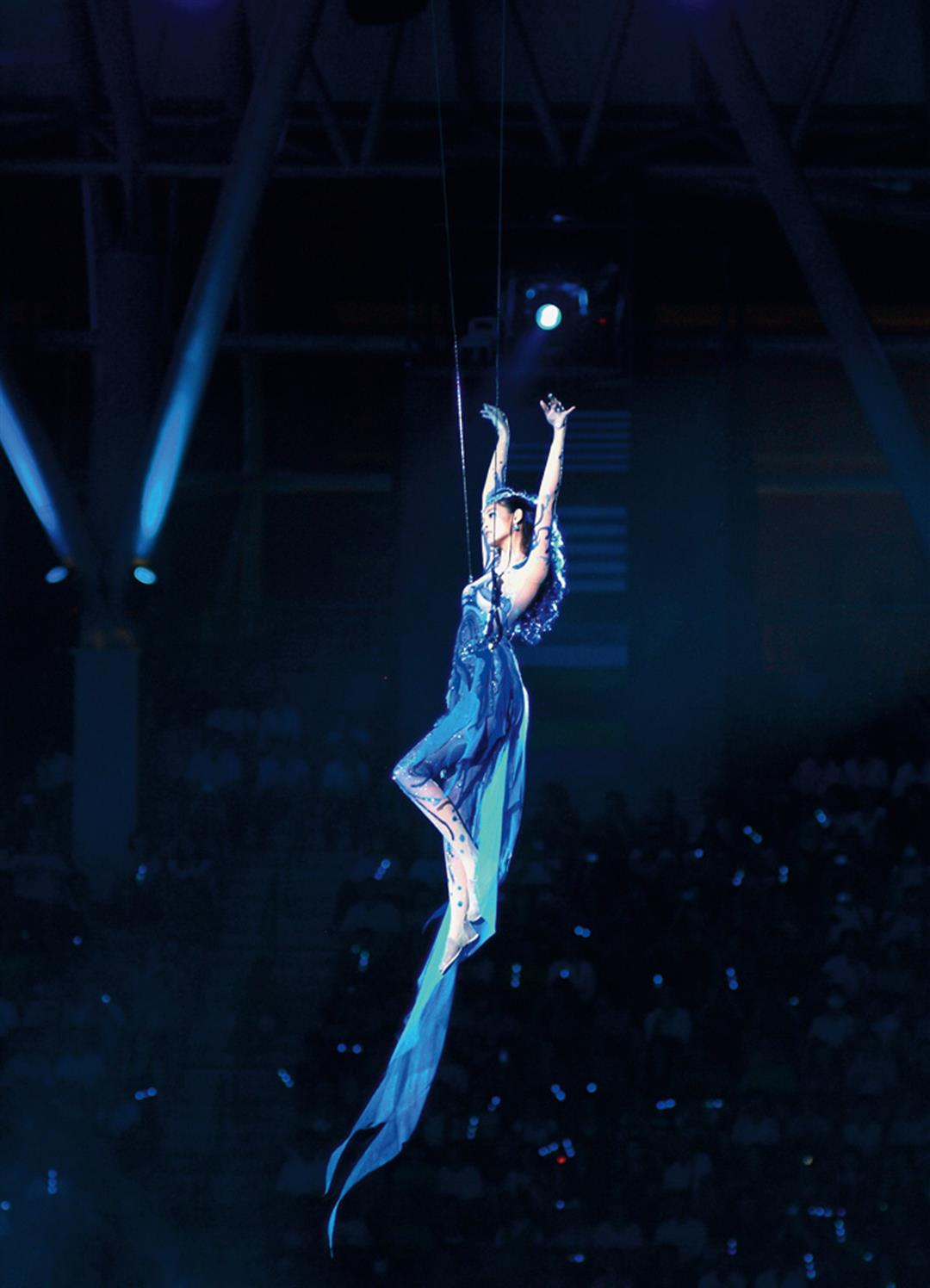
Yang has led his students on some amazing projects, including stage machinery for the 2009 Deaflympics opening ceremony. More than a personal milestone for Yang, that particular project also proved to the world that Taiwan is capable of building top-flight stage technology. The organizers came to Yang only 50 days before the opening ceremony, asking him to create a suspension system that would enable songstress A-mei to take off from a ten-meter tower, soar to a height of 30 meters, and travel a total distance of 80 meters before landing softly on the stage. They also wanted the system to allow four acrobats to perform in the air while model Patina Lin played the part of a sea nymph against a projected backdrop.
Yang custom designed and built ten winches to serve as the system’s heart. He used 22-millimeter steel cables as horizontal guides, then connected the performers to the aerial guides using two steel cables and small block-and-tackle setups, which were precisely controlled using software.
The death-defying aerial performance represented a huge leap forward for Taiwanese stage design, but an incident just before the show left a bad taste in Yang’s mouth. The venue left the power on the night before the event, causing servomotors in two of the winches to break down unexpectedly on the afternoon of the performance.
“An electromechanical engineer and I spent the whole afternoon testing the winches. We were working on getting them running again right up until the audience entered the venue, but ended up having to tell the stage manager that two of the aerialists wouldn’t be able to perform. I heard that the two had trained for a year for the show. I was so ashamed that I wanted to cry when they were told the news.” The experience taught Yang to always have backups ready, no matter what he was designing.

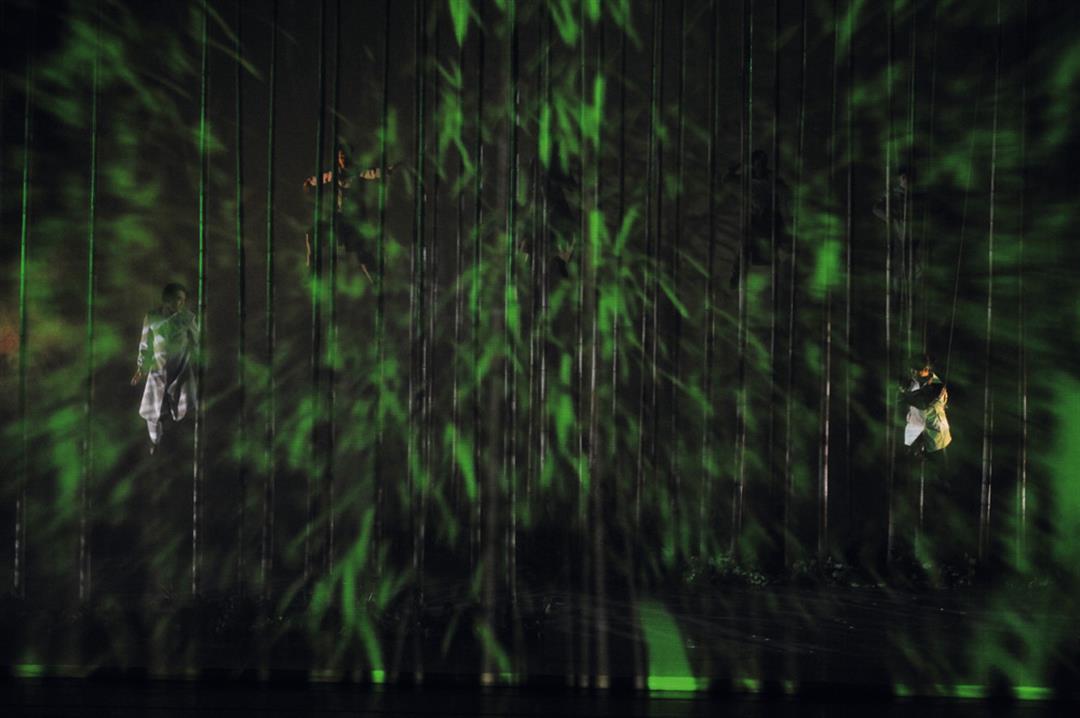
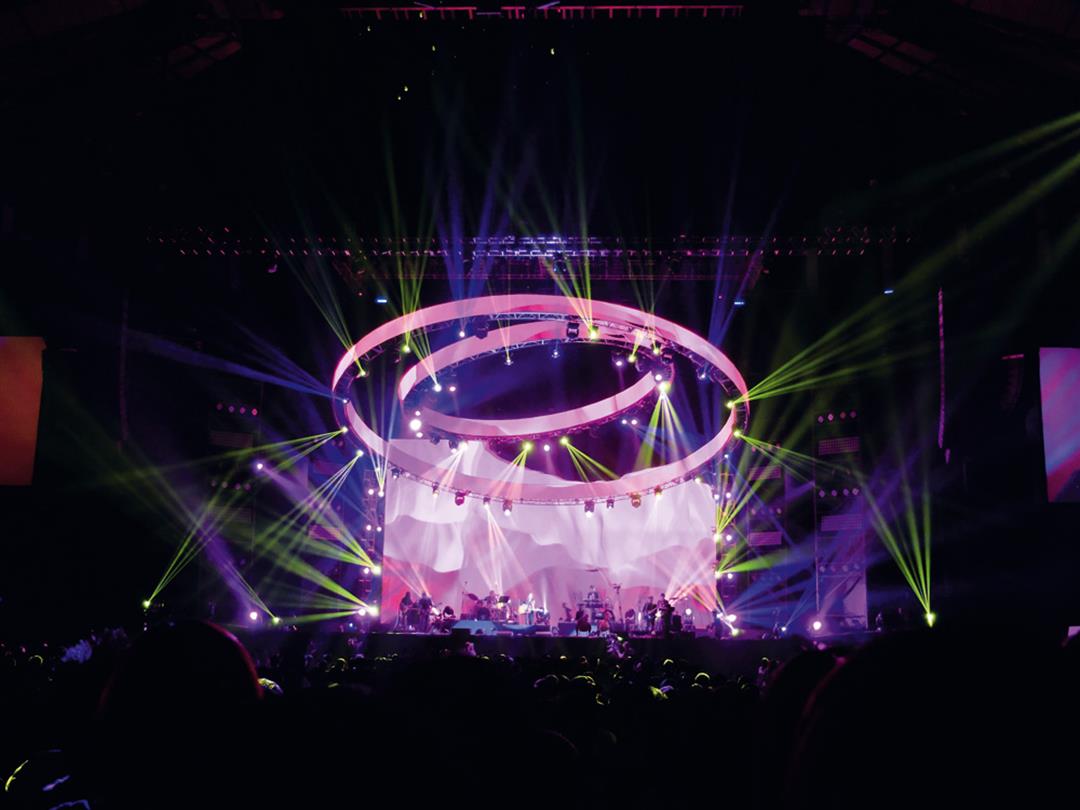
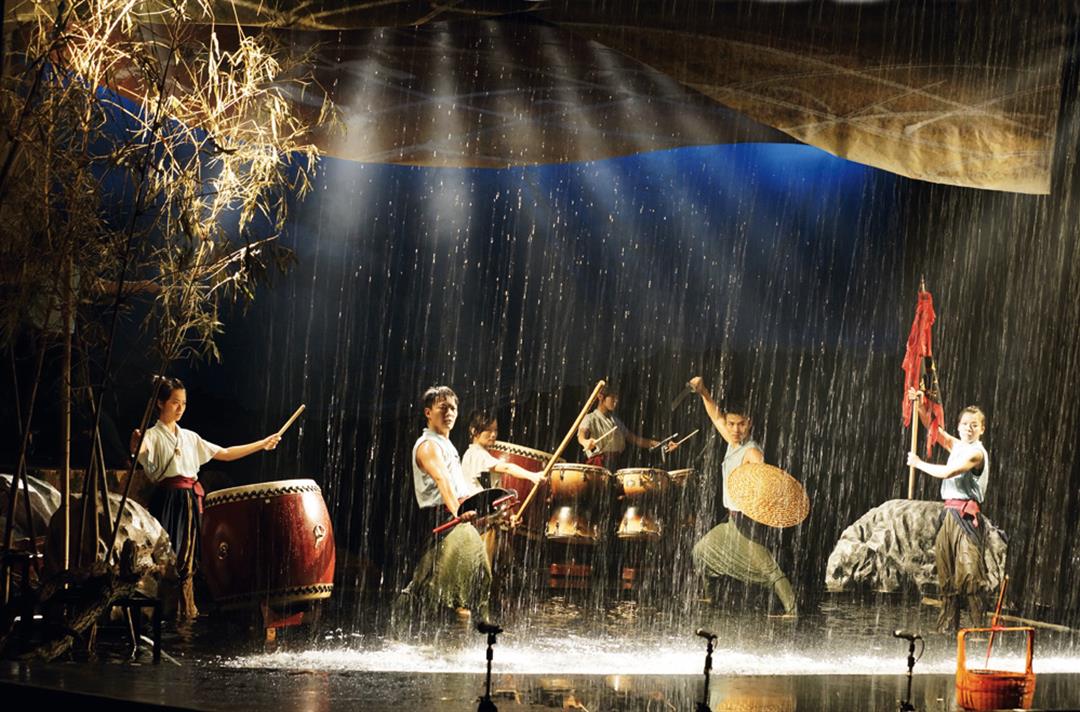
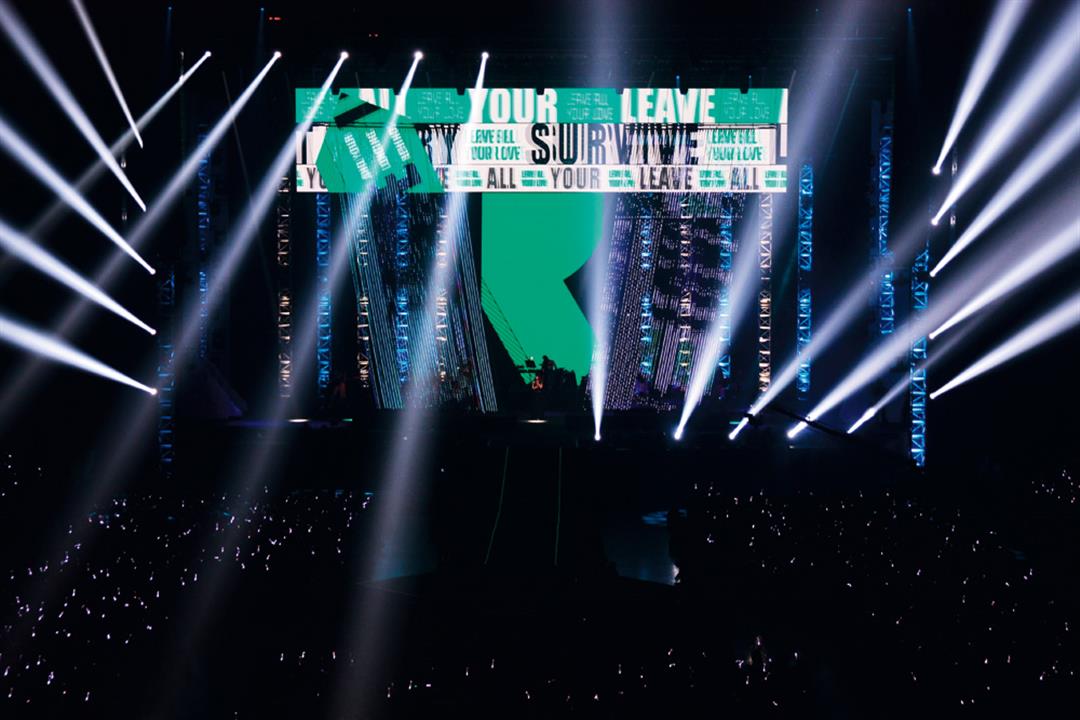
Whether working on plays or on pop concerts, Yang always advocates for using the stage to add glamor to the show. Representative works include (from left to right): a rotating double ring of lights for Cheer Chen’s Song of Transience concerts (courtesy of Free’s), water effects on stage in Kaohsiung’s Ten Drum Ciaotou Creative Park (courtesy of Ten Drum Art Percussion Group), and an LED curtain for Hebe Tien’s If concerts (courtesy of Free’s).
Yang is optimistic about the outlook for technical stage design in Taiwan, noting that Taiwan has a great deal of talent in the areas of automated systems for industry and machine manufacturing. “It’s just that the theatrical world hasn’t brought these firms into the fold.” Yang would like to ensure that his stage machines are assembled in Taiwan using parts manufactured in Taiwan, and has therefore spent significant amounts of time seeking out, visiting, and forming relationships with owners of local companies who previously hadn’t a clue about the theater.
With several new modern theaters slated to open across Taiwan in the near future, including the National Taichung Theater (currently under renovation) and the Taipei Performing Arts Center, and with pop music concerts becoming more elaborate, he believes demand for technical designers will grow.
Yang and a group of outstanding graduates have been working with concert producer B’in Live since last year, developing business partnerships aimed at better establishing and advancing the development of technical stage design in Taiwan. “If we start accumulating practical know-how now, Taiwanese theaters will be on a par with Broadway in a decade!”

Whether working on plays or on pop concerts, Yang always advocates for using the stage to add glamor to the show. Representative works include (from left to right): a rotating double ring of lights for Cheer Chen’s Song of Transience concerts (courtesy of Free’s), water effects on stage in Kaohsiung’s Ten Drum Ciaotou Creative Park (courtesy of Ten Drum Art Percussion Group), and an LED curtain for Hebe Tien’s If concerts (courtesy of Free’s).

Whether working on plays or on pop concerts, Yang always advocates for using the stage to add glamor to the show. Representative works include (from left to right): a rotating double ring of lights for Cheer Chen’s Song of Transience concerts (courtesy of Free’s), water effects on stage in Kaohsiung’s Ten Drum Ciaotou Creative Park (courtesy of Ten Drum Art Percussion Group), and an LED curtain for Hebe Tien’s If concerts (courtesy of Free’s).

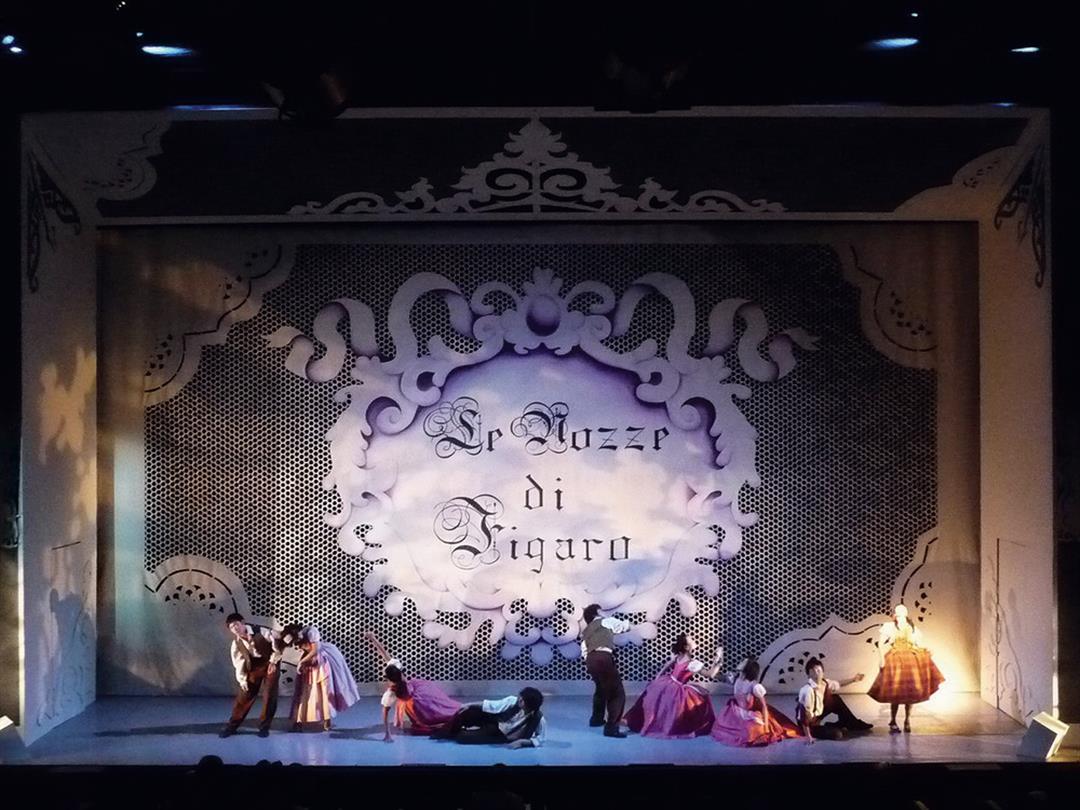
Technical designers for the stage bring the director and stage designer’s vision to vivid life, but must also pay careful attention to deadlines, budgets and safety. The photo shows the TNUA School of Theatre Arts’ production of The Marriage of Figaro. (courtesy of TNUA)

Having weathered the challenges of building stage machinery for the aerial portion of the 2009 Deaflympics opening ceremony, Yang is convinced that technical stage design can take flight in Taiwan if local designers are willing to put in the effort.