Stinky Tofu: Who Cut the "Chinese Cheese"?
Chang Chung-fang / photos Huang Li-li / tr. by Jonathan Barnard
March 1993


With the health food craze and the rage for all things oriental, tofu has become a mainstay in the supermarkets of Western countries. It pleases the palates of Western epicures and is just what the doctor ordered for homesick Chinese. It's only too bad that the "stinky tofu" these expatriates long for isn't in stock.
Can you remember--amid the crowds at the temple's gate, among the stands offering pig's blood cake and soy-cooked chicken wings, amid that potpourri of sweet aromas--that singularly strange smell?
Why is this tofu stinky? Why do Chinese like this smell? And how do you make stinky tofu?
In every corner of the world there are people who love bad smells. Yet the smells they love aren't necessarily the same.
Durian, from which many will run in panic, Thais call "the king of fruits." Some people turn up their nose at cheese, which others call the most delicious food known to man. The Chinese snack of stinky tofu is another of these controversial foods. Though some have likened it to dead mice, its fans never tire of its unique flavor.
Strange to say, even those who ordinarily don't go in too much for stinky tofu, wistfully remember its one-of-a-kind flavor when they go abroad. One seller of the stuff says that the first thing some people do after getting off the plane is to charge off after some stinky tofu--luggage in tow.
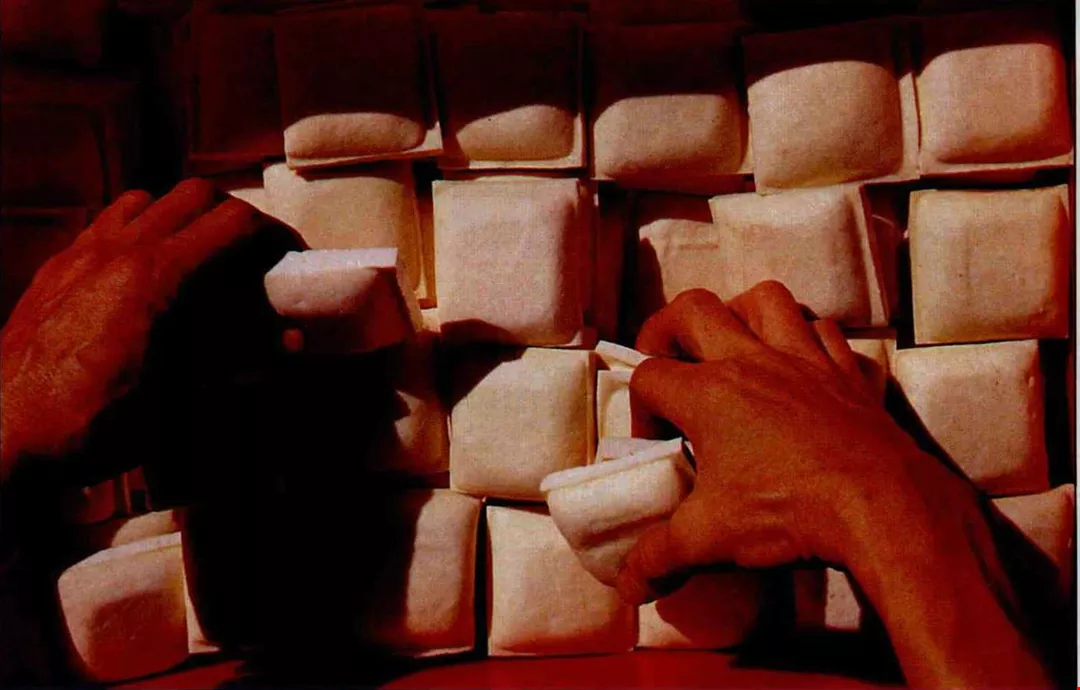
Before being fermented, the white chunks of tofu are plump and pliant. How filling they look!
It's a Taiwan experience:
Because both are protein-rich fermented foods, some people call stinky tofu "Chinese cheese." But how do foreigners used to cheese like this Chinese cheese?
One owner of a stinky tofu stand says that people often bring foreigners there to give them a taste of stinky tofu. Some eat only a bite or two, others chew away happily while nodding their heads in approval, and some Japanese customers eat while exclaiming "o i si" (tastes great).
American Sam Dixon says that most foreigners in Taiwan will want to try stinky tofu "because it's a Taiwan experience!" But in his observation, most are like him: They try it once and then stay away. His reason: "It stinks too much!" But Calvin Caborn, a Canadian, will eat it. "It tastes O.K.," he says.
While Westerners dislike its strong smell, Hongkongese Hsieh Piao says, "The smell of Taiwan stinky tofu isn't strong enough!" As he describes it, the proprietors of stinky tofu pushcarts in Hong Kong don't bother calling out. As soon as tofu hits the oil, the smell carries and people come on their own accord.
Even among stinky tofu lovers, the acceptable strength varies from person to person.
The owner of the first restaurant in Taipei to specialize in selling stinky tofu, a Mr.Hung, says that his restaurant offers stinky tofu of 15 different grades according to the length of time the tofu been pickled--the higher the stinkier. On the night of the lantern festival he specially brought out some level 15. The customers' reactions varied widely. Some gave a thumbs up and sang its praises, others thought it was putrid and didn't dare eat it, and others almost fainted at first whiff.
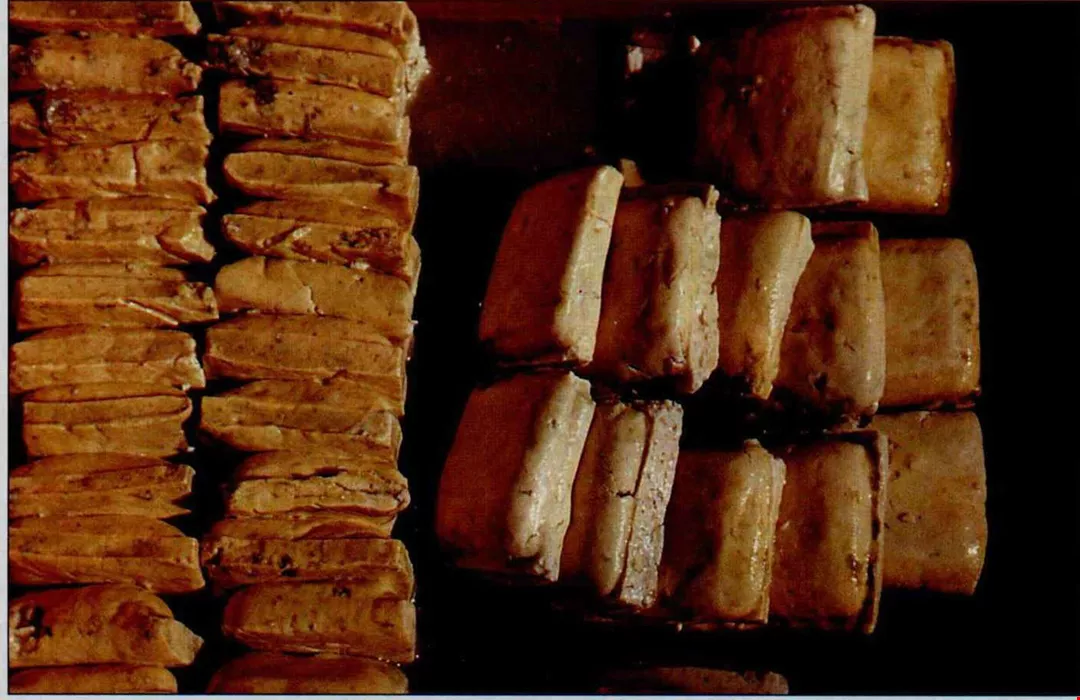
This "Chinese cheese" has been stewing in salt brine for three days.
The stinky amid the fragrant:
Lai Min-nan, who has a doctorate in agriculture and has researched fermented foods, points out these foods have special flavors which are impossible to artificially reproduce. For some reason the Chinese have a peculiar fondness for this kind of acrid smell. It's in such famous Chinese spirits as kaoliang and maotai. Lai says that after the alcohol evaporates, what remains will give off mighty wafts of odor reminiscent of smelly feet.
Although known far and wide for its smell, no one knows for sure the origin of stinky tofu. Yet there is an unproven story that stinky tofu was invented by a Ching dynasty tofu shop owner named Wang Chih-ho.
The story goes that Wang owned a tofu shop outside of Peking when Kang Hsi was emperor. One summer, he put a little extra effort into making tofu to help his son get a wife. But he couldn't sell as much as he made, and on one sweltering day the tofu went bad right in front of his eyes. Clear-headed in crisis, Wang pickled the tofu with Szechwan pepper and salt.
After a few days, Wang's store began giving off a strange smell, and immediately he thought of that pickled tofu. He ran over to find that the originally white tofu had turned green with mold. Reluctant to throw it away, he didn't despair. Tasting a piece, he discovered that he had made the tofu of a lifetime--never had he tasted tofu so delicious! Taking these moldy squares to the front of his shop, he shouted, "strangely fragrant stinky green squares." Customers flocked in out of curiosity.
Those who tasted it felt that though it didn't smell good, it tasted great. As word got around, Wang Chih-ho's tofu became famous, and many others began studying how to make it.
There's also another theory about stinky tofu's origin: In ancient times the herders on the borderlands would soak soybeans in the spoiled broth of vegetable soup, turning them into black beans, which they would use to make up for their lack of fruits and vegetables. After spreading to central China, the process was improved, and the dish became what would later be known as stinky tofu.
Chen Mei-hui, a lecturer in home economics at Chinese Culture University, says that it has long been known that the herders on the border lands fermented dairy products. The people of Central China probably learned how to ferment food from them. But these two theories are all just speculation, and neither is widely accepted as likely. Or perhaps both ideas have a basis in fact because there are two kinds of stinky tofu.
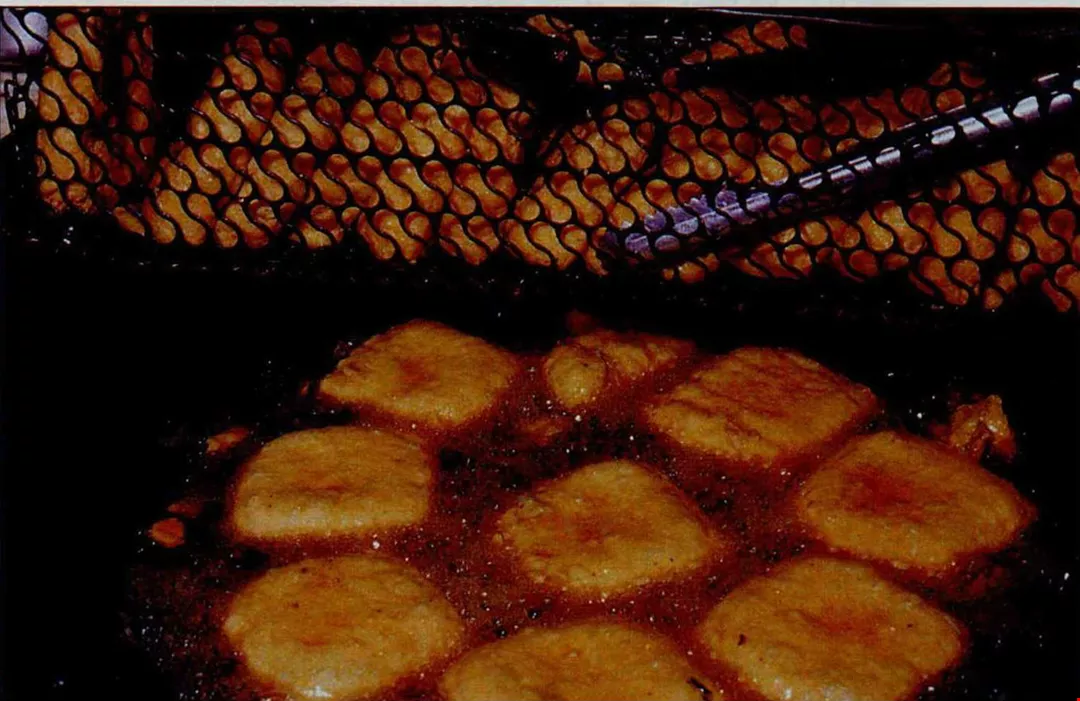
Stinkly tofu pulled from the frying pan is golden yellow in color with a sweet aroma that wafts in all directions and draws onlookers to drool.
Fried or steamed:
Wu Hsiao-hui of Taiwan Sugar Corp. says that the softer kind is called either "chou ching fang"--stinky green squares--or its common name "chou toufu ju" (ju means dairy product and fits its cheesy consistency). One makes it the way Wang Chih-ho did in the story: Sprinkle a little salt on top, then seal it up and let it naturally grow bacteria. This kind of stinky tofu is largely used as a side dish.
The other type is the deep fried stinky tofu made at night market stands. The cooking method differs from the one employed for "chou ching fang," as does its flavor. The one similarity is that both are made from tofu and both have pungent smells.
In making stinky tofu, the first stages aren't much different from making regular old tofu. First off, you soak soybeans in cold water (from four to five hours in the summer, 12-16 hours in the winter). Then grind the beans and the water into a thick fluid, pass it through a filter, cook it, add magnesium chloride, and stir until it has a consistency of a fine porridge. After a few minutes it will swell up into tender tofu. Cover the tender tofu with a cloth and place it into a big square dish. Layers are placed on top of each other to squeeze out the excess water. Then they are cut into small chunks and dried.
The chunks used for making stinky tofu can't be too hard or too soft. If the tofu is too soft, it will easily break apart, but if it's too hard it won't absorb anything when soaked. Halfway between fresh tofu and dried tofu is just about right. Then take the tofu chunks and dip them in stinky salt brine, waiting for them to ferment before pulling them out and offering them up as stinky tofu.
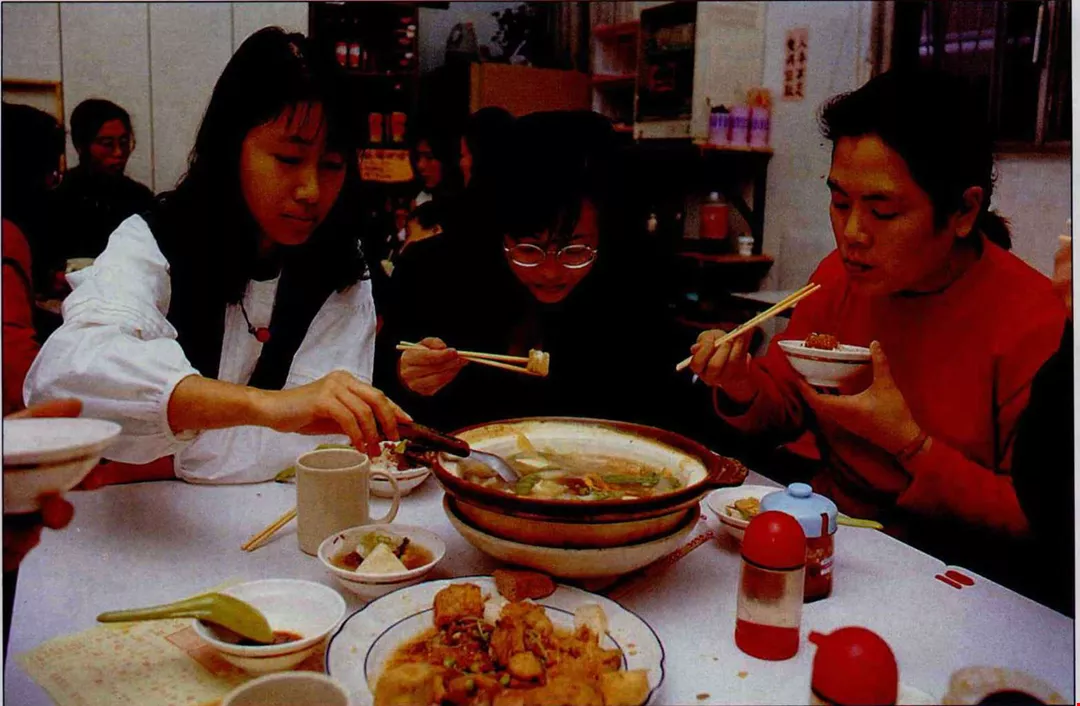
"Stinky tofu in a earthen pot," "stinky tofu variety plate," "vegetable steamed stinkytofu" . . . what an abundant selection of stinky tofu dishes are on offer here!
Natural bacteria:
Stinky salt brine is the reason that the stinky tofu is stinky. It's also the key to whether stinky tofu is successful or not. According to one person in the field named Hung, the conventional way to make stinky salt brine is to use ten or so vegetables--such as wild amaranth, bamboo shoots, mustard greens, winter melons, ginger and Szechwan pepper--pickle them with salt and let the brew naturally grow stinky and fermented, becoming the fermenting broth.
The first time you make this stinky brew, it's necessary to put it aside for at least 8 months--it's really very time consuming. But once it has fermented, you've just got to add vegetables when the fermenting broth gets a little thin.
Some cooks use salty vegetable juice, stinky fish, shrimp, etc. when making the stinky salt brine. And others use soda water, ammonia and other chemicals. This will absolutely make it smellier than stinky tofu made with the traditional method. But none are equal in safety and taste to the traditional natural method employed.
Lai Min-nan points out that while stinky tofu is a fermented food product, it differs fundamentally from soy sauce, vinegar, miso and other food products made with one type of bacterium in that its bacteria have not been cultivated. Growing completely naturally and freely, its micro-organisms are very complicated. Because natural bacteria are used for breaking down its ingredients, changing the ingredients will change the flavor.
"Stinky tofu brewed with chemicals has smell but no taste," says Lai Min-nan. "As for stinky salt brine brewed with fish and shrimp, there are more harmful substances created by the disintegration of animal matter, and so the resulting bacteria are more dangerous."
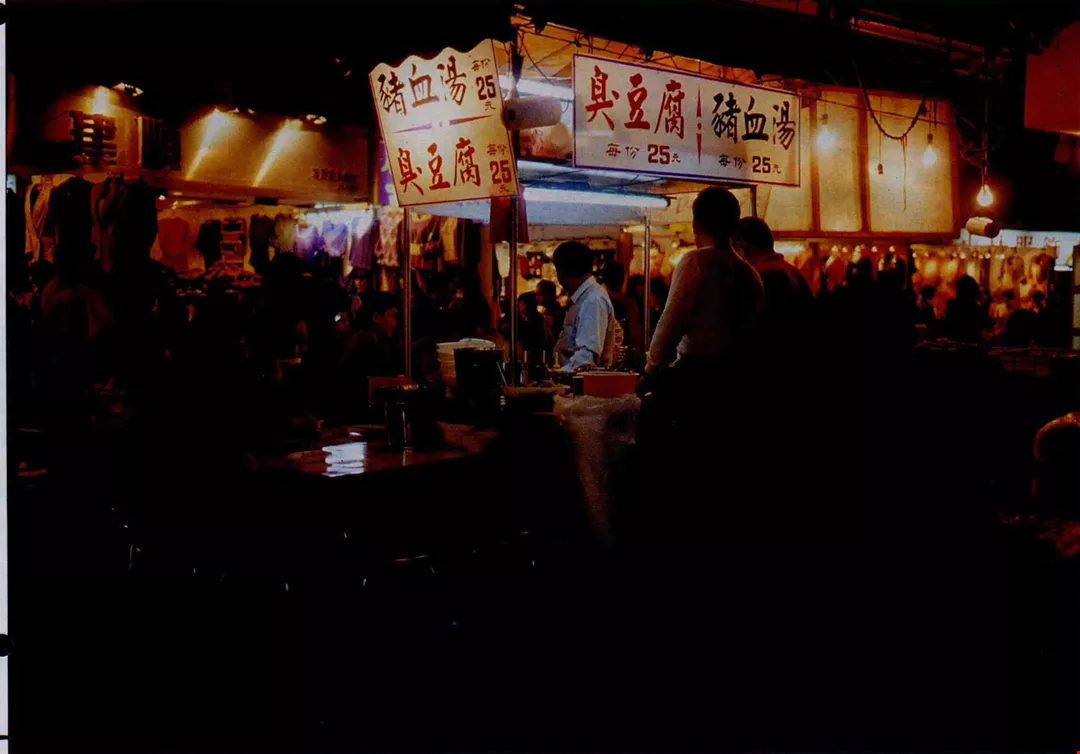
(Below) In the festive hubbub of a night market, you're never out of whiffing range.
Can stinky tofu cause cancer?
Some people fear that stinky tofu, like moldy peanuts, can cause cancer. Lai took uncooked stinky tofu and fried stinky tofu to National Taiwan University for toxic analysis. The results showed that those samples of stinky tofu had no cancer-causing aflatoxins.
While it would be impossible to analyze all of the bacteria that might occur in stinky tofu, Lai points out that the toxins in microscopic bacteria cannot survive intense heat. Thus, once the tofu has been deep fried, the bacteria will have been killed and their toxins will no longer be a threat.
In reality, frying stinky tofu not only kills bacteria but also turns what was stinky sweetly redolent.
Wu Hui-min, a stinky tofu professional, points out that if the tofu isn't stinky it won't be fragrant. Good stinky tofu "smells bad to the nose but good to the mouth." To put it another way, it's stinky uncooked, but after being cooked its sweet aroma wafts off in all directions. This is what makes stinky tofu attractive to people.
And how does the stinky turn into the sweet? It really isn't so miraculous. Lai Min-nan explains that tofu is largely protein. When it soaks in stinky salt brine (its fermenting brew), the microbes will break down its components, and the proteins break down into amino acids.
When the stinky tofu is then put under high temperature, most of the bad smell will evaporate. At the same time, the amino acids coming into contact with heat release a pleasant smell. That pleasant smell added to a little remaining stinky smell results in that special "stinky smell in the sweet smell."
Stinky tofu and pickled cabbage:
Most of the stinky tofu stands in the night markets deep fry their tofu. After being pulled from the oil, it is golden in color, crispy on the outside and tender inside. Its special flavor is matched with heavy flavorings like hot sauce, garlic, and vinegar. Or you can add some pickled vegetables. It's got a strong smell when you're eating it, and it's packed with flavor too.
The steamed stinky tofu in Chekiang restaurants is also very popular. It can be mixed with green beans or hot sauce and other flavorings. Some restaurants use it as an appetizer or provide it free of charge as a side dish.
Actually, stinky tofu doesn't have a very long history in Taiwan. Older Taiwanese never ate this "Chinese cheese" when they were young. When the R.O.C. government moved to Taiwan 18 years ago, the cuisines of all of mainland China's provinces came with it, and stinky tofu rode the wave.
Early on, most of the stinky tofu makers were from the mainland. Calling out with their thick accents, they etched a deep impression in the memory. From push carts, to the stands in night markets, to specialty shops: Stinky tofu has come a long way.
The Stinky Tofu Specialty Shop is what its name implies. Besides selling the steamed and fried varieties, it also offers 20 stinky tofu dishes its chefs invented themselves: stinky tofu in an earthen pot, stinky tofu vegetarian chicken, stinky tofu egg rolls, stinky tofu and rice special. . . . There's even a stinky tofu hamburger. The cooks employ all variety of cooking methods: steaming, boiling, frying, deep frying, and stewing. It's attracted quite a few stinky tofu aficionados to come and try something new.
Stinky tofu has transcended being an oddity of mainland provincial cooking to become a common food in Taiwan. It's more convenient to eat, and there are ever more numerous ways to cook it. But today, when everything must be done quickly, how many people use the traditional method to make stinky tofu? For connoisseurs, finding the truly delicious stuff is getting harder and harder.
[Picture Caption]
p.107
Deep frying at high temperatures both wipes out the bacteria and turns the stinky tofu sweetly fragrant.
p.109
Before being fermented, the white chunks of tofu are plump and pliant. How filling they look!
p.109
This "Chinese cheese" has been stewing in salt brine for three days.
p.109
Stinkly tofu pulled from the frying pan is golden yellow in color with a sweet aroma that wafts in all directions and draws onlookers to drool.
p.111
"Stinky tofu in a earthen pot," "stinky tofu variety plate," "vegetable steamed stinky tofu" . . . what an abundant selection of stinky tofu dishes are on offer here!
p.111
(Below) In the festive hubbub of a night market, you're never out of whiffing range.


@List.jpg?w=522&h=410&mode=crop&format=webp&quality=80)


