The Pou Chen Trilogy: Shoes, Electronics, and... Teeth?!
Yang Ling-yuan / photos Chuang Kung-ju / tr. by Phil Newell
June 2008


A ceramic false tooth and a pair of ath-letic shoes: one for the head, one for the feet, one that fits comfortably in your mouth, the other something that would be embarrassing to have end up in the same place. Yet these markedly different products come from one and the same corporate group-Pou Chen, the world's largest OEM shoe manufacturer. The move into dental biotech marks Pou Chen's second stage of upgrading, following on its crossover into electronics a decade ago. It has also made Pou Chen, a low-profile organization despite its enormous size, much more of a topic of conversation.
Walking into the Windsor Hotel in Taichung, which has been open for only two years, it doesn't feel very different from the usual five-star hotel, except that it may offer somewhat more of the high ceilings that are now so common in new urban construction. What is odd is that a lot of neighborhood people come into the hotel, and not to stay overnight. They are headed to see the dentist.
When you step out of the elevator on the sixth floor, you find yourself standing just outside a glass-enclosed space of great breadth and elegance. Inside the 350-square-meter offices of Dental Proshine, you will find the kinds of gear normally found only in a major medical center, such as three-in-one radiographic equipment capable of doing computerized tomography (CT) scans, panoramic x-rays, and cephalometric x-rays; hardware and software for implants; wastewater recycling equipment; single-use diagnostic instruments; separate examination rooms with doors that can be operated by foot pedals; shadow-free surgical lamps; and pressure mapping chairs for patients. Not only that, the whole environment has been designed with flowing water and special lighting to calm patients and make the high-tech surroundings feel less cold and alien.
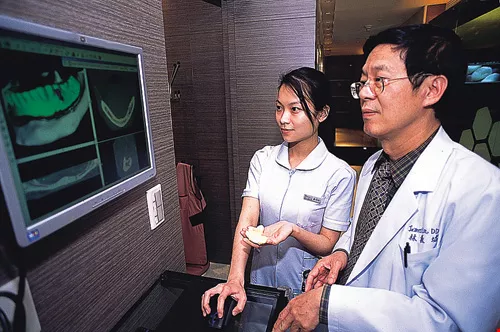
First-time patients at Dental Proshine can enjoy three-in-one radiographic services. Within two minutes, a precise picture of their condition will appear on the computer. The clinic even produces a card-sized "dental ID" convenient for patients to bring on each visit.
One size fits... one
Dental Proshine, which opened for business in late February of 2008, was set up by the world's largest OEM shoe manufacturer, the Pou Chen Group. CEO Tsai Chi-jui has noted that baby-boom generations around the world are now well into middle age and there is presently a US$10-billion-plus market for false teeth. It was with this market in mind, as well as developing Taiwan's "medical tourism" industry (in which costs are so competitive that people from places like Japan or the US can come to the island for a combined vacation and medical procedure for less than they would pay at home), that Pou Chen set up this high-tech, albeit money-losing, dental care center. At the same time as the clinic opened, Tsai Chi-jui announced the formal launching by Pou Chen of its own independent brand-the TDS (Total Dental Solution) system-developed by the Group's subsidiary Pou Yu Biotech Company.
But what on earth can be the connection between two such different products-ceramic teeth and athletic shoes? The link turns out to be the computer-assisted design and computer-assisted manufacturing (CAD/CAM) systems developed by Pou Chen.
Pou Chen's CAD/CAM system was originally devised for digital shoe modeling. Later it was realized that the manufacturing process for shoes and false teeth has a key similarity: "Every person's teeth, like their feet, are unique," explains Pou Yu Biotech dental technology department manager Arthur Kuo, "so everything has to be made to specifications." When making shoe soles, it is necessary to make a surface model for each size (differing by about eight millimeters per size number). For each type and style of shoe, nearly 20 such models are needed (covering sizes six to 18, plus some half-sizes). It can be a very time-consuming process.
When 25 years ago Pou Chen set its sights on grabbing a share of the global market for OEM shoe manufacturing, it invested in R&D to develop a CAD/CAM system of its own. The 3D shoe-sole quick grading system it created greatly speeded up the manufacturing process and improved uniformity, quality and precision. As a result, Pou Chen attracted the attention of the athletic shoe giant Nike, and received orders to join in the making of "Air Jordan" sneakers beginning with the fifth generation of that product (now in its 23rd generation and still produced by Pou Chen).
China promoter
Currently Pou Chen produces 200 million pairs of athletic and leisure shoes per year, has a labor force of nearly 470,000 worldwide, and has total annual revenues of nearly NT$200 billion (roughly US$6 billion). Five out of every hundred pairs of athletic or leisure shoes on the planet come from Pou Chen, which has a market share of 20% by value.
Pou Chen is not only the world's biggest OEM sports-shoe maker, it has also made itself "the best partner of name brands" with its ODM (original design manufacturing) capability.
"When a client gives us enough orders to reach a certain economy of scale, we will prepare a specially designated factory and R&D facility for that client." Pou Chen Group finance department vice president and corporate spokesperson Tina Chen explains that the client's exclusive production zone will include an independent factory, production lines, management team, and R&D.
For example, in Guangdong Province in the PRC Pou Chen has independent centers for Nike, Adidas, New Balance, Reebok, and Timberland. Pou Chen "factory towns" are not only important contributors to China's new status as "workshop to the world," allowing CEO Tsai Chi-jui to develop a personal friendship with former PRC president Jiang Zemin, they are also models for other Taiwanese firms, like the Hon Hai Group, that have moved into China more recently.
"In order to achieve market differentiation, it is very rare for any OEM company to serve two clients in the same line of business. But Pou Chen's production lines include all of the top ten athletic shoe brands in the world," relates Tina Chen.
Although in general brand-name corporations have cutting edge R&D, design, and marketing capabilities, they often become disengaged from the production process. They consequently have no control over problems like the actual making of molds, cost calculations, and process management. In Pou Chen's client-specific ODM/OEM R&D centers, Pou Chen's own experts work with designers sent from the brand owner. In addition to taking responsibility for each link in the production process, the centers also take the initiative to provide market information and analysis, creative ideas for clients, and new production techniques to lower costs. Pou Chen's principles of "loyalty" and "professionalism" have made clients "addicted" to the company.
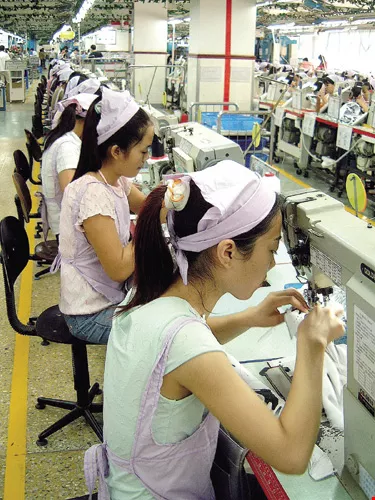
Pou Chen's unique operating model involves creating dedicated factories for each major client. In 2007 Pou Chen added an exclusive facility in Indonesia for Puma and another in Vietnam for Nike, while this year it is expected that a new Nike production center will open in Jiangxi, China, while a Converse factory will be added in Indonesia.
Lasting success
Let us leave for a moment the level of the global economy and visit the historic town of Lukang in Changhua County in southern Taiwan, where a shoe museum is being planned. This is the hometown of Pou Chen CEO Tsai Chi-jui, and the place where Pou Chen was born.
Turn back the clock 39 years to 1969. At that time Pou Chen was a small family factory with less than ten workers, producing simple plastic rain shoes and plastic sandals. As a small child Tsai had watched his father employ the ample manpower available during the agricultural slow season to handcraft goods woven out of rushes, like hats and shoe tops. Later his father decided to expand his factory, and Tsai, who had failed in his dream to test into the Department of Fine Arts at National Taiwan Normal University, decided to go into the family business, at a time when Taiwan was just hitting its stride in its glory days as the "shoe kingdom" exporting footwear to the world.
Eight years after the founding of the new factory, Tsai bought some industrial land in Fuhsing Township in Changhua and turned to manufacturing boots, shoe parts, and women's shoes. By that time the company already had over 10,000 employees, and almost all their neighbors in Lukang and all the young people of Fuhsing were working there.
Not long afterwards, however, the company faced a strategic dilemma: Because there was fierce competition in production of women's shoes, the unit price for export orders was only about US$2-3, and the shoe lasts had to be frequently changed to keep up with changing styles. On the other hand, the unit price for athletic shoes was US$5, and the shoe lasts could be used continuously for three years. Thus Tsai decided-despite not having a single order in hand-to take the risk and build an athletic shoe production line. When they finally got their first order, from Adidas, the next year (1979), Pou Chen began the transition to an athletic-shoe OEM manufacturer in earnest.
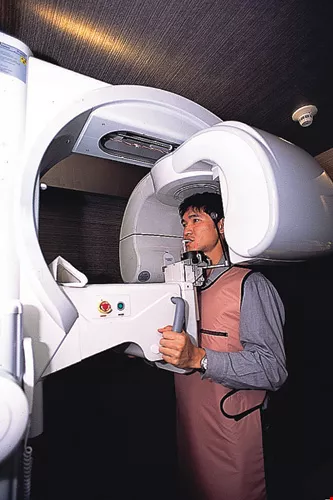
First-time patients at Dental Proshine can enjoy three-in-one radiographic services. Within two minutes, a precise picture of their condition will appear on the computer. The clinic even produces a card-sized "dental ID" convenient for patients to bring on each visit.
Growing with the client
"A good OEM company makes its clients more competitive." After entering the athletic shoe market, Tsai Chi-jui discovered that brand consumption was already taking shape. To meet client demands for design and fashionability, as well as to deal with ever-shorter product life cycles, Pou Chen invested NT$120 million to develop sophisticated computerized technology to make the overall production process faster and more precise. The company also began to pay extremely close attention to market shifts and cost reactions.
One example that Pou Chen likes to talk about goes back to the 1990s, when "sustainable development" and "environmental protection" were becoming mainstream. Nike wanted to change to more environmentally friendly materials for its cardboard shoe boxes, and adopted strict specifications for composition, weight, thickness, and so on. But a global search revealed that very few paper makers could meet the specs.
Spokeswoman Tina Chen says that after taking into account cost control and supply scheduling, Pou Chen decided to go "DIY." They entered into a joint venture with the Cheng Loong Corporation, with its 25% share of the world paper market, to build a new factory to produce the environmentally friendly packaging Nike needed. Cheng Loong would handle production and management, while Pou Chen would be responsible for finance and PR.
"OEM firms have to be constantly alert and highly adaptable, or they will quickly be left by the wayside," warns Tina Chen. From a more positive perspective, new demands by clients often are the first indications of novel profit-making opportunities. If firms can seize these opportunities, then they can reinvent themselves and find new directions forward.
After this experience, Pou Chen began to seriously consider the importance of vertical integration of the production process, upstream and downstream. Thereafter Pou Chen jointly invested with the Yuen Foong Yu Group to create a packaging plant, worked with the major resin producer Evermore Chemical Industry to open a resin factory, cooperated with the artificial leather and microfiber maker Sanfang Chemical Industries, and cobbled together a shoe parts factory with the USA's largest leather processor and exporter Prime Tanning. Even more examples could be cited, but the main point is that Pou Chen believes in complete vertical integration of the whole shoe production chain, right down to their soles and the glue that holds them together. The resultant savings in purchasing costs has allowed Pou Chen to become top dog in the OEM shoemaking world.
Because Pou Chen needs enormous volumes of shoe parts, they also need a specialized company just to manage transport. Four years ago Yue Yuen Industrial Holdings, a Pou Chen subsidiary located in Hong Kong, got together with the Internet logistics information firm LINE to create SupplyLINE Logistics. By effectively utilizing the global harbor network of the Hong Kong company Hutchison Whampoa Ltd., they have been able to make the entire logistics process transparent and visually accessible, so that now any client can at any time know the progress of its order, from the time of making the order all the way to warehousing and shipping, just by checking a computer monitor.
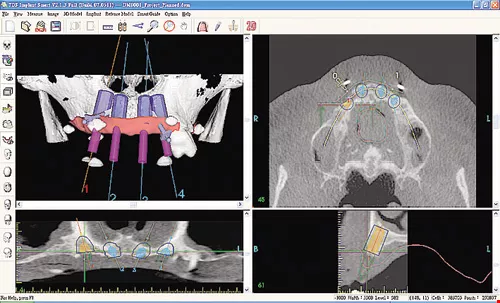
Dental Proshine has developed its own "Implant Smart" software to allow dentists to quickly identify the implant position and depth and thickness of the jawbone under the gums through cross-sectional images and 3D modeling, raising the success rate of the procedure. Then the dentist can install zirconium-oxide clad teeth that are indistuinguishable from the real thing.
Competition within the fold
Pou Chen's strategy has always been, "No matter what field, only work with the market leaders," which has enabled the firm to build a supply chain with "superstar" quality. But each subsidiary in the supply chain is also an independent profit center, and each must face the market and competition to survive.
Take for example O-T Enterprise Co., which produces insoles from ethylene vinyl acetate (EVA). This is a factory organized by one Pao Chen subsidiary, but it also supplies shoe manufacturers in other parts of the Pao Chen group and even outside the group. Similarly, the subsidiary can choose a more competitive parts factory to produce its insoles. This kind of complete openness to competition provides a salutary stimulus to every firm in the group.
"Even each individual division responsible for a different brand name must establish itself as a profit center, and employees working for different brands cannot share any of the client's trade secrets even within the Pou Chen group." Tsai Chi-jui, a master of the division of responsibility, has divided shoe manufacturing into three business groups, and there is also one electronics group. Within each one, a general manager is appointed for each name-brand client, and they compete with each other. There is also an office of overall management responsible for all finance, public relations, and support work. The company headquarters, meanwhile, is in charge of corporate social responsibility (CSR) and branding. Moreover, so that consumers don't get the idea that, "Nike and Adidas all come from the same factory anyway," Pou Chen and Tsai have always kept a low media profile.

Who dares wins
Twenty years ago, as Taiwan's previous competitive advantages-low labor costs, low environmental protection requirements, and a weak NT dollar-were disappearing, Tsai Chi-jui took a group of veteran employees with him to build a factory in China. After the Tiananmen Incident, which happened shortly thereafter, though foreign and Taiwanese firms were fleeing in fright, Tsai stayed cool.
"Those early days in mainland China were really a struggle, and the CEO was right there in the front line," says Tina Chen, "working and even eating and sleeping side by side with the employees, without regard for status or identity." In fact, even as international labor organizations have been harshly criticizing OEM manufacturers (including Pou Chen) for their military-like management and exploitative wages, in each Pou Chen factory zone there is not only the plant, but a hospital, bank, supermarket, and so on, offering workers much more comprehensive services than any small employer.
In Guangdong Province alone, Pou Chen's combined industrial parks are equal in size to four Hsinchu Science-Based Industrial Parks. Tsai's ambition is "to do everything possible to be one of the top three" in the industry. He knows that the only way to stay ahead of the pack in the shoe business-characterized by low profit margins and low barriers to entry-is to maintain large economies of scale and high productivity.
In recent years Pou Chen has not only expanded in terms of footwear, but has also crossed over into related products like athletic wear and caps. It is targeting the Chinese market in particular but is developing in other directions as well. In fact, now that the subprime crisis has weakened the economy in the US, which is the number-one market for athletic shoes, Pou Chen has fortunately been able to find boundless new opportunities in the PRC and Russia.
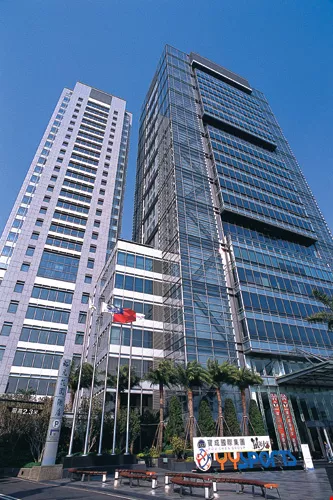
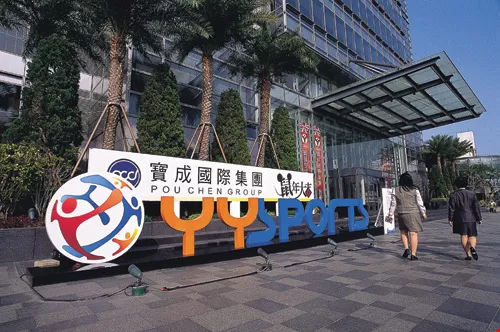
The Pou Chen Group, the number-one shoe manufacturer in the world, adopted the name YY Sports to organize distribution for retail sales in China. In the future, besides being the largest distributor in China, it will enter the markets in Hong Kong and Taiwan. The photo shows corporate headquarters in Taichung.
Electronics
Besides its core business of shoes, Pou Chen now gets over 30% of its revenues from electronics. Yet it only got into this industry purely by chance.
Eleven years ago, Pou Chen wanted to get together with other Taiwanese firms to create an industrial bank, but it eventually pulled out of the plan. The sum to be invested, US$1.2 billion, was then put entirely into the purchase of shares in Elitegroup Computer Systems and the creation, in a joint venture with Elitegroup, of Global Brands Manufacture Ltd. Pou Chen thus entered the electronics market, producing printed circuit boards (PCBs) and PCB assemblies. Three years later they added development and manufacturing of TFT-LCD modules and monitors.
"When the CEO visited electronics plants, he discovered that the production process for the so-called 'high-tech' information industry was actually simpler than the process for shoes, so he thought that he could challenge the leaders." Investment in R&D has always been at 3% of operating revenues, much higher than for most Taiwanese IT firms, and Pou Chen has long had the ability to cope with sophisticated manufacturing. Unfortunately, Elitegroup has not been well run, and for a time was even in crisis, leaving Pou Chen, as one of the biggest shareholders, in an embarrassing position. But now that cooperation has begun with major consumer electronics firms in China such as Lenovo and Haier, the situation has stabilized again.
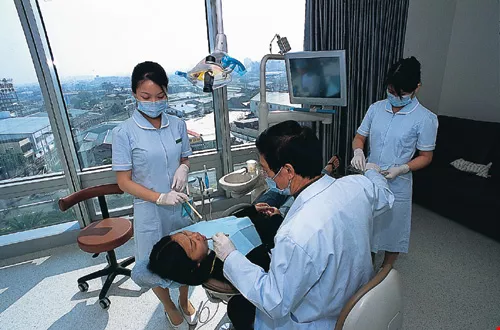
The Dental Proshine clinic, considered a "six-star" medical facility, is the touchstone for Pou Chen's crossover into the biotech industry. It also gives local residents access to dental implant technology on a par with the US and Europe.
Doing good by doing well
The more recent dental biotech operation, on the other hand, has its origins in Tsai Chi-jui's ideal of compassion for others.
"Pou Chen's CAD/CAM technology could be adapted for any product, like golf equipment for instance. But the CEO thinks that it is more meaningful to use the technology to make people's lives better rather than just churning out more consumer goods," relates Tina Chen. A devout Buddhist, Tsai Chi-jui believes deeply in the philosophy of the "karmic cycle." For example, after the massive earthquake of September 21, 1999, Pou Chen stopped building work on the Windsor Hotel for six months and diverted the resources to the construction of a 500-household "Nike Village" of prefabricated housing, to resettle those made homeless by the disaster. Thus, when someone suggested to him that CAD/CAM technology could be applied to tooth implants and false teeth, he was taken by the idea.
It has been the case that tooth implanting requires that the gums be cut open to plant and stabilize the root of the manmade tooth. This leaves a large and painful wound, and recovery times are long (four to six months). But with the TDS system, so long as the patient's bone is in sound condition, and so long as there is no need for a bone graft, or as long as there is no periodontal disease, gum shrinkage, or problems of that nature, the manmade root can be finished rapidly, greatly reducing the time required for implants.
"Similar grade tooth-implant technology also exists overseas, but given that there is an oligopoly controlling all the data and technology, only a few systems are being actively developed." Proshine HealthCare CEO Wang Jiunn-wen says that the habit in foreign markets is just to sell expensive machinery, but not to offer a complete package of know-how. As a result, costs are excessive for the new generation of implant technology, and it cannot be widely adopted. Pou Chen has decided to approcah the problem from another angle. Considering that the annual value of the global denture market is over US$10 billion, but the supply chain is scattered (with even the largest single brand holding only a 3% market share), Pou Chen can use its own superior OEM technology to develop a ceramic tooth production line.
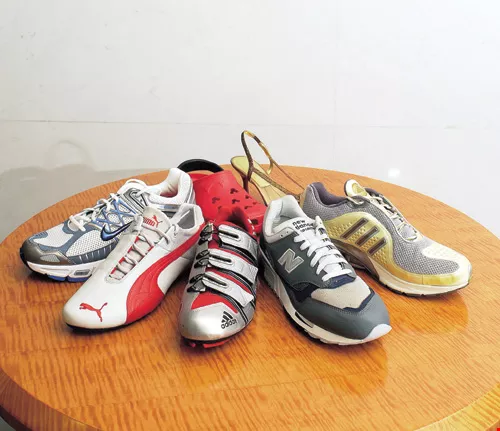
Although Pou Chen does not produce any brand names of its own, it does OEM work for many of the world's top labels, winning the confidence of clients with its guiding spirit of loyalty and professionalism.
Adaptable, indomitable
"In the future, your typical dental clinic will only need to install the Pou Yu Biotech TDS system's computer tomography equipment, 3D laser scanning machine, and software, and then it can send the patient's oral data directly to the factory, which can produce made-to-order teeth and deliver the product within two or three days," Arthur Kuo states.
"Baby-boom generations around the world are reaching late middle age, when teeth start to wobble. The US alone has demand for 90 million false teeth per year, and almost all of these are subcontracted out to Asian made-to-order manufacturers," says Kuo. In terms of production of CAD/CAM dentures, growth could hit 50% per annum, and it is estimated that in the next two years the US market alone will hit US$1 billion.
As a result of the proactive efforts to market TDS brand teeth, as well as active participation in dental conferences and industry shows, Pou Yu now has ten tooth manufacturing apparatuses in Taiwan and 30 more in China, producing about 50,000 units a month. While at present many consumers are put off by the high retail price demanded by dentists (about NT$20,000 per tooth), it is expected that there will be a highly profitable market in the future.
Over the past 40 years, Pou Chen has made the transition from small low-tech traditional factory to multinational giant, and has continually shown the determination, foresight, and courage to adapt, branch out, and change. That, one could say, is what the indomitable spirit of Taiwanese enterprise is all about.
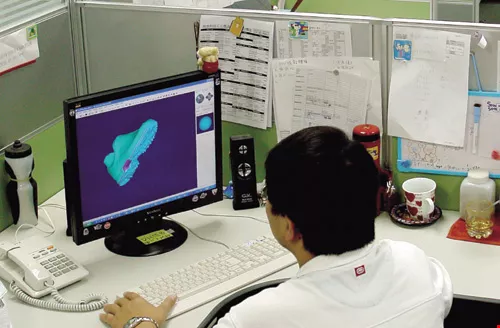
Pou Chen invested huge sums to import high-tech computers as used in the aerospace industry and, applying its CAD/CAM technology and long years of experience, has developed specialized models for use in a variety of industries, steadily moving to the lead in the global modeling technology race.


