The Guarantee behind Farm Exports--Food Traceability Systems
Teng Sue-feng / photos Jimmy Lin / tr. by Scott Williams
June 2005


Did you know there was once a craze for Taiwanese pork in Japan? Taiwan produces some 10 million head of swine per year, and for a time sold many of those animals to Japan. But that was before 1998's sudden outbreak of foot and mouth disease (FMD) brought pork exports to a grinding halt. To facilitate the return of Taiwanese pork to the international market and in the interest of the health of domestic consumers, this year the Council of Agriculture made food safety a major policy objective. COA minister Lee Ching-lung has also proposed a concerted effort to eradicate FMD within ten years. But many experts in the animal husbandry industry are dubious, recalling that it took Argentina a century and the Netherlands 30 years to do so.
Nonetheless, Lee is optimistic. Taiwan is, after all, an island, which means that if we eliminate the sources of the disease, we eliminate the disease. In fact, Taiwan's last case of FMD was detected more than four years ago on 2 February 2001.
How can food safety be assured in the farming industry? Perhaps the most effective approach involves a system of detailed production records. Such systems work much like the ID cards used for people-under them, fruits, vegetables and meats are all tagged with ID numbers that allow consumers to trace their entire production history from farm to fork. In this way, the systems forge a bond of trust between producers and consumers.
In the future it will be very difficult to export agricultural products without traceable and auditable production records, and this is likely to apply soonest to animal products such as beef and pork. With production records and tagging becoming the international norm, the COA has chosen to initiate a system for those Taiwanese agricultural products which have the greatest potential on the international market-organic rice, oolong tea, and tropical fruits. The computerization of production records is already allowing farmers growing potatoes, carrots and burdock root in Yunlin County's Tounan Township to earn profits that are double the compensation they would receive for letting their fields lie fallow.
The origins of "food traceability systems" can be traced back 20 years. In 1986, the United Kingdom reported the world's first case of mad-cow disease, or bovine spongiform encephalopathy (BSE), and was ultimately compelled to destroy 160,000 head of cattle. Scientists concluded that the outbreak had been the result of raising the animals on feed made in part from sheep that had had scrapie. The great danger of mad-cow disease, which, once active, kills the infected animal in a matter of weeks, is that it has a latency period of as much as ten years.
Affected cattle begin by acting as if frightened or provoked. They then develop difficulty moving, become weak, and die. Autopsies show atrophied brains with large numbers of dead neurons, and gaps between neurons that were still alive at the time of death. The net effect is that the brain comes to resemble a sponge, hence the "spongiform" of the disease's name.
People began to worry when in 1996 the British medical journal The Lancet published an article on the discovery of ten cases of "new variant Creutzfeldt-Jacob disease." The generally young victims of the disease had first become anxious and depressed before losing motor skills and mental acuity. The condition is almost always fatal. The medical community's conclusion, that mad-cow disease had been transmitted to humans, gave rise to worldwide concerns about European beef.
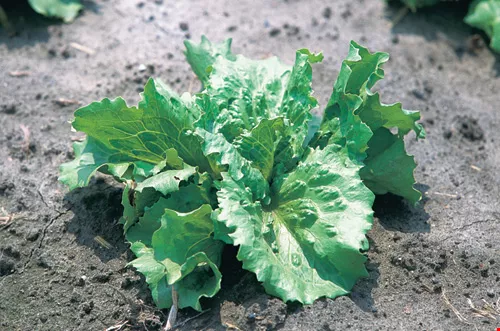
Food traceability systems function much like ID cards for food. Taiwan needs to accelerate its establishment of such systems because it will very soon become more difficult to export food products for which the route from farm to fork is unclear.
The right to know
This serious late-20th-century challenge to the global food chain provided the impetus for the establishment of food traceability systems. These systems store information about how plants and animals have been raised, produced and transported, making it transparent and traceable in order to improve the quality and safety of food products.
At a seminar on global food safety in late March, Sheu Fu, an assistant professor in National Taiwan University's Department of Horticulture, stated that genetically modified foods (GMFs) had also served to accelerate the development of food traceability systems.
But the US and Europe have staked out very different positions on GMFs. The issue ties into disputes over the enormously profitable international trade in agricultural products and has given rise to endless debates between nations over whether foods containing genetically modified ingredients should be labeled as such.
Because GMFs contain genetic material from other species, they are likely to produce new allergens, and may even facilitate cross-species transmission of diseases and the destruction of the ecological balance. Environmental groups and consumers are therefore very concerned.
The dilemma is that GMF crop yields are high and the protein that some contain could help nourish the growing populations of developing nations. "From the US's standpoint," says Sheu, "GMFs offer enormous economic benefits." He notes that China and India have begun to greatly expand their areas of land devoted to growing GM crops, and that almost all of the corn and soybeans that the US exports all over the world are produced by genetically modified plants. Perhaps the environmentally conscious European Union can close its doors to GMFs for now, but even it will have difficulty resisting what is becoming a dominant trend. Explicit labeling of foods with their entire production history to allow consumers to choose for themselves offers a possible solution to this dilemma.
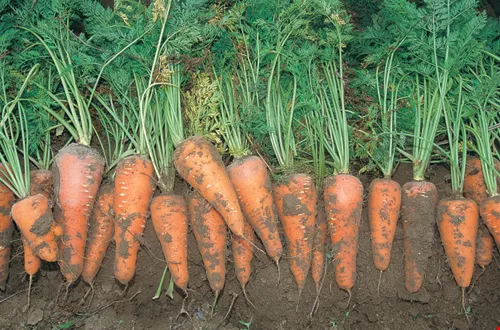
Food traceability systems function much like ID cards for food. Taiwan needs to accelerate its establishment of such systems because it will very soon become more difficult to export food products for which the route from farm to fork is unclear.
An ID for every cow
In January 2000, the EU published a white paper on food safety that stated that all food products should be traceable from 2005. After Japan discovered its first case of mad-cow disease in September 2001, it too began promoting detailed production records. In 2003, the Japanese government allocated ¥25 billion (approximately NT$7.5 billion) to subsidize the cost of developing a farm-to-fork traceability system, and set a target date of 2010 for its across-the-board implementation.
Japan first implemented this system for cattle. When consumers buy beef at their local supermarket, they can run a barcode on the package through an in-store computer which then provides detailed information about the animal from which the meat was cut: its sex; its birth date; the area in which it was raised; its producer; and its BSE test certificate.
"When food-related incidents happen, everybody points the finger at everybody else," says Sheu. "Every country is the same. The route from farm to fork is a long one. It includes production, storage, international transport.... In the end, we never find out at which point the problem occurred."
But Sheu points out that field-to-fork traceability systems give each head of cattle its own ID number. Everything about that animal is then entered into a database-its origin, the feed it consumed, the nature and date of its immunization shots, and the date it shipped. Having such information available makes it possible to find similar animals when adverse incidents occur. With help from such systems, the UK and Japan were able to bring their BSE outbreaks under control. And the US has gone even further with its own legislation: if there is a problem with a food product, its supplier must provide a detailed production history within four hours, or destroy the entire lot.
"Mad-cow disease," says the COA's Lee, "has an extremely long latency period. People infected with it don't know they've eaten a piece of contaminated meat until the disease hits them ten years later." Detailed production records can help investigators to track down the culprit.
The EU came up with the idea of a transparent farm-to-fork process years ago. Now, because Japan is the largest market for Taiwan's agricultural exports and because the Japanese market is demanding that the foods it consumes be traceable, Taiwan's COA is speeding up the implementation of its own farm-to-fork system.
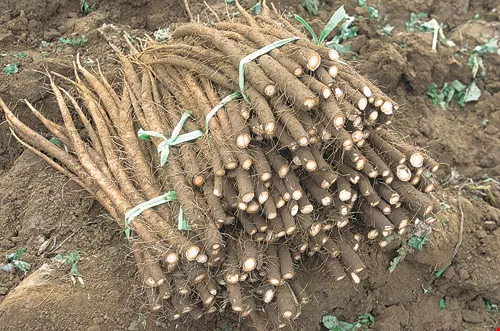
Food traceability systems function much like ID cards for food. Taiwan needs to accelerate its establishment of such systems because it will very soon become more difficult to export food products for which the route from farm to fork is unclear.
Making barren fields fertile
To address this growing trend, last year the COA began planning a pilot program for which it selected 16 products, including organic rice from Fuli Township, Hualien County and Yichuan aromatic rice from Wufeng Township, Nantou County, as well as pineapples, mangoes, head lettuce, soybeans, cabbage, water convolvulus, carrots, corn, tomatoes, strawberries, and tea. The COA's plan for farm animals and fish calls for it to begin with those for which export demand is greatest, such as chicken and eels.
Yunlin County's Tounan Township is among the areas in the pilot program. There, the local farmers' association is guiding farmers in contract farming of potatoes, carrots and burdock root, complete with a food traceability system. To the great delight of industry, government and academia, the association's efforts to standardize production methods have also significantly increased farmers' yields.
Tounan is a typical agrarian village with a population of more than 40,000. Time seems to move more slowly here, where most of the residents, both old and young, are farmers. Although the fields that have been handed down from generation to generation are often less than one hectare in size, many of the township's elderly farmers no longer have the strength to till them.
Chang You-tze has been the director of the Tounan Farmers' Association for the last 12 years and is also its heart. According to him, Taiwan's agricultural policymakers acted very cautiously during the first critical year after Taiwan joined the World Trade Organization in 2002. "At that time," he says, "Taiwan's farmers had virtually no standards for producing crops. They just blindly applied fertilizers and pesticides in their efforts to generate high yields. They produced large crops without a thought to market demand or the least idea about food safety."
Although the Tounan Farmers' Association has been contracting with local farmers for more than 20 years, the farmlands themselves are spread all over the area, making them difficult to manage. Still more troublesome were the variations in crop yield and quality from field to field.
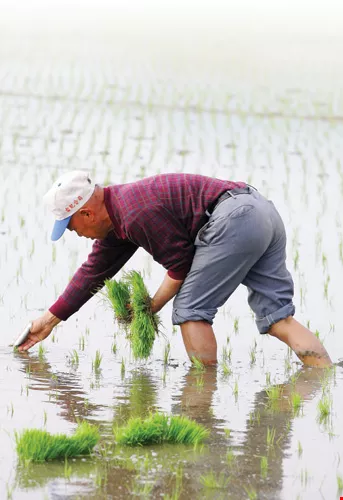
Large, good-quality fields are the roots of the agricultural industry. Taiwan's optimistic farmers sweat buckets to feed the island's people, and send some of the best of their products to tables around the world.
Thinking up solutions
Chang thought endlessly on the problems of how to create economies of scale and how to standardize farming techniques. In 2002, he began using the October-February period when the paddies lie fallow to plant roots and tubers. He called the new technique the "halfback production system," and formed something akin to a strategic production and marketing alliance to promote it.
He recruited 150 association farmers who got along well to create a "core" farm, and, using a contract approach, brought about 100 hectares under cultivation. He then extended his program beyond Yunlin to Chiayi County and Tainan County, where farmers from Liuchiao and Chiangchun Townships joined satellite farms, raising the total area under cultivation to more than 300 hectares. By expanding the scale of production, he overcame the limitations of Taiwan's fragmented farmland and achieved what had been considered today's most difficult farming objective-guaranteed dates, quantities, quality and prices.
Because contract farming tends to result in uneven product quality, Chang's most urgent need was to improve cultivation techniques. The Tounan Farmers' Association imported a small variety of potato from the US and developed its own specialized farming equipment. Spacing the rows evenly, which is essential to producing a medium-sized crop, was the most important of Chang's standardizations. Second on his agenda was establishing an internal oversight mechanism. To that end, the association's extension agents developed a form to record how much fertilizer and pesticide each farmer was using on his fields and the date of each application.
The results were apparent in just one year. Take carrots, for example. In 2002, Grade C and D carrots accounted for 70% of production and each hectare of land produced an average of 40 metric tons. By 2003, Grade A carrots accounted for 70% of the harvest and average production had risen to 60 tons. Because the association purchased the produce at guaranteed prices, farmers were able to earn twice what they would have received in compensation for leaving fields fallow.
Food traceability systems function much like ID cards for food. Taiwan needs to accelerate its establishment of such systems because it will very soon become more difficult to export food products for which the route from farm to fork is unclear.
Big business in little potatoes
While carrots have produced good results, potatoes offer some staggering opportunities.
Taiwan's love of the potato may or may not have gotten its start with Western fast food French fries. At any rate, the island's domestic production is insufficient to meet demand, so we import NT$1.8 billion in spuds every year from the US, the Netherlands and Germany.
Taiwan itself produces NT$300 million worth of potatoes per annum, of which Tounan accounts for NT$200 million. In fact, some 80% of the potatoes that pass through Yunlin's Hsiluo Wholesale Vegetable Market come from Tounan Township. Just imagine how big the opportunities would be if Taiwan were to expand its potato acreage and "reclaim" some of the import market!
When the COA began aggressively promoting its food traceability system last year, it took a look at the Tounan Farmers' Association's older paper records and decided to help the association computerize them.
The group assisting the association first entered data on more than 500 farmers and 2,000 fields into the system, then set up servers and imaging equipment in the field. Now, any one of the association's ten extension agents can access satellite positioning and geographic information systems via their PDAs to know in whose field they are standing, and enter the amount of that day's fertilizer and pesticide applications directly into their database. Consumers can then go through the association's website to find out where the carrots and potatoes they purchased were grown, what pesticides and fertilizers were used on them, and how to get in touch with the grower. The system is just like a personal ID card.
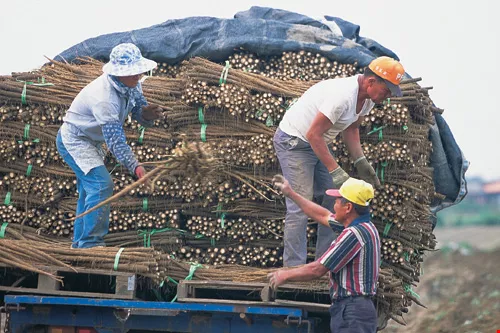
Taiwan's hardworking farmers shouldn't have to worry about poor prices for harvests. Promoting food safety by making the food production and distribution systems more transparent will create a win-win situation for farmers and consumers. Our picture shows the burdock root harvest in Tounan, Yunlin County.
Agriculture with peace of mind
But we mustn't forget that Taiwan has a great many elderly farmers. Chang You-tze says that the greatest difficulty the association has faced in its move to a computerized database has involved these senior citizens. "Some of these old farmers become distraught if they can't get out and work in their fields everyday," he says. "But in order to maintain the quality of our produce, the association handles the planting before turning over the management of the fields to them. Basically, we only let them weed and water. The association also collectively manages the hard work of applying fertilizers and pesticides, both of which affect food safety and crop quality."
When the heavy rains early this year made Tounan's fields too muddy to walk in easily, the February harvest of carrots and burdock roots was delayed again and again. When the fields were finally harvested, yields were down 20%, and the carrots, which had been in the earth too long, were huge, prompting association members to sigh, "When you farm, it really is Heaven that decides whether you eat."
To prevent a repeat of this year's disaster, Chang made improving drainage systems an objective. He also hopes to gradually expand the association's satellite farms and have the government advise on post-harvest tasks such as grading, packaging and shipping in order to unify production and marketing.
In the end, however, what most farmers and policy makers want to know is whether a food traceability system can bring more profits to producers.
Sheu says that a survey last year on Okinawa indicated that their food traceability system had increased farmers' profits by 20%, exactly offsetting the initial cost of setting up the system. Moreover, the cost of setting up farm-to-fork systems in the Japanese market is coming down, so the outlook for profit growth appears bright.
Some farmers are pig-headed," says the COA's Lee. "The way they see it, they've been farming their way for the last 20 years, so why they should make life difficult for themselves by changing their approach? But if in the end they discover that they can't sell their crops without keeping detailed production records, they'll come around."
Lee says that consumers need to throw their weight behind these systems as well. Traceability systems offer consumers peace of mind; they offer farmers better quality and higher profits; they offer firms the opportunity to build goodwill towards their brand; they offer the nation a chance to better its international image; and, ultimately, they provide a foundation for mutual advantage in the food chain of the 21st century.
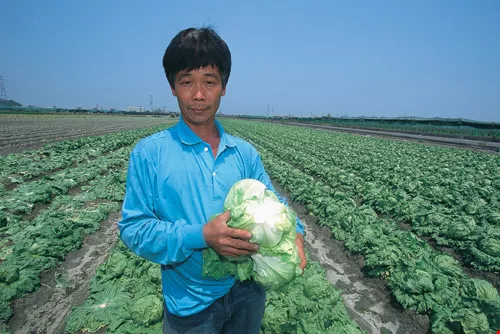
Taiwan's fast-food industry demands large quantities of iceberg lettuce. In Yunlin County, the Vegetable Producers' Strategic Alliance is engaging in large-scale cultivation in nearby townships in an effort to help farmers find a niche market.


