The Storytelling Guitarist-Chen Ming-chang Rediscovers His Youth
Kuo Li-chuan / photos courtesy of Chen Ming-chang / tr. by Geof Aberhart
August 2011


After six years of silence, this July musician Chen Ming-chang-known as the "wandering poet"-finally released a new album, Youth. In the album, the 55-year-old Chen looks back, telling stories of love, dreams, and the good old days.
Long absent from the music scene, Chen Ming-chang appeared at the Taipei performance venue Witch House to unveil his new album, and his trademark look-scruffy beard, simple red shirt, shorts, and a guitar.
His biggest productions during his absence have been a new marriage and a child, a three-year-old whose youthful talk has brought smiles to his father's face, sweeping away the dark clouds of Chen's painful past and problems with alcohol and depression.
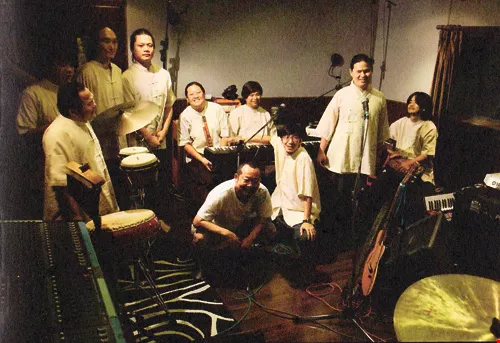
Chen's music combines Eastern and Western instrumentation and styles. This picture shows the Formosa Danshui Wandering Minstrels.
Naming his new album Youth is a reflection of Chen's newfound tranquility and happiness-a model dad, he rarely ventures far from home out of a desire to always be near his son.
The entire album was recorded live, giving the tracks a casual, natural sound, a return to the simplicity of folk music. It feels like a return to his Matinee period, unadorned and direct. Youth comprises nine songs in Taiwanese and one in Mandarin, with two songs in particular-"Beside the Danshui River Again" and "Come Back Soon"-nostalgic rearrangements of familiar classics. Four others were written for Golden Bough Theatre's dark comedy Sayonara My Love, while "Red Butterfly" and "Longing" are moving love songs that incorporate elements of Amis and Tao Aboriginal music.
What stands out about the entire album is the variety of the arrangements; after several years' break, Chen feels his work now is more mature and freer. His latest work combines East and West, with songs sometimes using strings, piano, dizi, or erhu, creating a vibrant and enthusiastic combination.
"Longing," says Chen, is built on a tune he heard a Tao Aboriginal friend humming one day a dozen or so years ago; struck by inspiration, he memorized the tune, and later combined it with a guitar playing style inspired by Bunun harmonies he calls "ocean guitar." Playing in a style reminiscent of the rise and fall of the waves, Chen taps into the deep cultural connection Taiwanese have with the ocean, and with his gravelly voice, the combination makes Chen sound like a modern-day bard.
"August Snows" is the closing theme to Sayonara My Love, and is inspired by Taiwanese Opera, using instruments traditional to Nanguan and Beiguan music to create a sense of desolation and coldness as silvergrass flowers fall in autumn.

Chen Ming-chang's "Wandering to Danshui," tailor-made for blind minstrel duo Li Ping-hui and Kinmen Wang, was a massive hit on its release, and even now its famous refrain can be heard echoing through Taiwanese-style beer halls.
Chen Ming-chang was born in Beitou, a northern Taipei suburb known for its seedy past, and in the late 1970s he was at the forefront of a new style of Taiwanese-language music as he toured the island's campuses with his genre-bending singing style and strong down-home appeal.
From the 1990s, Taiwanese-language music began increasingly aping Western styles, with the rise of Taiwanese rap and Taiwanese blues. But Chen has always stayed true to Taiwanese music's roots, incorporating Nanguan and Beiguan music, Taiwanese Opera, traditional folk music, and the music of Taiwanese puppet shows to create a style all his own.
Chen's works have been greatly influenced by his surroundings. As a child, he lived near a market in Beitou that hosted plays 360 days a year, and so virtually every day he would watch Nanguan, Beiguan, and Taiwanese Opera performances. His grandfather was also a fan of puppet theatre, and would often take Chen on his bicycle to see shows. Once at shows, he would find himself entranced by the movements and voices on stage. What really drew him into the world of music, though, was his older brother's guitar.
When his brother tested into senior high school, their parents bought him a guitar, but when he was preparing for the university entrance exams, the guitar lay idle. Chen, then in eighth grade, seized the chance, and later, after starting at Fu-xing Senior High, he realized he had a particularly good ear for music, beginning to play Western-style music and joining the guitar club, where he learned alongside his classmates each day.
After finishing senior high, Chen tried to join an acoustic guitar group as folk music was sweeping college campuses; he was rejected because his voice was "terrible." He also signed up for the second Golden Rhythm Awards' Creators Contest, performing in public for the first time. What he didn't expect was for the stage fright to be so bad as to have his hands constantly trembling; fortunately his creative talent still shone through, and he went on to write over 30 folk songs.
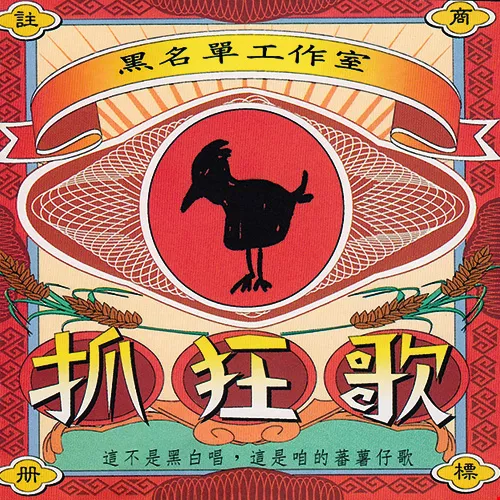
Chen's most iconic works: Songs for Going Wild, Matinee, the soundtrack to Dust in the Wind, and The Whales/Tung Flower Bride.
After finishing his military service, Chen tried apprenticing for a while, as well as selling watches, pianos, and insurance, until his father had a stroke when Chen was 26. Returning home to help the family, he began helping out at his mother's jewelry store.
Two years later, once his younger brother returned from military service, Chen decided to focus on his music. His mother gave him a four-track Yamaha recorder, and the fourth floor of their home was converted into a soundproof music classroom, where Chen held guitar classes.
In 1985, one of Chen's friends passed on a self-made recording of his to director Hou Hsiao-hsien, who quickly asked Chen to record for his film Dust in the Wind. Accompanied by pianist Christine Hsu, he played a cheap NT$600 guitar, the two of them recording for hours in the studio. In the end, Hou used a clip of music less than four minutes long in the film, which won an award for its score at the Festival of the Three Continents in Nantes, France. This was the first time a Taiwanese film had won a music award at an international film festival. It was also a turning point in Chen's life.
A friend once gave Chen a tape of music from Lin Hwai-min's Cloud Gate Theater, specifically from a show accompanied by Hengchun folk-music stalwart Chen Da. This was the first time he'd heard the simple, stripped down playing and singing of Chen Da, and inspired and moved by Chen Da's raspy voice, he began thinking about what really constitutes "Taiwanese music."
"I realized what my music was lacking was a down-home connection, some reflection on the local culture," says Chen. "The moment I start listening to my old Mandarin-language stuff, I'm totally shocked." And with that realization, he began looking for ways to make his music truly Taiwanese.
His 1990 work "Traveling to Taiwan" told the tale of pioneers traveling from China to Taiwan, using dyads and pentatonic scales to create Taiwanese-language music that called to mind Chen Da's "Reminiscence."

Fortunately, Chen's own awakening to local culture came just as martial law had been lifted.
Working at the time as a production assistant at Four Seas Records, Chen joined with Wang Minghui, Lin Wei-che, and others to form Blacklist Workshop. In 1989, they released Songs for Going Wild, with songs like "Taxi" and "Words from my Father" telling the stories of ordinary people's lives. Blacklist Studio flipped the traditional sorrowful stereotype of Taiwanese music on its head by incorporating rap, folk, and rock into their repertoire, boldly challenging tradition. They would later come to be seen by the music world as the vanguard of the "New Taiwanese Music Movement."
Since then, Chen's work has continued to focus on the daily lives of ordinary folk, telling the stories of people like fishermen, farmers, hookers, and drinkers, chronicling changes in Taiwanese society.
"Writing music is like writing a life story, and truly creative music can leave people feeling like they've been hit by lightning," says Chen.
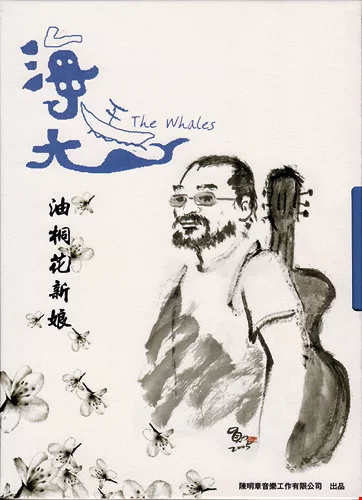
Chen's most iconic works: Songs for Going Wild, Matinee, the soundtrack to Dust in the Wind, and The Whales/Tung Flower Bride.
In 1995, Chen wrote another track that touched the hearts of Taiwanese and became a classic, "Wandering to Danshui." As is well known across Taiwan, the song actually began life as an advertising jingle and had only a few words:
Come one, come all, come with me / Drink a glass of shaojiu, cheers! Cheers!
With only that small part of the song written, Chen was introduced to the blind minstrel duo of Kinmen Wang and Li Ping-hui by photographer Pan Hsiao-hsia. Wang, with his trademark fiery red shirt and guitar slung over his back, and Li, accordion resting on his chest, had caught Pan's eye, and their willing acceptance of whatever life threw at them inspired Chen to finish the song.
The shaojiu goes down and feelings lighten, unhappiness is abandoned and the past becomes a dream. / Life has its ups and downs, and trouble always comes; sometimes the moon is full, sometimes it's on the wane. / But this night is for fun, so come along with me; you dance, I sing.
This tale of two people unwilling to bow their heads to fate, bravely making their way through the world, triggered a wave of interest in the down-home and ordinary, particularly on the back of the aforementioned advertisement and the unique voices of Wang and Li.
When Wang and Li released their album Wandering to Danshui in 1997, it went on to sell a whopping 300,000 copies in just 40 days, and the Chen-penned title track not only won Chen the Best Composer award at the Ninth Golden Melody Awards, but also became a favorite singalong for drinkers Taiwan-wide. In 2003, the Taipei County Government even erected a plaque to the song at Danshui's Fishermen's Wharf.
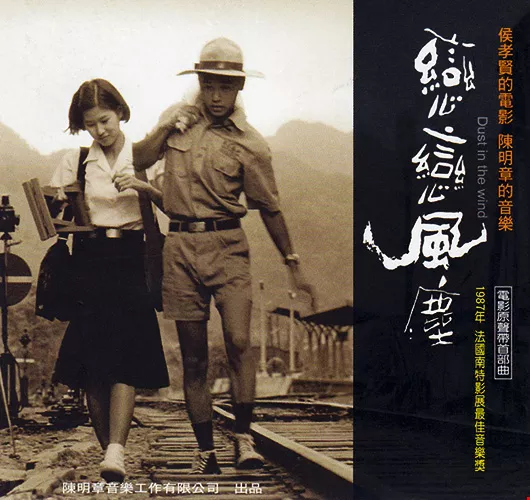
Chen's most iconic works: Songs for Going Wild, Matinee, the soundtrack to Dust in the Wind, and The Whales/Tung Flower Bride.
Chen Ming-chang has excelled at finding the stories in the hidden corners of society, and his talent has proven just as useful for this year's winner of the Golden Melody Award for Best Taiwanese Female Singer, Huang Fei.
Formerly an employee at a hairdressers, she was discovered when participating in a local singing competition. Rising to prominence after recording "An Extraordinary Woman" for the Pili Heroes compilation album, Huang-initially uninterested in becoming a singer-was convinced to persevere by Chen. In 2000, he wrote the song "Chase, Chase, Chase" and with Huang's precise diction and enchanting voice, the song was a surprise hit on her first solo album.
Huang herself has said that if it weren't for Chen writing that song for her, she wouldn't have struck such a chord with the audience so quickly.
Having gone through his artistic youth and the trials and tribulations of adulthood, today the youthful spark is as bright as ever in Chen, only further fueled by his bursting self-confidence.
"In the past, my songs were always a little sad, but now I'm happy. I've made myself change, and I've changed through investigating Aboriginal music and new perspectives on Taiwanese culture. Now that the environment has changed, mainstream Taiwanese culture has room to be open to more alternative ideas."
Audiences at Chen's live performances are often touched by his ability to tell a story with his guitar, whether it's the story of a Taiwanese Opera performance left without an audience because of bad weather ("Matinee") or the beautiful sight of flowers twirling in the wind after falling from a tung-oil tree beside a local government office ("Tung Flower Bride").
Critic Ma Shifang has said of Chen's 1993 work on the soundtrack album for Dust in the Wind, "If you're going abroad and can only fit one CD in your suitcase, make it this one."
Maybe in times to come the tale of how Chen came to work on a film soundtrack will be forgotten, but no matter what happens, his music will touch generation after generation of Taiwanese.

A man, a guitar, and an unrestrained, emotional performance style. Chen Ming-chang's music career has truly been Made in Taiwan, and he has become an icon of "New Taiwanese Music."
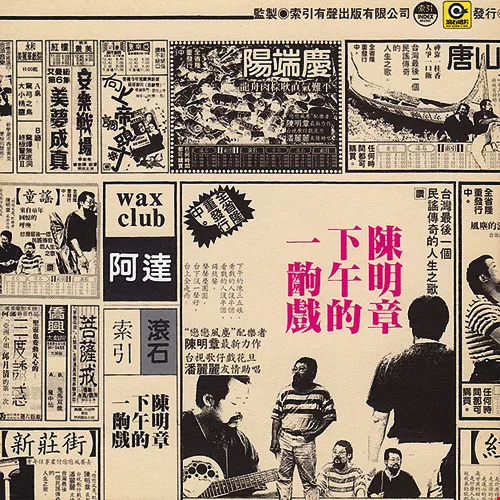
Chen's most iconic works: Songs for Going Wild, Matinee, the soundtrack to Dust in the Wind, and The Whales/Tung Flower Bride.
@List.jpg?w=522&h=410&mode=crop&format=webp&quality=80)

@List.jpg?w=522&h=410&mode=crop&format=webp&quality=80)


@List.jpg?w=522&h=410&mode=crop&format=webp&quality=80)
@List.jpg?w=522&h=410&mode=crop&format=webp&quality=80)

