

Indian talent is becoming global property.
The ancient civilization of South Asia has grown into one of the world's great sources of high-tech talent. In the highly competitive race to develop the industrial world of the future, and with huge numbers of investment dollars involved, India's technological expertise has an obvious attraction for Taiwanese industry.
Since 2001 the Taiwanese government has followed a vigorous policy of encouraging Indian talent into Taiwan. Companies previously unfamiliar with utilizing Indian skills, after many years tentatively exploring the scene, are now ready to introduce workers from the subcontinent more openly and widely. Considering the global trend toward employing Indians, how can this nation use their talents most wisely and efficiently? And how will they influence Taiwan?
On an early autumn evening, a high-level corporate meeting is under way in an office situated in a science park set amidst sugarcane fields in Tainan County.
This drab pharmaceutical plant produces the raw materials for what will become modern life-saving medicine after it has been mixed with a binder and pressed into tablet or capsule form.
The English-language sign on the gate is not very prepossessing, yet this company has US Food and Drug Administration approval, and is one of the few on the estate to boast foreign shareholdings. They have a very open employment policy, and at the moment they are looking for two senior staff members with R&D and management experience to research and develop new drugs. They need experts who are familiar with production processes, but haven't yet found the right people.
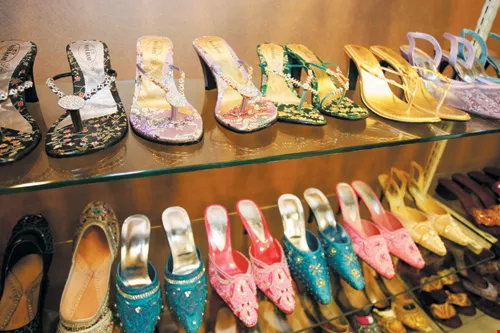
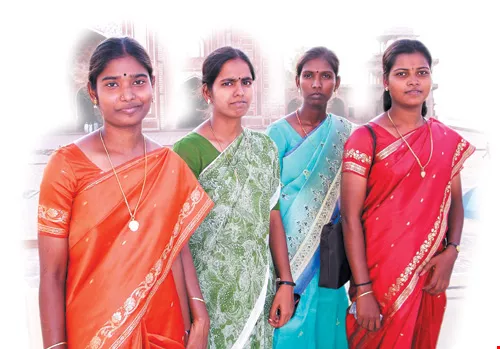
As well as Indian cuisine, the traditional sari has also become popular in recent years. Qureshi Shatiq (facing page) from Pakistan, whose wife is Taiwanese, is Taiwan's major importer of Indian saris.
Recruiting overseas talent
Far away in Kolkata (Calcutta), a branch of the multinational Manpower human resource group had just the previous day sent four recommendations to their Taiwan office. Operating internationally with clients is an everyday experience for them.
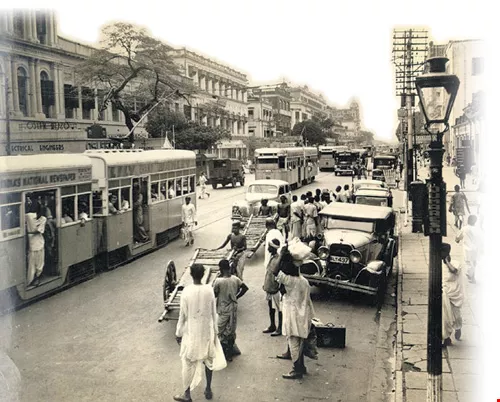
Like many great cities, Kolkata has its good and bad aspects. In this crowded city, only 4% of the area is utilized for roads (the norm for large cities internationally is 20%), making for highly congested traffic conditions. The red-light district is as famous as Mother Teresa's "Kalighat Home for the Dying." However, the world is gradually coming to understand that behind its reputation for squalor, the city also boasts some outstanding hi-tech talent.
The University of Calcutta, established in 1857, is the city's most prestigious, its mathematics and physics graduates having always been regarded as the best in India. In 1930, Professor Sir Chandrasekhara Venkata Raman was awarded the Nobel Prize in Physics, probably the greatest honor in the history of the institution. Today, when global enterprises are looking to recruit Indian talent, the University of Calcutta is the obvious starting point. Consequently, Calcutta graduates hold a significant number of prominent positions in the international corporate world.
"Indian graduates are well recognized in mathematics, software development and physics, but India also supplies outstanding personnel in many other fields," says Li Yen-hua, southern office manager for Manpower Taiwan. With the rich resources of a multinational talent bank at her fingertips, Li is confident in guaranteeing both employee and employer that if they are not satisfied with each other in three months, she will arrange alternatives at no charge until both sides are happy.
Despite huge potential returns from the development of a new drug, there is also substantial risk. It can take more than ten years to see a return, so a company needs strong financial backing to survive the development period. As a result, the development of new pharmaceuticals is almost exclusively in the hands of major European and American multinationals that employ the best people in the field.
"These highly qualifed personnel tend to congregate in Europe and America where the remuneration is the best in the world. Although some can also be found in China, Taiwanese drug companies worry about endangering their intellectual property and losing competitive advantage through underhand marketing methods, so in general they shy away from employing people from China," says Li.
Besides trying to recruit talent for the pharmaceutical industry from Europe, North America and China, an alternative resource is India. With Li's gilt-edged guarantee, two weeks later this drug company receives four recommendations for suitable candidates. Besides basic personal information, the reports detail comprehensive profiles of prospective employees: their previous job history including the business volume of their company, information about the candidate's direct supervisor, and notable achievements. Has the candidate had management experience? Have they supervised significant numbers of staff? What do they earn now and how much will they expect in a new position? What sort of person are they, and will they be bringing their family to Taiwan?
English language skills are a key criterion. English competence is a major reason why Indian candidates are in demand by other countries. And with increasing numbers coming to Taiwan, the Indian accent is becoming well recognized here.
"Companies can certainly bring Indian workers into Taiwan, but there are many cases where they prefer outsourcing work to India," says Ma Tao, a researcher at the Chung-Hua Institution for Economic Research. Hi-tech Taiwanese companies including BenQ are, on the one hand, bringing numbers of skilled Indian workers into Taiwan, and on the other, are entrusting part of their software design programs to companies located on the subcontinent.
This is typical of worldwide trends in outsourcing work due to increasing global competition. The only difference is whether the location is changed (outsourcing work to Indian companies) or the workers (bringing Indian workers to Taiwan). In the past few years, anxiety about unemployment has become something of a global epidemic. At the end of the 1980s when the country was short of labor, Taiwan started employing blue-collar workers from overseas, marking a period of economic growth. The situation is quite different today. What will the influx of hi-tech workers from abroad mean for Taiwan?
Things began to change in 2001.
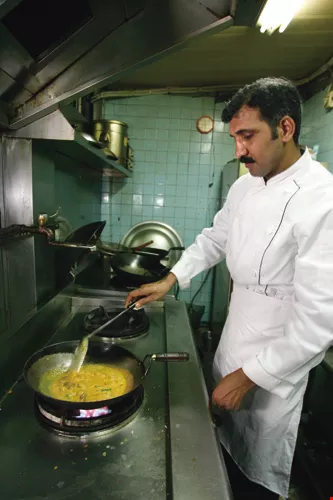
The trend towards importing Indian talent has sparked a taste for Indian cuisine in Taipei and Hsinchu City. Indian naan bread and tandoori food, previously almost unknown in Taiwan, are now growing in popularity. The photo shows Aaleja Indian Food-Court, which took out a gold medal in Taiwan's Best Food awards.
Hardware + software = ?
Taiwan has to date played an important role in global semiconductor and IT hardware manufacturing, but its software industry has never really got off the ground. In contrast, even before the concept of BRICs was widely acknowledged (embodying the four strongest developing nations of Brazil, Russia, India and China), India had already quietly established a reputation as one of the world's biggest international software subcontracting centers. From this potentially mutually beneficial background, in 2001 the Executive Yuan's Science and Technology Advisory Group, responsible for Taiwan's technological development policy, announced that the government would assist the IT industry to introduce Indian talent. The stated goal was to develop both the software and hardware sectors, creating new opportunities for the IT industry.
In the five years since, the number of Indian workers in Taiwan has increased annually. Statistics from the Employment and Vocational Training Bureau of the Council of Labor Affairs, which issues overseas workers' visas, back this up. In September 2006, 733 Indian professionals were employed in Taiwan, making India the fastest-growing source of white-collar professionals for Taiwan in recent years.
If we look at academic research institutes in Taiwan, we see that the number of Indian professionals working in this field is even more surprising: the National Science Council, a sponsor of post-doctoral research, recruits every year from around the globe, and Indians make up half the 300 candidates. These people are mostly scattered amongst the most outstanding institutions and universities in Taiwan, including Academia Sinica, the Information Policy Council, the Industrial Technology Research Institute, National Taiwan University, National Tsinghua University and National Chiao Tung University.
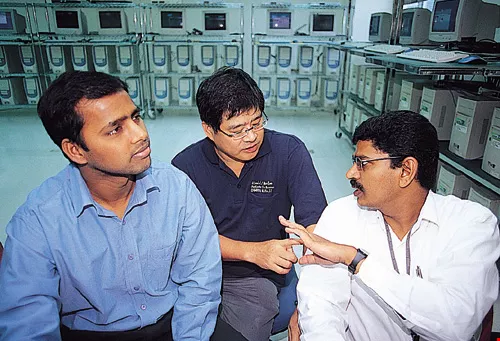
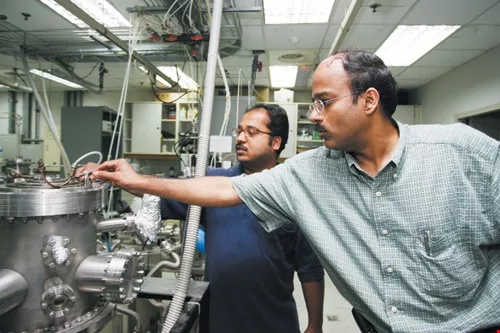
Skilled Indian workers are good employees in both industry and academic research. Accton Technology and the Institute of Atomic and Molecular Sciences in Academia Sinica were two of the earliest organizations to employ Indian talent.
Industry-led recruitment
Are they good? How does industry regard them? Those responsible for recruitment can best answer the question.
More than seven years ago, Accton Technology, a major manufacturer of networking solutions, went looking for skilled people through a human resource agent in India. This early group was quite small: only six were recruited to work in software development and testing for Accton.
"Back then we had limited understanding of the possibilities offered by India. We were completely unfamiliar with Indian customs, their education system and the reputations of the schools. It was a huge experiment," says Weng Lu-feng, a senior manager at Accton. For example: the qualifications of an Indian university graduate are about equal to a graduate from a Taiwanese vocational college. If a company needs a worker with qualifications equaling those of a Taiwanese university graduate, an Indian would need to have one to two years working experience as well.
"It's also easy to neglect the cultural side," says Weng. India, for example, has a caste system, so people from higher levels of society may well refuse to work with people from lower levels, and are often even unwilling to eat in the same canteen or sleep in the same dormitory. So a company that employs Indian workers needs to understand their backgrounds and respect their social system. Accton's initial group of six Indian engineers has grown to ten, some of whom have risen to senior supervisor and R&D management level.
"Why should Taiwan rely on India for hi-tech talent? There has always been a shortage of IT expertise in Taiwan, and companies need to look afar for skilled people. Indian skills are cheaper than ours, too--in the early days salaries were about half those of Taiwanese engineers. In fact, as well as Indians, we have also recruited Russian engineers," says Weng.
After Accton and some smaller companies began introducing Indian workers, the big ones like Taiwan Semiconductor and Macronix gradually followed suit. Hi-tech outfits based in the Hsinchu Science Park have strict guidelines for employing Indian talent: usually for short-term or specific developmental research. "Larger companies have always employed only graduates from National Taiwan, National Tsinghua and National Chiao Tung Universities, so when they recruit overseas they look for a similar level of skills," says Weng.
"Indian workers have proved themselves as serious and reliable employees, and their skills are certainly recognized worldwide. But Taiwanese companies need to be conscious of the feelings of local workers who may rail against the introduction of too many foreigners, so most try to keep the numbers of overseas workers to a minimum," reveals a senior human resource supervisor at Hsinchu Science Park.
Based on both government policy and the needs of industry, from computers, semiconductors, electronics and communications to engineering design consulting, there is an obvious trend towards employing Indian talent. "Software development, stableware (integrated circuit software that, once installed, can't be modified), R&D, design and testing can all be done reliably by Indian workers," remarks Ma Tao.
You push mine; I push yours
"Indians are great and very skilled employees, and it hasn't happened overnight," says Chen Kuei-hsien, a research fellow at Academia Sinica's Institute of Atomic and Molecular Sciences (IAMS). Having employed over 70 Indian researchers in the last decade, the institute is one of the largest academic employers of South Asian professionals. Chen and his wife Lin Li-chiung, a professor at National Taiwan University's Center for Condensed Matter Sciences, collaborate on research. Nowadays whenever they go to India they make a point of holding a "friends of the institute" meeting, and it's always crowded.
Chen's laboratory focuses on production processes and development of new membrane materials. The skills in his research team include physics, chemistry, electronic engineering, and materials science. In his 50-member team, there are six Indians, ranging from post-doctoral and postgraduate levels to research assistants.
Physicist Abhijit Ganguly has been in Taiwan for four years. A graduate of the University of Calcutta, he has a doctorate from one of the most prestigious institutes--the Indian Association for the Cultivation of Science. "At least six graduates from the association are currently doing post-doctoral research in Taiwan," he says.
From the University of Calcutta to the Indian Association for the Cultivation of Science, the IAMS has developed an effective system for sourcing Indian workers. It's a bit like an alumni association and it ensures a regular supply of talented people.
"I didn't know much about Taiwan, but after a recommendation from Surojit Chattopadhyay, a professor at National Chung Hsing University who was born in the same place as me and graduated from the same university, I knew I'd have no problems here," says Ganguly. He is from a middle-class family and describes himself as a home-loving type of person. These days, he regards the IAMS as his home and has no fixed working hours. When he finishes work, he often watches Taiwanese TV--such as Wang Chien-ming's baseball game--with his lab colleagues.
"Life in Taiwan is great and very easy. If I wanted to complain about something, it would be that my colleagues' English is really not very good. When we chat, I'm concerned that they won't understand me, so I always speak in the present tense. However, a few days ago when I was at a meeting in the US, I discovered that my English has actually deteriorated," says Ganguly, who has adapted well to life in Taiwan.
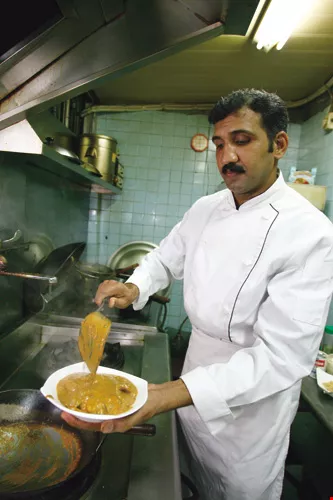
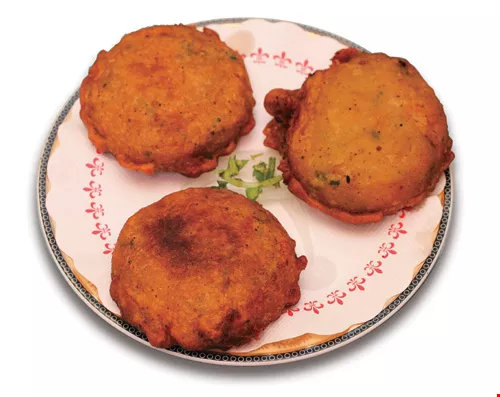
The trend towards importing Indian talent has sparked a taste for Indian cuisine in Taipei and Hsinchu City. Indian naan bread and tandoori food, previously almost unknown in Taiwan, are now growing in popularity. The photo shows Aaleja Indian Food-Court, which took out a gold medal in Taiwan's Best Food awards.
Selecting talent
Lack of competence in English, different nationalities, skin color and accent--these things are not important in a world where global talent migrates from place to place with relative freedom. In fact, "For people seeking rewarding employment opportunities, the nationality of an enterprise is basically irrelevant," says Ari Bhat, formerly R&D director of XCome Technology Ltd.
The headquarters of XCome, which develops software for cellphones and voice communication systems, are in Sanchung, Taipei County. Three years ago, Bhat was the only Indian in the company, solely responsible for the company's software R&D. Early this year, Xcome was again named one of the best newly established companies of the "Asian 100" by Red Herring magazine, the bible of Silicon Valley entrepreneurs. It was the only software company of five Taiwanese enterprises named. Bhat has contributed a great deal to the company. "It's great to find an organization with good prospects, and to develop in harmony with the company in a mutually beneficial way", he says. Following his initial work with XCome, in mid-2006 Bhat was sent at his own request to head up their Beijing branch, directing company operations in China.
Ma Tao of the Chung-Hua Institution for Economic Research recently finished a survey of skilled Indian workers, the biggest ever conducted in Taiwan. "We wanted answers to the following questions as guidelines for recruiting future Indian talent: What had they done before coming to Taiwan? What are they doing now? What are their career goals here? What do they think of the living and working conditions?" "Many people think Indian workers are cheaper, but according to our survey, this is no longer true," says Ma. For example, a recently graduated software designer can earn some NT$22,000-27,000 a month in India, rising to NT$40,000 after three to four years. If promoted to middle management, they can earn up to NT$55,000. "When the lower cost of living in India is considered, salaries offered in Taiwan are not much higher than in their own country. So from an employer's point of view, labor costs are no longer the main incentive for recruiting Indians."
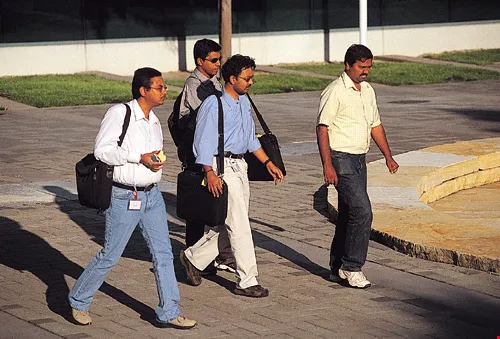
Everyone wants the best for themselves, so when Indian engineers go looking for a job, the two big English-speaking nations, the US and Britain, are naturally their first choice. Apart from the money (a newly graduated software engineer in Taiwan will earn only half of an average American salary), there are other attractions in the US and Europe. The common English-speaking background, better living conditions, less stringent requirements for immigration or long-term residency, and better opportunities for setting up a business all make Britain and the US more attractive. The Indian Institute of Technology (IIT) is one of India's most renowned institutes. For its graduates, who include Sun Microsystems founder Vinod Khosla, the most favored destination is the US. According to the Indian Economic Times, around 35,000 out of a total of 175,000 IIT graduates are working in that country.
Despite these statistics, the Science and Technology Advisory Group (STAG) of the Executive Yuan notes in its 2001 advisory that Taiwan still has its attractions. Says Ma Tao: "Taiwan's hardware know-how plus India's software design skills can create a win-win situation. A lot of Indian high-tech talent ends up in Taiwan because they see that with Taiwan's hardware manufacturing background and their software experience they can build a solid foundation for their future careers." Some Indian engineers see that if they come to Taiwan for four or five years, by the time they go home they will have improved their skills and thereby increased their value as employees. However, this doesn't mean they're not committed to their work here. Their performance has been generally very good. "We want to utilize Indian talent to strengthen Taiwan's international competitiveness, yet they also realize that they can use their Taiwan experience to empower themselves," says Ma.
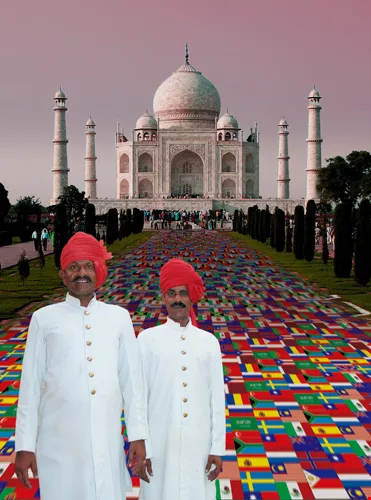
From investment prospects to highly skilled workers, India is becoming global property. Taiwan is not immune from this trend, so the nation needs to look anew at this ancient civilization to order to improve its understanding of the country and its people. The background of this collage shows the Taj Mahal, one of India's most famous sites.
Jobs in danger?
Looking to the future, a report produced early this year by STAG predicts that between 2006 and 2008 there will be 24,870 vacancies in the various industrial sectors in Taiwan, including jobs in semiconductors, imaging technology, communications, digital content, biotechnology, and IT.
In October 2006, Ma Tao and the STAG led a recruiting team to India. This time, their main target was IIT, India's most prestigious institute, where major international companies compete to employ the best of the bunch. Many of the graduates move straight into companies like Microsoft and Intel. "Just as we don't have a great understanding of India, they have very little knowledge of Taiwan and the opportunities it presents in IT," says Ma Tao. So the main goal for this trip was to improve understanding on both sides. In the future, utilizing government influence and backing in the recruitment process to assist Taiwanese enterprises will become standard procedure.
Although skilled Indian workers are very popular globally, Li Chieh-mu, general director of the Hsinchu Science Park Administration, wonders how much good for Taiwan will come of such recruiting ventures. Others also have their doubts. "If Taiwanese enterprises are going to hang on to the old idea of paying peanuts, then they'll get monkeys--they certainly won't be able to recruit A-grade talent," claims Accton's Weng Lu-feng.
In fact, salary levels in India are gradually coming closer to those in Taiwan. Although today India looks like a goldmine of talent, it will also be facing shortages in the IT field before 2009.
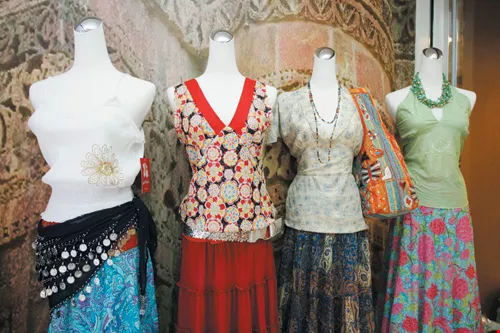
As well as Indian cuisine, the traditional sari has also become popular in recent years. Qureshi Shatiq (facing page) from Pakistan, whose wife is Taiwanese, is Taiwan's major importer of Indian saris.
Using global talent
"I prefer sending work to India rather than bringing workers here," Weng states frankly. In taking this path, we can cooperate fully in basic research projects and in the development of particular products.
Ma Tao agrees. "If we employ Indian talent, salary is only one of many considerations," he explains. "If we count the cost of helping them to settle in Taiwan, and of problems resulting from cultural and language differences among colleagues, many feel that employing foreign workers is not always the best choice." How, then, can Taiwan best use Indian talent, especially considering the constantly rising demand for hi-tech skills? "By outsourcing work to India--then the company in Taiwan needs only to become expert in long-distance management," says Weng. "In this type of setup, which is becoming a global trend, you can't see the people, but you can see the products."
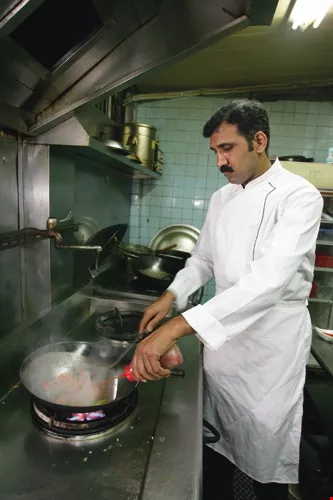
The trend towards importing Indian talent has sparked a taste for Indian cuisine in Taipei and Hsinchu City. Indian naan bread and tandoori food, previously almost unknown in Taiwan, are now growing in popularity. The photo shows Aaleja Indian Food-Court, which took out a gold medal in Taiwan's Best Food awards.
Whose future?
For skilled people and ambitious companies, the world is today a huge marketplace, and Taiwan needs to make sure it can access a good share of the available talent. At the moment, the number of Indian white-collar workers in Taiwan is increasing. Their influence can be felt, for example, in the number of Taipei and Hsinchu locals now trying Indian food. But while trying to make the most of the opportunities offered to industry by the foreign influx, we also need to tread carefully so that we can continue to offer good prospects for our own Taiwanese graduates. We need to be careful that in catering to one group, we're not neglecting the other.
Academic and government representatives including Lin Feng-ching, a minister without portfolio in the Executive Yuan, warn that industry is relying too much on Indian talent. These groups argue that when companies go recruiting, there's a danger of becoming over-reliant on a single source. Lin claims that in the past, Taiwanese enterprises have always depended on academic institutes to train skilled workers, but ideally this needs to change--they should be actively taking some of the responsibility for producing and training new talent. Then, if and when there is a global talent shortage, they will be in a very competitive position. The global trend for Indian talent is hotting up, but one day, the bubble is going to burst. The problems (often hidden) which have given rise to Taiwan's present skills shortage need to be addressed in a way that will ensure that they are permanently resolved.
Skilled Indian workers are good employees in both industry and academic research. Accton Technology and the Institute of Atomic and Molecular Sciences in Academia Sinica were two of the earliest organizations to employ Indian talent.
On the streets of old Calcutta, trams, cattle wagons, cars and pedestrians jostle for position, yet life appears much simpler and more relaxed than today. Nowadays, Kolkata's hi-tech talent is attracting interest from industry and academia worldwide.
In terms of salaries and living conditions, Silicon Valley, the heart of global technology, is the natural first choice of Indian workers. The photos (right and facing page) show Indian engineers leaving work at the headquarters of Oracle Corporation and Cisco Systems.
As well as Indian cuisine, the traditional sari has also become popular in recent years. Qureshi Shatiq (facing page) from Pakistan, whose wife is Taiwanese, is Taiwan's major importer of Indian saris.
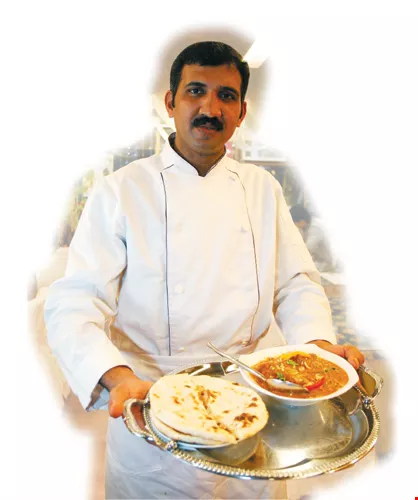
The trend towards importing Indian talent has sparked a taste for Indian cuisine in Taipei and Hsinchu City. Indian naan bread and tandoori food, previously almost unknown in Taiwan, are now growing in popularity. The photo shows Aaleja Indian Food-Court, which took out a gold medal in Taiwan's Best Food awards.
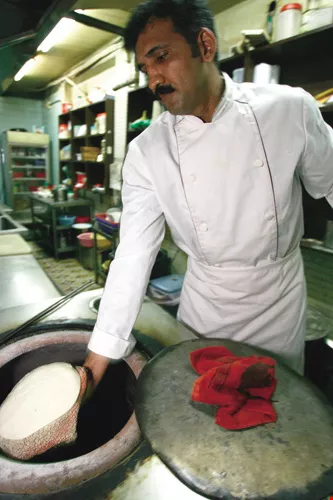
The trend towards importing Indian talent has sparked a taste for Indian cuisine in Taipei and Hsinchu City. Indian naan bread and tandoori food, previously almost unknown in Taiwan, are now growing in popularity. The photo shows Aaleja Indian Food-Court, which took out a gold medal in Taiwan's Best Food awards.
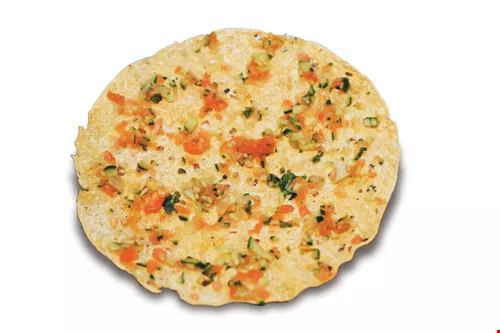
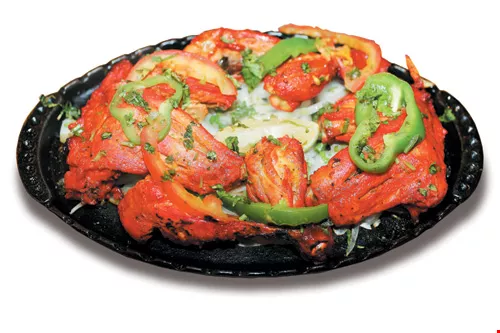
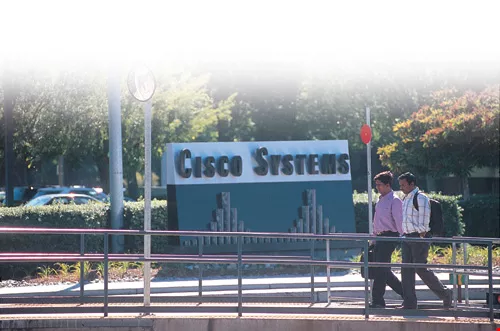
In terms of salaries and living conditions, Silicon Valley, the heart of global technology, is the natural first choice of Indian workers. The photos (right and facing page) show Indian engineers leaving work at the headquarters of Oracle Corporation and Cisco Systems.


@List.jpg?w=522&h=410&mode=crop&format=webp&quality=80)


