The Indie Dreams of 43 Zhang and Taiwan Colors Music
Chang Shih-lun / photos Jimmy Lin / tr. by Minn Song
August 2005


Over the last few years, Taiwan has seen the gradual emergence of a musical fashion for non-mainstream and independent labels. Of these labels, Taiwan Colors Music (TCM) has gained special attention because it released an album from Pau-dull, who won a Golden Melody award for best male performer, as well as sponsors the extraordinarily popular Ho-Hai-Yan Rock Festival that takes place in Taipei County's Kungliao each summer.
TCM's location in Taipei's Shetzu Island neighborhood seems to symbolize its market positioning of being not far from the center and yet having a fringe character. Beside the half-hidden door of the company's offices is a gaudy betel nut stand, a perfect complement to the company's own rough-hewn and localized eccentricity.
"My hometown is Yunlin, notorious for producing gangsters. And the indie music business requires a gangster's incisive approach, as well as music with personality, to stay at the leading edge of musical fashion. So that's why TCM's Chinese name uses the term for 'kingpin,'" says TCM founder 43 Zhang (aka Zhang Yi-ping, Chang Yi-ping, or 43 Chang), a cigarette dangling from his mouth.
Down-to-earth, and yet occasionally flashing a sly look, Zhang once worked as a corporate planner in a mainstream record company. "I handled albums by Huang Yi-ling and Liao Jun, both of which sold poorly," he says. After his stint there, he ran an underground radio station for a short time, and finally decided to return to his original calling, the record business, establishing TCM in 1998.
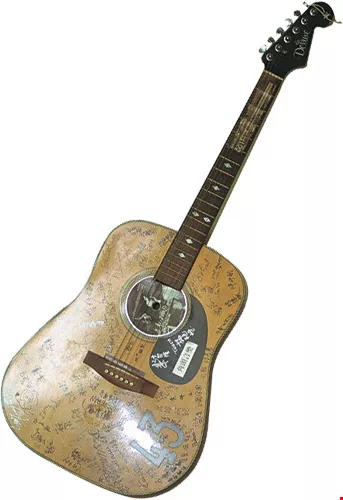
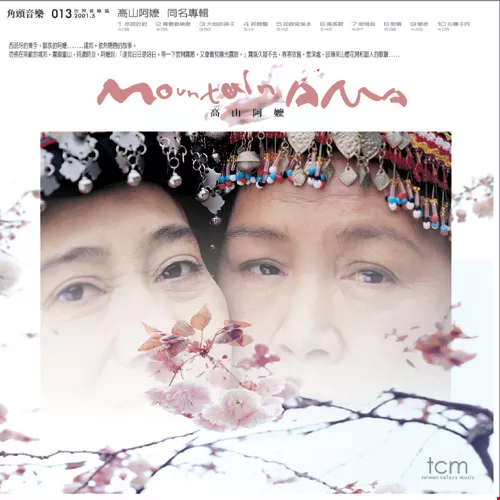
"What we want to do is run an independent label-independent in every sense. Our music and the way we operate are different from what you find in a mainstream company," he says. In the six years since its founding, TCM has released more than 30 works, from artists including Hokkien, Hakka, Aboriginal, and Ryukyu Island native artists, and even foreigners living in Taiwan. In terms of musical style, the company's offerings run the gamut from folk, rock and underground groups to theatrical music and movie soundtracks. The label has even released three albums of radio promos which feature tacky, ribald humor that strikes a populist chord.
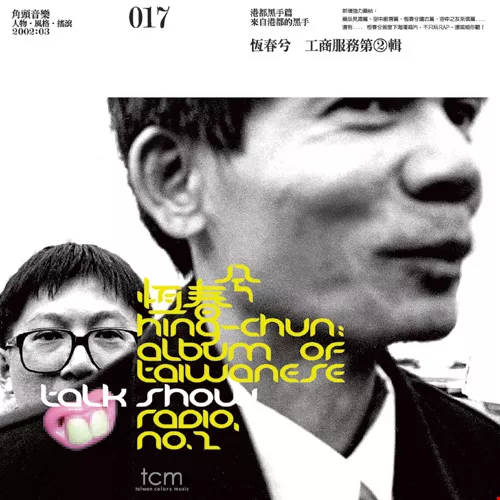
"Nestled against the blue sea and sky, I am at ease, so satisfied to have this moment," goes a paean to the sea by TCM Aboriginal singer Pau-dull. TCM's music ranges from Pau-dull's revivalist folk to Clipper's eclectic theatrical rock. Or it could be the joke- and rant-filled monologues of Kaohsiung motorcycle mechanic and talk-show host Hing Chun. "Your graceful figure, your perfume... I cannot live without you! Long Life cigarettes? No! 'Premature Death' is more like it. I hate you! For each cigarette smoked, life is cut short one minute."
Covering a diverse range of styles, a cacophony of voices-it's all because TCM's goal is to bring together as much of contemporary Taiwan's range of divergent and diverse voices as they can. "I want to prove that records can also be a documentary of the times," pronounces Zhang.
Just after he founded the company, Zhang borrowed NT$4 million, investing NT$2 million in TCM's own recording studio. "At the beginning, everyone was skeptical about the need to build our own recording studio. However, everything that's happened since then has proved that building it was the right choice. That's especially true for non-mainstream musicians, who have a more freewheeling style. They usually need more recording time to create good music than mainstream artists need. Outside recording studios charge by the hour, and that often makes for rushed sessions. For a non-mainstream label, using those studios is not only costly, but the stuff that's recorded doesn't sound natural."
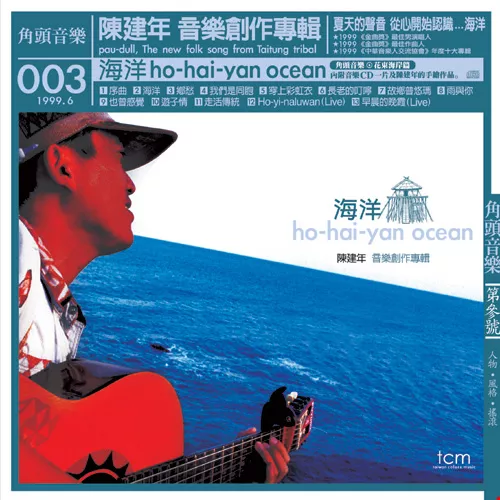
A recording process that pursues a natural feel and that respects the creative process is also reflected in the flexible work attitude. In 1999, to help an unknown Aboriginal policeman from Taitung to release a record, TCM staff made a special trip to Taitung to record him-simply because "that was the place where he felt most comfortable and could faithfully express himself." That album of originals titled The Ocean unexpectedly won a Golden Melody award, defeating mainstream singers such as Jacky Cheung and Lee Hom, turning Pau-dull into Best Male Performer at that year's Golden Melody Awards.

Something else that's special about TCM is that it does not use the long-term contracts of mainstream record companies. "Signing long-term contracts ends up restricting the singer's development. And besides, we don't have the capability to take care of them long-term," says Zhang. Therefore, TCM only signs a one-off contract for each time a singer releases a work. "The substance of the contract and the singer's royalty has to be spelled out clearly. Just because we're non-mainstream doesn't mean we can treat people unfairly."
If a singer hits it big, mainstream record companies will try to sign him or her up. "That's all right. I will sincerely express my hope that they will have a better opportunity for growth. What TCM can do is to help musicians who are interested in releasing an album to leave a precious document of their life. TCM and musicians are basically partners."
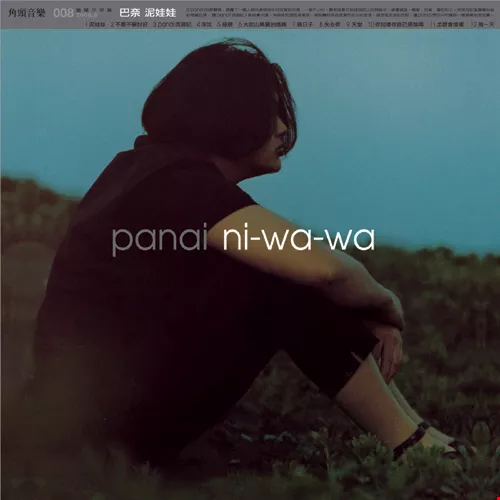
Zhang believes that this cooperative approach is quite significant for non-mainstream artists. "Many people like the album that we released for the singer Panai, but they don't know that a mainstream record company once had her signed for eight years, but weren't willing to release a single album. How many eight-year periods can a person throw away in a lifetime?"
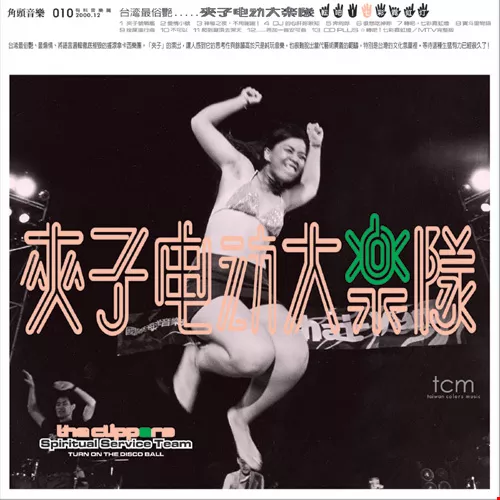
Currently, TCM's aim is to release six albums a year. For some projects, TCM handles everything-planning, recording, mixing, and post-production. Examples include albums by Pau-dull and Samin-gad. In others TCM gets a master tape that the musicians have recorded on their own, and then is responsible only for handling follow-up work such as design, graphics, release, and publicity. Examples of this approach include the latest releases from the Hohak Band and LTK.
Chen Guanyu, leader of the Hohak Band, which just released an album through TCM, and once a member of the Labor Exchange Band, says, "When I was with Labor Exchange we had to do everything ourselves. After recording the music, there was still a lot of administrative work, publicity, and distribution to deal with, which was quite a burden on the band. Now with a professional independent label like TCM that can handle packaging, graphic design, distribution, and marketing, indie musicians can concentrate on creative work."
This division of labor between the creative people focusing on getting the music right, and the specialists taking care of the follow-up details has gradually become popular at indie music labels over the past few years. However, none can beat TCM's strong distribution channels, the dazzling artwork, and big-literally-packaging.
TCM's advantage in distribution and packaging didn't simply appear out of nowhere. When he first started the company, Zhang came up with all manner of tricks to give the new brand exposure. "I previously worked in the mainstream record industry, so I knew very well how important distribution is," he says. In order to break into the market, he personally made sales visits to record shops all over Taiwan. "Although it was tiring, the results were good. Now you can see our releases in most record stores," he adds.
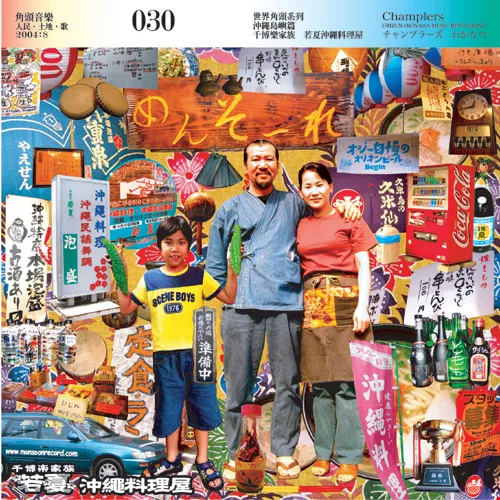
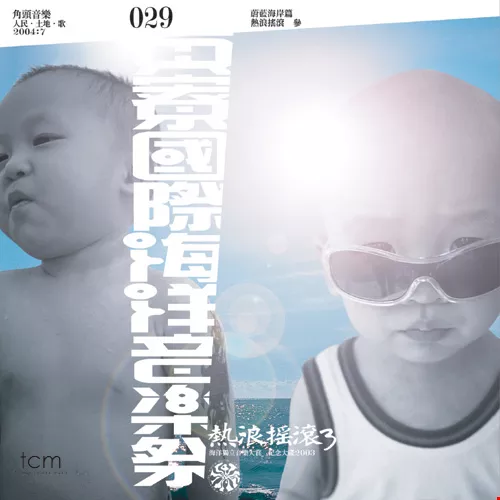
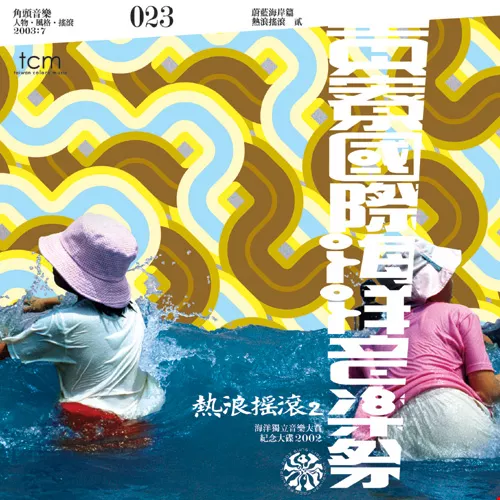
However, even when they are willing to stock indie recordings, record shops have usually placed non-mainstream works in less conspicuous locations. Thus, Zhang's second trick was to make a break from most people's conception of a CD by deliberately using a box with the same 24 x 24-centimeter dimensions as the album sleeve for a traditional vinyl record. Zhang says in a self-satisfied tone, "Making them that big meant the record shops had no choice but to put them someplace prominent, and shoppers can't avoid seeing them whether they want to or not." Zhang's unconventional approach enabled TCM to get a dedicated display rack at many shops, treatment that even mainstream records can't necessarily obtain.
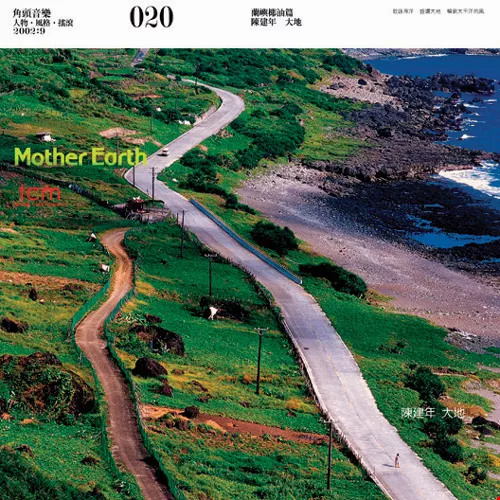
What most excites music-lovers about TCM are its exquisite print design and magazine CD concept. "I have always loved reading magazines, so I turned albums into magazine CDs, with lots of text and illustrations to add depth to the product," explains Zhang.
When most mainstream record companies are planning a new release, they limit the function of the booklet text and art design to spotlighting the singer. However, in TCM releases, the text might be literature and the art design may be a distinctive creative work-related to the album but with a life of their own.
In terms of artistic expression, TCM's works are chiefly the creations of designer Hsiao Ching-yang. Like Zhang, he once worked in the mainstream record industry. But only in the indie music arena has he been able to find the space to give free rein to his ideas.
"When I am working on an album for TCM, our workshop operates independently, and TCM doesn't interfere at all," Hsiao says. He therefore treats each cover he does for TCM as one of his own autonomous works of art, putting effort into conveying a distinctive Taiwanese visual style that maintains indigenous characteristics yet is also able to reflect an awareness of international artistic trends.
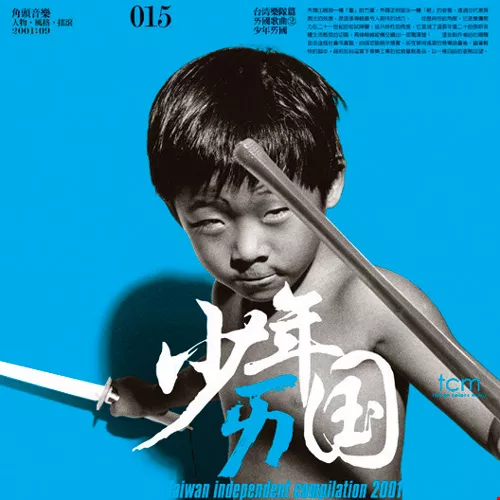
Just as Zhang wants to preserve the various sounds of our times, Hsiao hopes that his own works can convey a visual memory of a particular era. For a local indie compilation album released in 2001, Hsiao drew on the television drama Dragon in Flight that was so popular at the time as his inspiration for a cover that showed his naked son in the pose of an acrobatic fighter, mimicking a character from the drama. When he was doing a design for an album by talk show host Hing Chun, given the latter's style of earthy humor and rants, Hsiao brought in protest celebrity Ko Tzu-hai, to accentuate the album's jarring sense of the times.
Since 2000, TCM and the Taipei County Government have jointly organized the Ho-Hai-Yan Rock Festival in Kungliao each summer. Billed as a large international music festival for indie groups and creative artists, the first time attendance was only around 1000, but it has since evolved into an extravagant musical pilgrimage, drawing 300,000 people last year.
The success of Ho-Hai-Yan reflects a change in consumer habits. Whereas concerts organized by mainstream companies have always been just tools to market their stable of pop idol singers, backed by "bands" of studio players, both government and privately run concerts are increasingly attracting crowds by featuring creative innovators and bands that make their own original music.
It is against this background that TCM has in recent years begun to organize a large number of various musical festivals. Besides the most successful of these, the Ho-Hai-Yan Rock Festival, TCM's has also been involved in events such as the Taiwan Performing Arts Fair, which was put on for the first time this year in Kaohsiung's Wei-wuying area; the Festival of Austronesian Cultures in Taitung; and the Taipei Arts Festival.
"Reflecting prevailing trends, about 70% of TCM's revenues are drawn from events like music festivals, while our original business of records accounts for only about 30%. As for future trends, the CD market will only continue to contract," laments Zhang, "so having an auxiliary line of business to complement your main one is essential."
As for Ho-Hai-Yan, Zhang is considering the sale of admission tickets for the future, as well as strengthening the festival's thematic message. Zhang notes, "The Ho-Hai-Yan Rock Festival can evolve into a musical festival with an environmental, political, or issues-oriented theme, become financially self-reliant, and get rid of its government-run overtones. That's the only way to maintain the indie rock spirit."
In the six years since it was founded, TCM has become Taiwan's largest independent label. Looking to the future, Zhang says he will continue to cultivate the music festival market, and revenues from festivals will be funneled back into recording and production of CDs.
As for the prospects for indie music, Zhang believes that there is great scope for development overseas. "However, if you want to go global, you have to first have enough indigenous color, so that your product will have something distinctive that appeals to foreigners. That's the only way to open overseas markets," he explains. Work like that of the Hohak Band, or the new album from Aboriginal singer Samingad that will be heavily promoted in Europe next year, fall into this category.
In 1999, 43 Zhang wrote in TCM's founding statement: "We have come far from delusions and ostentation, far from hegemony, and begun to search for musical kingpins in the dream that has Taiwan as its axis." How the musical saga that began in Taiwan with TCM will unfold is something that everyone interested in pop music should care about. "Whatever happens," says Zhang breezily, "indie music's moment has arrived. As labels proliferate, TCM will not be advancing alone."
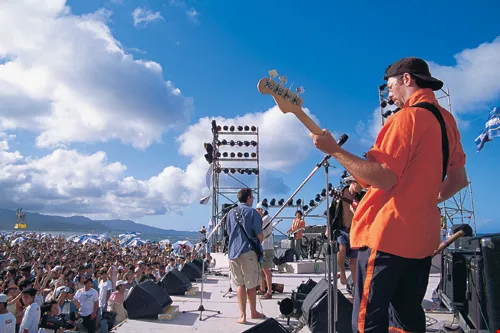
At the first Ho-Hai-Yan Rock Festival in 2000, there were only 1000 or so spectators on hand. Last year 300,000-plus people attended, and the event has become northern Taiwan's most important summer musical extravaganza.
Taiwan Colors Music record designer Hsiao Ching-yang is committed to using art to document the visual style of contemporary Taiwan.
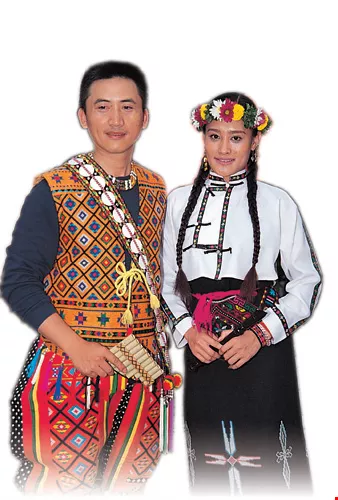
Pau-dull, a policeman from Taitung, won the Golden Melody Award for best male performer for his album The Ocean. Puyuma Aboriginal singer Chi Hsiao-jun will have an album released under her Puyuma name Samingad in Europe next year.
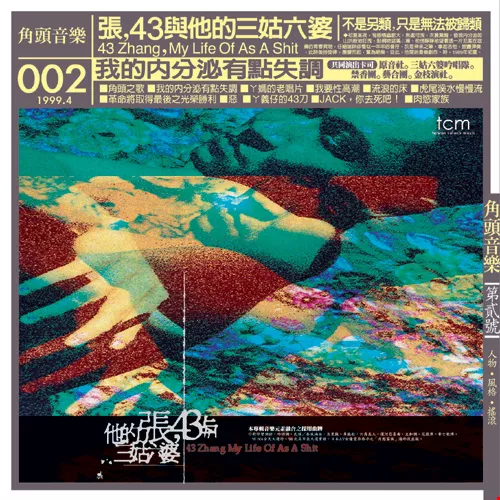

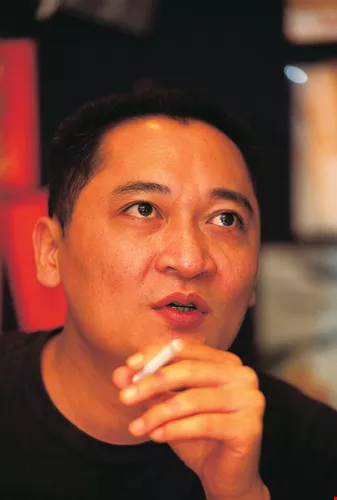
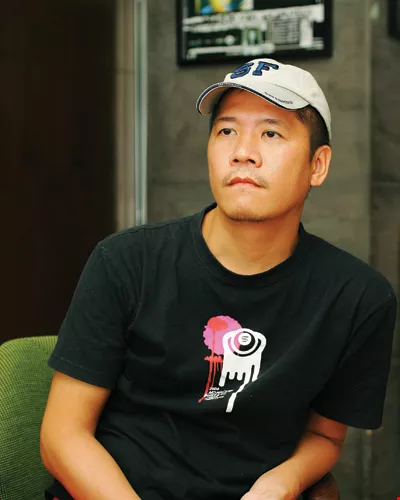
Zhang Yi-ping (who sometimes spells his name with a C), head of Taiwan Colors Music, has also released albums as an indie artist. Because his mother gave birth to him when she was 43, he adopted 43 Zhang (43 Chang) as his stage name.


@List.jpg?w=522&h=410&mode=crop&format=webp&quality=80)

