Tainan's experience
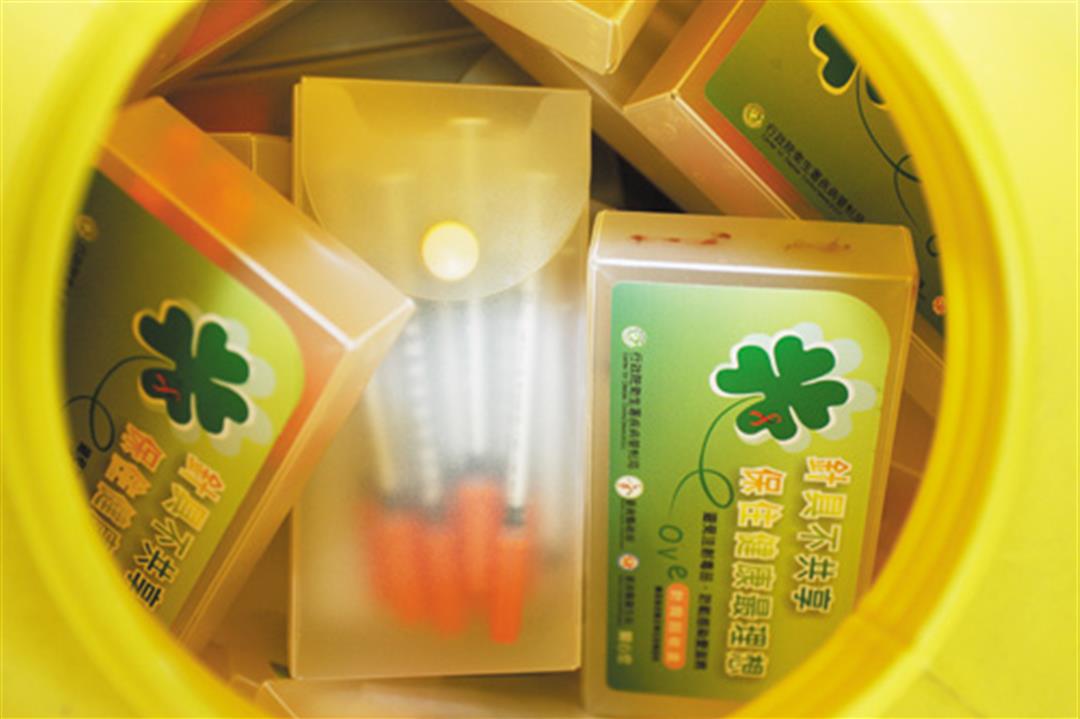
The substance of the program is an offer of free needles to attract addicts, paired with health education and substitution treatment. The program thus integrates the twin goals of fighting drug addiction and preventing AIDS. Though it seems simple, Yen explains: "Building trust with addicts or people infected with HIV takes time, especially given that these are groups that have rejected or maintain a distance from society."
Tainan County's has been the most successful of the DOH pilot programs. As of April 2006, it had distributed nearly 15,000 needles, and its infection rate had fallen from fourth highest in the nation in 2004 to ninth in 2005.
Although the public still has some doubts, the harm-reduction program's successes to date have been sufficient to lead the DOH, which is very concerned about the rapid spread of AIDS in Taiwan, to extend it to the whole island. As we enter June, the new national program is slated to roll out in fewer than three weeks. Personnel from health bureaus around the nation have been visiting Tainan County's 60 clean-needle exchanges to gain a little experience, making Yen's life on the front lines of Taiwan's harm-reduction effort still more hectic.
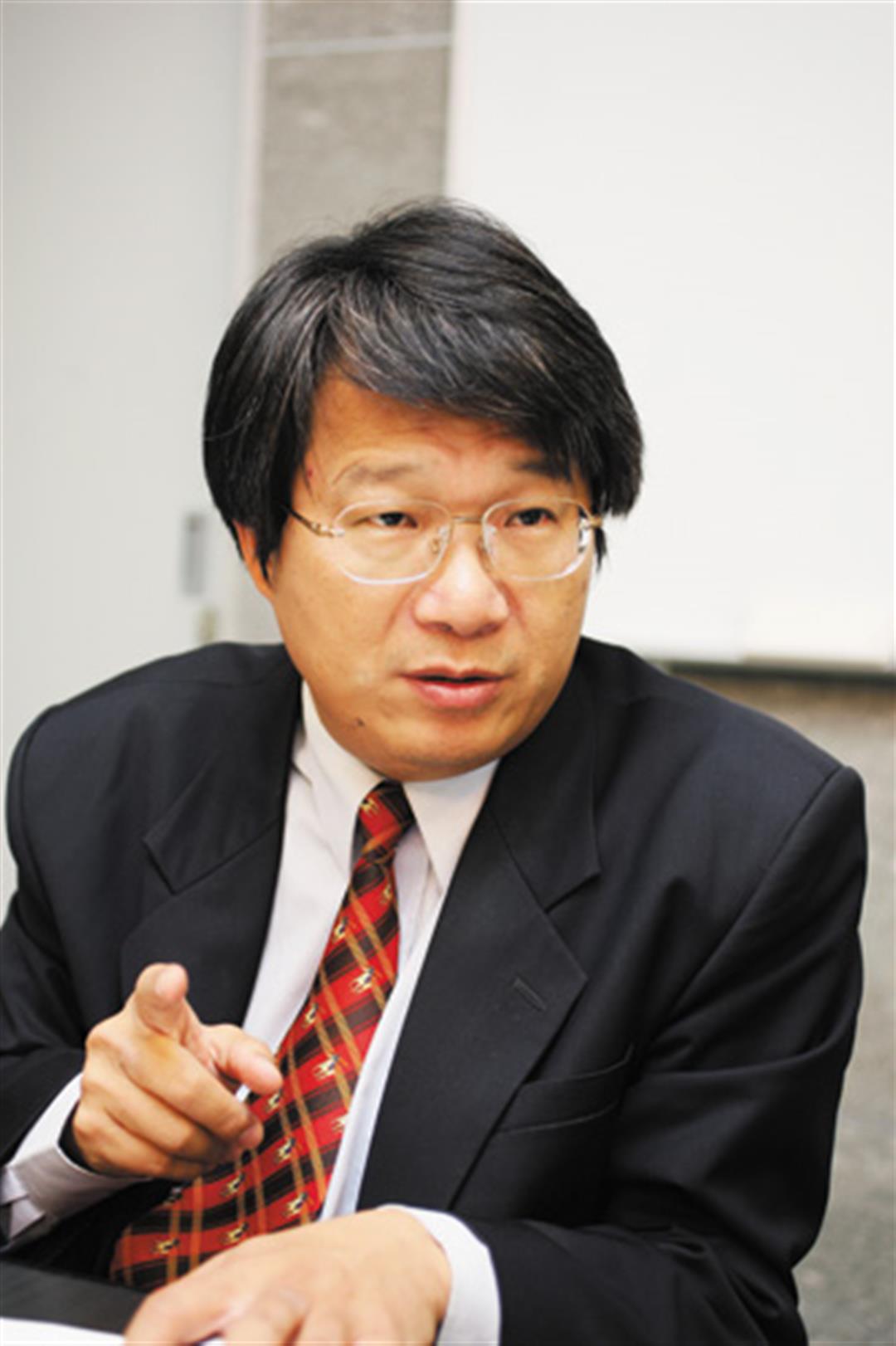
Yen only took up his position as deputy chief executive of Tainan County in early 2004, and at that time had no idea he would be thrust to the forefront of Taiwan's drug- and AIDS-prevention efforts. In fact, his concern for the prevention efforts resulted from a phone call from his mentor, former Minister of Health Twu Shiing-jer.
"I'd only just taken office," Yen recalls, "and actually hadn't given much thought to AIDS. Then, one day, my old teacher Twu Shiing-jer gave me a call. He told me that between January 2004 and September 2004 the number of new HIV infections in Tainan County had risen 300% from the same period in the preceding year. That was really a shock to me."
After examining the numbers, Yen realized that the majority of new infections had resulted from intravenous injections. To better understand how people use drugs, he talked to addicts in several of the county's jails and detention centers. There he learned that the government had stepped up its drug interdiction efforts in recent years, making pharmacies a focus of its monitoring. Consequently, many IDUs no longer dared to buy needles from pharmacies, and instead were sharing needles much more frequently.
Having traced the increase in HIV infections to its source, how was he reconcile the medical question with the drug enforcement issue? How was anyone to balance two major threats to public health? Yen was disheartened. In early 2004, he began to write newspaper editorials on the subject and started researching harm-reduction programs, which had been used abroad for a number of years.
Hong Kong implemented a harm-reduction policy in 1972. As with the majority of Chinese communities, it had problems with widespread opium use in the past. Then, in the 1960s, heroin became popular. The British colonial government spent years trying to interdict the drug, which only forced it further underground and worsened the public security problem. This ultimately led the British to implement a harm-reduction program. More than 30 years later, this program initially put into place to fight drug use has had an unexpected benefit--reducing the spread of HIV through shared needles. The experience of Western nations such as Australia and Finland further demonstrates that countries that distribute clean needles have HIV infection rates at least 20% lower than those that do not.
Healing society's hurts
In March 2005, Yen made use of a trip to Japan with Lee Ying-yuan, then secretary-general of the Executive Yuan, to speak out boldly to Lee. Perhaps owing to Lee's background in public health, the two men understood each other well. Shortly after they returned to Taiwan, then-premier Frank Hsieh called an inter-departmental conference that resolved to implement a pilot harm-reduction program and requested law-enforcement agencies to "go easy" on needle buyers.
Yen gave lectures, distributed flyers, and led county public health workers into jails in which drug offenders were concentrated in a series of efforts to spread information about the program, to show goodwill, and to establish channels for communication with addicts.
"Drug addicts are in and out of jail frequently," explains Yen, "and many of the friends and relatives who visit them there are also addicts. By talking to them, we've been able to get our message to people we can't usually reach." This approach allowed flyers listing the names of public health centers, diagnostic clinics, and pharmacies participating in the needle-exchange program to make their way into the usually inaccessible IDU community. And word-of-mouth took the information directly into places the flyers didn't reach.
"When we first heard the news," says Little K, "we were all suspicious. It wasn't until someone was brave enough to fill out the form, and nothing happened to them, that we dared go."
The second-to-last question on the free-needles form the IDUs fill out asks: "Have you ever considered quitting drugs? As many as 80% of respondents answered "yes," and nearly 40% of those included their cellphone numbers on the form so they could be contacted by a hospital or private organization about quitting.
"We learned something tremendously valuable from the Tainan pilot program," says Lin Ting, deputy director of the Center for Disease Control. "When you protect them, you gradually earn their trust. Of course, in Tainan County, the deputy chief executive oversaw the program himself. He talked to county law enforcement officials directly, and asked them not to interfere with people at pharmacies. That's the main reason addicts were willing to go get needles."
Once the free needles had established contact with IDUs, the program was able to move on to the distribution of methadone, which is used in substitution treatments to end the addiction to heroin. Methadone, a green liquid taken once a day, is still a controlled narcotic in Taiwan. But addicts given a daily dose of the drug are able to work and function normally, their lives undisrupted by their addiction.
A final problem
"Even if they have to pay for it out of pocket," says Yen, "a month's worth of methadone costs only NT$4,000 per person. It's heroin's NT$70-80,000 per month cost that drives addicts to steal, to rob, and to murder. Getting addicts off of drugs greatly improves public security."
"During the trial period, I was most afraid that someone would overdose on methadone," says Lin. "But free methadone is currently being provided to addicts by designated clinics. Healthcare professionals are with them there, and so far there have been no accidents."
Even in Hong Kong, where methadone has been in use for many years, there are still occasional accidents. In April, there were reports of a child dying after consuming methadone that its parents had kept in the refrigerator.
"In addition," says Lin, "less than 1% of needles are currently recovered. We need to see if using needle collection machines can raise this rate in the future."
Other issues remain. "We still need to think hard about which addicts can pay for their own methadone," explains Lin, "and which will have it for free. Most of those who start taking methadone stay on it for life. In terms of both government finances and social equity, we can't give it out free to everyone."
"Some people ask me directly whether spending nearly NT$200 million a year on harm reduction is worth it," says Yen. "I tell them, 'Maybe you should look at how much we spend on AIDS treatment every year.'" Yen says that the Taiwan AIDS Foundation estimates the lifetime treatment cost of a single AIDS patient to be about NT$16 million, and that there are currently more than 10,000 people in Taiwan infected with HIV. If you assume an 80% treatment rate, treating these people will cost more than NT$120 billion.
"Given the rapid rise in the number of people infected with HIV in Taiwan, this amount will grow every year," says Yen. "And it is an expense we all will bear."
The national harm-reduction program is being launched amidst both support and doubts. But Yen thinks that doubts needn't be a bad thing--they lead to discussion.
"I don't think that my proposal is necessarily the best one out there," admits Yen, "but Taiwan is facing a dual threat from drug use and HIV/AIDS. Not taking action quickly is certainly the wrong choice."



@List.jpg?w=522&h=410&mode=crop&format=webp&quality=80)





@List.jpg?w=522&h=410&mode=crop&format=webp&quality=80)