Power Tie:Chunghwa Telecom Rewires Electricity Calculation
Coral Lee / photos Jimmy Lin / tr. by Phil Newell
April 2010
An understanding of energy effi-ciency will be critical in the 21st century. It is therefore also the century in which Taiwan's strongest industry, information and communication technologies (ICT), will really show what it can do. Through computer "intelligence" and the "linkage/integration" capabilities of the Internet and mobile communications, no matter what the setting-production line, daily life, transportation-energy use can be made more flexible, more efficient, and smarter.
According to the Smart 2020 report produced by the Global e-Sustainability Initiative, the ICT industry has the potential to drive major carbon-emission reductions in other industries, enough to lower total carbon emissions by 15% as of 2020 compared to 2002. Ever-alert Taiwanese ICT firms have already sensed these new commercial opportunities, and in recent years the industry leader-Chunghwa Telecom-has come out with a series of services such as "intelligent transport systems," an "intelligent energy network," and "cloud services," crossing over into other fields to play the role of carbon-reduction wizard. In the future, when relevant legislation and infrastructure are mature, CHT will also stake out territory in that trendiest of areas: smart electrical grids.
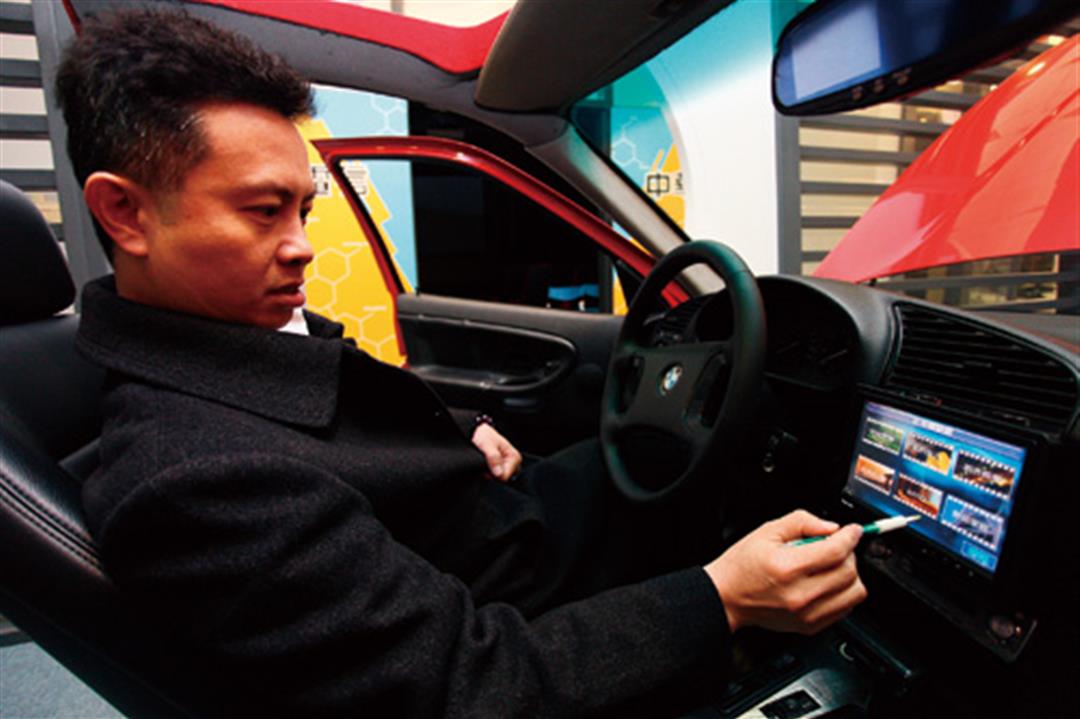
Ordinary citizens are already familiar with "intelligent transportation systems." When urban office workers work overtime deep into the night, and there are no more MRT trains, they just need to call a wireless taxi service, and in a couple of minutes their transportation will arrive right on time.
The "intelligence" that Chunghwa Telecom (CHT) injected into this system lies in the following contrast: In the past the drivers would have to stay in contact with the central control center at all times, and passengers would have to put up with the annoying intrusion of constant wireless chatter: "A passenger on such-and-such a street wants to go to such-and-such a place, which vehicle can go? In how many minutes can you be there?" Then several drivers would respond and the control center would have to decide which one to dispatch, all through crackling bursts of chatter.
Now? The control center receives the call from the passenger, then, from a number of red dots appearing on the map on the main monitoring screen, selects the vehicle that is closest to the passenger, and sends a command to the car's built-in mobile communications device. The driver, in turn, needs only press a button to confirm, and the work of dispatching a vehicle is finished.
This integrated system, incorporating the Global Positioning System (GPS), Geographical Information System (GIS), and General Packet Radio Service (GPRS), is not only faster and fairer than the old system, it can also keep track of the income assigned by the HQ to each driver and moreover monitor on-screen the route followed by each car, serving both management efficiency and passenger safety at the same time.
This system is also widely applied in bank cash-transport vehicles, police cars, and delivery services. Besides ensuring efficient assignment of vehicles, it can also monitor whether drivers exceed the speed limit, park illegally, or depart from their routes to take care of personal business, thereby permitting more efficient use of fuel as well.

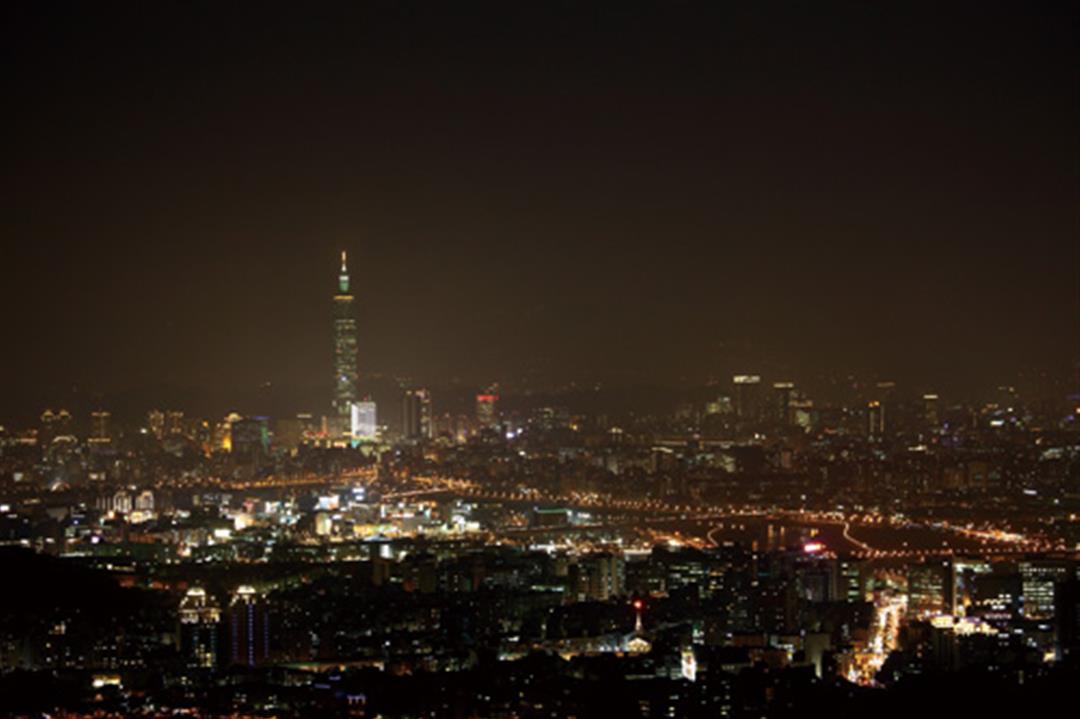
The exuberance of the brightly lit city! Or should that be "the extravagance of the use of electri-city!"? As energy efficiency becomes increasingly important, Taiwan's advanced information and communication technologies (ICT) industry can bring its expertise to bear to make power use more flexible and rational.
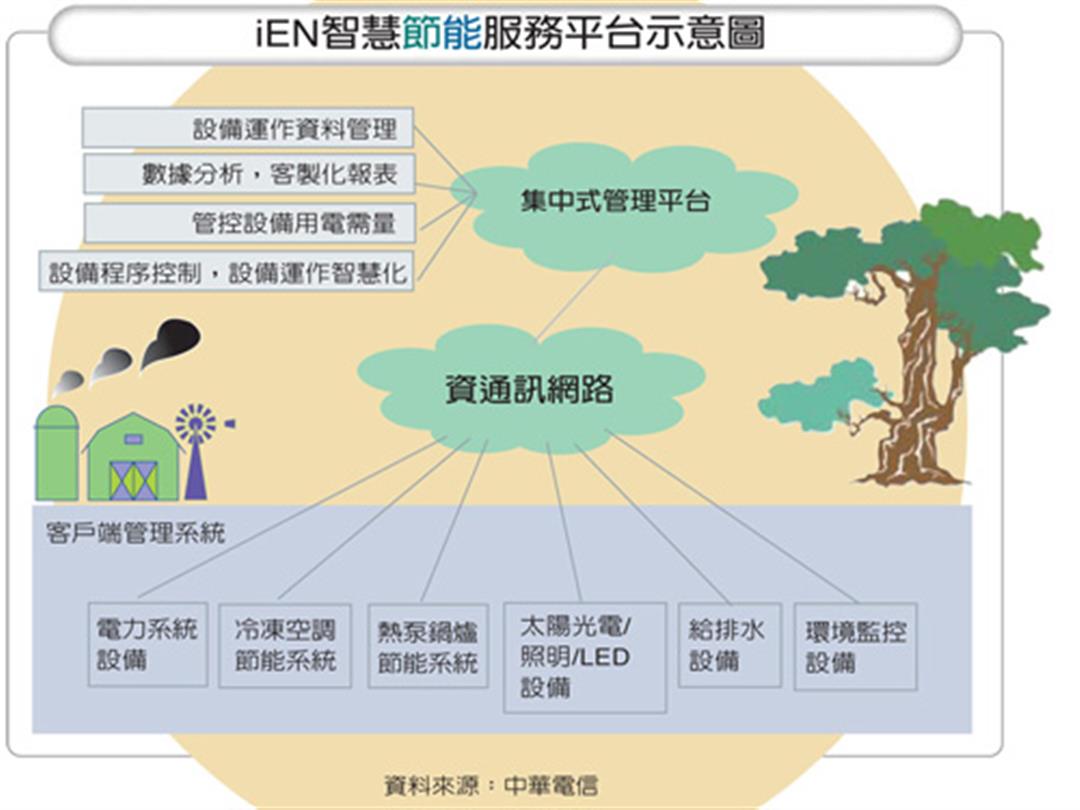
ICT "intelligence" not only can increase the efficiency of transport management, it also has a wide range of applications in office buildings. The iEN (intelligent Energy Network) service that CHT formally came out with last year is a real trendsetter in this respect.
For a given office building or school, for instance, many systems-climate control and lighting in common spaces; heat pumps and boilers; freezer equipment; drainage and sewage systems-all consume huge amounts of energy. Through online linkages (intranet or internet), iEN connects all systems to a central control platform, not only making control easier, but even allowing immediate adjustments (sometimes done automatically according to settings put in by the user, sometimes done with human intervention).
"iEN in fact comes from what we have learned from many years of using ICT to monitor energy conservation in our telephone exchange equipment rooms." Hung Feng-yue, vice president of the Enterprise Business Group at CHT, says that CHT has over a thousand equipment rooms across Taiwan, operating 24 hours a day. In order to reduce power consumption, the company has a built-in system of climate control. For example, during the day when it is hot all 10 air conditioners in an equipment room will be on, with that number reduced after sunset to two sets of five that operate alternately. Moreover, different temperatures can be set for each season of the year. Another consideration is whether the time is a peak one for Internet use or not, because when the server CPUs in the equipment rooms are working especially hard, they release a lot of heat, so there has to be more air conditioning, which can then be turned down during non-peak hours.
In order to create uniform control of its many scattered equipment rooms, CHT developed a model of centralized control at headquarters through Internet linkages. It is estimated that by 2012 this system will have reduced electricity use by 138 million kilowatt-hours, which translates into 86,250 tons of CO2 emissions (a cut of about 10%). "Given the recent enthusiasm for saving energy and reducing carbon emissions, we infer that there will be demand for such a system in other industries, which is why we adapted the system to develop iEN," explains Hung.

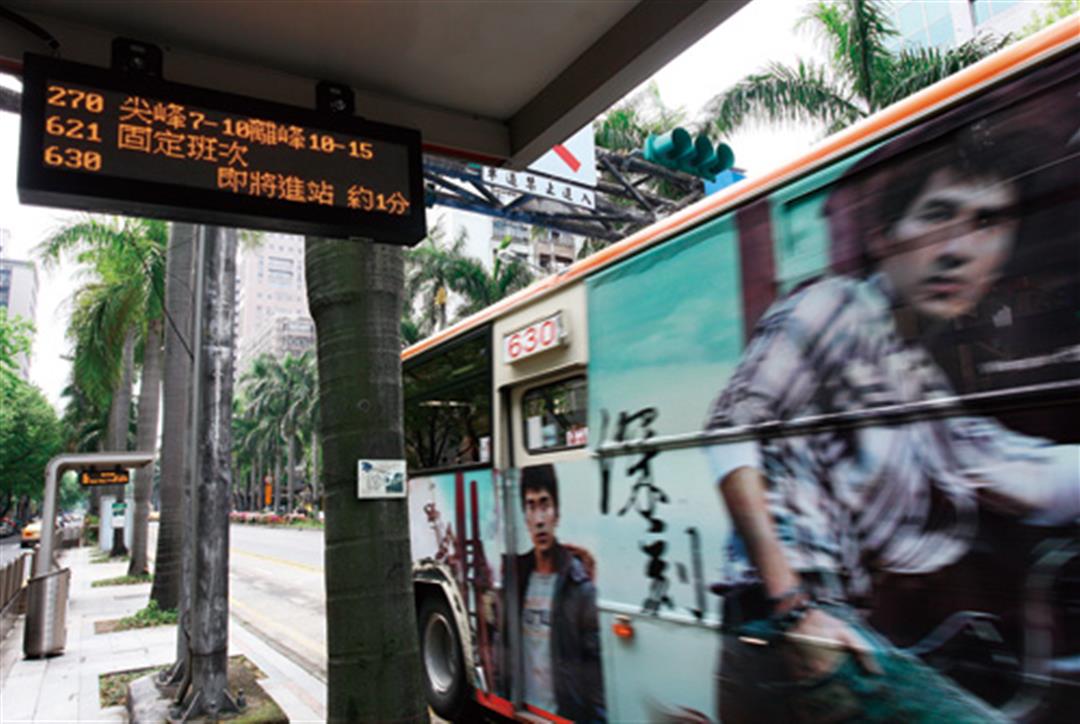
"Bus 630 will pull into the stop in one minute." Chunghwa Telecom's "intelligent transport system" services can be applied to public busses, and in fact are already being tested on several lines in Taipei City.
In fact, the energy arrangements in many office buildings and factories in Taiwan are very extravagant, and it is certainly time to make a comprehensive assessment of their needs.
Looking at electricity, for example, when any building or factory is completed, and they apply for electricity supply, they all sign a "contract volume" with Taiwan Power Company. In order to ensure that there is enough electricity to go around, TaiPower adds a punitive clause for any building that exceeds its contracted volume without forewarning. To avoid being punished, users find it best to assume scenarios with extreme estimates and sign contracts for the maximum possible power demand, despite the fact that they get no rebate if they do not use their full allotment.
Given this ingrained mindset in which everyone is overestimating use to avoid shortages, "factory production facilities like clean rooms often set their contract volume to meet a situation of the production line operating at full capacity in the hottest imaginable weather" says Ma Sheng-shong, manager of the Foundation of Taiwan Industry Service. Consciously or unconsciously this creates waste, just like a 3000-cc vehicle from the moment it is started up is sure to use more fuel than a 1600-cc one.
In order to change this uneconomic model of energy use, in the past few years "energy services companies" (ESCOs) have sprung up in Taiwan. They specialize in diagnosing and treating non-optimal designs and facilities for corporate clients. Because the initial outlay can be expensive, some ESCOs even help their clients negotiate for loans from banks which are then repaid over time from the client's savings on energy costs, creating a situation in which all three parties come out ahead.
"CHT's iEN, in addition to doing what current ESCOs do, also offers 'remote monitoring' and 'dynamic management' functions." Hung Feng-yue adds that "information and communication technologies" is the area in which CHT by nature has a comparative advantage. Having complete Internet facilities and the capability to process enormous amounts of data and do remote monitoring, CHT can take the services provided by ESCOs that are basically limited to improving the energy efficiency of hardware and raise them to international standards. "We are not trying to take business away from the ESCOs, but to complement them to develop a new industry for the future."

iEN allows corporate clients, through a management platform, to monitor and control energy use in all their sites and fields of activity and moreover implement flexible control. Of course, in order to monitor a client's equipment it is necessary to install related sensors and devices to facilitate transmission of information to, and commands from, the central control platform.
Take schools as an example of how the system could function in practice. The control system can be linked to the digitized schedule of classroom use, so that if a classroom has a class from 10-12 in the morning, the system will turn on the power, lights, and climate control at 9:50, and automatically turn everything off when class is over. If someone wants to use the classroom at non-scheduled times, they have to apply online in advance.
IEN also applies management techniques to "compel" users to change their habits.
For example, if in a certain area of a building people often forget to turn the lights or A/C off when the workday is over, the system will send a text message to the building superintendent, and after the super ensures that no one is in fact working overtime in that area, he can turn off the lights and A/C directly through the system, which makes a record of the action. As a result, there will be "decisive evidence" of which units in the building have the worst habits, and they will not be able to escape being closely watched by central control.
If iEN is applied in a factory, it offers even more amazing possibilities, such as the "optimization" of management of the electrical system. The control system not only provides a statistical overview of the client's actual power use, suggesting a new and more appropriate contract volume, it also provides a detailed analysis of the distribution of power use each month and "dynamic management." For example, it will suggest that the client reschedule certain production-line activity to off-peak hours, when power is cheaper.
In order to ensure that the factory is not fined for power use that exceeds contract volume when it is operating at maximum capacity, the system will precisely calculate the energy use of each piece of equipment or facility, and issue a warning when "critical mass" is reached. At that point, power supply can be temporarily suspended to certain locales in accordance with a priority list drawn up by the client, while those areas that absolutely cannot have any power lapse proceed normally.
Building in incentivesMoreover, because the energy efficiency of a factory's production process is inextricably linked to the energy efficiency of its parts, businesspeople are well aware that they can only increase efficiency by getting new equipment. "But if you only get new machinery but don't maintain it, energy efficiency will get worse year after year."
Wang Gaoxiong, director of the Corporate Services Deparment at CHT, points out that generally speaking, "maintenance" means at most sending someone to inspect and repair equipment at regular intervals. But if there is no long-term data as a standard, engineers often cannot be sure whether energy use has gone beyond normal parameters. With iEN, on the other hand, because there is constant monitoring, whenever any part of any facility experiences a statistical deviation (because, say, parts have come loose), a text message will be sent to the factory to do maintenance. This early warning system, under which gear can be tweaked before enough damage has been done to put it out of order entirely, makes it possible to keep equipment in optimal condition for the long haul, and energy efficiency will not erode over time.
The bill for these advanced services includes (a) system installation and (b) follow-up maintenance and supervision. The former varies depending upon the amounts of monitoring and control equipment required and number of sites, ranging from a few tens of thousands of NT dollars to the tens of millions. (Clients also have the option of renting needed sensors and information systems.) The latter are mostly paid for on a monthly basis.
In the year since iEN has come out, many hospitals, schools, and government agencies have started using it. Regrettably, few private companies have adopted it, largely for lack of government subsidies.
Another reason, one that has been a problem long criticized by environmental activists, is that electricity prices in Taiwan are too low, so there are few incentives for corporations to reduce energy use.
However, CHT estimates that over the next three years there is a potential market of at least NT$2 billion per year. At the same time as they anxiously await changes in government policies, they will take every opportunity to give their troops experience and training, because the planet can't wait, so how can Taiwan?