

Are you familiar with the big temple procession in Hsuehchia Township, where they "visit Baijiao?" It's one of the most famous temple festivals in southern Taiwan. But Hsuehchia Township is in Tainan County, while Baijiao is in China's Fujian Province, so what's the connection between the two places? What's the special significance? The story begins in the mid-17th century, in the reign of the Ming emperor Yongli....
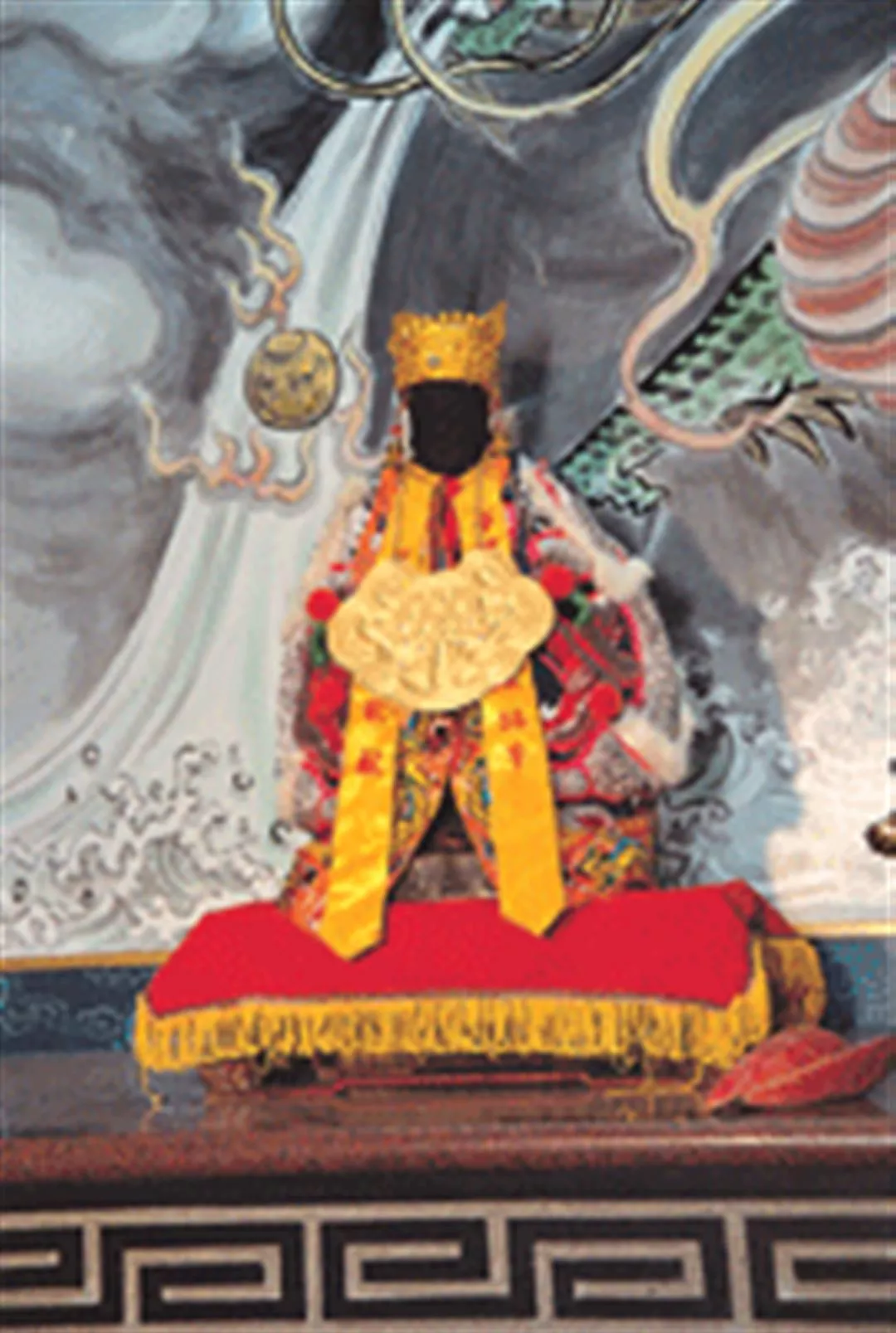
Over 300 years ago, the people of Baijiao Village, Tongan Township, Fujian Province, sailed to Taiwan with General Koxinga. For divine protection on their journey and in the arduous task of settling a new land, they took along a statue of the Great Emperor Baosheng from Ciji Temple in Baijiao Village. Once in Taiwan, they built a temple in honor of the Great Emperor.
After the new Tsuchi (Ciji) Temple was completed in Taiwan's Hsuehchia, the faithful would transport the statue back to the mother temple in Baijiao every year about four days before the Great Emperor's birthday, so that he could pay his respects there. This custom continued into the Japanese colonial period, but came to an end when cross-strait travel was cut off in the 1920's.
After Taiwan reverted to Chinese rule in 1945, worshippers came up with a way to deal with the difficulties of travel to Fujian. They decided that the Great Emperor could pay his respects in Tainan on the banks of Chiangchun Creek at the spot where the earliest pioneers had first set foot in Taiwan. There they built Paichiao (Baijiao) Pavilion and erected a memorial so that township residents could carry out the annual ceremony at a distance, as they do to this day. At the end of the ceremony, they always draw water from Chiangchun Creek to symbolize their awareness that "when drinking water, one must remember the source," i.e. be grateful, in this case to their ancestors for pioneering the land that is now their home. The proceedings at the pavilion are referred to as "visiting Baijiao." When the faithful "visit Baijiao," they worship both a god and their ancestors. The ritual is unique among Taiwan's temple festivals in this sense.
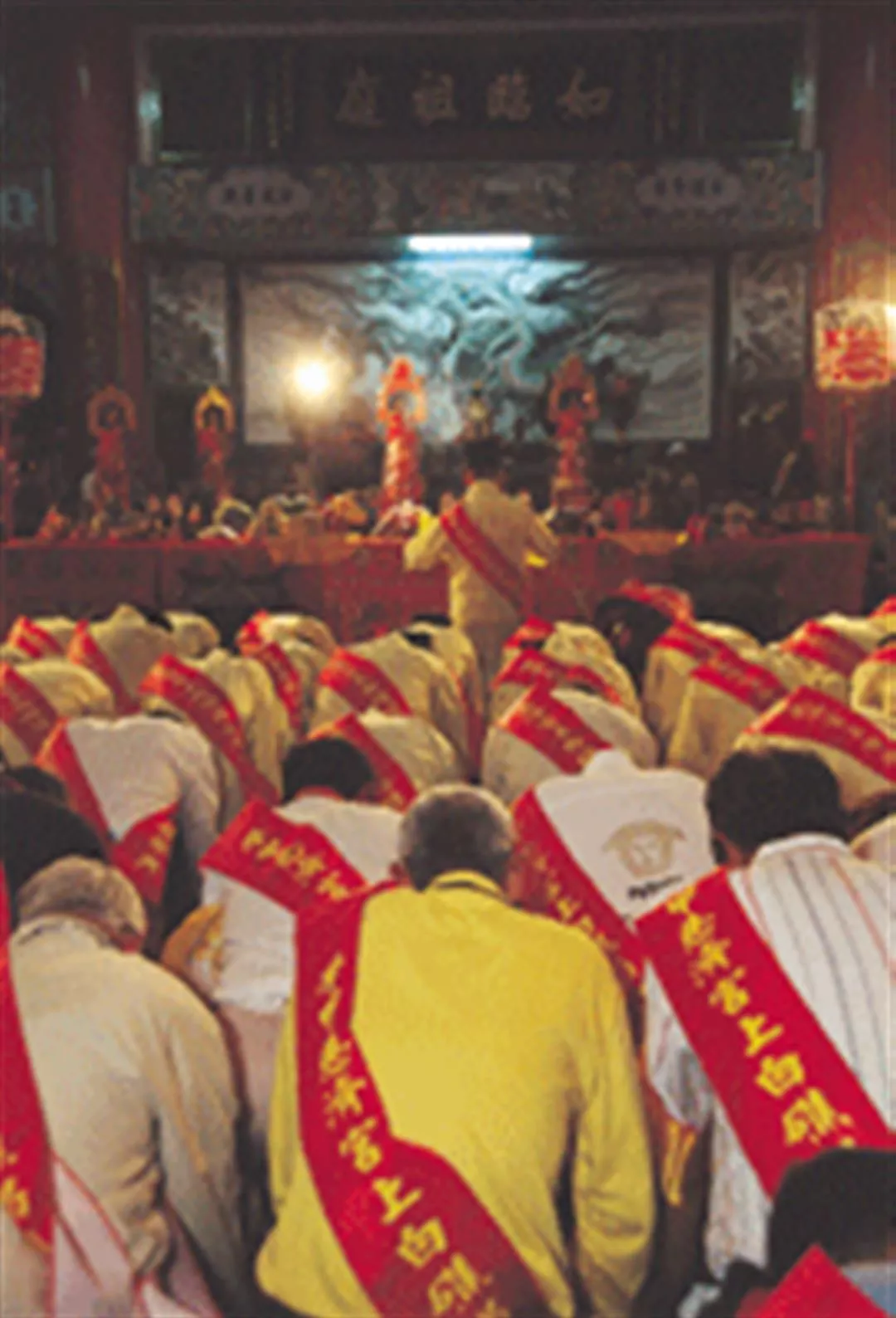
The "visit to Baijiao" ritual involves worship of both deity and ancestors. The celebrant observes all the old rules, performing three triple kowtows to show that the local populace has not forgotten the sacrifices of their ancestors.
Procession to Baijiao
Tsuchi Temple is the principal center of religious worship in Hsuehchia. After nearly 60 years, the annual visit to Baijiao has become deeply ingrained local lives and culture. The visit to Baijiao takes place each year in the middle of the third lunar month. In this sleepy little township, it is a major event.
As the time for the visit nears, preparations get in gear. Residents hang a big red banner from the archway over the main street to announce the procession that will mark the visit. The atmosphere is full of excitement and happiness, not unlike during the preparations for a wedding. Locals sit around talking of little besides the visit. "How many palanquins do you suppose there'll be this year? How many floats will there be in the procession? How many festival troupes are gonna come? I heard so-and-so's kids will be in the centipede march. So-and-so's kid got lucky with the divination blocks, so he's gonna play the emperor...."
The anticipation builds until the ceremony gets officially underway at 6 a.m. on the appointed day. Temple authorities first hold the main worship rite. The head celebrant burns incense to send birthday wishes to the Great Emperor Baosheng, then performs three triple kowtows. Some 100 palanquins and festival troupes now begin converging on Tsuchi Temple from all over the surrounding region. Throngs of worshippers, food stalls, and roadside hawkers selling folk arts totally block off the road in front of the temple, and a festive air, charged with even more energy than Chinese New Year, descends upon Hsuehchia.
After this ceremony, the festival troupes kick into action, inviting the Great Emperor to come out from the temple. The Great Emperor boards his palanquin, and a procession some three or four kilometers long begins snaking its way through the streets, heading to Paichiao Pavilion about four kilometers away, to remember the ancestors.
Some say that the most fervent participants in temple festivals are there to see all the festival troupes in action. Blame it on the charged atmosphere, or on individual hysteria, but whatever the cause, people go into frenzy at these festivals. In moderate cases, perhaps someone's tears flowing without them even knowing it. Others say that just the sound of the gongs and drums really stir you up, and you can run around all over the place without feeling the slightest fatigue.
Temple administrative director Liu Yi-jen says that temple festivals all over Taiwan are pretty much the same, but the main difference with the visit to Baijiao is the performances of the festival troupes. About 100 troupes of all descriptions (including flower drum dancers, drum dance troupes, buffalo-and-plow troupes, and Song Jiang martial arts troupes) come in from as far away as Kaohsiung, Taitung, and Nantou. They come to deliver birthday greetings to the Great Emperor, and the air fairly crackles with their energy. Contrasting the visit to Baijiao with the huge Matsu procession of Tachia, Liu notes that the most notable feature of the Matsu procession is the huge crowds of pilgrims who follow it along the procession; the festival troupes at Tachia are a bit less impressive. Although plenty of people also take part in the visit to Baijiao, in this case it is really the numbers of troupes, their high-quality performances, and the vigorous participation of many temples that make the visit to Baijiao so special.
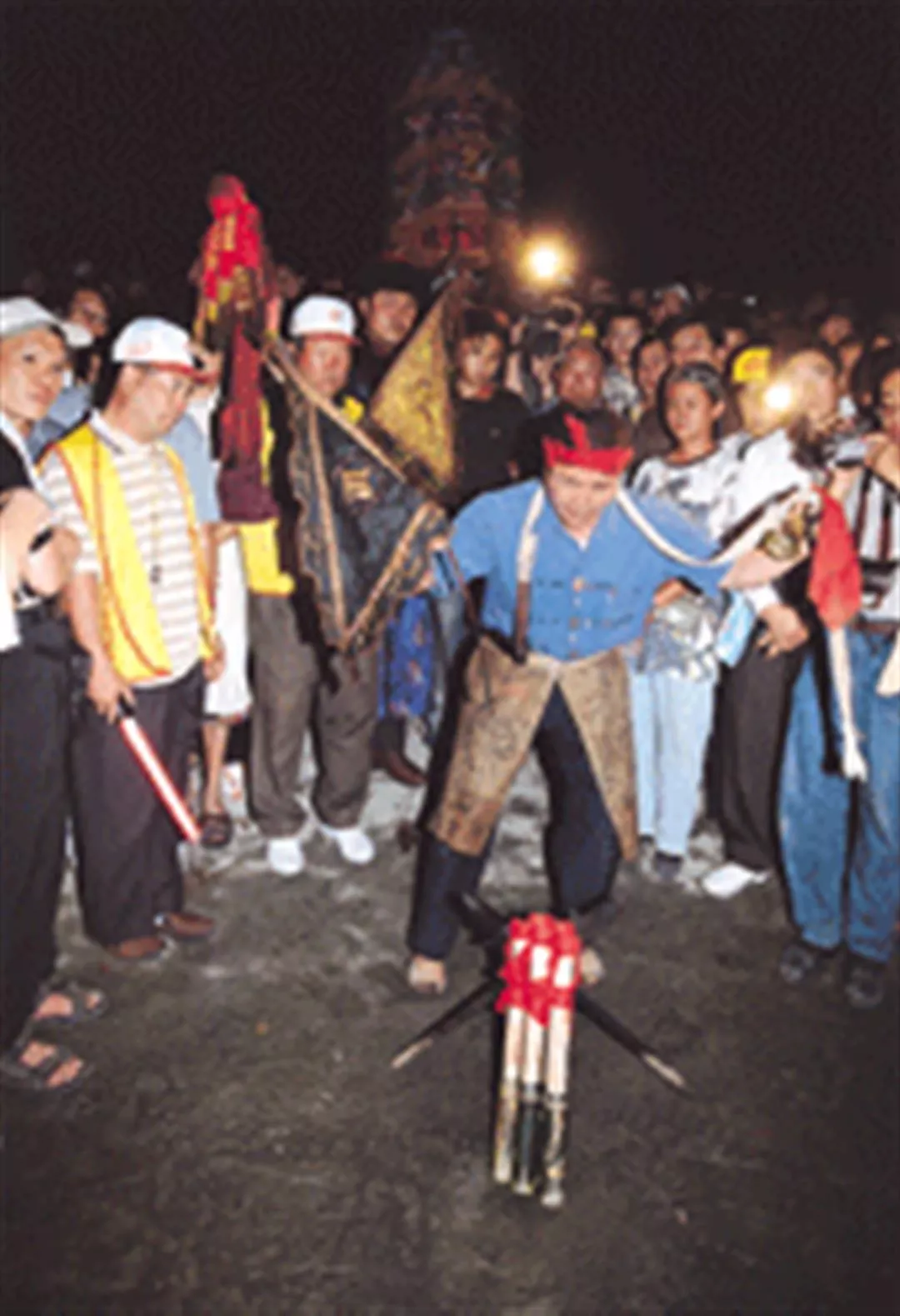
After finishing the ritual for paying respects to the deity, the head celebrant heads to the banks of Chiangchun Creek to draw water, symbolizing the awareness that "when drinking water, one must always remember the source," i.e. be grateful for what others have done.
The big festival
The visit to Baijiao takes place every year and wraps up in about a day, but once every four years Tsuchi Temple elects a new board of trustees and supervisors, and the occasion is marked by the Hsuehchia festival.
The main difference between the big festival and the visit to Baijiao is that the procession doesn't just go from Tsuchi Temple to Paichiao Pavilion. Instead, it spends three days passing through all 13 districts in the township, stopping for a short while before every temple large and small in each district to supplicate the gods for good fortune and protection from adversity. The faithful cover a good 100 kilometers each trip out, and don't go to Paichiao Pavilion to show reverence to the ancestors until after the last procession on the third day has finished up.
The festivities peak on the last night. After the ceremony to enthrone the Great Emperor Baosheng, everyone waits in Paichiao Pavilion for all the worshippers and temple troupes to arrive, which usually doesn't happen until around midnight. The normally quiet village is bathed in light this evening, and awash with the sound of revelers. Residents come from near and far to catch the once-a-year excitement. Bottle rockets fly, fireworks flare, firecrackers pop, and air horns (suddenly a big item in recent years) blare. The festival now enters its climax.
After all the temple troupes, floats, and palanquins arrive, the "distance ritual" gets started in the pavilion. Everything is done just as in centuries past, in a very solemn atmosphere. First, the spirits of the departed are worshipped, appropriate passages are read, flowers and fruits are offered up, and the celebrants bow in deepest reverence for those who have gone before. Next, they pay homage to the main Ciji Temple on the mainland. Finally, they draw water at the banks of Chiangchun Creek before returning to Tsuchi Temple, bringing the festival to a close at three or four in the morning.
This is the year for the four-yearly big festival. In the early morning, Generals Fan and Xie, gods who've been invited over from Youming Temple in neighboring Chiali, arrive at Tsuchi Temple and take up positions on either side of the main gate. As worshippers pass by the generals on their way into the temple, they stop to have the generals drive away malevolent spirits.
Everyone living along the procession route has a table set up outside their home arrayed with offerings of flowers and fruit. They also have lots of drinks on ice in buckets, which they hand out to those in the procession.
In addition to refreshments for deities and humans, the locals don't forget to care for the animals. Some put out a big wash basin next to their table, full of water, yam sprouts, and fresh hay for the messenger, an "ox" hand-picked by the Great Emperor Baosheng himself.
After firecrackers start exploding in the distance, the messenger shows up at the entrance to the village, signaling the imminent arrival of the temple troupes. Villagers waiting in twos and threes under the shade trees rush to call family members out from home. Everyone lines up along the route, some holding sticks of burning incense, others with hands folded in prayer, to greet the palanquin and entreat the deity for his blessings. The children atop the dancing centipede throw out candies to the crowd, and everyone scrambles for their share of the auspicious treats.
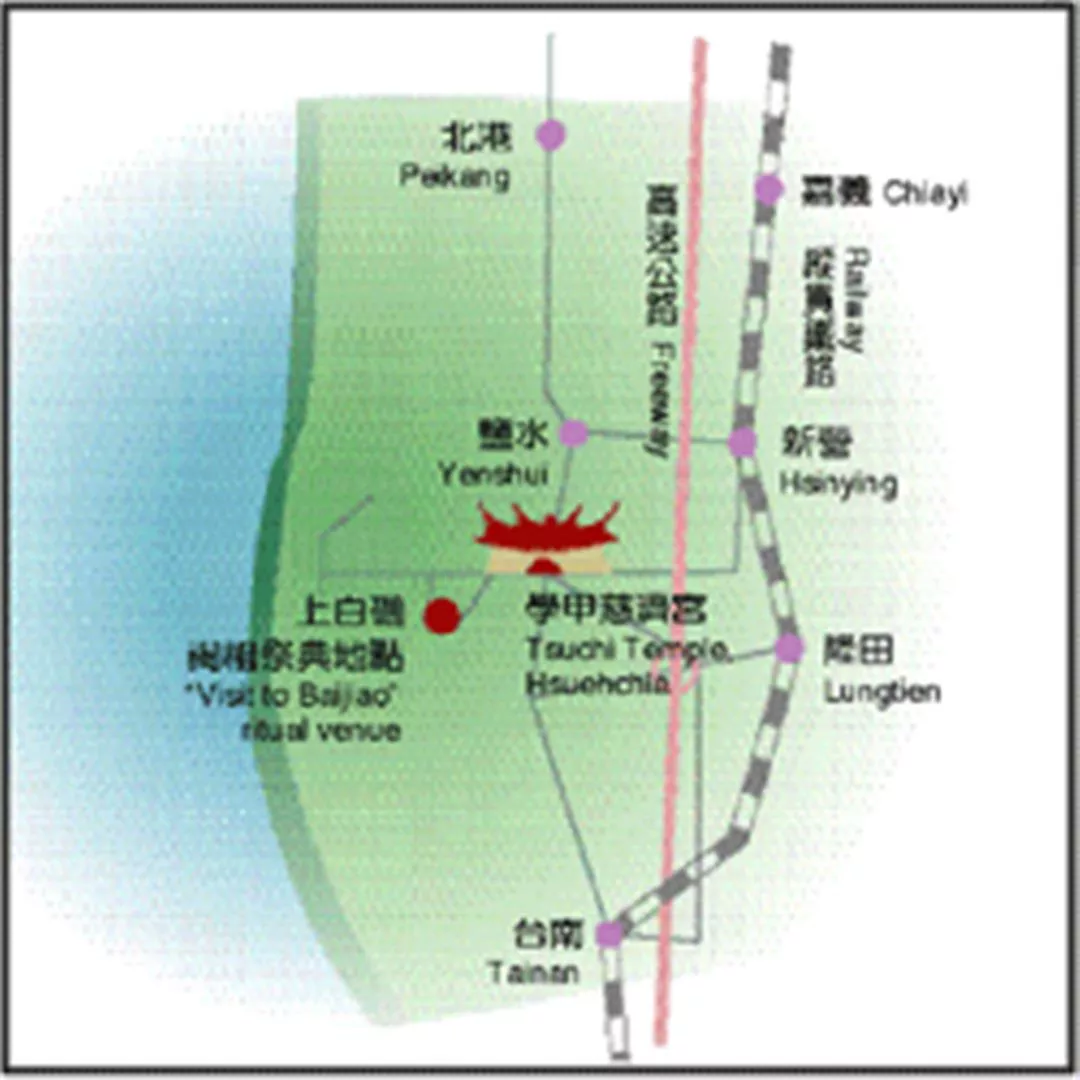
Tainan
Blessings from the centipede
The centipede march is the largest and most eye-catching of all the traditional performances during the visit to Baijiao. According to tradition, the centipede god is an incarnation of the green dragon spirit, come to earth to lend his assistance to the Great Emperor Baosheng. Because of meritorious service rendered in this capacity, he was appointed Protector of the Great Emperor. He is a powerful banisher of evil.
The centipede march, which dates back over 120 years and has always led the way in the Great Emperor's processions through Hsuehchia, is performed by 36 local boys and girls, all of whom must be seven to 11 years old and weigh no more than 30 kilos. They sit atop a platform built from 18 wooden planks. Adults carry the platform through the streets on their shoulders.
Temple head Wu Hsiang-mao explains that having the centipede pass over you will protect you from evil, which is why many residents make sure to get out along the procession route and wait on their haunches for the centipede to come and pass over them. But the huge number of people wanting "the treatment" was slowing the procession too much, so in recent years they've had the centipede circle five times around each temple on the route. Anyone inside the circle benefits just the same as if the centipede had passed overhead.
The kids riding on the centipede dress up as characters from a different theatrical piece each year to add to the festivity. The centipede march motif is generally based on popular historical legends, such as The Water Margin or other perennial favorites.
There's always an emperor in the piece, who sits at the very end of the centipede to highlight his exalted position. The task of choosing which boy will play the emperor is a serious matter. To make the choice, divination blocks are cast before the Great Emperor in an atmosphere of great solemnity.
The motif this year was based on The Legend of Yue Fei. Playing the part of the Song emperor Gaozong was Chen Te-hsin, a second-grader at Yuhu Elementary School in Peimen Rural Township. He landed the big role over about a dozen other candidates. All three of his older sisters had already performed in the centipede march, and the Chen family felt it an incomparable honor that their boy's lucky throw of the divination blocks landed him the emperor's role.
The "visit to Baijiao" at Tsuchi Temple in Hsuehchia Township is a big annual event. Surrounded by throngs of worshippers, nearly 100 temple troupes prepare to set off on the procession back to the temple.
A day atop the centipede
On the day of the festival, as young Chen Te-hsin rode past his school on the back of the centipede dressed in the emperor's robes, his classmates were all there to greet him. He tried to throw them candy, but they were too far away, so a teacher had to scoop up a bunch and take it back to them.
In years when there's a big procession through the whole of Hsuehchia, a different group of 36 kids rides atop the centipede each day, for a total of 108 centipede riders. Parents who want this honor for their kids have to donate about NT$15,000 to Tsuchi Temple, and the figure goes higher for the three boys who play the part of emperor.
Kids riding the centipede have to get up at a bit past three in the morning and go to the meeting place to put on their makeup and costumes. They will be atop the writhing centipede all day long, so to make sure no one falls off, they are all strapped into position. But kids are kids, and their behavior during the ride provides no little entertainment to onlookers. Some fall fast asleep, oblivious to the frenetic crowds. Some get quite enough of the interminable ride and cry to their mothers walking alongside. Still others complete the ride with aplomb.
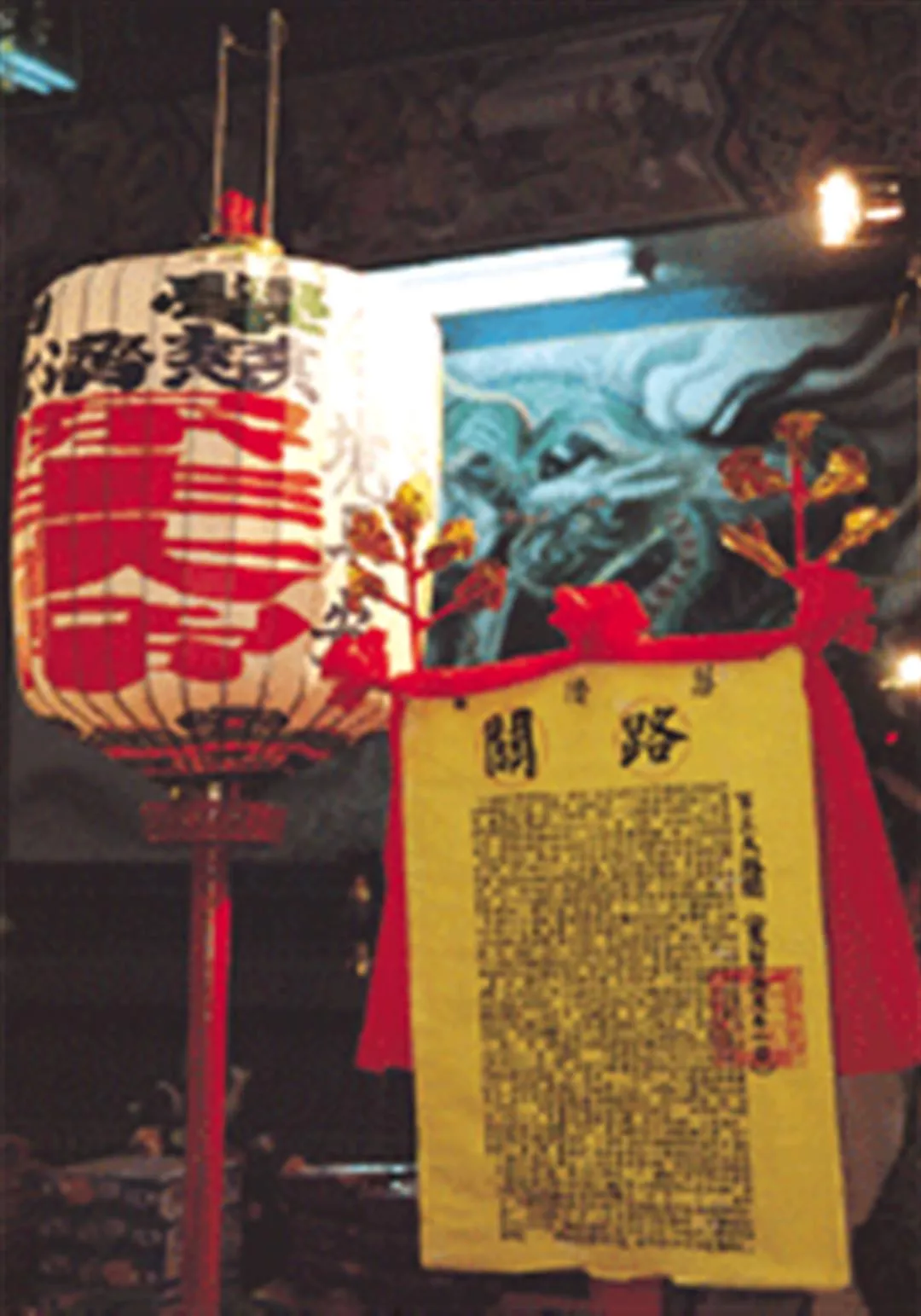
The main purpose of the three-day procession around Hsuehchia Township is to beseech the gods for their blessings. The barrier shown here has been placed ahead of the temple troupe and serves notice upon all local denizens, whether human or spirit, that any malevolent being who dares cause a ruckus on this auspicious day is in for a whuppin'!
Sticking to the old ways
The centipede march is actually a feature of many temple festivals, but in recent years a lot of temples have taken to transporting the centipede on floats snazzed up with all sorts of electronic gadgetry. These centipedes have the sparkle of modern technology, but lack the natural simplicity and cohesive force of the old-fashioned centipedes, not to mention the festive feeling that comes from seeing the centipede moving slowly along on the shoulders of sweating, straining adults, displaying their will and stamina. This is what Tsuchi Temple is most proud of.
Because the procession lasts an entire day, 150 centipede bearers are hired to carry the 36 kids along the 30-kilometer route. The bearers work in two shifts and relieve each other throughout the day. Over the course of three days, quite a bit of money is spent on the centipede bearers.
According to Wu Hsiang-mao, the total cost of the procession through Hsuehchia Township is about NT$5 million, over a third of which is for the centipede march. This reflects the tremendous importance of the centipede march to the festival. The tenacious attachment of local residents to their traditions highlights the seriousness of their reverence for their ancestors and the temple across the strait where their patron god came from. It all may seem a bit out of step with the times, but their insistence on tradition is all the more deserving of our esteem for that very reason.
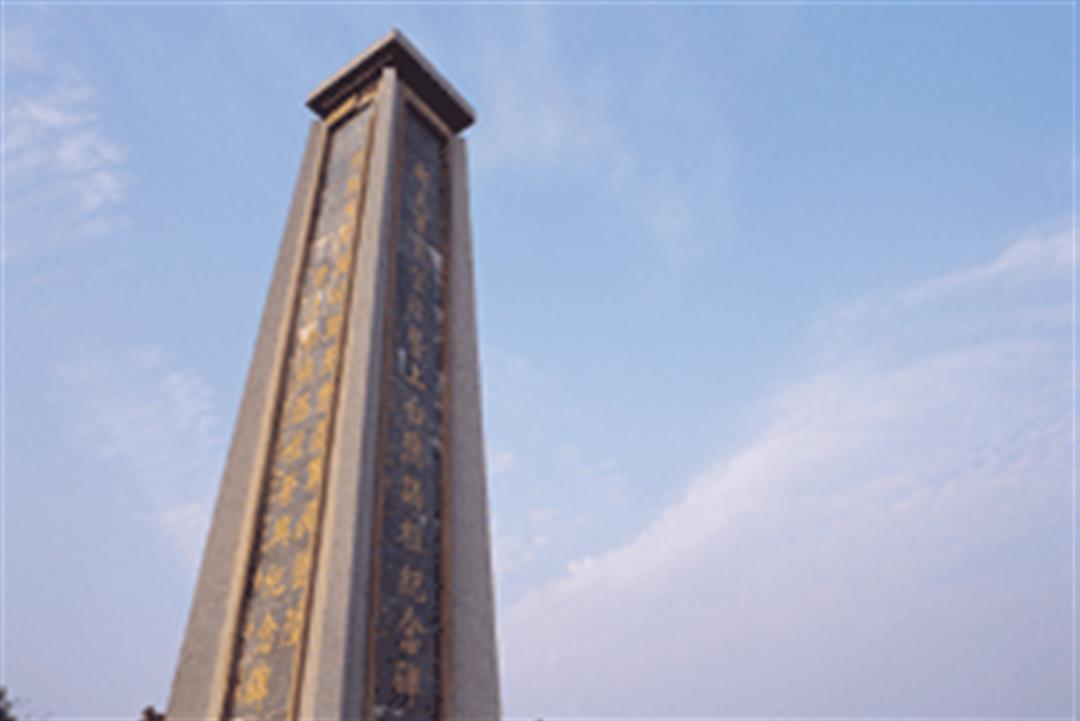
Out of gratitude for the arduous labors of their ancestors who first settled Taiwan, the modern inhabitants of Hsuehchia erected a memorial on the banks of the Chiangchun Creek where the ancestors first hit land. It is here where they pay homage to the main Ciji Temple in mainland China.


(facing page) In preparation for the "distance ritual," a Song Jiang martial arts troupe does a performance before the celebrants enter Paichiao Pavilion, using its consummate martial arts expertise to set the stage for the ritual to follow.

The centipede march, performed by 36 local children, is the star of the temple troupes performing for Tsuchi Temple's Great Emperor Baosheng.


@List.jpg?w=522&h=410&mode=crop&format=webp&quality=80)
