The Tatung Institute of Technology
Florence Li / photos Vincent Chang / tr. by Peter Hill
October 1986


Two years ago, a female student at the Tatung Institute of Technology missed class without an excuse. Her professor called both her parents' and her sister's homes, but no one answered. Then an idea dawned on him. He phoned the Tatung home repair service, gave them her address, and asked them to send a truck out. Sure enough, she was at home.
Most university students don't think much of skipping classes, and their professors usually have no way of finding them if they do. But at the Tatung Institute of Technology, skipping classes is taken very seriously. As for tracking down students, as this professor did, it helps that the school's president, Mr. Lin Ting-sheng, is also Chairman of the Board of Tatung Co.
The spirit of the institute is a reflection of its president. As Chairman of Tatung Co., Mr. Lin knows well the importance of coordinating theory and practice. Therefore, for every hour spent studying theory at the school there are three hours of experimentation. Specialists from the company teach classes at the institute, and students spend winter and summer vacations undergoing practical training--at Tatung Co., of course.
Therefore the students have only one week each of summer and winter vacation. As Mr. Lin sees it, however, vacations should be done away with anyway; in this age, he feels, it is imperative to put every ounce of effort into catching up to the developed countries.
In his opening speech to new students, he says: "For every eight hours of work the employees of leading companies put in, we have to put in over sixteen." Hence, it is unthinkable to Lin that students should miss classes without an excuse.
If Tatung Co. is to achieve its goal of encompassing Europe, the Americas, and Asia in its sphere of operations, then its employees, in addition to having a sound basis in theory, good practical experience, and a diligent work attitude, must be fluent in a foreign language. For this reason, in addition to English, the institute's students must study a second foreign language. Graduate students, in addition, must take a six-week intensive course in English before beginning their studies.
The institute's curriculum is designed to give the students, in addition to an education in their field of study, a better understanding of the world around them. Huang Cheng-ching, the school's dean of studies, points out that the institute and Tatung Co. have an intimate relationship; and because of their coordination of theory and practice, the development of the school has become a reflection of the growth of industry in the ROC
In 1943, the founder of Tatung Co., Lin Shang-chih, realized that the fostering of human resources was prerequisite to industrial development, established the Ta- tung Vocational High School. In 1956, three new departments were created, in electrical engineering, mechanical engineering, and business management. The latter was created out of the realization, as Tatung began undertaking steel production, of the importance of good management to its success in that field. In 1963, the school became the Tatung Institute of Technology. In 1970 the Department of Chemical Engineering was added. Later, with the development of the ROC's foreign markets, the Department of Industrial Design was established. And with the development of the information industry in the 1980s, the institute has added the departments of Information Science, Applied Mathematics, and Materials Engineering.
The institute's newest department is the Department of Biological Engineering; it is currently the only school on Taiwan with such a department. In the West, especially the United States, bioengineering technology is being used for the production of chemicals, agricultural products, and medicines such as insulin. For the past four years, the institute and Tatung Co. have working cooperatively on developmental research in this technology. One of the fruits of this effort is a product called Cyclodextrin (CD). Although invented by Tatung Co., the company is prepared to let other companies find new uses for it. Says Hsiung Chieh-tien, director of the Department of Biological Engineering: "We'll sell CD to other companies, and they can use it to develop new products." The department began recruiting students this year, and has so far accepted 45 applicants.
Presently, there are 165 full professors, assistant professors, and lecturers at the institute. Among them, a full 37 percent--62 teachers--have received funding from the institute for their educations. Youth is a special characteristic of the school's faculty; many of the department heads achieved their positions before the age of 35.
The school is known for taking special care of its students. The supervision of the students' lives is famous for its strictness, and has earned the school the unofficial name "the Tatung Military Academy." Originally, the school's regulations dictated that, among other things, the students wear uniforms all year round--white shirts and black slacks, with khaki jackets in the winter; that the male students have their hair cut short every three weeks; that the students obtain written permission to leave the school grounds and that the students assume the responsibility of keeping the campus clean. These rules are naturally not as strict as those of a military academy; nevertheless, students longing for the carefree college life were apt to be disappointed. The institute's strictness has won it some media attention, as well as some criticism. Despite a certain amount of pressure, however, the school sticks to its system of regulations.
The institute was all male until four years ago; the first year, there were only five female students, and the male-female ratio is still ten to one. As a result, some female students still feel a bit apprehensive in their surroundings. This ratio also causes difficulties--of a social nature--for the male students. In order to meet women, many of them make their way over to one of the nearby junior business colleges, like Min Chuan Women's College of Commerce.
Another arena for socializing is the Tatung Co. itself. As one department head puts it: "After leaving the school gates, one naturally heads for the company." Besides the students' practical training and the professors' research work, the institute and Tatung Co. are closely related through their cooperative development of new products and systems: of the 230 research projects carried out at the institute in the last academic year, 218 belonged to Tatung Co.
Because of this close relationship, the institute is often seen by outsiders as a training ground for the company. According to statistics, though, only about 20 percent of institute graduates are employed by the company. As Dean of Studies Huang Cheng-ching points out, the school's students receive no public assistance, and they are neither obliged to work for Tatung Co. nor assured of finding employment there when they graduate.
The number of institute graduates employed by the company can be attributed to a tacit understanding cultivated over time between the company, the institute's professors, and the students. Says the head of the Department of Electrical Engineering: "The first thing we consider in applicants is their moral character; then we look at their scholastic abilities. And after graduating from the institute, you can be sure students will be responsible and conscientious workers."
In short, for Tatung Co., it's not only the quality of the products that counts, but also the quality of the people behind them.
[Picture Caption]
The Tatung Institute's landscape, though not large, is secluded and shad y.
Along with the founding of the Department of Bioengineering, the institute established a biological museum. Pictured is one of the museum's exhibits.
Blink your eyes, and the Tatung plant has become an indoor athletic field.
(Above) One corner of the semiconductor laboratory.
(Below) A color experiment class in the Department of Industrial Design.
A white shirt, black pants, and short hair are trademarks of Tatung Institute students.
Minority students at Tatung take advantage of extracurricular activities to display their charm.
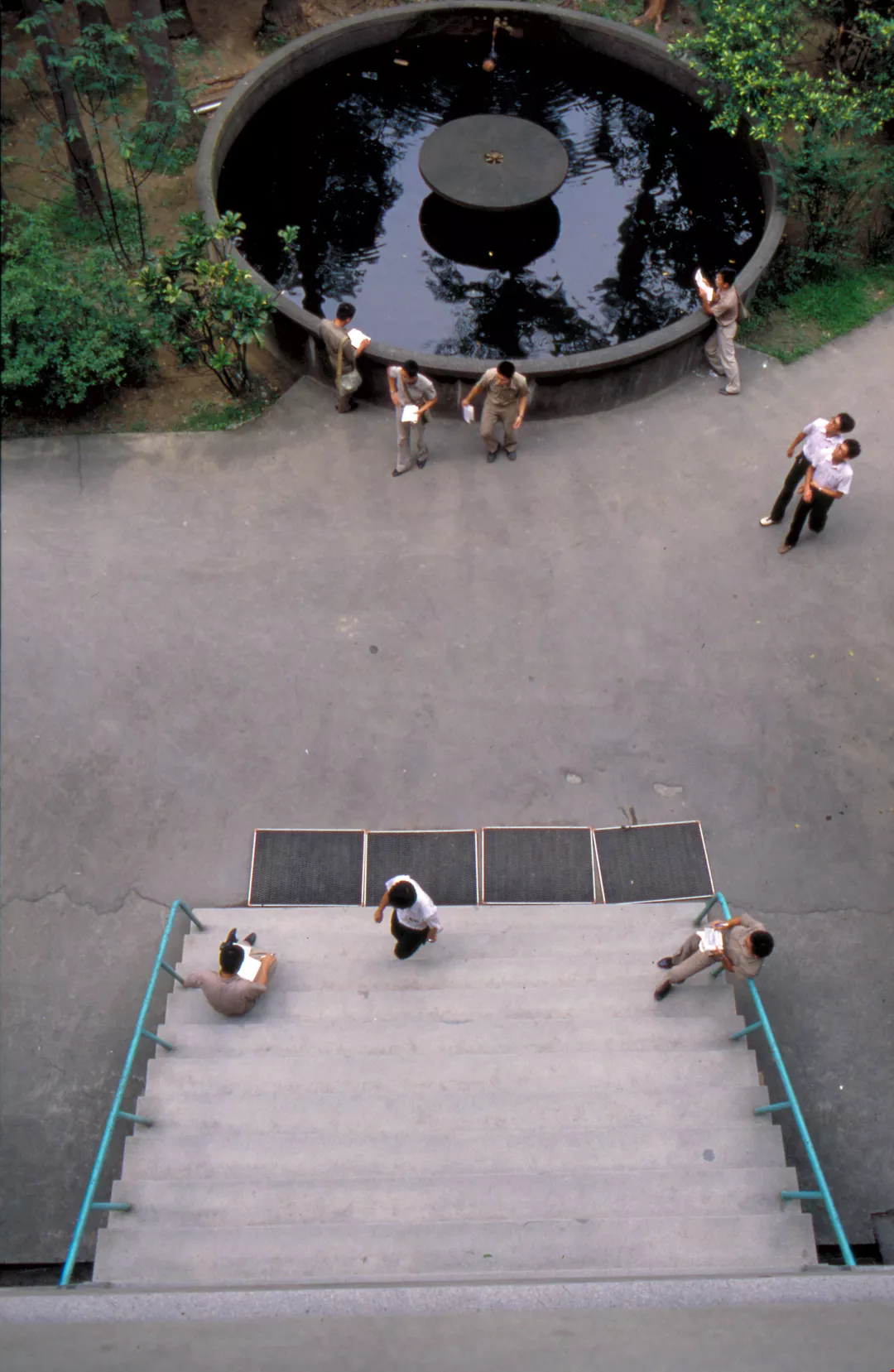
Behind the carefree faces and pretty scenery lies no small amount of study pressure.
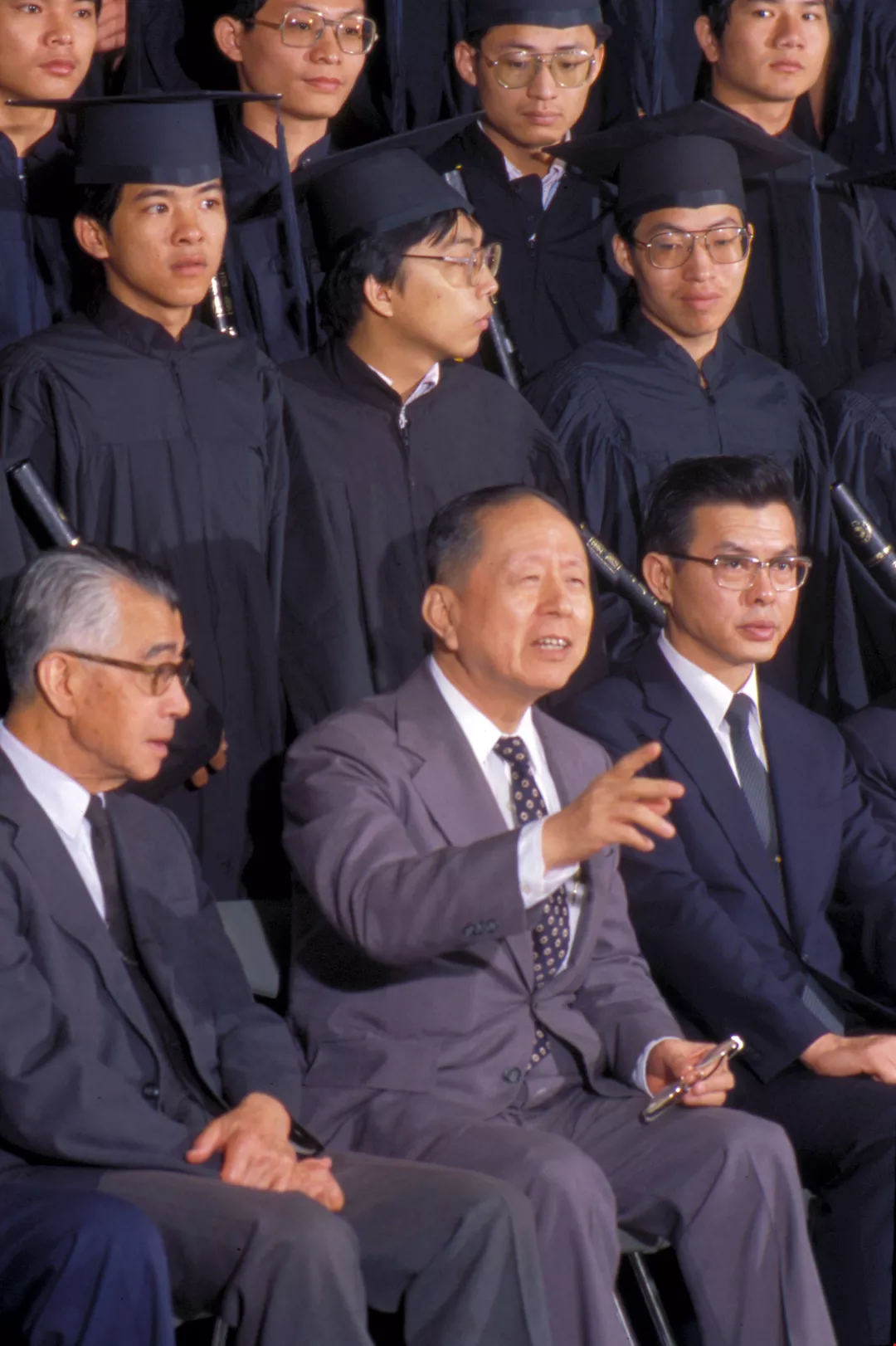
Moral education and training in a second foreign language are legacies of the school's "Father," Lin Ting-sheng. A group portrait makes a nice souvenir.
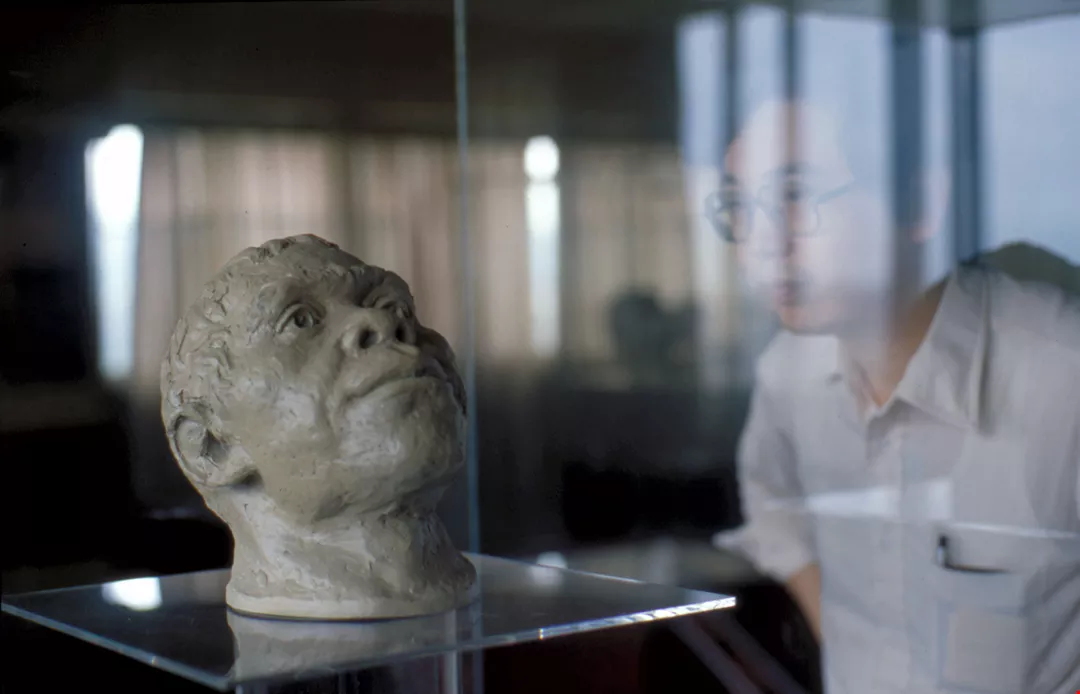
Along with the founding of the Department of Bioengineering, the institute established a biological museum. Pictured is one of the museum's exhibits.
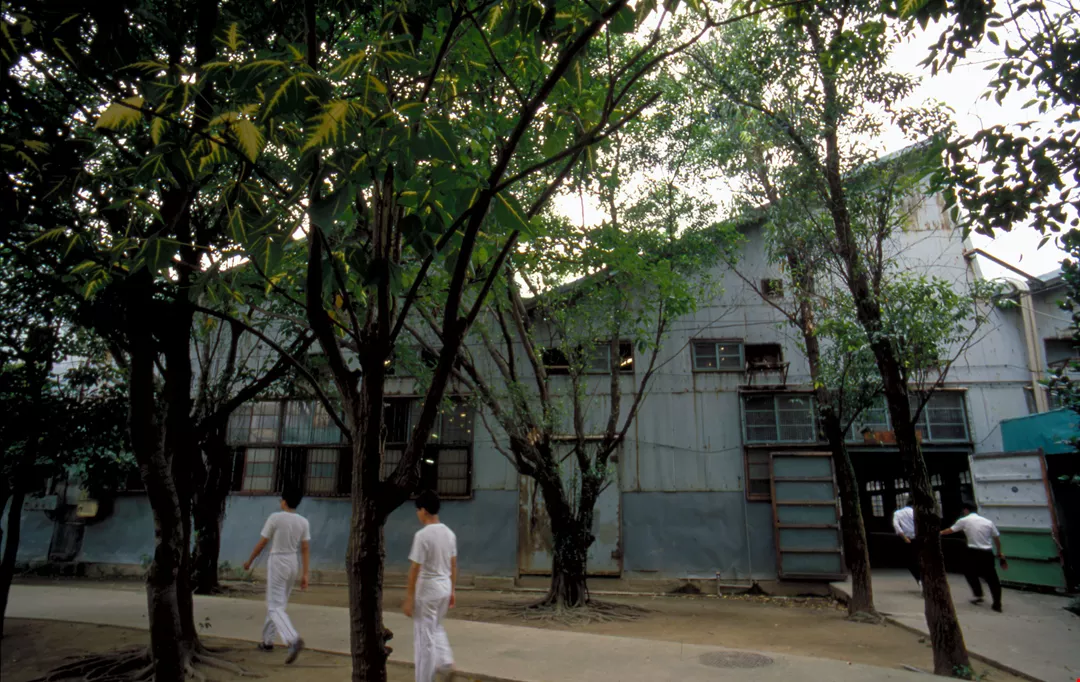
Blink your eyes, and the Tatung plant has become an indoor athletic field.
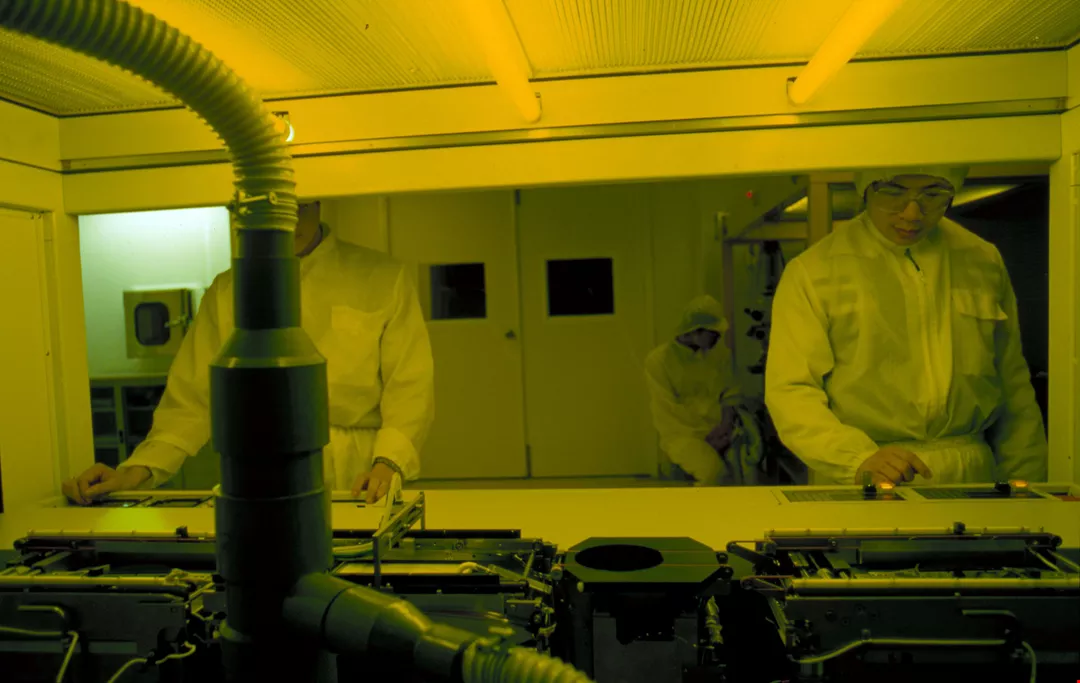
(Above) One corner of the semiconductor laboratory.
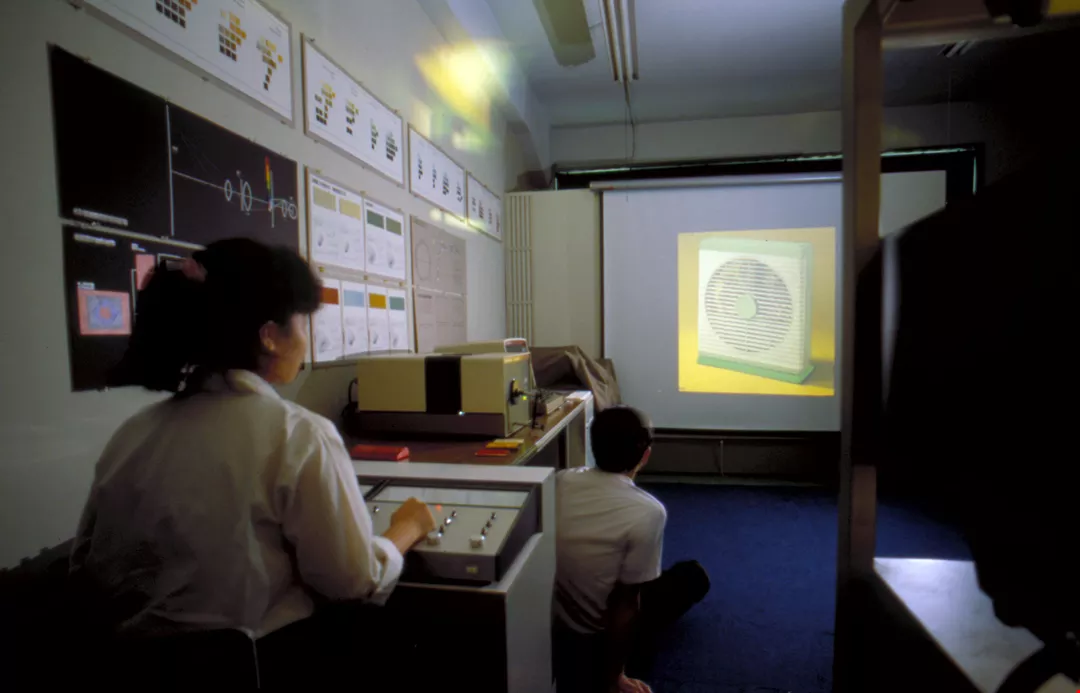
(Below) A color experiment class in the Department of Industrial Design.
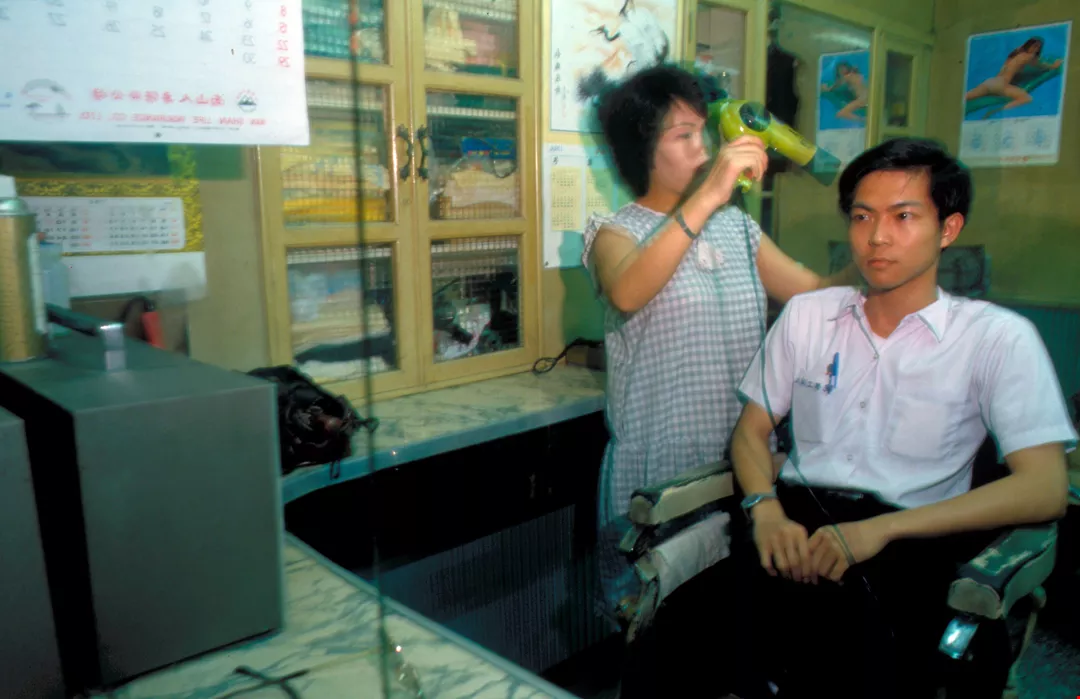
A white shirt, black pants, and short hair are trademarks of Tatung Institute students.
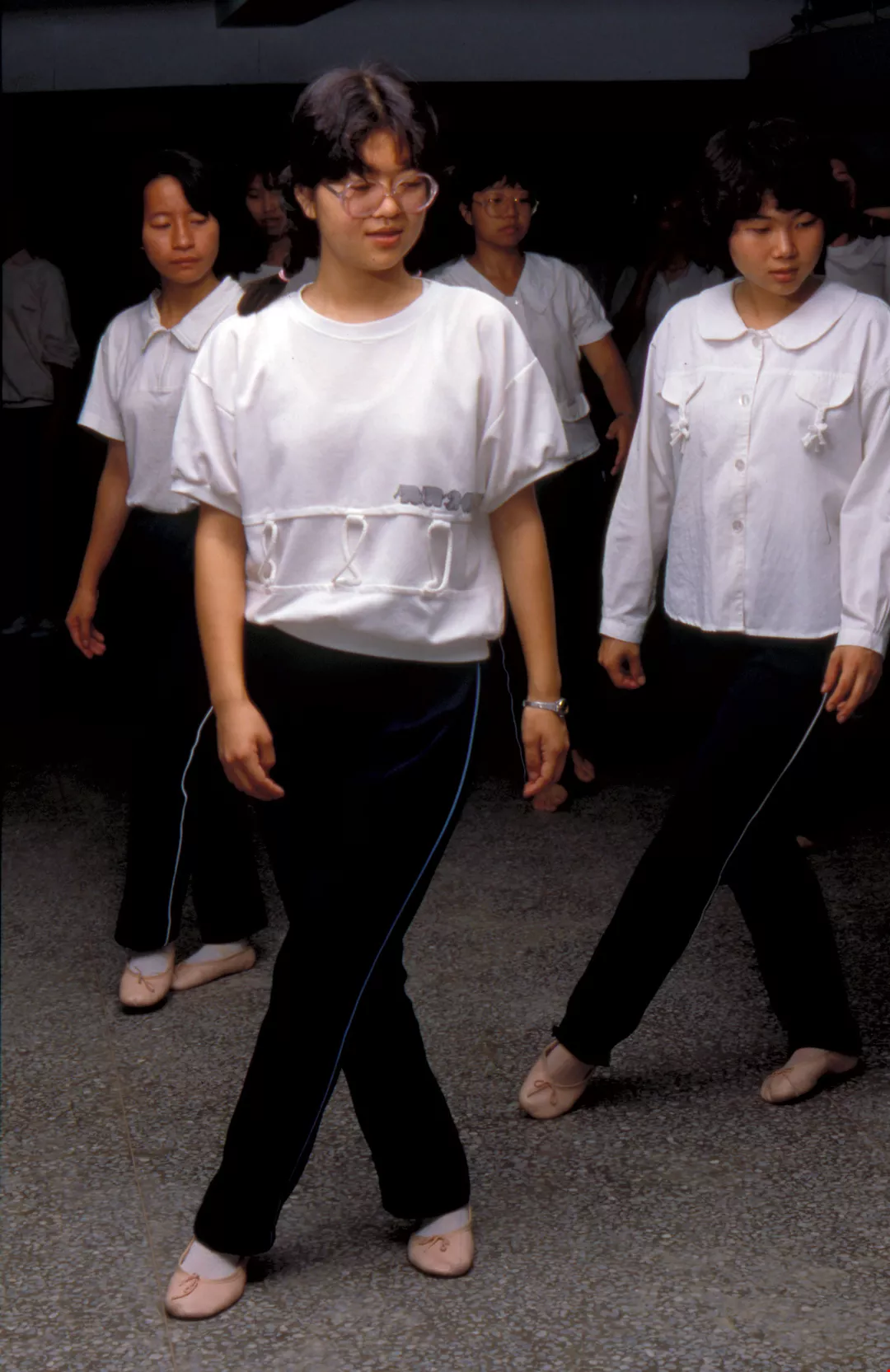
Minority students at Tatung take advantage of extracurricular activities to display their charm.
Behind the carefree faces and pretty scenery lies no small amount of study pressure.
Moral education and training in a second foreign language are legacies of the school's "Father," Lin Ting-sheng. A group portrait makes a nice souvenir.


