A Future Treatment for Autism? Hsueh Yi-ping’s Groundbreaking Research
Chang Chiung-fang / photos Hao Cheng-tai / tr. by Chris Nelson
August 2014
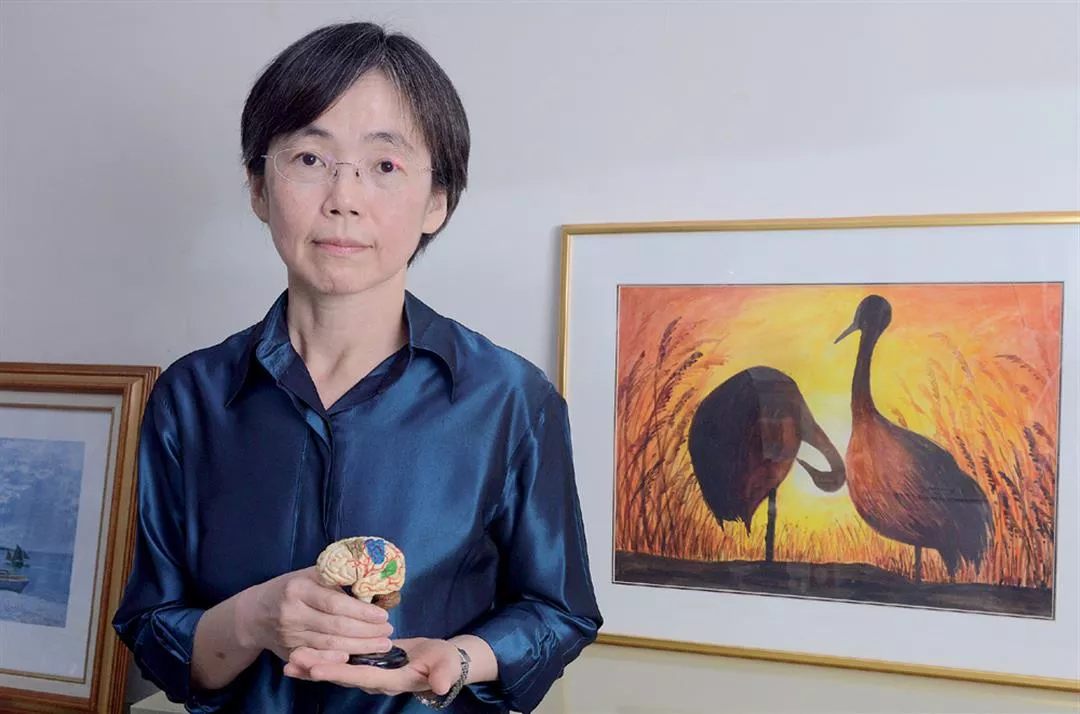
In January 2014, the team of Dr. Hsueh Yi-ping, a research fellow at Academia Sinica’s Institute of Molecular Biology (IMB), published their findings in the foremost international neuroscience journal, Nature Neuroscience, after nine years of research. This study has garnered ample attention because, on top of identifying a mechanism for autism’s pathogenesis, the team also found a promising autism drug, which currently awaits clinical trials.
This groundbreaking discovery is like a ray of light in the darkness to parents of autistic children, not to mention the patients themselves.
In her research, Hsueh Yi-ping found that abnormal neural connections between the amygdalae—important structures located within the temporal lobes of the brain—can lead to autistic-like behaviors. But what’s more noteworthy is that she found a promising remedy: she showed that D-cycloserine, a drug already used to treat tuberculosis, is effective at treating abnormal, autistic-like behaviors in mice.
The day after Hsueh’s press conference unveiling these findings, the phones of Hsueh’s lab at the IMB rang off the hook as parents of autistic children eagerly called to inquire about it.
Hsueh also received an email from a couple who moved to the US over 20 years ago for the sake of their autistic child. In it, they expressed their willingness to move back to Taiwan for clinical trials.
“The greatest accomplishment for a researcher is to make a contribution to society!” says Hsueh about these families’ urgent requests for information. But since human drug trials haven’t been conducted yet, there’s little she can do at the moment.

After nine years of research, Hsueh Yi-ping has at last identified one of the causes of autism and found a drug that may treat it. Hsueh believes that contributing to society is the greatest achievement for a scientific researcher.
According to the latest statistics from the US, one out of every 88 children is autistic, and the incidence rate for boys is five times that of girls.
There’s little research into incidence rates of autism in Taiwan, but according to the Ministry of the Interior, there were 13,366 autism patients in 2013. This figure grows on average by nearly 1,000 a year.
The severity of autism differs, but it affects patients and their families no matter on which end of the spectrum a person may lie.
Until lately, little has been known about the causes of autism. But in recent years it has been found to originate in the early stages of neurodevelopment.
From genome sequencing, scientists have discovered hundreds of variant genes in autism patients. But they still need to work out how these mutations affect nerve development and lead to autism, and how they contribute to the condition.
Hsueh’s team used genetically engineered mice called “knockout mice” as well as in vitro nerve-cell cultures as models to study the molecular mechanisms involved in the development and differentiation of nerve cells.
Autism is not caused by a single gene. But an American study of over 2,000 people with autism found that the gene T-brain-1 (TBR1 for short) ranks fifth in frequency among these pathogenic genes.
“I became aware of the TBR1 gene while doing postdoctoral research at Harvard Medical School. But though I knew it was involved with neurodevelopment, I didn’t know at the time if it was related to autism,” says Hsueh.
“My thoughts and ideas for this project were actually things I came up with in my lab in Taiwan,” she says. “Though it took nine years, it was worth it.”

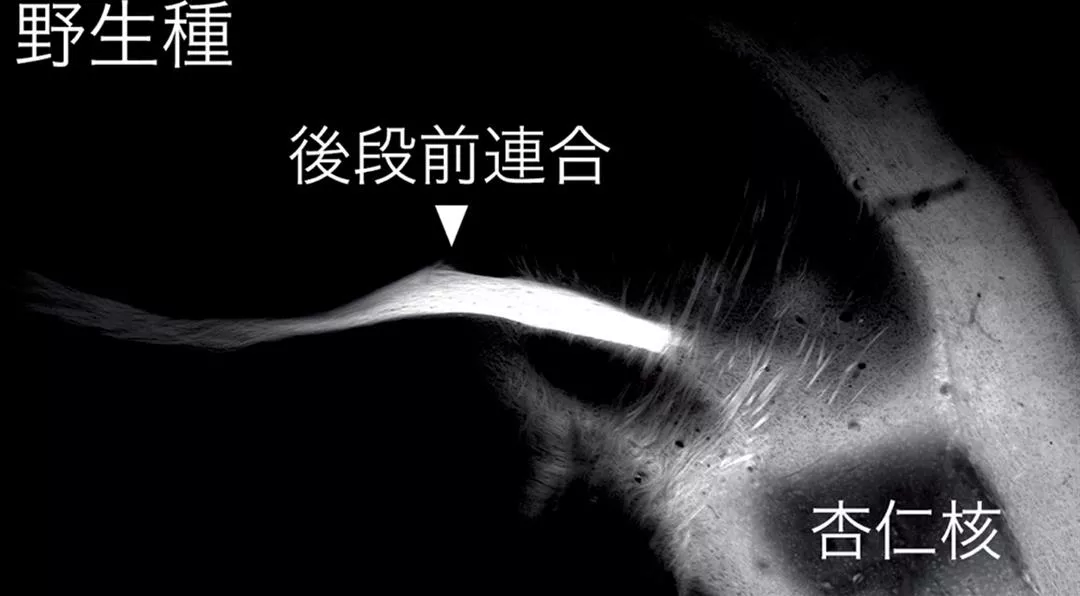
Mice without the posterior part of the anterior commissure show autistic-like behaviors due to disruption of the neural circuits linking the amygdalae in the left and right hemispheres of the brain.
Hsueh’s team compared wild-type mice to TBR1-deficient mice in order to study the physiological changes that take place in TBR1-deficient patients.
Two wild-type mice placed in the same space tend to be curious about each other and chase each other around. But when a wild-type mouse is placed in the same space as a TBR1-deficient mouse, the latter completely disregards the other mouse, showing no social interaction.
Hsueh’s research shows that TBR1 deficiency leads to the loss of a specific structure in the white matter of mouse brains: the posterior part of the anterior commissure. This structure contains the neural circuits that normally connect together the amygdalae of the left and right hemispheres of the brain. Its absence prevents signals from being transmitted properly.
The amygdalae control functions such as social interactions, emotional reactions, and the formation of fear memories. Accordingly, TBR1-deficient mice show autistic-like behaviors such as poor social interaction and communication skills, compromised learning and memory functions, and a reduced ability to adapt to change.

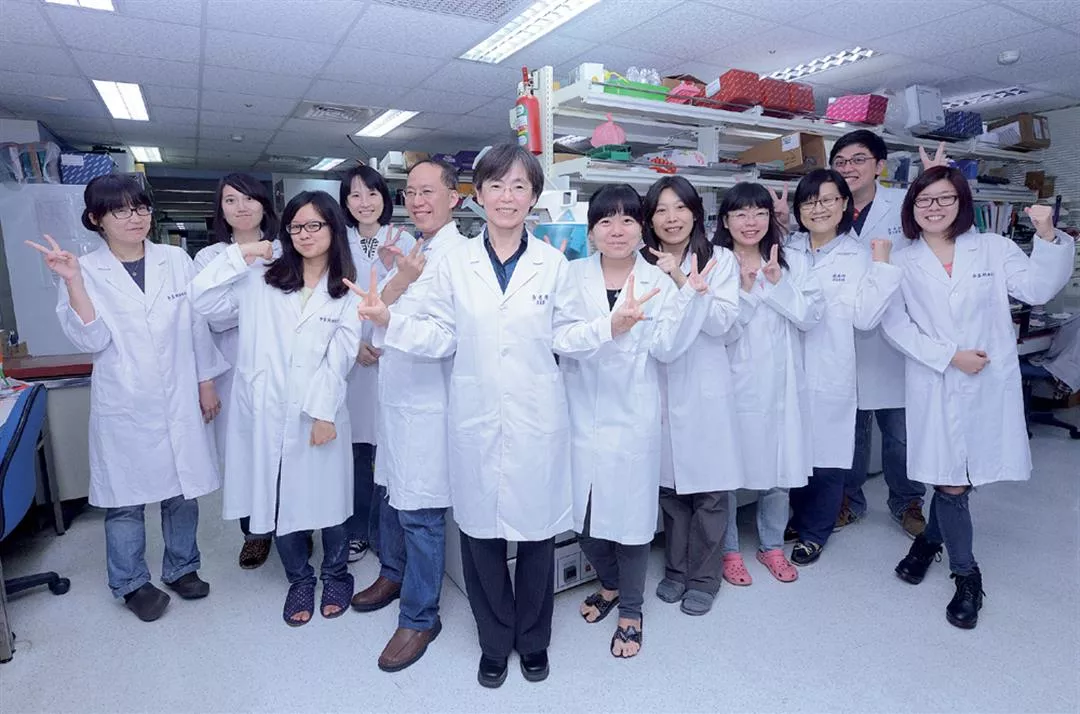
Taiwan’s biotech sector isn’t male dominated. Pictured here is Hsueh Yi-ping’s research team, made up mostly of women.
Current medical technology is not yet able to repair deficient neurodevelopment in the anterior commissure, but it’s possible to attempt modifications in later stages.
Hsueh notes that local injections of D-cycloserine into the brain or the abdominal cavity are effective at improving social interaction, communication skills, learning, memory, and adaptive skills in mice.
D-cycloserine is a drug already used in clinical practice for treating tuberculosis. But further tests are needed to determine whether it’s suitable for treating autism and what side effects this antibiotic will have in the long term.
But what’s certain is that “the human brain is highly plastic,” says Hsueh. With maintenance and stimulation of neuronal activity through training, there’s a chance for improvement.
Gender balance in the lab“There are lots of female scientists in the life sciences,” says Hsueh. In Taiwan, she has worked in settings with around the same number of women as men, and has never felt any gender imbalance. At the IMB, for instance, not only are the researchers about half men and half women, the director is a woman. And of Hsueh’s 12-person research team, only two are men.
Family is just as important as work to Hsueh. She is grateful for her husband’s and mother-in-law’s support.
“I give half the credit to my mother-in-law,” says Hsueh. Her post-doc advisor had encouraged her to continue working in the US, but Hsueh, unable to abide seeing her mother-in-law cooped up like a prisoner in the US, decided to move the whole family back to Taiwan. Since she moved back, it is only thanks to her mother-in-law’s help at home that Hsueh doesn’t have worry if she needs to work in the lab on the weekends to stay on schedule with her research.
With such staunch backing, this female scientist continues to work hard to help others.