The Taipei Pavilion--Wireless Broadband, Resource Recycling
Lin Hsin-ching / photos courtesyof Taipei City Government / tr. by Scott Williams
May 2010


AHarmonious City and a Humble Self," "An Advanced City and a Clean Self".... Tourists shuttling through Shanghai's streets cannot ignore the slogans pairing "city," "life" and "self" with various adjectives. The objective of the pervasive propaganda is simply to make sure everyone knows that the "city" is the star of this year's World Expo.
This year's expo is utilizing its 15-hectare Urban Best Practices Area (UBPA) in Puxi as a platform to introduce the brand-new city theme in as innovative a manner as possible. The area looks at four facets of the city-livable homes, sustainable urbanization, the protection and utilization of the historical heritage, and technological innovation in the built environment-to extrapolate present-day and future plans for intelligent and convenient cities.
A total of 87 cities submitted 113 proposals for exhibits at the World Expo. Some 55 had proposals selected, but Taipei was the only city to have two selected, one on wireless broadband communications and the other on resource recycling. The Taipei Pavilion will also demonstrate the quality, convenience, and vitality of life in Taiwan's metropolises.
Situated on the west bank of the Huangpu River, the Puxi Park exhibition area will host the 18 corporate pavilions and 55 city pavilions of the UBPA. Puxi was once the site of a number of large and medium-sized industrial facilities, including the Jiangnan Shipyard founded by Qing-Dynasty official Li Hongzhang and the Nanshi Power Plant. The Shanghai municipal government has renovated these long-obsolescent facilities, turning them into a fantastic venue for cities from around the world to exhibit on their past and their vision for the future.

To promote the Taipei Pavilion, the Taipei City Government invited pop star Wang Leehom to appear in a short film. Below are some images from the film.
Like the pavilions of other participating cities, Taipei's will be located in what used to be a power plant. The building's plain warehouse-like exterior made it easier for participating cities to focus their attentions on the substance of their exhibitions.
Tuo Chung-hwa, commissioner of the Taipei City Department of Information and Tourism, says that the Taipei Pavilion's most distinctive features are its "interactivity, 3D displays, and new technologies." Taipei mayor Hau Lung-bin greets arriving visitors from the world's largest P3 display (a 5.382-meter x 3.2-meter high-grade LED display).
The 792-square-meter, two-story Taipei Pavilion includes two 3D cinemas. Visitors can ride a replica of Taipei 101's high-speed elevator to the pavilion's second floor. There, in the Taipei 101 360-degree 3D Cinema, they'll see a short Hou Hsiao-hsien film about life in Taipei. Visitors then cross an elevated walkway to a pyramidal theater located over a virtual Taipei Basin. The theater uses advanced projection technologies to screen a film on life in the Taipei of the future.
In the interactive multimedia exhibition area on the first floor, visitors can use a touchscreen interface to tour famous Taipei destinations. The city government also randomly selects 10 lucky people out of every group of 84 for a virtual tour of Taipei landmarks such as Longshan Temple and Taipei 101 using advanced RFID technology.
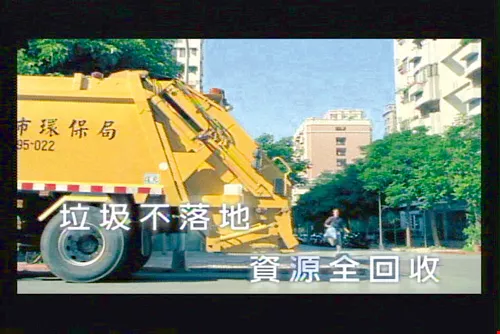
To promote the Taipei Pavilion, the Taipei City Government invited pop star Wang Leehom to appear in a short film. Below are some images from the film.
The two films are intended to market Taipei and explain the planning and implementation of the city's resource recycling, wireless broadband communications, and other important programs. Hou applied the documentary-style narrative for which he is famous to his film, providing visitors with a fresh, authentic viewing experience.
Last fall, the production team began visiting sites familiar to ordinary Taipei residents-the National Palace Museum, Longshan Temple, Beitou's hot springs, Shilin Night Market, Eslite Books, Taipei 101's New Year's fireworks show, and the Lantern Festival celebrations at the Sun Yat-sen Memorial Hall. They even rode in a helicopter to get aerial footage of the city.
Hou says that to achieve the 3D/360-degree effects, the production team had to carry 11 cameras and form them into a circle to shoot. His large crew frequently caught the eye of sharp-eyed citizens. "As a result," says Hou, "we had a lot of footage that we couldn't use because a passerby would suddenly pop up in front of a camera to have a look around."
Though difficult and expensive to shoot (it cost NT$22 million), the six-minute film succeeds in giving audiences a very "local" perspective on life in Taipei. For example, the fish in the scene showing hawkers at the Huazhong Bridge fish market are so vibrant that they look ready to jump out of the screen. In the scene at Eslite Books, viewers feel as if they're standing right beside the mother reading a magazine while she comforts the infant in her arms.

To promote the Taipei Pavilion, the Taipei City Government invited pop star Wang Leehom to appear in a short film. Below are some images from the film.
The film on Taipei's future mixes live footage with computer animation. Its protagonists are a family-the husband is a high-tech "fluorescent fish researcher" while the wife teaches students to make art from recycled materials. The family's use of remote medicine and video surveillance technologies, and its reuse of waste illustrate Taipei's progressive planning in the fields of wireless communications and resource recycling. The film concludes with footage of renowned dancer Sheu Fang-yi in action.
According to producer Chen Po-chuan, the entire film uses masking to place the actors' images on a virtual version of the Taipei Basin. To create the "dancing in the air" effect used in the film, Sheu and her choreographer boyfriend Bulareyaung Pagarlava learned to scuba dive because "dancing in the water felt more like floating in the air."
"Sheu had to hold her breath for a full minute in a five-meter-deep swimming pool to perform the 'underwater dance' piece. The first time Pagarlava went diving, he didn't decompress properly before surfacing and burst his eardrum. It's going to take him at least six months to recover," reveals Chen.
Many Taipei citizens in the arts and cultural communities have worked long and hard on behalf of the Taipei Pavilion. These two films are like elegant, slowly unfolding essays that transport audiences to Taipei and give them an up-close view of the beauty, convenience, and affability of life in the city.

To promote the Taipei Pavilion, the Taipei City Government invited pop star Wang Leehom to appear in a short film. Below are some images from the film.
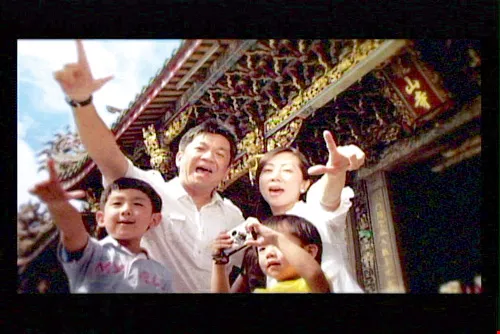
To promote the Taipei Pavilion, the Taipei City Government invited pop star Wang Leehom to appear in a short film. Below are some images from the film.
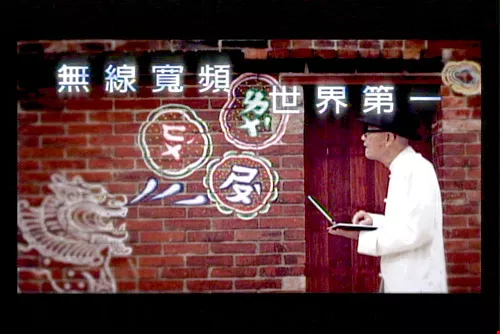
To promote the Taipei Pavilion, the Taipei City Government invited pop star Wang Leehom to appear in a short film. Below are some images from the film.
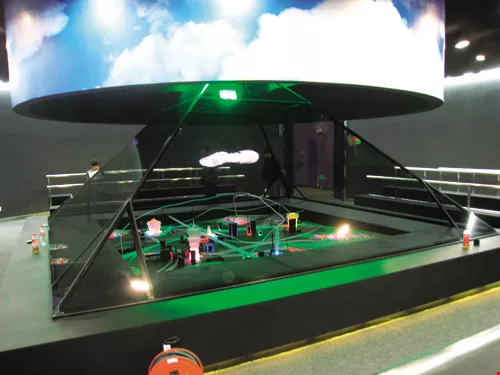
A virtual Taipei Basin designed by the Taipei National University of the Arts sits under the pyramidal theater. Projection technology makes actors appear to perform within the basin.
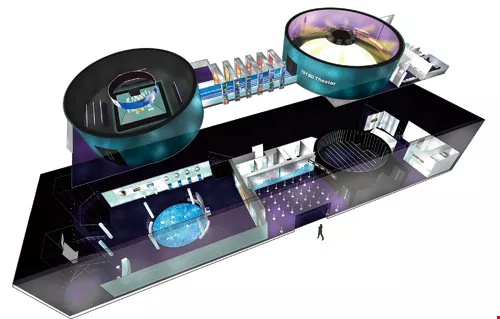
The high-tech design of the Taipei Pavilion's "twin theaters" is one of the exhibit's main attractions.
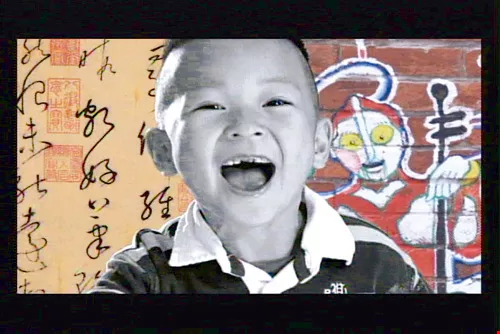
To promote the Taipei Pavilion, the Taipei City Government invited pop star Wang Leehom to appear in a short film. Below are some images from the film.

To promote the Taipei Pavilion, the Taipei City Government invited pop star Wang Leehom to appear in a short film. Below are some images from the film.


