Chinese immigration to Brazil goes back a fair way. According to studies by Yang Tsung-yuan of the department of Chinese at Sao Paulo University, it was back in 1812 (in the Chia- ch'ing period of the Ch'ing dynasty) that 400 Chinese tea workers were invited to Brazil by the then Prince Regent to open up tea plantations, in what must surely be a first for Chinese "agricultural technician diplomacy."
Unfortunately the experiment proved none too successful and the tea workers mostly left or returned to China, only a handful staying in Brazil. Then in 1855 Chinese laborers were again brought over to Brazil in large numbers by Brazilian and American firms to help open up agriculture in that vast but sparsely populated land. It is estimated that by 1880 there were over 2,000 Chinese laborers in Brazil.
The Ch'ing authorities maintained a stand-offish attitude towards labor emigration, as exemplified by a public proclamation of 1860: "The Court will take no steps to enquire further about those who turn their backs on their ancestral hearths and go overseas in search of gain." Thus were Chinese laborers relegated to the rank of disloyal and unfilial subjects.
Meanwhile court officials well knew that over- population was the main reason for the famines and rebellions sweeping across China. This is how Li Hung-chang interpreted Brazil's recruitment of Chinese laborers: "If tens of thousands of Cantonese emigrate (to Brazil) each year, that would amount to hundreds of thousands in the course of a decade ... and our internal troubles would simply disappear." So emigration to Brazil was seen as a panacea for China's social problems!
Whatever the official attitude might be, the un disputed fact is that as word spread, more and more young people left for a new life overseas. Octogenarian Ho Kuan-ying, president of the Sao Paulo Chinese Association, recalls his motive in leaving for Brazil at the age of 17 (in 1927): "I had several cousins who'd done well overseas and returned to buy farmland, build large houses and wrap up brilliant marriages, and of course we were envious."
Chinese immigrants in Sao Paulo in the 1930s tended to be from either Kwangtung or Chekiang. It was easy to make a living by running a restaurant, and "chiao-tsai" eateries became a specialty of the Brazilian Chinese community.
"Chiao-tsai," simply put, is an improved version of pizza. You don't see them so much now, but according to Professor Yang Tsung-yuan at one time every town in Brazil, large or small, had a "chiao-tzu" eatery, and since Brazilians went over- board for this dish it naturally proved a money- spinner for many overseas Chinese.
Back then the Chinese worked abroad in order to glorify their ancestors. After seven years' hard toil in Brazil, Ho Kuan-ying returned home just like his cousins, married according to his parents' instructions, and brought his new bride overseas; and his sons were sent back to China for their education to ensure they didn't "forget their roots."
"I only went abroad to earn money, who would have thought I'd stay on?" Ho Kuan-ying sighs. Having waited for things to stabilize after the war he sold off his prosperous gift shop and took his wife and children back to China with the intention of buying farmland and settling down. But once arrived in Hong Kong and seeing the internal situation in China so uncertain everywhere, he stayed in Taiwan for a while before finally deciding, after much hesitation, to head back to Brazil in 1957.
Tragic times forced Ho Kuan-ying to settle down in a foreign land; and at the same time many mainlanders took refuge in Brazil to escape the consequences of communism. A group of Shanghai businessmen were a notable feature of this period.
"The Ting's, the Jung's, the Pi's and the Chan's were prosperous families with successful businesses in Shanghai," notes Chen Lung-chi, an old Brazil hand of 20 years' standing and currently chief construction engineer for Sao Paulo's Kuan-yin Temple. These industrialists shipped their plant machinery over from Shanghai lock, stock and barrel and set themselves up in Brazil. Today they still wield considerable clout as major figures in Brazil's textiles, flour, soybean oil and edible oils sectors.
"Unfortunately these industrialists keep them selves to themselves and due to the language barrier have little to do with the Brazilian overseas Chinese community, the majority of whom come from Taiwan. It's difficult to meet them at all," says Chen. Even so, over time a number of middle- aged mainland Chinese industrialists have taken a keen part in Brazil's overseas Chinese community.
One example is Ssu Tzu-lin, who did much to set up an industrial association within the community. Proprietor of the Shanghai Clothing Company of Taiwan and owner of several plastics and textiles plants in Brazil, Ssu Tzu-lin enjoys excellent standing among overseas Chinese in Brazil. As a devout Buddhist he has contributed US$15,000 towards the construction of Sao Paulo's Kuan-yin Temple and is friendly with Hsu Tieh, the brains behind the project. One speaks in Taiwan mandarin, the other in Shanghai mandarin, each partly guessing what the other is trying to say as their enthusiastic discussions of community affairs have onlookers baffled.
Large-scale Taiwanese immigration to Brazil dates from the 1950s to the 1970s, since when Brazil's economy has gone downhill in contrast to Taiwan's economic takeoff; Brazil has also gradually closed the door on immigration as unemployment has risen, so there has been a net outflow of Taiwan immigrants.
After Brazil established ties with Peking in 1974 increasing numbers of mainland Chinese immigrated illicitly on the pretext of visiting relatives or joining their families; with the partial lifting of the Bamboo Curtain in the 1980s the stream of mainland immigrants swelled even more. Illegal immigration is no great problem since Brazil announces an immigration amnesty every few years, which has attracted mainlanders all the more.
Of course Brazil's 30,000-strong mainland Chinese immigrant community has its sons of high- ranking cadres and prosperous private businessmen, but most of them funded their exit by clubbing together. Once abroad they quickly join restaurants and gift shops run by relatives to earn cash to send home. Some appreciate Brazil's freedom and progress, but others claim to feel disappointed and have taken a dislike to the country.
In the wake of the Tienanmen Square massacre of June 1989 a new wave of mainland immigrants headed for Central and South America, lending new impetus to Brazil's overseas Chinese community. The story of the Chinese in Brazil is far from over yet; it's just a question of what form the next climax in the tale will take.
[Picture Caption]
This antique ROC Foreign Ministry passport was issued in 1927.
An old Brazil hand for half a century, Chinese Association chairman Ho Kuan-ying has a host of priceless stories to tell about the immigrants' life.
Could this be a sports match? Funnily enough, it's the scene on board a Dutch-run steamship bound for Brazil. (photo courtesy of Sun Chia-ching)
The Kuan-yin Temple's Chinese-style courtyard has become a feature of Sa o Paulo's oriental quarter.
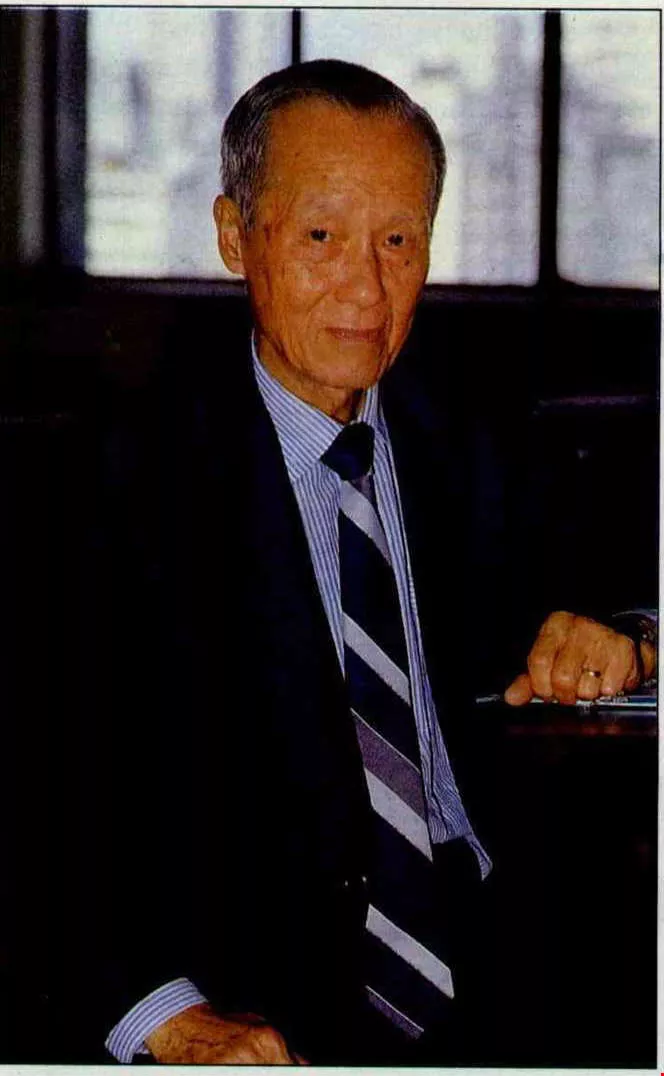
An old Brazil hand for half a century, Chinese Association chairman Ho Kuan-ying has a host of priceless stories to tell about the immigrants' life.
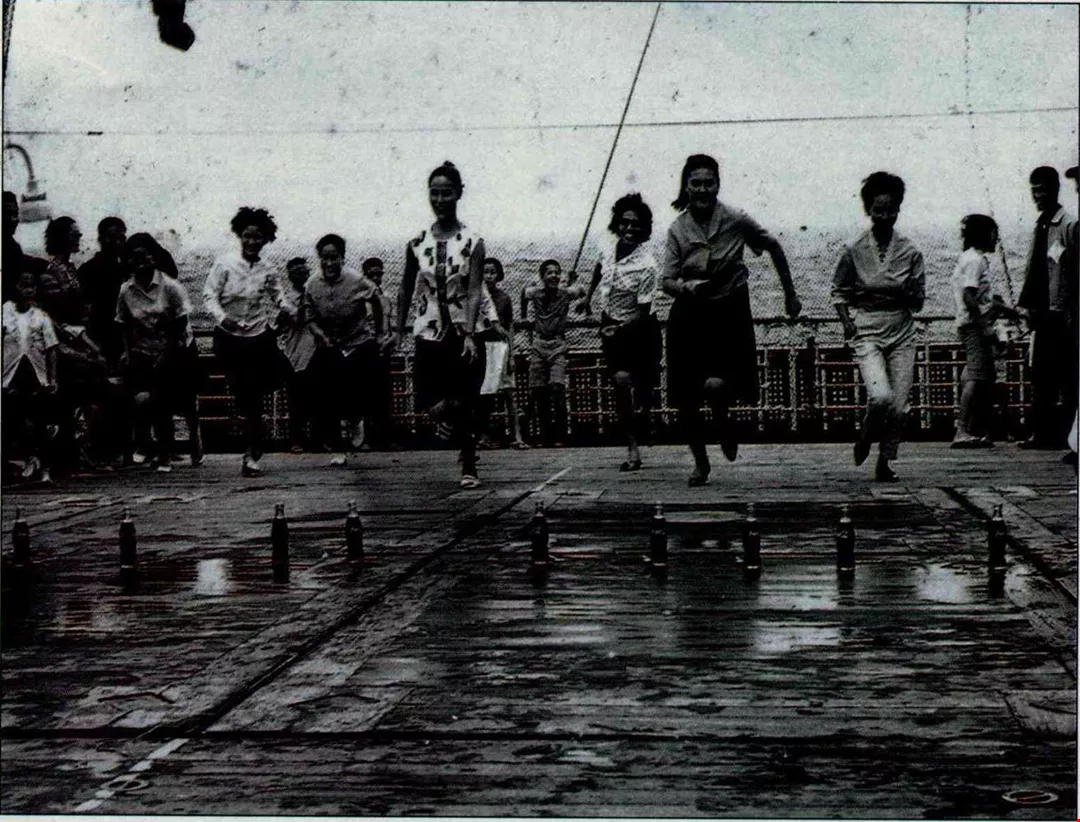
Could this be a sports match? Funnily enough, it's the scene on board a Dutch-run steamship bound for Brazil. (photo courtesy of Sun Chia-ching)
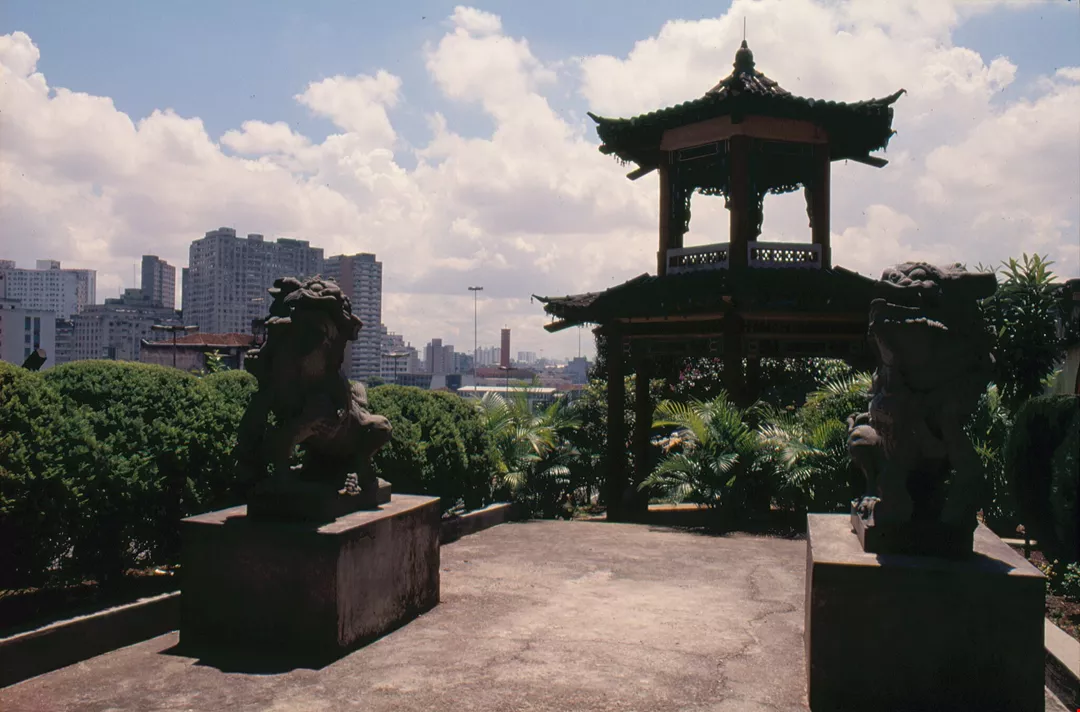
The Kuan-yin Temple's Chinese-style courtyard has become a feature of Sa o Paulo's oriental quarter.




@List.jpg?w=522&h=410&mode=crop&format=webp&quality=80)

@List.jpg?w=522&h=410&mode=crop&format=webp&quality=80)

@List.jpg?w=522&h=410&mode=crop&format=webp&quality=80)
@List.jpg?w=522&h=410&mode=crop&format=webp&quality=80)
