Records of archaeological excavations at Taoyuan County's Dayuan Primary School date to the era of Japanese rule when the school was first being built, but it wasn't until early last year that the county government began paying attention. When 3,000-year-old prehistoric artifacts were discovered near a bathroom being built as part of the renovations to the old school, the county ordered work halted.
Archaeological investigation has revealed that the best-preserved portion of this prehistoric site is located right where the school has undertaken a rebuilding project. As a result, difficult decisions loom: how should the site be preserved, and should the school be relocated? Dayuan Primary is not alone in its quandary. Dalong Elementary School in Taipei has also encountered the same situation.
There may be a way around the dilemma--to create Taiwan's first educational setting combining a school with the preservation of an archaeological site.
It's late June and the wickedly hot sun has brought the asphalt to what feels like the edge of a boil. Less than a minute after passing the Taoyuan International Airport, the intercity bus approaches its terminal stop--Chungcheng East Road in Tayuan Township. We make a right turn and follow Chungcheng North Road to our destination, the Chungcheng South Road entrance to Dayuan Primary School. Just as we begin to worry that we won't be able to find the "legendary" Chienshan prehistoric site, a group of fifth graders pauses to give us directions. "There are four holes behind the dais on the playground," offer the smiling children, pointing the way.
The school's students have been lucky: the school's renovation plans have brought them into contact with cultural treasures 300 times older than themselves. They have also been unlucky, in that work on the new classrooms they've been waiting for has been suspended. Their teachers, meanwhile, have quite a different worry--they've heard the school may be relocating.

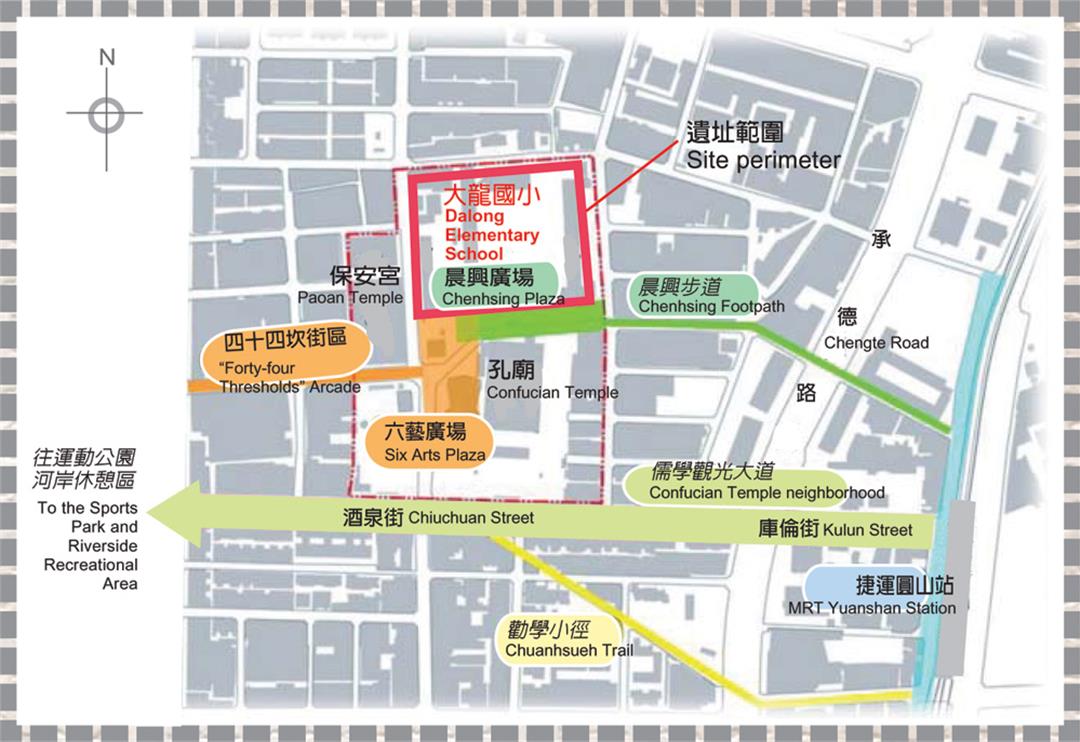
Map of the Dalongdong Cultural District
Mixed feelings
The discovery of the artifacts has created a battle between the furtherance of construction work on the campus and the preservation of these cultural assets. On the plus side, valuable prehistoric cultural assets are finally getting attention. On the minus side, the school could be facing relocation.
"It's only natural for kids to kick the rocks by their feet as they walk around campus," says Dayuan principal Su Kun-lang. "But now students have to be extra alert for unusual stones." Su says that the school's science teachers are hoping to use the dig to help the kids gain an understanding of the lives of their ancestors and to that end they have begun organizing an archaeology camp.
Tayuan Township head Chang Chien-lung, whose family has been living here for generations, was among the first to call for the preservation of the site. He also proposed organizing cultural tours of the township to help residents learn more about their area's history.
But Su Kun-lang also played a pivotal role in getting the renovations to his campus underway and is concerned that the construction work has been halted. If the decision is made to relocate the school, where will it go? What will happen to the school's nearly 4,000 students and faculty? He also knows it won't be easy raising the NT$8 million needed to relocate.
Liu I-chang, leader of the group conducting the dig, may be able to ease the middle-aged principal's mind. "Naturally, we can best reproduce the way prehistoric Taiwanese lived by preserving everything at the site of the find," he says, "but that doesn't necessarily mean that people today have to make sacrifices."
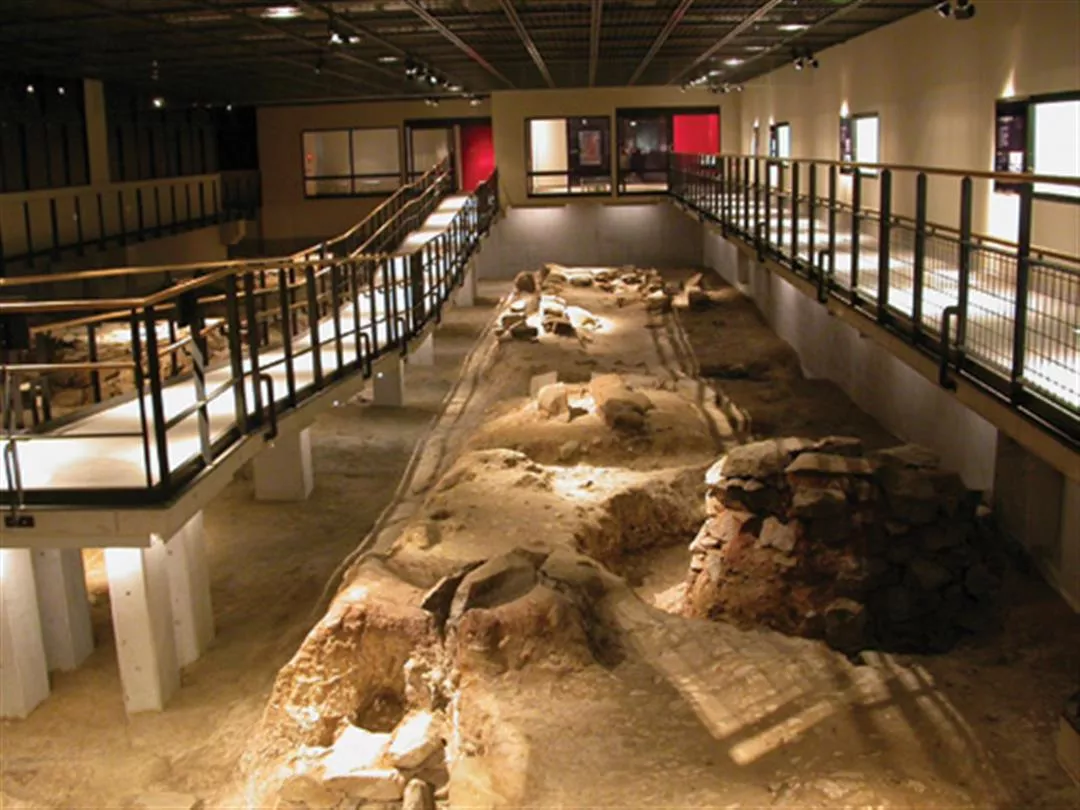
Based on the approach taken by Sakuramachi Elementary School in Japan's Nagasaki Prefecture, Liu has recommended tearing down the old buildings, fully excavating the site, cleaning up the finds, then raising the new buildings on piers. In that way, the open first floor could be used to preserve the site. You could then keep the artifacts on display by either running a footbridge over the site or covering it with tempered glass.
"If some extra money is spent on the construction of the foundation, the two can coexist," says Liu. He explains that this would allow the students to walk through the prehistoric site on the way to their classrooms, the ancient and the modern to interact, and the kids to gain a radically new sense of time and perspective on history. In addition to being an important resource for the school, the site could also become a community asset that could be opened up to visits by locals and others from outside the area.
Chen Shei-saint, director of the Taoyuan County Cultural Affairs Bureau (TCCAB), says that he supports the coexistence of new construction and cultural preservation. But because the site covers such a large area and will take so much time and money to preserve, the issue must first be put before the relevant county agencies for discussion. In his view, the best solution would be for the county to make a presentation to the central government, apply for a national historical monument designation, and let the nation as a whole fund its preservation.

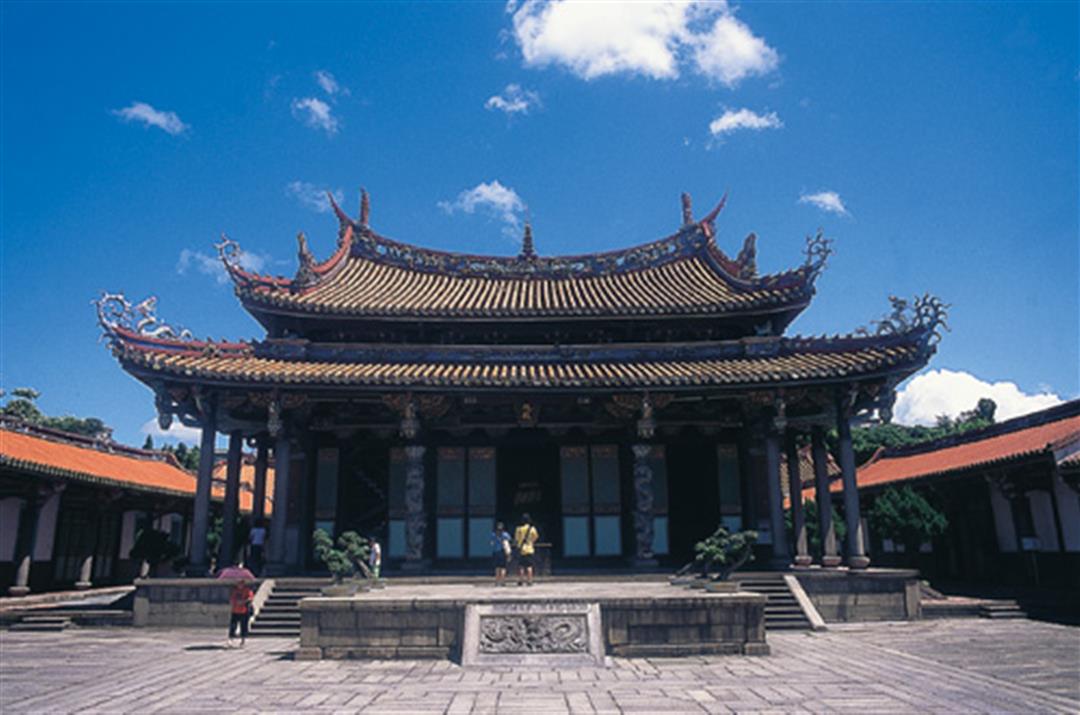
Destruction is easy; rebuilding is hard. The hidden costs of construction and development have been high for the residents of our island, and include historical artifacts that had existed for several thousand years. The photo shows the Confucian Temple in Taipei's Dalongdong, which stands near a recently discovered and as-yet unnamed prehistoric site.
Tug of war at Dalong Elementary
The archaeological site discovered on the campus of Dalong Elementary School, Taipei's oldest elementary school, has not been nearly as fortunate the one in Tayuan.
Like the Dayuan site, the Dalong site was discovered by chance: While the Taipei City Urban Redevelopment Office was working on the Six Arts Plaza in the Dalongdong Cultural District, a local came across the remains of what was possibly a fortified compound dating to the Qing dynasty. Last September, the Taipei City Cultural Affairs Bureau put together a committee to evaluate the site and asked Liu I-chang to begin a preliminary dig.
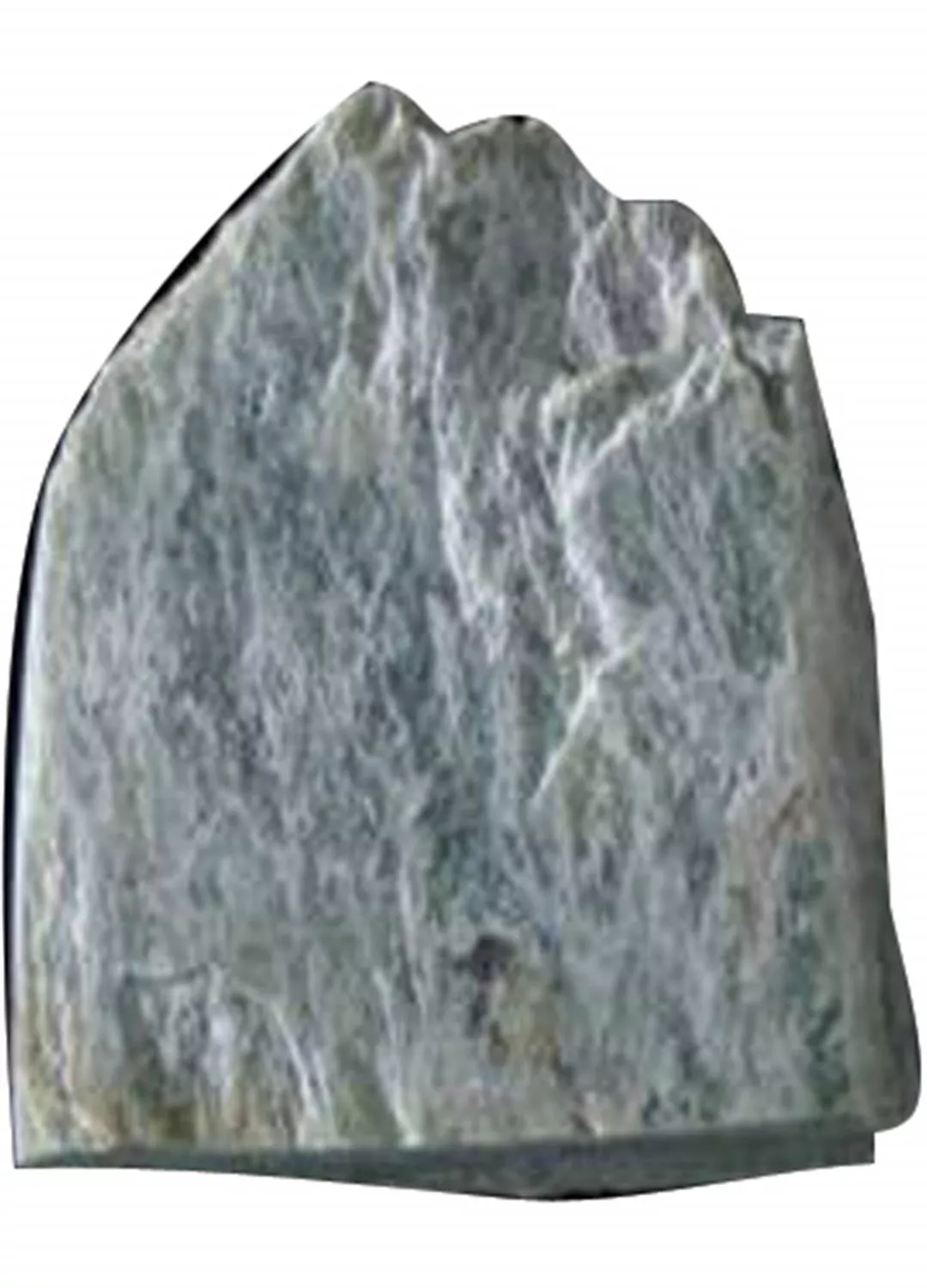
The archaeological team started work right near the Six Arts Plaza, excavating four trenches on the playground of Dalong Elementary and five others around the campus. During the first part of their dig, they uncovered wooden sandals, rubber boots, and other everyday items from the Japanese era, as well as Meiji-era coins. As they went deeper, they found coins dating to the reigns of the Qing emperors Daoguang and Qianlong. At a depth of 1.5 meters, they began to find traces of prehistoric artifacts from a single cultural stratum, likely that of the Hsuntangpu, who were active 4,300 to 2,000 years ago. They had originally been looking for Qing-dynasty objects and were astounded to have uncovered a completely new prehistoric site.
However, the Dalong site hasn't received the same kind of government, private and scholarly support that the Dayuan Primary site has, and it faces some difficult problems.
"The Dalongdong neighborhood is crowded, and the streets are terribly congested. We finally got the government to undertake a comprehensive redevelopment of the area and were expecting them to build an underground parking lot under Dalong Elementary, but now it's halted again?" exclaims Mrs. Tsai, a 20-year resident, relating locals' expectations of redevelopment. On the other side of the debate are cultural workers who want to preserve the neighborhood's historic value.
"The historic buildings in the neighborhood of Dalong Elementary, including Bao'an Temple, the Confucian Temple, and the row of 44 old shops along Hami Street, are northern Taiwan's most precious educational monuments," says Chen Ying-tsung, voicing the concerns his organization, the Dalongdong History and Culture Studio, has about the neighborhood. "More than 10,000 people have signed a petition requesting that this historic area be preserved in its original form. Now that a 4,500-year-old archaeological site has been unearthed, the city government has no excuse for not halting the construction."
Liu says that since Dalong Elementary is an educational institution, there are no questions about who controls the land, which has allowed the site to be preserved to the present day. However, the school is in an old neighborhood in the crowded Tatung District, where there is little space to relocate the school or the proposed parking lot. He therefore believes the best solution is to allow the school and the prehistoric site to coexist.
But if this approach doesn't pan out, then what? Liu's opinion as an archaeologist is that when the school is rebuilt, all construction should be banned from the southern part of the campus, where the prehistoric site is best preserved. Meanwhile, construction on the northern part should only proceed after it has been explored and evaluated by archaeologists. In short, he proposes a compromise that preserves half of the site as it is and the other half as data.
As for the redevelopment project, Wang Chun-ting, a planner with Taipei City's Department of Cultural Affairs, says that coordinating with the various public works departments has been the most difficult problem. The issue is that the New Construction Office of the city's Public Works Bureau, which is responsible for handing out the contracts for the work, has never before had to simultaneously build a school and preserve a prehistoric site. Since all the contracts have already been issued, withdrawing them and revising the project will require the payment of compensation to the contractors and raise legal questions. The situation has been referred to the mayor's office, and a final decision is pending.
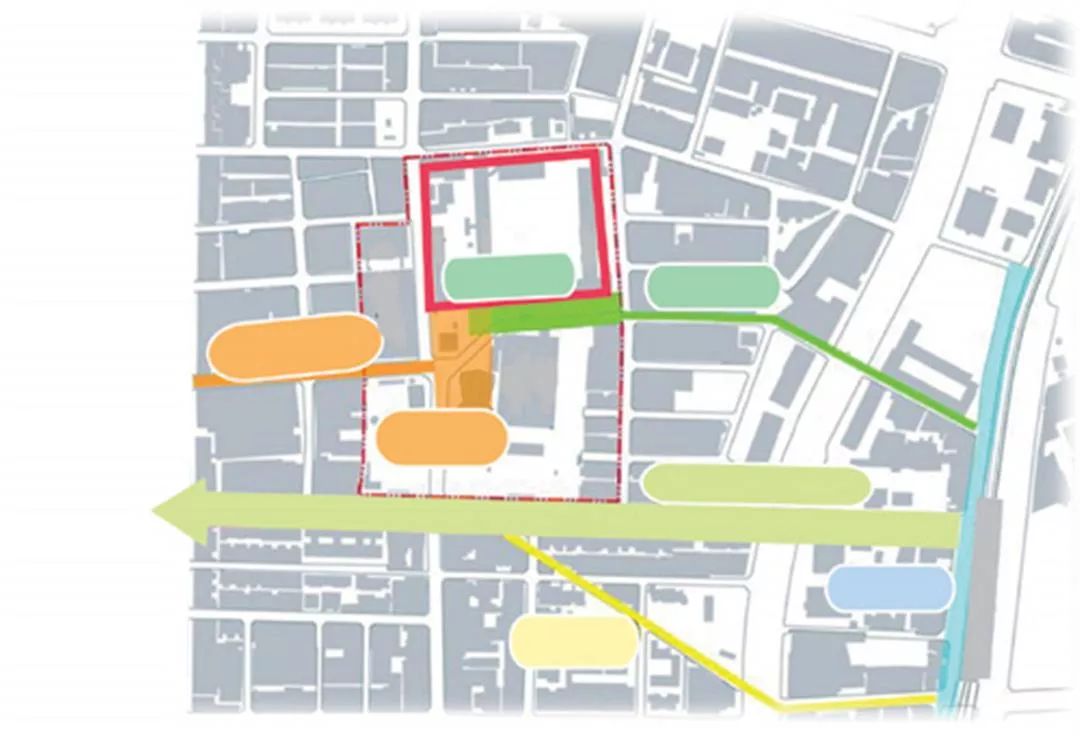
Map of the Dalongdong Cultural District

Overly demanding?
Precious and fragile, prehistoric archaeological sites are quickly destroyed by rumbling construction equipment. Development has long since ruined many important historic sites throughout Taiwan: Taipei County's Shihsanhang site was turned into the Pali wastewater treatment facility. Taitung's Peinan site became the new Peinan station on the southern link railway line. Thousands of years of this island's history are being rapidly lost, and a government and a public oblivious to archaeological sites are among the main culprits.
"From a national standpoint, cultural properties are more than just 'consumer items' requiring large amounts of money to preserve," says Liu, who oversees the digs at both Taoyuan's Dayuan Primary and Taipei's Dalong Elementary. "They are also an important part of a knowledge economy. Properly utilized, they can have a huge impact on the economy."
Chang Kuo-yu, a 77-year-old Dalong alumnus, recites a poem in Mandarin over the phone: "Someday this tree will become a column, / And will no longer cast a mossy shade; / Come a cold autumn evening, / A thousand-year-old crane will have nowhere to alight."
The poem comes from the story of a prefect determined to cut down a tree. Local residents begged to keep the tree, but he remained unswayed. When the day came to cut it down, the troops gathered around it found this poem inscribed in the tree's bark. The prefect grasped the poem's meaning and let the tree live.
"Culture" may mean nothing more than treasuring and respecting the ways of the past, but it can also be something extremely demanding. Each of us must decide which meaning is more important to us.

Nagasaki's Sakuramachi Elementary School sits atop the site of the Edo-period Church of Saint Dominic. Its raised walkways offer one model for how construction projects and archaeological sites can coexist.