Nostalgia on the Menu:Boxed Lunches Get on Track
Chang Meng-jui / photos Chuang Kung-ju / tr. by Geof Aberhart
December 2003


In 2000, the Taiwan Railway Admin-istration (TRA) first released its "Taiwan Rail Nostalgia Lunches" to a rapturous welcome from the public. In the three years since, the TRA has pulled in over NT$70 million from these boxed lunches. Then on January 9th all this led them to take their 50-plus years of experience with boxed lunches to Japan, where their lunches sold just as phenomenally as they had in Taiwan. The rush was such that it even garnered coverage in the media, much to the amazement of people throughout Taiwan.
As well as attracting international attention, the Nostalgia Lunches also proved a stimulant to the domestic market. Major chains like 7-Eleven, Family Mart, Hilife, and Circle-K put out their own variations on the boxed lunches, and now everyone wants a piece of the action. Even buffet restaurants are hanging "Railway Lunch" banners over their doors, trying to jump on the bandwagon. Genuine and imitation "Railway Lunches" flooded the market in phenomenal time. What is the fascination with these Nostalgia Lunches that the Taiwanese people love so much?
The name for these boxed lunches used in Taiwan is biandang, a Chinese adaptation of the original Japanese name for them, bento. The first thing anyone in Taiwan thinks of whenever someone mentions the beginnings of these lunches is those sold by the TRA years and years ago. And they're right. Back before the road transport system was fully developed, rail was the primary means of transport, with people relying on it to get around the island. With so many people travelling long distances, feeding them became a major concern for the TRA.
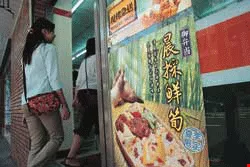
The look and flavor of a lunchbox determines how well it sells.
The taste of the tracks
In 1949, in response to the needs of their passengers, the TRA set up a travel meal service. Taiwan Rail cafeterias were set up at several major stations, and they also began offering biandang-boxed lunches-on the trains for the convenience of passengers. To start with, they only offered basic Chinese-style meals with vegetables and white rice, but later they added meals of pork on white rice, and it is these meals that have continued on to this day.
In the early days, Taiwanese rail passengers had two options-basic or express trains, with seat-bookable and deluxe express trains added only later. In those days the general populace wasn't particularly well off, so most couldn't afford the biandang on top of ticket price, and the meals themselves were somewhat lacking in terms of packaging and presentation. From 1949 through to 1969 they were served in fiberboard boxes which were thrown out when the passenger had finished with them. In 1970 the TRA changed to aluminum boxes, but later medical studies proved that the aluminum was toxic, and thus unsuitable for use with food. At this, the TRA immediately ceased using the aluminum boxes, moving on to stainless steel ones. However, the costs involved with using stainless steel boxes were higher, meaning they could only offer them on the seat-bookable and deluxe expresses, while passengers on the basic and express trains were sold lunches in the old fiberboard boxes.
In 1979, lightweight polystyrene boxes took over from stainless steel, mostly because once the passengers had finished their lunches, they'd usually end up taking the box with them, and when using the stainless steel boxes, this was at a considerable cost to the TRA. Secondly, passengers had complained that the lunchboxes weren't sufficiently clean, with bits of rice stuck on them, about which word quickly spread. Recently, however, with the rise in environmental awareness, polystyrene has become entirely unwelcome, so the TRA has dropped it and resurrected the fiberboard boxes.
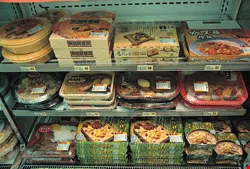
There is an ever-increasing variety of prepackaged meals on the market, keeping the customers just as stuffed as the retailers' wallets.
Half a century of "old-time flavor"
When they were first introduced, the railway lunches sold for NT$25 each, while a cup of tea cost NT$2, and a stewed egg no more than NT$1. A biandang was a tremendous luxury, and most passengers could afford little more than the smell of them. As the nation grew wealthier, the railway lunches gradually became more and more popular. The price per lunch went up and up as the price of the ingredients rose, going from NT$25 to NT$30, 50, 60, peaking at NT$80 each. Recently, though, it has dropped back down to NT$60 per lunch. Regardless of how the price may have changed, the taste never has, maintaining that original "old-time flavor." The TRA is dedicated to sticking to it.
The lunches are also subject to high and low seasons-you'd expect that they would sell their best during the traditional holiday periods, when the trains are absolutely packed. Actually, the more passengers there are, the worse they sell, because the aisles in the carriages are completely full, meaning the servers just can't make their way through to make their sales. If they tried to make their way through the crowds, they would get little more than dirty looks, so they simply suspend the service over those periods.
According to the latest statistics from the TRA, the peak season for the lunches is July and August, over the summer vacation. Their sales record is 18,000 lunches in one day. With the numbers required so great, the TRA has had to set up four production workshops in northern, central, and southern Taiwan, which work to make lunches 24 hours a day. Even though the lunches are available each and every day, they are still the subject of seemingly limitless nostalgia. As soon as people get the chance to try them, they just can't let them go; it's as if the lunches were old friends. Because of this, TRA decided to try "Taiwan Rail Nostalgia Lunches" as an anniversary souvenir.

The packing for the TRA lunchboxes has constantly been revised and updated, so that each design becomes a collectors' item. Photo 1 shows the latest "Nostalgia Edition" packaging, number 2 the wooden style used in the early days, and number 3 a regional logo.
The power of nostalgia
On the 9th of June 2000, the TRA decided to celebrate their 113th anniversary in a way that everyone could enjoy. A year earlier, during the celebration of their anniversary in 1999, they sold models of Taiwan's earliest locomotive, the Tengyun, "Cloud Rider," with the words "Remembering our Trains" carved on them. These models were a 1000-unit limited edition, with each selling for NT$35,000; no-one expected they would sell out in the space of a day-even the TRA were blown away.
This is how Chen Ching-piao, head of the TRA's Catering Services Division, explains it: "Fans of domestic train travel are getting more and more numerous, and publications about the railway are coming out all the time. On top of this, there are people who collect rail paraphernalia-just look at the popularity of tickets from Chuifen and Chengkung stations over recent years." (In Chinese, these two names together sound like the phrase "succesfully find a marriage partner.") Although the price for the commemorative train sets was high, nostalgia still managed to get people to dig into their pockets.
With such a successful precedent set, the TRA naturally figured that the much-loved and well-known railway biandang should be their main product to commemorate the turn of the millennium. To make sure they were faithful to the way the lunches tasted in the old days, the TRA specially hired Liao Mao-sheng, a chef with 31 years experience in making this kind of packed lunch. Liao personally made the traditional-style pork meals. They included pork slices, salted eggs, pickled cucumber, pickled vegetables, and rice cooked with chopped cabbage and lard, all served in a stainless-steel box with a pair of metal chopsticks, and a carrybag. The lunches were called "Taiwan Rail Nostalgia Lunches," and each sold for NT$300, with a limited run of only 1000.
On June 8th, after the news broke, even before the sales of the normal boxed lunches at midday, there were already massive queues of eager customers waiting at the station cafeteria. Since the display for the nostalgia lunches still hadn't been set up, the TRA assumed that the crowd were queuing for train tickets, and paid them no heed. Come 9 p.m., the crowds were huge, with numbers of elderly people and even mainlanders coming in to queue up. The crowd was even bigger than that for train tickets over Chinese New Year. The organizer of the lunch sales exclaimed, "I don't believe this!"
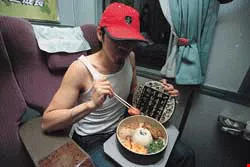
A boxed lunch price war has broken out across Taiwan, changing the way consumers eat.
A little lunch, a lot of love
When they officially started selling the lunches at 9 a.m. the following morning, there was already a crowd of over 2000 waiting. With only 1000 biandang, they were all sold in less than 20 minutes. With so many left in the cold, the TRA immediately announced that all those who were unable to buy one of the meals could put their names down for one of the next batch; thanks to the tremendous interest, there were to be another 10,000 ordered. When the news of this broke, numbers started to snowball, growing daily, until the biandang had become more popular even than that year's previous hot sellers, Hello Kitty and Portuguese-style egg tarts. Total sales of the "Taiwan Rail Nostalgia Lunches" hit roughly 90,000, shocking the TRA staff and giving them a madly busy three months trying to satisfy the demand.
As Chen Ching-piao points out, they've offered sparerib lunches for years, "but they're just not the same. The modern ones aren't sold in the old stainless steel boxes, and the characters for 'nostalgia' imprinted on the boxes just added to the whole feel of them." He believes that doing this met the passengers' desire for a piece of the past, and everyone took advantage of this chance to indulge their nostalgia. Chen reckons that all those passengers who in the past could never afford the lunches were particularly happy about this opportunity, and would buy five or six lunches at a time, so they could make up for that lost part of their youth!
Aside from the nostalgic value, the recipe for the pork lunches was another important factor. Liao Mao-sheng, who started studying the preparation of these lunches in his teens, says that at the core of the recipe is spring onion and ginger. On top of that, he then adds his own homemade rice wine-but the recipe and quantities? Trade secret.
The other distinguishing feature of the Taiwan Rail Nostalgia Lunches is of course the rice and vegetables. The rice isn't just the usual white rice; it includes fried spring onion, sesame oil, dried shrimps, bak-choi, and a small amount of pork stock. The cooking technique is a combination of boiling, steaming, and roasting. With such a unique flavor, it's no wonder that people can't get enough of the lunches.
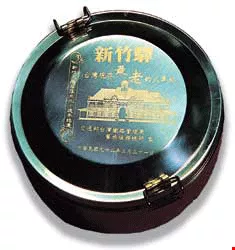
Opening a TRA lunchbox, one is immediately hit by a mouth-watering aroma.
The hero of Ekiben
The success of 2000's "Taiwan Rail Nostalgia Lunches" was so phenomenal that the TRA then decided to offer the lunches every year. Each time the design of the stainless steel box would change, satisfying the lust for collector's items. This tactic proved effective, and according to the latest figures from the TRA, they sell on average 70,000 lunches each year. And it's not just domestic sales either; their fame spread to Japan, home of this style of packed lunch, where the TRA were asked to take part in an exhibition.
When the Japanese newspaper Asahi Shimbun first ran a major story on the Nostalgia Lunches, it stirred up a rush on them from Japanese buyers. From January 9th, 2003, the TRA took part in the 38th Ekiben ("station lunches") exhibition at Keio department store in Shinjuku, Japan. Each day at the exhibition they had 700 lunches up for sale, and once again they sold like hotcakes-every last lunch was sold within 15 minutes.
When Taiwan was in the grip of Nostalgia Lunch fever, the general manager of Keio actually made a special trip to Taiwan to ask the TRA to take part in the Ekiben exhibition. But at that time there just wasn't the manpower for it, so they couldn't make any promises. Last year, Keio once again extended their offer, and while the TRA didn't turn them down, they simply couldn't spare the people for it. Finally, a chef was sent to Taiwan from Japan to study how the pork was prepared and how to cook the rice and vegetables. After a period of study, he returned to Japan, taking with him the taste of these nostalgic lunches. With 7500 carrybags and stainless steel lunchboxes supplied by the TRA, the Japanese chef handled all the materials purchasing and preparation for the biandang in Japan.
During each the 14 days of the Ekiben exhibition, 700 of the Nostalgia Lunches were sold, with this getting up to 900 on the weekends; just like before, the demand for the lunches was immense. Mr. Yoshiaki, the man in charge of sales there, says that it was the first time he'd ever seen anything like it. Originally, the hosts just wanted a more international flavor to the exhibition, and therefore he invited the TRA to come and take part. He never thought that the Taiwanese lunches would end up the biggest attraction at the whole exhibition!
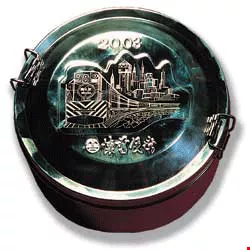
The packing for the TRA lunchboxes has constantly been revised and updated, so that each design becomes a collectors' item. Photo 1 shows the latest "Nostalgia Edition" packaging, number 2 the wooden style used in the early days, and number 3 a regional logo.
Old folk's wishes
The ROC Tourism Bureau, under the Ministry of Transportation and Communications, sees these lunches as a great boon, bringing into Taiwan still more Japanese tourists. The Japanese already make up the largest single group of tourists coming to Taiwan at just over 37% of the total, so in February this year Taiwan Rail lunches were included as part of a project to increase tourist figures. Each Japanese tour group that came to Taiwan and took a rail tour was given Nostalgia Lunches in stainless steel boxes. Thanks to this, Japanese lovers of Taiwanese food have flocked to the island.
This August, a guide with a group of about a dozen elderly Japanese tourists came to sightsee in Taiwan. As well as coming to visit various famous historical sites, another major part of their visit was the railway, during the course of their journey along which they were to try the Taiwan Rail lunches. Sugino Yoshiko, a 60-plus member of this group, gave a happy sigh at the thought of being able to try one of the fragrant lunches while on the train. Last time they were selling the Taiwan Rail biandang in Japan, said Sugino, she saw a report on them on the TV, but unfortunately didn't get a chance to try any. "Finally, I get to fulfill that desire."
Sugino also revealed that when she was younger she visited Taiwan and tried one of the Taiwan Rail pork lunches, which left a deep impression on her. Now that she's visiting again in her old age, she intends to relive that experience once more. There are many other Japanese visitors like Mrs. Sugino, who have loved rail journeys ever since childhood, and who love taking these train tours.
With 21 years in charge of the railway meals, Chen Ching-piao sees several differences between Taiwan's lunches and Japan's. In Taiwan, the lunches are generally hot meals, while in Japan they're cold. Also, the pork in Taiwan's meals is first deep fried, then stewed in soy sauce, as compared to Japan's with their more tender, fresher taste and more appetizing smell.
But Chen also notes that not only are the lunches offered by Japan Rail more famous, they also have a massive variety. At one exhibition of railway lunches there were 180 different regional lunches on display, an unbelievable sight. The lunches on display used local specialty ingredients, meaning that it was possible to tell what area any given lunch was from at a glance. This is the greatest strength of the Japanese lunches-and for passengers who want a new experience each time, it is a great attraction.
Having tried all kinds of domestic and foreign railway lunches, Taiwan Railway Culture Association administrative director Hsieh Ming-hsun says that of all the foreign railway lunches available, he considers Japan's to be the best. They're also often tied in with the special features of the local area-for example, seaside stations offer seafood lunches. Also, the lunch boxes come in all sorts of different designs, from cane baskets to ceramic boxes. When he visited Japan, he brought back several extraordinary lunch boxes as souvenirs. He believes that Taiwan's boxed lunches are too boring: they lack any kind of local flavor, and have a lot of room for future improvement.
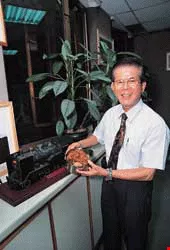
Chen Ching-piao, head of the TRA's Catering Services Division, shown here holding one of their lunchboxes, says proudly: "This 'old-time flavor' just seems to have garnered undying devotion from our travelers."
Old memories, new popularity
Aside from the massive popularity of the Nostalgia Lunches, domestic convenience store chains are also paying attention to this virgin market. Starting a couple of years ago, one after another they started offering different kinds of local packed lunches, starting a "biandang war,"-one would offer theirs for NT$40, so a competitor would drop theirs to NT39, all promoting their lower prices. Their ads tout the fact that you can try up to seven different kinds of lunch, and some even offered a bowl of soup with them during harder times, hoping to be able to pull in more customers. For dragging the domestic boxed meal market into a price war like never seen before, they have come under fire from all corners for wrecking the market and forcing traditional snack stands into a difficult position. Fortunately, such low prices can't last, and the market will eventually be able to right itself.
According to a survey by the Economic Daily News, sales of packed lunches in Taiwan's five biggest convenience stores total up to 100 million units per annum. Of this, 7-Eleven makes up over 80%, with the other four chains selling a total of about of 20 million units annually. As the survey indicates, 7-Eleven's success has changed the face of the market, and the eating-out habits of consumers. At 7-Eleven, it's easy and convenient to buy the lunches, the stores are open 24 hours, and they have microwave ovens for customers to heat up the lunches, making the general public more and more keen on them. These biandang have already become a popular item with the younger generation, people who never were part of the nostalgia craze in the first place.
In this battle of the biandang, some small shops selling boxed lunches have had to come up with some way to deal with the competition. As well as dropping their prices, many have started flying banners saying "Railway Lunches" to try and get the attention of customers. A few ambitious people have come up with ways to add value to the lunches. One example is the famous Snake Kiln in Nantou; the owner Lin Kuo-chiang started offering "Ceramic Lunch Boxes," with an inscription by calligrapher Liu Pei-hsiang on the lid of each box, decorated with traditional paintings of plum trees. These lunchboxes are more culturally and environmentally conscious, while also having a distinct local flavor. The initial run of 3000 was snapped up within two days.
Although these packed meals may be convenient and offer a variety of flavors, they're not necessarily great for your health if eaten on a daily basis. According to findings by the "Around Taiwan Health Care Alliance," almost half of all office workers in the country prefer lunch boxes for lunch. These lunches usually contain fish, tofu, meat, and egg-all high-protein, high-calorie foods. One should only eat this kind of meal every now and then. If eaten too often over a long period, they are likely to cause weight gain, and they do not provide a balanced diet.
It seems that this biandang fever has gone from being a way to relive old memories to being the next big thing, hitting heights Taiwan Rail could never have imagined when they started selling them!
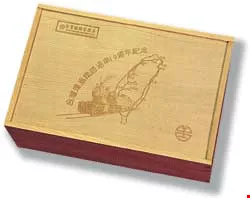
The packing for the TRA lunchboxes has constantly been revised and updated, so that each design becomes a collectors' item. Photo 1 shows the latest "Nostalgia Edition" packaging, number 2 the wooden style used in the early days, and number 3 a regional logo.


@List.jpg?w=522&h=410&mode=crop&format=webp&quality=80)


