Tang Prizes Honor Excellence, Spotlight Taiwan
Sherry Shang / photos courtesy of the Tang Prize Foundation / tr. by Jonathan Barnard
September 2014


The first Tang Prizes, with the award date of September 18, have received much attention both in Taiwan and overseas. The five recipients of the four prizes made plans to come to Taiwan in September to collect their prizes, as well as to attend lectures, seminars, concerts and a National Palace Museum exhibition on Tang and Song Dynasty painting and calligraphy.
Internationally renowned for their outstanding research accomplishments, the five recipients are all highly deserving. Moreover, by commending international scholars and organizations for their innovations and contributions to humanity, the Tang Prizes convey Taiwan’s determination to move onto an international track and establish close links with the global academic community. “Tang Prize Week” gives Taiwan a chance to welcome these luminaries and also to show off Taiwan to the world!
The Tang Prizes are Taiwan’s first academic awards that are global in scope, conferred biennially on individuals and institutions anywhere in the world. Two years ago Ruentex Group chairman Samuel Yin established the Tangs with an endowment of NT$3 billion. There are individual prizes for sustainable development, biopharmaceutical science, Sinology, and rule of law. Each carries a cash award of NT$50 million (NT$40 million for the recipient and NT$10 million in assistance for related research). The monetary award is higher than that given for the Nobels. Indeed, it is the highest of any international academic prize. The Tang Prize Foundation has commissioned the Academia Sinica, Taiwan’s preeminent academic institution, to select the winners. Lee Yuan-tseh, former president of the Academia Sinica, is chairman of the selection committee.
At the press conference marking the prizes’ establishment, Yin explained that he had been thinking about launching an international prize for 20 years, and he especially wanted to thank the Academia Sinica for its support in bringing his idea to fruition. He noted that the Tang Dynasty was a golden age in Chinese history, particularly notable for encompassing both Eastern and Western values and for being tolerant of dissent. Its name is thus well suited to representing the meaning behind the awards.
Academia Sinica president Wong Chi-huey expressed his high expectations for the Tangs’ future. Wong explained that the Tang Prizes emphasize innovation and social contribution and impact, which gives them a slightly different orientation from the Nobels. He hoped the Tang Prizes would have a positive and far-reaching impact by serving as a platform to spur research and education, to encourage exchange between international and Taiwanese academics, and to bring Taiwan some good publicity.
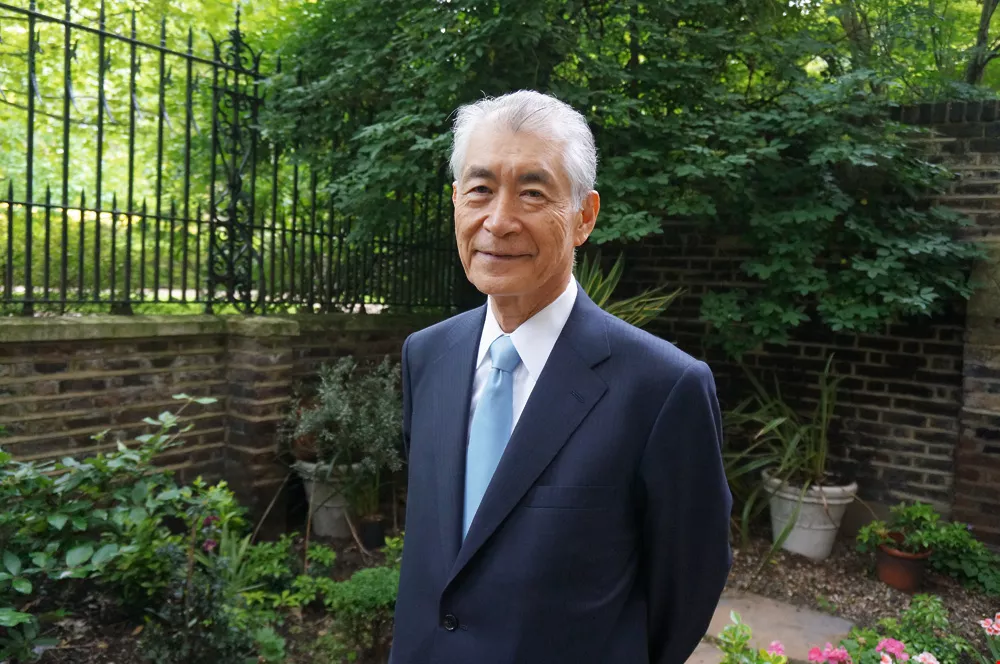
Advances in immunotherapy made possible by the discoveries of Tang co-winner Tasuku Honjo offer new hopes for cancer sufferers.
Gro Harlem Brundtland, now 75, served first as Norway’s minister of environmental affairs and then as prime minister for three terms. She went on to become director-general of the World Health Organization and the UN secretary general’s special envoy on climate change. Currently, she is deputy chair of both the UN Foundation board and The Elders, a group of international leaders working for peace and human rights that was brought together by Nelson Mandela, the group’s founder.
For more than 30 years, Brundtland has continually pushed for symbiosis and balance between humanity and the planet. In 1987 the UN’s World Commission on Environment and Development, which she chaired, published Our Common Future, widely known as the “Brundtland Report.” The report provided a clear definition of “sustainable development”: “Sustainable development is development that meets the needs of the present without compromising the ability of future generations to meet their own needs.”
By offering challenges and setting a direction for science and technology, and by aiming for a balance between economic development, environmental protection and social justice, the report directly led to the 1992 United Nations Conference on Environment and Development (UNCED) in Rio de Janeiro. Known as the “Earth Summit,” the conference in turn led to plans for concrete actions to realize the conception of sustainable development. It gave birth to Agenda 21 and the United Nations Framework Convention on Climate Change, and eventually the Kyoto Protocol and the UN Conference on Sustainable Development.
A trailblazer in acting to protect the planet and the human environment, Brundtland has been an outstanding world leader. Currently, she lives with her husband in a suburb of Oslo, Norway, but she is still highly engaged in battling climate change and promoting equal rights for women.
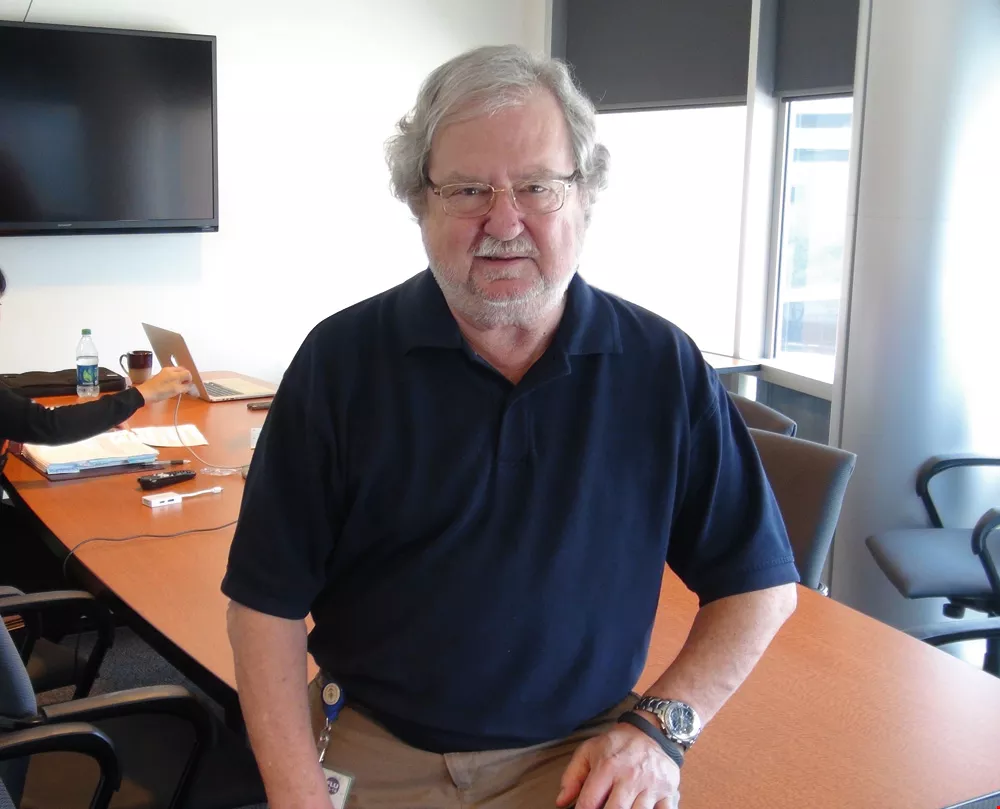
James P. Allison, co-winner of the Tang for biopharmaceutical science, is deeply gratified that his research can help cancer sufferers.
The first Tang Prize for biopharmaceutical science is being shared by James P. Allison of the University of Texas and Tasuku Honjo of Kyoto University. Allison discovered the protein receptor CTLA-4, which inhibits the activation of T cells, and Honjo discovered another inhibitory receptor, PD-1. Their findings paved the way for research into a new method to combat the growth of tumors: immune checkpoint blockade. Trials have proven that these techniques are effective in combating cancer. Drugs for use in related treatment regimens have already been developed.
Allison, 66, is chair of immunology at the University of Texas MD Anderson Cancer Center. His research focuses on immunology and cancer.
In 1995 he and another scientist discovered “cytotoxic T-lymphocyte-associated protein 4” (CTLA-4). Moreover, his team was the first to prove that CTLA-4 downregulates T cells’ immune response. It was a key discovery about regulation of the immune system. Allison developed a new way to treat cancer by blocking molecules on immune-system T cells that turn off immune response.
Tasuku Honjo, 72, is a professor of immunology and genomic medicine at Kyoto University. In 1992 Honjo discovered the second immune checkpoint on T cells, called PD-1. In clinical trials, cancer treatment drugs that block PD-1 have shown great promise.
Allison won the Economist Innovation Award for Bioscience last year. When Allison was a child, his mother died of cancer. That spurred his interest in studying disease. Nevertheless, there were at first doubts about the effectiveness of cancer immunotherapy. It is only in recent years that the import of his research has been fully grasped. He is extremely gratified that it can benefit many with cancer.
Honjo discovered PD-1 20 years ago, but it is only in the last decade that he has successfully confirmed the function of PD-1 molecules. He didn’t originally anticipate that the discovery would lead to an effective method for treating cancer. Today cancer immunotherapy has entered the mainstream of pharmaceutical research. Smiling, Honjo said: “There’s true joy in a dream being realized.”
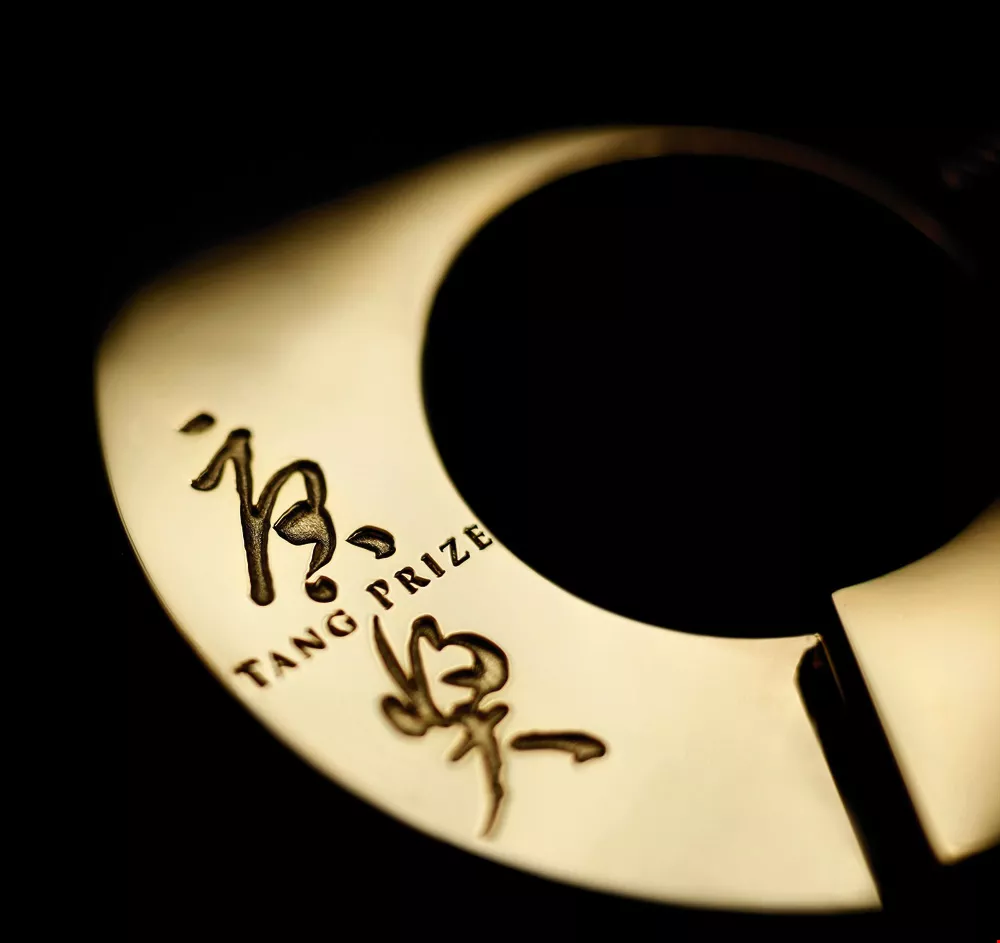
Inspired by the double helix of DNA and images of dragons, the Tang Prize medal was designed by Naoto Fukasawa.
Albie Sachs threw himself into the South African civil rights movement in the 1950s in determined opposition to apartheid. He studied law in order to fight for human rights, equality and freedom. From 1994 to 2009, when he served on South Africa’s Constitutional Court, Sachs advocated forcefully for the abolishment of capital punishment and for legal protections for homosexuals and AIDS patients. Because Sachs has long advocated for respecting all people and has affirmed the abilities and value of different social groups, he has amply embodied the important values of the rule of law.
Born in Johannesburg in 1935 to a Lithuanian Jewish family, Sachs participated in the Defiance of Unjust Laws Campaign when he was 17 and was taken into custody as a result. After he became a lawyer, he frequently represented those who were charged with violating apartheid policies and consequently was blacklisted by the South African government. He was persecuted for long periods and after spending time in prison went into political exile abroad. In 1988 he survived a car bomb but lost an arm and vision in one eye.
In 1990, 24 years after leaving South Africa, Sachs returned to help lay the foundations of a new constitution based on racial equality and the rule of law. In 1994, after Nelson Mandela was elected president in the nation’s first elections open to all races, Mandela nominated Sachs to the Constitutional Court. In that role Sachs made many important rulings that helped to transform the court into a protector of justice and human rights.
Sachs, 79, came to Taiwan last year for the release of the Chinese-language edition of his latest book, The Strange Alchemy of Life and Law. “I think the people choosing me for the prize were really... choosing what South Africa achieved through the law,” Sachs said after learning that he had won the Tang. “I feel very proud, proud to belong to a generation of South Africans and a generation of lawyers who fought for freedom.”
.jpg?w=1080&mode=crop&format=webp&quality=80)
Historian Yu Ying-shih’s Tang Prize for Sinology is well deserved.
Yu Ying-shih is widely regarded as a master historian in both Chinese and Western academic circles. In the field of Chinese history, particularly Chinese intellectual and cultural history, he has played a trailblazing role.
Now 84, Yu has authored a tremendous number of papers and books. In 1974 he was elected to the Academia Sinica. He taught at Harvard, Yale, and Cornell and other renowned universities, and is an emeritus professor at Princeton. In 2006 he was awarded the prestigious Kluge Prize by the US Library of Congress for his lifetime achievements in humanities and social science research.
When former Academia Sinica president Lee Yuan-tseh informed Yu that he had won the Tang, Yu humbly replied, “I don’t deserve the honor.” In an interview with the Central News Agency, he said, “The Tang Prize itself represents a cultural phenomenon worth noting. The Republic of China on Taiwan would not be able to establish a prize of such magnitude, along the lines of the Nobel, if it had not attained a leading position among the nations of the world.”
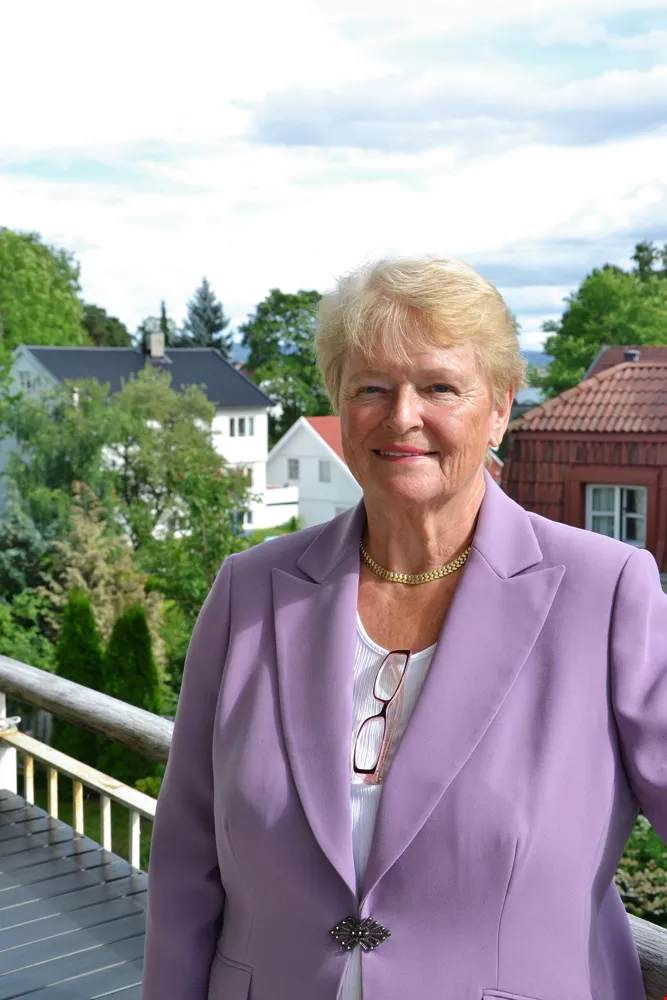
Norway’s former prime minister Gro Harlem Brundtland has been called the godmother of sustainable development.

@List.jpg?w=522&h=410&mode=crop&format=webp&quality=80)


@List.jpg?w=522&h=410&mode=crop&format=webp&quality=80)
@List.jpg?w=522&h=410&mode=crop&format=webp&quality=80)
