The Kupa Band--Taiwan's Havana Groove
Chang Meng-jui / photos courtesy of Chang Meng-jui / tr. by Scott Williams
November 2002


Taiwan residents in their 40s or 50s will most likely remember the Kupa Band, the Cuban-style big band founded by professor Hsieh Teng-huei. But few realize that this 50-year-old big band which fostered the talents of innumerable jazz musicians is still jumping today. Similarly, many will remember Pai Chia-li, the beautiful host of the popular Milky Way Palace variety show, introducing "the Taiwan Television Band, led by Hsieh Li-sheng" at the beginning of every show, or, a few years earlier, Pao Kuo Liang introducing "the China Television Band, led by Lin Chia-ching" every Sunday evening on his Joyful Holiday program. But few know that both the Taiwan Television Band and the China Television Band were composed entirely of Kupa Band alumni.
Since the Red Playhouse reopened, the Kupa Band have been playing to packed houses at 8 p.m. on the last Friday of every month. Tonight, they have the enthusiastic audience swaying in time to every song. Some find the call of the music too much to resist; they push their chairs aside and begin to dance.
The audience ranges from young couples in their 20s and 30s to silver-haired septuagenarians, but most are middle-aged. In fact, these middle-aged music fans seem to feel as if the band is playing just for them. They lose themselves in the songs, clapping time, singing along and even dancing in the aisles.
The 50ish Lai Chun-tsai flew up to Taipei from his home in Taitung just to see the band play. He says excitedly that he used to go to Kupa Band shows at Taipei's Chungshan Hall and International House 30 years ago, but lost track of the band after he moved out of Taipei. He had assumed that they were no longer performing and it was certainly an unexpected pleasure to have the chance to see them again after all these years. He ordered tickets the moment he heard about this month's show so he would be sure not to miss it.
Lai Cheng-sen, a Hsinchu resident who works in the IT industry, took advantage of a break between sets to approach the stage, where he asked band leader Hsieh Shou-yan if he remembered him. It seems that during a Hsinchu performance by the Kupa Band, Lai was overcome by an urgent need to use the restroom. When he asked the band if they would take a short break while he did so, many in the audience thought he was trying to break up the performance. In reality, Lai just couldn't bear to miss even a moment of the band's set. When Lai reminded Hsieh of the story, Hsieh burst out laughing and replied that he couldn't forget it.
The Kupa Band has etched memories deep in the minds of any number of people. When the band played at the reopening of the Red Playhouse, Taipei Cultural Affairs Bureau director Lung Ying-tai and film director Ko I-cheng were in attendance. Neither Lung nor Ko had seen the band in years, and immediately hurried over to say hello. Lung also gave them a big thumbs up, saying: "Having the chance to see the Kupa Band play live today is truly an unexpected bit of luck."
According to Lee Yung-feng, who is the executive director of the Paper Windmill Theater in addition to booking performances for the Red Playhouse, the band is the playhouse's most popular act. "We don't have any worries about ticket sales when we book the Kupa Band."
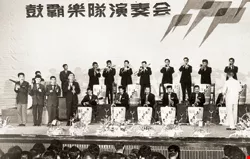
(opposite page photo by Lai Chi-neng)
Hsieh Teng-huei, music fanatic
The Kupa Band was founded by Hsieh Teng-huei. Hsieh had loved music since childhood, but his family was opposed to him making a career of it. Nonetheless, the indomitable Hsieh was determined to take a musical path in life. By the age of 13, he could play the harmonica, and at 15 he began studying violin with Li Chin-tu, a professor of music at National Taiwan Normal University. In high school, he also took up guitar. After graduating high school, he was recruited by Mitsui and Company and was soon sent to Thailand. During his 11 years there, he also developed a passion for accordion. In later years, this deep love of music drove Hsieh to put together his own band.
In 1953, Hsieh happened to see a Filipino jazz band that was touring Taiwan. With only 12 members, the band was relatively small, but they were talented players and received good reviews. Hsieh himself was so impressed by their performance that he decided then and there to form an amateur band of his own. He gathered together a number of friends who shared his interest in music, including Yeh Chuan-ching, Wen Ching-tien, Tsai Che-hsiung and his own younger brother, Hsieh Li-sheng (then playing in the Taiwan Symphony Orchestra), and formed the first incarnation of the Kupa Band. The 21-piece band played a mix of American jazz and Latin music and included five saxophones and four trumpets, as well as a piano, bass, guitar, drums and band leader. Kupa was the first big band to form in Taiwan following its return to Chinese rule.
The band was originally known as the Taipei Cuban Boys to reflect Cuba's musical reputation and the band's enthusiasm for Latin music. However, the ROC's anti-communist stance made the original name somewhat awkward when revolution turned Cuba into a communist nation. To get around the problem, Hsieh and company changed their name to the Kupa Band.
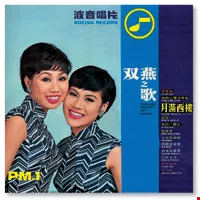
Hsieh Teng-huei also created the Swallow Sisters, a duo renowned for their harmonies.
Honeymoon Hall
Wen Ching-tien, a 73-year-old founding member of Kupa who still plays keyboards with the band, recalls that prior to joining Kupa he had formed his own band in Keelung, a trio that consisted of himself on accordion with a violinist and a guitar player. According to Wen, there were few people in Taiwan who could play music in those days, so everyone just taught themselves.
In 1951, Wen met Hsieh Teng-huei while working for Shinkong Spinning. Hsieh might have been working in a textiles factory, but he was obsessed with music and frequently gathered musically inclined friends together to learn from one another. Wen believes that Hsieh's forming of the Kupa Band was only natural, "because he had an inexhaustible enthusiasm for music that was looking for a chance to express itself."
When the band first formed, they practiced on the second floor of Hsieh's wife's Honeymoon Hall Bakery. The bakery closed 10 years ago after more than 40 years on Taipei's Chungshan North Road, but the band still practices on the second floor of the building.
Although it was an amateur band, Hsieh asked a lot of his muscians. Bandmembers practiced hard and the band gradually improved. The following anecdote is indicative of how much Kupa's members loved to play: In those days, Wu Chien-cheng, who worked for the railway administration as a conductor, played bass for the band. Wu was the kind of guy who never missed practice, but one day he was scheduled to drive a steam engine from Keelung to Taipei during the band's practice time. When the train reached the Fuhsing Bridge (which used to stand at the intersection of Chungshan North Road and Chunghsiao East Road) Wu realized he was in danger of missing practice entirely. He quickly recruited another railway employee to take over his conducting duties, hopped off the train, and legged it up Chungshan North Road to Honeymoon Hall.
The following year, Kupa staged a mambo concert in the amphitheater at New Park (now 2/28 Peace Park). Under Hsieh's direction, the band captured the hearts of the audience, which called for encore after encore. In those days, Hsieh Li-sheng, who would later lead the Taiwan Television Band, and Lin Chia-ching, who went on to direct the China Television Band, played sax and trombone, respectively, with Kupa. For the next ten years, Kupa performed frequently at venues such as Chungshan Hall and the Air Force's Hsinsheng Club, but remained a sideline for bandmembers. The band was also a favorite with the American troops who were then stationed in Taiwan; the bases competed with one another to book the band for their annual Christmas parties.

Hsieh Teng-huei (second from right), who founded the Kupa Band and made innumerable contributions to music in Taiwan, received a special Golden Tripod Award in 1992.
Taking center stage
When Taipei's Ambassador Hotel opened for business in 1964, it needed a big band for its nightclub. Hsu Chin-te, then the hotel's president, was thinking about bringing in a band from overseas. Coincidentally, Hsu' daughter was then studying piano with Kupa's piano mentor and had heard the band several times. She recommended Kupa as exactly the sort of top-notch band the very modern Ambassador was looking for. Hsu decided to check out the band, and brought his American, Japanese and French managerial staff with him to a performance at the Broadcasting Corporation of China auditorium. The American manager thought the band was great, and was shocked to learn that they were amateurs.
Once the band completed contract negotiations with the hotel, most members quit their day jobs. A notable exception was Hsieh Teng-huei himself, who passed on the bandleader's baton with the excuse that he was a musical dabbler unable to meet the demands of playing professionally. In all, 13 bandmembers signed the hotel's contract. Thinking back on it, Wen Ching-tien smiles. He recalls that the band was paid NT$128,000 per month. The leader got NT$10,000 and the rest of the band received NT$8,000 each. The remaining portion of the band's salary was used to cover band expenses. "In those days, a civil servant made less than NT$3,000 per month and the manager of a major hotel made only NT$3,500. Our salaries were so high-there's no telling how many people were envious of us."

Hsieh Shou-yen (second from right) now leads the Kupa Band. In days gone by, he formed the band Four Plus One under his uncle Hsieh Teng-huei’s guidance. Sitting in front is Chang Suo-ling, a popular singer of the day known as “Miss Ribs.”
The next generation
Though Hsieh Teng-huei had left the band, he didn't leave music. Hsieh was on a musical mission. Now that the "first generation" of the Kupa Band was playing at the Ambassador, he began using his spare time to train a second generation. This time, he put together a band that played purely out of interest and never accepted payment for performing. Prior to its opening in 1965, the Fortuna Hotel was also looking for a band. When the Fortuna attempted to recruit the Ambassador's band, the Ambassador suggested it talk to Hsieh Teng-huei and the new band he was working with. In this way, Kupa's "second generation" arrived at the Fortuna under the direction of Hsieh Li-sheng. When Taiwan Television was adding to its line-up of music programs and needed a house band in 1966, it too sought out the Kupa Band, stealing the second generation away from the Fortuna.
In 1970, the Lisheng Music Hall opened on Taipei's Chunghwa South Road, where it staged performances by Taiwan's hottest singers. But great singers need great bands to back them. The hall set its sights on Kupa's "third generation," which Hsieh Teng-huei was then training. Hsieh did not feel his bandmembers were in any way obligated to him; when he first began rehearsing the Kupa Band, he relied entirely on his own enthusiasm for music. So when people wanted to hire the bands he had trained, he had no reason to say no as along as the band itself was willing. This had happened to his first two bands, and it was only natural that it would happen to his third. Moreover, Hsieh had always believed that bands need new people to remain vital. As he was fond of saying: "New people have passion and are excited about playing."
When recruiting new musicians, Hsieh was not at all demanding; he asked only that the new recruits be able to sightread music. Chops were not an issue for him because he believed that they could be acquired over time.
In 1966, Hsieh led the Ambassador and Fortuna Cuban Boys in a joint performance at the Chungshan Hall celebrating the anniversary of President Chiang Kai-shek's inauguration. The performance was televised, bringing the Kupa Band to the attention of an even broader audience.
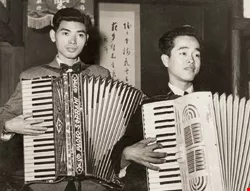
Wen Ching-tien (left) still plays with the Kupa Band. At the time of the photo, he was Kupa’s accordionist.
A major player
Hsieh not only made the Kupa Band's reputation, he also created the Swallow Sisters, the first duo in Taiwan to make extensive use of vocal harmonies. The honey-voiced sisters hit it big in the sixties, overshadowing the many other sister acts around at the time. Hsieh also arranged all of the Swallows songs himself, adding plenty of harmonies. After the success of the Swallow Sisters, Four Plus One, Chen Fen-lan, Hung Yen-ping, Li Pei-ching, Chiu Yuen-shu and Kang Ya-lan all took voice training from Hsieh.
Hsieh became so well known and the vocalists he trained so successful that in 1970, the 16-year-old Liu Hsiao-pei, an ethnic Chinese from Thailand, flew to Taipei to seek him out. Liu had seen the Swallow Sisters and Chen Fen-lan perform in Thailand and had been impressed by their vocal skills. When she made inquiries, she discovered that they had studied with Hsieh. She decided that she too would study with Hsieh and came to Taiwan specifically to do so.
For his selfless contributions to music, Hsieh was awarded a special Golden Tripod in 1992.
While the Kupa Band was originally formed to play jazz, they also play Latin music, international chart toppers, Taiwanese folk music, all kinds of dance music and even classical music. For this they are in debt to their long-time arranger, Wen Ching-tien. Wen has tirelessly scored the hits of the day for Kupa, providing the band with a wealth of material to play. To date, Wen has created band scores for more than 1,000 songs, a large part of which have been local tunes.
Sharing a musical passion
Wen Ching-tien says that the music fans of those days were more fond of and more familiar with local popular music. The band therefore always included a few familiar tunes in their sets. Playing them live always brought audiences to fever pitch.
Hsieh Lei, who sang with Kupa innumerable times, recalls that the band excelled at Latin dance tunes. He says the small bands of today with their synthesized sounds just can't create the same kind of vibe that Kupa did when the mood lights came on and they started playing. He notes that the reason that the Kupa Band has been around for 50 years is simply that they are the best big band in the country.
When Hsieh Teng-huei retired, his nephew Hsieh Shou-yen became the leader of the band. Hsieh Shou-yen, who has been with the band for more than 30 years, got his start playing clarinet. Under his uncle's tutelage and guidance, he joined Four Plus One and recorded a number of albums. These days, Hsieh Shou-yen has also gone gray, but his eyes still shine when conversation turns to the Kupa Band's illustrious history. Hearing him talk about the band, one is transported back in time.
Hsieh Shou-yen says that the Kupa Band had its golden age more than 30 years ago. In those days, every member of the TTV, CTV and China Television Service bands had first been a member of Kupa. As time went on, people remembered the TV bands, but gradually forgot Kupa. "Actually, we never stopped performing. The band's in its fifth generation now."
The Kupa Band forever
Hsieh Shou-yen explains that the reason so many people thought the Kupa Band had broken up or were no longer performing is that the band doesn't perform often. He points out that Kupa is a big band with 24 members, so it costs more to hire it than to book a smaller band. As a result, the band usually only plays at the major functions of large organizations such as the Jaycees, the Lions and some American corporations.
Hsieh reveals that Taichung Mayor Jason Hu is among the band's fans. When Hu was director of the Government Information Office, he always used to hire them to play at receptions for visiting diplomats. Professional performances made for lively receptions at which the diplomats thoroughly enjoyed themselves.
In the months before Hsieh Teng-huei died, it was the future of the Kupa Band about which he was most concerned. He repeatedly took his nephew's hand and asked him to keep the band together no matter what. Hsieh Shou-yen says that his uncle taught him the meaning of determination and making a contribution. He goes on to say that while he himself may not be all that special, he will never forget his uncle's request. No matter how Taiwan may change, the Kupa Band will always be there to entertain people.

@List.jpg?w=522&h=410&mode=crop&format=webp&quality=80)


