Goatherd in New York--Ju Ming's Incredible Journey
Tsai Wen-ting / photos Pu Hua-chih / tr. by David Mayer
September 2000


Ju Ming hails from the township of Tunghsiao in rural Miaoli County. After finishing sixth grade, he left school to help his parents support their large family. From these humble beginnings, Ju advanced step by step toward an improbable destiny as a world-renowned sculptor.
In 1937, a 51-year-old man served as midwife to help his 41-year-old wife bring the couple's eleventh child into an impoverished household. The boy was named Chu Chuan-tai, but local townfolk took to calling him "Ninety-two" because that was the combined age of his parents at his birth. "Ninety-two" is known today in much wider circles as Ju Ming.
Mother Memorial
Ju Ming's father was a severe asthmatic who spent much of Taiwan's rainy winter months wheezing in bed. The family only managed to eke by thanks to the income Ju's mother brought in by weaving straw mats. One of Ju's most indelible childhood memories is his mother's hands, perpetually in motion until late every evening. Whenever any of her children urged her to call it a day, she would just say, "Silly kid! If I go to bed now, what are we going to eat tomorrow?"
The first part of the Juming Museum to be completed was the spot where Mother Memorial sits. It depicts a woman busily weaving a straw mat, surrounded by her 11 children. While this piece was under construction, Ju Ming placed a fresh flower on it every day and sat there remembering his mother. "If I hadn't grown up in such a poor family, I wouldn't have been willing to struggle so hard in the face of adversity."
As a boy, Ju Ming herded goats in the hills to bring in a bit of money for the family. His school work suffered, and Ju laughs, "I used to get lots of zeros." His sixth grade diploma is the highest-level graduation certificate he ever received.
When Ju was 15 years old, people in town hired the craftsman Li Chin-chuan to renovate the local Sea Goddess Temple. Ju's father, impressed with Li's skill, persuaded Li to take on his son as an apprentice. Ju ended up staying with Li for the three years and four months that make up a standard term of apprenticeship in Taiwan. Under Master Li's tutelage, Ju Ming learned to work wood with precision. As a low-level apprentice, Ju was responsible for doing the preliminary rough cuts for various wood pieces. Although Ju had the slightest build among all of Li's students, he did this job three times as fast as anyone else. He turned out rough work, and the more advanced students who did the detailed work disliked working with his pieces. Li Chin-chuan never made any attempt to "correct" Ju's unique style, for he recognized it as an integral part of his personality. From the very beginning, Ju's work foreshadowed the brash, bold lines of the Taichi Series that he would work on later in his career.
After a while Ju began to chafe at the limited range of his work, which generally involved only furniture and some low-relief carvings. He borrowed a camera, photographed some water buffalo, and secretly started to do some experimentation. Much to his surprise, when the secret was exposed, Li Chin-chuan was actually delighted at his "infraction," and the two began to work together on sculpture in the round, which they sold in the village of Sanyi.
I have a daughter...
After finishing his apprenticeship, Ju struck out to make a living, determined to help out with his parent's finances. He found a job with a local furniture maker, but the ambitious young man had bigger things in mind. One day he swiped NT$16 from his older brother and hopped on a train for Keelung, thinking to make something more of himself in a bigger city. It didn't take him long to find a job at a shop making Buddhist knick-knacks.
The delicate-featured Ju was a hard worker with a simple, honest manner. Every boss he worked for took a liking to him. His first boss in Keelung even offered to arrange a marriage between Ju and his daughter, despite the fact that Ju came from a poor family and had little education, while the girl was a high school student, which was quite an achievement in those days. Nothing came of the offer, however, and Ju eventually quit the job, rented some store space, and went into business for himself. The property owner took a liking to Ju, and he too offered to let Ju marry his daughter. That marriage never happened either. When Ju moved back to Tunghsiao in search of apprentices, he often stopped in on an old classmate. Ju impressed his friend's mother, who found him "honest, smart, and hardworking." She showed Ju a picture of her daughter Chen Fu-mei, who had left home at the tender age of twelve to work in Taipei and send money back home. One thing led to another, and Ju eventually married the girl in the picture, who was every bit as industrious as Ju himself. She has turned out to be an indispensable partner in his lifelong ventures.
Ju Ming often got totally wrapped up in his business, leaving his wife to take care of the children all by herself. She also had to cook meals for about a dozen apprentices and still find time to help with painting and sanding. Ju's business eventually went bankrupt, and it was she who hustled around town borrowing money wherever she could to pay off the shop's creditors. When there wasn't money to buy the children even a little piece of sugar cane to chew on, she kept the family's financial worries to herself, not wishing to add to her husband's burden. When Ju decided to study under Yang Ying-feng, Fu-mei stood behind him all the way, just as she did later when he threw all the family's assets into the building of his museum. "Well, we're husband and wife, after all. If I didn't support him, who else would?"
Ju finds a famous teacher
Although the bankruptcy created big headaches for the family, it also increased Ju's resolve to pursue an artistic career. As the owner of a business, he had spent his days working wood to meet the specs of his customers, and it drove him crazy. He dreamed of following his own path, carving his own creations. As he flipped through magazines and newspapers, he couldn't help noticing that there was a man already living this same dream. This man was Yang Ying-feng, a world-renowned sculptor working right here in Taiwan.
In 1968, at the age of 31, Ju marched off to see Yang Ying-feng. Uninvited and unexpected, he showed up at Yang's door and asked to be accepted as a student. To press his case, he showed Yang two of his works, Mother Memorial and Girl Playing in the Sand. Ju and his friends had already asked several of Yang's students for an introduction to the master, but had met with nothing but refusal, so he decided to make one last valiant effort. In preparing for his unannounced visit, he even told himself that he would go down on hands and knees and beg if need be, just like they do in all the Chinese television shows. Ju's determination made a deep impression on Yang, a strong believer that the mark of a true artist is not to be found in technical skill, but in a person's attitude. In Yang's view, an artist must be sincere and kindhearted, otherwise he is unlikely to attain artistic success. Ju ended up studying under Yang for eight years.
Yang took a special interest in the country boy with no formal art education. He gave his student a new name, Ju Ming, to express his hope that Ju would say good-bye to Chu Chuan-tai, the person who had already achieved considerable fame as a craftsman.
Yang often took Ju along on his trips abroad, and even resorted to a bit of trickery to advance Ju's career; once when he was scheduled to put on an exhibit at the National Museum of History, he begged off, claiming to be too busy, and had his pupil take his place. Ju won rave reviews for the show, the very first of his career. At a time when the newspapers paid scant attention to the arts, China Times reported on his show five days in a row. The museum extended the show by a month, but the visitors were still flocking in to see Ju's work, so an entire room was set aside and Ju's show ended up running an entire year.
In 1982, the 46-year-old Ju flew off to New York with a painter, determined to go further with the contemporary art he loved. The featherweight artist settled into an apartment in a rather dangerous part of Brooklyn and set up his atelier in the landlord's sweltering garage.
After his friend flew back to Taiwan, Ju was left completely on his own, with no one to share his meals with or talk to. The gregarious artist with no patience for books started spending lonely, sleepless nights flipping through romances by Chiung Yao. The change of scenery spurred Ju to come out with an entirely new theme, the Living World Series.
The third phase of Ju's artistic career had begun. The first phase was best symbolized by the water buffalo of In One Heart. The focus was very downhome, very Taiwanese. The second phase was his Taichi Series, and embraced all of Chinese culture. Now he had moved on to the international stage. "It was a natural progression," says Ju, who likens it to the difference between a child at different ages. A three-year-old speaks the language of a three-year-old, he says, and a five-year-old speaks the language of a five-year-old. There is no need in his view for a design or a plan of any sort. As long as you engage in self-cultivation, says Ju, the creative juices will flow. Some criticized the Living World Series at first as neither Chinese nor Western, but Ju answered his critics with a question: What is Chinese or Western in our lives today? Wouldn't it be better, he asked, to describe his work as "both Chinese and Western?"
At the pinnacle
In late 1997, 37 works in Ju Ming's Taichi Series went on display at the Place Vendome in Paris. It was the first time this swanky venue had ever exhibited the work of a living artist, let alone a non-European artist. When Juming Museum opened in 1999, all four of Ju's children were working in the arts. After a lifetime of toil and struggle, Ju had reached the pinnacle, both as an artist and a father.
So where will he take his career from here? For starters, Ju has donated his museum to the Ju Ming Culture and Education Foundation, and continues to live the life he has always known. He gets up at 5 a.m., practices his tai ji quan, does handstands for a half hour, and eats a breakfast of pickles and steamed buns prepared by his wife. He then works all morning before taking a noon nap. He often watches television afterwards, which is where he got his idea for the athletes in the Living World Series. Ju has very few social engagements, and spends most of his time working on his art. Every evening before going to bed, he meditates on some aspect of life. "Art comes from life. Art is self-cultivation." This has been a constant for Ju throughout his evolution from goatherd to master sculptor.
As I stand chatting with Ju, a furious thunderstorm breaks out. Booming thunderclaps seem to rattle every joint in our bodies. That doesn't happen so often in northern Taiwan. Always one with a taste for the big and powerful, Ju keeps exclaiming, "I love it!" Gazing off toward a dead tree in the hills, he cries out, "Look! It's pouring buckets out there, but the birds aren't even budging from that tree! They're just waiting for the weather to turn." Ju Ming has always considered nature his greatest teacher. He stands quietly under the eaves, mesmerized by the storm. For a second, I'm struck by the thought that the motionless sculptor has turned into a statue himself! Could it be that he's just picked up the inspiration for his next great masterpiece?
p.116
"Art comes from life. It's a kind of self-cultivation." Ju Ming, who never received any academic training in the arts, has never planned out his work in advance, but that hasn't slowed down production one iota.
p.117
Two women have influenced Ju Ming profoundly. One was his mother. The other is his wife. (courtesy of Ju Ming)
p.118
Ju Ming's teacher suggested that the skinny artist take up tai ji quan to improve his health. It has been a way of life for Ju Ming for many years, and inspired the Taichi Series.
p.118
Ju studied under two teachers. Li Chin-chuan provided him with a solid grounding in traditional wood carving, while Yang Ying-feng guided Ju into the realm of pure art. Lots of designs by Li Chin-chuan and works of sculpture by Yang Ying-feng are on display on the second floor of Juming Museum.
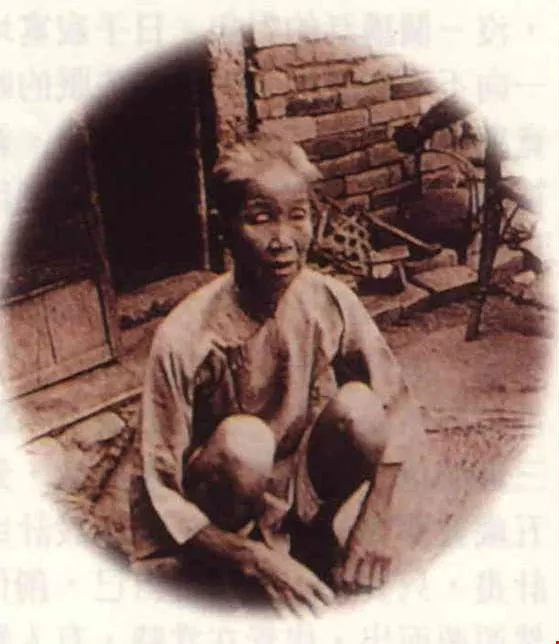
Two women have influenced Ju Ming profoundly. One was his mother. The other is his wife. (courtesy of Ju Ming)
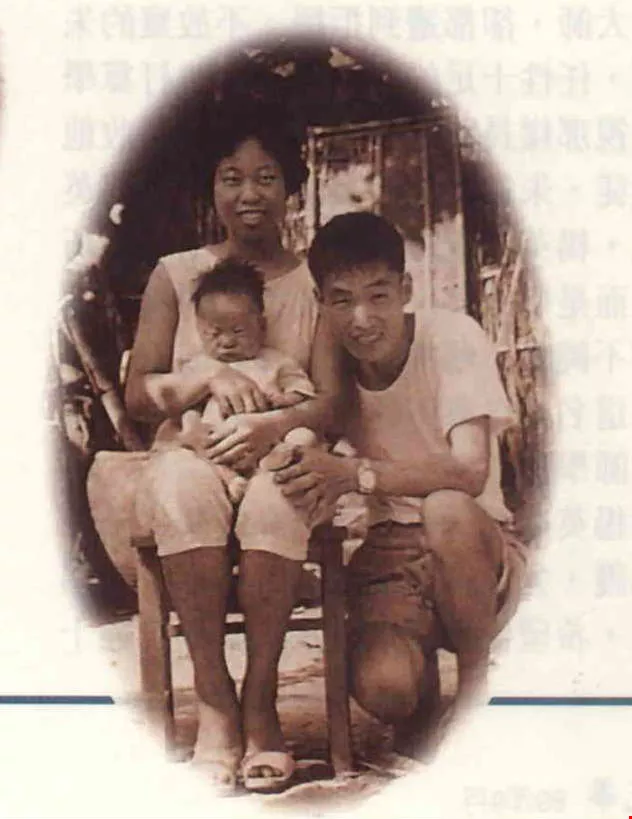
Two women have influenced Ju Ming profoundly. One was his mother. The other is his wife. (courtesy of Ju Ming)
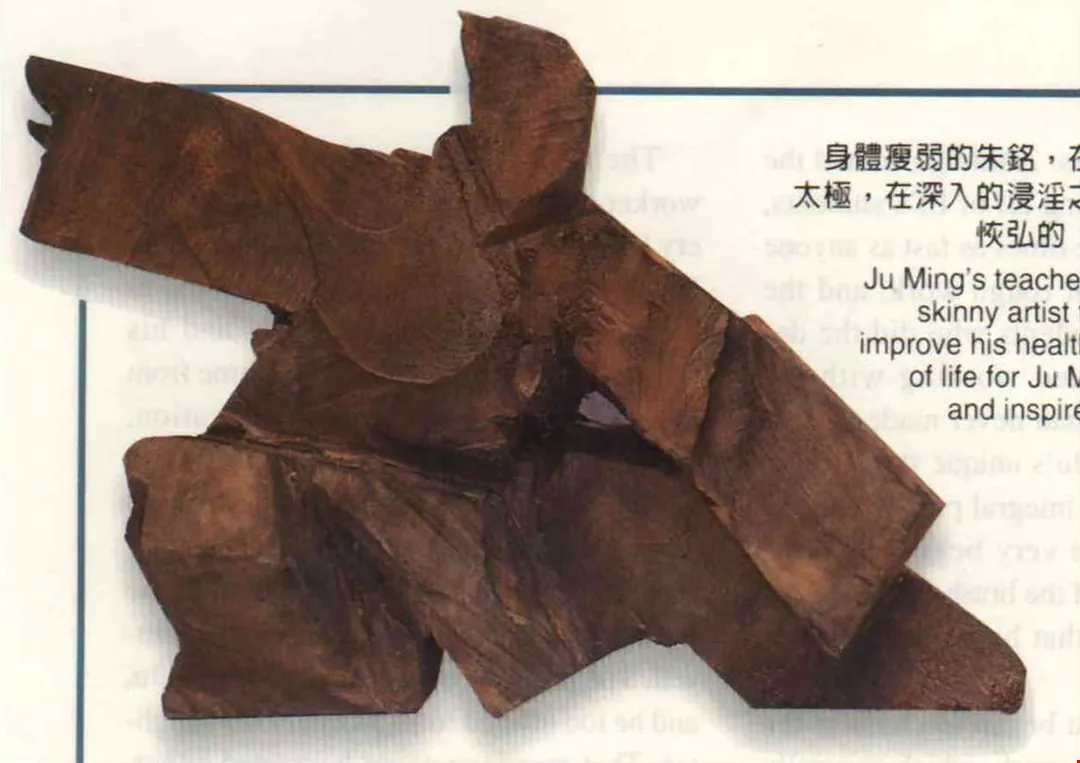
Ju Ming's teacher suggested that the skinny artist take up tai ji quan to improve his health. It has been a way of life for Ju Ming for many years, and inspired the Taichi Series.
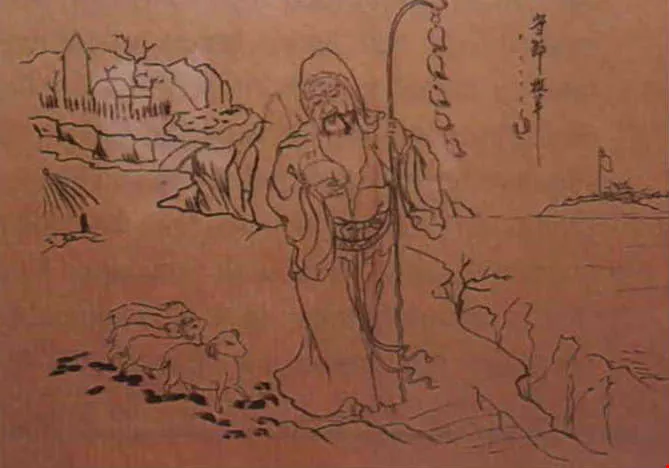
Ju studied under two teachers. Li Chin-chuan provided him with a solid grounding in traditional wood carving, while Yang Ying-feng guided Ju into the realm of pure art. Lots of designs by Li Chin-chuan and works of sculpture by Yang Ying-feng are on display on the second floor of Juming Museum.

@List.jpg?w=522&h=410&mode=crop&format=webp&quality=80)

@List.jpg?w=522&h=410&mode=crop&format=webp&quality=80)


