Café Across the Ocean— Reaching Young People’s Dreams
Liu Yingfeng / tr. by Geoff Hegarty and Sophia Chen
December 2012
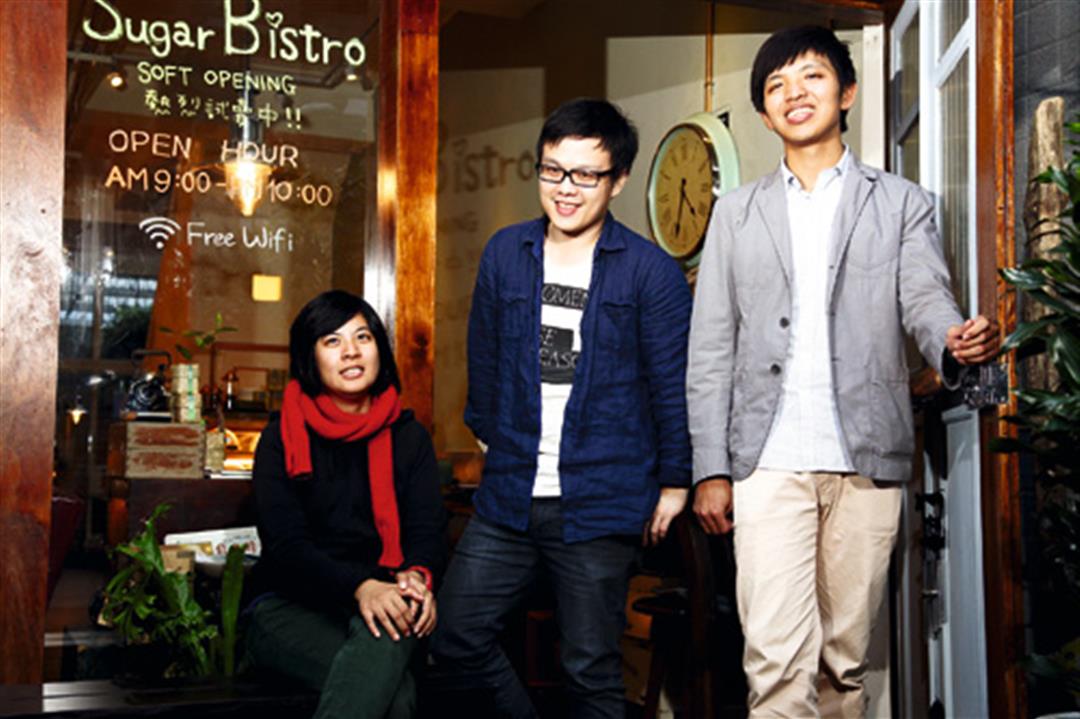
Across the Ocean is not just a place to eat—it’s more a base for young people to dream their dreams.
The idea for the café developed through three initially independent concepts: a strong concern for the environment, making Taiwan’s voice on environmental matters one to be heard, and helping Cambodian farmers enhance and promote their food production.
The café has become a powerhouse where three special young people express their dreams of changing society.
The story begins with the Across the Ocean Program, through which Yu Hsuan-ju and Wang Pinwen visited nine South Pacific island nations in just over six months.
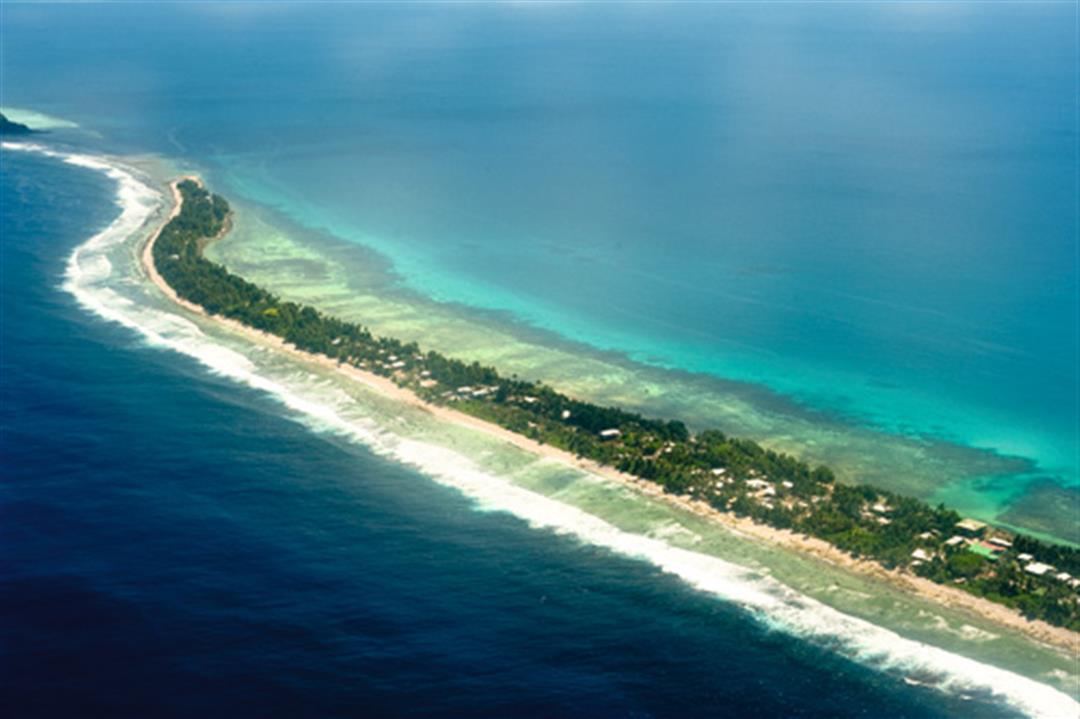
Yu Hsuan-ju, the initiator of the café, says that once by chance she saw a TV program about Tuvalu, an island nation in the South Pacific which has diplomatic relations with Taiwan.
Tuvalu appeared so vulnerable to the rising tides of global warming that the program aroused Yu’s curiosity. Wanting to know more about the threat to the distant islands of the South Pacific, she began to research the predicted rise in sea level caused by global warming. Her desire to someday visit the islands to find some resolution to this potential disaster gave rise to the Across the Ocean Program.

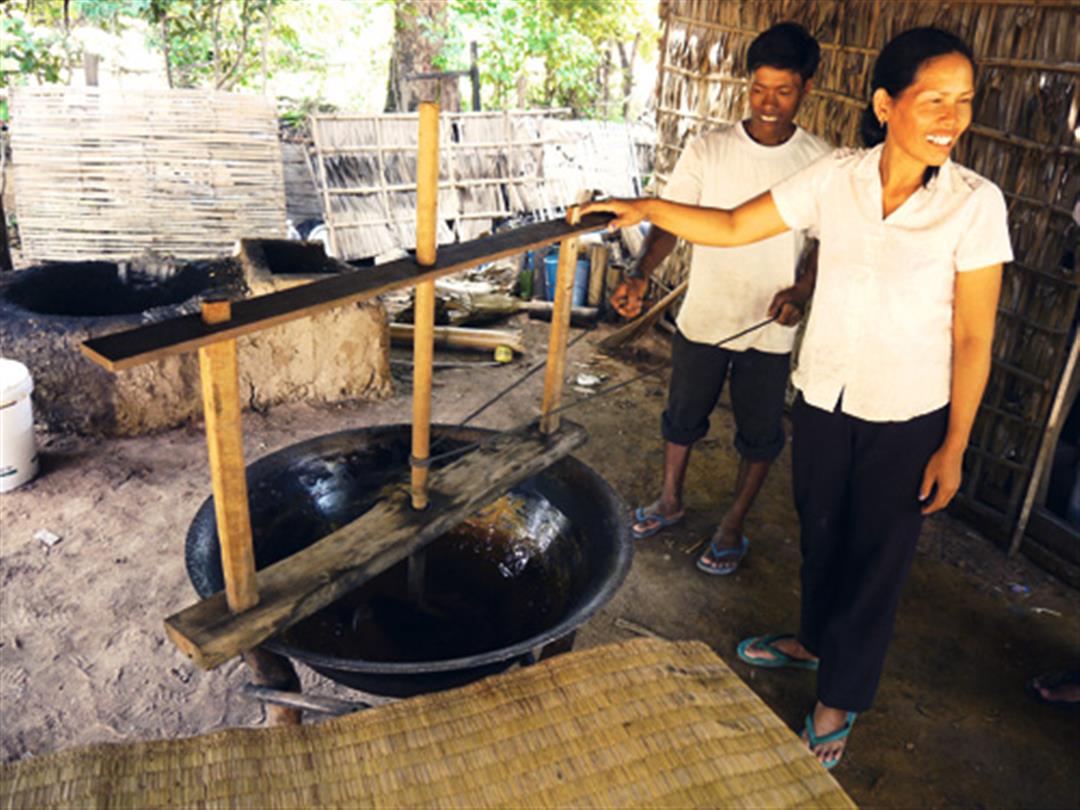
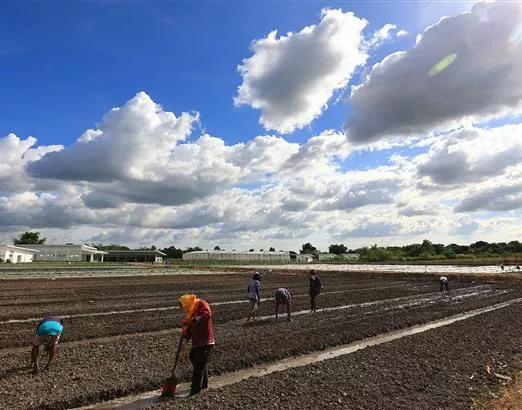
Recognizing the many uses of palm trees, Wang contracted Cambodian farmers to produce palm sugar, which is extracted from palm tree sap and processed into a saleable product. He created the brand Camgoldia to market the result.
In 2009, after graduating from the Department of Speech Communication, Shih Hsin University, Yu found a job as an assistant stage manager at the National Theater, and began saving money to travel and achieve her dream. It was here that she met her future traveling companion, Wang Pinwen.
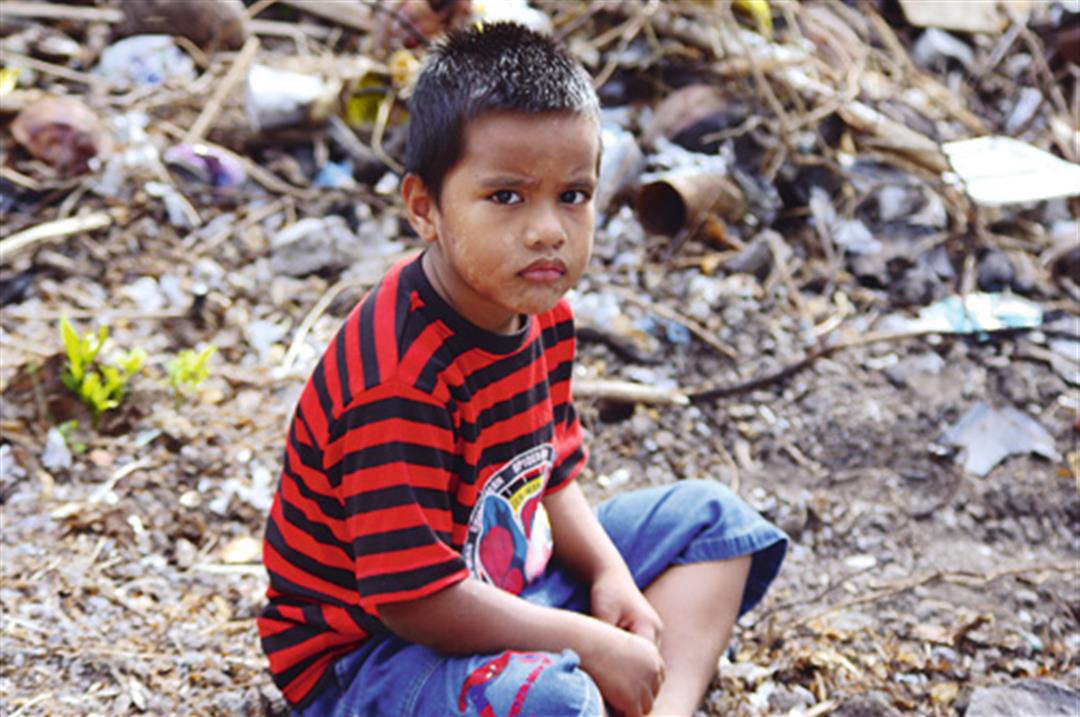
In July 2010, with savings of less than half their planned travel budget of NT$500,000, they quite courageously went ahead with their adventure. During nearly six months of traveling, they saw homes in Tuvalu surrounded by domestic trash, experienced a severe water shortage in Nauru, and were almost swept away by giant waves in Samoa. Because of their sometimes dramatic experiences of meeting nature face to face, on her return to Taiwan Yu began to reexamine her ideas about the relationship between people and the environment.

After their South Pacific sojourn, Yu and Wang with three friends decided to do something meaningful for the environment. Together they raised NT$1 million to set up a café which they christened Across the Ocean, a multifunctional place that was to hold forums, exhibit environmentally friendly furniture, and provide a platform for free-trade products.
Across the Ocean aims not only to encourage the protection of the environment in daily life, but also hopes to become a place for the gestation of young people’s dreams. As part of its launch, they created a “Dream Nurture Project” to encourage the young to participate.
The café has made a loss since its grand opening just over a year ago, and they had to close temporarily in July 2012 for some minor changes in direction. However, Yu and her business partners have never forgotten the initial goal of the café. During its relatively short life, they have held a forum on “What you can do on Earth Day.” They have also considered the suffering currently being endured by the younger generation because of unemployment and low wages, launching a protest and delivering the “Declaration of the Bitter Gourd”: “We are suffering; we dare to speak out; we will never give up on our dream!”
Yu wrote in the preface to an account of their South Pacific adventures: “We once stood in the streets of South Pacific island nations, singing songs to raise money for people in need. We hope that perhaps one day the island people will be grateful for our songs. This is probably the most important thing that we will ever do in our lives.”

Recognizing the many uses of palm trees, Wang contracted Cambodian farmers to produce palm sugar, which is extracted from palm tree sap and processed into a saleable product. He created the brand Camgoldia to market the result.
Chang Liang-yi, chairperson of the Taiwan Youth Climate Coalition, was one of the original architects of the café concept. After becoming a part of the program, he traveled to Samoa to join the others. He is trying his best to change society.
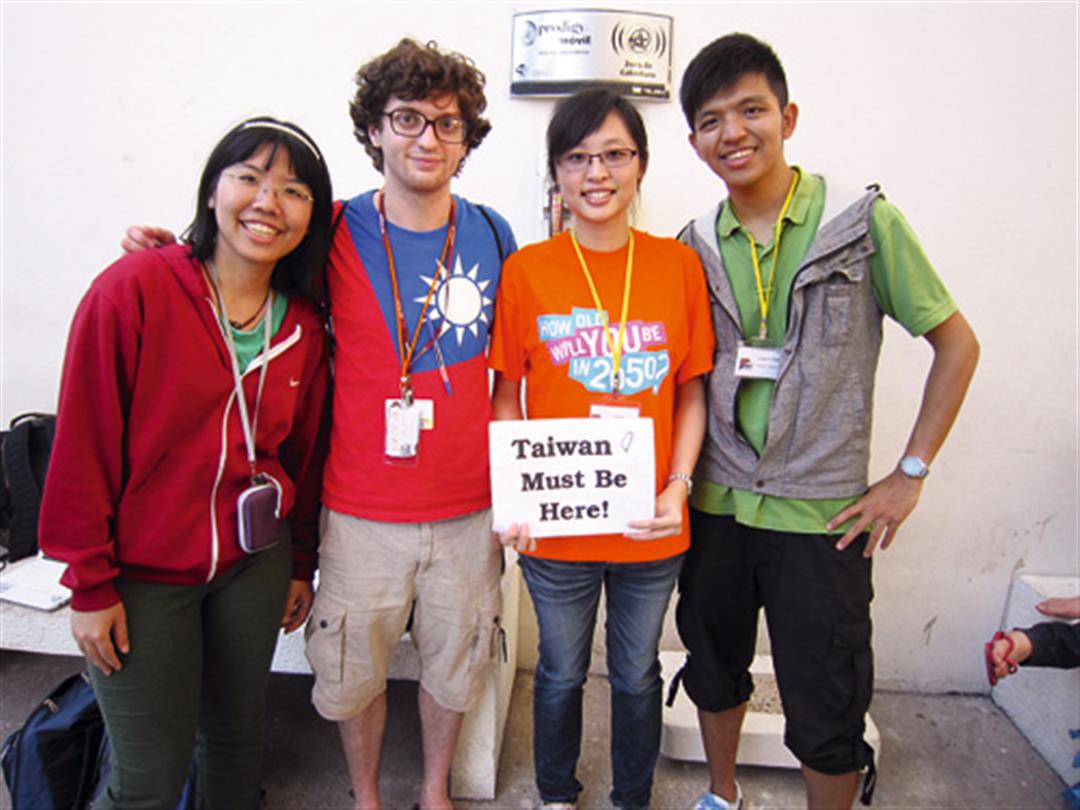
While the 15th United Nations Framework Convention on Climate Change Conference, which was attended by representatives from 129 countries, was under way in Copenhagen, Denmark in December 2009, Chang was a third-year student in the Department of Life Science, National Tsing Hua University. With other Taiwanese visiting Copenhagen for the event, Chang witnessed a Tuvalu woman kneeling in front of representatives outside the conference venue, urging the international community to deal with the potential disaster that Tuvalu was facing: total submersion due to rising sea levels.
Returning to Taiwan, Chang began to search for information about climate change, and through this process, heard about the Across the Ocean Program. He joined the program immediately, and then visited Samoa to gain a better understanding of the issues.
Strolling along a road in Samoa, with the sea on one side and steep hillsides on the other, Chang reflected on the fact that residents would have nowhere to flee if they were hit by giant waves. So his visit to Samoa brought him a deeper understanding of the threat posed by an unruly Nature.

At the 2009 UN Climate Change Conference in Copenhagen, representatives from many countries contributed ideas to protect the environment.
When the UN climate conference moved to Cancún, Mexico in December 2010, Chang attended with eight companions. This time he didn’t quietly stand on the sidelines, but actively sought an opportunity to speak for Taiwan on global climate change issues.
After the Copenhagen conference, Chang could see the potential power of the voices of the young. In fact, quite apart from the formal agenda of the conference, many opinions were discussed in the more relaxed forums on the fringes of the event. However, he found that many of the independent participants and official representatives from Taiwan, many of whom had a great deal of experience in conferences of this nature, were quite passive: they attended all the meetings, but rarely exerted any significant influence on the outcomes.
After the Cancún conference, Chang made contact with a number of international groups to learn from, and also joined the Asian Youth Forum, later becoming forum chairperson. Along with 30-plus representatives from other Asian countries including Japan, Indonesia and the Philippines, they made a joint declaration of their commitment to do everything in their power to protect the environment.
From student to environmental champion, Chang says that the current outcomes of climate change action in Taiwan could be assessed at either 100 points or zero, depending on one’s perspective. But regardless of the outcomes, only real action can bring about any real change.
In March 2012, Chang and 20 others who had participated in UN climate change summits over the years, decided to establish the Taiwan Youth Climate Coalition (TYCC). They made English mandatory in their regular meetings in order to make the most of opportunities to attend international forums and speak at international events.
The TYCC is currently preparing to attend the UN Climate Change Conference being held in Qatar in November and December, 2012. They are hoping to showcase Taiwan’s contributions in terms of environmental, climate and food issues.

Yu saw a TV program about Tuvalu, an island nation in the South Pacific which is confronting rising sea levels, and decided to launch the Across the Ocean Program to gain a deeper understanding of the issues.
Local brand Camgoldia was created by Wang Ming-feng, a graduate of the Department of Industrial Design, Tunghai University. Born in 1981, Wang cares deeply for society and supports the development of homegrown businesses. He was introduced to Across the Ocean by friends, and is one of the most recent recruits to the café. Although a latecomer, he had a background of concern for society long before joining.
The turning point of Wang’s life came on a journey to Cambodia in 2004. Wang regularly traveled abroad during his years at university, and after completing military service, he arranged a trip to Cambodia to visit his uncle who had been running a business there since the 1990s, before starting to look for a job in Taiwan. He was just one of the regular tourists who stayed in local hotels and visited the area’s attractions.
One day, he sent his clothes to the laundry but forgot to remove US$100 from one of the pockets. He never expected to see the money again, but to his surprise the laundrywoman returned the money in full, despite the fact that most people were quite poor, with an average monthly income in Cambodia of around US$70.
The event had a profound effect on Wang, witnessing as he had the simplicity and pureness of heart of the Cambodian people. Before he had begun this journey, Wang considered himself a simple traveler, but by the time he was on his way home, he had changed. He was now an “actor,” a person with goals and things to do. He wanted to build an elementary school in a village near Phnom Penh to improve the local children’s level of education, and turn their fates around.
It was a dream that Wang intended to achieve, but he didn’t know how to begin. During his journey in Cambodia, he had often seen people selling palm sugar on the street, so he decided to apply his design skills to transform the plain palm sugar into a refined product to raise money for the school.
Palm trees are everywhere in Cambodia, and they have a wide range of uses. The trunk and leaves are often used for building materials, and palm sugar can be extracted from the sap. Wang saw palm trees as gold for Cambodia, so he established a company which he christened Camgoldia—a combination of Cambodia and gold—to sell palm-related products.
Wang sought the cooperation of farmers on the outskirts of Phnom Penh with the assistance of his uncle. He also introduced the French organic certification system in order to improve the quality of the product. When farmers produced palm sugar that met the certification standard, he would guarantee them a better price than that on the local market.
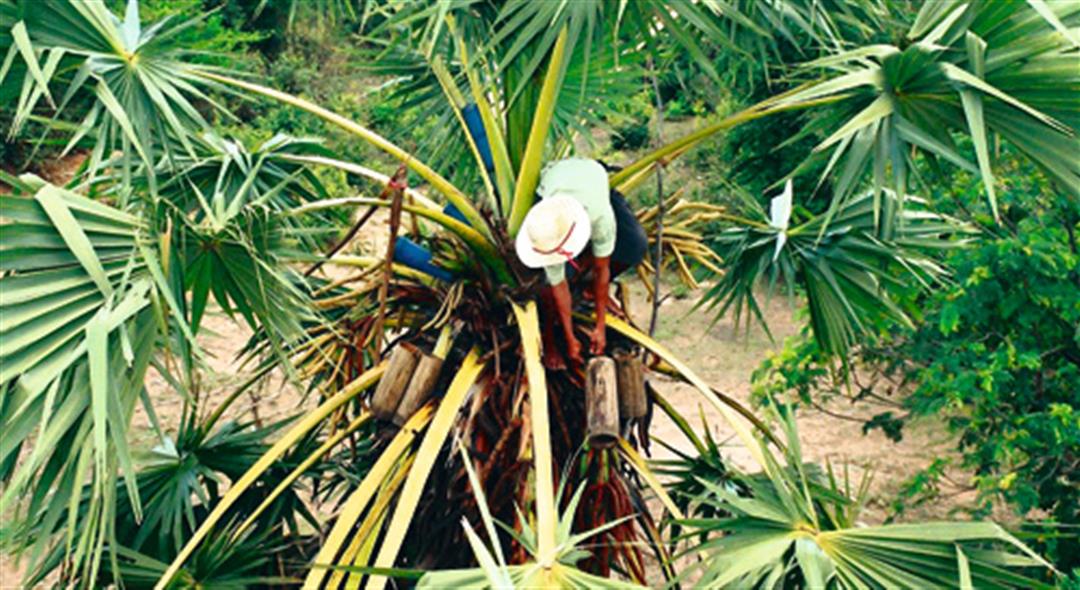
Recognizing the many uses of palm trees, Wang contracted Cambodian farmers to produce palm sugar, which is extracted from palm tree sap and processed into a saleable product. He created the brand Camgoldia to market the result.

The palm sugar business developed rapidly from only a couple of farmers willing to cooperate with Camgoldia as contractors, expanding to currently over 100 farming households from 10 villages, with a steady annual palm sugar production of 12 tons.
Unlike other philanthropists who inject capital to help the community, Wang brought the local people together to work to improve their own livelihoods. He employed an operating approach akin to the cooperative model, allowing contract farmers some participation in the operation. Now, nearly half of the company’s 10-plus employees are local residents.
As the operation and brand image gradually developed, Wang handed over the business to an ethnic Chinese partner. In 2009 he returned to Taiwan, and in March 2010 Camgoldia displayed its products at the Asia Organic & Lohas Product Expo. In under two years, Camgoldia products like palm sugar and palm vinegar were being displayed at the Breeze Center, and on sale through books.com.tw—all this despite the company’s small scale and lack of brand recognition.
As Wang initially needed to focus on product quality, he wasn’t able to feed back much of the revenue into funding for the school. But after introduction into the Taiwanese market in 2010, each product purchased automatically contributed NT$10 to the school building fund. With over two years’ contributions, the NT$500,000 target for building the school is gradually coming within reach.
Wang, who is still in charge of the company’s management, design and finance, joined Across the Ocean three months ago. He has taught people how to use palm sugar and vinegar as cooking ingredients in the café’s kitchen. “Many had never cooked with palm sugar, so this inspired me to run an experimental kitchen.” Wang is indeed a person who believes in putting his ideas into action.
With the sun just setting and neon lights flashing on the bustling Xinyi Road in Taipei City, Across the Ocean Café is located in a quiet alley. Its white sign with black writing is lit only dimly, and its indoor lighting exudes a warm feeling. The three business partners belong to the same generation, each finding targets deserving of their care during their individual journeys. They are living examples of the fact that actions speak louder than words: “If you see something that needs doing, do it. It’ll be ok.”


Chang (right) made contact with a number of international groups and youth representatives from various countries to collectively voice concern over global climate change issues.

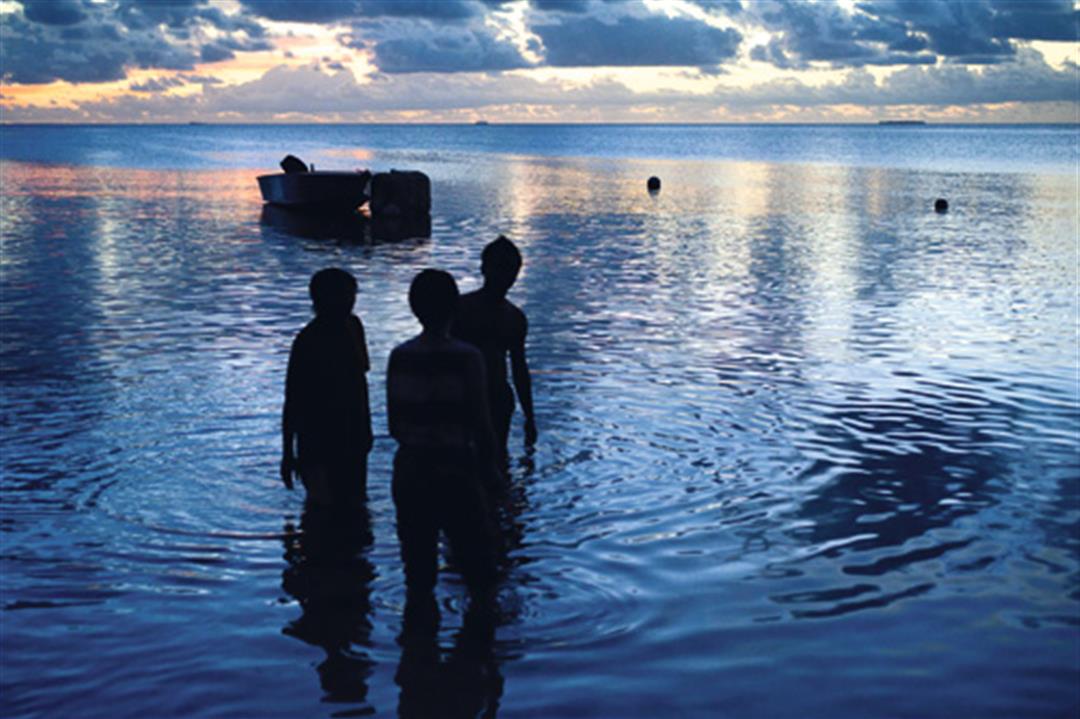
Nauru is experiencing a severe water shortage. Impacts of global climate change like this cannot be ignored. The photo shows a child on Nauru.