No "Kid" ding--The R.O.C. on Taiwan Needs More People?!
Chang Chin-ju / photos Vincent Chang / tr. by Phil Newell
June 1992


Is it time for the old family planning slogan, "two children are just right, and one isn't too few," to retire? Why?
Taiwan's population density is the second highest in the world. It is estimated that the most appropriate population for the globe is 2.5 billion. Today, with the total world population already exceeding 5 billion and growing, do we want to add to the earth's burden?
Unfortunately, the problem is not that simple.
What's the most obvious difference between Taiwan's under 20 "new mankind" and the older generation?
"Oldest brother! Second brother! Third brother! Fourth brother! . . ." This situation of Mom and Ded calling off the kids by number is unlikely to occur to them. When asked about their family, the new generation will no longer talk about "second older brother," "third older sister," "fourth younger brother," "fifth younger sister" and so on, leaving the listener with the difficulty of figuring out just how many children there are in this household.
Just having three-quarters of a daughter: In 1964, the Taiwan area began implementation of comprehensive family planning. The fertility rate for women of child bearing age at that time (that is, the average number of children born to women from 15 to 49) was five. By 1985, the overall fertility rate broke the "two is just right" barrier, falling to about 1.7, heading toward "one child is not too few."
According to the Republic of China Population Policy Outline, by 1989 the population growth rate should have dropped to 1.3--in fact this figure was reached in 1986.
It was originally a cause for joy that family planning targets were achieved ahead of time, but population scholars are starting to worry.
This is because the determinant of a country's future population rise and fall, the net fertility rate--the number of daughters, who have the ability to reproduce, born to a mother--has also dropped along with the birth rate to 0.75. This is like saying that if each woman has on average only 0.75 daughters, then over time "the number of childbearing women in each generation will decline by 25%," says Chen Kuanjeng, chairman of the Graduate Institute of Social Welfare at National Chung Cheng University.
Because of the development of medical care and other factors, life expectancy is longer, and the death rate has dropped. Add to this that the population cohort born during the peak birth rate period of twenty years ago is now reaching child-bearing age and "coming onto the reproduction line," although the rate at which infants are born is declining each year, the total population of Taiwan is still increasing at one percent annually. According to statistics of the Ministry of the Interior, the population of Taiwan will reach a peak of 25 million in the year 2020.
The problem is, if the overall fertility rate stays at 1.7, then there will be no replacement for each pair of parents. Once the population peak passes, if there are no factors such as international migration, the population will show negative growth and then will radically decline. It may even get to the point, some scholars anticipate, that 90 years from now Taiwan's total population will be only 10 million.
What's wrong with population decline? The way many people see it, the positive significance of population decline exceeds the negative significance. Taiwan is densely populated, second in the world only to Bangladesh, with more than 50O people per square kilometer. What would be so bad about the population declining to 10 million? It could relieve the social and psychological pressures of overcrowding, so that our society can have a little room to breathe. "At least housing prices won't be so expensive!" This, unfortunately, represents the innermost feelings of many citizens.
"It's too bad that negative population growth isn't quite so ideal as it appears on the surface," says Chang Pei Chi, director of the Office of Man power Planning at Council for Economic Planning and Development of the Executive Yuan. A low birth rate leading to negative population growth will cause the population structure to be perverted into an inverse pyramid. Over time, society will quickly age and lose its vitality. Besides having streets filled with "white-haired old gentlemen," many social problems will follow.
The scholarly community has no definitive answer as to what the ideal population for a country is. But economists estimate that if the fertility rate for women stays at about 2.1 --i.e. about two children per couple--after three generations (because life expectancy is extended) the birth date and death rate will balance off, and population will attain a steady zero growth rate. This is the origin of the idea that "two children is just right."
But from the evidence of the advanced nations, people have discovered that if the government takes no action, the prediction of a zero growth rate is simply, well, premature. In countries with low birth rates, these are usually brought about by national economic growth, education for women and rising employment. Women will consider how a situation benefits them before deciding to have a child, and so in many developed nations, after the fertility rate declines to below 2.0, it continues to fall. Several Western European nations have slid to about 1.4.
Becoming an elderly society: The trend of a low birth rate makes the aging of society unavoidable.
Last year, people 65 and over constituted 6.3% of the total population of Taiwan, already nearing the United Nations marker of 7.0% for an "elderly society." Although this is still small compared to the figures of 17 or 18% for Germany and Sweden, the transformation of the population structure in the West only occurred after the industrial revolution, and took one or two hundred years to reach the current situation.
Having absorbed the experience of the developed nations, we have created a "population miracle," completing the transformation from a high birth rate to a low birth rate in only twenty years. Today the birth rate is even lower than countries like Sweden, the United Kingdom or France. But because of this, "our population fault lines will be even more severe," says Sun Te-hsiung, chairman of the Research, Development and Evaluation Commission of the Executive Yuan.
The retired over-65 population in our country today numbers one for every ten from 15 to 64. That means that at present there are ten people responsible for one elderly person. If there is no change in the rates of birth and death, fifty years from now the ratio will be 10︰4, and the burden of caring for the elderly will be increased.
Overwhelmed by social welfare: The elderly have higher medical costs and more need for caregivers than the population in general. In the past several households could help each other, but in the future an illness for an elderly person could overwhelm a household. "Society is composed of families, and family burdens will become social burdens, which will become social problems," points out Chen Kuanjeng.
Naturally a population problem need not be solved only with population-related remedies. In the West the problem of the elderly is coped with by the government's social security system. But Chen Kuanjeng goes a step further and notes that no matter who takes care of whom, in the end somebody has to pay. Even if the government takes care of the elderly, the expenses must still be paid by an increase in taxes on ordinary families. And the more retired older people there are, the smaller is the corresponding tax base; as expenses rise, income can not keep pace, and as the deficit mounts, finances will be overwhelmed. "The fact that today European and American social security systems are facing financial collapse is because when the systems were first designed, no one expected that the impact of the transformation of the population structure would be so severe."
In 1983, the American government passed a law that the retirement age would be extended from 65 to 67, hoping to reduce the weight of retirement payments to the elderly. Today the Austrian government is unable to pay out the stipulated amount of elderly benefits, and from time to time lowers payments in view of the financial situation. The curve tracing the population transformation in Europe and North America is more graduated than in Taiwan. Given this, what is our ability to cope with the rapid aging of society?
Many problems in an elderly society: A social security system is built on the foundation of everyone sharing risks. But looking at several social insurance programs being implemented in Taiwan today, one cannot help but be concerned. Taking labor health insurance as an example, according to statistics of the Department of Health, a reasonable tax rate should be 14%. At present, however, it is only 7%, and everyone just wants the government to make up the difference. Legislators have the power to adjust the tax rate, but to retain voting support, they have been consistently unwilling to alter the tax rate, and government subsidies have become heavier and heavier. The result of government losses is that it must lower the level of payment for and quality of medical care in order to balance the books.
Although the problem of our elderly population is not as severe as in the West, many scholars believe there is no time to be wasted in planning for an aging society. Chen Kuanjeng says directly, "Decision-makers must not forget that Taiwan's population is aging much faster than in Japan or the United States, and the elderly population will be a major problem for Taiwan in the future."
This is the reason why the Population Commission of the Ministry of the Interior concludes, after examining social and economic factors, that population policy should be slightly adjusted. "We don't dare to advocate population increase. We just hope that the reality can fit the idea of 'two children is just right,' to reach the level of substitution and reduce future problems," says Chien Tai-lang, director of the Population Administration. The family planning slogan "two is just right," will remain, but we will no longer be hearing "one is not too few." It is hoped that in the future the population will reattain the zero growth rate to maintain the status quo.
Concerns distant and immediate: "Looking at it overall, the world population is exploding day after day, but you still have to make regional considerations in looking at population issues," contends Sun Te-hsiung. The distant concerns of sociologists about the changes in the population structure are by no means exaggerated.
Chang Ming-cheng, director of the Taiwan Provincial Institute of Family Planning, also points out that the foundation for filial piety is built on at least a minimal economic capability. If in the future young people expend excessively economically and spiritually, we really need to pay attention to whether or not this will create another social problem of the young being unwilling to support the old. This is similar to the concern some have that as the birth rate becomes lower and lower, the new generation--which will have few relatives--will lack an emotional support network while growing up, so that the value system of the whole society changes.
Only time will tell about the more remote problems sociologists have in mind, but for economists, the shortage of labor caused by a declining birth rate and the social problems that will be consequently bred are by no means "making a mountain out of a molehill."
No matter what the situation in a society in terms of automation and mechanization, labor power is something that can never be dispensed with. Although the current labor shortage in Taiwan was not caused by the falling birth rate, many people are concerned that the future change in the population structure will be, as the Chinese saying has it, "a layer of frost on top of the snow," and could even lead to economic collapse.
Although there are also articles which refute the idea that there is a connection between a negative birth rate and economic retrogression, shortages of labor have already become serious in Western European countries. Germany has brought in more than 5 million Turkish workers, While France has permitted large numbers of Algerian and Libyan workers to come. Today these have become serious internal problems, and are used by scholars as warning examples to be heeded.
Why not a "social rate of increase"? It is not only the natural birth and death rates that determine the change in population structure--there is also the so-called "social rate of increase," which is the rate of population migration. But generally speaking, a natural increase in population is beneficial for social stability because of similarities or race and culture, while "a large population of foreign migrants is often something that can't be helped," says Chien Tai-lang, whose bureau is in charge of both population and immigration. Add to this that Taiwan's area is limited, and from either environmental or social perspectives, cannot absorb too many foreign immigrants.
There are also those who argue that the government has already permitted mainland Chinese spouses to come to Taiwan, and in the future mainland policy will influence the population structure, and thus restore the fertility rate, so what's the worry? But they don't say that no country has ever used immigration to resolve the problem of an aging society, or that it is worth being skeptical about how much of a mainland Chinese population Taiwan can absorb.
Sun Te-hsiung believes, on the other hand, that if one day the movement of mainlanders to Taiwan is completely liberalized, population policy can be considered in stages, and it is by no means unchangeable. But you cannot for some unpredictable factor not take precautions against problems that are being faced now.
Liao Cheng-hung, a professor of agricultural extension at National Taiwan University and the former director of the NTU Population Research Center, believes that adjustments in public policy can be seen as an inevitable choice for the current generation between quality of life and the problem of an aging society. If they haphazardly let the population decline drastically, they will have to face the problem of an aging society in the very near term. But if the population today can return to the level of "two children being just right," Taiwan will have a relatively substantial period of time to cope with this issue. But then this generation will not enjoy any easing of pressures on space.
There are also scholars who believe that there is not necessarily an inverse relationship between population density and quality of life. Holland has the third highest population density in the world, just behind Taiwan, "but the quality of life of the Dutch is by no means just one spot on the list ahead of us," concludes Chen Kuanjeng.
Are late marriage and divorce making the situation worse? Although there are differences in the views of scholars about the population problem, they are similarly not optimistic about moderating the path of the population curve. Chang Ming-cheng adopts the following metaphor: Population control is not like turning off a tap, where people have children when you want them to, and don't when you don't want them to. Especially today, when the idea of population control is already deeply imprinted on people's consciousness, the population will not dramatically increase because of a few incentives.
Taking France, for example, government subsidies to childbearing women have reached the point where one need only have five children and you needn't ever work again. But this type of "home nursery school" social benefit has not been enough to stimulate the persistently low birth rate to show signs of recovering.
The Taiwan Provincial Institute of Family Planning has done repeated surveys of women in Taiwan, discovering that the proportion of women who want to have only one child has increased continually. Statistics from the Research, Development and Evaluation Commission also indicate that the proportion of women from 20 to 24 who have a spouse has declined from 60% ten years ago to 30% today, while the same ratio for women 25 to 29 has gone from 90% to 70%.
The increase in late marriages and divorce means that even if married women maintain a rate of two children each, the overall birth rate will continue to decline. As for the 5,000-6,000 unmarried women who have children, though the number is increasing steadily, it at present still has little impact on the overall birth rate.
This is the golden age of population: Since the effect that population policy can have on the birthrate is limited, for the Western European countries that already have negative population growth, they have no clear population policy, but many measures have been brought out which use social welfare to make it easier for parents to have more children. In Japan, where the birth rate has recently declined rapidly, they do not use an increase in the infant population to moderate the problem of demographic aging, but promote a child rearing time-off system and reemployment, and strengthen child protection policies, to make it more convenient for women to have children. This is perhaps something Taiwan should quickly adapt.
Chien Tai-lang says that today's population targets have already been achieved, so the government should take a neutral attitude; at the same time as not taking the initiative to encourage reproduction, it should also move to reduce to a minimum past policies which restrained population growth. For example, the regulation that subsidies for the education of children of the military, civil service and teachers do not extend to the third child should be eliminated. "Reproduction is a personal matter--let the people decide," he says. At most the government should subsidize medical costs for treatment of infertility, letting people who want to have children have them, or who want to get married get married.
A book entitled Demography describes Taiwan, Singapore, Korea and Japan in these terms: "There are a few countries that recently had a large scale increase in population, but the birth rate has already fallen to below the replacement level, and they are facing dismaying situations."
Today the government has its ideas about population policy, and need no longer be dismayed. Liao Cheng-hung argues that we are right now in the most favorable period, because we have already escaped from the period of unlimited population growth, but have not yet entered an "elderly" structure. Right now everyone has employment, and social expenditures are not high, so you could say these few years are Taiwan's "golden age." But it cannot be forgotten that the social conditions and capability to cope with the elderly population and the labor shortage in the future also depend on these few years!
[Picture Caption]
Right now most elderly in Taiwan are cared for by the family, but what about the future?
Imagine thirty years form now. It is already imperative to begin laying out a social welfare policy for an elderly society.
The Proportion of women with a spouse has steadily declined, creating a ripple effect that lowers the overall birth rate.
(Above) Family planning promotion has worked! Scenes like this of a ten-brother family have been virtually eradicated. (rephotographed by Vincent Chang)
(Below) The era of 'one child is not too few' is past.
Besides issues of the burden of caring for the old and a potential labor shortage, sociologists are also worried about the possible change in values brought about by an aging society. (photo by Cheng Yuna-ching)
If the current birth rates are maintained, each generation will have 25% less women, and it won't be rare for grandmothers to be without granddaughters. (photo by Diago Chiu)
Taiwan's population structure is changing quickly. It will become an "elderly society" with a steadily rising proportion of people over 65 in the future.
The elderly have higher medical costs and more for caregivers than the population in general.
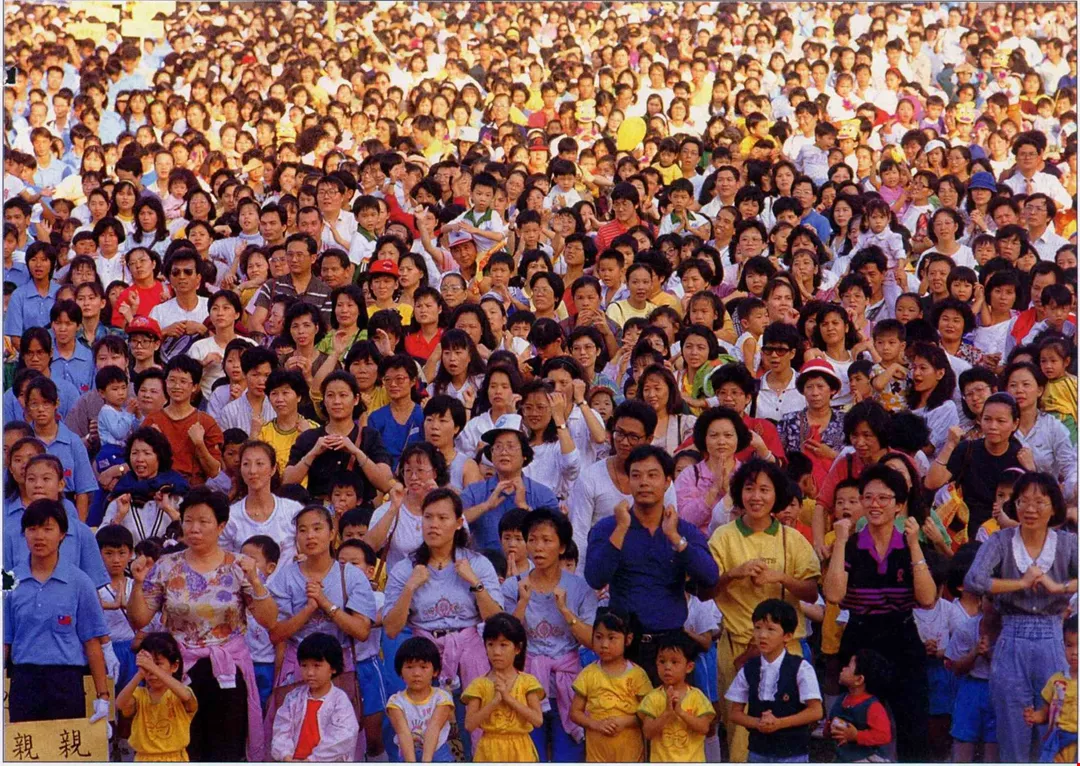
Imagine thirty years form now. It is already imperative to begin laying out a social welfare policy for an elderly society.
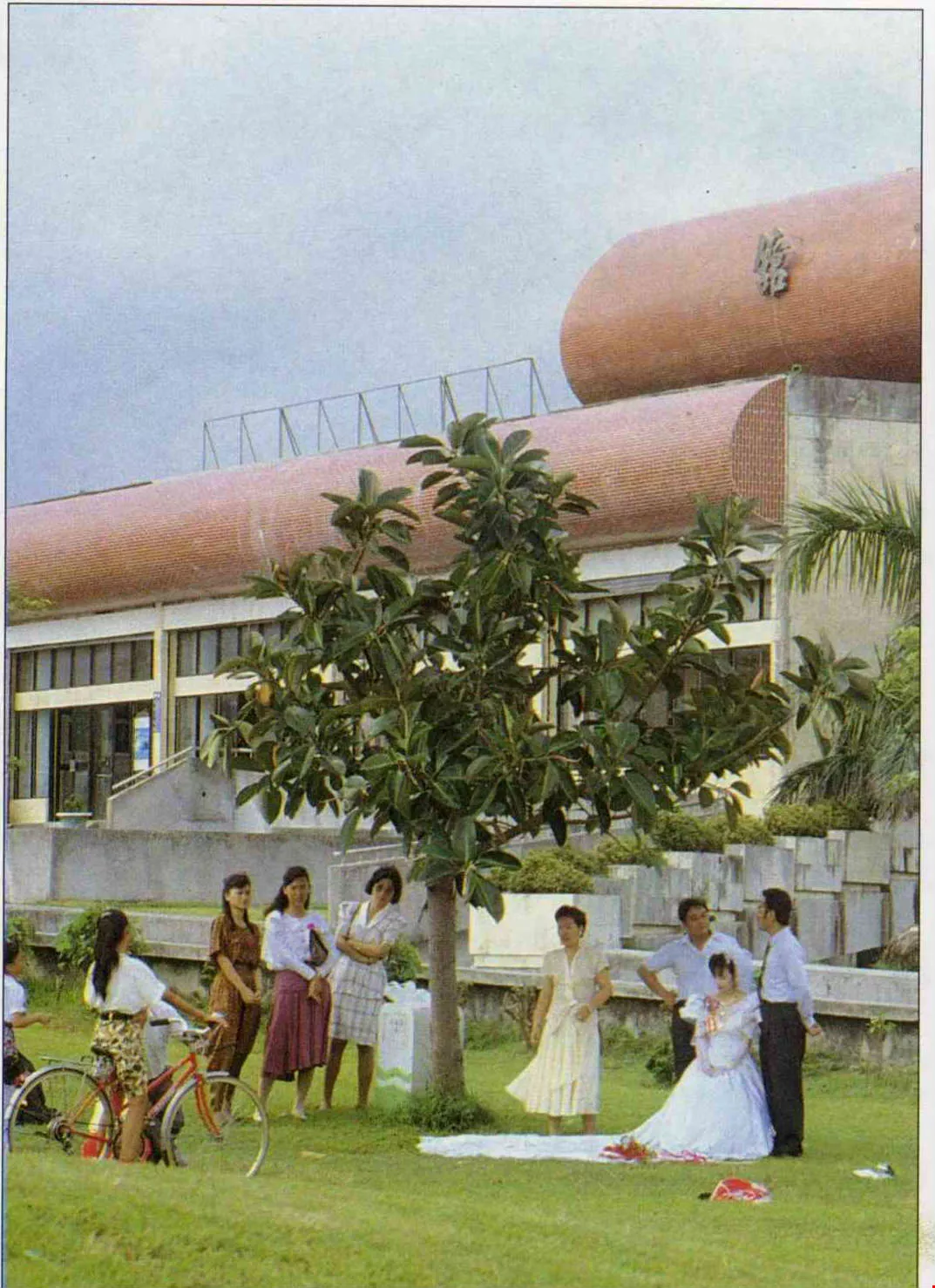
The Proportion of women with a spouse has steadily declined, creating a ripple effect that lowers the overall birth rate.
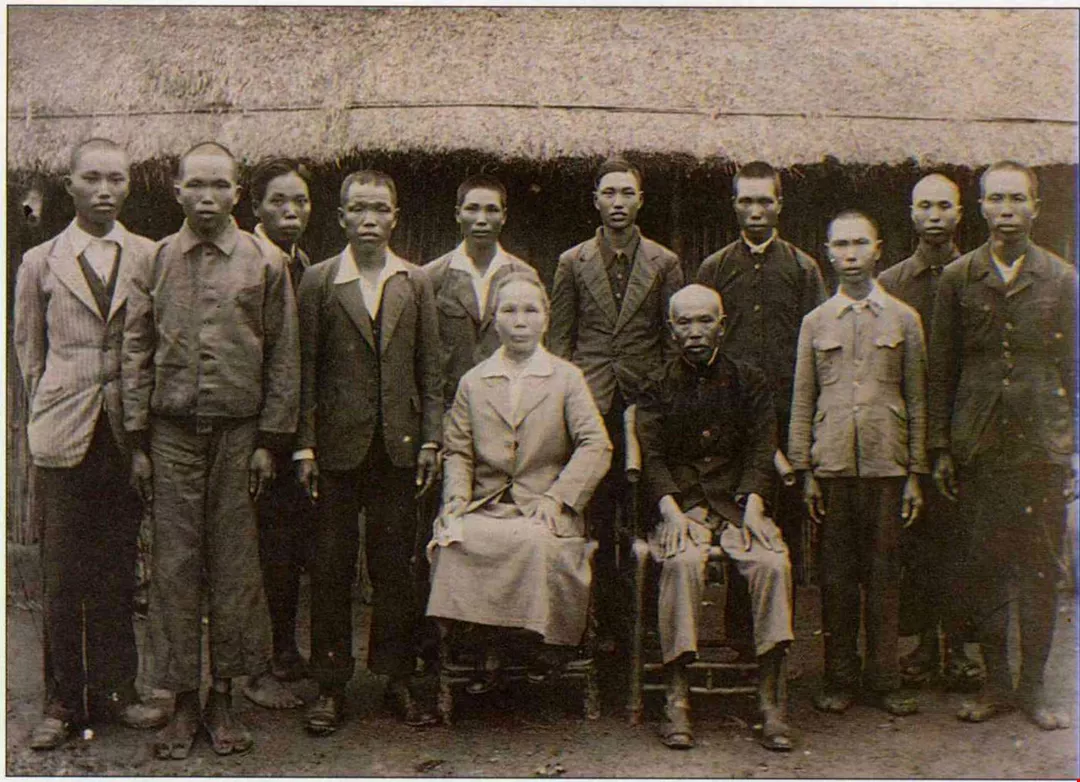
Family planning promotion has worked! Scenes like this of a ten-brother family have been virtually eradicated. (rephotographed by Vincent Chang)
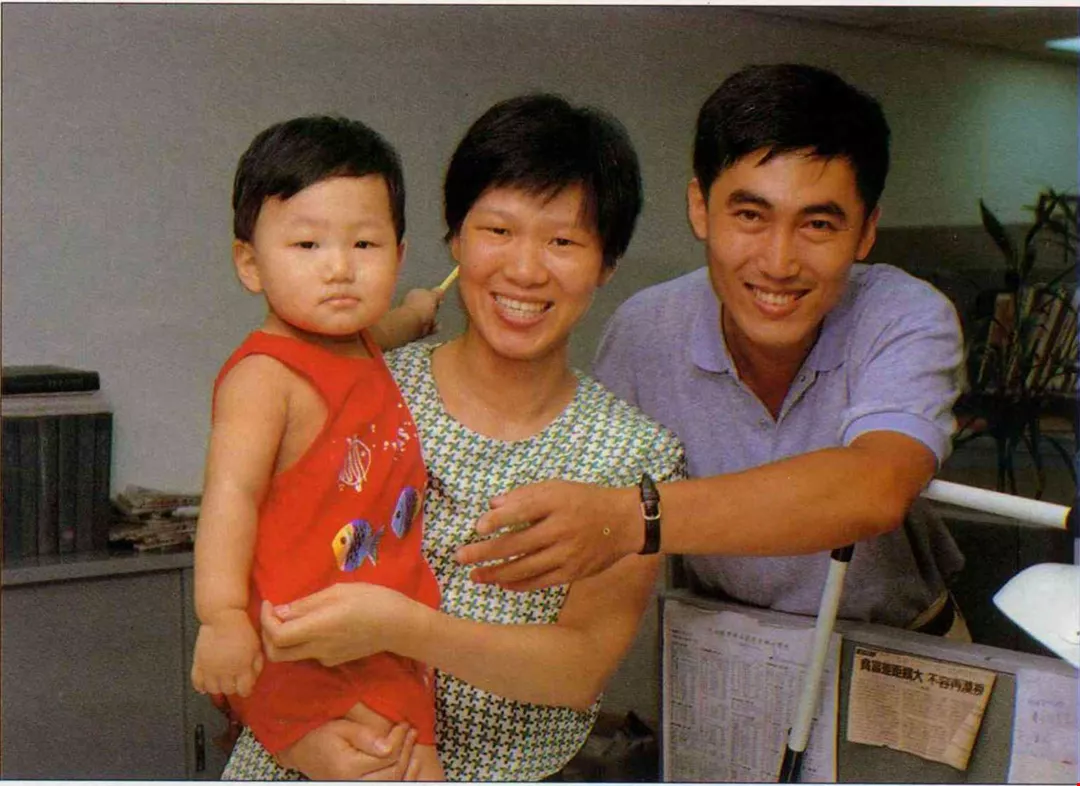
The era of 'one child is not too few' is past.

Besides issues of the burden of caring for the old and a potential labor shortage, sociologists are also worried about the possible change in values brought about by an aging society. (photo by Cheng Yuna-ching)
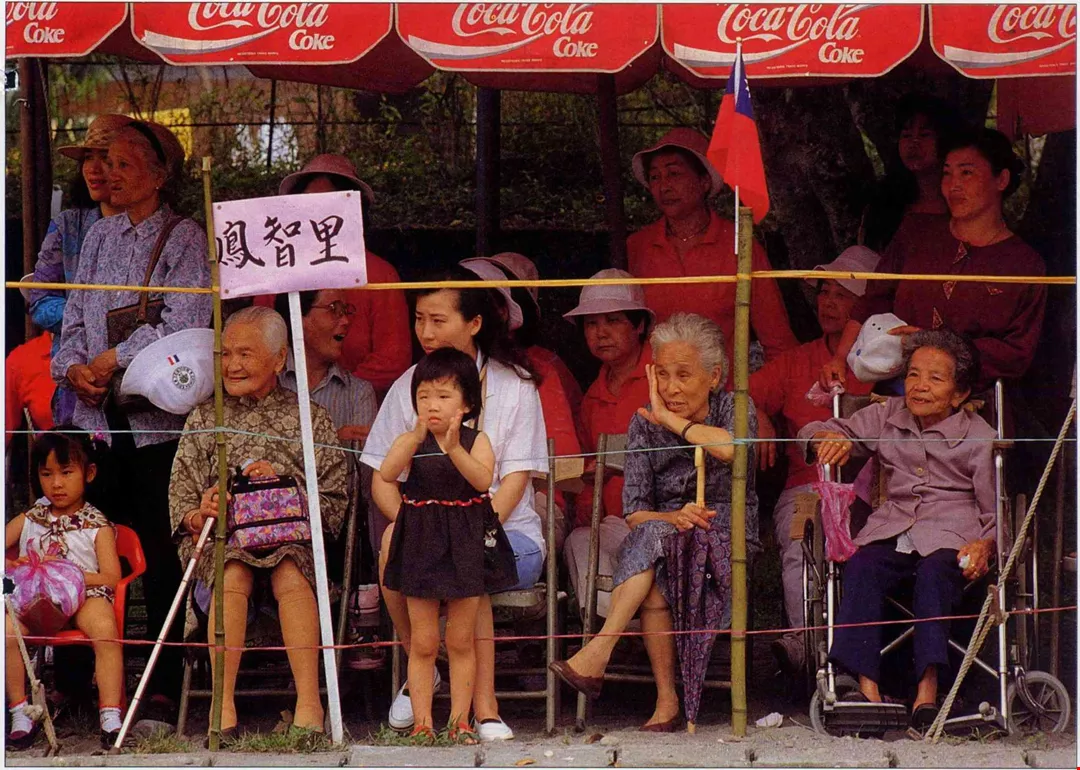
If the current birth rates are maintained, each generation will have 25% less women, and it won't be rare for grandmothers to be without granddaughters. (photo by Diago Chiu)
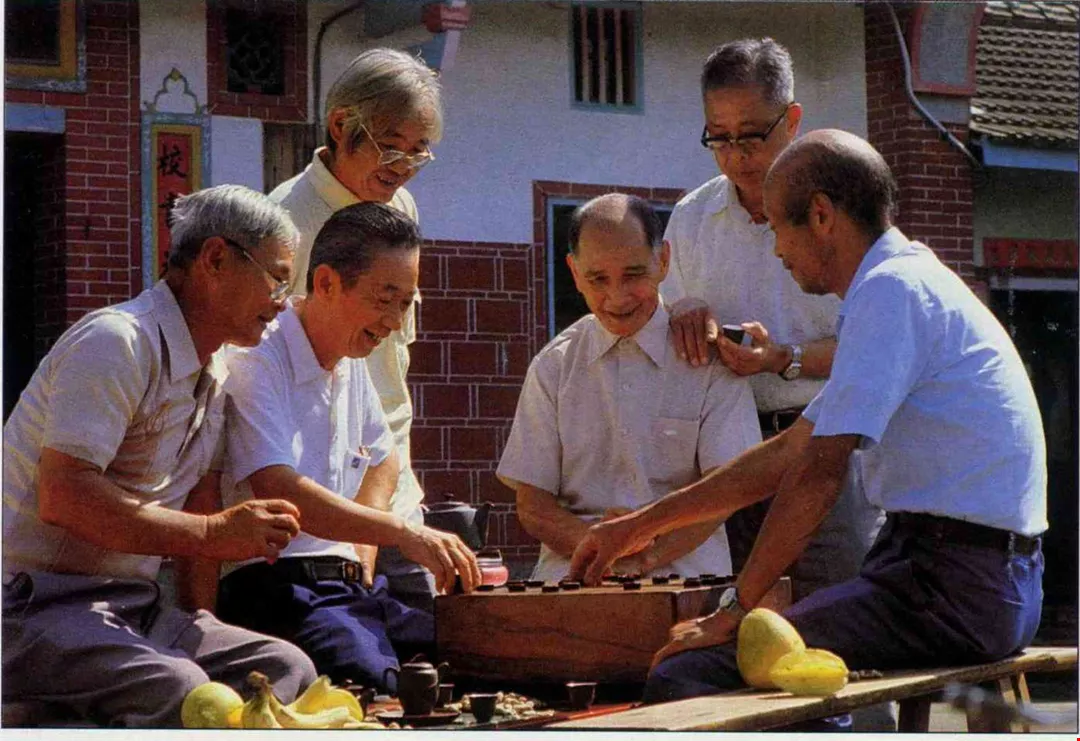
Taiwan's population structure is changing quickly. It will become an "elderly society" with a steadily rising proportion of people over 65 in the future.
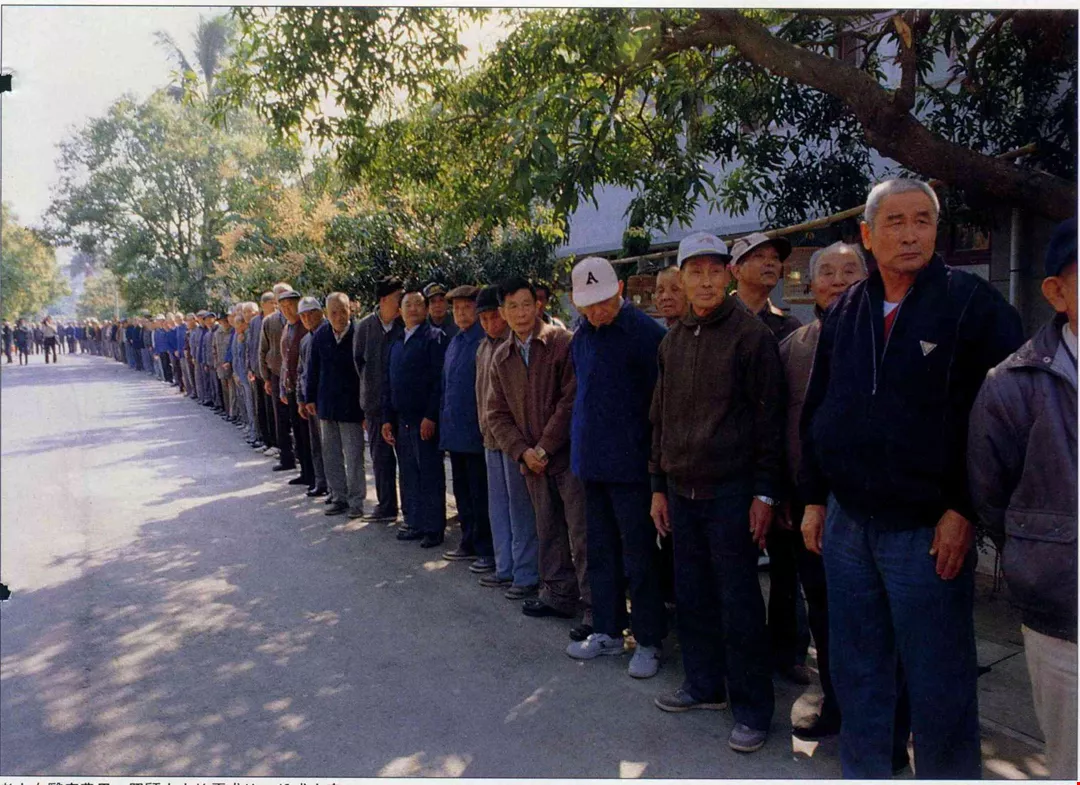
The elderly have higher medical costs and more for caregivers than the population in general.


@List.jpg?w=522&h=410&mode=crop&format=webp&quality=80)


