In the 1970s, Taiwan was still a very conservative society, and dramatic serials like Bao Qingtian and Bodyguard ran on themes of righteousness and Confucian virtues. The former, telling the amazing tales of the upright and patriotic magistrate Bao Qingtian of the Song dynasty, struck a responsive chord, and set a record of 350 episodes. (It was even revived in 1993, when, amidst widespread fears of declining social order, it lasted for another 236 episodes, and was also immensely popular in mainland China, Hong Kong, and Southeast Asia.)
Bodyguard, which was first broadcast (by CTS) in 1974, was Taiwan's first highly successful martial arts series. Zhao Yanling, a bodyguard for a private security service in imperial times, protected the good and loyal and overcame countless obstacles to fulfill his duty. The streets virtually emptied when the program came on.
In 1978 CTV played a new trump card, broadcasting the Hong Kong series Chu Liuxiang, whose eponymous main character was the traditional Chinese equivalent of a knight-errant. Its success launched a fad for Hong Kong martial arts shows, and Hong Kong players became the new favorites of Taiwan's TV viewers. However, because Chu Liuxiang was broadcast only on the weekends, it did not have too great an impact on Taiwan's prime time serials.
Following the wave of martial arts shows came a fad for heart-rending emotional stories. Serials like Don't Say Goodbye, Reunited With Ah Lang, and The Stars Know My Heart, all directed by Lin Fu-ti and shown on Taiwan Television (TTV), had successful runs. The latter-which told the story of a single mother who discovered she had cancer and, knowing she had not long to live, had to find a new home for her five children-swept the 1984 Golden Bells Awards.
Next came a bunch of elaborate historical dramas. CTV started it all off with a series on Wu Zetian, the only woman emperor in Chinese history. Thereafter, there was a brief period of success for comedies like The Postman Always Rings the Correct Doorbell, but these have remained a small minority.
The next trend came with the Chiung Yao Romances. Chiung won an enthusiastic audience response with adaptations of her own love stories to television. After the government lifted the ban on traveling and filming in mainland China, more Chiung Yao Romances were filmed there. Her most recent effort is beloved by Chinese drama fans everywhere, and mainland actress Zhao Wei has become wildly popular in Taiwan. The Romances have been running for more than a decade now and have never faded in popularity. But because Chiung maintains high standards, production is limited to only about one series a year.
After Chiung Yao, the spotlight shifted to nativist Taiwanese drama and Yang Pei-pei's adaptions of the martial arts novels of Jin Yong (whose English name is Louis Cha). Jin's novels were already immensely popular, and Yang embellished them with elegant costumes and elaborate martial arts stunts. The success of the TV series even helped drive last year's rise of a new field of cultural inquiry: "Jinology."
Nativist Taiwanese dramas have created their own new format of "contemporary realist" programming. They have been all the more widely discussed since they have touched upon political taboos, and, at Formosa Television at least, are part of a deliberate policy to promote the use of the Taiwanese language.
This short history of prime-time drama in Taiwan would not be complete without mentioning one more point: They usually have pop stars come and sing the theme songs, which is a great boost for the public visibility of both singer and song. A good series will strengthen the popularity of the song, while a good song can make a series even more popular. Sometimes the songs prove more enduring than the series, continuing to be heard long after the program has been wrapped up. After a number of years, people can only remember the song, but nothing of the plot of the show!
Looking back on 30 years of prime-time serials in Taiwan, shows like Ching-ching, Bodyguard, and Reunited With Ah Lang were successful in their time because society then was more simple, there were few entertainment options, and there were only three TV stations to choose from. These melodramatic stories brought together a huge audience, struck a chord in people, and became part of the collective memory. But now, with the rise of cable TV and the splintering of entertainment choices, the only place prime-time TV will have such a major impact will be in our memories.
p.94
"Reuniting mother and daughter depends on finding the plum flower mark!" Chiung Yao the writer can make even the most banal plots moving, and the TV series she produces are rich in emotion and meaning. They are one of the strongest elements in Taiwan's prime-time serials. The photo shows the main players in the series Plum Flower Mark, male lead Ma Ching-tao (left) and female lead Chen Teh-jung. (courtesy of Joy Production Corporation)
p.94
The series Dream of the Red Chamber, made by CTS, was exquisitely done, and won a Golden Bell Award for best drama for its year. However, because of its slow pace, several production delays due to scheduling problems with lead actor Chung Pen-wei (right)-who was still doing his military service-and frequent changes in its time slot, the series, though critically acclaimed, did not get very high ratings. (photo by Tsai Sen-chi)
p.95
The series Bao Qingtian was immensely popular on both occasions on which it was broadcast by CTS. The revived version, shown in 1993, in which Chin Chao-chun (middle) played Judge Bao, was particularly well received by the Chinese community worldwide. (photo by Tsai Sen-chi)
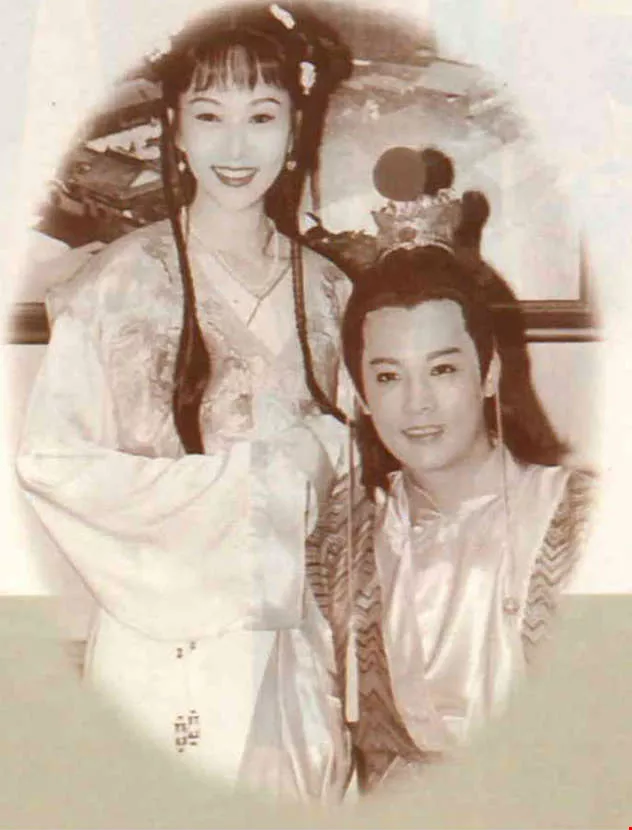
The series Dream of the Red Chamber, made by CTS, was exquisitely done, and won a Golden Bell Award for best drama for its year. However, because of its slow pace, several production delays due to scheduling problems with lead actor Chung Pen-wei (right)-who was still doing his military service-and frequent changes in its time slot, the series, though critically acclaimed, did not get very high ratings. (photo by Tsai Sen-chi)
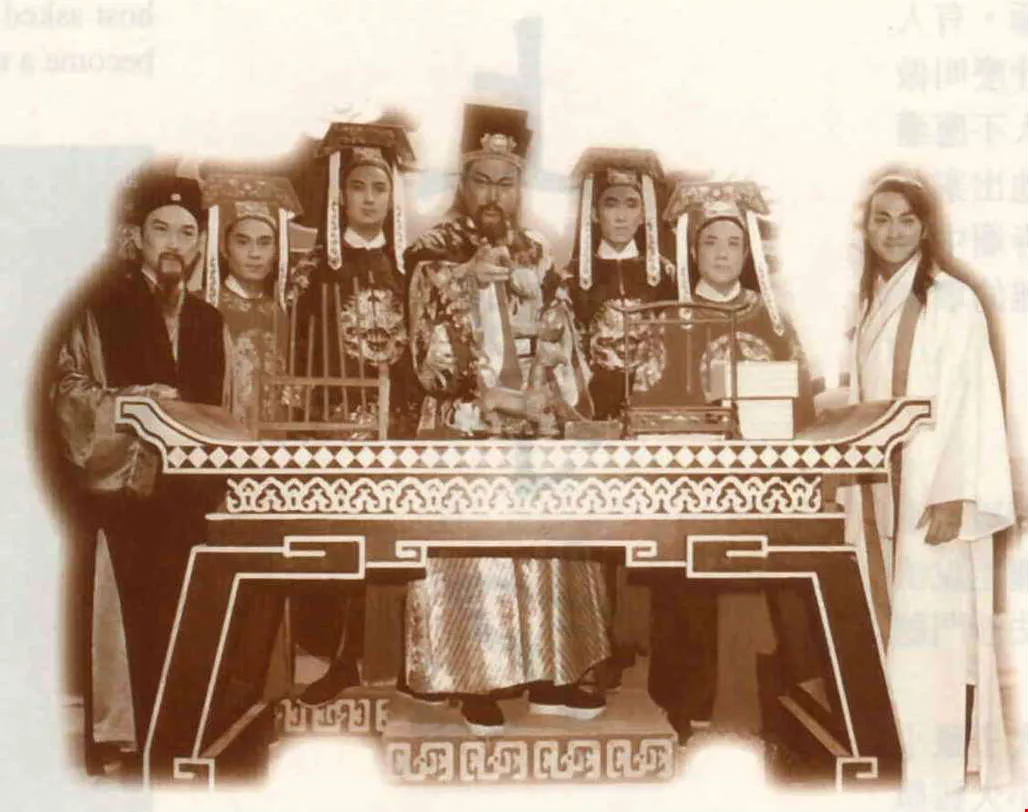
The series Bao Qingtian was immensely popular on both occasions on which it was broadcast by CTS. The revived version, shown in 1993, in which Chin Chao-chun (middle) played Judge Bao, was particularly well received by the Chinese community worldwide. (photo by Tsai Sen-chi)




@List.jpg?w=522&h=410&mode=crop&format=webp&quality=80)