

It used to be that coffee was a mark of refinement, and cola the sign of the new generation. Tea? That was for old fogeys.
Today, one of the most popular leisure activities in Taiwan is - to head off to the "tea shake " shop for a drink and a chat. And the "coolest" drink on the market is canned oolong tea.
How has tea made this turnaround?
Tea, which has a history of 3000 years in China, had been pushed off the soft drink stage by cola, soda, coffee, and even fruit juice, as Western things became in vogue and items Chinese declined.
Today, succeeding to traditional tea houses, with modern beverage and packaging technology, it has finally broken through the traditional image of "old man tea" - of elderly gents sipping delicate little cups of hot tea - to display a startling potential for rebirth. And when you look at the TV advertisements, there are beautiful young girls and handsome teen idols pushing tea drinks, clearly targeting the youth market.
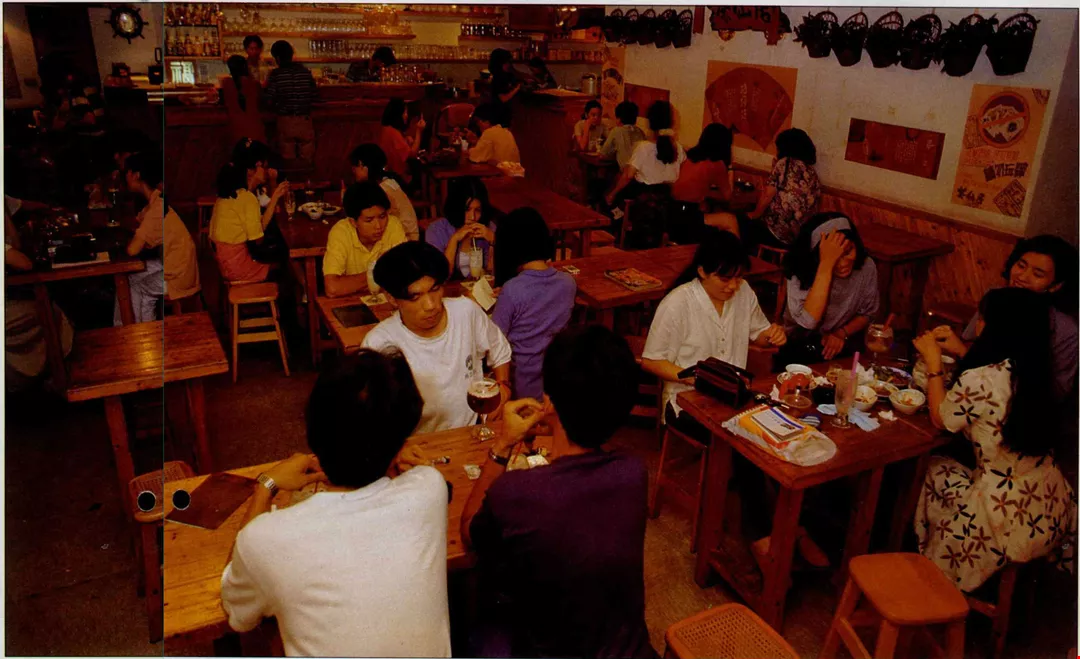
A nice open space and low prices make "bubble tea" shops more accessible to the average guy, attracting young people in particular and drawing them back to the world of tea.
Chinese cola:
Ten years ago Liu Han-chieh was in business in Taichung selling tea leaves and tea sets. He brought back a Western drink mixer from Japan, but being no fan of alcohol, tried using it on iced tea instead. Little did he expect that the resulting drink would be so light, cool, and refreshing, topped off with cute little bubbles. "We couldn't think of an appropriate name right away, so we just called it "bubble tea," he recalls.
This is how it all began. Not only did he expand from his corner stand to having seven shops, he spread from Taichung throughout the island.
As others learned and copied his trade, every small town - indeed, virtually every street and lane-- came to have its own shop peddling "bubble tea," now frequently styled "black tea shakes. " They clearly replaced the traditional fruit drink stands as the mainstream for cold refreshers. Ambitious operators began chain stores: Take for example the Hsiao Hsieh Tea Shop, with over a hundred branches, which has grown so quickly that even boss Lin Ko-shen isn't exactly sure how many there are.
At the same time, a large number of flavored packaged teas began to appear on the market, with a similarly startling rate of growth. These past two years, oolong tea has been in a class of its own. For the Shin Shii Industrial Co., which was earliest into this market and holds the largest market share, sales increased 10 times over last year, and it is expected they will quadruple again this year.
Last year tea-total sales reached NT$8.4 billion, creating a tremendous shock to carbonated drinks and packaged coffee. For four consecutive years, up to last year, sales of lemon-lime soda and sarsaparilla grew at annual rate of 10% for the Hey Song Corporation; last year sales declined 5%.
It may seem like these black tea shake shops are just places to while away time, and packaged teas are just for convenience. But the success of these teas has not only altered the soft drink market, it has extended to affecting traditional Chinese tea culture.
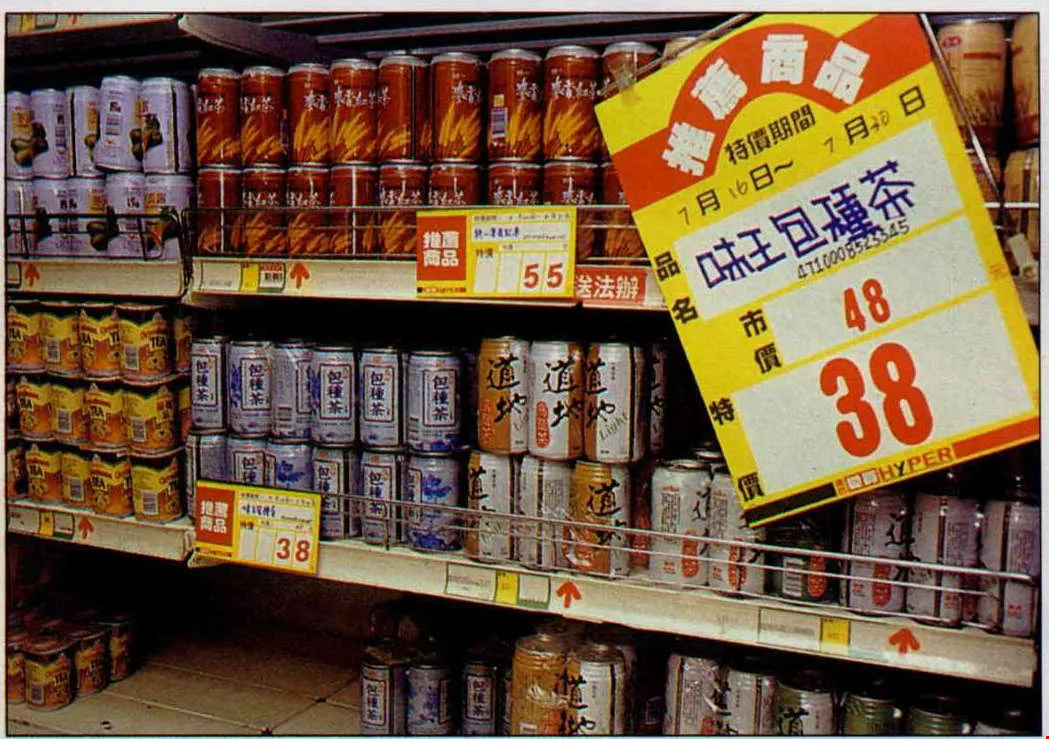
After some modern repackaging, traditional Taiwanese teas like oolong and paochong are making a name for themselves in the intense battleground that is the local soft drink market.
Rewriting tea history:
The rapid increase in sales volume means first and foremost a rewriting of the history of the development of tea in Taiwan over the past 200 years--from being a tea exporting area to becoming a tea importing area.
Tea in Taiwan began 200 years ago, during the Chiaching reign of the Ching dynasty. Taiwan was one of the most famous tea exporters in the world. The black tea produced during the Japanese occupation and the green tea produced after retrocession were important foreign exchange earners.
Given the vast increase in consumption today, it is now necessary to import tea from outside. Beginning two years ago, Taiwan's tea import volume for the first time surpassed tea exports, formally reversing the last two hundred years of tea history in Taiwan," says Juan I-ming, director of the Taiwan Tea Experimental Station.
The new pattern of tea consumption also sends up a signal about new lifestyles.
Taiwan was poor in its early days, and tea that could otherwise earn foreign exchange was seen as a luxury item at home. Don't even mention the fact that the average person rarely drank tea at home, and would only bring it out to serve guests, even the tea farmers would just drink using the stems left behind after the leaves had been picked.
The 1970s were a decade of prosperity, and local people gradually acquired the means to be tea consumers. Traditional tea houses consequently increased, and tea was brought out of the home and turned into a leisure time culinary activity. With deliberate efforts to recreate traditional China or rural Taiwan in the decor, these places rapidly became the most popular leisure spots of their time, dragging the attentions of young people away from coffee and cola and cultivating a large new market.
Nevertheless, when the novelty had worn off, there was another 'dynastic change': "With all the details you had to know about tea quality, the implements, and the ceremony, plus the fact that it wasn't cheap by any means, young people became alienated to it all," explains Liu Han-chieh, himself a connoisseur of the art of tea.
Especially for the McChildren of the 1980s, who grew up with fast food, everything has to be done as quickly as possible. Traditional tea houses, where people sit stiffly waiting for the water to come to a boil, chatting over the quality and fragrance of each tiny cup they savor, leave them cold.
So why not give them a glass of chilly ice tea that suits their mood, and put them out sitting in the sun by the side of the road, Parisian cafe style, watching other people scurrying where they will? Or why not package it up like Western style soft drinks so you can drink it anytime, anywhere?
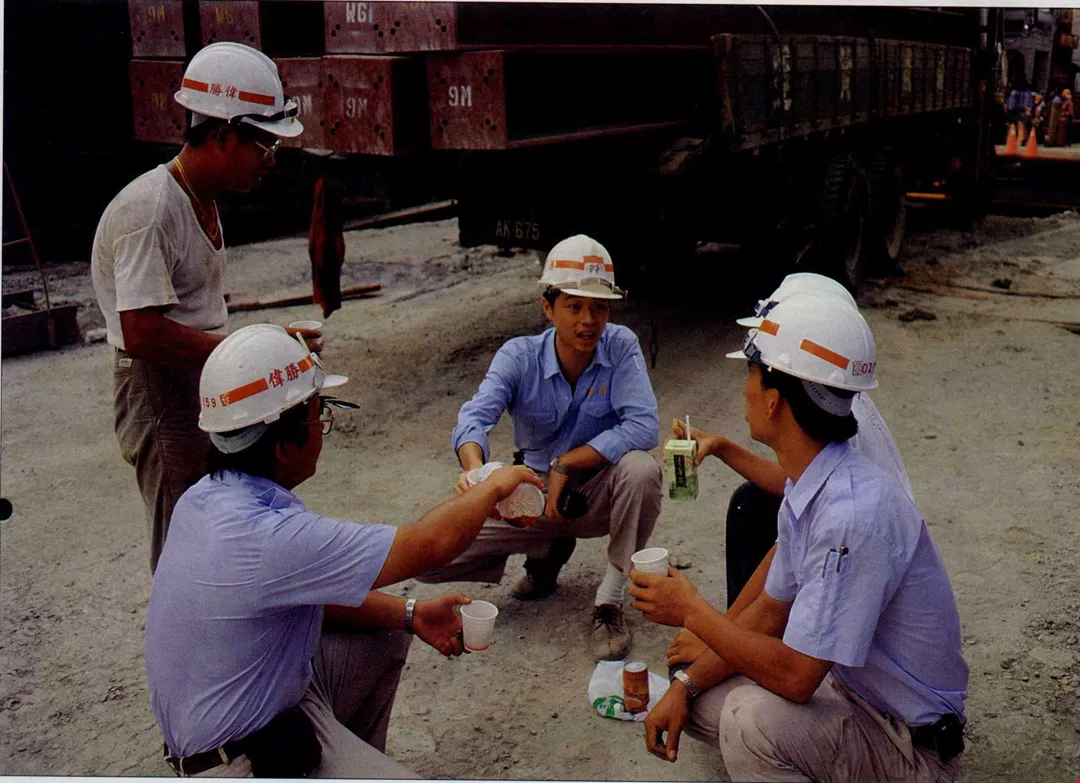
Packaged teas can be bought and consumed on the run, while you only have to yell "bring it on !" when you're thirsty. Come on partner, sit down and have a tea.
Fast food tea:
Bubble tea shops and packaged teas arose in response to the need for convenience and mass marketing.
Drinks prepared at bubble tea shops start with simple red or green tea. "It's not very expensive, and you can drink a huge glass for half the price of a cup of coffee, and even spend several hours hanging out," says a middle school student who often does just that with her classmates after the school bell rings.
One of the features of tea is that it can be made stronger or weaker. It has its own striking flavor when strong; when it is weak, it is more like water, suitable for mixing with various flavorings like jasmine, lemon, pomegranate, or whatever. This special feature combining rich flavors with diverse selection is just the thing for the youthful desire for constant change and novelty.
Further, compared to coffee shops or traditional tea houses, there is little equipment needed for a black tea shake shop. The tea and other ingredients are cheap, and the the technique can be picked up easily, so it is suitable for the small entrepreneur. It is especially attractive to independently minded young people who like to work on their own, so it is most common to see a group of youthful friends collaborate to open a shop, as a result, the atmosphere in the shops is often dominated by a certain degree of personalization and individual style.
Director Juan has also been observing this phenomenon. "My children have been drinking oolong tea since they were small. I never thought that, for late night studying, they would start using Lipton tea bags." From this experience he realizes that Taiwan's tea industry must develop a diversified product line in order to attract youth.
The rapid-steeping tea leaves and tea juice extraction technology needed for canned and packaged tea was developed by the Tea Experimental Station and provided to the industry. This is why tea beverages have been able to spread so rapidly.
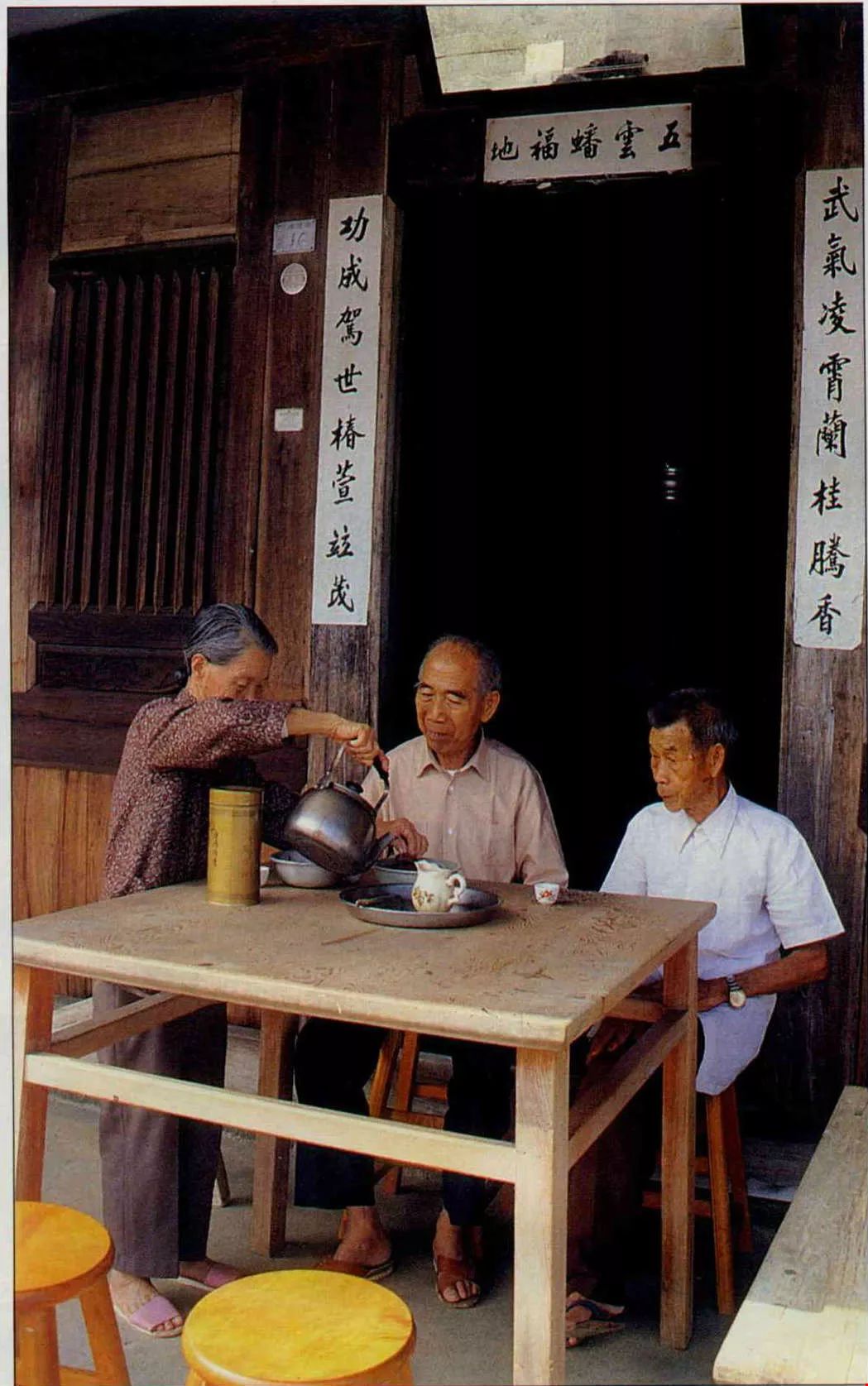
Whether the container be a delicate little teapot in the hands of a literati, or the big aluminum household pot of yesteryear, tea never fails to evoke some nostalgia. (Sinorama file photo)
Change in consumption attitudes:
The rise of tea today is due not only to its conformity to the requirements of youth. There are also great changes going on in the larger victual environment, providing a hotbed for growth. Taking canned oolong tea for example, this was brought out as early as eight years ago by local businesses copying the fashion for oolong tea in Japan, but it unexpectedly flopped at first.
Bob Yeh, managing director of the Meta Advertising Company, which handles the account for Shin Shii oolong tea, analyzes the reasons for failure at that time: First, Chinese who had long been accustomed to taking their tea hot could not immediately accept cold tea. There was a traditional belief that "tea left overnight produces poisons. " If tea is left to steep for a long time, it creates tannic acid, which causes the arteries to contract and makes digestion difficult.
Today businesses use the latest soft drink technology, extracting the tea juice, killing germs with high temperatures, then using vacuum packaging. Without oxygen, the tea will not be able to produce excessive tannic acid.
Next came the problem of the attitude of consumers. "At that time we did a survey and discovered that the most important thing for consumers in choosing a drink at that time was the taste, with the least concern about health and nutrition," continues Yeh.
Nevertheless, " over a long period of time carbonated drinks began to lose their novelty in both taste and status, and were no longer so attractive to the main consumers of soft drinks," points out C.C. Lin, chairman of Rosa Foods Company, which saw the changing trends three years ago and got involved in the market.
Now we are in the middle of an awakening of consciousness about health and nutrition, bringing consumers around to more natural products. A series of medical studies has shown that tea contains a great deal of vitamins and minerals, and that tea can lower cholesterol and reduce the risks of cancer. Modern people are also concerned about getting overweight, so tea, with a lower sugar content (and often no sugar at all), is seen as a health drink.
There is one young mother who, besides milk, only buys canned black tea to give to her thirsty youngsters when they go out. "I feel better about giving them this than those sicky-sweet, over-stimulating drinks," she explains.
Back to the countryside:
Health factors aside, there is also a certain warmth to the idea of tea.
A taxi driver draining a can of oolong tea with gusto says that "it reminds me of that pot of bitter tea Dad used to take with him when he went out to work in the fields."
"Traditional food products can easily bring on nostalgia, " believes Lin Ko-shen. "Localization " is the trend in food products, leading to a flood of traditional products in contemporary packaging on the market. It's not just tea--other "new " favorites include "eight treasures" congee, papaya milk-hakes, and white gourd tea.
In recent years, with growing prosperity, some people in Taiwan have seen tea as something of a status symbol, competing to buy expensive teas and even forking over tens of thousands of NT dollars for a few ounces of some champion leaf. Even ordinary consumers are now more inclined to buy the purer and more refined "high mountain tea. " This has led to a phenomenon of new land for tea being developed at increasingly high altitudes, which in turn severely affects soil and water conservation.
Further, Taiwanese favor spring teas and winter teas, which have a better flavor because of the chill in the climate, while summer and autumn teas are shunned. This uneven consumption pattern leads to concerns about waste of tea. After the rise of the black tea shake and packaged teas, lower altitude teas and left-overs from the marketplace have found a new home.
Missing out on the beauty of the tea ceremony:
From delicate and delightful little tea pots to easy opening cardboard and aluminum containers, from the enjoyment and serenity of the tea ceremony to the variegation of the bubble tea varieties, tea certainly has taken a tumble from its perch on the pedestal. It has become a casual part of daily life. Inevitably, there are those who feel regret about this new culture.
Chou Yu, who was at the forefront of the tea house trend in Taiwan with the Wisteria tea house, argues that although tea beverages may win out in terms of convenience, the joy in steeping tea oneself is in seeing the dried up tea leaves uncoil in the boiling water, bringing a kind of release from daily life as well as inspiring quiet and distant thoughts. "You'll never understand this feeling by drinking those fast-food teas," he concludes.
Despite this, from cola to coffee to oolong tea, at least we can say that in terms of soft drinks, young people have "come home."
[Picture Caption]
p.102
A nice open space and low prices make "bubble tea" shops more accessible to the average guy, attracting young people in particular and drawing them back to the world of tea.
p.104
After some modern repackaging, traditional Taiwanese teas like oolong and paochong are making a name for themselves in the intense battleground that is the local soft drink market.
p.105
Packaged teas can be bought and consumed on the run, while you only have to yell "bring it on !" when you're thirsty. Come on partner, sit down and have a tea.
p.106
Whether the container be a delicate little teapot in the hands of a literati, or the big aluminum household pot of yesteryear, tea never fails to evoke some nostalgia. (Sinorama file photo)
p.107
It's all tea just the same, but in the hands of young people it becomes as diversified as the mixed drinks at a bar. It's a whole new future for tea!


@List.jpg?w=522&h=410&mode=crop&format=webp&quality=80)


