Selling Cities on the Silver Screen
Chang Chiung-fang / photos Lan Chun-hsiao / tr. by Geof Aberhart
June 2010
Half a century ago, Gregory Peck and Audrey Hepburn played out the tale of a brief fling between a journalist and a princess in the film Roman Holiday,which has etched into the minds of audiences forever images of Rome's Trevi Fountain, the Mouth of Truth, and the Spanish Steps. Fifteen years ago, the Japanese city of Otaru, in Hokkaido, rose to fame as the setting for the Shunji Iwai-directed Love Letter. Four years ago, Tom Cruise vehicle Mission: Impossible III gave massive exposure to the Chinese cities of Shanghai and Suzhou. And late last year, the question of whether the floating mountains of the 3D epic Avatar were based on Huangshan in Anhui Province or Zhangjiajie in Hunan Province became a much-debated issue; tourist destination "The Pillar of the Southern Heaven" in Zhangjiajie was renamed "Hallelujah Mountain" to cash in on Avatar's success, bringing in tourists and boosting the area's tourism industry.
Cinema can have a tremendous reach, and its influence can be both strong and sustained. Today, this has become a powerful marketing tool and an irresistible shortcut to fame for countries and cities around the world.
However, the opportunity for big-screen success for cities and countries doesn't just fall out of the sky. Rather, places need to build good relationships, make themselves attractive places for shooting films, and actively fight for their chances. Taiwan has been making its own efforts in this direction, and now these efforts are beginning to bear fruit.
You may have heard that initially the makers of Mission: Impossible III wanted to film at Taipei 101. When the producers came knocking, Taipei 101 management asked to peruse the script, after which there were concerns over a scene where the Ethan Hunt character was to jump from the "world's tallest building" to a neighboring skyscraper-not only was this dangerous, there was also the problem of there not being any particularly tall skyscrapers in the vicinity of Taipei 101. The producers also wanted to shoot some street scenes in the Xinyi District around Taipei 101, but could not find the appropriate authorities to get permission from. With such obstacles facing them, the production team gave up and turned instead to Shanghai; now that Taipei 101 has ceded the title of World's Tallest Building to the Burj Khalifa in Dubai, it seems this was a chance missed that will never return.
Never mind the 15 million pairs of eyes that saw MI3 in the US and Canada, the simple 2000 job opportunities, worth RMB2 billion, that the shooting created is enough to leave Taipei's authorities crying into their beer.
But what's past is past, and in response to that experience the authorities set up the Taipei Film Commission (TFC) to help with future efforts. "The first person we have to thank for the establishment of the commission is Tom Cruise," jokes TFC director Jennifer Jao.

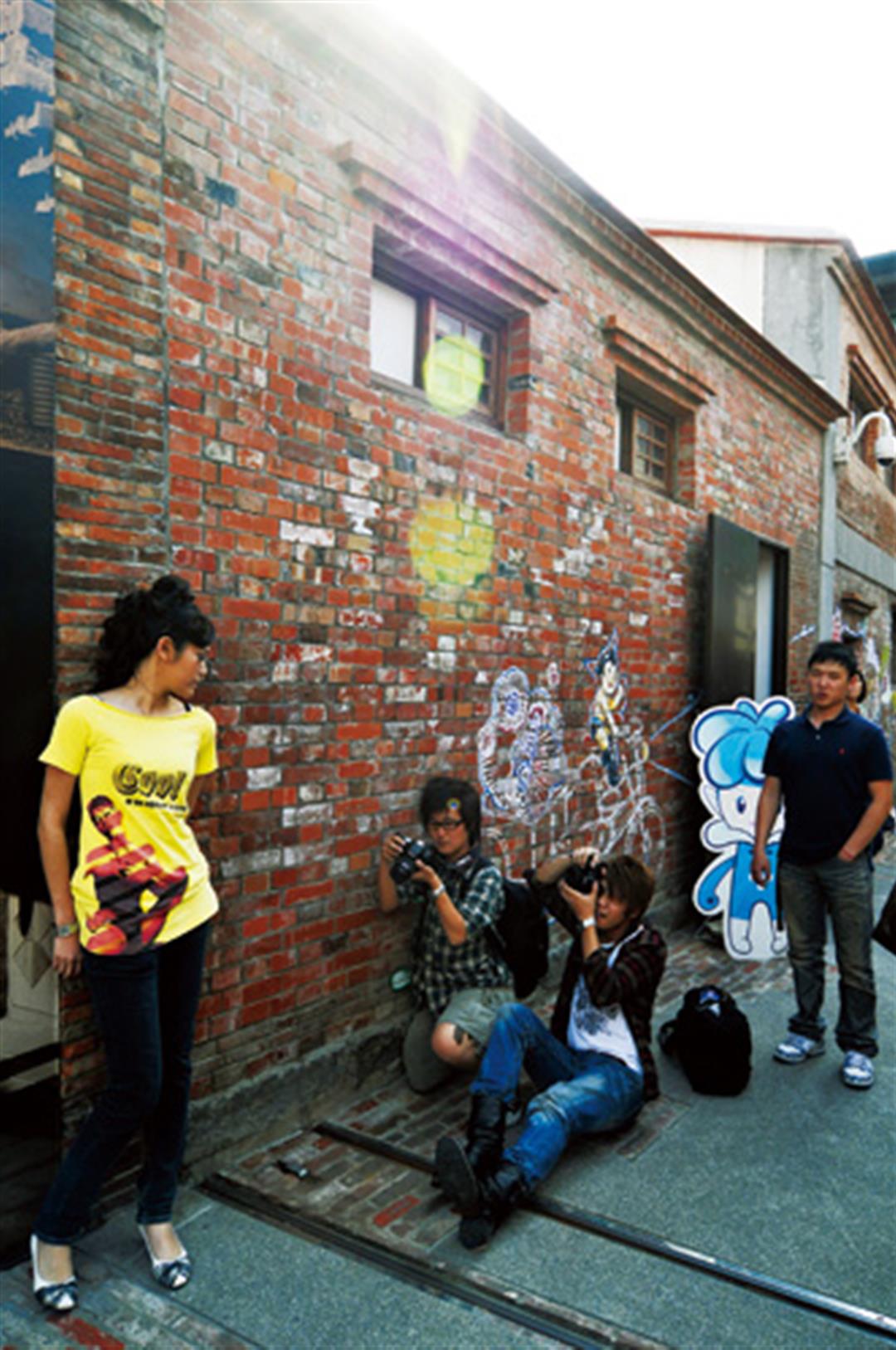
The popularity of the film Monga saw Bopiliao-in Taipei's Wanhua District and the setting of much of the movie-also enjoy a boost in popularity. Now music videos, wedding photos, promotional shots, and even foreign television shows are being shot there.
In March, as a springtime cold snap hit Taiwan, work in developing the film and television industries in both the north and the south of the island was in full swing.
The Ming Jincheng-directed television series My Volleyball Team Lover, currently shooting in Kaohsiung, has already spent a week shooting on the banks of the Love River, before shooting indoor sequences at a new community near Zhengqing Lake. The stars, from old hands like Long Long to rising stars Gabriel Lan, Godfrey Tsao, and Cindy Sung, all said it had been a long time since they'd been to Kaohsiung, and that they hadn't realized how much it had changed. The older stars were surprised by how Zhengqing Lake was now neighbored by communities and tall buildings, while the younger ones fell in love with the beautiful weather.
As for Taipei, the TFC has recently begun working with director Tsao Jui-yuan on the television series Niyada, which tells a story of a child of a single parent, and which has had scenes shot in the Presidential Palace. Next up they will be helping with Thai television series Eternal Flame, which will be shooting in the newly restored Bopiliao area of Wanhua District.
"Give us your best shot-nothing is too difficult!" declared Taipei mayor Hau Lung-pin, hyperbolically adding, "Even if you want to blow up City Hall, we'll see what we can do for you!"
The authorities have opened their arms enthusiastically to the film and television industries, marking a complete 180 from their old ways of being difficult to deal with, and the key to this has been the concept of
"city marketing."
"Cities around the Asia-Pacific region are clamoring to build an image for themselves and draw in tourists, and Taipei is naturally doing the same," notes Taipei's deputy mayor Lee Yong-ping. This emphasis on marketing the city is a natural and necessary response to the competition Taipei faces.
South Korea, for example, has proven adept at using the film and television industries to market itself, and provides a stellar example of turning around the image of not just a city, but an entire country.
Before the "Korean wave" broke across Asia, Japan and Bali were the leading tourist destinations in the region. About 15 years ago, though, South Korea began integrating tourism and television, building a powerful marketing juggernaut through series like Winter Sonata, Jewel in the Palace, and Full House.
Winter Sonata, for example, not only transformed the image of Korean men from one of gruff men who treated their wives poorly to one of elegant, sensitive gentlemen, the main filming locations-the island of Namiseom and Yongpyong Resort in Gangwon-became must-see destinations for fans.
Deputy Mayor Lee says that after seeing the impact of Korean film and television, even pop-cultural powerhouse Japan began to follow suit, as did other nations like Thailand and India. While Taiwan could rely on similarities in language and culture to attract tourists from China, to reach those in other regions it would have to make use of television and film marketing. In recent years, pop groups like F4 and Fahrenheit have been sent as "tourism ambassadors" to Japan and South Korea, and the popularity of their respective television series Meteor Garden and Hanazakarino Kimitachihe proved an attractive way to market Taiwan.
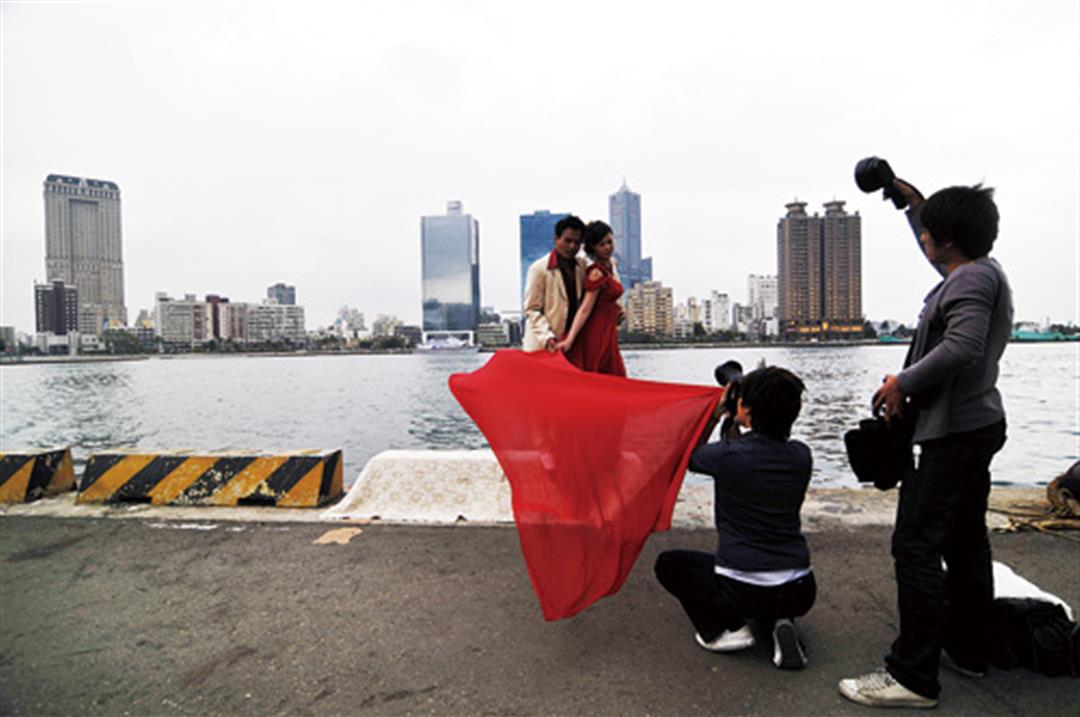
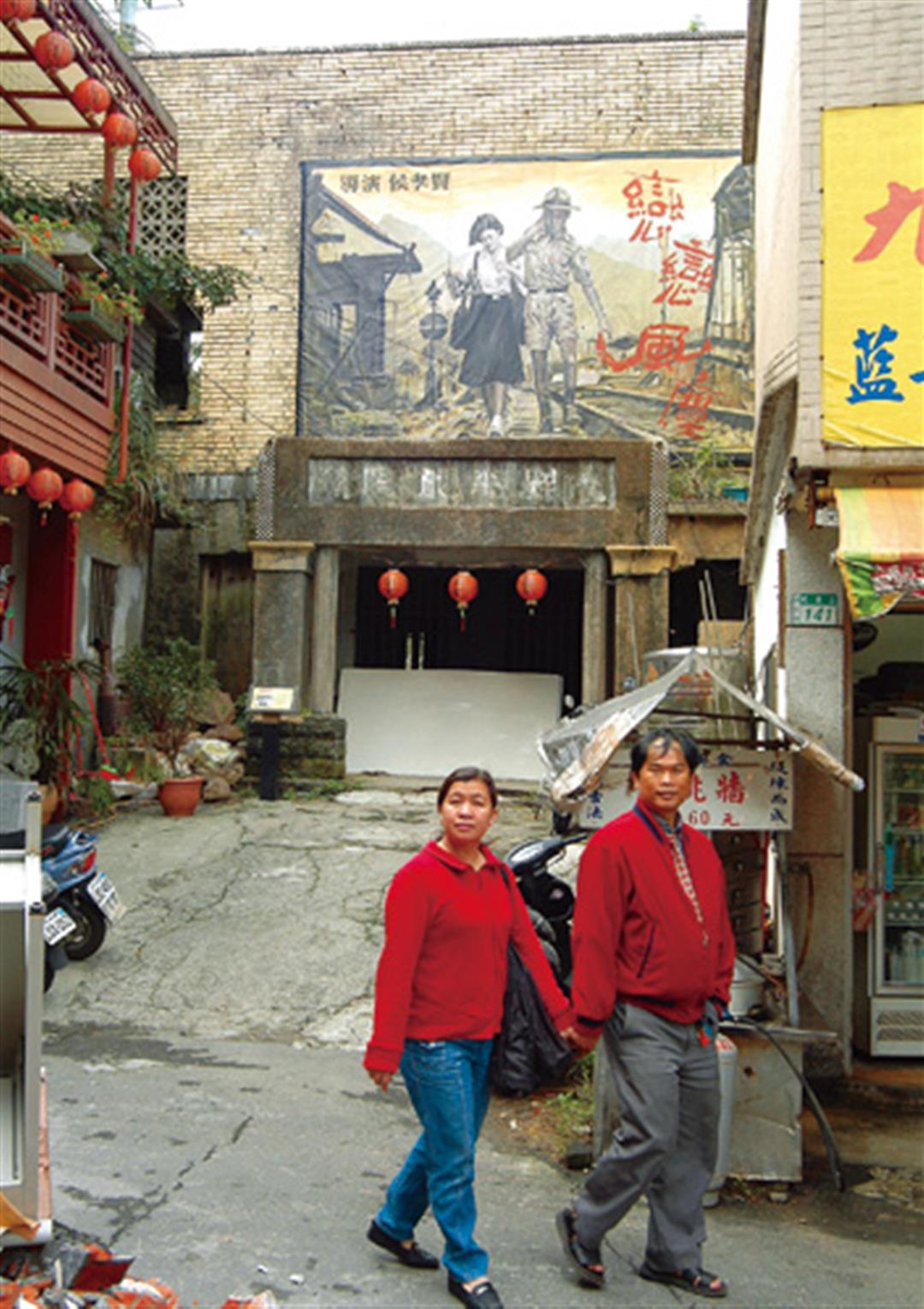
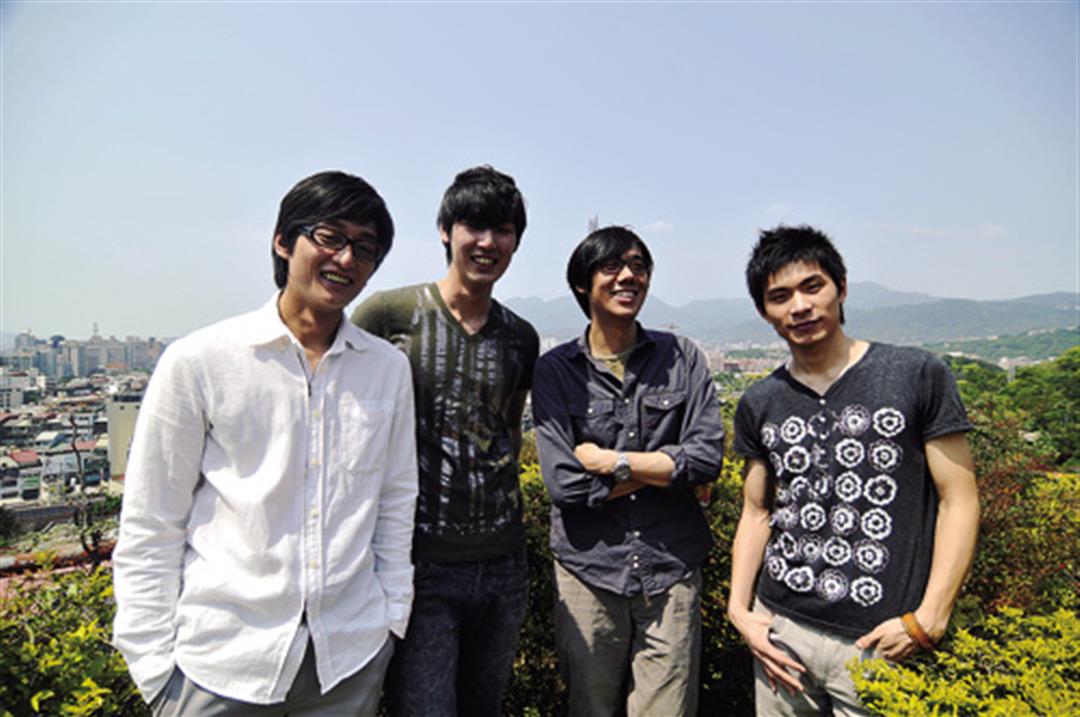
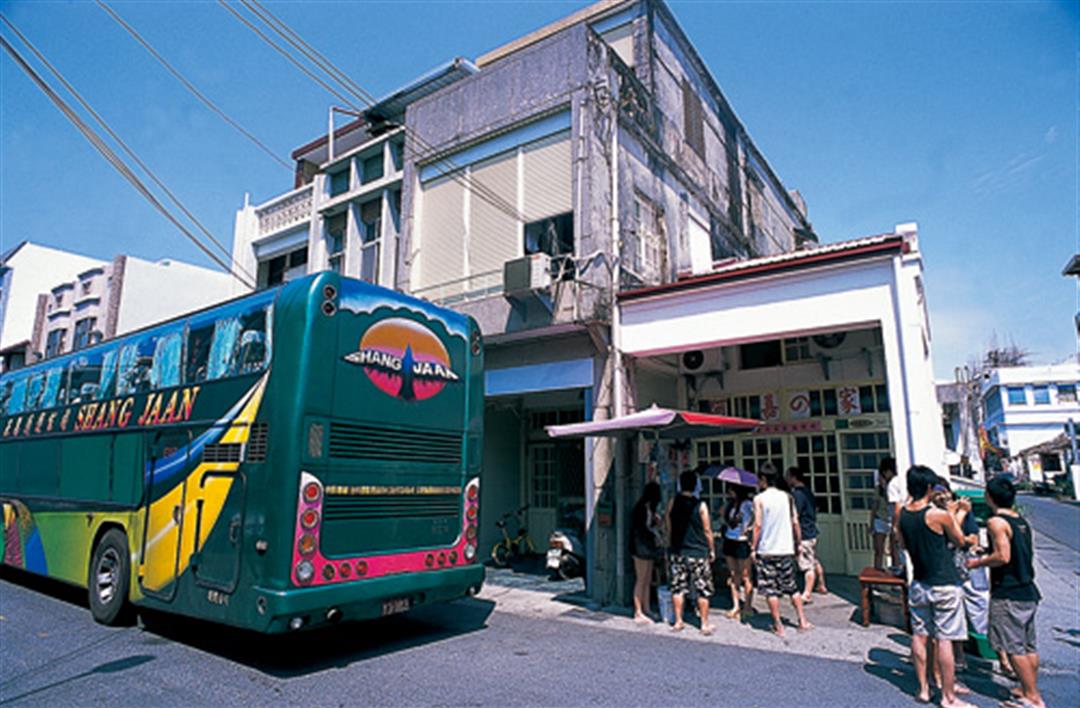
Thanks to their ties to film and television, Kaohsiung's Love River (featured in Black & White), the town of Jiufen (from A City of Sadness), and the suburban hills of Taipei (from Au Revoir Taipei-the third photo from the top shows the film's director and leading actors) have all been etched into audiences' minds. In the lowermost photo, we see a Singaporean tour group visiting Kending to see the home of Cape No. 7 protagonist Aga.

The first city to really make a conscious effort to promote itself like this was the "Ocean City," Kaohsiung. The city's first challenge, though, was to step out of the shadow of Taipei.
With Taiwan's main equipment company (Arrow Cinematic Group) and post-production companies (Lee Rong Film & TV Equipment, Leader Entertainment) all being situated in Taipei, in 2003 then-mayor of Kaohsiung Frank Hsieh offered an incentive for interested filmmakers-if one quarter or more of filming was done in Kaohsiung, and the film won a prize at one of six major film awards (namely Cannes, Venice, Berlin, the Oscars, Tokyo, and Pusan), the Kaohsiung City Government would award the lucky filmmakers a prize of NT$10 million. The first to take away this award was the Tsai Ming-liang film The Wayward Cloud, which took the Silver Bear Award at the Berlin Film Festival and was filmed in part at Kaohsiung's Dragon and Tiger Pagodas and alongside the Love River.
In 2007, new mayor Chen Chu set a new precedent by establishing a project aimed specifically at fostering documentary filmmaking in the city and looking for scripts set against a Kaohsiung backdrop, offering to foot up to NT$1.5 million in production expenses.
Director of the Kaohsiung Film Archive Liu Shiu-Ying points to seven successful drama or documentary films that are the fruits of the first year of this project, including Freezing Point; Sumimasen, Love; and big winner at last year's Golden Horse awards No Puedo Vivir Sin Ti. In 2008, the follow-up project further upped the ante, offering investment of up to NT$2 million.
In June 2009, Kaohsiung City took their support of film a step further by creating the Filmmaking Assistance Center, which offers consultancy, employment services, and location scouting assistance, along with facilities for meetings, editing, and reproduction, leaving filmmakers free to focus on making their films free of other distractions.

In contrast to Kaohsiung, Taipei was a little slower off the mark. However, with its wealth of resources, not only has it made up for lost time, it has also begun working to compete with Shanghai, Hong Kong, Seoul, and other major destinations in East Asia.
Deputy Mayor Lee points to New York as an example: New York City is one of the leading choices for filmmakers, and at the busiest times there can be hundreds of films and television shows being filmed on the city's streets. In order to help solve the problems filmmakers can face, the city set up the Mayor's Office of Film, Theatre, and Broadcasting, which has over 100 staff and is ready to respond whenever filmmakers need them.
With the establishment of the Taipei Film Commission, Taipei hopes to follow in the footsteps of New York. With Mayor Hau serving as the chair of the commission, the TFC is a powerful ally for directors and producers, as it can in one fell swoop coordinate with all of the agencies and departments involved with filming, from the police and fire service through transport, health, and other civil servants.
Since the 2008 founding of the commission, the total grants available each year have grown from NT$12 million to, in 2010, NT$20 million, and as business has boomed, so have the commission's staff numbers.
Jennifer Jao, director of the commission, says that business increased by 150% in 2009, with the seven staff handling over 320 applications for assistance and working with 163 films. This year, their staff has doubled, and as of late March, they had already provided assistance to 65 films shooting in Taipei, a figure Jao expects to surpass 200 by year's end.
In order to create an environment friendly to filming, the TFC has once again taken a leaf from New York's book, offering a "Filmmaker's VIP Card." By providing quality half-price accommodation, hot meals, and other benefits to filmmakers through agreements with over 100 hotels, restaurants, biandang stores, laundromats, and car rental companies, the resultant reduction in expenses makes Taipei a more competitive option.
Jao also points out that currently Taiwan is the freest location in the Chinese-speaking world, with no restrictions on themes, friendly residents, a high standard of living, and a myriad of beautiful destinations in easy reach. Add to that lower prices than neighboring Japan and none of the small area and dense population of Hong Kong, and Taiwan truly seems to have quite the competitive edge.

Thanks to their ties to film and television, Kaohsiung's Love River (featured in Black & White), the town of Jiufen (from A City of Sadness), and the suburban hills of Taipei (from Au Revoir Taipei-the third photo from the top shows the film's director and leading actors) have all been etched into audiences' minds. In the lowermost photo, we see a Singaporean tour group visiting Kending to see the home of Cape No. 7 protagonist Aga.

This fever for entertainment marketing for cities has swept up the island, and Taipei and Kaohsiung are not the only two to catch it-Taichung City, Nantou County, Tainan County, and Yilan County have also set up film commissions to help share the tremendous burden that filmmaking can put one under.
However, commissions outside of Taipei and Kaohsiung face problems of limited funds and manpower, and so many are staffed only by one or two staffers from the county or city information offices. As a result, they are generally not very familiar with this kind of marketing or film assistance work.
Being the two biggest cities, Taipei and Kaohsiung have always competed for attention through their marketing strategies.
"There's something for everyone here," says Jao. Taiwan is a small country, and thus more important than marketing the individual cities is marketing the entire country, which is something the cities and counties should be able to come together on rather than getting hung up on regional distinctions.
No matter what the film is about, says Jao, if it receives a Government Information Office grant, an award from the Taipei Film Festival, or is at least one-third filmed in Taipei, the TFC will put its full support behind it, handling marketing both domestically and abroad.
Cape No. 7 and No Puedo Vivir Sin Ti are excellent examples. In the former, almost entirely filmed in the southern town of Kending, the only appearance of Taipei is as the protagonist Aga prepares to leave the city, yelling "F*** you, Taipei!" In the latter, the main setting is that of Kaohsiung docks, while aside from shots of a few "high-security" areas like the Presidential Palace and Legislative Yuan, Taipei only appears in the form of a scene where the male protagonist, embracing his daughter, threatens to jump from an overpass to protest against injustice done to them.
Nonetheless, both films walked away with awards from the Taipei Film Festival, and so the TFC has embraced them as if they were their own. Not only did they help call press conferences, they also arranged for advertising on buses, in the Taipei Metro, and on the billboards on the side of the Taipei Arena, as well as assisting with other mass media marketing efforts.

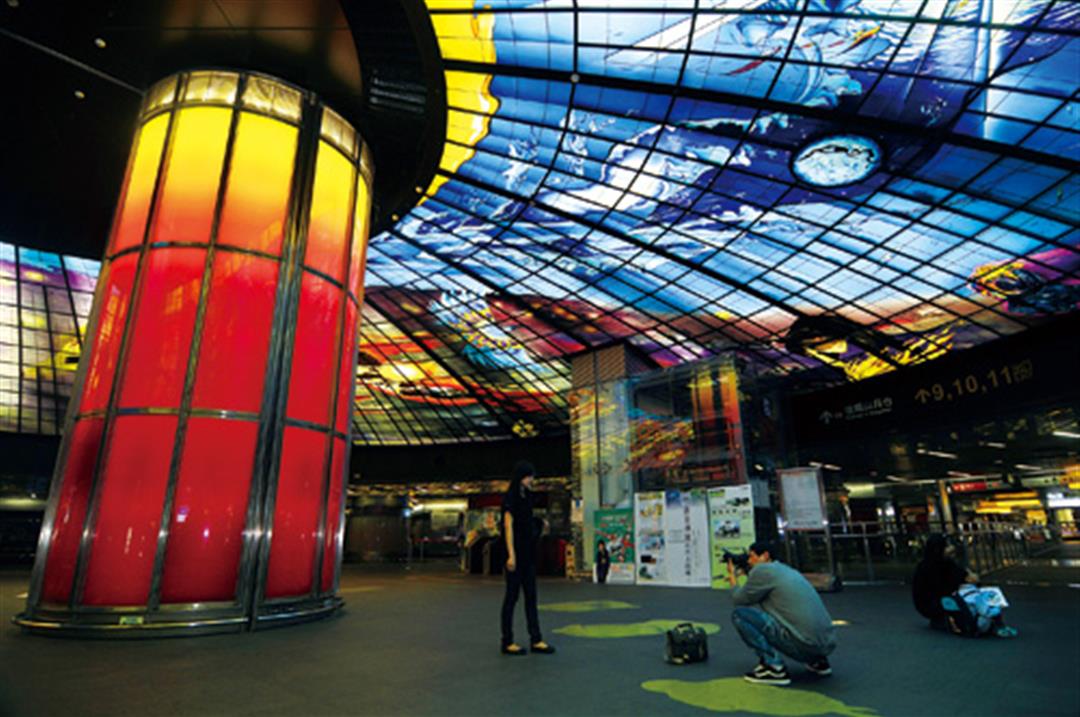
At Formosa Boulevard Station, the intersection of the Red and Orange Lines of the Kaohsiung MRT, a colorful piece of glass art known as the "Dome of Light" adorns the ceiling. This has become one of Kaohsiung's best known sights, and when it featured in Black & White, it was an immediately recognizable icon of the city.
The first glimpses of the marketing power of cinema came 20 years ago, with Hou Hsiao-hsien's film A City of Sadness. A Venice award winner, the film made its setting-Jiufen, in Taipei County-a major tourist draw, with "City of Sadness tours" being promoted to Japanese tourists. Although Hou has expressed regret for having transformed the once-tranquil town into a tourist spot, nonetheless the popularity spawned by that film has continued to this day, and on weekends the place throngs with visitors to the point it can be hard to find a place to get a little air.
When television series Black & White exploded onto the scene last year, it proved the best possible marketing tool for Kaohsiung, with some commenters online saying that they "never thought Kaohsiung could be as beautiful as Miami!" Almost overnight, the city became the travel destination for Taiwanese youth.
On the day the finale of Black & White aired (June 27, 2009), the cast, crew, and Kaohsiung City Government held a viewing party at Dream Mall, with over 3000 people showing up to see how the series ended. That same day, Kuo Cheng Construction opened the location used as the home of one of the leads-in reality a rooftop in their building Kuo Cheng UFO-and over 1000 people queued up to take a look. These fans were not only Taiwanese, but also from much further afield, including visitors from Japan, South Korea, Thailand, and Singapore.
To capitalize on the popularity of Black & White, Kaohsiung put together package itineraries and published a handbook introducing the main shooting locations. One such location, Room 6805 of the Splendor Kaohsiung, now costs NT$44,000 a night, but is still doing booming business. Another location, the Kaohsiung Software Park, has become a popular place to find work, with occupancy rates in the buildings having shot up from 30% to a whopping 90%.
Liu Hsien-huei, chief secretary of the Kaohsiung City Government Information Office, excitedly explains that no-one had expected the response to be so overwhelming, and the actual results have boosted confidence in the value of film and television marketing for the city.

Thanks to their ties to film and television, Kaohsiung's Love River (featured in Black & White), the town of Jiufen (from A City of Sadness), and the suburban hills of Taipei (from Au Revoir Taipei-the third photo from the top shows the film's director and leading actors) have all been etched into audiences' minds. In the lowermost photo, we see a Singaporean tour group visiting Kending to see the home of Cape No. 7 protagonist Aga.
Not willing to let Kaohsiung run away with all the success, Taipei has also made strides in spinning film into gold over the past two years.
Monga received a NT$4 million grant and enthusiastic support from the TFC, and on the behalf of the film, the commission organized dozens of meetings with over 500 people, from borough chiefs and local merchants to temple keepers. Released earlier this year, Monga was a box-office smash, raking in over NT$258 million.
Because of Monga, in just two short months the virtually empty buildings of the Bopiliao area in Wanhua District, Taipei, became one of the hottest tourist destinations in the city.
"No matter when you go, you're quite likely to bump into tourists visiting from Malaysia, Singapore, Hong Kong, or Macao, some of whom even go there for wedding photos!" says Jennifer Jao. During Chinese New Year 2010, over 20,000 people made their way to Bopiliao in a single day, and local merchants have seen business jump by anything from threefold to tenfold, with no signs of cooling off yet.
The currently screening Au Revoir Taipei has won awards at foreign film festivals, and has become the best marketing tool for Taipei on the international stage.
Not only did Au Revoir Taipei receive support from the Taipei Film Commission, it also successfully applied for a NT$3.5 million production grant from the Taipei City Department of Cultural Affairs.
While the films of Tsai Ming-liang are characterized by their gray alienation, those of Ang Lee by their traditional formality, and those of Edward Yang by a sense of cool hurriedness, the Taipei shown through the lens of young Taiwanese-American Arvin Chen is a place of warmth and romance.
Jennifer Jao, who helped take Au Revoir Taipei to the Berlin International Film Festival, says that the rapturous applause the film received at its premiere was a tremendously moving thing to see.
"What people from Taipei see in the film as just ordinary life can be a real surprise to foreign viewers," says Jao. From the beginning of the film, as the protagonists enter a Taipei Metro station and immediately stick to the right side of the escalators (to let passengers in a hurry get past), the audience was all smiles and laughs. Afterward, people approached the director and asked questions like "Why are people in Taipei always eating?" and "Why are there people dancing in the parks?" One Austrian reporter said to leading man Jacky Yao, "Having seen this film, I really want to go to Taipei!" Meanwhile people in the film industry who had been to Taipei were full of praise and pride, commenting on how they'd been to night markets in Taipei and how delicious the food there is.
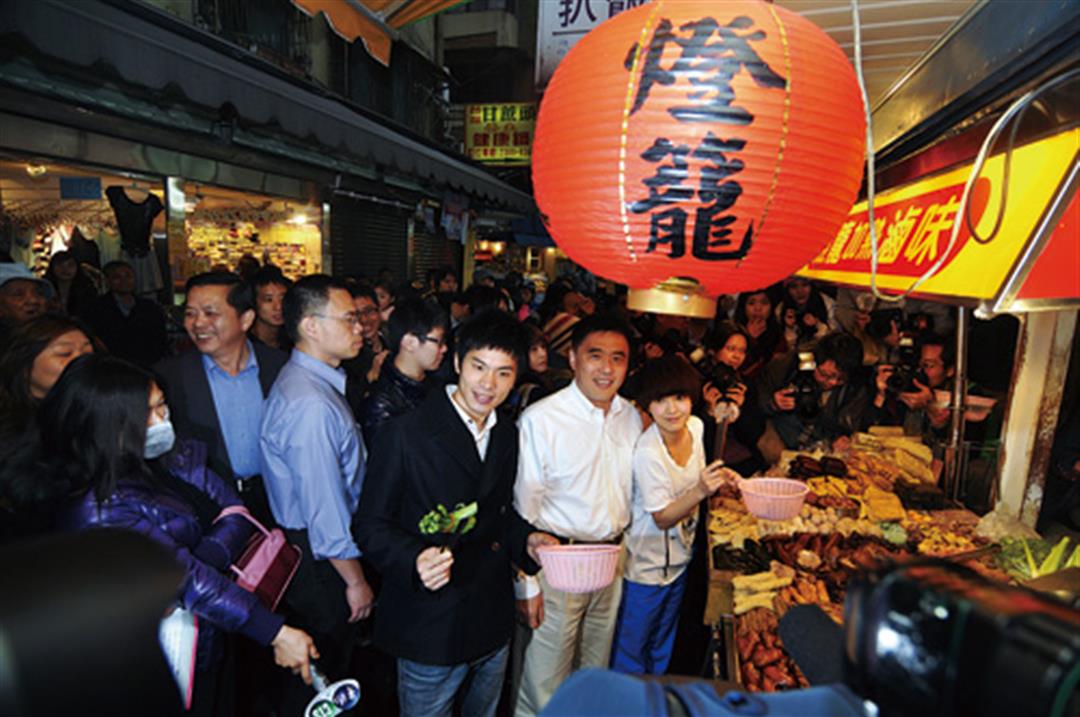
Aiming to strike while the iron is still hot, the TFC have drawn up an Au Revoir Taipei map showing a total of 10 locations from the film-including the Eslite Bookstore featured, the Shida Night Market, Metro stations, Da'an Forest Park, Rongxing Garden, and Zhongxiao East Road-and uploaded it to Google Maps; in two weeks of its uploading, the map had received over 46,000 hits.

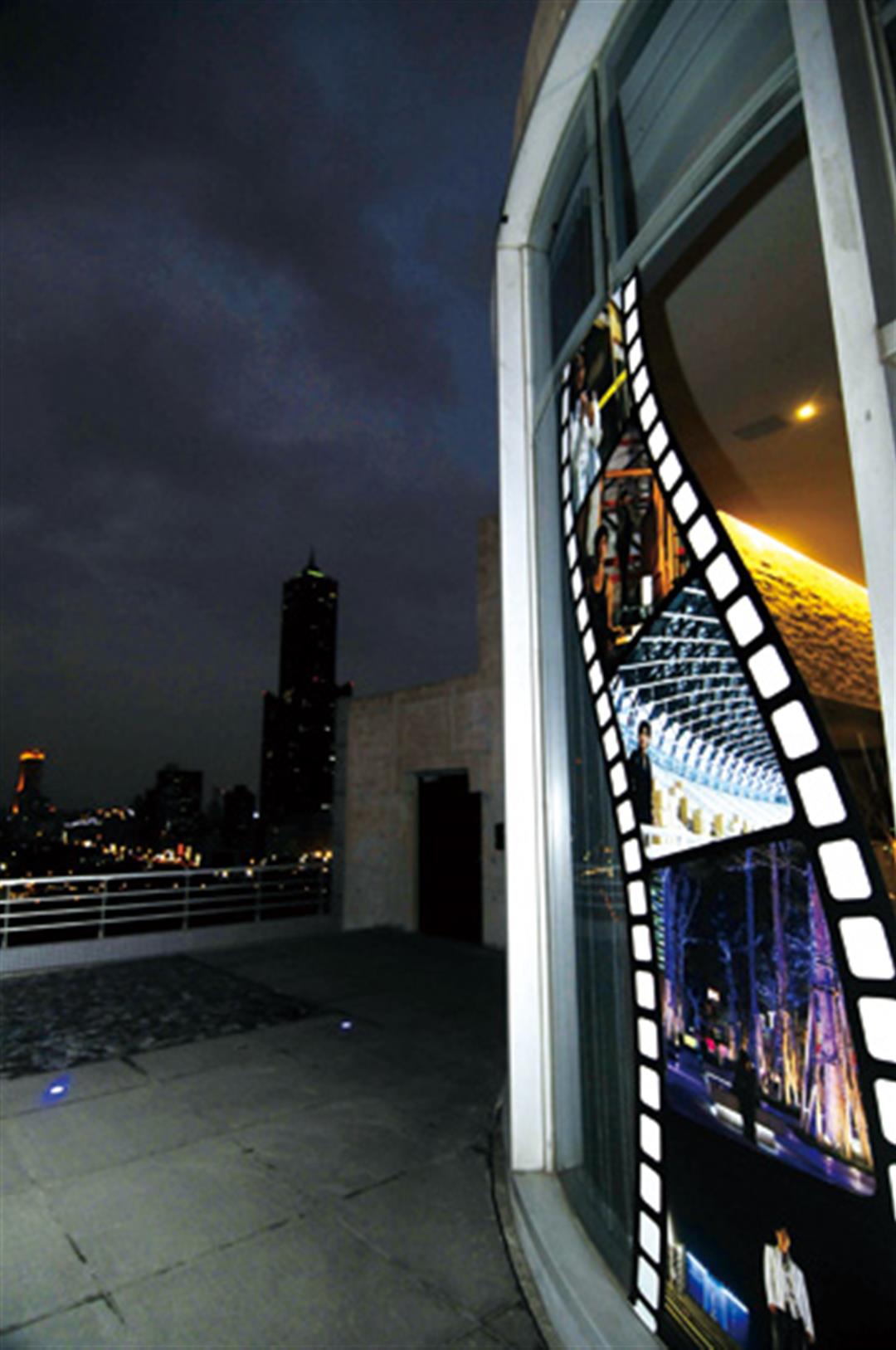
In moving from heavy industry to tourism and film, Kaohsiung has found a new future for itself. The rooftop of the Kuo Cheng UFO building, used as a set for Black & White, still has photos from the show on its walls, and looking from the observation deck out toward the landmark Tuntex Sky Tower and the docks offers a spectacular way to take in the nighttime beauty of Kaohsiung.
Au Revoir Taipei won the "Best Asian Film" award at the Berlin International Film Festival, and on April 2 the film began packing cinemas in Taipei. Distribution rights have already been sold for the film in Germany, Switzerland, Austria, Malaysia, Singapore, France, and several countries in the Middle East, which has been quite the confidence booster for director Arvin Chen.
"Film is the most effective, most powerful method of communication," says Chen, who also remarks that there was no deliberate effort on his part to "market" Taipei, but rather a simple effort to put his Taipei onto the big screen.
"Any marketing of the city that's going on is purely a bonus," Chen remarks, adding that "audiences are very perceptive, and if you're trying to market to them, they'll see right through you and you're over before you even start." But despite not trying to market Taipei, Chen says that he was impressed by the power of cinematic marketing when attending foreign festivals with the film.
More importantly, though, film can give people a new perspective on the place they grew up. Leading man Jacky Yao, who has spent 26 years of his life in Taipei, says that until filming Au Revoir, Taipei he'd never seen Taipei as a romantic place, but the film gave him a whole new perspective on the city, showing him its true beauty.
"Everyone wants to see films about the places they live!" says Jennifer Jao. This kind of marketing is not just aimed at foreign audiences, but also at giving Taiwanese people a new way to see themselves and their feelings. As Deputy Mayor Lee says, "You can't move others until you can move yourself!"
From Cape No. 7 and Black & White to Monga and Au Revoir Taipei, the many faces of Taiwan are increasingly making their way onto screens here and abroad, not only moving and comforting locals, but also showing the rest of the world the beauty and friendliness of Taiwan!

In late March, Taipei mayor Hau Lung-pin (center, wearing a white shirt) and the leading man and woman of Au Revoir Taipei Jacky Yao and Amber Kuo went to Shida Night Market in Taipei to visit one of the spots from the film, Deng Long Savory Snacks.