New Life for Ancient Wisdom-- The I Ching in Germany
Hsiao-yun Kleber-Chang / photos Hsiao-yun Kleber-Chang / tr. by Scott Gregory
January 2006
"The I Ching? Even we Chinese have a hard time understanding that, it's so deep. Can foreigners really get it?" That was my first reaction when, more than a decade ago, I first saw a copy of the book in a German friend's home.
Even harder to believe was that this friend, who had no background in sinology, had not just one but two different translations of the I Ching, or "Book of Changes," on his bookshelf. The Germans are a pragmatic people, I thought--he wouldn't put these books out to show off his "culture" or "learnedness." Seeing my doubtful expression, he cracked a smile and said, "The I Ching is mysterious and fascinating. I even use it to as a divining tool--it's quite accurate!"
I thought it was odd, but I just chalked it up to my friend's eccentricity. Only later did I find out that I had been underestimating foreigners, and that the I Ching was actually rather popular in Germany. When German girls in my dormitory came to critical junctures in their lives concerning love, work, or their futures, they'd gather around a table with some coins and a copy of the I Ching to seek the wisdom of the Chinese ancients. "It really works, want to try?" they'd call, inviting me to join in. This I Ching fever surprised me again.

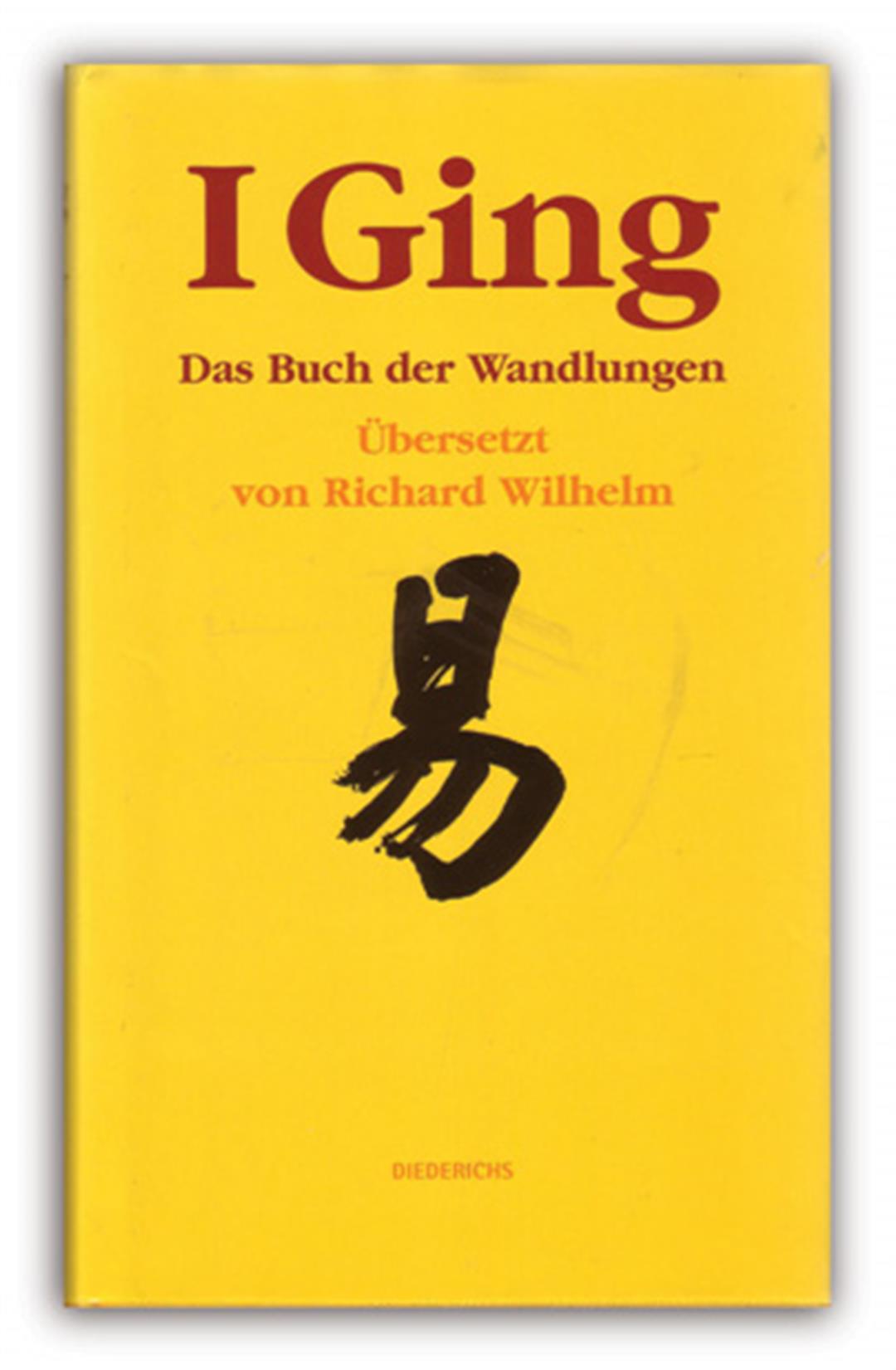
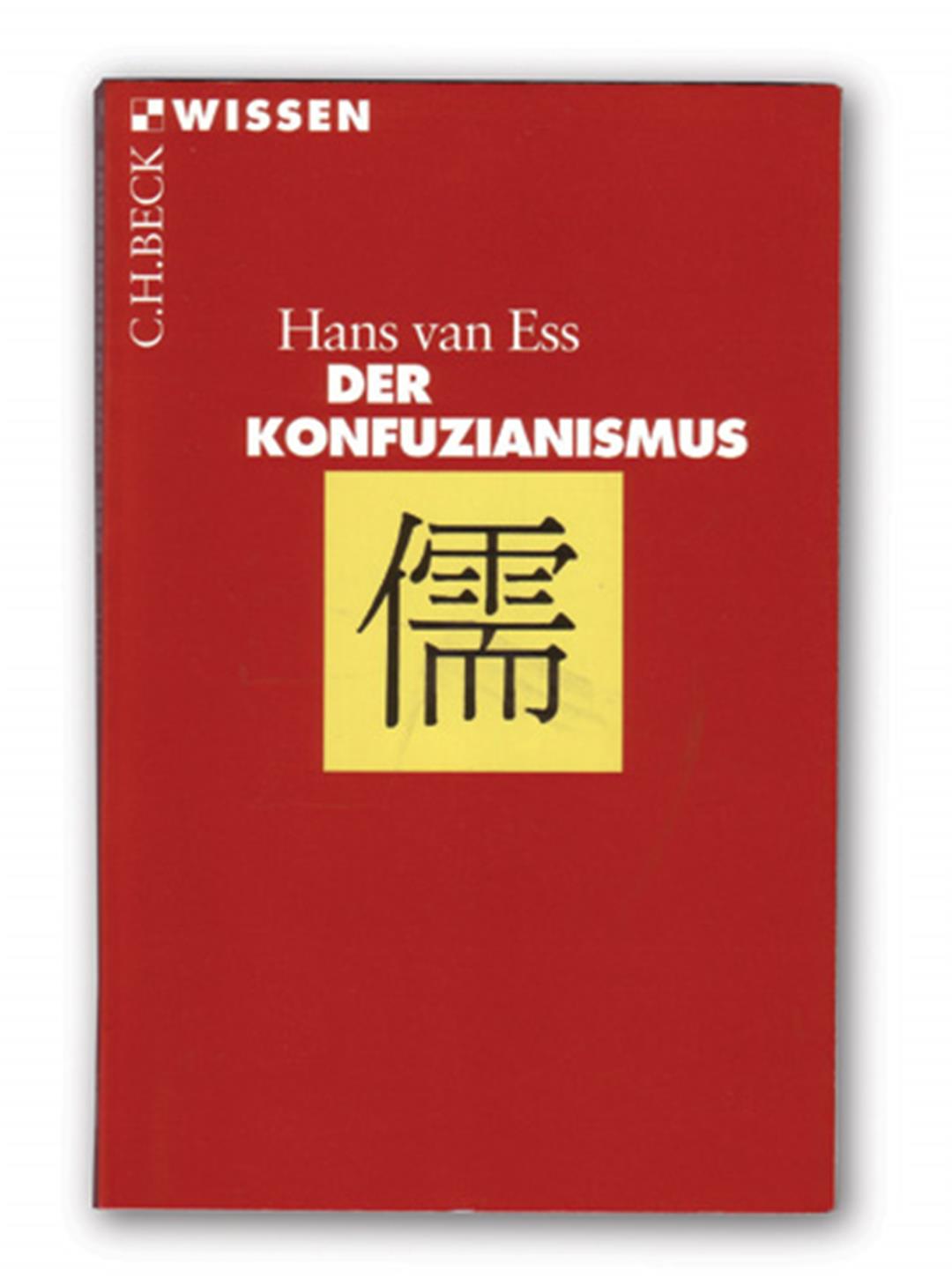
There are more than 300 European translations of the I Ching. Richard Wilhelm's is the most accepted German edition. In his book Der Konfuzianismus, Van Ess explains that the I Ching is the root of Confucian thought.
I went home and searched for "I Ging" (the German romanization) on Google, and found more than 9 million related pages. If you include English, then there are over 20 million pages--I was stunned by its popularity! The book is much more popular abroad than in China or Taiwan. Surely its compilers had no idea they'd have so many foreign friends 4,000 years in the future.
On the web, I also came across countless organizations with names like "The I Ching Society," "The School of I Ching Studies," or "The I Ching Fan Club" in Germany. There was even an academic forum for study of the I Ching set up by a university which often holds conferences and lectures. Someone even playfully termed the book "The Bible of the East."
The I Ching has been in fashion in the West for a long time, and many well-known Europeans and Americans have touted its mystic power. For example, Carl Jung, the master of modern psychoanalysis, once said, "The I Ching does not offer itself with proofs and results; it does not vaunt itself, nor is it easy to approach. Like a part of nature, it waits until it is discovered." Herman Hesse, winner of the Nobel Prize for literature, maintained that everyone can use the I Ching, whether as a divining tool or as a book of wisdom to be appreciated.
The German Buddhist practitioner Lama Anagarika Govinda said that the I Ching has nothing to do with belief or superstition, and belongs to no particular religious sect. Rather, he said, it is a collection of observations of nature and symbols of the universe and, therefore, is not limited to any one people or nation. He also remarked what a shame it was that the West only discovered it so late! Even Bob Dylan, the American singer perhaps second only to Elvis in popularity, praised the book, saying, "I'm not trying to push it, I don't want to talk about it, but it's the only thing that is amazingly true, period, not just for me. Anybody would know it. Anybody that ever walks would know it...."

In conversation, Van Ess draws symbols from the I Ching to illustrate his points. He's got an interesting way of using the book to explain Taiwan's relationship with China.
German sinologist Roderich Ptak says I Ching studies have a long history in Europe, and there are more than 300 different translations of the work. The most authoritative--and best-selling--German translation is that by Richard Wilhelm (1873-1930). Wilhelm was a missionary born in Stuttgart. He chose the Chinese name Wei Lixian for himself, and in 1899 was sent to what was then a German colony, Qingdao in China's Shandong Province, to conduct missionary work.
Wilhelm spent more than 25 years in China, becoming the archetypical "China hand." In 1913, he began to translate the I Ching under the tutelage of the scholar Lao Naixuan. He finished the project ten years later in Beijing, and then the year after that he returned to Frankfurt, Germany to become one of Europe's preeminent sinologists.
Many of the literati of the day were influenced by Wilhelm's translation of the I Ching. Herman Hesse, for example, went from being a pious Christian to a student of Buddhist, Daoist, and Confucian thought. In addition to translating the I Ching, Wilhelm also produced a translation of Laozi's Dao De Jing in 1910.
Though in the 70 years since Wilhelm's death many scholars have published translations of the I Ching, none has bested his. Then in 1950, an American sinologist named Cary F. Baynes translated Wilhelm's German into English for a wider audience. His translation was lauded as the "New Testament of I Ching Studies."
The "Old Testament," then, was the version entitled I Ching: Book of Changes, also translated by a missionary, James Legge (1814-1897). Legge produced it with the assistance of the Chinese scholar Wang Tao, and it was published by Oxford University Press 41 years before Wilhelm's German translation appeared. Academics generally agree that it was the best of its era.
Later versions never matched these authoritative master translations, but they continued to appear both in Europe and America.
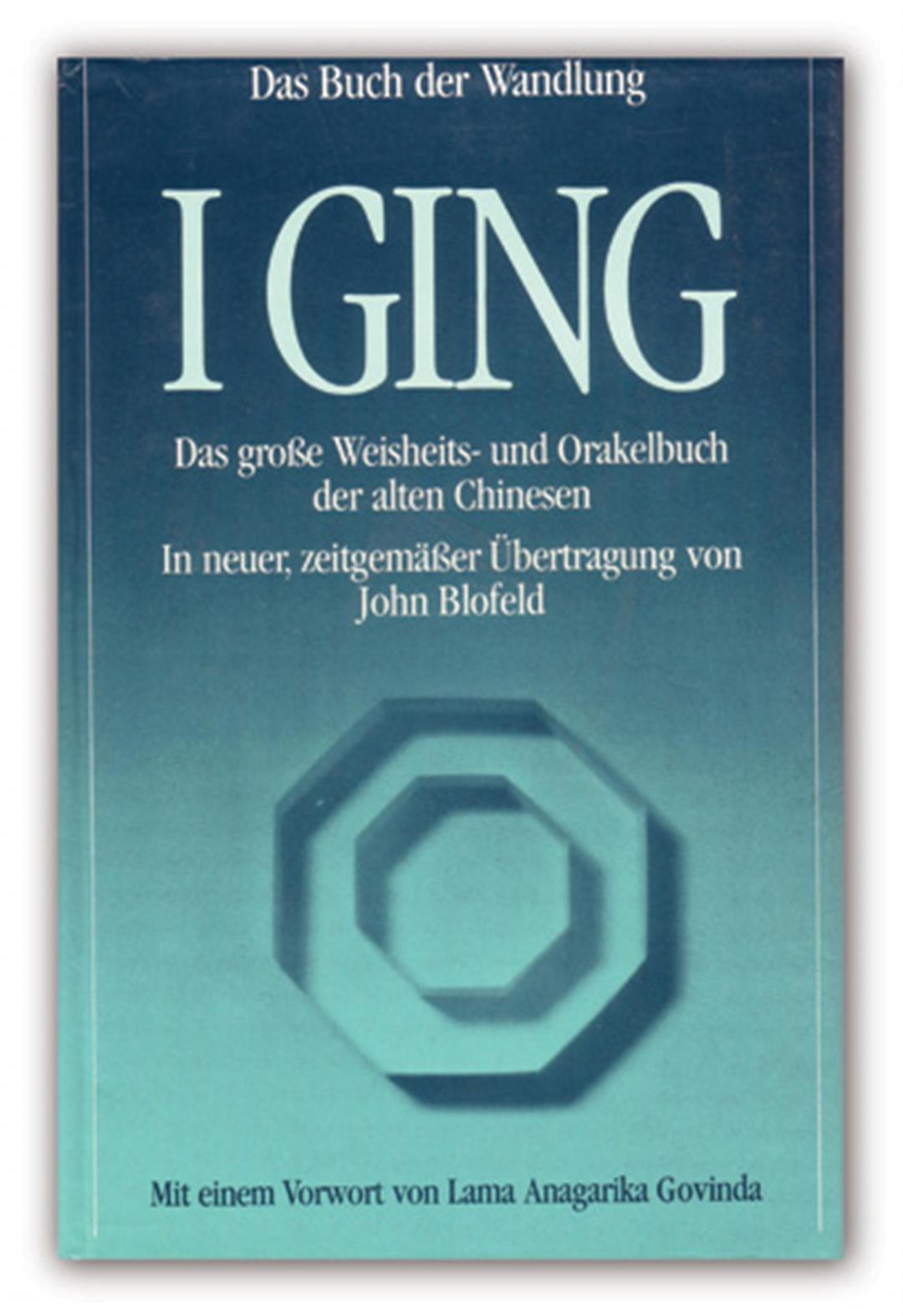
In 1983, an English version translated by John Blofeld (1913-1987) was published. Blofeld, the preeminent "China hand" of the 20th century, lived out his youth in pre-Communist China, where he developed an interest in traditional wisdom and philosophy. He'd often visit Buddhist and Daoist temples as well as religious recluses, and through those visits was inspired to become a scholar. He chose to study the I Ching, and after decades of work completed his "modern version."
In his preface, Blofeld says that he does not wish to be a second Wilhelm or Legge, nor does he wish to criticize those predecessors' shortcomings. He says his intention was to create a version in vernacular language that would be readable for the general public and to provide what he thought was the correct interpretation for ambiguous passages.
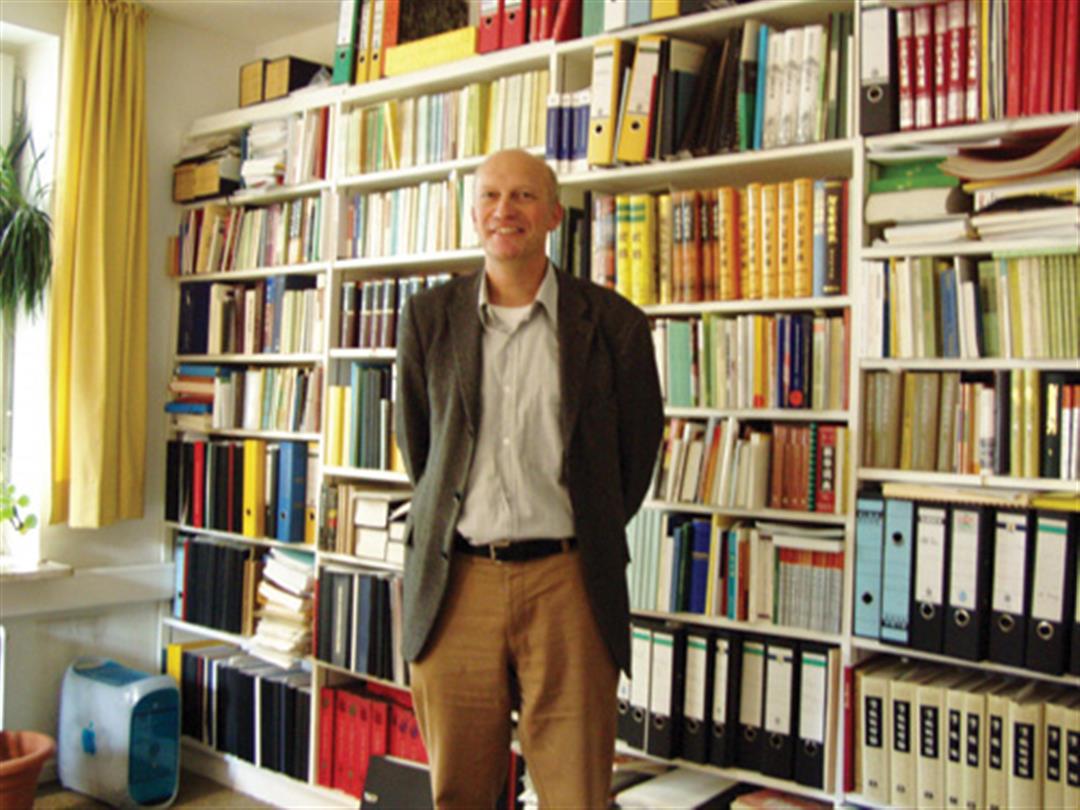
The I Ching is the subject of serious scholarship in Europe, and Professor Van Ess is an authority in the field. The bookshelves behind him are full of research materials on the subject.

Why is it that in the West, interest in Confucian writings such as The Analects pales behind that in the I Ching or the Dao De Jing, when Confucianism is the hallmark school of thought for the East? It couldn't be that the Chinese Communists managed to stamp out Confucianism in the West though they failed to do so at home with their Cultural Revolution! Is it that The Analects just doesn't suit Western tastes?
University of Munich professor Hans Van Ess thinks the answer is very simple--Confucianism's notion of rigid hierarchical relationships has no market in an era of democracy, and Westerners of modern times cannot conceive of its heavy emphasis on respect for those in senior positions.
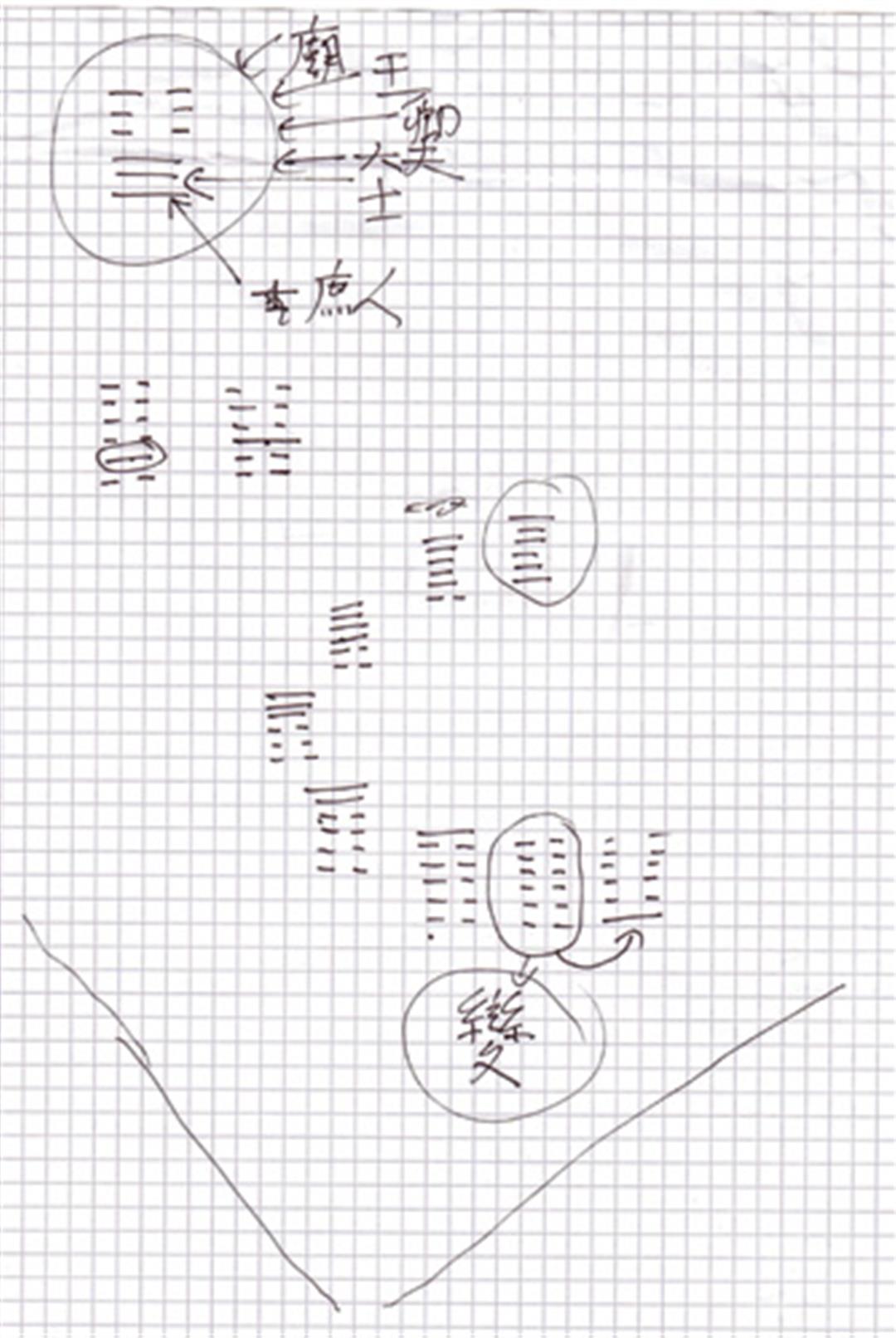
However, Van Ess writes in his book Der Konfuzianismus that the I Ching is actually the font from which the Confucian school springs, and the cosmic order it describes is the source of that strict system of hierarchical relationships. Van Ess uses the I Ching's symbols of yin and yang to explain his way of thinking--he believes that even Taiwan's relationship with China can be explained in terms of the I Ching, which says "Lack leads to change, change leads to passage" and that nothing in the world is impervious to change. In time, both Taiwan and China will change and find their suitable paths.
According to Van Ess, studies of the I Ching in China ceased for a long period of time, and it wasn't until 1973, with the excavation of a manuscript from the third Mawangdui tomb in Changsha, Hunan Province, that they picked up again. Comparing studies on both sides of the Taiwan Strait, he says that Taiwanese academics show a deeper Western influence and are more aware of work in the field from the rest of the world. Chinese academics, on the other hand, have a more traditional orientation.

There are more than 300 European translations of the I Ching. Richard Wilhelm's is the most accepted German edition. In his book Der Konfuzianismus, Van Ess explains that the I Ching is the root of Confucian thought.
Has spending so much time reading the I Ching over the years affected Van Ess' outlook on life at all? He won't comment, but you can see a bit of its influence on his life. He was already a successful scholar when he gave it up and entered the business world. His salary was much higher than a profes-sor's, but after a few years he decided to return to academics. Van Ess says with a smile, "I thought I was just more suited to doing research." This modest professor doesn't drive home from work, but rather takes public transportation or walks. And while most Germans pass their days cursing the ineffectualness of the government or the lack of meaningful reform, he merely says patiently, "If the time's not right, what you seek will not come."
Actually, it's not only the intellectuals of Germany who've caught I Ching fever. Over the last decade or so, the call to return to nature has been sounded, and all sorts of mystical and Eastern subjects have come into vogue, including feng shui, acupuncture, qigong, Chinese medicine, palmistry, the Chinese zodiac, Chinese massage, and various Buddhist schools. To many Germans, these are the stuff of everyday conversation.
The popularity of the I Ching in Germany surpasses the imagination. The I Ching and the Daoist philosophy of Laozi are quite familiar to the Germans, even rivaling the respect given by Asians to the Greek philosophers Socrates and Plato. Even many astrologers mention the I Ching when introducing Western astrology.
With an academic eye, Professor Van Ess has watched the I Ching become a fashionable commercial item, and though he chuckles at the phenomenon, he doesn't think its becoming popular is a bad thing. As the philosopher Wayne McEvilly said, "In the modern world, you could say that to be without knowledge of the I Ching is to have an unforgivable flaw in one's spiritual life!"
That statement must strike a chord with German lovers of the I Ching. They feel that the mystical wisdom of the I Ching is something to be consulted in matters of everyday life--or, as the Bible says, "Seek and ye shall find." They know from their personal experience that anyone who earnestly seeks answers from the I Ching will find them, and that those answers will help them understand their situations and find their paths. To them, the I Ching evidences a profound commonality between the patterns of nature and human consciousness.