The Changing Family
Chang Chiung-fang / photos Chuang Kung-ju / tr. by Anthony W. Sariti
February 2004


In 2004 the United Nations celebrates the tenth anniversary of the International Year of the Family. This year, once again, issues relating to all aspects of family life will be the focus of discussion. The logo for the IYF, a heart sheltered by a roof linked by another heart, shows an open space to the right of the hearts and seems a metaphor for the changes and openness that characterizes the modern family.
The more than one billion families that live on the planet today have undergone changes as they have confronted a tumultuous, changing world around them. Taiwan is no exception. With astonishing speed the Taiwan family is undergoing change in the wake of industrialization, urbanization and the expansion of education. Caught up in the midst of this change, are you aware of it? How should you regard these changes and how should you respond to them?-changes that cause many people a great deal of anxiety who nevertheless feel powerless to affect them.
What is the family like? Each person has his or her own picture. Some say the family is like a refuge where members can find shelter from life's trials and hardships. Others say the family is like a financial institution that provides for daily necessities. Some people liken the family to a silk cocoon-warm and comfortable but closed off and restrictive. Yet others liken the family to a poisonous snake where members are bound together, but by bonds of hatred and dislike instead of love and caring.
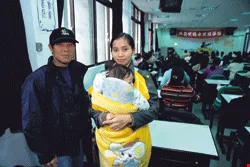
The "multi-ethnic family" has increased greatly in number and has become a family type that society cannot afford to ignore.
The family
The original Greek word for family denoted an "economic unit," while the Chinese character for family, depicting a pig beneath a roof, similarly shows a place where relatives live together in conjunction with a means of livelihood. Although related family members today still live together in one place, the means of livelihood may differ from one to the other. No wonder the modern family is "falling apart at the seams."
The ideal family of the past was one where two adults of opposite sexes married for the first time and created a family that would continue forever without divorce. It would also care for older parents, produce children and thus shoulder the heavy responsibility of carrying on the family line. Sadly, this image of the family has undergone numerous changes and it is obvious that it now is nothing like it used to be. "First time married," "opposite sex," "no divorce" and even "carrying on the family line" are no longer necessary conditions of the modern family.
Two years ago the Chientai Educational and Cultural Foundation conducted a survey of Taiwan's e-generation. Seventy percent of the respondents did not oppose pre-marital sex. With regard to marriage, almost 60% said: "If you get along, then stay together, if not, then split." More than 50% felt having children in a marriage was unnecessary. These results showed that traditional family values were facing a severe challenge.
As for the reasons behind all this, "Family changes cannot be insulated from societal changes. They are the side effects of industrialization, globalization, feminism, and the spread of education as well as democracy and pluralism," says Professor Lin Wan-i of National Taiwan University's Department of Social Work.
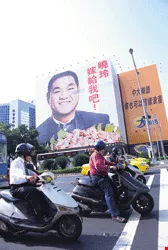
Although in this modern age of constant change the yearning for romance still exists, the dream of marriage and starting a family is like a lottery ticket-there is hope but no guarantee.
Filial piety still exists
Since 1985 the Academica Sinica's Institute of Sociology has been conducting surveys on social changes in Taiwan. An important survey topic has been changes in the family. Yi Chin-chun, a researcher at the institute who has taken part in the survey studies, points out that over the past 40 years there have been very clear changes in the structure of the family and in the relationships among family members.
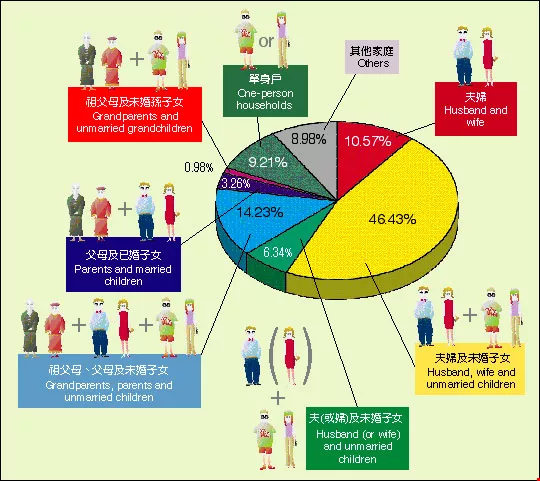
Before the 1960s, one third of Taiwan families were classified as "patriarchal families." These were "extended families" consisting of both direct and co-lateral family members living together. After the 1980s the proportion of "blended families"(a "stem" family composed of three directly related generations) increased. Today it is the "nuclear family" of husband, wife and children that has become the norm.
The key element in classifying Taiwan families is whether elder parents are present. Yi Chin-chun points out that, unlike the Western "husband and wife" model, the traditional Chinese family structure is based on the patriarchal lineage group. Thus where the elder generation lives, apart from or with their children, becomes a reliable index for conducting research on family structure.
Yi Chin-chun surveyed married people aged between 20 and 64 and living with their spouses on "the connection between how they care for parents and their own attitudes to parental care in the future." Survey results showed a stable proportion of families in which elderly parents lived, at around 20%. The family, it turned out, had not disintegrated as quickly as might have been imagined.
Currently 63.5% of elderly parents live with their married children, in what demographers stress is the dominant family structure in Taiwan, the "blended" or "stem" family. About 20% of elderly parents live with their spouses or live alone. Sixty percent of elderly parents surveyed received their living expenses from their children.
Unexpected was the fact that children very much hoped to live with their elderly parents and conform to the traditional model of filial piety in this regard, while the image they had for themselves in old age was rather untraditional. Future plans for almost half of them tended toward living with their spouses only or living alone (43.9%), and they also stressed economic independence (44.4%).
The Taiwan three-generation "blended family," defined in terms of the living arrangements of the elderly, seems not yet to have gone into decline.
Chen Kuanjeng, a demographer teaching at Chang Gung University's Department of Healthcare Management, says the Taiwan family has not been "nuclearized" and that the nuclear family is not the modern norm. In countries like Taiwan, Japan and Italy where there is a strong sense of family, the three-generation stem family is still common.
Nevertheless, it is worth examining whether this situation might change as a result of the rising education level of the younger generation and a prosperous economic environment or an increase in public welfare support for the elderly.
In light of Yi Chin-chun's finding, cited above, that almost half of all young adults do not have old age plans that include living with their married children, it is clear that the notions of "three generations living under one roof," and "raising children to provide for one's old age" are on the decline.
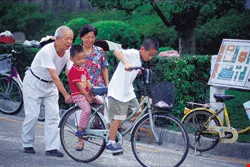
The increase in life expectancy has led to Grandpop and Grandma living with their grandchildren for a longer period of time-to the great benefit of both generations.
The shrinking family
Changes in the family are a reflection of changes in the growth and composition of the national population.
The Taiwan household continues to shrink. From an average household size of 5.6 persons in 1966, the figure sank to only 3.4 by the year 2000. Households of less than four people continued to increase. In the ten years to 2000, two-person households went from some 600,000 to over one million. Single-person households grew by more than 100% and by 2000 they had reached a figure of 1.4 million.
The continued shrinking of family size is related to the modern phenomena of marrying late, not marrying at all, having a small number of children or having none at all.
According to the Directorate-General of Budget, Accounting and Statistics (DGBAS), late marriage is an increasing phenomenon. Compared with 20 years ago, the average age of first-time marriage for men has been pushed back 2.5 years to 31. For women it has been pushed back 2.6 years, and on average a woman is nearing her 27th birthday before she dons the bridal gown.
In addition, some people marry with no intention of having children at all, which has led to a great increase in the "two-person family." DGBAS surveys have shown the primary reason modern couples feel there is no need for children in marriage is that they do not want to increase their financial burden. The second reason is they feel their own freedom might be compromised. A third reason is that taking care of children is just too much trouble. Many young people are afraid of, or simply not interested in, "advancing" to parenthood.
The increase of the single population has been even more of a key influence on the birth rate.
According to Ministry of the Interior statistics, at the end of 2002, of people over 15 years of age, about 56% were currently married. About 34% were unmarried, 5.5% had lost or a spouse, and 4.8% had divorced. In other words, almost half of people over age 15 were living as single people.
It is worth noting that according to the DGBAS's 2002 survey, among the chief reasons why single people had not yet married, the "economic issue" had leaped into first place, replacing the earlier "have not met the ideal partner." Given a high unemployment rate with no end in sight, more and more young people in the future will prefer to go it alone, to continue to live with and rely on their parents for room and board, happy to be a "single parasite" rather than take up the burden of setting up their own household.
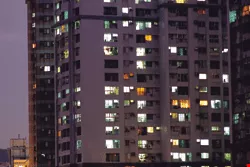
Among the myriads of families that exist, each has its own story. No matter what kind of family we may talk about, each has it own road to a happy future.
Disappearing relatives
The scale and structure of the family have undergone changes, and so have the relationships among family members.
Yi Chin-chun argues that the development of close relationships among family members requires a lot of time spent living together and the cultivation of a patient attitude. The biggest "bone of contention" involves work and school.
The DGBAS's "Survey of Social Development Trends (Family Life), Taiwan Area, 2002" showed that, leaving aside time for sleep, men spent only an average of six and a half hours around the house, while women averaged just less than eight and a half hours.
On the surface, it would appear that diligent study and hard work have their purpose in establishing a happy family. The irony is that precisely because of this, people have lost the time and energy to create full and rich family relationships. Especially with the increasingly common two-income families and geographically divided families (husband or wife working in a different location), the relationship between parents and children is even more strongly impacted. In addition to this, points out Yi Chin-chun, the number of siblings has decreased and the single child population has grown. This has also caused changes in human interactions, the most evident being that aunts and uncles have disappeared, and relatives have declined in number.
Another element in changing family relationships is increased life expectancy. In other words, although relatives are fewer, one lives with them longer during a lifetime.
The increase in life expectancy means that elders may be grandparents for 30 or 40 years. Yi Chin-chun notes that in Western society grandparents are seen as "relatives" one step removed from the nuclear family. But for Chinese, the grandparents are completely integrated as "family members." For this reason, health and economics allowing, grandparents can always give grandchildren additional care and material support. In mainland China, which has long pursued a one-child policy, six adults (mother, father, and grandparents) now compete with one another in their affections for a single child.
Peng Huai-chen, an associate professor in Tunghai University's Department of Sociology, also points out that because of increased life expectancy and the ageing of the population there will be more and more "two-generation elderly families." Such is the situation currently in Japan. After a 60-something older person retires he or she must return home to take care of an 80- or 90-year-old parent. This kind of family where "old people take care of old people" may become increasingly common in Taiwan in the future.
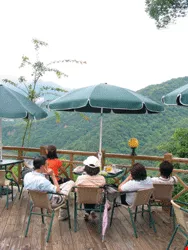
Who says single people can't "start a family"? Like-minded friends, although they are not blood relatives, can become "intentional relatives" and travel life's road together. (photo by Jimmy Lin)
Marriage-a fleeting encounter?
If we take a look at the cornerstone of the family-the husband-and-wife relationship-we can see it is in serious danger.
The latest study published by Queen Mary University of London shows that for men the preference to "just live together with a partner" beats out being tied by the bonds of matrimony. For women, "no relationship at all" is best.
Both men and women show a declining interest in marriage. It is no wonder, then, that 30% of married people wake up in the morning and wish they were still single. Getting married has changed from a "necessary life experience" to a free "choice." For many married couples it has even become a "beautiful mistake."
Since marriage can be a mistake, divorce has become a way to correct this. Such thinking has led to a rapid increase in the divorce rate.
Taiwan's gross divorce rate (measured against the entire population) grew from 0.9 per thousand in 1982 to 2.7 per thousand in 2002. The divorce rate for the married population is currently 6.1 per thousand, behind only the US, Australia and South Korea.
Society's attitude toward divorce has also gone through a major change. Twenty years ago the average person in Taiwan saw divorce as something disgraceful, especially as regards women, who were frequently saddled with the epithet of "failure" or "bad woman." A divorced woman couldn't hold up her head among friends or relatives. Feminists and women's rights activists today argue that divorce or separation represent a bold move by a woman to break away from an abusive patriarchal family. Rather than something disgraceful, divorce has come to represent an opportunity to seek a new life and create a happy "second spring."
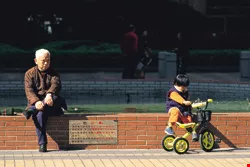
The old age population is increasing while the birth rate continues its decline. The population imbalance is the result of changes in the family and is perhaps the "last straw" that will "break the family's back."
Easy divorce, difficult remarriage?
As the divorce rate rises, the remarriage rate for men has also clearly increased. From 36 per thousand in 1982 it climbed to almost 51 per thousand last year. In contrast, the remarriage rate for women has dropped. From a low 17.7 per thousand it slipped further to 16.6 per thousand, less than one third of that for men.
Do women not want to remarry, or is remarriage difficult for them in the marriage market? This is worth looking into. But perhaps part of the answer lies in the fact that the responsibility for the housework, raising the children, and taking care of elderly parents still falls for the most part on women's shoulders.
Divorce has become the chief factor behind the single-parent family in Taiwan. According to the 2002 DGBAS survey, the single-parent family composed of mother or father and unmarried children stands at about 6.3% of all families. The single parent in these families is three times more likely to be a woman than a man. The ratio is highest in the 45- to 54-year-old age group.
Studies here and abroad all show that the "economic issue" is the most severe difficulty facing the single-parent family. DGBAS statistics indicate the proportion of non-working single-parent heads of household in Taiwan is over 45%. Of that group, women represent 78%. How in the world do these women, without a spouse and without a job, manage to maintain a living and raise their children? This is a matter for concern.
Further, because the traditional concept that "for men there are three 'highs': high stature, high level of education and high salary," has made it difficult for Taiwan men in weak socio-economic positions to marry Taiwan women, they have turned to marrying women from Southeast Asia or mainland China, leading in recent years to a sudden rise in the number of families resulting from "international marriages." By the end of 2002 there were more than 74,000 spouses of foreign nationality legally residing in Taiwan.
Lin Wan-i thinks that this increasingly numerous "disadvantaged multi-ethnic family" deserves the close attention of the government. These families must be better understood and assisted, otherwise a high proportion of their offspring will face educational obstacles, with the danger that the succeeding generations will all sink into the lower strata of society.
Another and most troubling phenomenon for researchers is that as a self-supporting economic unit caring for the elderly and looking after children, the number of economically disadvantaged families has increased in recent years, and the gap between rich and poor households has widened.
In 2003 low-income households were 1.08% of the total, representing a significant increase from the 0.82% of over ten years earlier. On average, every 90 minutes another child is born to poverty. People are fond of saying that "poor couples have nothing but grief"-that poverty will exacerbate the fragile family relationships, the functionality of the family will decline and the family itself will disintegrate. In light of the numerous reports in recent years on the "trilogy of family tragedy"-unemployment, divorce, and suicide (often with a child)-the government has offered a number measures to help in the hope of salvaging a deteriorating situation.
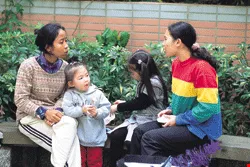
The two-income family affects the parent-child relationship. Children raised by foreign maids are the objects of "cross-generational upbringing" of a different sort where the age gap is replaced by differences in language and culture.
A pluralistic family
It is undeniable that the "family" has changed, and although it has not reached the point of total disintegration, there is a radical transformation taking place. The stable traditional family is declining and, by contrast, more and more new-style families are making their appearance. They have a fragile structure, are unstable, and cannot be defined in generational terms.
In fact the "complexity" of the Taiwan family exceeds that of most Western countries. Peng Huai-chen points out that in Taiwan a number of divorced couples still live together and maintain the outward appearance of a happy home, while other couples, although not divorced, live like casual acquaintances.
Leaving aside families "in name only," whether it's the "single-parent family," the "second family" (after remarriage, bringing children from a previous marriage), the "geographically divided family," or the "pseudo-single-parent family" (one spouse absent for extended periods), they all have increased with surprising speed. Showing a slight increase in number are families where, because of the absence of both parents, Grandma and Grandpop are raising the children in their place "across generations." In addition, situations where "surrogate cross-generational" raising of children takes place by people other than the actual parents, such as foreign-born maids, aunts and uncles, have become quite commonplace.
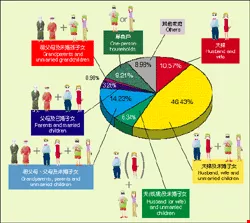
One-person households
Not the changing family's fault!
The "family" has changed, and this worries a lot of people.
One educationalist argues that the seeds of adolescent problems "are sown in the family," and that the problems "manifest themselves in school and become worse in society." He points directly to the family as solely responsible for the increasingly serious problem of juvenile delinquency. A great deal of research also has shown that divorce is a "critical factor" leading to adolescent problems like deviant behavior, truancy, drug abuse, early sexual experience, childhood pregnancy, and depression.
However, Wu Chyi-in, an associate research fellow at Academica Sinica's Institute of Sociology, did a study in 2000 entitled "The Structure of the Family, Upbringing and Adolescent Behavior" in which he exploded the myth that the "broken family" gave birth to "troubled adolescents."
This study focused on students from 86 junior high schools in Taipei. From the first to the third year inclusive, 5.8% of the children lived in a single-parent home. Surprising was the fact that numerous surveys on deviant behavior all showed no statistical difference between adolescents from normal families and those from single-parent families. Even the breakup of the parents' marriage had no direct effect on the tendency toward depression in the children.
Wu Chyi-in's conclusion: "The divorce of parents in no way was the primary cause of adolescent deviant behavior. The key to this issue was really poor parenting. This finding can perhaps give some slight consolation to those families that result from a failed marriage and allow them to clear their sullied reputation and be treated fairly by society.
Be happy!
On the opening page of his novel Anna Karenina, Tolstoy wrote, "Happy families are all alike; every unhappy family is unhappy in its own way." Today this sentiment is in need of some revision.
Professor Lin Wan-i points out that in the last three or four years the Taiwan family has been in the throes of steady change in the direction of smaller scale, diversity, differentiation, fragility and a decline in functionality. Of course, in the absence of a better replacement it is dangerous foolishly to cry out "down with the family!" But there certainly is no longer any single definition of the family. The only way really to protect each family member is through respect and the acceptance of the various types of families that do exist.
In the 1997 American book Family-by-Choice by Susan Ahern and Kent G. Bailey, the authors argue that people should not lament the passing of the traditional family because a new possibility has arisen in its wake. People can freely choose the type of family best suited to them and find a new horizon. Indeed, at any stage of life a person may find himself with no friends or "family" where he can hang his hat. If one can lower the bar, expand the imagination, then even a group of friends who share no blood relationship or economic ties can become "intentional relatives" and constitute a "family by choice."
Professor Peng Huai-chen of Tunghai University says, "In Taiwan today with its high rates of mobility, divorce and family disintegration, we should all acknowledge that no matter what type of family we are talking about, all that is necessary is to manage it with care, and road to happiness will be open."
Just be happy! No matter what kind of family you are a part of!


@List.jpg?w=522&h=410&mode=crop&format=webp&quality=80)


@List.jpg?w=522&h=410&mode=crop&format=webp&quality=80)
