From all over the USA, they congregated on the small Pacific island known as “the Beautiful Island,” Ilha Formosa. From the president to the people, from startups to study halls, from splendid hotels to simple street stalls, they encountered all Taiwan has to offer. They are the fellows of the Ministry of Foreign Affairs’ inaugural Mosaic Taiwan program, 27 young Americans who share a fascination with Taiwan. Over three weeks, they got to meet the people of Taiwan and discover for themselves that the Taiwanese are as warm as the island’s tropical summers.
The June sun peeks through the clouds, lighting up spots of a pasture in Bulao Bulao as the Mosaic Taiwan fellows line up, single rank, practicing archery.
And of course, Bulao Bulao being an Aboriginal village, there have been a few cups of millet wine downed. But although everyone’s feeling a little merry, the fellows’ eyes still burn with the same curiosity.
“The face of Taiwan changes constantly as you go up from Taitung to Taipei,” says Hilda Mwangi, a newly-admitted lawyer in the state of Maryland. She explains how in rural America you can drive for four hours and have virtually nothing change, but in Taiwan, you never know what’s around the next corner. Will it be paddy fields? A valley? The coast? Maybe a big city? And the people vary as well, different tribes and different races living together and creating a beautiful melting pot.
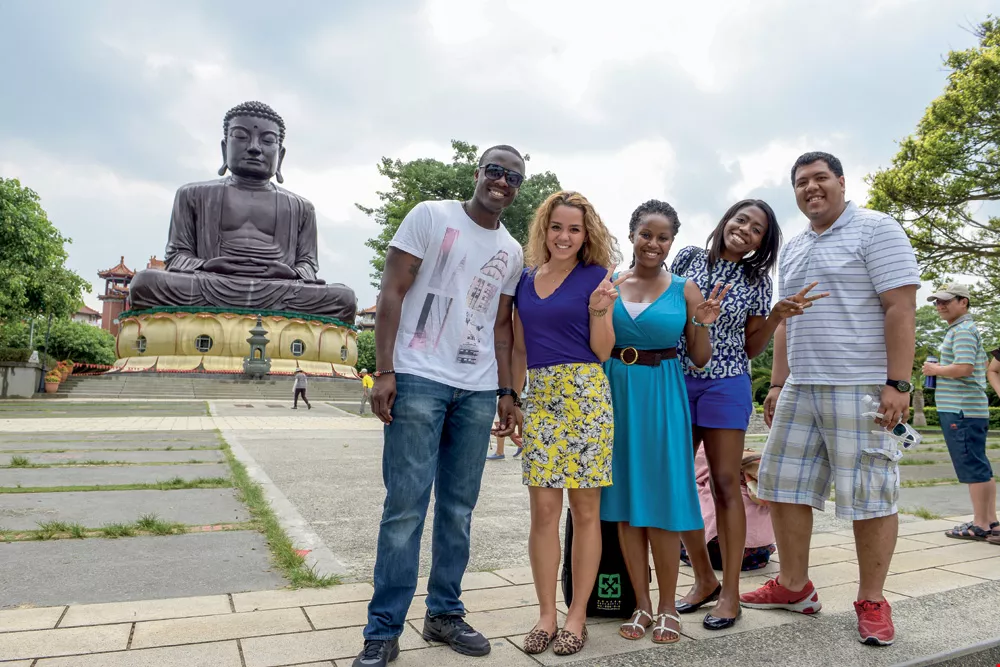
The host families organized day trips for their “children” around Taichung and Changhua, including visits to Changhua’s famous Big Buddha.
“I’m really rethinking my plan for the future,” says Brittney Jimerson, currently studying for a doctorate in engineering at North Carolina Agricultural and Technical State University. With a five-day tour of the east coast just complete, Jimerson and the other fellows are back in Taipei, taking a cruise along the “Blue Highway” of the Danshui River. Jimerson remarks that the sunset reminds her of Yilan, where she met architect Huang Shengyuan, who had walked away from a high-paying job overseas to return to his home town and give something back. She is also reminded of meeting Taipei YouBike advocate and chair of the Cycling Life-Style Foundation, Vicky Yang, who talked about how “profit isn’t the goal.”
“I’ve heard a lot of big talk before, but there aren’t many who actually follow through,” says Mwangi, a former legislative aide at the Maryland General Assembly. What impressed her most, she says, was the volunteer work of the Tzu Chi Foundation. She had never seen such selfless work to help those both at home and abroad, and it reignited in her a passion that the “real world” had been snuffing out.
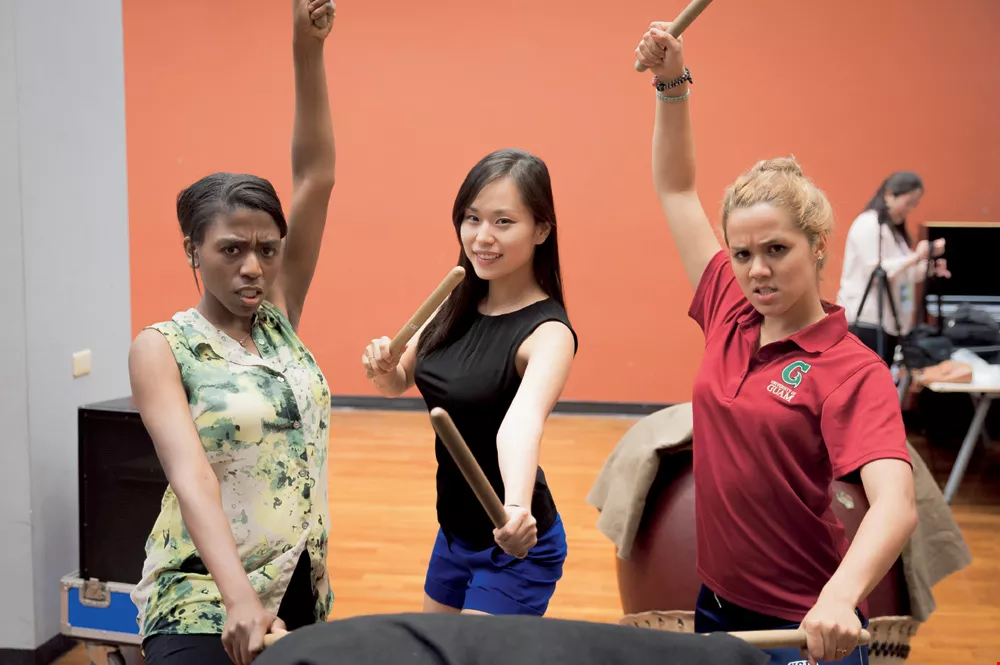
From rural villages to Aboriginal communities to big cities, from the intellectual arts to the martial arts, the Mosaic fellows experienced the best of Taiwan and took away wonderful memories.
The friendliness of the people of Taiwan has been an eye-opener for the Mosaic fellows, and for Mwangi, no moment was more so than stepping into her host family’s home for the first time and being overwhelmed with food as a welcome.
Lychees, guavas, all kinds of seasonal Taiwanese fruit were on offer. Breakfast has been no less overwhelming, with Mwangi’s host mother cooking eggs and congee, and then going to a nearby breakfast shop to buy some dumplings and soymilk “just in case.” The near-constant feast has been wonderful, Mwangi says, but also makes her want to scream “stop feeding me already!” at times.
Mwangi’s host father, Wang Lu Pei, has hosted several foreign students before, and so this time he was prepared with an itinerary covering central Taiwan’s sights, hoping to give his “foster daughter” an enjoyable stay.
Visiting the Changhua Big Buddha and Wuqi Harbor, as well as the Gaomei Wetlands, the new family bonded and created great memories. While visiting the “Highway Garden” in Changhua’s Tianwei Township, Mwangi spotted the type of roses her father loves so much, and so to help ease that burst of homesickness, Wang laid on a lavish seafood dinner for her, knowing she comes from Baltimore, a city famous for its seafood.
While they may have only known each other for two short days, leaving is still difficult. Mwangi hugs the Wangs tightly, promising to visit “Mom” and “Dad” again next year.
“Our door is always open,” replies Wang.
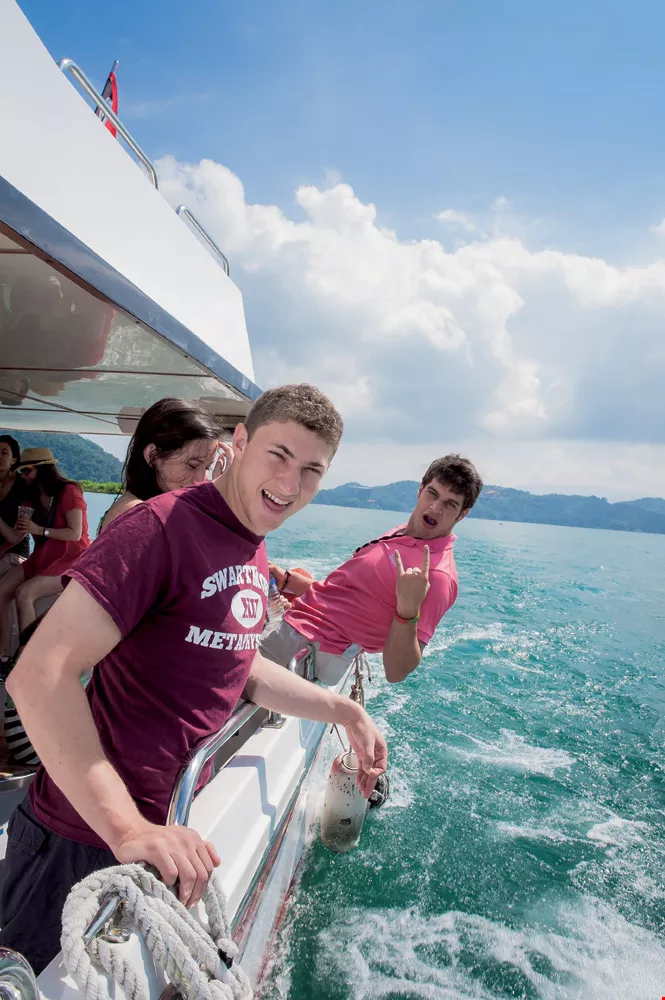
From rural villages to Aboriginal communities to big cities, from the intellectual arts to the martial arts, the Mosaic fellows experienced the best of Taiwan and took away wonderful memories.
And Taiwanese people’s enthusiasm is evident not just in the host families, but also in the interactions between the fellows and young Taiwanese.
“Education is the duty of each generation,” remarks Liu Anting, Princeton graduate and currently head of the NGO Teach for Taiwan. Liu, too, left behind the chance of a promising career abroad to return to Taiwan and set up an NGO to “bring change back to Taiwan and help Taiwan’s children live a little more happily.”
Liu recruits and trains teachers for remote rural areas, helping to foster leaders among disadvantaged children. Her stories touched many of the fellows, and particularly Jasmine Asuncion, a fellow educator of children and an aspiring UNICEF goodwill ambassador. The two shared stories of the challenges of NGO work, and talked about the possibility of working together in the future.
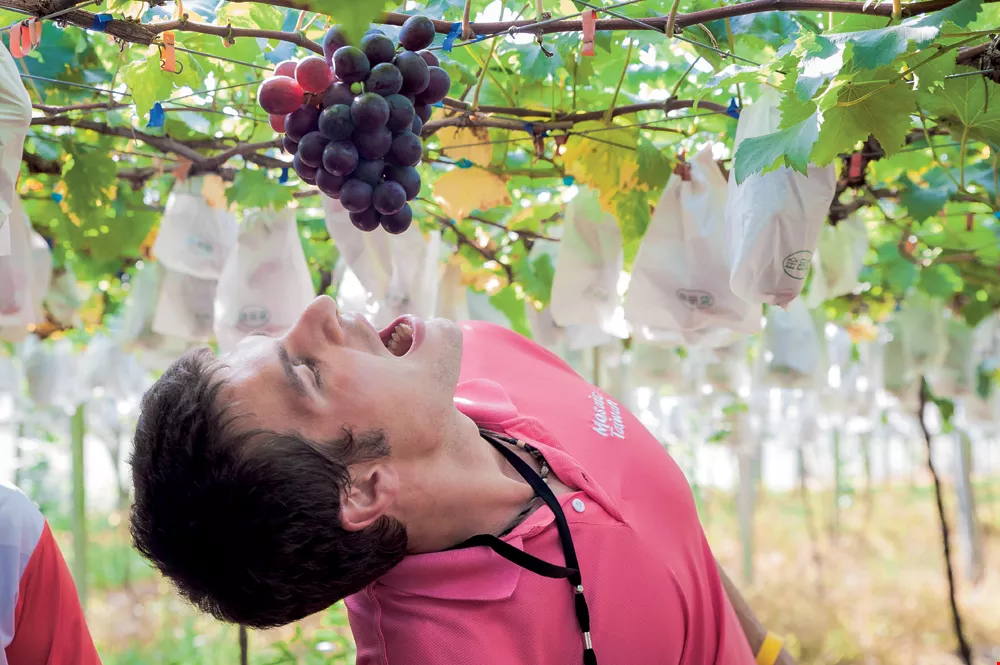
From rural villages to Aboriginal communities to big cities, from the intellectual arts to the martial arts, the Mosaic fellows experienced the best of Taiwan and took away wonderful memories.
Such transnational cooperation can involve all kinds of political and commercial considerations, and so mutual trust is key.
Sam Sussman, soon to start graduate study in international relations at Oxford, believes that Taiwan and the US share common values, like commitment to democracy, liberty, and human rights, as well as both being home to a variety of ethnicities, religions, and languages. Thanks to this, it’s relatively easy for the two sides to come to a mutual understanding and become trustworthy partners in commerce, politics, or international relations.
“We really should deepen our cooperation with Taiwan,” says Daniel Hsieh, a student of law at Seattle University and a summer extern at the Washington State Attorney General’s Office; “It would really have a lot of benefits for the US.” After talking with several Taiwanese professors, Hsieh considers Taiwan a leader in Asia in terms of intellectual property protection. American companies, he continues, should look to Taiwan as a base for R&D and manufacturing, and thus as a foot in the door of the Asian market.
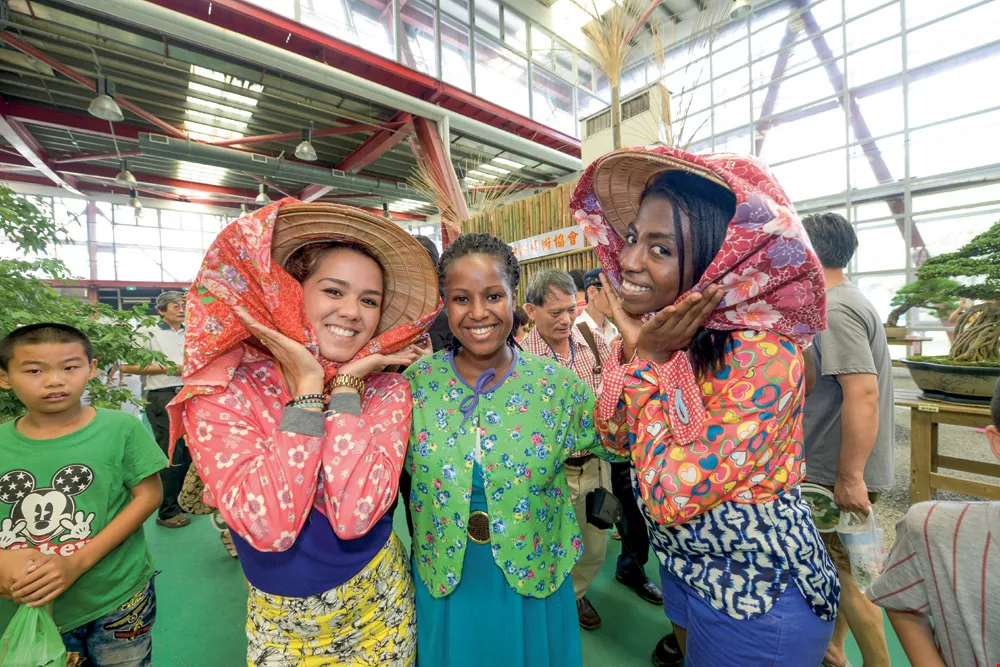
From rural villages to Aboriginal communities to big cities, from the intellectual arts to the martial arts, the Mosaic fellows experienced the best of Taiwan and took away wonderful memories.
The Mosaic fellows are also very interested in the cross-strait situation. Zachary Feldman is an executive assistant at the Maryland Office of the Secretary of State and a China studies major who spent a year traveling in mainland China. Before coming to Taiwan he thought it would be much the same as the mainland, but now he has found that Taiwanese are much friendlier and more open to other cultures. “Some people don’t know a whole lot of English, but they’ll still really try their best to talk with you,” Feldman says. Now he can say with conviction that Taiwan and mainland China are totally different.
Samuel Galler, a doctoral student of international development at Oxford with a particular focus on civil society in mainland China, remarks that the biggest point of difference between the two sides is freedom. Taiwanese enjoy freedom of speech, assembly and religion, and that gives Taiwanese society a vibrant energy that mainland China, where groups are tightly controlled by the government, lacks.
Galler, who speaks Mandarin, also discovered that while mainland China and Taiwan may ostensibly share a common language, there are many words that are different. The word tudou, for example, means “peanut” in Taiwan, but “potato” on the mainland. What Taiwanese people refer to as a biandang, Chinese call hefan—a boxed lunch. Behind all of these differences are differences in culture and history that make Taiwan well worth visiting first hand.
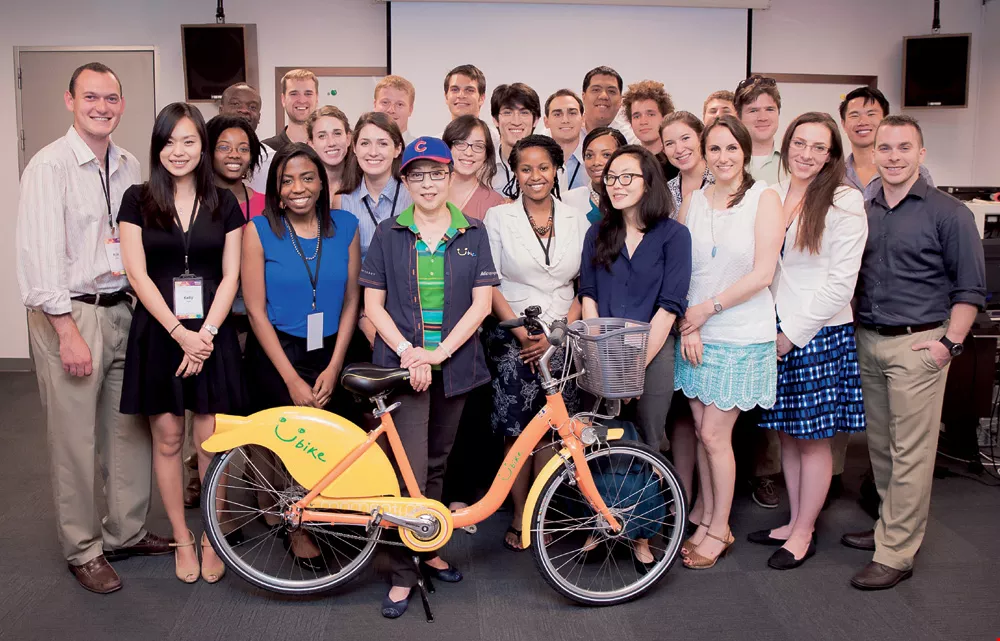
From rural villages to Aboriginal communities to big cities, from the intellectual arts to the martial arts, the Mosaic fellows experienced the best of Taiwan and took away wonderful memories.
The fellows also kept their personal Facebook timelines up to date with their adventures, posting photos of Taiwan’s sights and rapidly stacking up Likes.
“My friends keep asking where I am,” says Hilda Mwangi. Over the course of her visit, she was able to teach her friends about Taiwan through the Internet. Her mother's friend would get Taiwan confused with Thailand and worry her daughter would get caught up in the turmoil. “At least now she can find Taiwan on a map, and she knows it’s not Thailand and not mainland China.”
For the wrap-up presentation on July 4, Matthew Nolan, a student of Sino-American relations at Arizona State University, put together a video imagining himself as a congressman in 2026 and casting the deciding vote on a bill that would greatly impact cross-strait relations. Suddenly he is flooded with memories of his Mosaic Taiwan experience, and he decides to stand with Taiwan. The video was met with thunderous applause, and was a powerful expression of what many of the fellows were feeling.
Some of the fellows are looking forward to more specialized trips like this, whether for the legal profession, agriculture, or the cultural and creative industries. Even more of them are already planning a return trip next year.
Reading about a place in a book or seeing it on TV is no match for being there and experiencing it for yourself. Through their three-week stay, these Mosaic Taiwan fellows have already built a bridge between the two sides of the Pacific, a link that will stand the test of time.

From rural villages to Aboriginal communities to big cities, from the intellectual arts to the martial arts, the Mosaic fellows experienced the best of Taiwan and took away wonderful memories.