

When it comes to business opportunities in the Muslim world, Taiwan is making its presence felt. Taiwan has been actively courting Muslim tourists by creating a hospitable environment and finding new ways to welcome Muslim visitors, and Taiwanese enterprises have long since established export routes to Muslim markets. For example, over four decades ago Herdsman Enterprises began marketing beauty products in Southeast Asia. Their much-coveted pearl creams have already been sold in such numbers that if stacked vertically they would exceed the height of 1000 Taipei 101 skyscrapers.
Statistics indicate that the global Muslim population exceeds 1.6 billion, accounting for about a quarter of the world’s population, and that by 2050 it will approach 2.8 billion. According to the latest estimate from the Global Islamic Economic Report (GIER), Muslim-related economic output is expected to reach US$3.5 trillion by 2020, supported by rapid population growth, a growing middle class, higher levels of education and higher disposable incomes.
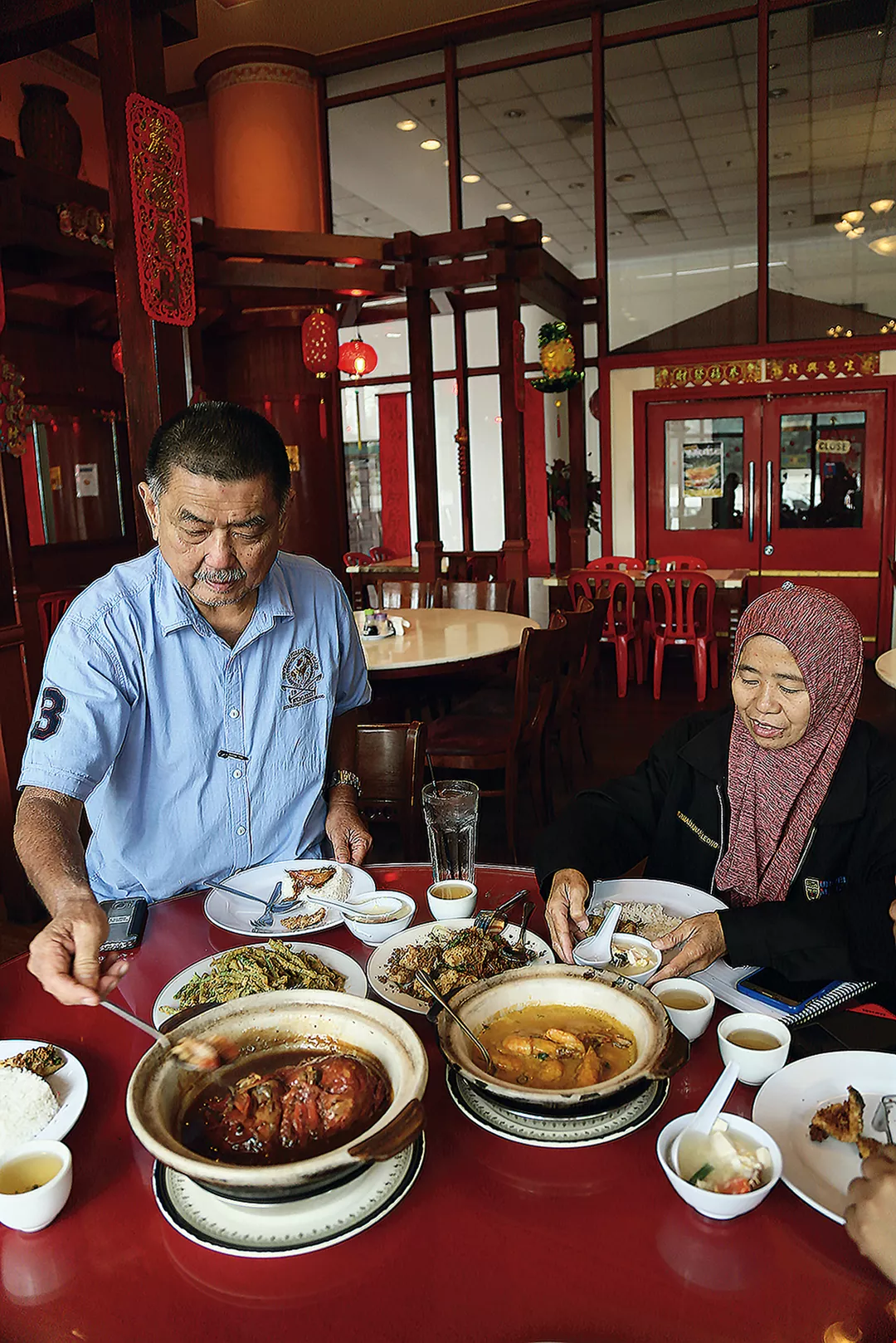
Islam requires adherence to a strict dietary code. Aside from banning pork and the blood of animals, meat must be prepared in accordance with religious guidelines.
Catering to Muslim tastes
Islamic law determines the patterns of daily life for Muslims. According to the Quran pork is unclean, and certain other foods are proscribed from the daily diet of believers, such as the blood of animals, animals not slaughtered in the name of Allah, and alcohol.
In the past Muslims largely consumed foods originating in the vicinity of their homes. In today’s globalized world of speedier transportation, however, food preservation techniques have improved and processed foods are ubiquitous. As a result halal certification was adopted to avoid consumers inadvertently transgressing Islamic dietary restrictions. Various countries, seeing favorable business opportunities, have been vying to make inroads into the enormous halal market.
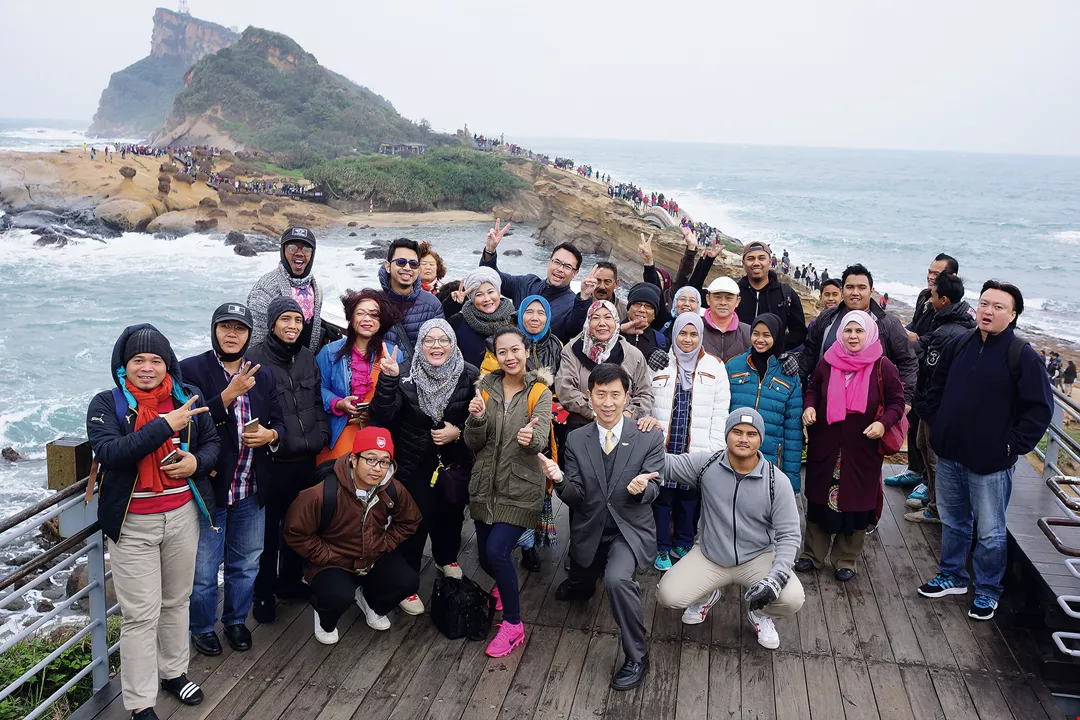
Tony Wu (center, wearing a suit) leads a Malaysian media group on a tour of Taiwan. (courtesy of Tony Wu)
A Muslim-friendly environment
“Taiwan has been investing in Muslim tourism for less than five years,” says Eric Lin, director of the International Affairs Division of the ROC Tourism Bureau. Seeing the potential for growth, the Tourism Bureau has been promoting a Muslim-friendly tourism environment. Taiwan’s 13 national parks led the way by providing prayer rooms and installing hand showers in toilets. Islamic prayer rooms have since been installed at important transportation hubs, including Taoyuan International Airport, Taipei Railway Station, the Taichung High Speed Rail Station, and the freeway rest stop at Qingshui in Taichung.
Creating a Muslim-friendly environment relies heavily on the cooperation of the private sector. The Tourism Bureau thus held information sessions and arranged subsidies to stir interest among service enterprises. But because Taiwan is not a Muslim country, many businesspeople believe that halal certification is difficult to obtain.
In order to dispel this notion, the Tourism Bureau and the Chinese Muslim Association are cooperating in securing halal certification and the designation “Muslim Friendly Restaurant” for restaurant operators. The first is reserved for restaurants run by Muslims, and the second is for those run by non-Muslims, but the criteria are the same. They are granted only after a thorough inspection proves that a restaurant meets certain specifications on food origin, methods of preparation, specific utensils, and segregated preparation areas, and accords with the proscription against displaying portraits.
Up to 2011 only 15 restaurants had obtained certification. But today Muslim-friendly restaurants number more than 100. Taiwan’s food culture has expanded into the world of halal cooking, from the five-star Silks Palace at the National Palace Museum and one of the restaurants at Taipei’s Grand Hotel to less-expensive neighborhood restaurants like Huang’s Halal Beef Noodles or the Kunming Islamic Restaurant, and the trend is still picking up steam.
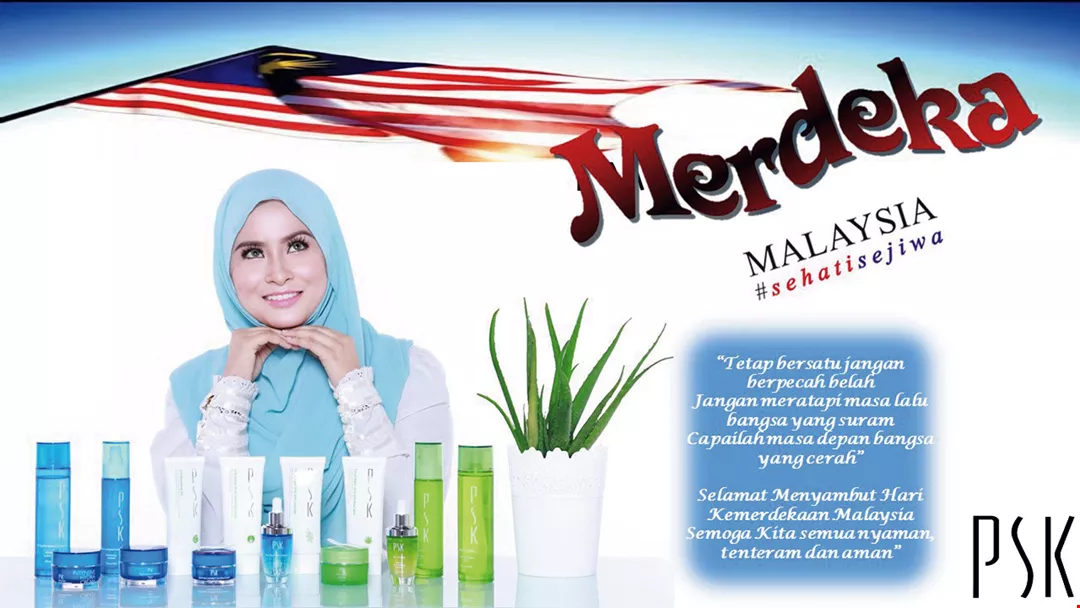
Herdsman Enterprises has been using Malay models and the Malay language in its advertising campaigns to gain the confidence of Malay consumers. (courtesy of Herdsman Enterprises)
Hospitality with heart
Aside from creating a Muslim-friendly environment, it is essential for Taiwan to capitalize on its reputation for hospitality. Tony Wu, director of the Kuala Lumpur Office of the Taiwan Visitors Association, is brimming with ideas on just how to introduce Taiwan to Muslim visitors. In 2013, for example, Wu arranged for 20 Muslim orphans from impoverished families to visit Taiwan. Wu says he got the idea from the Quran, which calls on Muslims to look after widows and orphans. He hoped to use the experience to build a positive impression of Taiwan’s willingness to look after the disadvantaged. It was a successful example of national diplomacy, and the children were later interviewed by Malaysia’s TV9, marking the first time that Taiwan’s tourism efforts were broadcast to a predominantly Muslim audience.
In 2016 Wu visited Abdullah Mahmud, a Malaysian religious leader, and learned that Muslim tourists were particularly interested in nature and herbal products and placed great emphasis on family life. This made him realize that Taiwan could market current tourism trends such as leisure farms, theme parks, and hands-on activities.
Wu also organized a press tour of Taiwan to promote the island’s tourism efforts to the Malaysian media. Among those taking part were the Malaysian celebrity Maria and the famous radio host Raifa. During their tour Maria, who is followed by more than 700,000 fans on Instagram, shared video clips of her experiences sampling Taiwanese delicacies, soaking in a hot spring and visiting the National Palace Museum, using the power of social media to promote Taiwan as a fun destination.
Wu is overflowing with good ideas. “On recent trips to Eastern Malaysia, I discovered that people there shared many similarities with Taiwan’s Aborigines, quite possibly because they are both Austronesian peoples. Taiwan’s Aboriginal culture could be another appealing aspect for us to highlight in our efforts to encourage tourist visits from Malaysia,” he says with enthusiasm.
In the past five years, Malaysian tourist visits to Taiwan increased by more than 50%, from 300,000 in 2011 to 470,000 in 2016.
In the 2015 MasterCard‡CrescentRating Global Muslim Travel Index, Taiwan ranked tenth among non-member countries of the Organization for Islamic Cooperation in terms of meeting the needs of Muslim travelers, and in 2016 the island jumped three places to number seven. “Next year we will move even higher up the rankings,” Wu says with confidence.
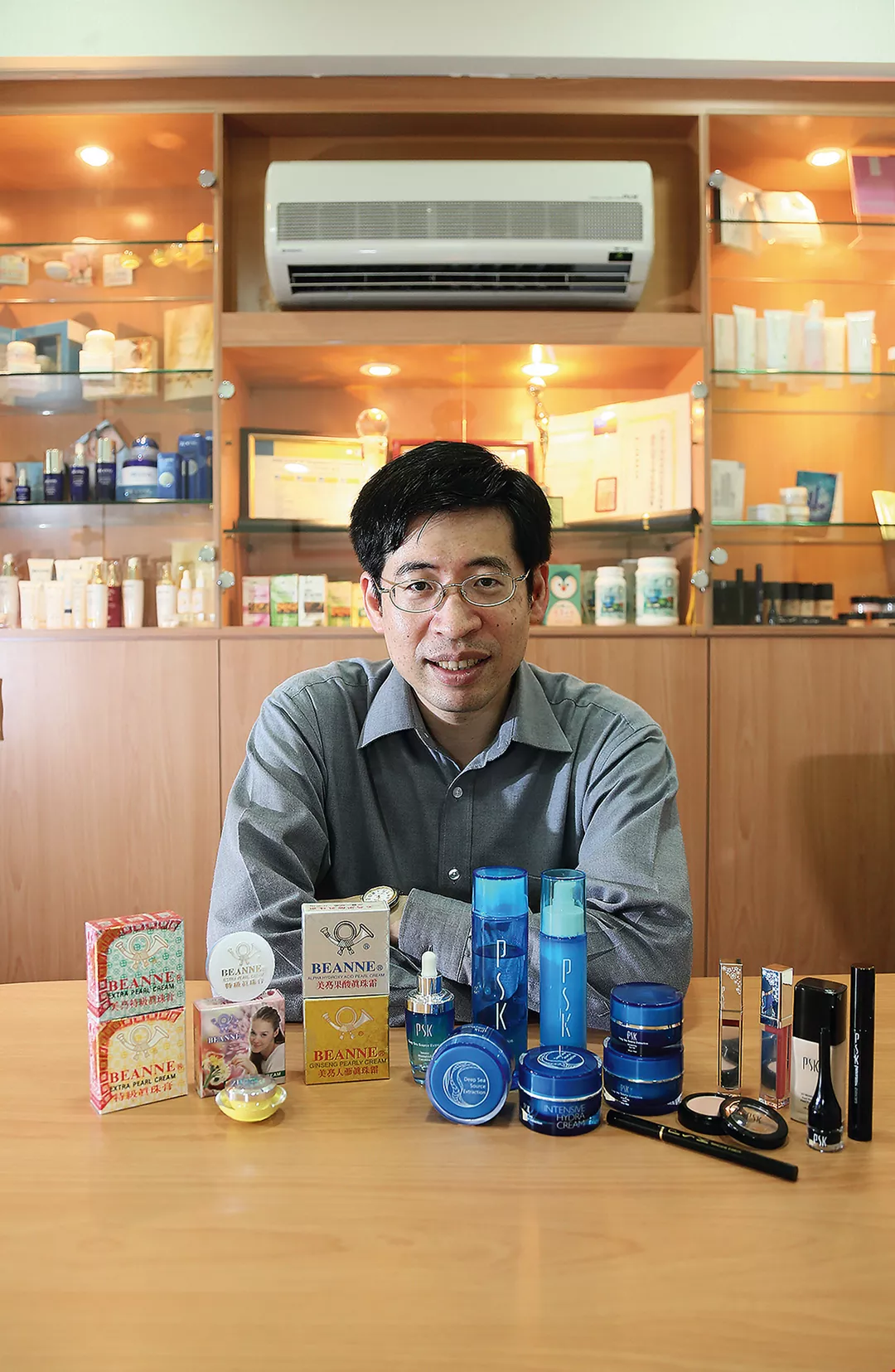
The products of Herdsman Enterprises are sold in more than 30 countries worldwide. Caleb Tang believes that localization is the key to success in the global marketplace.
Learning to sell locally
Selling Taiwanese merchandise into Muslim markets requires similar diligence. Herdsman Enterprises began cultivating the Southeast-Asian market as early as 1974. Second-generation executive Caleb Tang describes his family background: his parents both came from Malaysia to study in Taiwan. They liked it so much that after graduation they decided to settle down and go into the export business.
The name for Herdsman Enterprises’ BEANNE cosmetic line comes from the Malay word for wife and is intended to represent a husband’s devotion to his wife. Their most famous product is a pearl cream nicknamed “Grandma’s BB cream.” Used both as a skin whitener and as a foundation, it has been a leading brand in Southeast Asia for more than four decades.
Herdsman Enterprises’ products are sold in more than 30 countries around the word. It is one of the few Taiwanese brands sold in Middle-Eastern markets, including Saudi Arabia, Kuwait, and Dubai, where Herdsman’s years of cultivating local markets has found some success. Caleb Tang believes that the key to approaching different customers and different markets is localization. In Malaysia, for example, Herdsman has focused its marketing efforts on Malays, who make up 60% of the population. Working with a local agent that has been marketing cosmetics for more than two decades, it has established a distribution channel to sell its products through local shops, which are the direct contact points with customers. The company has also been using Malay models and the Malay language in its advertising campaigns to help local consumers more easily identify with their products.
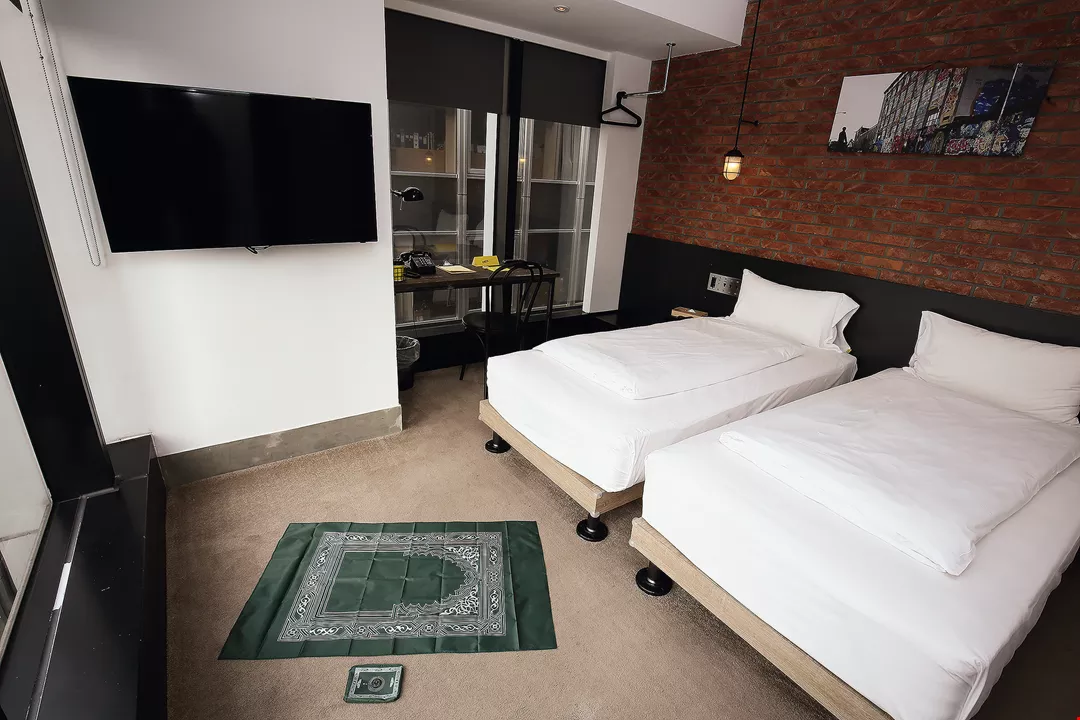
Taiwan has been working hard to create a Muslim-friendly environment. Pictured here is a Muslim-friendly guestroom at Taipei’s Check Inn, which features an arrow pointing toward Mecca, a prayer rug, and a hand shower in the bathroom.
The pros and cons of halal certification
Since entering the Malaysian market in 1974, Herdsman Enterprises has accumulated 40 years of experience. “At present halal certification in Malaysia is a marketing issue, not a legal issue,” observes Caleb Tang.
Malaysia is the sole member of the Association of Southeast Asian Nations that proclaims Islam as its official religion, and it lists the development of Islamic enterprises among its key industrial priorities. The Department of Islamic Development Malaysia (abbreviated to JAKIM in Malay) is a government-led initiative that issues halal certification, which carries considerable weight in the Islamic world. Yet there is still a lack of international consensus on halal certification standards.
Applying for halal certification is highly beneficial for businesses, but complying with JAKIM’s halal production standards can be costly, requiring not only that the raw materials meet halal requirements but also that the entire production line is used only for halal products.
The Taiwan Halal Integrity Development Association was established in 2011 to provide halal certification, and is recognized by the official certification agencies in Malaysia, Indonesia, and Singapore. Tasha Hsiao, director of the Taiwan Trade Center, Kuala Lumpur, notes that after obtaining halal certification some companies simply put the halal logo on their products but do not design packaging with the Malay consumer in mind, thus alienating customers.
Caleb Tang says it is quite possible that one day certification will become a regulatory issue. So at present the most important strategy is to try to gain a foothold in the market. If further legal restrictions are imposed in the future, businesses with considerable market share will find it easier to navigate the regulatory process. For example, Herdsman Enterprises was already well established the Middle-Eastern markets when Saudi Arabia introduced a requirement for all imported products to be certified by the Saudi Arabian Standards Organization. To protect its position in the local market, Herdsman naturally applied for the necessary certification.
Taiwan has already made comprehensive preparations for doing business with Muslim countries, from creating a welcoming environment to adapting to different tastes. It is optimistic and ready to go!
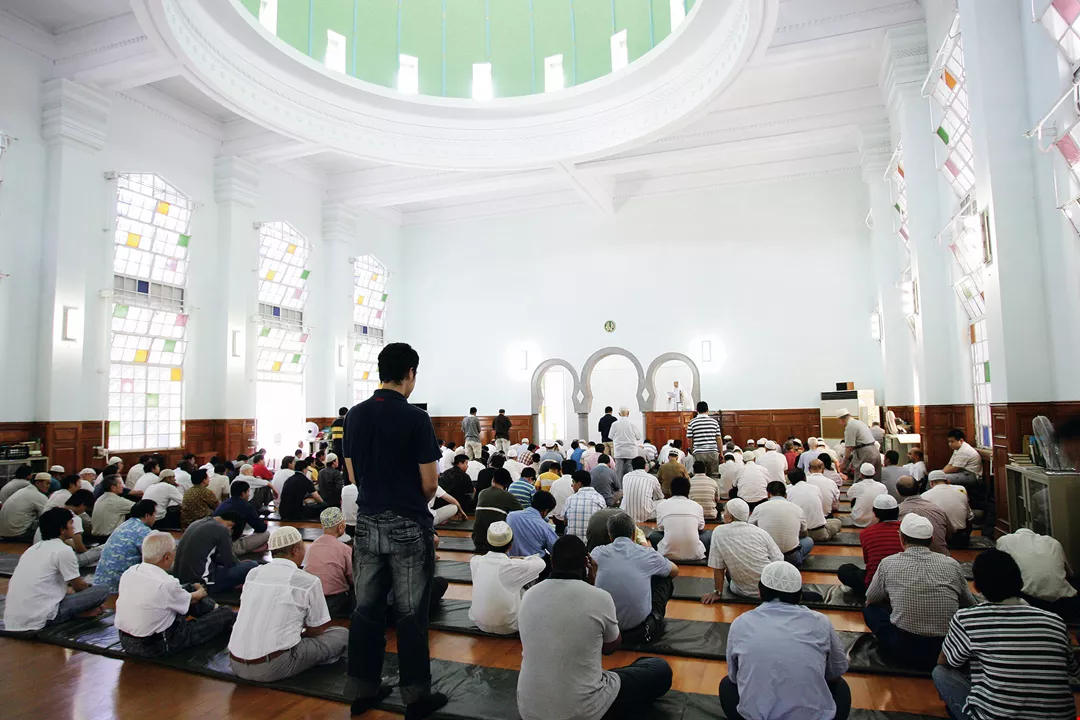
Taiwan’s own long-established Muslim population lives mainly in Taipei, Taoyuan, Taichung and Kaohsiung. Pictured here are worshipers praying at the Taipei Grand Mosque.


