No Free Lunch? The Faces of Social Welfare
Chang Chung-fang / photos Hsueh Chi-kuang / tr. by Phil Newell
December 1993
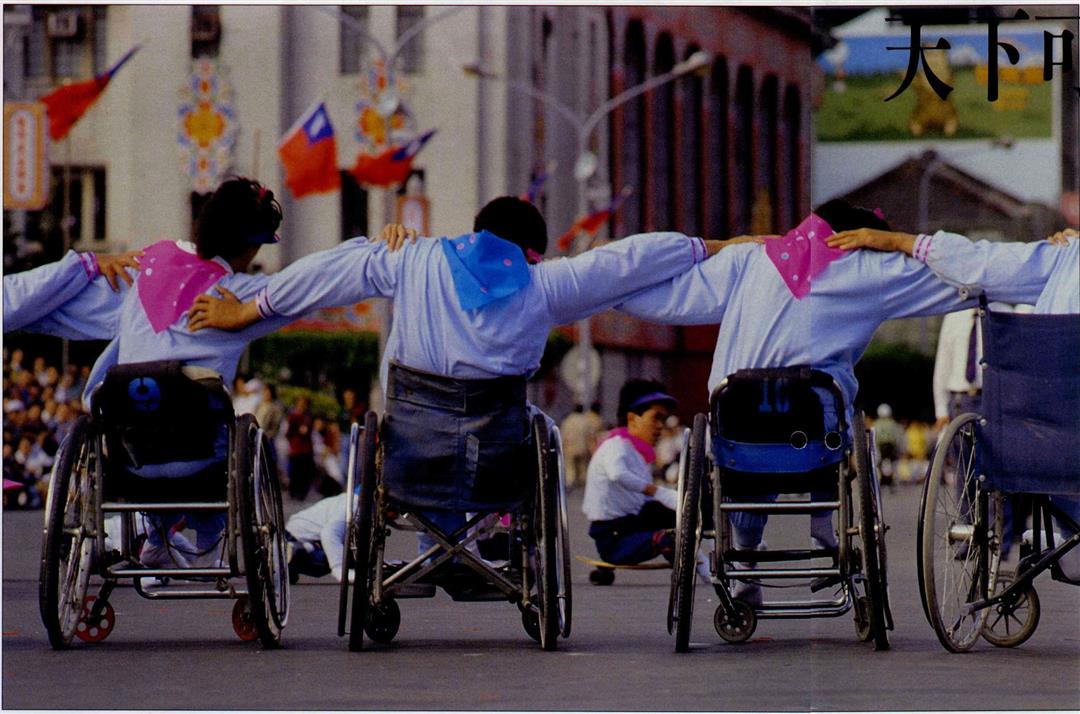
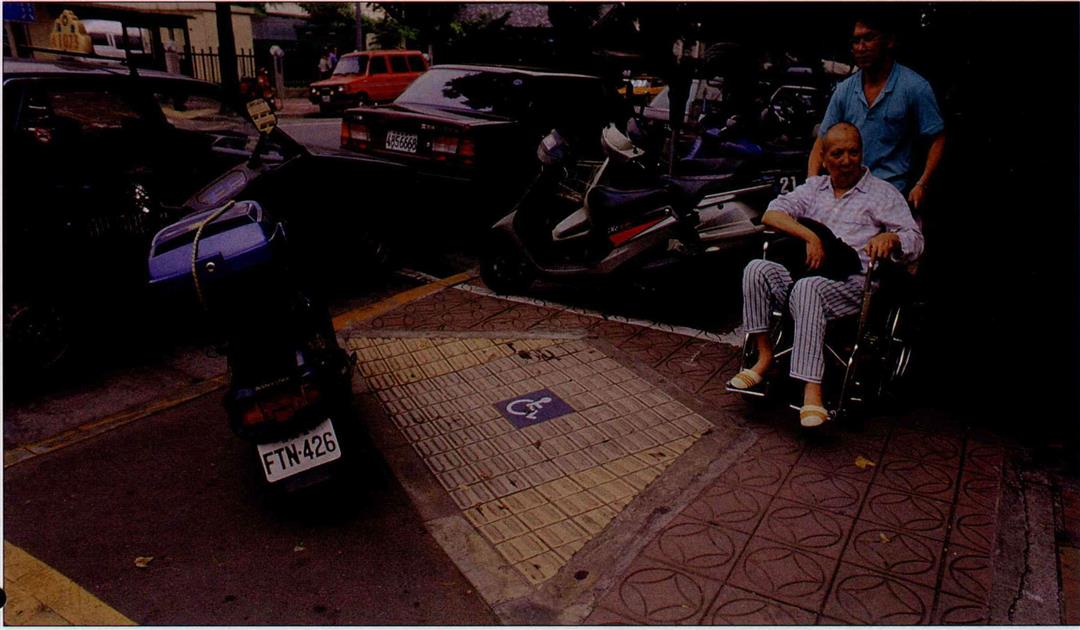
With a sound social welfare system, the handicapped would not have so many worries. (photo by Diago Chiu)
Recently "social welfare" has been a much debated topic. It is not only a required part of the political platform of every candidate in the election, it is even more important as a device by which the major political parties struggle for voter identification.
From national health insurance to basic and earnings-related state pensions for the elderly, the social welfare pie is growing ever larger. Scholars have differing views on the subject, and the average man in the street is increasingly confused. So what, then, are the advantages and disadvantages of social welfare? Will the social welfare pie taste sweet? Or spoiled?
Birth, aging, sickness, death. These have always been personal concerns. But today many nations implement social welfare policies to guarantee a basic quality of life for their citizens "from cradle to grave."
With industrial development and intensified competition, people have grown more insecure about their futures. With periodic economic downturns and various other factors, people have begun to understand that the reasons for poverty cannot be laid entirely at the door of the individual, society also has some responsibility.
Consequently governments have adopted social welfare policies. These employ insurance, subsidies, and services to guarantee that citizens can avoid destitution and to allow all people to enjoy guarantees of at least a basic quality of life.

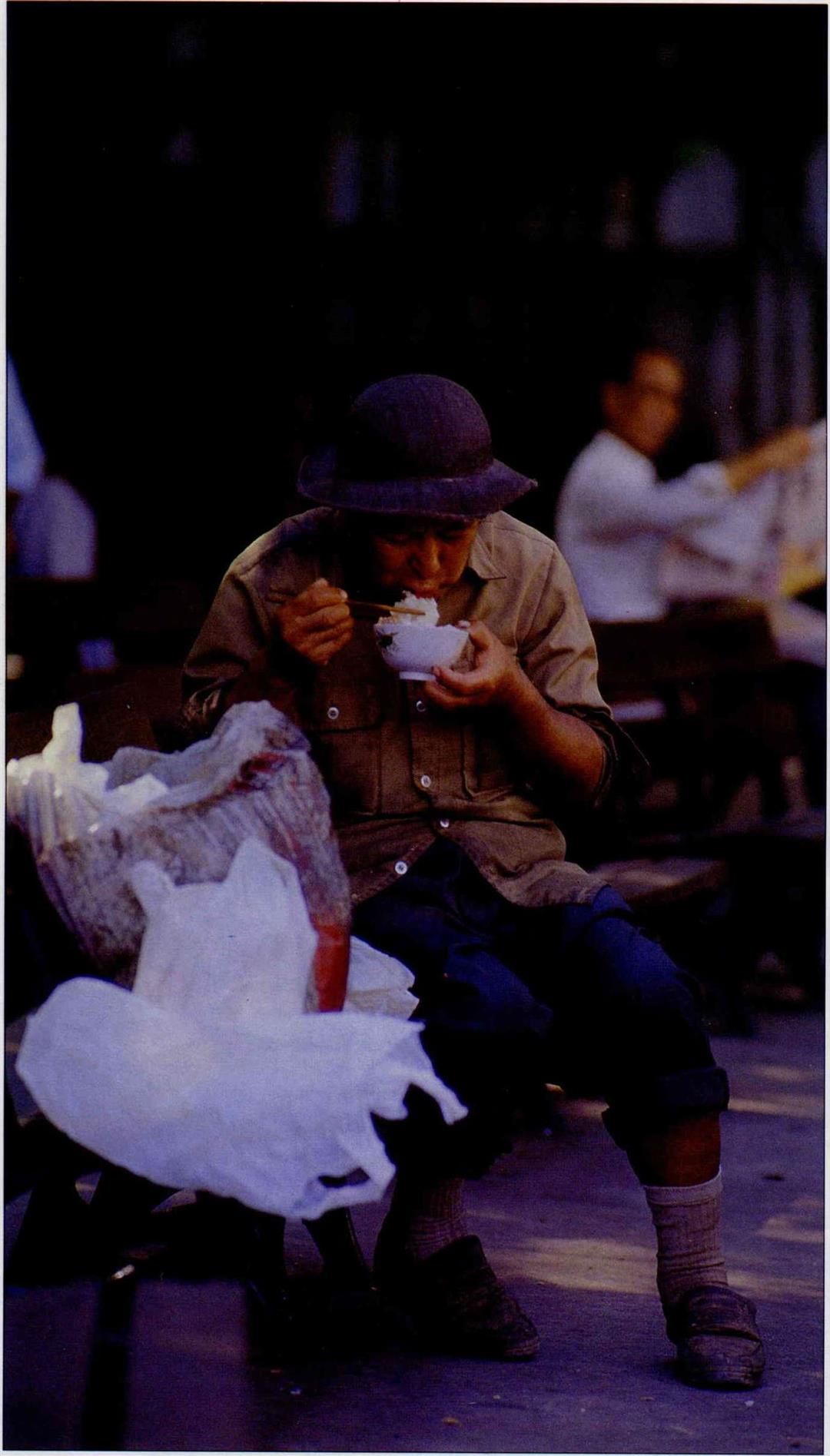
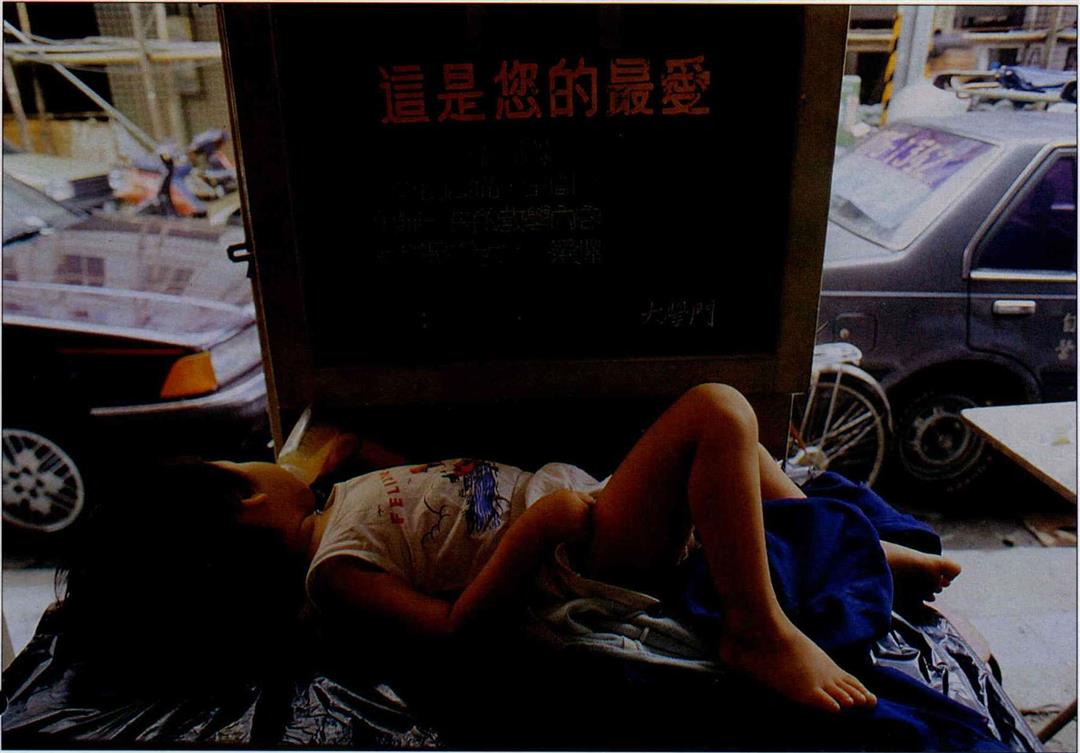
Is it an individual problem if the number of street people is large? Or is it a problem of inadequate care from society?
A political choice:
Most people wrongly assume that social welfare simply refers to subsidies. In fact that's not the case. Social welfare includes three major types: social security (insurance), social assistance, and social services. Of these, social insurance is the most important item. Lin Wan-yi, an associate professor in the Graduate Institute of Sociology at National Taiwan University, states that social insurance is the underpinning of the entire society. If it is done properly, it can reduce the costs of social assistance. So-called social insurance is a method for spreading and sharing risk. Low-risk persons with the capability to pay provide income assistance to high-risk people with a low capability to pay. Costs are ordinarily divided among the individual, employers, and the government. Major social programs which are soon to be implemented in Taiwan (namely national health insurance) or are being actively discussed (namely old-age pensions) all fall within the range of social insurance.
Although the original intentions are good, what is the actual effect of social welfare in terms of the positive and negative impact on society? As usual, there is no definitive answer.
Free-market economists argue that everything should be determined by the "market function." The government should not interfere in the market. In an ideal society of perfect competition, everyone would be able to sustain themselves without government assistance. If someone is poor because they are lazy, the individual must be held responsible.
Neo-classical scholars argue that there are in fact flaws in the market economy. A laissez-faire policy will create a society in which the strong crush the weak. The government thus should employ social welfare to compensate for defects in the market, to achieve a redistribution of wealth, and to increase the overall effectiveness of the whole society.
Although there are differing views, thus far most countries in the world have headed down the path of social welfare. Some of the advanced countries have been at it for over 100 years.
In an international survey done in 1977-78, the percentage of young people in various nations who responded that the thing about their country of which they were most proud was its "social welfare" was 60% in Sweden, 45% in the UK, and 30% in West Germany. It is apparent that social welfare has widespread support among citizens.

While calls for "social welfare" fill the air, it is also necessary to build up the "civic culture" of concern for others; or else the best laid plans will be wasted.
Background to social welfare:
The various social welfare systems around the world are not identical in all respects, and their backgrounds and the timing of their development have also varied.
Taking the UK, for example, the pain and suffering of the Second World War altered the polarized class ideology of the pre-war period, leading to the development of a welfare system aimed at total coverage for the whole population.
The United States, where capitalist ideology is deeply rooted, began a welfare system in the 1930s at the height of the worldwide Great Depression. At that time, when people were jumping out of Wall Street office buildings like raindrops, President Roosevelt moved to cope with the economic crisis with the "Social Security Act" of 1935.
Social welfare began late in Taiwan, but it has by no means been completely ignored. Social assitance (like disaster relief, or help for the handicapped) and social services (like educational and recreational activities), while not fully adequate, have been continually undertaken.
As for social insurance, labor insurance was initiated in 1950, followed by insurance for civil servants in 1958, and farmers' insurance in 1989. All are links in the social insurance chain. Already more than one-half the population enjoys health insurance. However, except for the one million or so military, civil service, and teaching professionals who have retirement funds, other payments are still in the discussion stage.

After the implementation of national health insurance, children, long seen as a "high-risk group," will no longer be "unwelcome clients" for health care.
The "elderly nation" of the future:
Many people wonder--has our national income reached the level necessary to support social welfare?
In fact, whether or not to implement social welfare is a policy decision, and is not related to the level of national income. Lin Wan-yi contends that a social welfare policy is a "political choice," and not an "economic choice." The benefits and costs are very difficult to assess, and there is no definitive standard by which to do so. This is because it is a link in public policy, and affects the interests of a huge number of people, leading to competition between organized interests of people. As a result, different interest groups have different views of social welfare.
Chen Kuan-cheng, a researcher at the Institute of Social Sciences at Academia Sinica, suggests that the only requirement is that people need something and are willing to invest the money to guarantee their own security; then the government will have no reason to put off or fail to implement the policy. Chen believes that GNP should not be the standard to determine whether or not to adopt a social welfare policy. Many countries began to promote wide ranging social welfare programs when their GNP was only a few hundred dollars.
When discussing the importance of social welfare to a society, it seems that two places to begin are demographic structure and family function.
According to estimates of the Council for Economic Planning and Development of the Executive Yuan, by 1994, 7.1% of the population will be aged 65 years or older. At that time, Taiwan will officially enter the ranks of "elderly nations" as defined by the United Nations. But when various countries implemented their "senior citizens' fund," their elderly population was only 1-2% of the total.
Chen Kuan-cheng points out that the elderly today ordinarily have many children, and it is usually no problem for the combined resources of the offspring to support the parents in their golden years. But in the future, elderly people will only have had one or two children, so that the burden will be heavier. Right now, the number of elderly in Taiwan it equal to ten percent of the number of working-age adults. According to estimates, by the year 2025 this figure will increase to 25%.

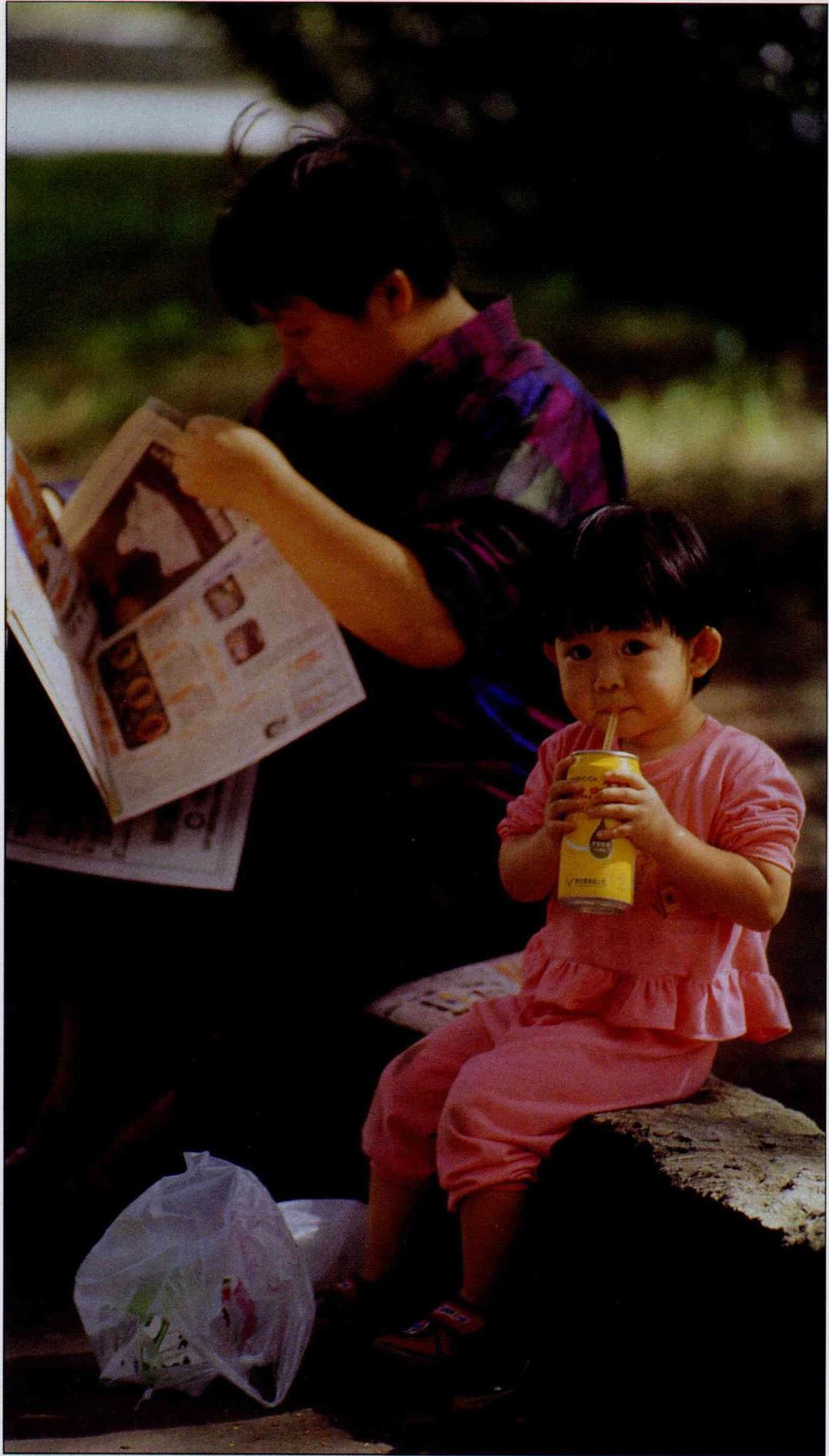
Who should take responsibility if children are not adequately cared for? (photo by Diago Chiu)
The decline of the family:
Besides changes in the population structure, the functions of the family are also declining.
Chen Kuan-cheng indicates that the only effective retirement system currently in Taiwan is the family system. "Although many in Europe and America feel that our family system is something to be admired and copied, it is not very reliable to depend entirely on the family system in the future," notes Lin Wan-yi. The number of people in a household is on the decline; at present there are only 4.1 persons per household. Of these, the elderly and minors require support and care. Meanwhile, the rate at which women are economically productive is ever-higher, with 44.8% of women currently in the work force. It is evident that there are fewer and fewer people left at home to care for those who need it. When it is also considered that the number of single-parent households is increasing (because of divorce, separation, or widowhood), it is clear that the functions of the family are waning.
In fact, the ability of families to support the elderly is already declining. In a survey done in 1981, 63% of the elderly depended on their families for support; today that figure has fallen to 50%.

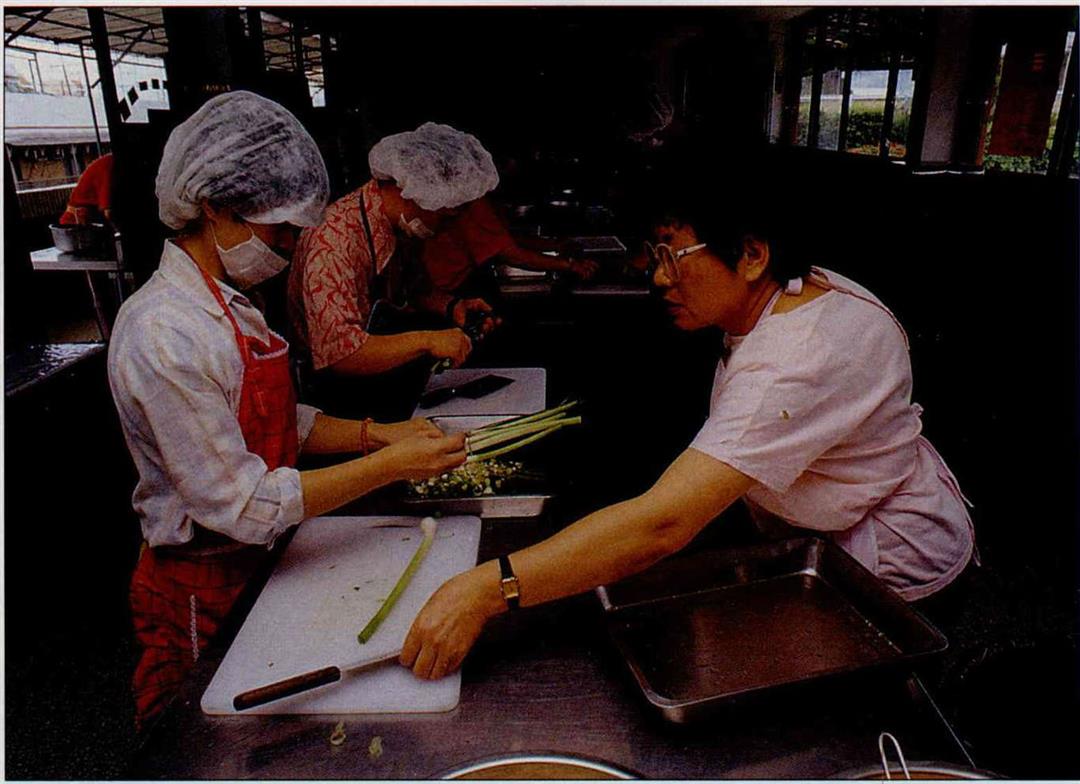
Besides government social insurance, social welfare also requires more participation by private groups, The photo shows mentally handicapped children making box lunches at the First Children's Development Center.(photo by Diago Chiu)
The myths of social welfare:
Most people are familiar with, and indeed accept with little question, the problems allegedly created by social welfare; budget deficits, moral decay, laziness, obstruction to economic growth . . . But what are the facts?
Lin Wan-yi says that the budget deficits in Europe and America are not entirely created by social welfare; furthermore, no country has yet gone bankrupt because of social welfare. "This is entirely a problem of management efficiency," he points out. Currently social welfare is still in the "research and discussion" stage in Taiwan, yet there is already an annual deficit of more than NT$30 billion (about US$1.2 billion).
In fact, the main factor behind the fact that revenues cannot keep up with social security outlays is that there are fewer and fewer taxpayers.
Chen Kuan-cheng explains that the typical European and American social security system is an intergenerational transfer of benefits, which is to say that the living expenses of the current elderly are paid by the current young and middle aged. When the current young become the seniors, the next generation will pay the bills. But in the last couple of generations in which this system has operated, the youth population has been declining, so that the burden is correspondingly greater, and tax revenues are not enough to meet outlays. Thus, deficits are created.

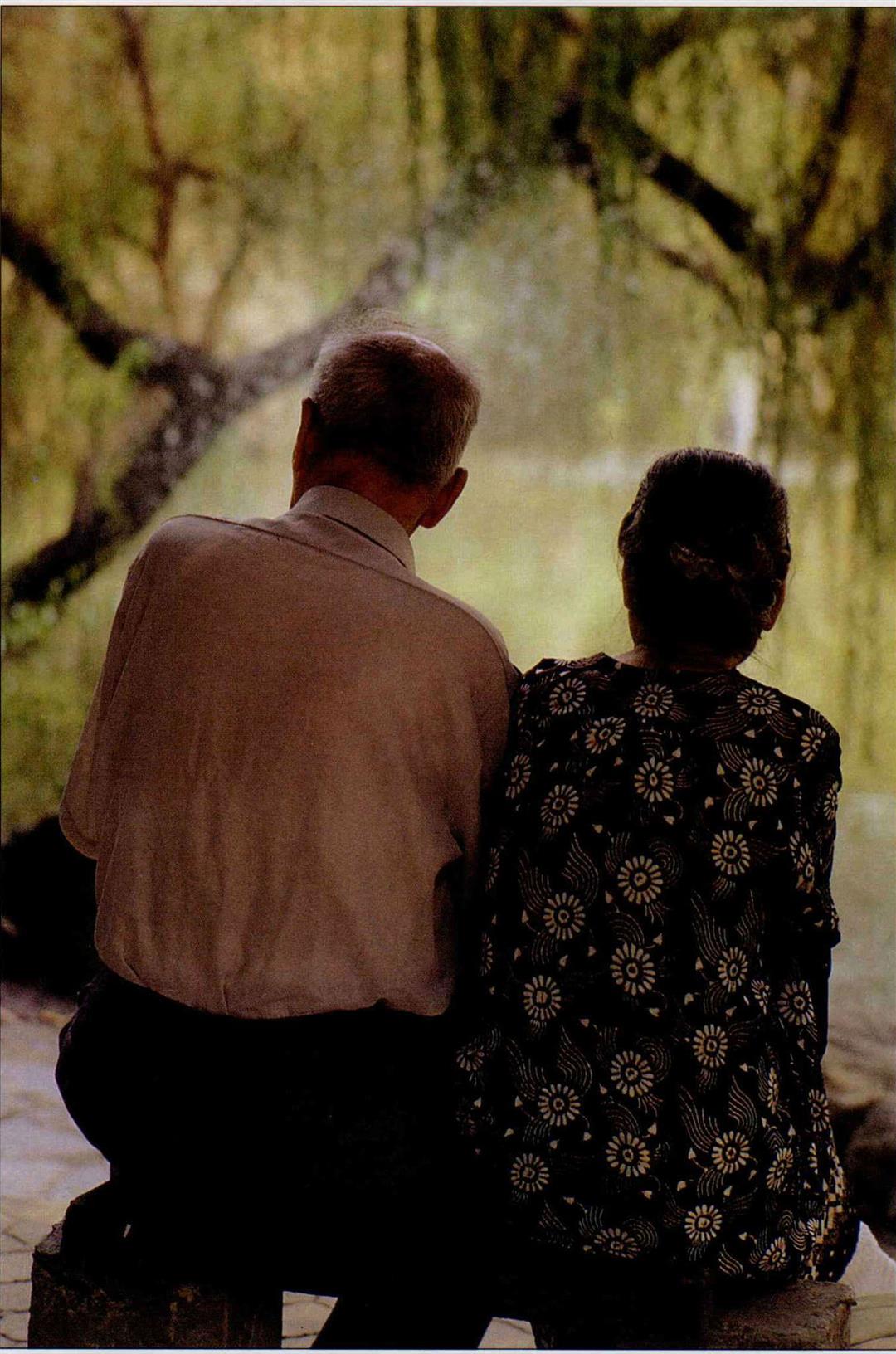
It is estimated that next year the percentage of persons aged 65 or over in Taiwan will be 7.1%.
Does good social welfare make lazy people?
Social insurance, and especially unemployment insurance, is the most criticized aspect of the social welfare system, because it affects willingness to work. Not only does it lower the willingness of high income earners to work, even the desire of low income earners to work declines.
Wu Hui-lin, a researcher at the Chunghua Institution for Economic Research, feels that this is just human nature. "People by nature like things easy, and find labor abhorrent. Once they have a chance for a free lunch, who's going to pass it up?"
Chan Huo-sheng, a professor in the Department of Sociology at National Taiwan University, opines that "a good social welfare system should be one that does not encourage laziness, and one that does not turn idleness into dependency." This problem must be carefully considered in designing policy.
Research suggests that laziness will only be encouraged in a situation where the work ethic is weak and the level of guarantees in social welfare is high. According to this logic, if methods are found to strengthen the work ethic, and the level of social services only provides a minimum quality of life, then laziness will not be the result.
A fiscal crisis?
Because Taiwan already has a budget deficit, with revenues running behind outlays, where will the resources for social welfare come from? Will the fiscal burden be worsened? Could it lead to fiscal collapse?
Today, expenditures on social welfare account for 16% of all government spending, which is quite low compared to the 30-50% in other industrialized nations. Moreover, the deficit is by no means caused by social outlays. Thus, some contend that consideration should begin with the basic financial structure.
In terms of revenues, Lin Wan-yi believes that the current taxation system relies too much on direct taxation (deducting taxes from income), and too little on indirect levies (such as on property and inheritance). This greatly decreases the sources of tax revenue. Among direct taxes, it is the taxes on employees that are hardest to evade, so that most taxes are paid by the middle and lower classes. As a result it would be both unfair and very difficult to increase taxes there.
Cheng Wen-hui, a professor in the Graduate Institute of Social Welfare at National Chung Cheng University, adds that at present Taiwan has tapped into few tax sources, and with legal tax exemptions (for example, for teachers, or to encourage investment) and illegal tax evasion, tax revenues are extremely low, leading to inequities in taxation.
There are also many debatable aspects in terms of the distribution of expenditures. At present 25% of the national budget goes for defense and the military; 20% goes toward economic development; routine government administrative costs account for 10%; 15% is applied to education . . . . The remaining few percent is up for grabs among public health, agriculture, social welfare, religious, and other interests, naturally leading to the "squeezing out" effect.
Does it really not matter if nothing is done?
Perhaps implementing social welfare will have its down side, but if it is not adopted, our society could pay a considerable price. If social resources are poorly distributed, this could contribute to many social problems. Chan Huo-sheng argues that Taiwan has focussed too heavily on economic development over the past 20-30 years, while relations between people have deteriorated and social problems have multiplied, to that people feel a strong sense of insecurity.
Naturally, insecurity does not derive entirely from economic factors. Political instability or other factors can also generate insecurity. But taking the United States, which has great political stability, as an example, the excessive gap between rich and poor is one of the elements contributing to insecurity there. Compared to European nations, the United States devotes less to social welfare, while the amount required for crime prevention and medicine is comparatively larger.
Some scholars note that it costs money to implement social welfare, and it costs money to maintain social order, but many countries choose the preventative (the former) rather than choose the curative (the latter), because the latter has less chance of success.
Cheng Wen-hui notes that in fact our society already implements, in an invisible way, "income redistribution." He indicates that the excessive accumulation of foreign reserves has led to an excess of floating capital and rampant money games and speculation; land prices have skyrocketed and stocks have soared upward, so that the gap in income between rich and poor has become more pronounced. Polarization between the haves and the have-nots is increasingly acute, If this keeps up, not only will it erode the fruits of economic growth, it will severely warp the work ethic among young people.
Investing in people:
You can see from this that the development of "people" is critical. "For a country to be strong, it relies not on powerful weapons, but on high quality people," says Lin Wan-yi. Tp raise the quality of human capital, besides education and technology, raising the level of culture and guaranteeing social security are very important.
Chen Kuan-cheng relates the two major positive conditions for Taiwan as it plans a social welfare policy. The first is that the root problems underlying the fiscal crises in European and American nations have already been found, and we can avoid repeating the same mistakes. The second is that Taiwan has quite complete census data.
Chen points out that no more than ten other nations in the world have a compulsory housing registration system like that in Taiwan. "Since we already have the population data, we can get a handle on the future trends in the population structure."
Yet, we are also lacking a great deal of basic, objective data. For example, how many senior citizens actually will need medical care? How many elderly will require nursing home care? Chan Huosheng suggests that the most urgent task at the moment is not to draft legislation, but to do basic research.
A crisis of confidence?
How to appropriately draw up an efficient social welfare system that is suitable for local society is a major challenge. But there it yet another question about which people cannot feel at ease: Can it be implemented effectively? The goal of a social welfare policy is to reduce the gap between rich and poor and to reduce the occurrence of social problems, not to take more money and more manpower just to create more waste. The large deficits run up since the initiation of labor insurance and farmers' insurance give cause for concern.
Wu Hui-lin states his worries quite forthrightly: "Government agencies are corrupt and inefficient. If money is turned over to the government for this purpose, not only will it be employed inefficiently, ordinary people will have no way to oversee the process. So that's not as good an idea as allowing the people to save their own money and handle matters themselves."
Although the topic of social welfare has been talked up in the course of the election, leading to a cacophony of voices each with his or her own views, this has also been an excellent educational opportunity. It has allowed us to once again get to know what social welfare is all about, and to consider which path to take.
No free lunch:
The first thing that people must get straight is that, though social welfare may not be an impossible road to travel, it is not a panacea that will solve all problems. People must not have excessively high expectations of a social welfare system. Secondly, people must have an understanding of the relationship between their rights and their responsibilities. For example, it will probably be necessary to raise taxes. Tan Huo-sheng stresses: "Social welfare is not a 'free lunch.' It's not even an inexpensive lunch."
What deserves the attention of the government is that those scholars who advocate social welfare and the free-marketeers who oppose it have one thing in common: they both oppose a "hasty" or "crude" social welfare policy.
[Picture Caption]
p.104
With a sound social welfare system, the handicapped would not have so many worries. (photo by Diago Chiu)
p.106
Is it an individual problem if the number of street people is large? Or is it a problem of inadequate care from society?
p.107
While calls for "social welfare" fill the air, it is also necessary to build up the "civic culture" of concern for others; or else the best laid plans will be wasted.
p.108
After the implementation of national health insurance, children, long seen as a "high-risk group," will no longer be "unwelcome clients" for health care.
p.109
Who should take responsibility if children are not adequately cared for? (photo by Diago Chiu)
p.110
Besides government social insurance, social welfare also requires more participation by private groups, The photo shows mentally handicapped children making box lunches at the First Children's Development Center.(photo by Diago Chiu)
p.111
It is estimated that next year the percentage of persons aged 65 or over in Taiwan will be 7.1%.
p.112
Child care has always been a big problem for working women. This problem could be eased or even resolved in a comprehensive social welfare system. (Sinorama file photo)