Taiwanese creativity and inventiveness are again reshaping the world’s image of our island.
Taiwan’s representatives at the 2012 International Exhibition of Inventions in Geneva, Switzerland, turned in a fantastic performance with their green-oriented inventions. Now that our knowledge businesses are receiving accolades for their “brain power,” their next challenge is to turn those inventions into to cash by commercializing their patents.
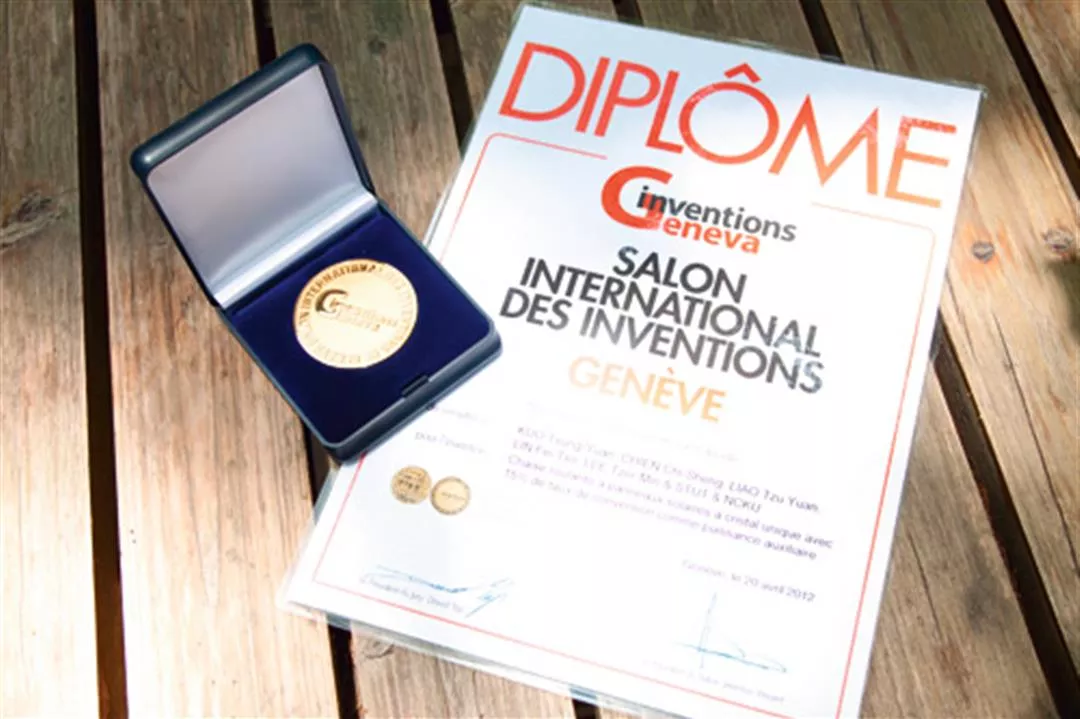
Taiwanese inventors raked in 45 gold medals, 52 silver medals, 25 bronze medals, and eight special prizes at April 2012’s 40th annual International Exhibition of Inventions of Geneva, their gold medal and total prize numbers ranking them number one in the world for a third consecutive year.
Chen Tsung-tai, executive director of the Taiwan Invention Association, says that two factors explain the increasing numbers of Taiwanese taking part in the exhibition and their impressive results: government incentive mechanisms like the Small Business Innovation Research (SBIR) program, and the ability of our inventions to address the new global interest in reducing energy usage and carbon emissions. For example, three of the eight special prizes won by Taiwan this year involved some form of energy conservation.

Chai Yen-hsin, a professor of electrical engineering with Taipei Chengshih University of Science and Technology, has developed an energy-saving light that consumes 20% less power than a typical light. Ceiling fans with lights incorporating the now-licensed technology are expected to sell for two to three times as much as traditional ceiling fans.
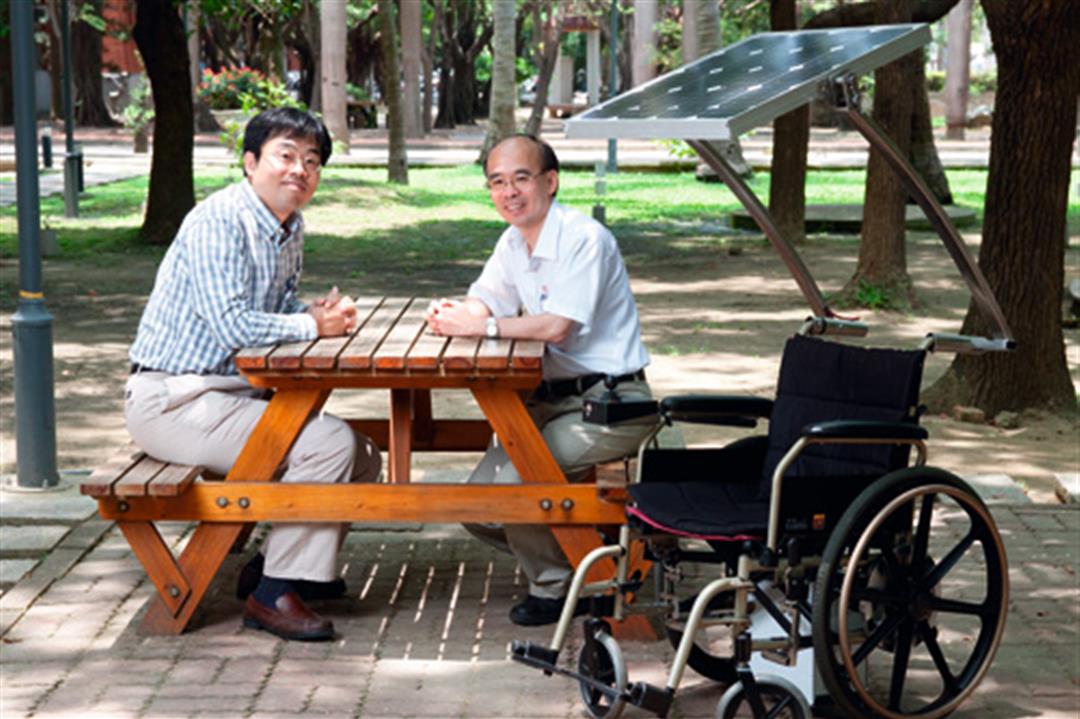
Take the solar-power-assisted wheelchair jointly developed by the College of Engineering at Southern Taiwan University of Science and Technology (STUST), the Medical College of National Cheng Kung University (NCKU), and Chi Mei Medical Center, which utilizes a solar panel to increase its range.
The invention, which had won two gold medals at the 2011 Invention and New Product Exposition in Pittsburgh, Pennsylvania, earned another gold medal at the 2012 Geneva exhibition.
Wheelchairs currently come in two basic varieties—manual and electrically powered—each of which has advantages and disadvantages. The former can be folded up for storage or transport in the trunk of a car, but can injure shoulders and elbows with long-term use. Electrically powered wheelchairs are much easier to use, but that can be a problem in itself by contributing to inactivity and to a decline in cardiopulmonary function. Electrically powered wheelchairs are also hard to store and may run out of power during extended use.
Kuo Tsung-yuan, the dean of STUST’s College of Engineering, began developing wheelchairs a decade ago when a PhD student in biomedical engineering came to him seeking his mechanical expertise. Over the years, Kuo has striven to make wheelchairs better meet the needs of users, testing, tweaking and retesting his designs continuously to that end. More recently, he began working with Chi Mei and the NCKU medical school, drawing on the clinical experience of their medical personnel to further improve his designs.
He claims that his solar-assisted wheelchairs offer two major advantages over more traditional models. First, they incorporate a lever that lets the user switch between manual and electrical power. This allows users to get a workout in manual mode, helping to maintain their cardiopulmonary function, while also permitting them to engage the electrical motor when tired. In addition, the batteries and solar panel can be removed. This enables the wheelchair to be folded and placed into the trunk of a car, making it easier for seniors and the disabled to go on longer journeys.
The second unique feature is the solar panel itself, which delivers extra power to the batteries and extends the chair’s range.
“A typical electric wheelchair has a range of about seven kilometers,” says Kuo. “The solar-power-assisted model can travel 10–12 km, an improvement of more than 30%.” He adds that the solar panel can track the sun, keeping it optimally positioned to increase charging efficiency. The panel also provides users with protection from the sun and rain.
Prior to designing the solar-assisted wheelchair, Kuo had worked on voice-controlled wheelchairs. But Lee Tzer-min, a vice dean with NCKU’s medical school, pointed out to him that a wheelchair-bound patient suffering a heart attack or stroke would be unable to control the wheelchair, possibly worsening the crisis.
“Safety has to be the top consideration in medical equipment design,” says Lee. “Functionality is secondary.”

Chai Yen-hsin, a professor of electrical engineering with Taipei Chengshih University of Science and Technology, has developed an energy-saving light that consumes 20% less power than a typical light. Ceiling fans with lights incorporating the now-licensed technology are expected to sell for two to three times as much as traditional ceiling fans.
The solar-assisted wheelchair may provide handicapped individuals with another transportation option, but its inventors still have obstacles to overcome if they are to commercialize it.
Generally speaking, it’s easier to set up technology transfers for inventions that perform well at international expos, and gold medal winners certainly command a higher price. And the further along an invention is in the commercialization process, the more likely it is to win an award.
But because Taiwanese colleges and universities lack access to production and sales channels, they need the support of experienced businesses to commercialize their inventions.
Kuo says that while STUST is still studying technology transfers, NCKU has already established a technology transfer center that employs 21 people responsible for patent deployments and industrial cooperation.
Before Chai Yen-hsin, a professor of electrical engineering with Taipei Chengshih University of Science and Technology (TCUST), developed his energy-saving light, the school inked a NT$1.4 million cooperation agreement with Bestshine Technologies, including NT$600,000 to transfer the technology.
Chai says inventing is fun and getting patents is easy, but the process takes time, effort, and capital. If the technology can’t be licensed, it becomes in effect a liability.
When Chai accepted the position of head of research and development at TCUST four years ago, he chose to focus development efforts on practical products for everyday life. He often took his students to retailers like TLW, E-Life Mall, and Tsann Kuen, checking out products while talking about getting products to market before tacking on additional functions.
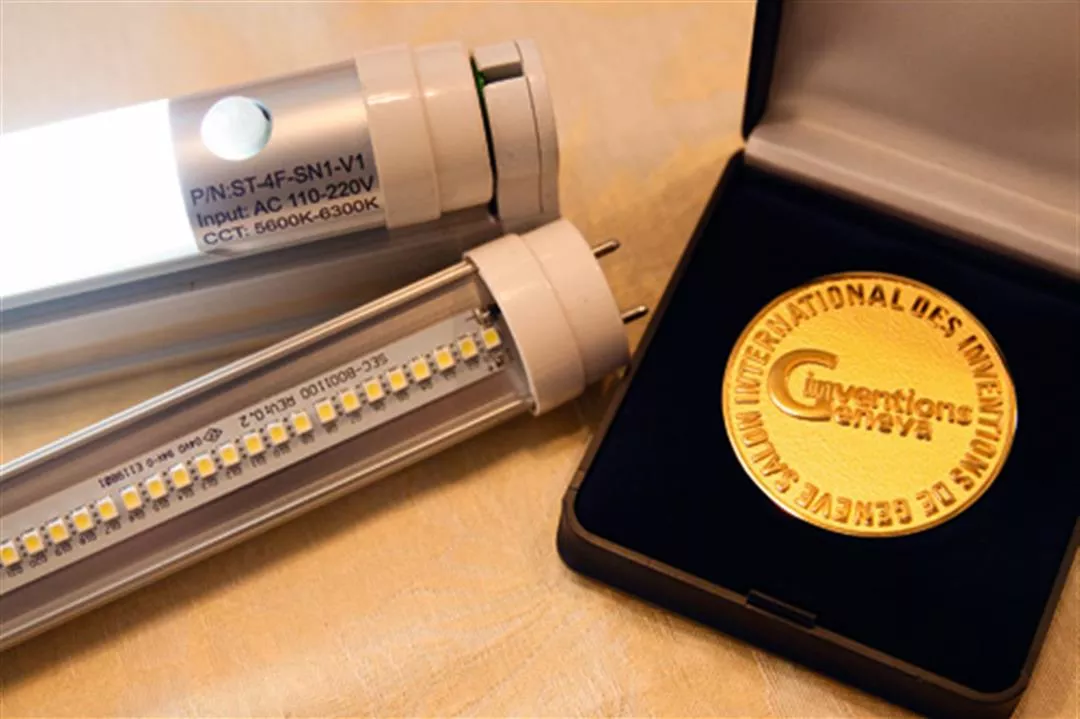
Chai’s energy-saving light, which won a special prize at Geneva, marries a sensor to an LED lamp.
The energy-saving lights currently on the market all emphasize their low energy consumption and high output. In contrast, Chai’s invention uses a sensor to turn the light on and off, and to adjust its intensity. If the sensor detects a person or vehicle moving within 1.5 to 2 meters of itself, the light comes on. If the sensor detects no one in the room, it either turns the light off or cuts it to half its maximum intensity. Such lights could well save a large retailer open 24 hours a day nearly NT$10,000 per month.
The invention has already been patented in Taiwan, the European Union, and the United States, and put into production. In fact, as of March 2012 some 4,500 had already been sold in the US. And when Chai attended May 2012’s LIGHTFAIR International expo in Las Vegas, firms were asking about the feasibility of placing annual orders for as many as 170,000 units.
He reveals that Taiwanese convenience store giant 7-Eleven has already begun installing his lights in flagship stores in central and southern Taiwan. If he can gain access to the mass market, sales will go even higher.
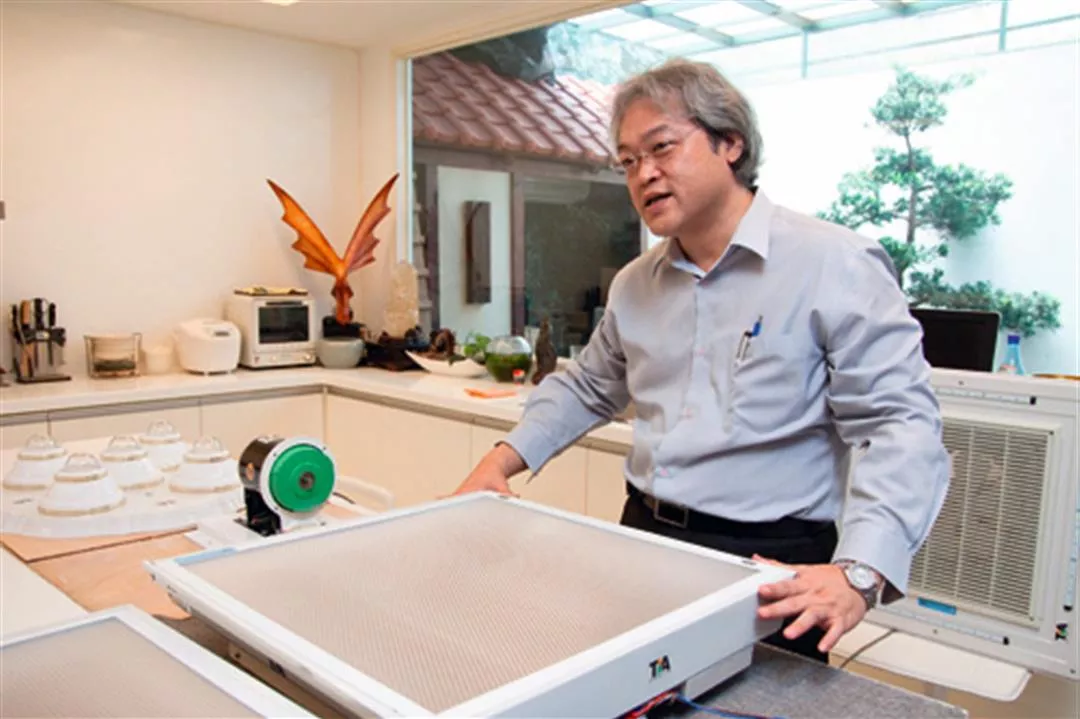
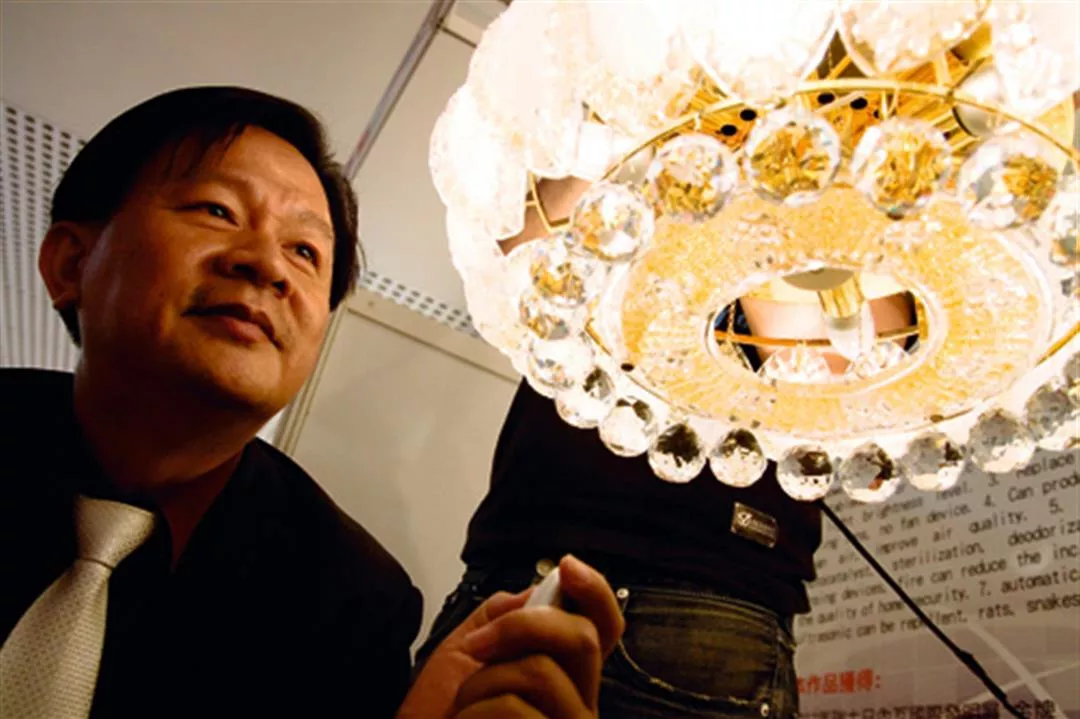
Drawing on the concept of reusing wasted energy, Kevin Lin, chairman of TIA Technology, has invented a self-powering lighting and cooling fan system that saves both money and energy.

Energy conservation has gone mainstream, but many green technologies aren’t yet mature. As we await their development, the concept of recycling everyday wasted energy holds great promise. Kevin Lin, a Berkeley PhD who also holds a degree from the New York University Institute of Fine Arts, is exploring the possibilities.
Lin had the opportunity to visit Microsoft founder Bill Gates’ home during his 1997 tenure as a visiting scholar in the US. That eye-opening experience got Lin thinking about building his own intelligent home.
Anticipating the global move towards “going green,” Lin established TIA Technology. The company produces energy-saving lights, cooling fans, and generators, and has also been conducting research into recycling waste energy. The idea isn’t about reducing energy waste, but about collecting energy that will be wasted anyway and routing it back to the machine generating it or to another device.
Lin says that lighting and ventilation systems are among the most important and resource-consuming elements in offices, factories, and apartments. At root, his idea is simple: when building or renovating, don’t waste resources attempting to develop new technologies—conserve them by using extant technologies.
For example, lighting, fans, and air-conditioning units all generate waste energy. Photovoltaic power converters—a well understood technology—can capture some of that wasted energy and reuse it. Lin used this patented technology to invent a light and fan system that generates its own power. Installing two of his light fixtures and one exhaust fan in an office allows the lights to fully power the fan, saving an average of 5–9% on the monthly electric bill.
Once the first of the power-generating lights was hooked up and turned on, it immediately began converting waste light and heat into usable power. “The energy can be used to power the light itself, or to provide electricity to other lights, devices, and emergency lighting.” Lin says that this self-powering technology not only saves money, it can be reused indefinitely, making it practically a no-brainer for offices and factories that use a lot of energy.
Lin’s invention attracted serious attention at the Geneva show from firms in Germany, the UK, Switzerland, Australia, and Japan, all of whom were very interested in its cost and potential production volume.

Kuo Tsung-yuan (right), dean of the College of Engineering at Southern Taiwan University of Science and Technology (STUST), and Lee Tzer-min, a vice dean with National Cheng Kung University’s medical school, worked together to develop a solar-assisted wheelchair. The wheelchair won a gold medal at the 2012 International Exhibition of Inventions in Geneva, Switzerland.
Product development is something of a marathon. When Lin was working on his system, one of his biggest challenges was finding a way to stabilize its power output.
There’s a good deal of variability in fluorescent tubes. The amount of power they waste varies by manufacturer, and their actual output can differ from their rated output. Lin and his development team ended up spending three or four years in testing, searching for the most appropriate parts for his lights. They ultimately settled on photopolymer plates, heat-collecting panels, and magnetically oscillating integrated circuits.
“Once you start innovating and inventing, there’s no turning back,” says Lin. “It’s addictive, and it’s unbelievably exciting and fulfilling when you succeed.” Lin says that he sold four pieces of real estate to support development on this project. He estimates that he’s invested NT$50–60 million in it so far, and will need at least another NT$70–80 million if they are to start production by the end of the year.
He says that when he saw his lights using 1–2% less energy than LEDs, he got excited and decided to sell the first property to fund his work. When the team increased the energy savings to 3–5%, he figured they were so far into the project that it would be a shame to give up.
The truth is that invention takes passion, but commercialization takes cash.
Wu Kuo-chun, chairman of the Chinese Innovation and Invention Society, says that there were 82,988 patent applications in Taiwan in 2011, 50,305 of which were granted. However, just 3% of these have been successfully turned into products, and fewer than 1% have actually made money.
He explains that the low rate of commercialization results primarily from the lack of market value of many inventions. Money problems are also an issue: the majority of Taiwan’s inventors operate independently, and lack both capital and access to groups capable of licensing their work.
Taiwan is already a frequent winner at international innovation and invention competitions. The World Economic Forum’s 2009 report on global competitiveness ranked Taiwan the sixth most innovative of 133 economic entities, and first in terms of the number of patents per 1 million population.
Taiwan’s creative flames are alight and we have already seen massive growth in the number of inventions we produce. The challenge our knowledge industries now face is how to cash in on those ideas.

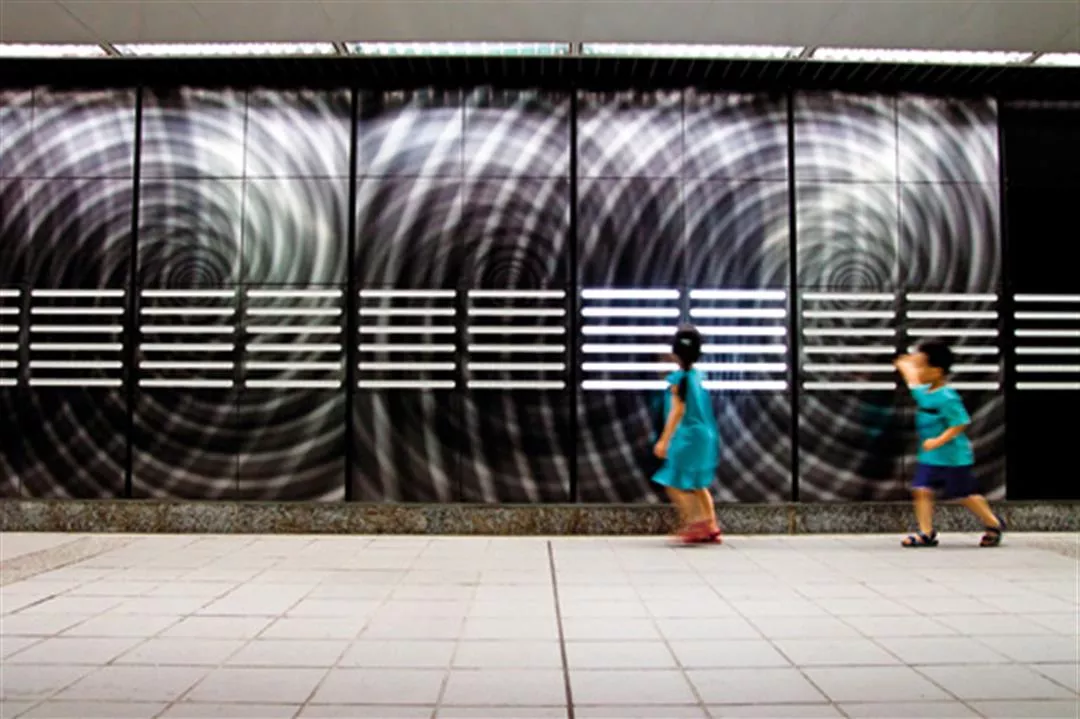
“Green” has gone global. Japanese artist Koichiro Miura’s Fast or Slow, on a wall of a passage on the Taipei Metro’s Neihu line, is an assemblage of 60 wall-mounted LED lights controlled by 30 sensors. The lights “follow” pedestrians, lighting as they approach and extinguishing as they pass, creating a modern, environmentally aware feeling.