The Costs of a Korean Olympics
Elaine Chen / photos Vincent Chang / tr. by Gerald Hatherly
September 1986


Mention the term "final countdown", and Americans will probably think of the first space launches. The Chinese, on the other hand, will immediately think about that particular year's university entrance examinations. To the citizens of South Korea, however, the final count down has come to symbolize the 1986 Asian Summer Games and 1988 Summer Olympics.
Throughout Seoul, its streets and buildings covered with a forest of signs publicizing these events, a sort of tense atmosphere prevails, one that seems to suggest that the Olympics are a test that South Korea cannot fail.
According to estimates compiled by the Seoul Olympic Organizing Committee (SLooc), the 1988 Games will attract 13,000 athletes, 7,000 journalisits, 5,000 representatives, and over 270,000 visiting tourists. In addition, satellite transmission will allow a worldwide audience of billions to focus on this small peninsular nation.
"No other advertising forum has greater impact and effect than this," says a spokesman for Nassar, a South Korean tennis equipment manufacturer, when explaining why his company is actively seeking the right to have his tennis balls carry official Olympic recognition. It also reflects the determination on the part of the South Koreans to stage this event.
In order to secure the right to stage the 1988 Summer Games, South Korea began to work diligently years in advance. One of the first tasks was to project the image of South Korea as being a sports loving nation.
To this end, South Korea has long committed itself to the promotion of athletics. Regardless of whether it was in the construction of athletic facilities, or the development of international calibre athletes, both had the strong support and direction of the government. In fact, after the liberalization of cigarette ads in 1973 all revenues were used to establish an athletics promotion fund. As a result of such activity and support South Korea has emerged as a respected sports nation. Her men's and women's basketball, archery, soccer, and distance running have all earned international recognition. But athletic prowess is definitely not enough to stage an event like the Olympics. The quality and quantity of the athletic facilities must be assessed, while the accommodation and transportation arrangements for both participating athletes and visiting tourists must also meet international standards. Finally, the technological abilities to handle satellite transmission to all parts of the globe is also crucial.
Costs, of course, are high. After careful cost evaluations, the SLOOC estimated that the event would cost an additional US$3 billion. This, for a nation with a foreign debt that exceeds US$40 billion, seems like adding financial difficulties to the difficulties. Fortunately, the Economic Planning Board took complete control of these responsibilities.
In 1980 the Seoul Olympic Commit tee presented their application to stage the 1988 Summer Games. At the same time large-scale construction of the athletic facilities was going on. The next year, the International Olympic Committee awarded the 24th Summer Olympic Games to Seoul over Nagoya, Japan. As the Deputy Secretary General of the SLOOC said with great satisfaction, it was an "unprecendented victory."
The 1988 Summer Olympics provide the South Koreans with an opportunity to stand and announce to the world that they are developed nation. A developed nation, however, must have a population that is also developed. Realizing the emphasis placed on environmental protection by developed nations, the government outlawed the sale of such exotic, but traditional, culinary favorites as dog meat and snake soup in the Seoul urban area. The government also played an active role in upgrading those service areas that have direct contact with visitors. Hotels and taxis were special areas of emphasis. Today, Seoul's cab drivers wear clean white shirts and white gloves.
The South Korean government has also planned to actively promote traditional Korean cultural activities in order to impress visiting foreigners. This promotion has taken many forms including the use of traditional music instruments, traditional military equipment, and the Pa Kua (eight-line configurations) in Olympic designs. The Korean tiger, a favorite with the entire population, has been selected as the auspicious mascot of the 1988 Games. Korean art will also be on display in performances, exhibitions, and other events. The Olympic Cultural Festival, an event held in conjunction with each Olympics, will be held from August 1,1988, until the end of October that year. During this cultural festival some 17 public performances and 15 exhibitions will be staged.
South Korea assumed an extremely determined spirit during the construction of the Olympic facilities. The construction broke many existing records in terms of speed and low cost.
One of the most exceptional examples was the rejuvenation of the Han River. Years of severe polluting had left the river, in the view of most ecologists, dead. But in just three years of dredging and treatment, the river not only was cleaned up, it was once again able to support fish life. The mud dredged from the river was used in the construction of the "Olympic Road," a six-lane highway connecting Seoul's International Airport with the Olympic Site.
Seoul originally had just one subway line, 7.8 kilometers in length, constructed in 1971. In order to meet the demand of the Olympic Games, three new lines were constructed in less than seven years. The city not only refurbished and enlarged 18 of the existing Olympic competition venues, they constructed 16 new sites to meet the 34 competition venues required for the 1988 Games. In addition to the facilities themselves, the SLOOC has installed the most advanced information analysis systems. These will be able to provide up-to-the-minute results for all the reporters.
The costs for these embellishments have been quite expensive. The river clean up and construction of new subway lines cost an estimated US$1.4 billion, while the Olympic stadium, athletes' village, and other facilities totaled US$1.7 billion. But in assessing the amount of work done for the costs, the organizers have spent their money well.
The Olympic Games have stirred debate among the citizens of South Korea. According to Se-Lin Hus, the South Korean Minister to the Republic of China, the cost has its benefits. "The country originally needed a subway and an athletic stadium. This is investing!"
To most citizens the 1988 Summer Olympics demonstrate a new confidence in the government. Even the opposition groups have tempered their position when it comes to the Olympics.
Like the carrot before the horse, the Olympics provide South Korea with an incentive to develop and modernize. Regardless of the method used, we must wait and see if this goal can be achieved.
[Picture Caption]
The sign beside this department store counts down the days remaining to the Asian Games.
This stadium, with a seating capacity of 100,0O0, will be the site of the opening ceremonies for the 1988 Olympics.
The Olympic stadium is beautiful, but security is tight.
(Above) Practicing in the Olympic stadium is bound to lift an athlete's spirits.
(Below) The Olympic Park is completed, quietly awaiting the approach of 1988.
(Left) The cartoon mascot of the 1988 Games appears everywhere around Seoul.
(Right) Traditional Korean opera will be an important program in welcoming Olympic guests.
To expand financial resources, the Seoul Olympic Committee has already begun selling souvenirs.
The Olympic facilities require constant maintenance to stay in tip-top condition.
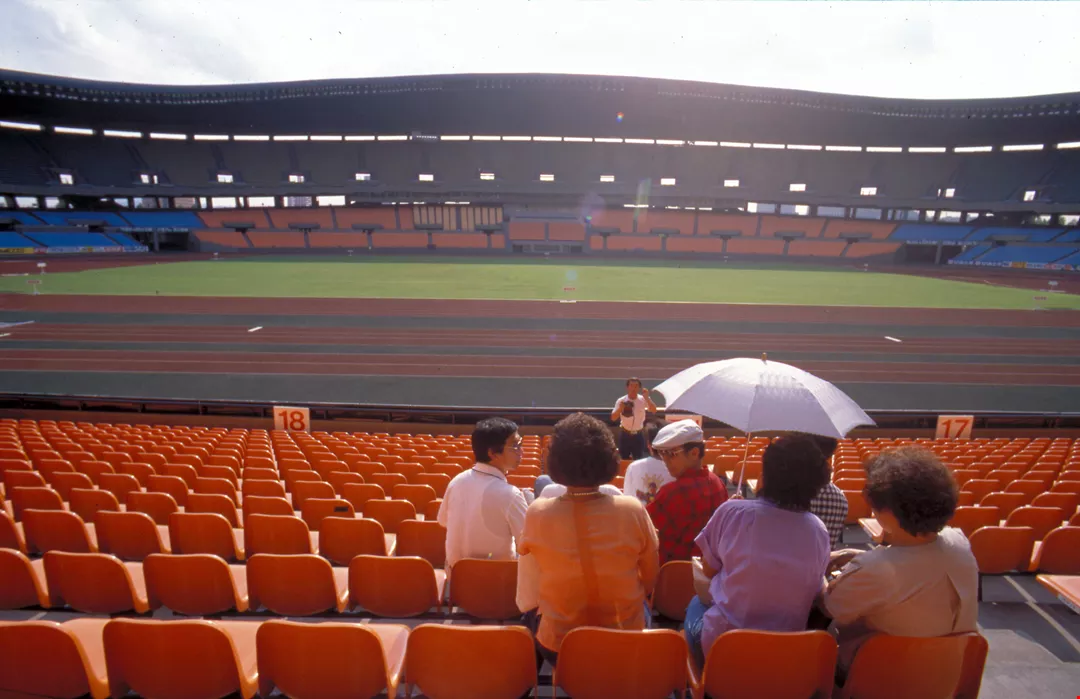
This stadium, with a seating capacity of 100,0O0, will be the site of the opening ceremonies for the 1988 Olympics.
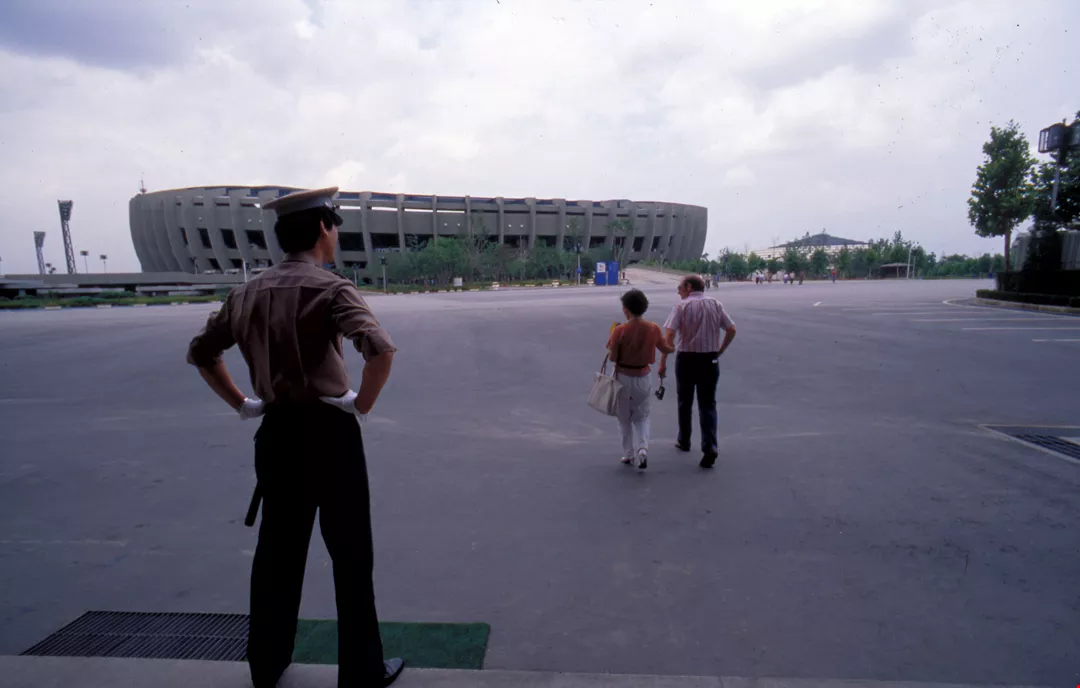
The Olympic stadium is beautiful, but security is tight.
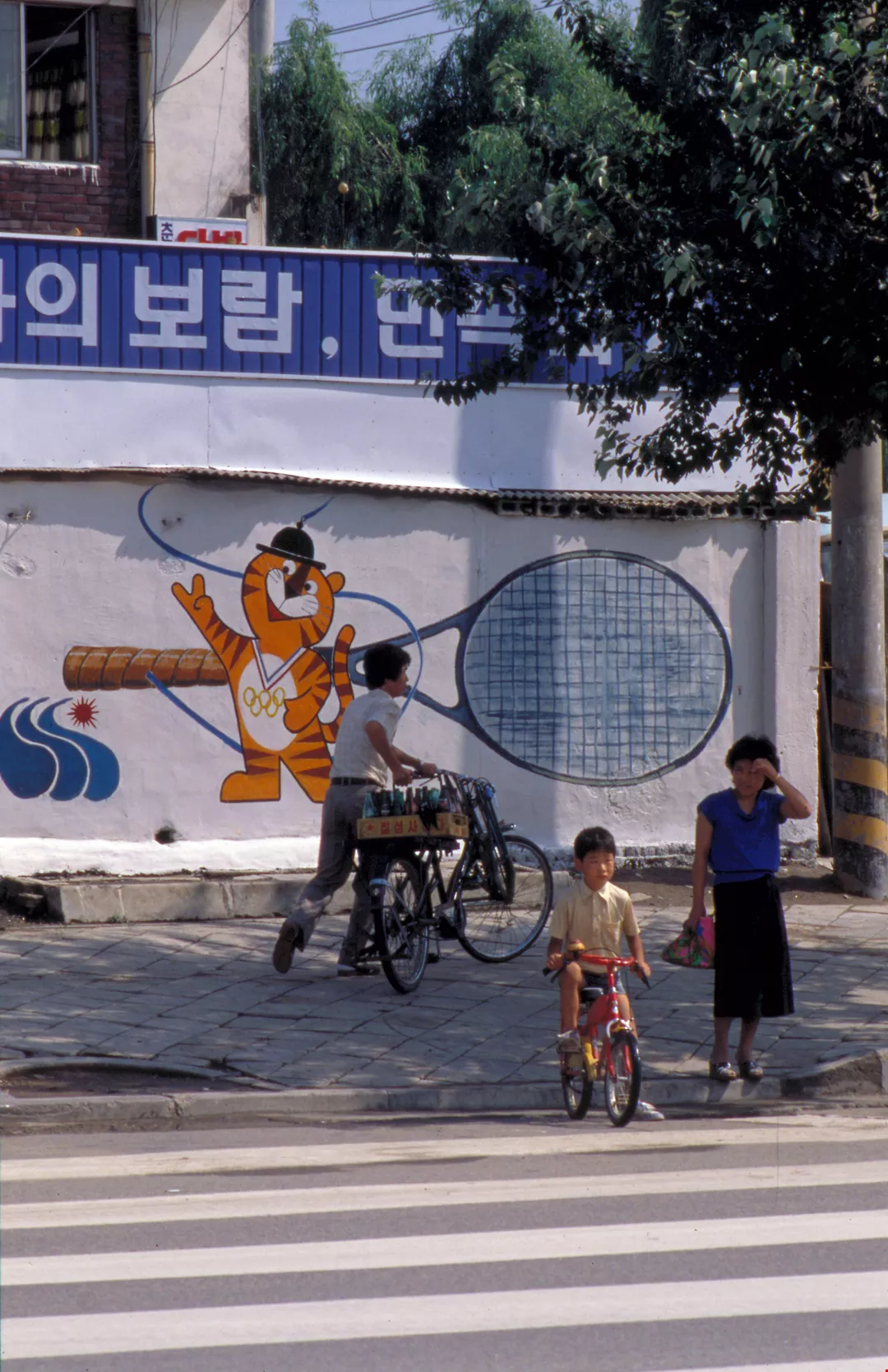
(Left) The cartoon mascot of the 1988 Games appears everywhere around Seoul.
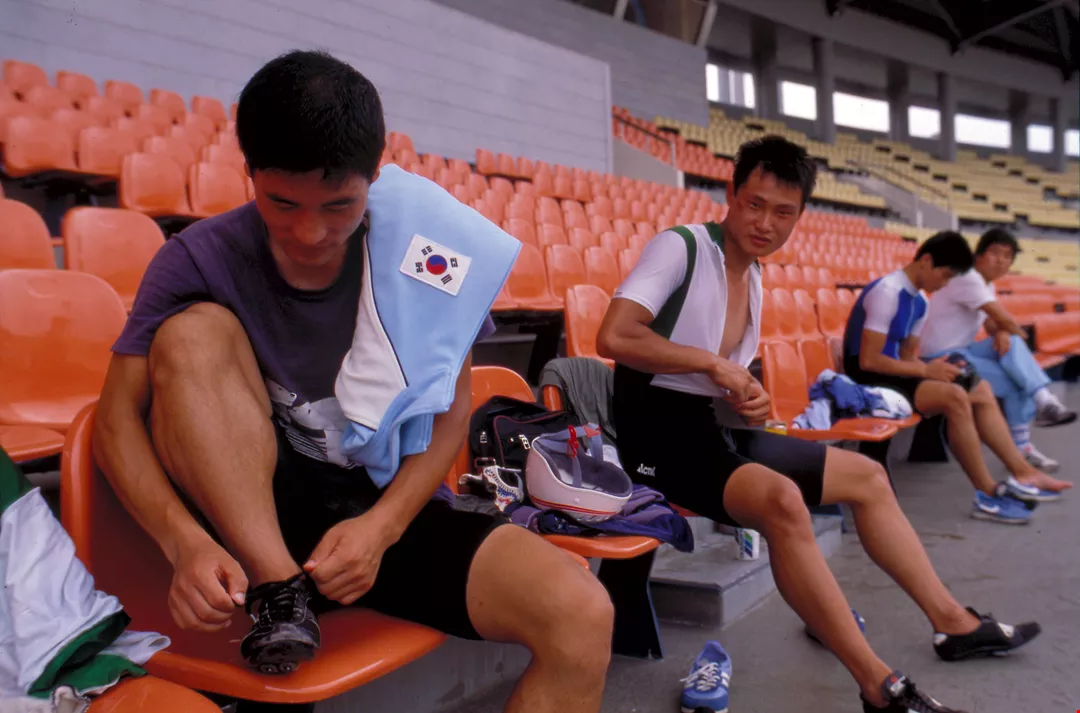
(Above) Practicing in the Olympic stadium is bound to lift an athlete's spirits.
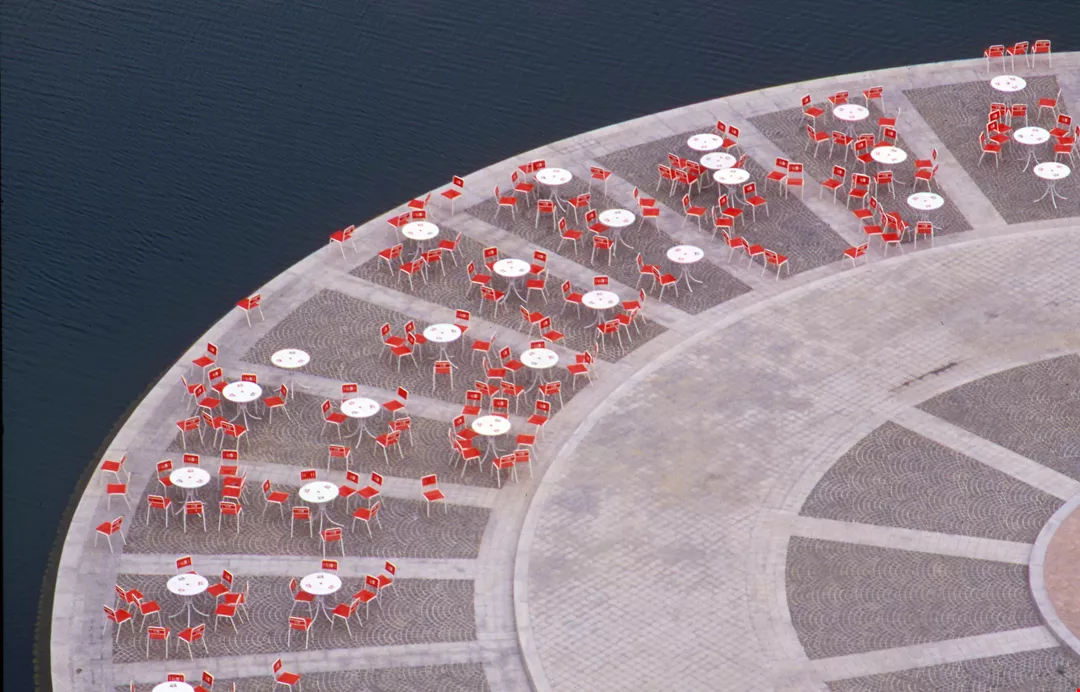
(Below) The Olympic Park is completed, quietly awaiting the approach of 1988.
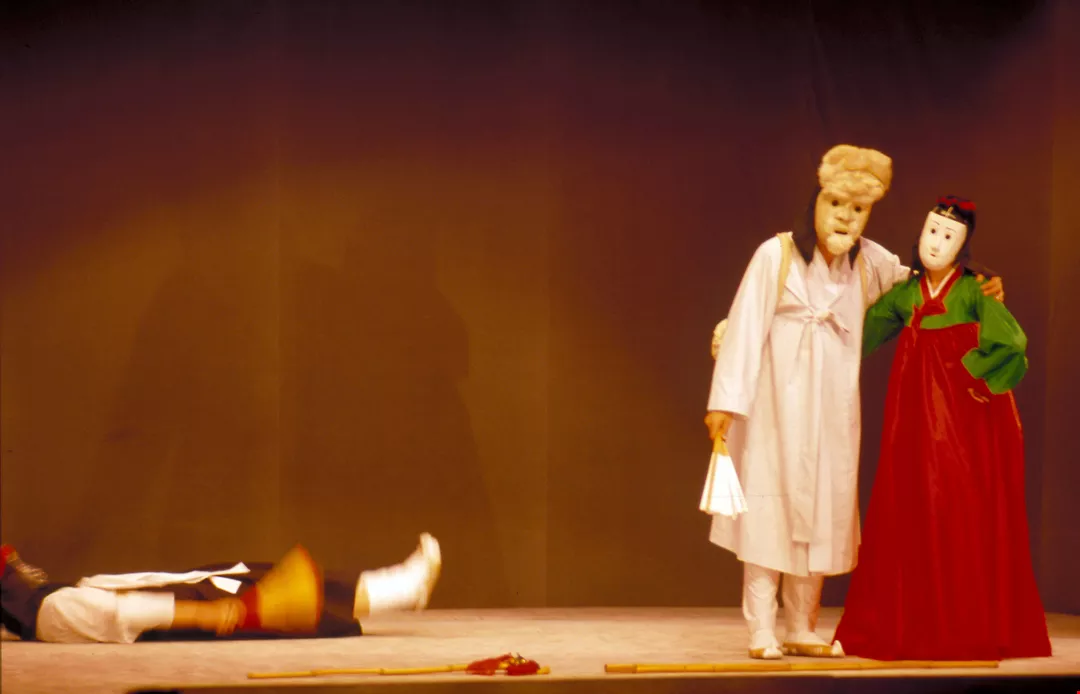
(Right) Traditional Korean opera will be an important program in welcoming Olympic guests.
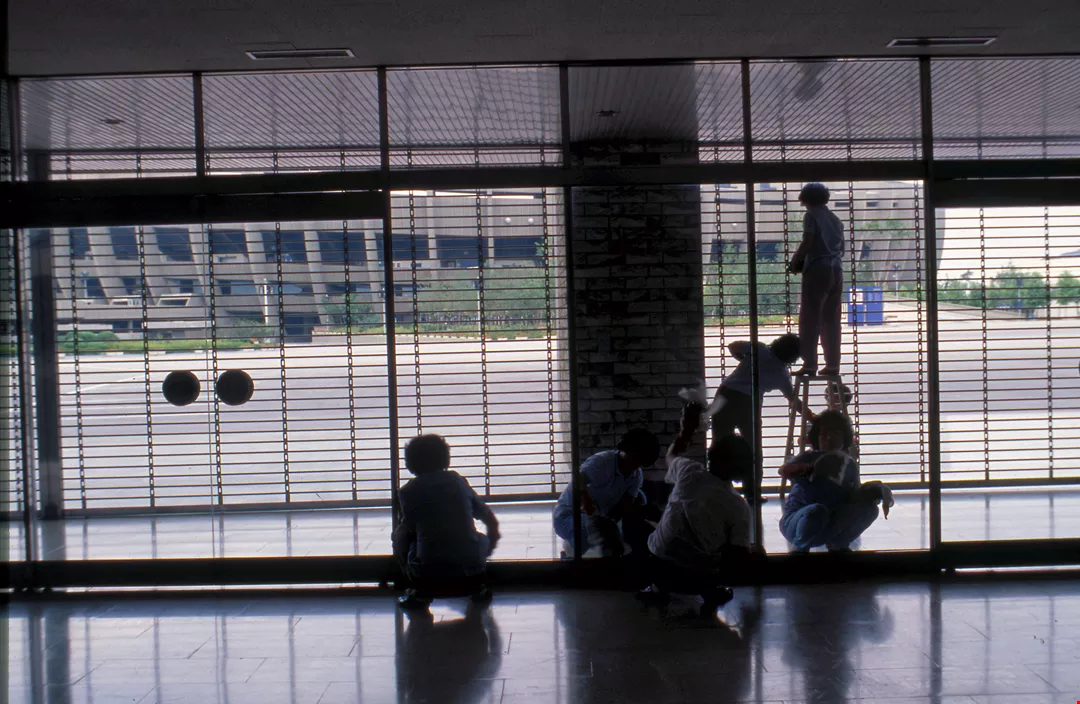
The Olympic facilities require constant maintenance to stay in tip-top condition.
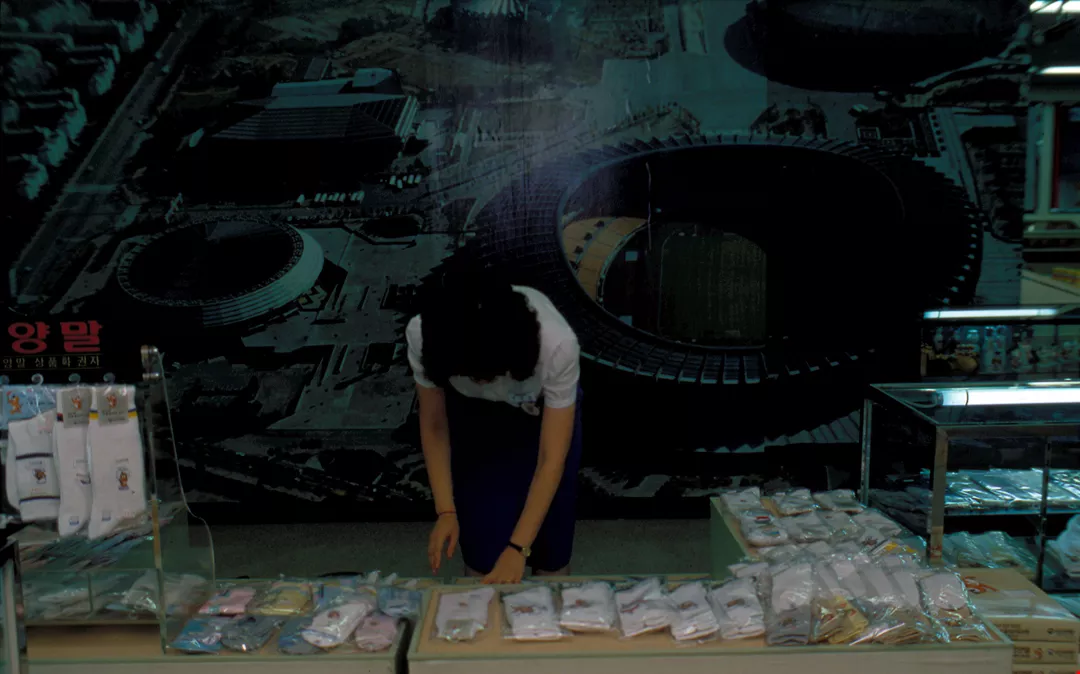
To expand financial resources, the Seoul Olympic Committee has already begun selling souvenirs.


