Taiwan’s Koi King Conquers Foreign Markets
Kobe Chen / photos Chin Hung-hao / tr. by Jonathan Barnard
June 2012
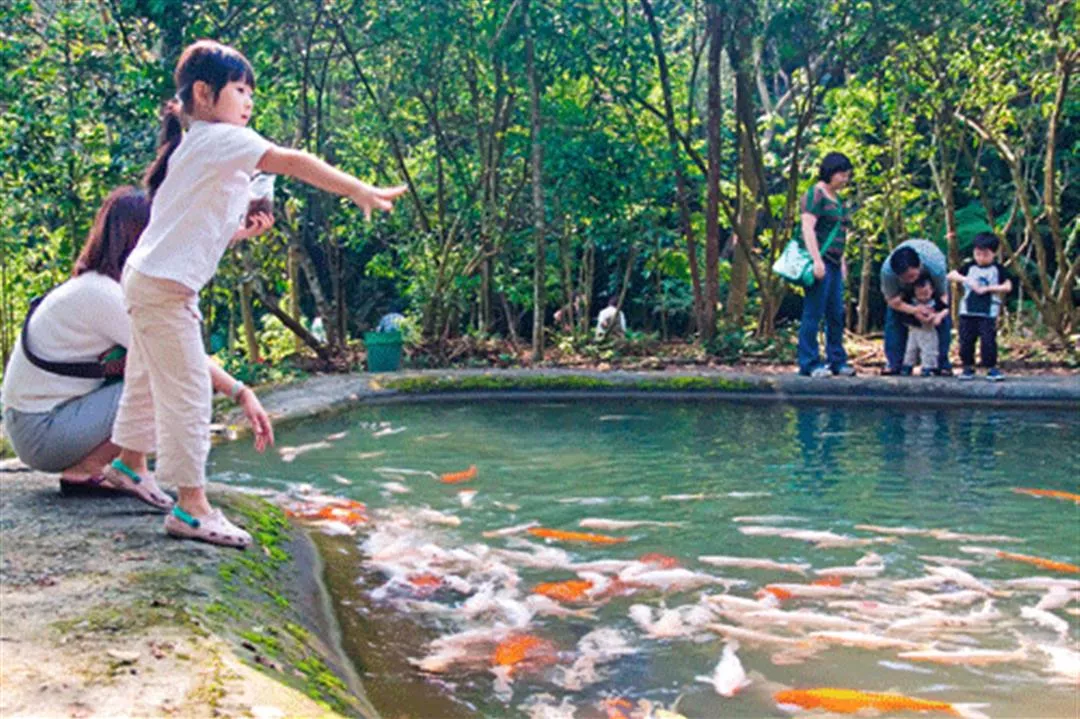
It’s a scene familiar to all: At the bank of a pond in a park, children happily sprinkle fish feed from their bare hands, as brightly colored fish eagerly rush to the food. In this instance, the darting fish are the life work of “koi king” Chung Ying-che.
Chung’s Sing Chang Koi Farm is located in Yunlin County’s Lunbei Township, where the farm’s office is packed with trophies. How did this local fish producer wind up going abroad to win international competitions and garner business opportunities worth tens of millions of NT dollars?
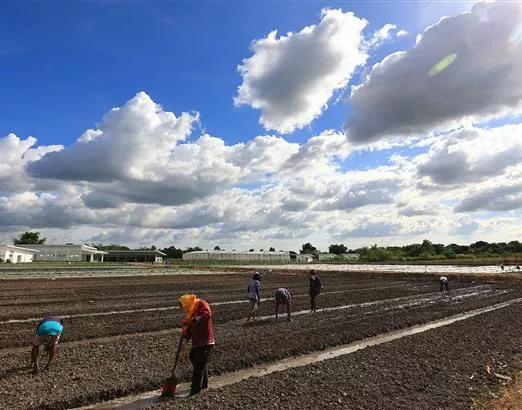
Of all Taiwanese counties, Yunlin is the most rural. The remote township of Lunbei has experienced an extreme population outflow, and the place has a desolate feel. This is the site of Sing Chang Koi’s three-hectare fish farm.
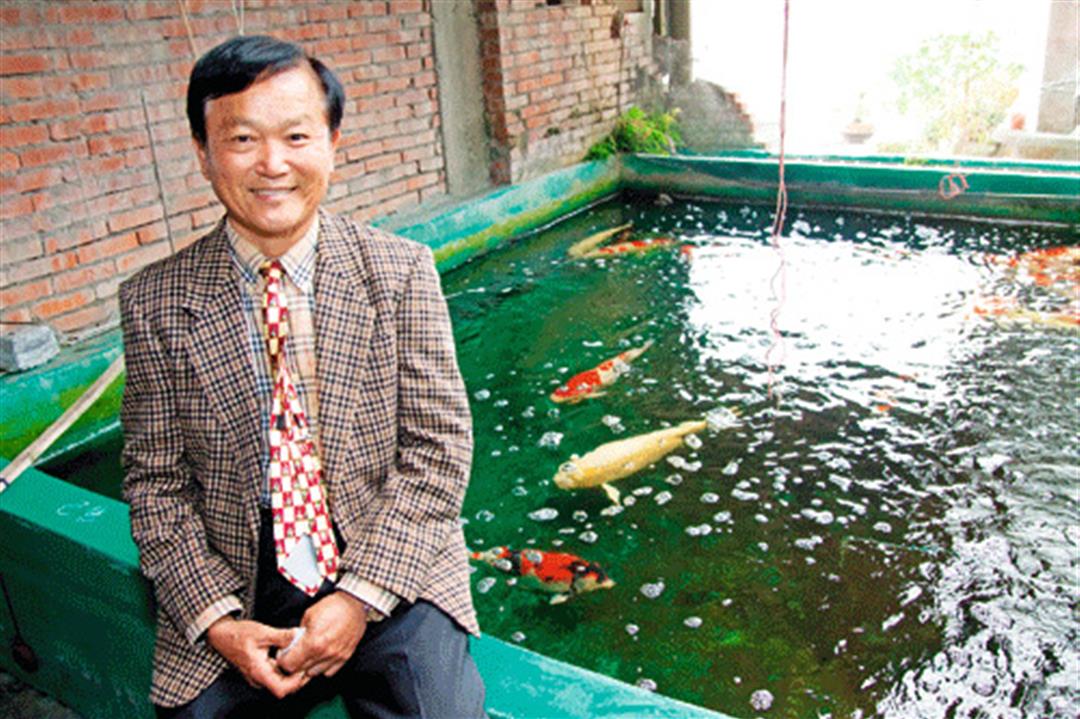
Chung Ying-che, the head of the farm, has more than 30 years of experience in raising fish. When he was a youth, his family grew rice. Then, after performing his military service, he tried to earn a little extra income by raising pigs. But in the 1970s, Taiwan’s small pig farmers started merging into ever larger operations, and family pig farms found it hard to make ends meet. What’s more, the price of rice proved to be very unstable. Chung decided to turn his paddy fields and pigsties into fishponds and raise what was then a highly profitable fish, tilapia. But as the Taiwanese economy took off, people’s palates grew more refined, and the market for tilapia, considered inferior to deep-sea fish, collapsed. Both prices and sales dropped dramatically.
With incomes growing, raising ornamental fish at home became all the rage. Chung correctly perceived an opportunity and began to move into the market for aquarium fish. Unfortunately, the fashion didn’t last very long, and Chung decided to set his sights higher—to koi, fish that are notoriously difficult to breed. Toward that end, he invested a large amount of money in research.
“I told my wife that in five years I’d get the hang of it,” recalls Chung, 60. “When you’re young, you’re full of confidence. Now, with many half decades having passed since then, I still don’t have full mastery of the techniques.”
.jpg?w=1080&mode=crop&format=webp&quality=80)
Many years ago Chung Ying-che turned his pigsties into fishponds. Through hard work, the smiling Chung has made the farm a splendid success.
In 1982, after having failed at his first attempts at breeding koi, he remained confident that he could achieve success and took a trip to Japan. There he spent a lot of money buying fish, which he brought home to breed.
Back then, Japan’s technology in the field was world leading. Chung took advantage of going to Japan to learn a little of the basics from his suppliers. He then returned home, where he hit the books to learn as much as he could about the techniques on his own. In two-plus decades, he lost more than 20 million fish, advancing by trial and error. He thus beat the path to today’s success.
Generally speaking, there are four main reasons you lose healthy fish: bacteria, improper temperature, a lack of oxygen, and viruses. Among these, viruses are the most frightening. If just one fish contracts a virus, the rest of the fish in the pond are likewise doomed. Consequently, Chung pays close attention to separation between ponds. Fish that are brought in from the outside must at first be confined in their own pond or tank for observation. By no means can you immediately put them in with the other fish.
“The right temperature, the right oxygenation, the right way to get rid of bacteria—you can look to books for answers to all those issues, but to cope with viruses, you’ve got to rely on your accumulated experience,” he says. “In that area, it’s not possible to ‘steal’ knowledge.”
After passing the first hurdle of good health, the next steps are to control body type, general sheen and color, as well as the coloration that is specific to individual varieties of koi. All are key factors affecting price.

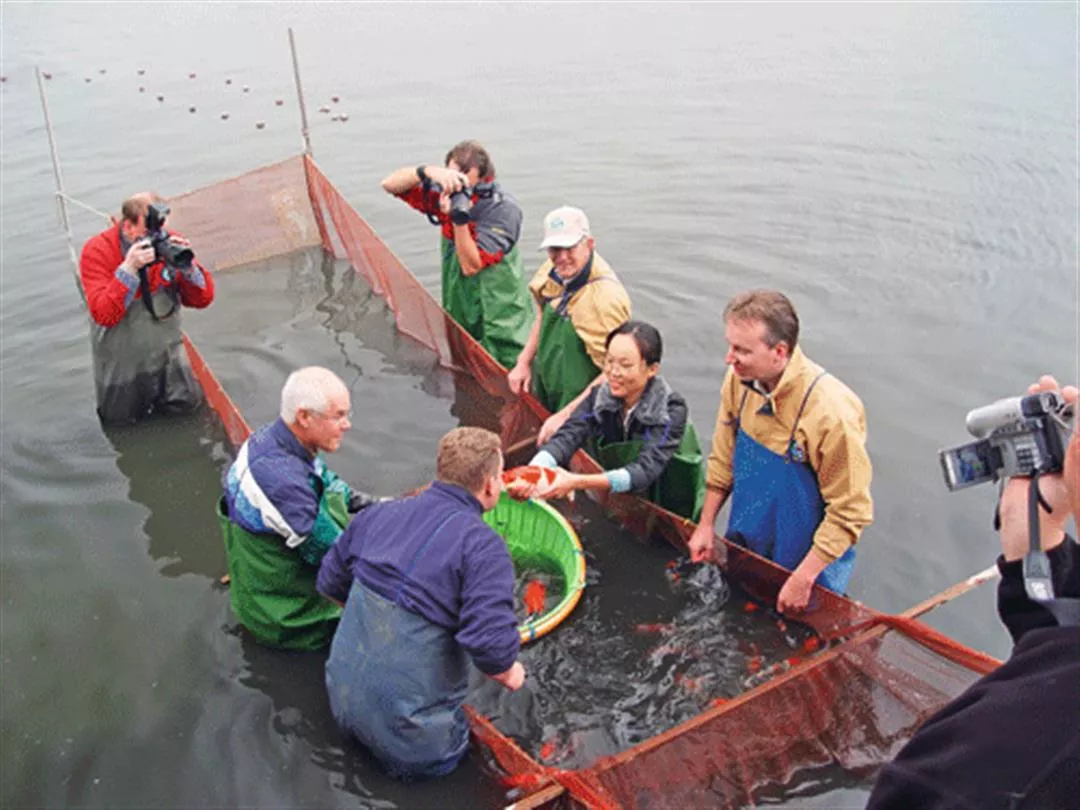
Chung Ying-ying gives foreign buyers a closer look at Sing Chang’s koi. Through its passion for high quality, the farm has built up strong sales.
Chung explains that you first consider body type, which includes both size and proportions.
The average lifespan of a koi is estimated at 70 years, and there are records of koi living over a century. Hence, they basically have lifetimes comparable to those of humans. What’s more, a good body type represents health and a reduced chance of the fish losing shape as it ages.
Currently, Sing Chang’s most expensive koi has a length of one meter. It is highly symmetrical right to left and beautifully proportioned back to front. Its price exceeds NT$1 million.
Next, one considers the sheen and purity of a fish’s color. The highest quality koi should be shiny with even, clear coloration and distinct separation between color blocks. Fish with these features tend to get only more beautiful as they age.
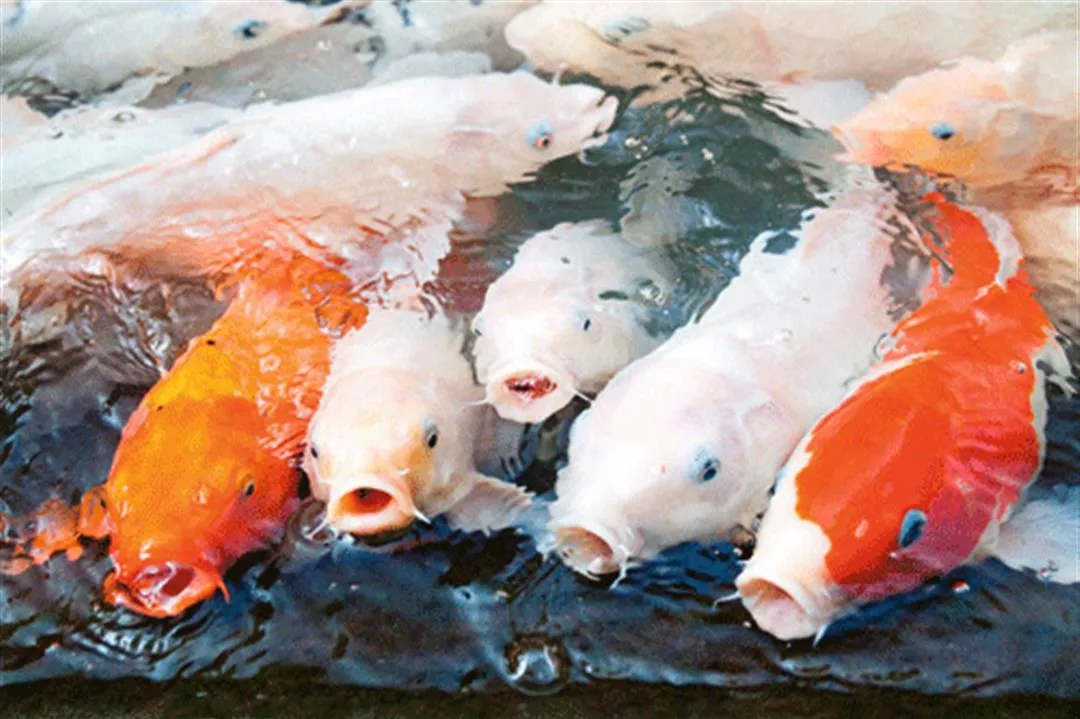
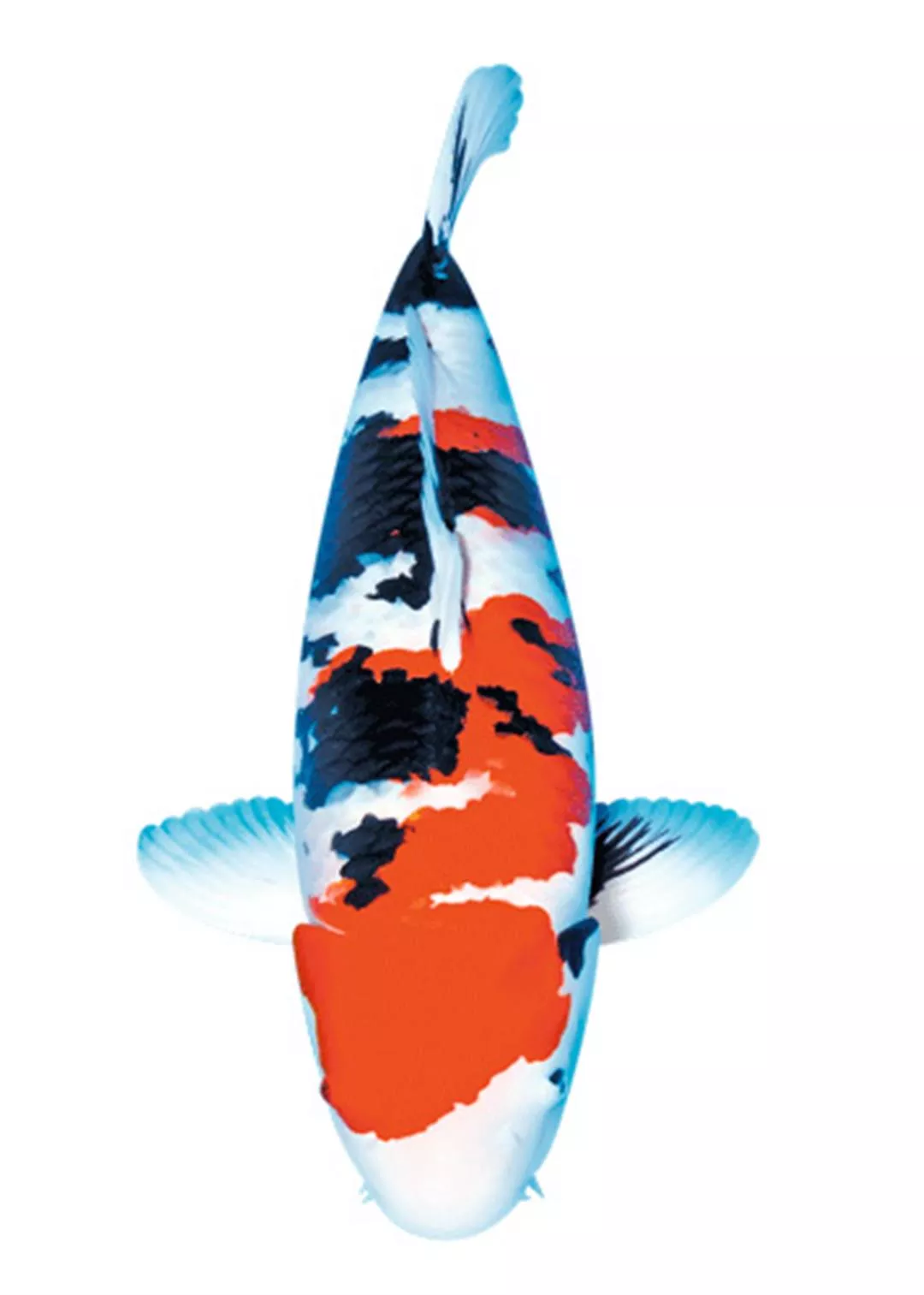
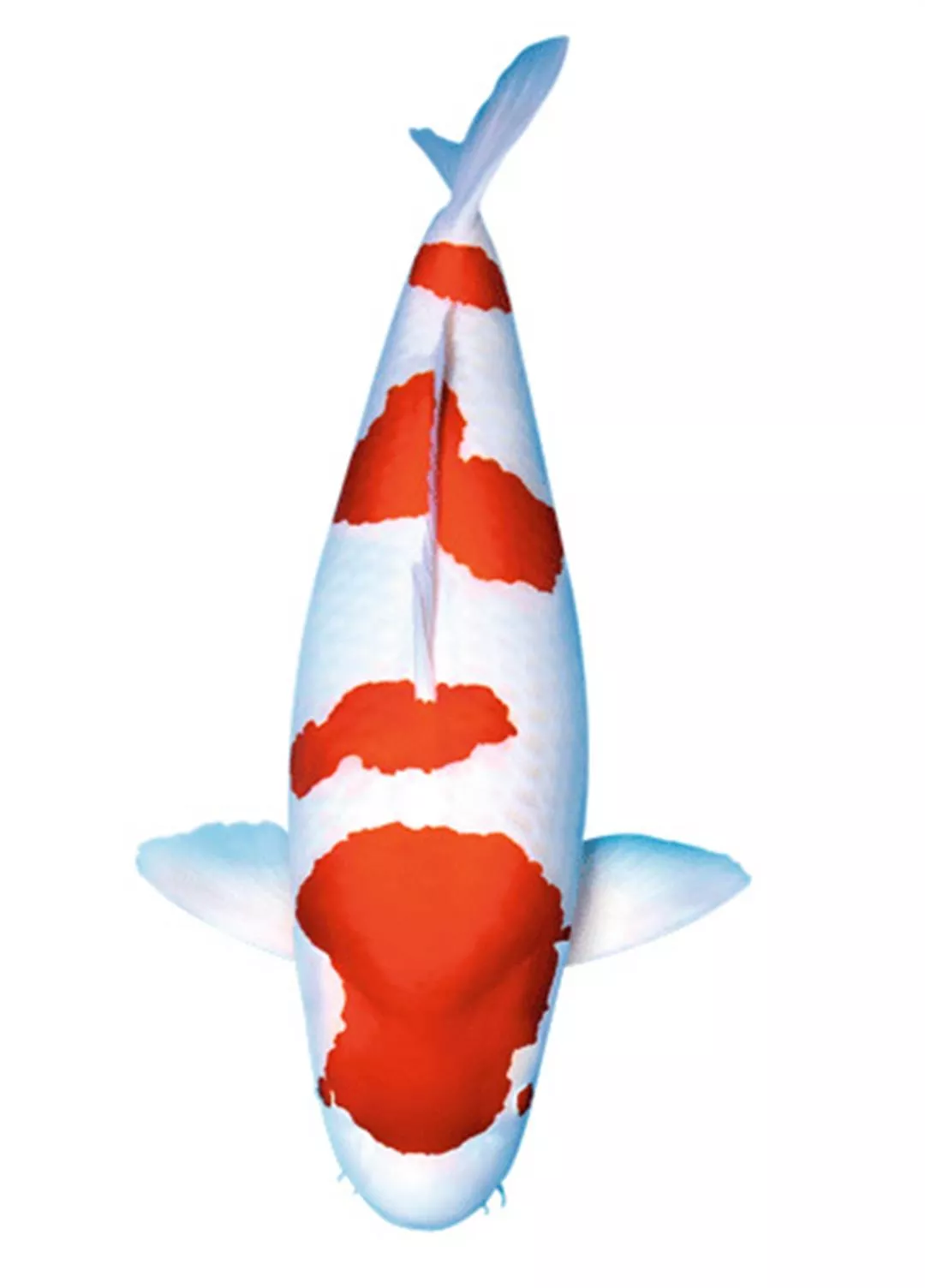
Finally, there are the colors associated with distinct kinds of koi. There are numerous koi varieties—more than 100 all told. The most commonly seen are the three known as “Gosanke” by Japanese breeders: Kōhaku (“red and white”), Taishō Sanshoku, and Shōwa Sanshoku. These are the best sellers in both Japan and Taiwan. Although coloration is largely an innate genetic feature, the post-natal environment can also prompt variations. Consequently, there is a great deal of uncertainty. For instance, some koi are born only with red blocks, but when they get a little older, they may develop black spots. Generally speaking, you have to wait until about 45 days after hatching. The coloration won’t become stable until they get to about 10 centimeters in length.
Koi eggs can hatch as many as 300,000 larvae, but many of these are of inferior quality. There is a need for repeated culls for quality as they grow. Typically, from 300,000, repeated screenings leave only 200.

Chung Ying-che has a dream of getting more people to appreciate the beauty of Taiwan’s koi.
With a hardworking attitude, Chung steadily pushed his koi business forward. But in 2003, as a result of failed investments in land around the site of the planned Sixth Naptha Cracker in Yunlin’s Mailiao, Chung was forced to borrow money from friends to get by. He ended up with debts of NT$200 million.
At his wits’ end, he was able to find help from a surprising source: his daughter Chung Ying-ying. From a young age Ying-ying had shown interest in holding artist’s brushes, but never fish.
“How have I turned into a village woman?” Chung Ying-ying had loads of doubts about whether she was cut out for the work, and at one time was close to quitting, but facing the possibility that all the hard work her parents had put in over their lifetime might turn out for naught, she reconsidered. She couldn’t bear to think of her parents toiling on the farm in their old age. Eventually, she became resigned to her fate and threw her all into the work.
Beginning by feeding the fish and cleaning the pools, Ying-ying has done every job on the farm, and in the process her way of thinking about koi changed. She has discovered that koi are in fact a lot like paintings, with each specimen a completely unique work of art. Whereas she hadn’t previously thought much of the black and white patterns on some of the fish, she now regards them as possessing something of the artistic spirit of inkwash landscapes.

In August 2003, Chung Ying-che and Chung Ying-ying went to Europe to attend a koi show, where they discovered some significant differences in the European and Asian markets. Fish that were considered undesirable in Taiwan could fetch a high price in Europe.
“On the other hand, they had no interest in some fish that we thought were really pretty.” The father and daughter mulled over their options before deciding to march into the European market.
In 2010, Sing Chang’s koi earned four gold and eight silver medals in international competitions—an achievement that could well be described as world beating. In 2011, at a Dutch koi convention, the farm earned seven golds and one silver. The performance was the talk of the show, and it forced the world’s koi aficionados to acknowledge the high quality of Taiwanese specimens.
However much glory those international shows confer on award winners, they require a lot of money. Chung Ying-che estimates that it costs more than NT$1 million each time they exhibit. Consequently, they’ve got to make the most of the opportunities for publicity, and they always aim for the highest possible impact.
For this reason, Chung Ying-ying has worked with professional marketing groups to link koi with the “colors of the orient.” At the shows they perform the Japanese tea ceremony to attract customers, and they set off images of brightly colored koi against a background of calligraphies. Ying-ying wears a qipao as she introduces customers to the family’s koi. The heavy oriental flavor attracts the notice of Europeans, and orders have rolled in.
Exporting to Europe sounds like a business opportunity with boundless potential. In which case, why haven’t other Taiwanese fish producers tried it? The answer lies in transport issues and the need for drug tests.
The EU has extremely strict health and pharmaceutical controls, and it has even stricter demands about importing live animals. The Taiwan animal husbandry industry typically administers drugs both to prevent disease and spur growth, and thus can’t pass EU drug inspections.
After understanding the EU situation, Chung Ying-ying suggested that her father take off the bird netting protecting their ponds, because healthy fish are hard for birds to catch. By allowing birds to cull the sick and unhealthy specimens, they don’t need to use drugs. It has also saved them the trouble of manual screening.
Another problem is transport. The trip from Taiwan to Europe is a long one, and sometimes it requires transferring planes. The koi may spend as long as 48 hours confined in small tanks, so the trip always makes Chung Ying-che extremely nervous. The solution they’ve come upon was inspired by “the story of the boiling frog.” First they move the fish they plan on transporting from large ponds to medium-sized ponds, and then finally to small ponds, getting them acclimated to smaller and smaller spaces. Thus conditioned by experience, the fish won’t be killed by the cramped quarters of a long trip (unlike the frog of the story, which was killed by the slowly increasing heat).
Having cleared two difficult hurdles, Sing Chang successfully began exporting to Europe, expanding its business to over NT$20 million annually. Sales to Europe now account for 60% of its business.
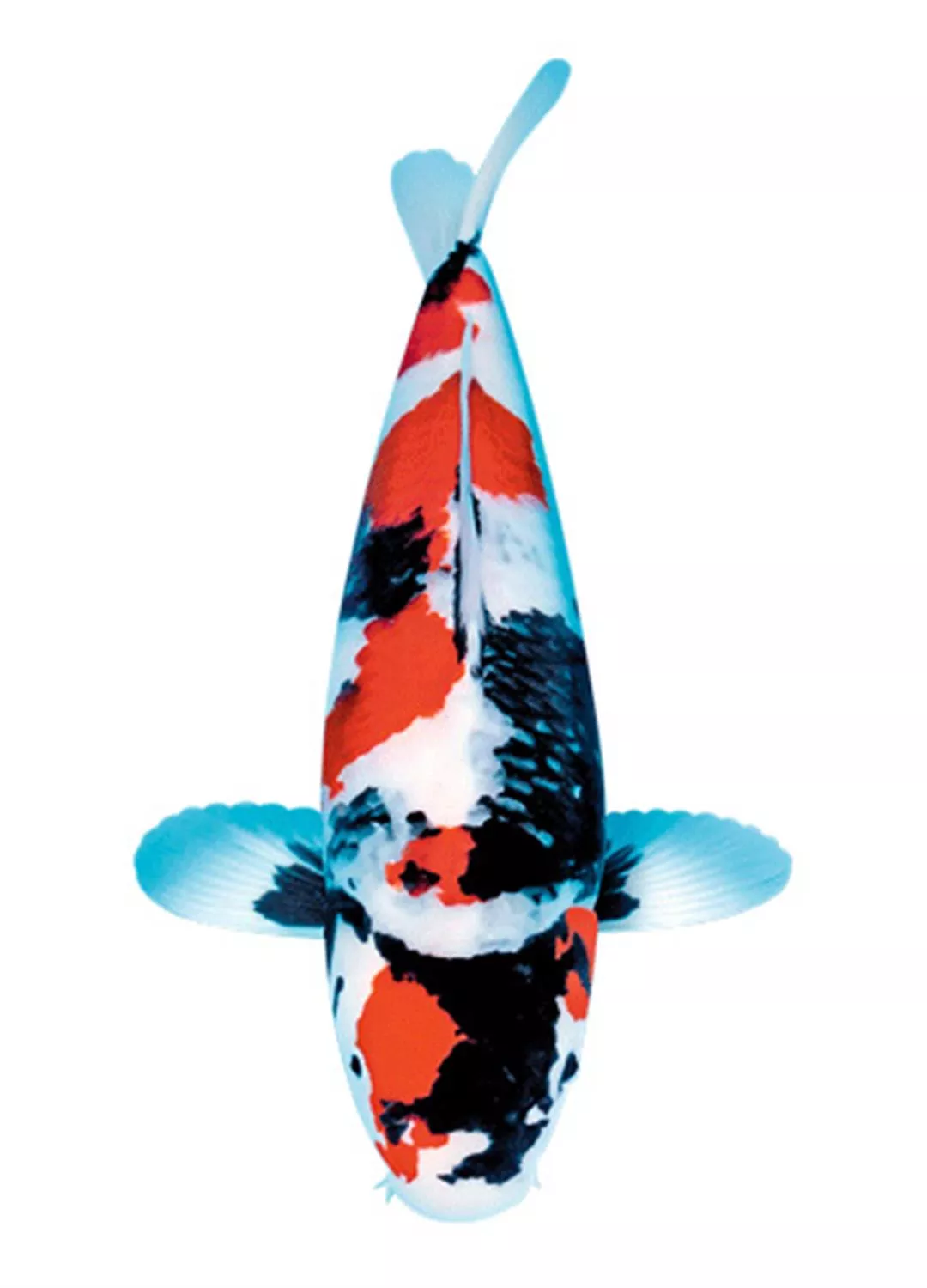
Kōhaku (left) display the basic coloration of koi. When you add black spots they become Taishō Sanshoku (center). Shōwa Sanshoku (right), meanwhile, have a quality evocative of ink-wash paintings. These three varieties are bestsellers in Japan, where they are known collectively as “Gosanke.”

After making a name for himself, Chung Ying-che has received a steady stream of invitations to speak at campuses. When students in the audience hear that there are big bucks to be made raising fish, many ask if they can come and learn the ropes. He says: “So long as you can bear hardship, I’ll teach you.”
Many young people want a crash course but don’t want to put in the needed effort. The work involved in raising fish changes throughout the seasons. Sometimes you’ve got to be at work as early as 4 a.m., and you’ve got to do a lot of digging, weeding, and manure lugging. You’ve got to muck around in the fishponds in the cold of winter. There is work just about all year round, and many give up before they’ve even been at it a year, so all their earlier study is wasted.
The father’s skills acquired from many decades of raising fish, along with the daughter’s independent vision and marketing skills, bring together the traditional with the innovative. They have allowed Sing Chang’s koi to shine brightly on the world stage.
In recent years, the growing ranks of affluent mainland Chinese have come to constitute the new market with the strongest potential for Taiwanese fish breeders. In the face of economies of scale enjoyed by mainland producers, Chung is nonetheless full of confidence, insisting that he will not try to compete on price and stressing that Sing Chang’s fish are high-quality, vigorous specimens. The farm has already made a name for itself on the mainland.
In an era when entrepreneurs are having a tough go of it, Chung proves that, so long as one is willing to put in the work, an old dog can be taught new tricks—and fish can swim out of the shallows and jump the gate to become dragons.

Kōhaku (left) display the basic coloration of koi. When you add black spots they become Taishō Sanshoku (center). Shōwa Sanshoku (right), meanwhile, have a quality evocative of ink-wash paintings. These three varieties are bestsellers in Japan, where they are known collectively as “Gosanke.”


Kōhaku (left) display the basic coloration of koi. When you add black spots they become Taishō Sanshoku (center). Shōwa Sanshoku (right), meanwhile, have a quality evocative of ink-wash paintings. These three varieties are bestsellers in Japan, where they are known collectively as “Gosanke.”