

Why do some people suffer from allergies but notothers? The pathogenic mechanism of allergies remains an unsolved mystery to this day, while more and more people are turning victim to these afflictions.
Why do some people suffer from allergies but notothers? The pathogenic mechanism of allergies remains an unsolved mystery to this day, while more and more people are turning victim to these afflictions.
In late April, the Department of Health approved a new anti-allergy medicine: Xolair. This drug, dubbed the first immune regulating drug in more than a century, was developed by Chang Tse-wen, a distinguished research fellow at the Genomics Research Center at Academia Sinica, who tells us that Xolair will not only benefit millions of allergy sufferers around the world, but will further reveal the mechanisms of allergies.
In both the developed and developing worlds, it's estimated that, on average, nearly 20% of people are affected by allergies. And in the US, asthma has become the top cause of both child and adult absence from school or work.
Small wonder that on the day the US pharmaceutical company Tanox announced that its new anti-allergy drug, Xolair, had passed Phase II of its clinical trials for peanut allergies, it instantly became the most e-mailed story on Yahoo! News.
In February 2007, Chang Tse-wen was conferred the highest honor of the American Academy of Allergy Asthma and Immunology: the Honorary Fellow Award. The first ethnic Chinese person to earn this award, the sexagenarian Chang has been called a Taiwanese hero. The recent Department of Health approval of the sale of this drug was especially gratifying to him: "Soon, with my own eyes, I'll be able to see Taiwan's allergy sufferers benefiting from this," says Chang.
The price of civilization
Immunology is Chang's area of expertise and antibody engineering is his focus. Xolair is the first drug successfully developed by Chang's company, Tanox, Inc.
Chang obtained his master's degree in chemistry from National Tsing Hua University in 1972 and his doctorate in cell and developmental biology from Harvard Medical School in 1977. Afterwards, he worked in research and development for the American biotech firms Ortho and Centocor, and subsequently taught at Baylor College of Medicine. In 1986 he and his wife Nancy founded Tanox in Houston, devoting themselves to developing drugs for allergies and AIDS.
Allergy sufferers may appear healthy, but their quality of life is deeply compromised; only they truly know the suffering they endure. Part of the reason that Chang decided to develop anti-allergy medicines is that he himself has allergies.
"About a third of Taiwanese students develop allergies after going to America," notes Chang, who started developing a pollen allergy during his third year there. As time passed his allergy grew more serious. "Spring and fall are the worst. Tree pollens in the spring and grass pollens in the fall are extremely fine: they blow with the wind, inflaming the eyes and nasal membranes of sufferers, making their noses run and eyes water. It's miserable."
Examples abound of strange new environments producing allergies like Chang's. Even for those who don't move to new places, the proportion of allergy sufferers has been rising in pace with modernization and urbanization.
Pollen, dust mites and cockroaches induce ailments in allergy sufferers such as asthma, hay fever, allergic conjunctivitis and atopic dermatitis. At such times they rely on antihistamines, steroids or bronchodilators to pull through. They pass bad days with trepidation, because if asthma (a severe constriction of the bronchial muscles that can lead to asphyxiation) strikes, it can be fatal if they don't receive medical attention in time.
In recent years, the severity of food allergies in parts of Europe and North America has been climbing, with peanuts being a prime example. Peanut allergies are not very common in Taiwan, but they are quite prevalent in the US and Western Europe. Two years ago, when Chang went to speak at Harvard, he met an assistant professor from China who had lived in the US for 15 years, whose daughter had a peanut allergy. Even though they were very cautious about what they ate, the daughter became sick one day while reading a library book and was rushed to the emergency room. It's believed that the last person to borrow the book had been snacking on peanuts as he read. Due to unknown environmental variables, the frightened family put off their plans to visit relatives in their ancestral home in Hubei when they considered the environment and poor medical facilities there.
All the fault of IgE?
Just as with the common cold, no cure for allergies has ever been found. Anti-allergy drugs such as antihistamines can only buffer part of the irritation caused by the allergy. In other words, they treat the symptoms, not the cause. When Chang was researching new drugs, he chose to start with Immunoglobulin E (IgE), aiming to strike at the root cause of allergies.
From an immunological perspective, an allergy is a form of hypersensitivity. It's an immunological dysfunction in which bodily tissues overreact to normally harmless substances, launching an all-out assault on things like pollen and dust mites that come in contact with the body. This triggers various defensive reactions (e.g. inflammation), but also, when serious, destroys bodily tissues along with the harmless foreign substances.
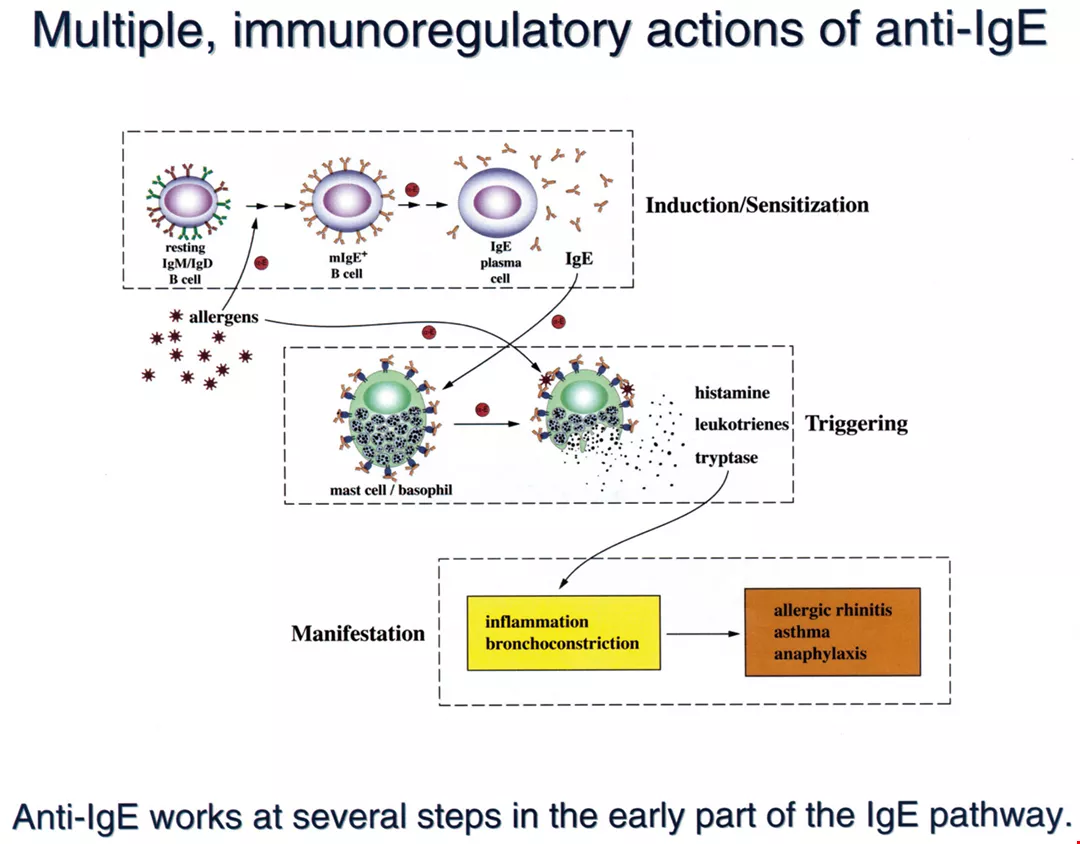
IgE is an allergy-related antibody, Chang explains, and people in different environments produce different types of IgE. When the surface ligands of mast cells and basophil cells in sufferers' immune systems are all occupied by IgE, it forms a kind of army waiting to take action (which can last for months to years). Then, if the sufferer comes into contact with an allergen (inhaling, eating or via the skin), the IgE binds to the allergen, causing an allergic reaction.
In fact the antibody IgE is not a mystical new discovery. As early as 1967, a Swedish doctor and a husband-and-wife team of Japanese immunologists doing research in the US discovered it in the human body. But at that time it wasn't yet seen as a target for allergy treatments. Chang is the first to do this.
Chang points out that when mast cells and basophil cells are stimulated by allergens, they release more than ten pathogens, including histamines, sparking allergic reactions. Past allergy medicines could only neutralize or suppress one or other of these substances, while the anti-IgE Chang extracted actually blocks the allergy mechanism at its source, binding to IgE before the allergens can, thereby preventing an allergic reaction. "It's as if somebody told these trouble-making immune defense troops, 'Don't worry, we'll handle it.'"
The manufacturing process for Xolair is rather involved. First, human IgE is injected into mice, which produce the corresponding antibody anti-IgE. Then, after the antibody is "humanized," biotech methods are used to extract the needed protein drug. The reason the antibody needs to be humanized is that monoclonal antibodies taken from mice will be seen by the human body as foreign matter, triggering an immunological reaction that neutralizes it. Therefore it's necessary to apply genetic engineering to convert most of the molecular structure into a human gene sequence for the human body to accept it and allow it to work.
Overcoming obstacles
The R&D, clinical trials and approval process for drugs is a long, slow road. It has taken 16 years for Xolair to go from lab to market.
Of all drugs developed, only anti-cancer and AIDS medications are approved quickly by the US Food and Drug Administration because of the urgent need to save lives. Anti-allergy drugs, on the other hand, are examined more carefully because of the large number of potential users, so the process drags. During the process, re-testing is often necessary before submission to meet FDA requirements for the number of patients tested during clinical trials.
Chang speaks frankly: in 2000, before the third phase of the clinical trial was completed, he was still not 100% reassured. It was only in 2003 when the drug finally received FDA approval that he genuinely felt this drug was a success.
Part of the uncertainty of the R&D of this new drug came from doubts within the industry about the safety of anti-IgE. Chang says that though most anti-IgE drugs can neutralize IgE, they may also trigger allergies, some of which may be more severe than that caused by the original allergen. Therefore, anti-IgE was at first used only as a reagent in the lab; nobody dared to test it on humans for fear of possibly inducing allergy or anaphylactic shock throughout the body.
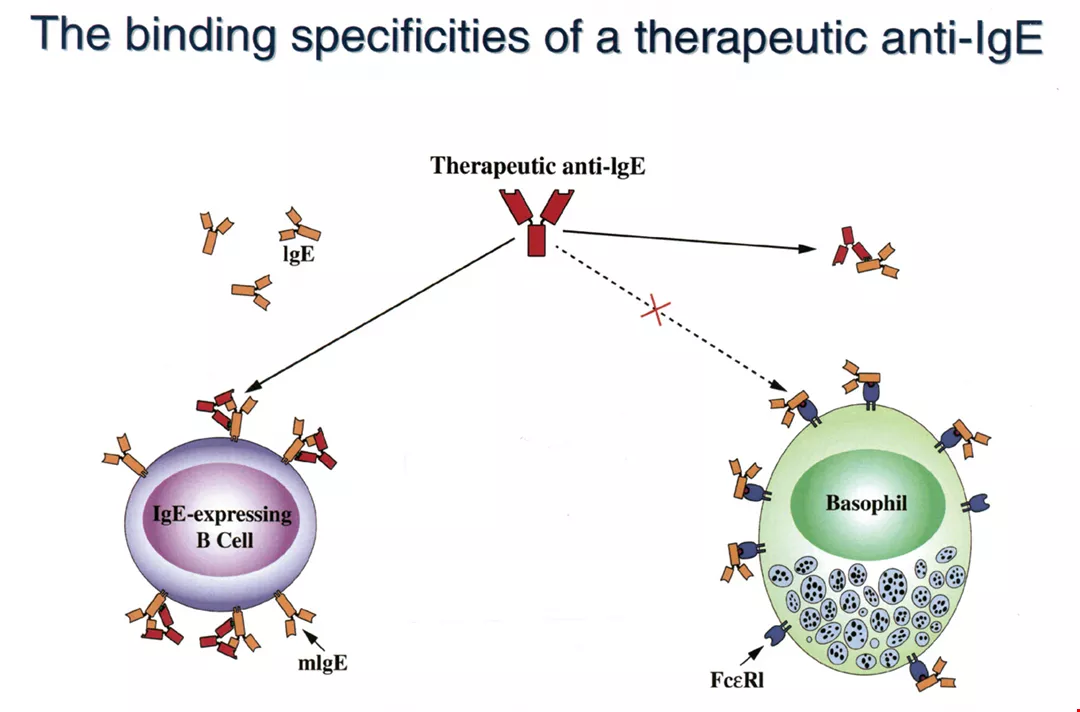
One basis for Xolair's patent, as well as its most important property, is that it will not come into contact with IgE that has already bound to ligands on the surface of cells, and therefore will not trigger an allergic reaction. However, any protein constituent can elicit an allergic reaction in some people, and the probability that Xolair will do so is about one in a thousand.
Despite the elimination of the safety concerns, there are still those who worry. Might IgE be ineffective? Would neutralizing IgE impede the immune system? And just as when a retreat is ordered in an army, what if a real enemy invades?
Chang points out that IgE's specific immunological function has never been confirmed. Some think IgE is related to defense against human parasites, but currently in more developed countries--the ones where allergies are more common--parasites are not a major health concern. Chang also conducted clinical trials in a remote part of Brazil, the results of which confirmed that those who used anti-IgE did not develop compromised immunity, nor did they become easily susceptible to parasites.
Besides safety concerns, many people were skeptical about the effects of this drug, the reason being that the link between allergies and the dread ailment asthma had never been verified. So at first, there were doubts as to whether anti-IgE would treat asthma. Yet clinical trials verified that neutralizing IgE via anti-IgE could indeed treat asthma, thereby confirming the link. The current understanding is that almost all childhood asthma is allergic in origin, and in adult asthma sufferers the correlation is as high as 60-70%.
A fly in the ointment
In late April, the Department of Health approved a new anti-allergy medicine: Xolair. This drug, dubbed the first immune regulating drug in more than a century, was developed by Chang Tse-wen, a distinguished research fellow at the Genomics Research Center at Academia Sinica, who tells us that Xolair will not only benefit millions of allergy sufferers around the world, but will further reveal the mechanisms of allergies.
In both the developed and developing worlds, it's estimated that, on average, nearly 20% of people are affected by allergies. And in the US, asthma has become the top cause of both child and adult absence from school or work.
Small wonder that on the day the US pharmaceutical company Tanox announced that its new anti-allergy drug, Xolair, had passed Phase II of its clinical trials for peanut allergies, it instantly became the most e-mailed story on Yahoo! News.
In February 2007, Chang Tse-wen was conferred the highest honor of the American Academy of Allergy Asthma and Immunology: the Honorary Fellow Award. The first ethnic Chinese person to earn this award, the sexagenarian Chang has been called a Taiwanese hero. The recent Department of Health approval of the sale of this drug was especially gratifying to him: "Soon, with my own eyes, I'll be able to see Taiwan's allergy sufferers benefiting from this," says Chang.
Four years ago Xolair was approved for sale in the US, and the green light for sale within the European Union was given in 2005. Yet due to safety concerns, the price and the large population of allergy sufferers, at first it was only approved for sufferers over 12 years old with moderate to severe asthma. Now, some years later, nearly 100,000 Americans have used Xolair.
US$10,000 (about NT$330,000) a year in medical fees is pricey, but compared with before, when severe asthma sufferers averaged a yearly medical expense of US$50,000, it is worth trying.
Xolair saves sufferers from serious allergies, but allergy specialists have mixed feelings about the new drug's sale.
In the US, allergies are a major field with more than 10,000 practicing specialists. If allergies can one day be prevented or even eliminated, will this mean the professions of allergy specialists who test allergens and conduct immunotherapy will be threatened?
"Not at all. On the contrary, some doctors are actively studying how to use it in conjunction with immunotherapy," Chang points out. In the past, after doctors identified which allergen affected a sufferer, they would inject progressively increasing amounts of allergen into the body, allowing the immune system to gradually adapt to these allergens rather than wantonly launch an offensive. Yet such immunotherapy is protracted and time consuming, and by adding Xolair they can safely increase the allergen increments and shorten the course of treatment.
In Chang's view, the situation's not ideal yet even though Xolair is on the market.
Currently this drug has a high dosage (an injection once every two to four weeks, adjusted thereafter according to individual circumstances with some people stopping after a year or two) as well as a steep price, so major private insurers in the US will not cover those with mild allergies or whose symptoms are treatable with steroids. Thus the opportunities for using it are few, and this is a major downside. In addition, the dosage is too high for about 15% of asthma sufferers--those most severely affacted--because they have too much IgE in their systems (700 IU per milliliter of blood), so they were excluded from the early phase of clinical trials. Even though the drug has now been approved, this group lost their chance for treatment.
A missed opportunity

Foods and the environment are chock full of allergens. Their ubiquity is a hazard to the quality of life of allergy sufferers.
The price of civilization
Immunology is Chang's area of expertise and antibody engineering is his focus. Xolair is the first drug successfully developed by Chang's company, Tanox, Inc.
Chang obtained his master's degree in chemistry from National Tsing Hua University in 1972 and his doctorate in cell and developmental biology from Harvard Medical School in 1977. Afterwards, he worked in research and development for the American biotech firms Ortho and Centocor, and subsequently taught at Baylor College of Medicine. In 1986 he and his wife Nancy founded Tanox in Houston, devoting themselves to developing drugs for allergies and AIDS.
Allergy sufferers may appear healthy, but their quality of life is deeply compromised; only they truly know the suffering they endure. Part of the reason that Chang decided to develop anti-allergy medicines is that he himself has allergies.
"About a third of Taiwanese students develop allergies after going to America," notes Chang, who started developing a pollen allergy during his third year there. As time passed his allergy grew more serious. "Spring and fall are the worst. Tree pollens in the spring and grass pollens in the fall are extremely fine: they blow with the wind, inflaming the eyes and nasal membranes of sufferers, making their noses run and eyes water. It's miserable."
Examples abound of strange new environments producing allergies like Chang's. Even for those who don't move to new places, the proportion of allergy sufferers has been rising in pace with modernization and urbanization.
Pollen, dust mites and cockroaches induce ailments in allergy sufferers such as asthma, hay fever, allergic conjunctivitis and atopic dermatitis. At such times they rely on antihistamines, steroids or bronchodilators to pull through. They pass bad days with trepidation, because if asthma (a severe constriction of the bronchial muscles that can lead to asphyxiation) strikes, it can be fatal if they don't receive medical attention in time.
In recent years, the severity of food allergies in parts of Europe and North America has been climbing, with peanuts being a prime example. Peanut allergies are not very common in Taiwan, but they are quite prevalent in the US and Western Europe. Two years ago, when Chang went to speak at Harvard, he met an assistant professor from China who had lived in the US for 15 years, whose daughter had a peanut allergy. Even though they were very cautious about what they ate, the daughter became sick one day while reading a library book and was rushed to the emergency room. It's believed that the last person to borrow the book had been snacking on peanuts as he read. Due to unknown environmental variables, the frightened family put off their plans to visit relatives in their ancestral home in Hubei when they considered the environment and poor medical facilities there.
Chang empathizes with those serious asthmatics who can't get help, but an even greater regret he has is that Taiwan's biotech industry missed a prime opportunity.
Pharmaceuticals are a vital part of Taiwan's biotech industry. But due to legal restrictions, the road toward new drug development is slow going.
"Phase I clinical trials are not carried out in Taiwan," says Chang. Human testing bears the risk of criminal liability, so hardly anybody in Taiwan is willing to conduct Phase I clinical trials, which are the riskiest. But new drugs that have not undergone a Phase I clinical trial are solely dependent on lab data and have no market value; thus they are less able to attract investment or international cooperation. This is a serious disadvantage for Taiwan's small biotech firms.
An inadequate legislative framework is a major problem and poorly focused research is also a chief shortcoming. Chang candidly points out that there has long been a tendency in Taiwanese academia to value quantity of research output over quality.
"You won't find one research paper in a hundred with a high degree of academic and practical worth," says Chang. The majority of research lacks innovation and does not even have the most basic value.
In such an atmosphere, Taiwan drug manufacturers are currently stuck producing generic drugs, having lost the aspiration or courage to develop new drugs. There isn't even one drug company manufacturing proteins or antibodies.
After large pharmacuetical factories dedicated to manufacturing proteins sprang up in Singapore, South Korea and China, Taiwan's government looked into this issue last year, contacting Chang's company in hopes of marshaling Tanox's successful experience to spur domestic biotech drug manufacturing.
Yet at that time, the American pharmaceutical company Genentech was secretly discussing a US$919 million (around NT$30 billion) merger with Tanox. In November last year, before Taiwan's government reached a decision, the two companies signed a formal contract. Taiwan therefore missed its opportunity to build a platform for cooperation with a major international company. Chang is fraught with exasperation about this.
Back into the fray
By the time Xolair was ready to be launched in Taiwan, Chang had long since changed his role, leaving the boardroom for the lab.
As Chang and his wife built the firm together, perhaps it may appear to many to be a match made in heaven. Tanox not only successfully developed a new anti-allergy drug, it is now completing the Phase II clinical trial for another drug, Anti-CD4, used for late-stage AIDS patients for whom drug cocktail treatments no longer work. And it appears that success is just around the corner.
But in reality, Chang's marriage and his company's business both hit rough waters. When he and his wife divorced, the company became involved in a protracted lawsuit because another drug company had filched its technology. But in the end, Chang gained a patent and forced the other company to pay up in an out-of-court settlement.
Having endured divorce and a business crisis, Chang decided to return to Taiwan in 1996 at the invitation of the president of National Tsing Hua University, to serve as dean of the College of Life Sciences at his alma mater. Then in 2000 he began a three-year stint as CEO of the Development Center for Biotechnology.
After nearly seven years of administrative work, Chang hoped to return to his beloved research. In 2006 he was accepted as a research fellow at Academia Sinica's Genomics Research Center.
"Now is the time when I have been best able to get a handle my own research in ten years since returning home. I still have many dreams to fulfill," says Chang, boldly describing several research plans in his hands as he sits in his spanking new office in the newly completed Genomics Research Center.
In addition to a working on a new allergy drug--one that directly targets B-cells carrying IgE on the surface which he hopes can complement Xolair--and studying the mechanisms of anti-IgE, he is researching ways to improve antibody engineering techniques. And development of a new drug for lymphatic cancer is in progress.
Perhaps a career is like marriage. Now, as long-divorced Chang is embarking on his second marriage, his career in research is blooming once again.

Foods and the environment are chock full of allergens. Their ubiquity is a hazard to the quality of life of allergy sufferers.
Chang Tse-wen:Date of birth: August 25, 1947
Education: BS and MS in Chemistry, National Tsing Hua University
PhD in Cell and Developmental Biology, Harvard Medical School
Career: Manager, Molecular Immunology Department, Ortho (1977)
Director and Vice President of Research, Research Center, Cenocor (1981, 1984)
Professor, Department of Viology and Epidemiology, Baylor College of Medicine (1986-1997)Founder and Vice President of R&D, Tanox, Inc. (1987-1997)
Professor and Lecturer, College of Life Sciences, National Tsing Hua University (1996-2006)CEO, Development Center for Biotechnology (2001-2003)Distinguished Research Fellow, Genomics Research Center, Academia Sinica (2006)

Shy, sincere and unassuming, yet persevering, Chang radiates the charming aura of the scientific researcher.
All the fault of IgE?
Just as with the common cold, no cure for allergies has ever been found. Anti-allergy drugs such as antihistamines can only buffer part of the irritation caused by the allergy. In other words, they treat the symptoms, not the cause. When Chang was researching new drugs, he chose to start with Immunoglobulin E (IgE), aiming to strike at the root cause of allergies.
From an immunological perspective, an allergy is a form of hypersensitivity. It's an immunological dysfunction in which bodily tissues overreact to normally harmless substances, launching an all-out assault on things like pollen and dust mites that come in contact with the body. This triggers various defensive reactions (e.g. inflammation), but also, when serious, destroys bodily tissues along with the harmless foreign substances.
IgE is an allergy-related antibody, Chang explains, and people in different environments produce different types of IgE. When the surface ligands of mast cells and basophil cells in sufferers' immune systems are all occupied by IgE, it forms a kind of army waiting to take action (which can last for months to years). Then, if the sufferer comes into contact with an allergen (inhaling, eating or via the skin), the IgE binds to the allergen, causing an allergic reaction.
In fact the antibody IgE is not a mystical new discovery. As early as 1967, a Swedish doctor and a husband-and-wife team of Japanese immunologists doing research in the US discovered it in the human body. But at that time it wasn't yet seen as a target for allergy treatments. Chang is the first to do this.
Chang points out that when mast cells and basophil cells are stimulated by allergens, they release more than ten pathogens, including histamines, sparking allergic reactions. Past allergy medicines could only neutralize or suppress one or other of these substances, while the anti-IgE Chang extracted actually blocks the allergy mechanism at its source, binding to IgE before the allergens can, thereby preventing an allergic reaction. "It's as if somebody told these trouble-making immune defense troops, 'Don't worry, we'll handle it.'"
The manufacturing process for Xolair is rather involved. First, human IgE is injected into mice, which produce the corresponding antibody anti-IgE. Then, after the antibody is "humanized," biotech methods are used to extract the needed protein drug. The reason the antibody needs to be humanized is that monoclonal antibodies taken from mice will be seen by the human body as foreign matter, triggering an immunological reaction that neutralizes it. Therefore it's necessary to apply genetic engineering to convert most of the molecular structure into a human gene sequence for the human body to accept it and allow it to work.

Just as Xolair's release was being celebrated, Chang Tse-wen began his next stage of research into new allergy drugs. Now a research fellow at the Genomics Research Center at Academia Sinica, Chang is enjoying a new start in both work and love.
Overcoming obstacles
The R&D, clinical trials and approval process for drugs is a long, slow road. It has taken 16 years for Xolair to go from lab to market.
Of all drugs developed, only anti-cancer and AIDS medications are approved quickly by the US Food and Drug Administration because of the urgent need to save lives. Anti-allergy drugs, on the other hand, are examined more carefully because of the large number of potential users, so the process drags. During the process, re-testing is often necessary before submission to meet FDA requirements for the number of patients tested during clinical trials.
Chang speaks frankly: in 2000, before the third phase of the clinical trial was completed, he was still not 100% reassured. It was only in 2003 when the drug finally received FDA approval that he genuinely felt this drug was a success.
Part of the uncertainty of the R&D of this new drug came from doubts within the industry about the safety of anti-IgE. Chang says that though most anti-IgE drugs can neutralize IgE, they may also trigger allergies, some of which may be more severe than that caused by the original allergen. Therefore, anti-IgE was at first used only as a reagent in the lab; nobody dared to test it on humans for fear of possibly inducing allergy or anaphylactic shock throughout the body.
One basis for Xolair's patent, as well as its most important property, is that it will not come into contact with IgE that has already bound to ligands on the surface of cells, and therefore will not trigger an allergic reaction. However, any protein constituent can elicit an allergic reaction in some people, and the probability that Xolair will do so is about one in a thousand.
Despite the elimination of the safety concerns, there are still those who worry. Might IgE be ineffective? Would neutralizing IgE impede the immune system? And just as when a retreat is ordered in an army, what if a real enemy invades?
Chang points out that IgE's specific immunological function has never been confirmed. Some think IgE is related to defense against human parasites, but currently in more developed countries--the ones where allergies are more common--parasites are not a major health concern. Chang also conducted clinical trials in a remote part of Brazil, the results of which confirmed that those who used anti-IgE did not develop compromised immunity, nor did they become easily susceptible to parasites.
Besides safety concerns, many people were skeptical about the effects of this drug, the reason being that the link between allergies and the dread ailment asthma had never been verified. So at first, there were doubts as to whether anti-IgE would treat asthma. Yet clinical trials verified that neutralizing IgE via anti-IgE could indeed treat asthma, thereby confirming the link. The current understanding is that almost all childhood asthma is allergic in origin, and in adult asthma sufferers the correlation is as high as 60-70%.
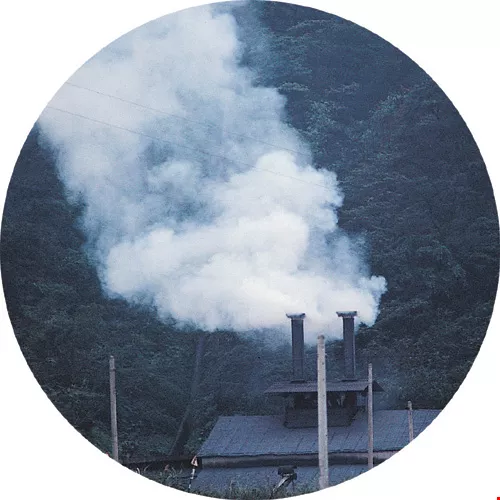
Foods and the environment are chock full of allergens. Their ubiquity is a hazard to the quality of life of allergy sufferers.
A fly in the ointment
Four years ago Xolair was approved for sale in the US, and the green light for sale within the European Union was given in 2005. Yet due to safety concerns, the price and the large population of allergy sufferers, at first it was only approved for sufferers over 12 years old with moderate to severe asthma. Now, some years later, nearly 100,000 Americans have used Xolair.
US$10,000 (about NT$330,000) a year in medical fees is pricey, but compared with before, when severe asthma sufferers averaged a yearly medical expense of US$50,000, it is worth trying.
Xolair saves sufferers from serious allergies, but allergy specialists have mixed feelings about the new drug's sale.
In the US, allergies are a major field with more than 10,000 practicing specialists. If allergies can one day be prevented or even eliminated, will this mean the professions of allergy specialists who test allergens and conduct immunotherapy will be threatened?
"Not at all. On the contrary, some doctors are actively studying how to use it in conjunction with immunotherapy," Chang points out. In the past, after doctors identified which allergen affected a sufferer, they would inject progressively increasing amounts of allergen into the body, allowing the immune system to gradually adapt to these allergens rather than wantonly launch an offensive. Yet such immunotherapy is protracted and time consuming, and by adding Xolair they can safely increase the allergen increments and shorten the course of treatment.
In Chang's view, the situation's not ideal yet even though Xolair is on the market.
Currently this drug has a high dosage (an injection once every two to four weeks, adjusted thereafter according to individual circumstances with some people stopping after a year or two) as well as a steep price, so major private insurers in the US will not cover those with mild allergies or whose symptoms are treatable with steroids. Thus the opportunities for using it are few, and this is a major downside. In addition, the dosage is too high for about 15% of asthma sufferers--those most severely affacted--because they have too much IgE in their systems (700 IU per milliliter of blood), so they were excluded from the early phase of clinical trials. Even though the drug has now been approved, this group lost their chance for treatment.

Foods and the environment are chock full of allergens. Their ubiquity is a hazard to the quality of life of allergy sufferers.
A missed opportunity
Chang empathizes with those serious asthmatics who can't get help, but an even greater regret he has is that Taiwan's biotech industry missed a prime opportunity.
Pharmaceuticals are a vital part of Taiwan's biotech industry. But due to legal restrictions, the road toward new drug development is slow going.
"Phase I clinical trials are not carried out in Taiwan," says Chang. Human testing bears the risk of criminal liability, so hardly anybody in Taiwan is willing to conduct Phase I clinical trials, which are the riskiest. But new drugs that have not undergone a Phase I clinical trial are solely dependent on lab data and have no market value; thus they are less able to attract investment or international cooperation. This is a serious disadvantage for Taiwan's small biotech firms.
An inadequate legislative framework is a major problem and poorly focused research is also a chief shortcoming. Chang candidly points out that there has long been a tendency in Taiwanese academia to value quantity of research output over quality.
"You won't find one research paper in a hundred with a high degree of academic and practical worth," says Chang. The majority of research lacks innovation and does not even have the most basic value.
In such an atmosphere, Taiwan drug manufacturers are currently stuck producing generic drugs, having lost the aspiration or courage to develop new drugs. There isn't even one drug company manufacturing proteins or antibodies.
After large pharmacuetical factories dedicated to manufacturing proteins sprang up in Singapore, South Korea and China, Taiwan's government looked into this issue last year, contacting Chang's company in hopes of marshaling Tanox's successful experience to spur domestic biotech drug manufacturing.
Yet at that time, the American pharmaceutical company Genentech was secretly discussing a US$919 million (around NT$30 billion) merger with Tanox. In November last year, before Taiwan's government reached a decision, the two companies signed a formal contract. Taiwan therefore missed its opportunity to build a platform for cooperation with a major international company. Chang is fraught with exasperation about this.

Foods and the environment are chock full of allergens. Their ubiquity is a hazard to the quality of life of allergy sufferers.
Back into the fray
By the time Xolair was ready to be launched in Taiwan, Chang had long since changed his role, leaving the boardroom for the lab.
As Chang and his wife built the firm together, perhaps it may appear to many to be a match made in heaven. Tanox not only successfully developed a new anti-allergy drug, it is now completing the Phase II clinical trial for another drug, Anti-CD4, used for late-stage AIDS patients for whom drug cocktail treatments no longer work. And it appears that success is just around the corner.
But in reality, Chang's marriage and his company's business both hit rough waters. When he and his wife divorced, the company became involved in a protracted lawsuit because another drug company had filched its technology. But in the end, Chang gained a patent and forced the other company to pay up in an out-of-court settlement.
Having endured divorce and a business crisis, Chang decided to return to Taiwan in 1996 at the invitation of the president of National Tsing Hua University, to serve as dean of the College of Life Sciences at his alma mater. Then in 2000 he began a three-year stint as CEO of the Development Center for Biotechnology.
After nearly seven years of administrative work, Chang hoped to return to his beloved research. In 2006 he was accepted as a research fellow at Academia Sinica's Genomics Research Center.
"Now is the time when I have been best able to get a handle my own research in ten years since returning home. I still have many dreams to fulfill," says Chang, boldly describing several research plans in his hands as he sits in his spanking new office in the newly completed Genomics Research Center.
In addition to a working on a new allergy drug--one that directly targets B-cells carrying IgE on the surface which he hopes can complement Xolair--and studying the mechanisms of anti-IgE, he is researching ways to improve antibody engineering techniques. And development of a new drug for lymphatic cancer is in progress.
Perhaps a career is like marriage. Now, as long-divorced Chang is embarking on his second marriage, his career in research is blooming once again.

Foods and the environment are chock full of allergens. Their ubiquity is a hazard to the quality of life of allergy sufferers.
Chang Tse-wen:Date of birth: August 25, 1947
Education: BS and MS in Chemistry, National Tsing Hua University
PhD in Cell and Developmental Biology, Harvard Medical School
Career: Manager, Molecular Immunology Department, Ortho (1977)
Director and Vice President of Research, Research Center, Cenocor (1981, 1984)
Professor, Department of Viology and Epidemiology, Baylor College of Medicine (1986-1997)Founder and Vice President of R&D, Tanox, Inc. (1987-1997)
Professor and Lecturer, College of Life Sciences, National Tsing Hua University (1996-2006)CEO, Development Center for Biotechnology (2001-2003)Distinguished Research Fellow, Genomics Research Center, Academia Sinica (2006)

Foods and the environment are chock full of allergens. Their ubiquity is a hazard to the quality of life of allergy sufferers.


@List.jpg?w=522&h=410&mode=crop&format=webp&quality=80)


