Take the Plunge! Diving in the Coral Reefs off Green Island
Jenny Hu / photos Su Yen / tr. by Jonathan Barnard
July 1995


Diving is one of the hottest new leisure activities in Taiwan. After getting their diving licenses, many can't wait to go abroad to take the plunge, but do you know that veterans of world-class diving spots have said, "The Great Barrier Reef doesn't have anything over Green Island"?
After shedding its veil of mystery and its Alcatraz-like reputation as an island for political prisoners, remote Green Island has been noticed once again for its unspoiled natural beauty. It's a place of dramatic cliffs and gigantic boulders, where white sand beaches meet grasslands. But more than this, its special geographic location puts it in the middle of the Kuroshio current, which runs from the equator and nurtures coral and tropical fish, making for a beautiful and colorful underwater world.
The choppy ocean is gray-blue and the sky silver, with a light drizzle falling. On this early summer afternoon, the northeast winds are blowing softly, and the ocean current is rather gentle. In a pavilion in Nanliao on the southwest coast of Green Island, a Japanese diver, accompanied by travel agents and local diving instructors, is preparing to go into the sea.
Underneath that series of waves washing against the shore is a bright and colorful coral reef, a veritable jungle of coral. Likened to "a flower garden at the bottom of the sea," it is the focus of Teiichiro Tachibana's investigation this afternoon. Lured by Green Island's excellent reputation, Tachibana, a coordinator for a Tokyo diving club, has come on an exploratory trip so that his club will be among the first to offer diving trips to the island.
The five members of his group put on wet suits, vests with buoyancy compensators, blocks of lead that weigh nearly 30 kilograms, and oxygen tanks. One after another, along the newly built diving path, they walk across the beach covered with shell fragments, toward the reef's edge under the sea. The end of the path is under water, connecting with the gently sloping coral reef. The five, their feet in flippers, splash through the waves. To reduce the force of the tide, they walk like crabs, sideways down the slope. When the water is as deep as their chests, they all put on their face masks and mouthpieces, take a deep breath, bring their heads under water and start swimming into the sea.
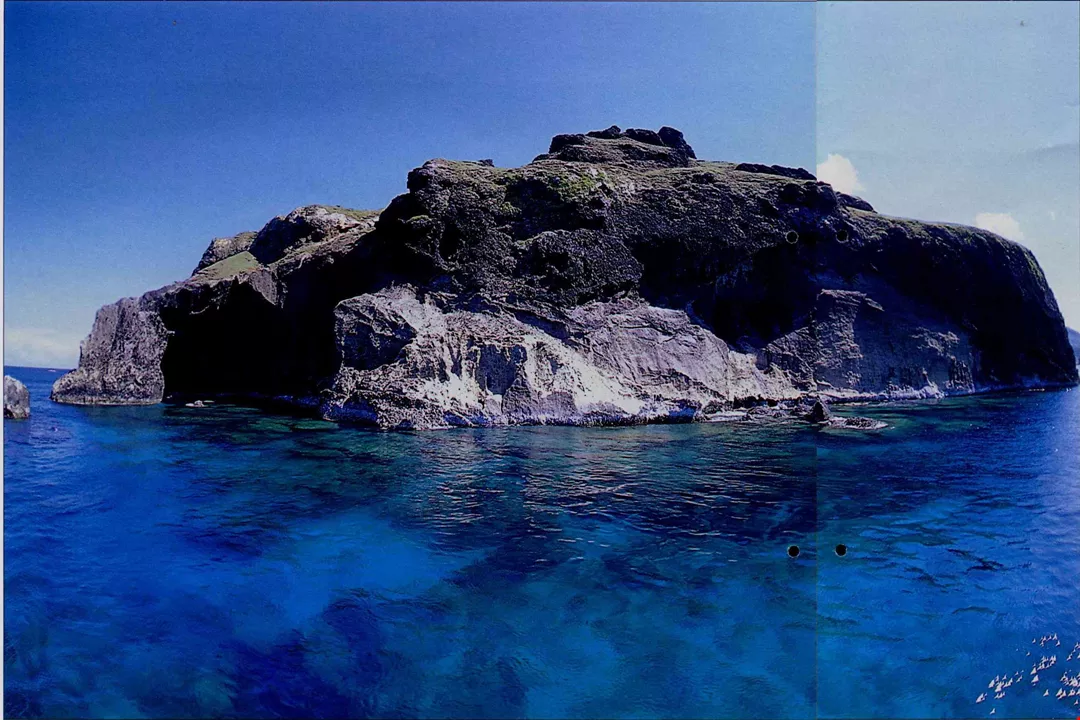
The blue sky and waters of Green Island nurture thriving underwater ecologies.
The garden of seas
To reduce their buoyancy, they adjust the air in their vests and slowly make their descent. Through their goggles, a clear and peaceful ocean world spans before them. Group after group of light blue light yellow and light green stony coral grow from the sandy sea bed. Red and green algae are scattered about. Thus begins their trip through this "ocean flower garden."
Ahead, the sea bed is terraced downward. The scenery all around them comes to life in the soft sunlight, revealing a busy and vibrant world at the bottom of the sea. Amid the surge channels and the sea bed that gently rises and falls, are soft coral groups, as colorful as fruit trees in flower, swaying like willows in the wind. They extend tentacles, shaking in the current, to catch food. Huge, erect staghorn corals branch like trees. Schools of tiny tropical fish, looking for food, shuttle back and forth amid the coral. Around and about are all varieties of colorful shells, conches, sea lilies, sea anemones, sea urchins. . . as well as scattered algae and Christmas tree worms attached to the stony coral. The entire effect is like a vast and festive garden on the ocean floor.
The divers have kept close to one another. They make an OK sign and bring out bread, which they wave at the fish. Soon tropical fish approach en masse, encircling them and silently feeding. Off to the side, a diving instructor sets up an underwater camera to make a record of this harmonious feast.
After being under water for about 15 minutes, before even half of their oxygen has been used up, one of the diving instructors becomes aware that the current is getting stronger. The tide is rising, which makes the current more turbulent, and he gestures for everyone to return. They head to shore, and by the time they reach the beach, the waves striking the shore have become rather testy.
After Tachibana, who has more than 20 years of diving experience, returns to the pavilion and changes clothes, he sits smoking on a low wall and looks out toward the sea. "Very pretty," he says again and again in heavily accented Chinese. "Not bad at all!"
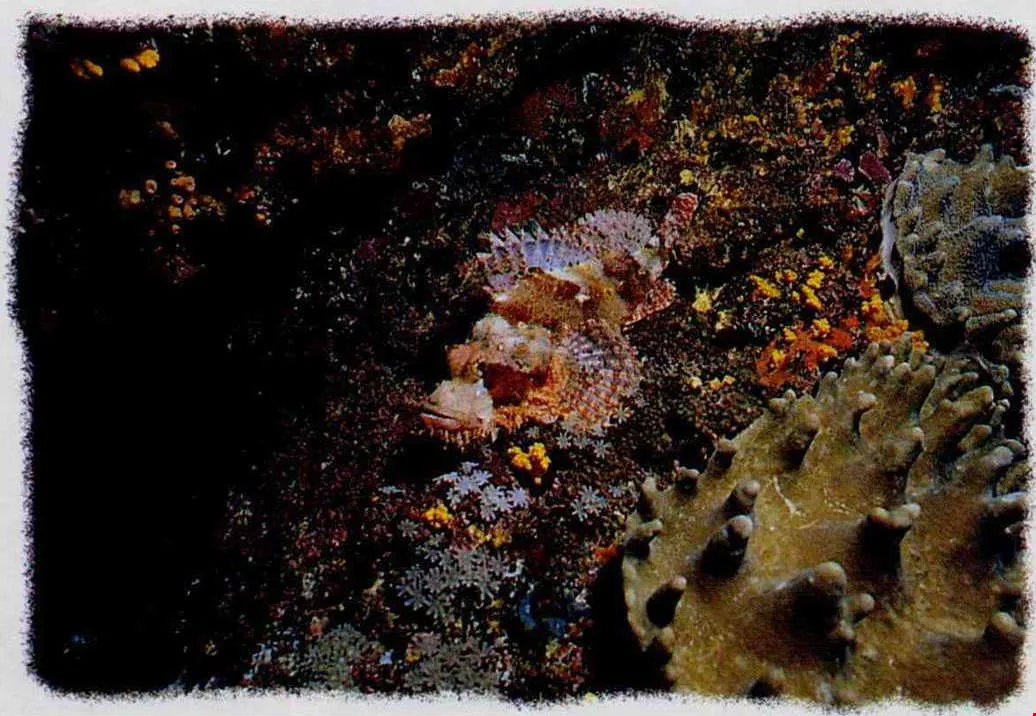
Hard to distinguish from actual rock, stonefish, with their poison glands in their hard fins, hide in the coral rock, heads half-exposed, waiting to pounce upon any small fish that might wander by.
A pearl of the Pacific
The impression that many Taiwanese have of Green Island, which sits alone in the Pacific about eight minutes by plane from Taitung, is of a place where political prisoners were incarcerated during the era of martial law, a place which for decades could not be visited and was shrouded in mystery. In 1990, in a new era of openness, the prison for political prisoners became a thing of the past. The Tourism Bureau's East Coast National Scenic Area Administration opened an office here and began to make plans for opening the island to tourism. Distant Green Island was suddenly no longer so distant. It offered unspoiled natural beauty, and its 3000 residents, largely fishermen, led simple lives. Then there were the goats and sika deer that had been released along the coast. All combined it was like a carefree paradise at a remote corner of the sea.
Every morning a small plane arrives from Taitung with tourists, few of whom don't "ooh" and "ah" as they gaze upon the beautiful coastline. Green Island was a volcano at the bottom of the sea 4.3 million years ago. After 3 million years of volcanic activity, it rose above the ocean surface. Today, besides mountains shaped by spouting volcanoes, it has a coast formed by long-term exposure to wind and water, steep cliffs that overlook the ocean, magnificent table lands created by ocean erosion, giant boulders of exposed andesite, vast grassy meadows that were once terraces under the sea, fine white sand beaches, gully-riven coral reefs, and hot springs that burst up from between reefs on the sea floor. What a tremendous variety of fantastic natural scenery, considering that the island can be covered by car in 40 minutes and on foot in four hours!
Still, the truly special beauty is not found on land. Green Island has always been inextricably linked to the sea, its greatest natural resource, and Green Islanders have always wrested their living from it. Now more and more divers are coming to Green Island. In their view, the island's real treasures are the colorful coral formations and the thriving underwater ecologies they support. Searching for spots in the Pacific region with the most eco-tourism potential, the Transportation, Telecommunications and Tourism Subcommittee of the Pacific Economic Cooperation Committee examined 18 areas submitted by member countries last year and finally selected Green Island as a case study for natural-resource-based tourism. It will serve as a model for developing other Pacific area sites that have abundant ecological resources. And if Green Island is a hit, its coral ecologies will largely be responsible.
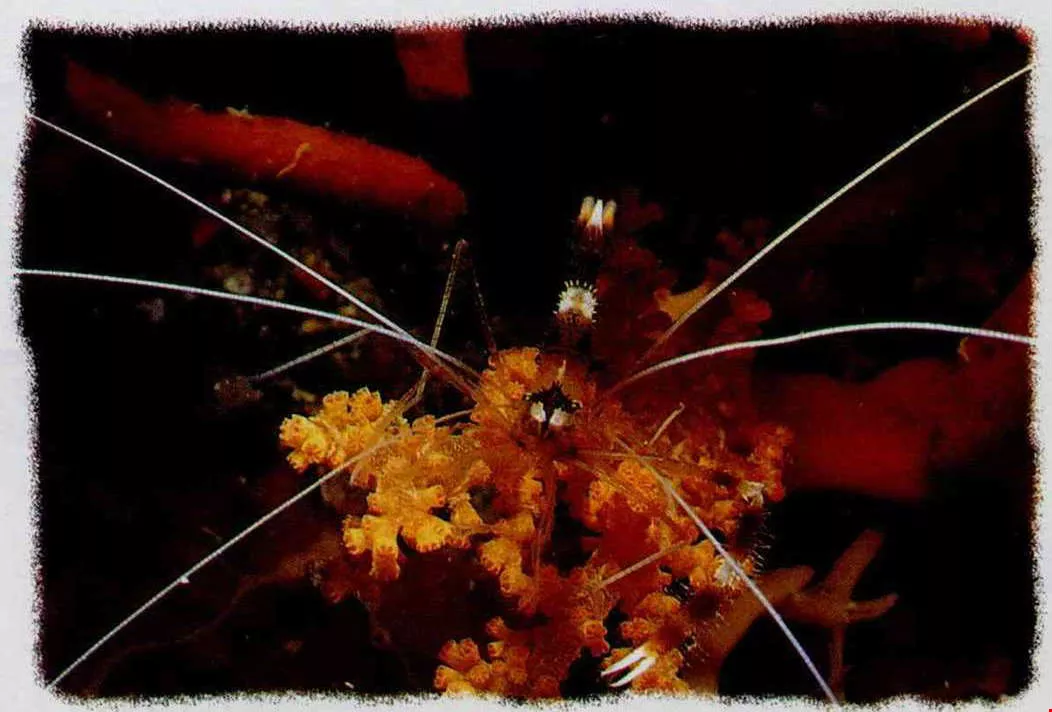
Banded coral shrimp are one of the most beautiful shrimp species found in coral reefs. How delicate are their six long and slender feelers! Eating decaying matter, parasites and other such detritus, they serve as sanitation workers of the seas.
Less than 0.2% of the sea
One diving company makes this sales pitch: "Now you can see only 30% of the world's beauty; the remaining 70% awaits your exploration." And amid the 70% of the world that is ocean, it's safe to say that coral reefs are what most captures people's attention.
Biologists long ago gave coral reefs a fitting description: "the tropical rain forests of the sea." Where coral grows in abundance, so too grow tens of thousands of seaweeds, sponges, shells, shrimps, crabs, fish, sea urchins, and starfish. Species of fish and smaller creatures live together in a coral reef, forming an ecological food chain.
The symbiotic algae that live in the cells of coral accomplish photosynthesis, which allows the coral to absorb nutrients that it metabolizes to build its bone structure. And the algae's abundant pigments are responsible for coral's vibrant colors. Then the viscous liquid the coral secretes provides a source of food for other ocean creatures. The craggy structure of the coral provides a natural home with ample places to hide, and a myriad of creatures gather here in a web of coexistence.
Coral reefs require clear, unpolluted water in shallow seas no deeper than 30 meters, so that the symbiotic algae can absorb enough light and the coral can feed on the organisms that float by. If the water's too hot or too cold the coral will die. Warm waters of 20-30●C year round are most suitable. The salinity of the water must be above 0.25%, and so reefs cannot be close to the mouth of a river. With all these restrictive conditions, the world's coral reefs are almost all found within 28 degrees of the equator, and their total area amounts to less than 0.2% of he world's oceans.
In Taiwan, coral reefs are found in the northeast corner, the east coast, Kenting, Penghu, Green Island, Orchid Island, and Hsiao Liuchiu. Because Hsiao Liuchiu, Green Island and Orchid Island are unpolluted, with strong ocean currents and clear water and without rivers dumping silt into the sea, they support coral and abundant communities of fish. But because of strict regulations imposed during the era of martial law and an absence of facilities, their treasures have only been explored by scholars and a few divers. Most people are very unfamiliar with them. And because there is no convenient transportation to Hsiao Liuchiu, and there are problems involving indigenous people on Orchid Island, neither are as convenient for developing diving-based tourism as Green Island.
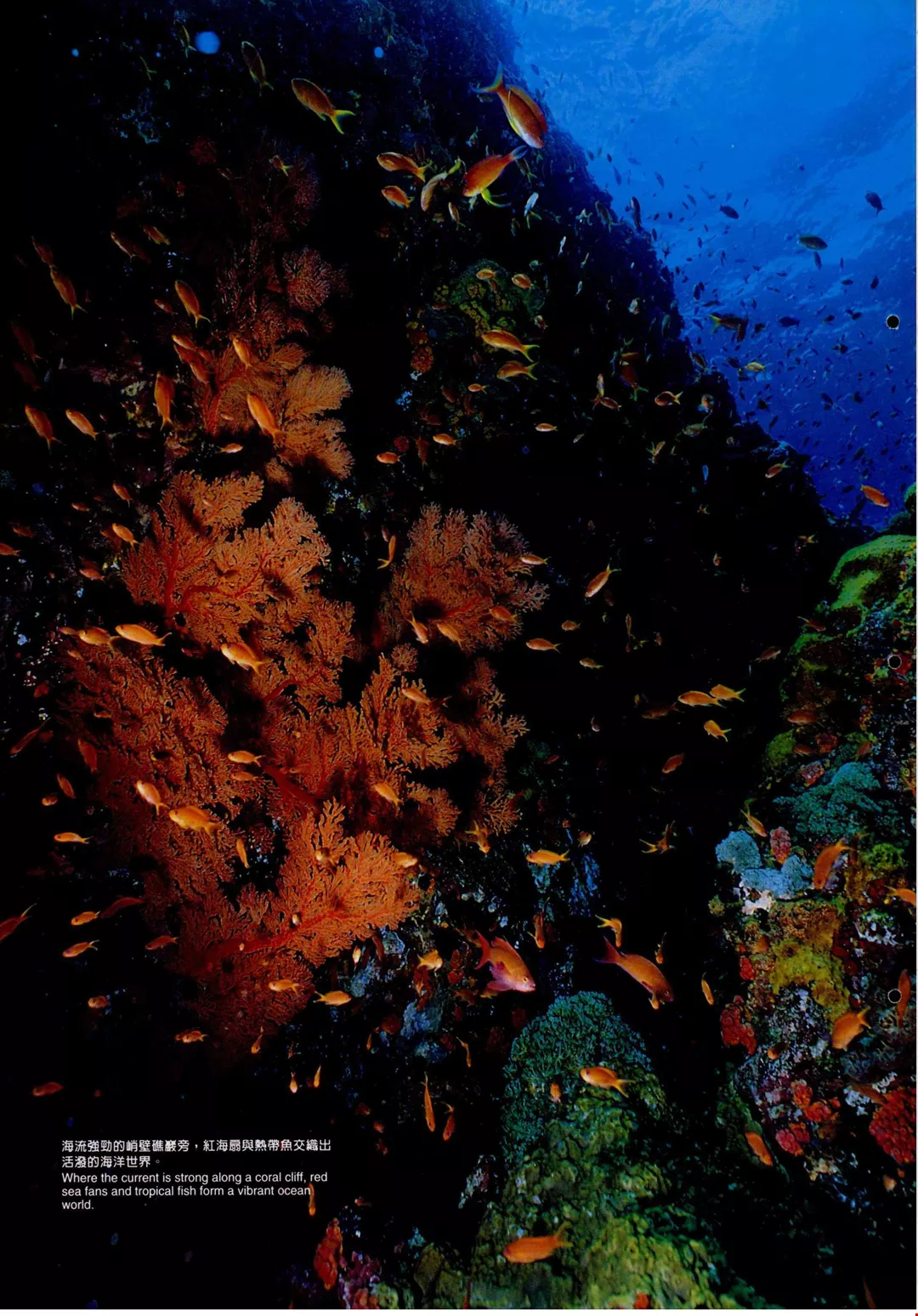
Where the current is strong along a coral cliff, red sea fans and tropical fish form a vibrant ocean world.
The paradise nurtured by the Kuroshio current
The veil of mystery thrown over the island for several decades blocked progress but also prevented damage wreaked by development and its hordes. And so the island's waters remain pristine. On clear days the ocean around the island is very blue, and one can see 30--or even 40--meters in the water. Before the planes even land, their passengers have been given a glimpse at the coral world under the sea.
Looking east from a cliff top known as "the Little Great Wall," one can see clearly how two currents, one on the left and one on the right, merge not far from shore. Combined they are the Kuroshio current, a warm current coming from the equator. After passing the Philippines, the Kuroshio splits into two currents when it passes by Orchid Island and Green Island off Taiwan's East Coast. They rejoin just north of Green Island and continue as a single current, flowing toward Okinawa.
The Kuroshio current allows the ocean water around Green Island to be above 20●C all year long. And because the water is clear here, stony coral and soft coral groups abound, with high rates of ground over. The current also brings many tropical and sub-tropical fish here, creating a vibrant coral ecology.
On the side of a giant coral formation that is 100 or even 1000-plus years old, grow water lilies, which are a kind of echinoderm that looks like a flower blooming in the sea. With backs striped yellow and blue, a school of fusilierfish swim by. A clownfish, a strange being that lives on sea anemones, is busy delving into everything. Colorful butterflyfish and damselfish hiding in the web of coral reveal half their heads. Hawkfish rest on top of the coral waiting to pounce upon any small fish that might float by. On the sea floor 20 meters or more down, garden eels that resemble long whips are catching plankton. When they see the divers move close, they pull back into the sands. The goatfish use two long whiskers under their cheeks to feel for food hiding in the sand. At the side of a cliff, a group of bright red sea fans shake with the current, and a school of light green, light purple, and light red anthids float by. Menacing lionfish, covered with what seem to be thorns and claws, swim along face down. Upon seeing human divers--what strange creatures!--sea snakes swim by and touch their flippers....
The festive tropical flavor of the coral reefs off of Green Island is abundantly clear. "Some diving sites here are just as good as those in the Great Barrier Reef of Australia," says Su Yan, one of Taiwan's most experienced diving instructors.
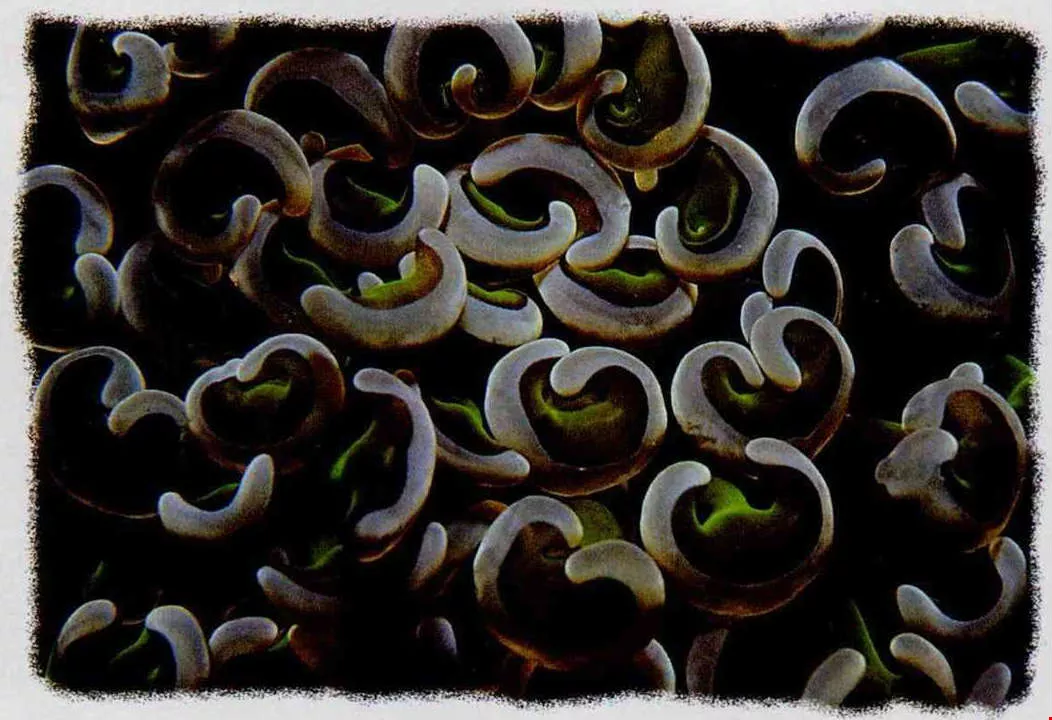
Coral is constructed of many individual polyps. Here, in hard coral that is part of a coral reef, the ends of the polyps have opened to allow the symbiotic algae within to accomplish photosynthesis.
Any time, any place
Generally speaking, a good spot for diving means a place where the visibility is good, the varieties of fish are numerous, and the coral is lush. In the view of many who have dived around Green Island, it ranks among such world-class diving sites as Palau, Sipadan, and the Maldives. Since the repeal of martial law, under the policy of making the East Coast National Scenic Area into "a vacation destination of international standard," various facilities, such as diving paths and pavilions, have been completed since last year. Privately operated bungalows, hotels, diving agencies and recreational boats have also opened to business, with the hope that the island will soon become a paradise for divers and lovers of ocean ecology.
From October to April, during the season of northeast rains, on the east and north coasts of Green Island the typical scene is of stormy seas, dark reefs and waves chipping away at the cliff walls. At this time the soft coral dwindles and large fish that move in giant schools grow in number. On the slopes of the reef, you can see fierce jackfish and sharks that grow nearly a meter long cruising about slowly. It's dangerous and exciting. Nocturnal fish, such as squirrelfish which gather in schools of several hundred, hide in the crevices of the reef and nervously shoot back into their holes as soon as humans approach. And on the south and west coasts, because the hills on the island block the wind and rain, the soft coral in the sea grows lush.
Wind direction influences ocean currents, and is a key factor when divers decide whether or not to go into the water. The central hills on Green Island play the role of "wind terminator." During the northeast rains when the northeast coast has very choppy seas, the southwest coast still has calm waters, when its garden undersea is as beautiful as ever. And when the summer winds bring the southwest rains, divers can go to the northern reefs. All year long, except during typhoons, divers needn't worry about not being able to get into the water.
Dreaded boat changing virtually doesn't exist here. Abroad, to reach many world-class diving sites, you've got to spend a few hours in transit, switching from planes to boats before arriving, but on the southwest and north coasts of Green Island, you can just walk right off the beach to world-class diving scenery. Even if you want a take a boat to leave the harbor and do some deep-sea diving, it's just a short boat ride away. In less than one hour you're there. And so when divers come to Green Island, whether they rent their own bungalow or stay at the Green Island Hotel dorm, they need stay just three days and two nights for a relaxed island diving vacation. If you lack a diving license, but would still like to take a look at the underwater scenery, you can go to a certified diving instructor right on the island and say you'd like to "experience diving." He can take you scuba diving individually or give a group of you a look at the underwater world snorkeling.
People in the diving world have described the ocean as "the world of inner space." You leave the land and enter a gravity-free state. As you descend the sunlight thins, and your sense of distance and direction are distorted. At this time, let your spirits and body relax, and feel the brush of the current. You're just another creature in the tropical sea.
[Picture Caption]
.p36
There are more than 400 varieties of coral around Green Island, more even than on the Great Barrier Reef. This rare abundance makes it ideal for developing eco-tourism.
p.38
Hard to distinguish from actual rock, stonefish, with their poison glands in their hard fins, hide in the coral rock, heads half-exposed, waiting to pounce upon any small fish that might wander by.
p.38
The blue sky and waters of Green Island nurture thriving underwater ecologies.
p.39
Banded coral shrimp are one of the most beautiful shrimp species found in coral reefs. How delicate are their six long and slender feelers! Eating decaying matter, parasites and other such detritus, they serve as sanitation workers of the seas.
p.40
Where the current is strong along a coral cliff, red sea fans and tropical fish form a vibrant ocean world.
p.41
Coral is constructed of many individual polyps. Here, in hard coral that is part of a coral reef, the ends of the polyps have opened to allow the symbiotic algae within to accomplish photosynthesis.
p.42
Orange-red tube coral usually grows at depths of ten meters or more in the caves of coral reefs. Here tube corals have opened their tentacles to catch plankton.
p.42
Sea squirts look like works of glass art. One of the most complex invertebrates, they rely on the filters in their orifices to extract plankton from the sea water.
p.42
A tiny anemone crab enjoying a stroll on a sea anemone. The sea anemone's tentacles form a natural cover, on which are stinging cells that paralyze intruders. The sea anemone makes them its home.
p.43
By staghorn coral, you often find moorish idols--with their black, yellow and white bodies and their long fins--as well as schools of damselfish, who rarely wander too far. When the damselfish encounter a predator, they quickly hide in the coral.
p.44
A clownfish seeking protection in the tentacles of a sea anemone. His leftovers are the sea anemone's gourmet treats.
p.45
Gateway Rock. If only we show love and respect for the world of nature, the oceans will welcome us.
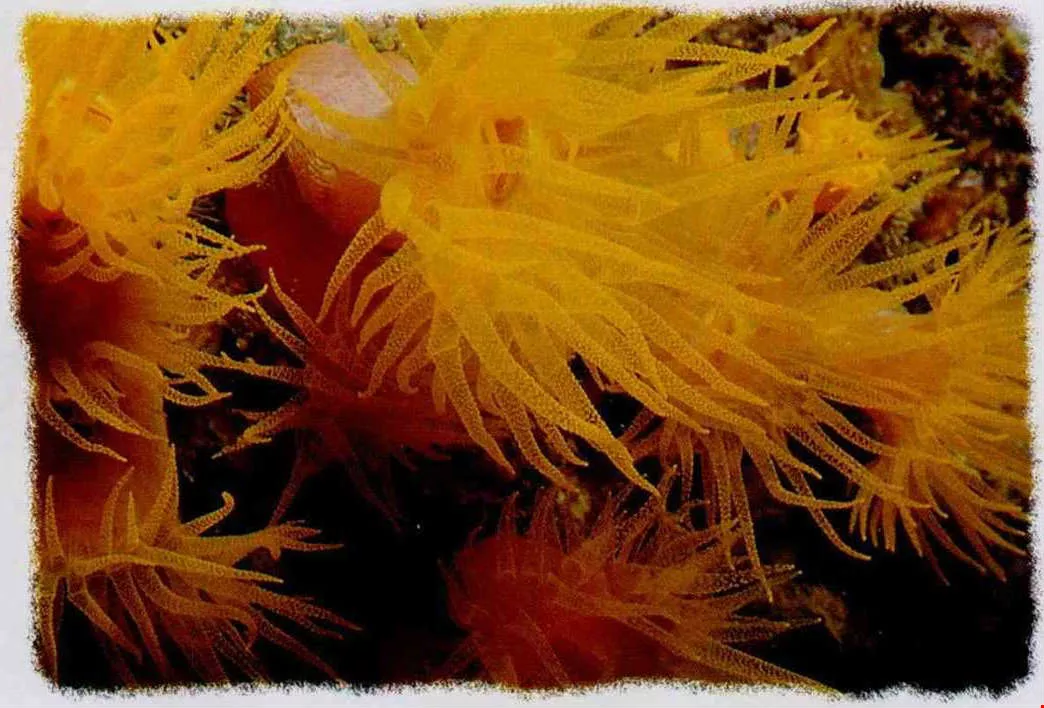
Orange-red tube coral usually grows at depths of ten meters or more in the caves of coral reefs. Here tube corals have opened their tentacles to catch plankton.
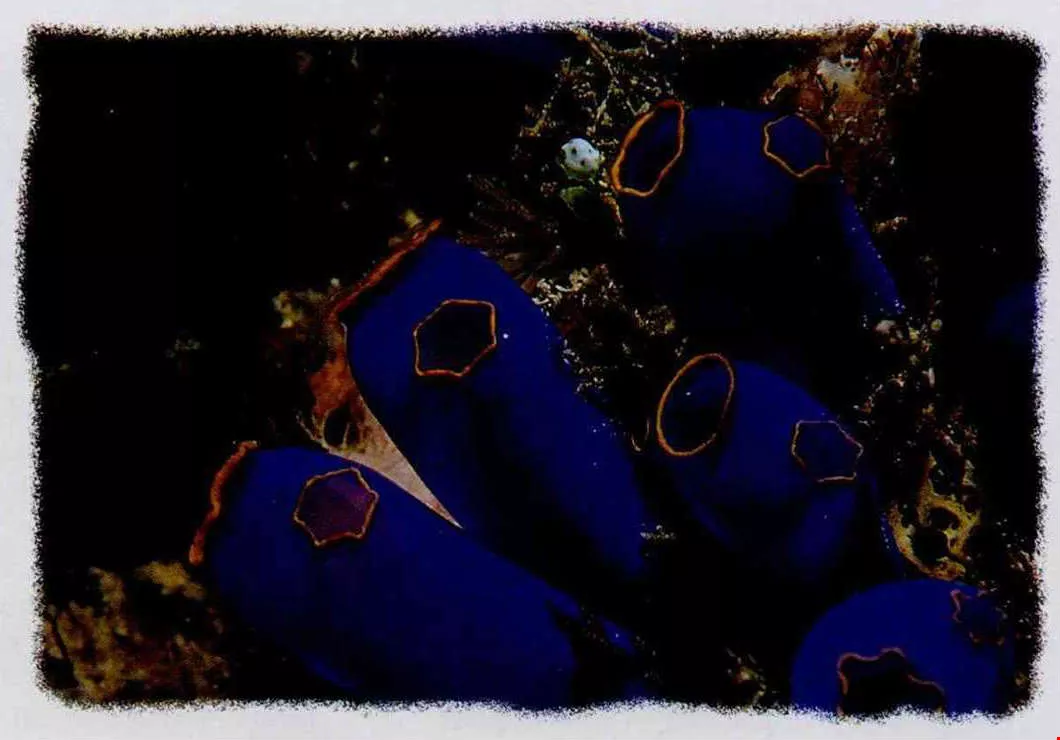
Sea squirts look like works of glass art. One of the most complex invertebrates, they rely on the filters in their orifices to extract plankton from the sea water.
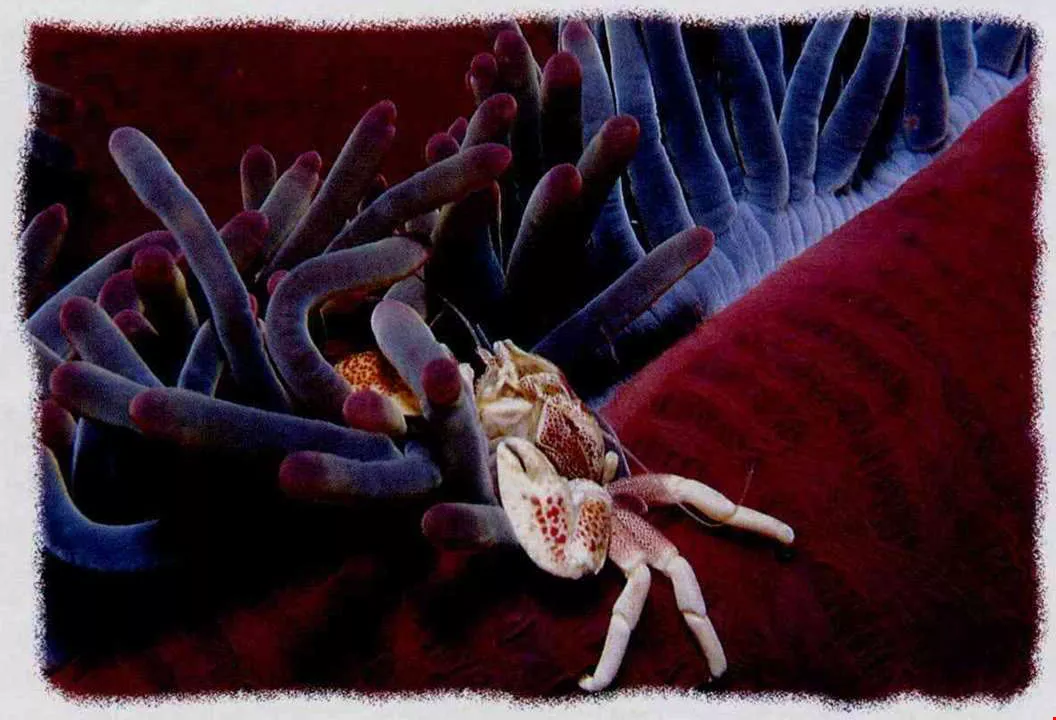
A tiny anemone crab enjoying a stroll on a sea anemone. The sea anemone's tentacles form a natural cover, on which are stinging cells that paralyze intruders. The sea anemone makes them its home.
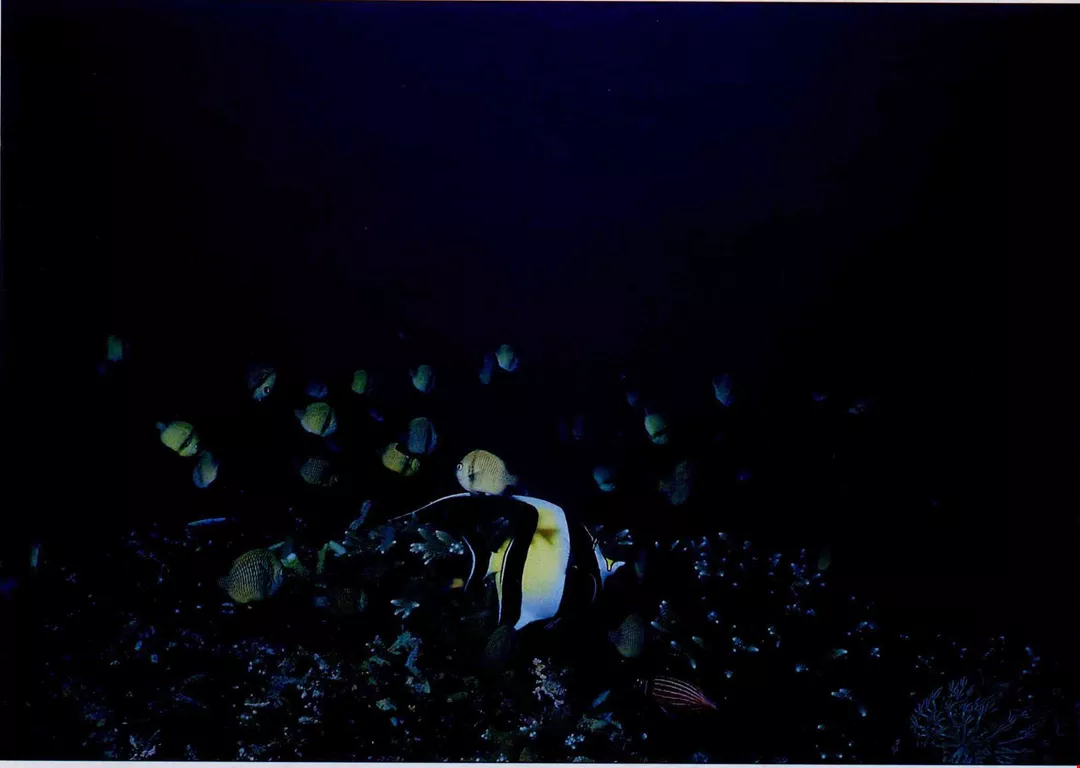
By staghorn coral, you often find moorish idols--with their black, yellow and white bodies and their long fins--as well as schools of damselfish, who rarely wander too far. When the damselfish encounter a predator, they quickly hide in the coral.
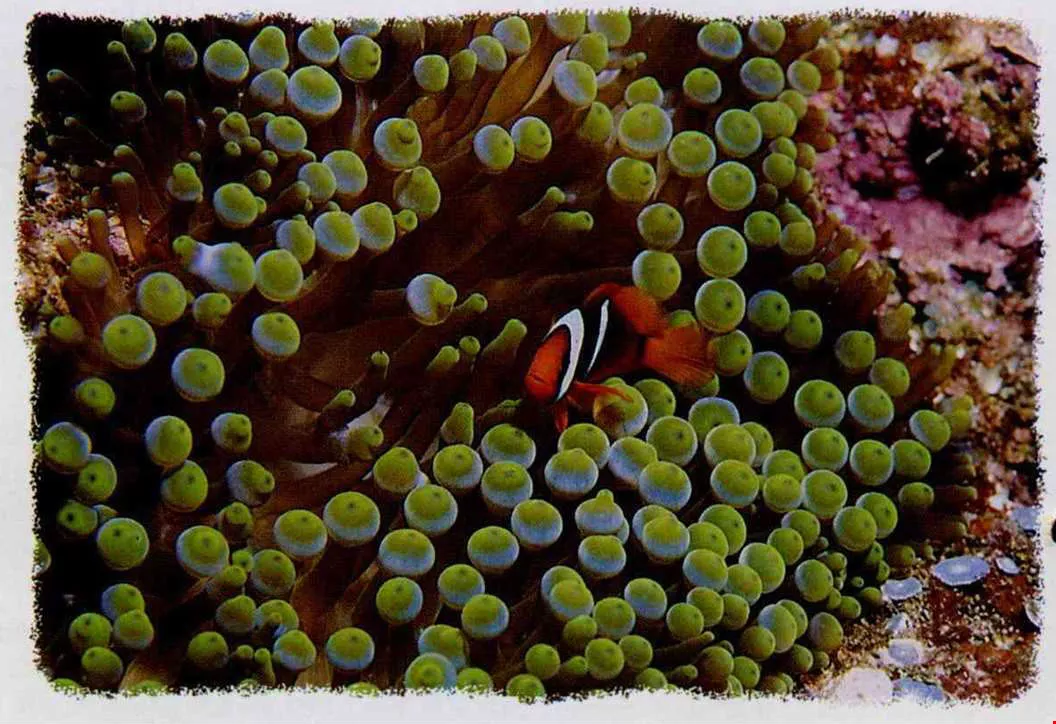
A clownfish seeking protection in the tentacles of a sea anemone. His leftovers are the sea anemone's gourmet treats.
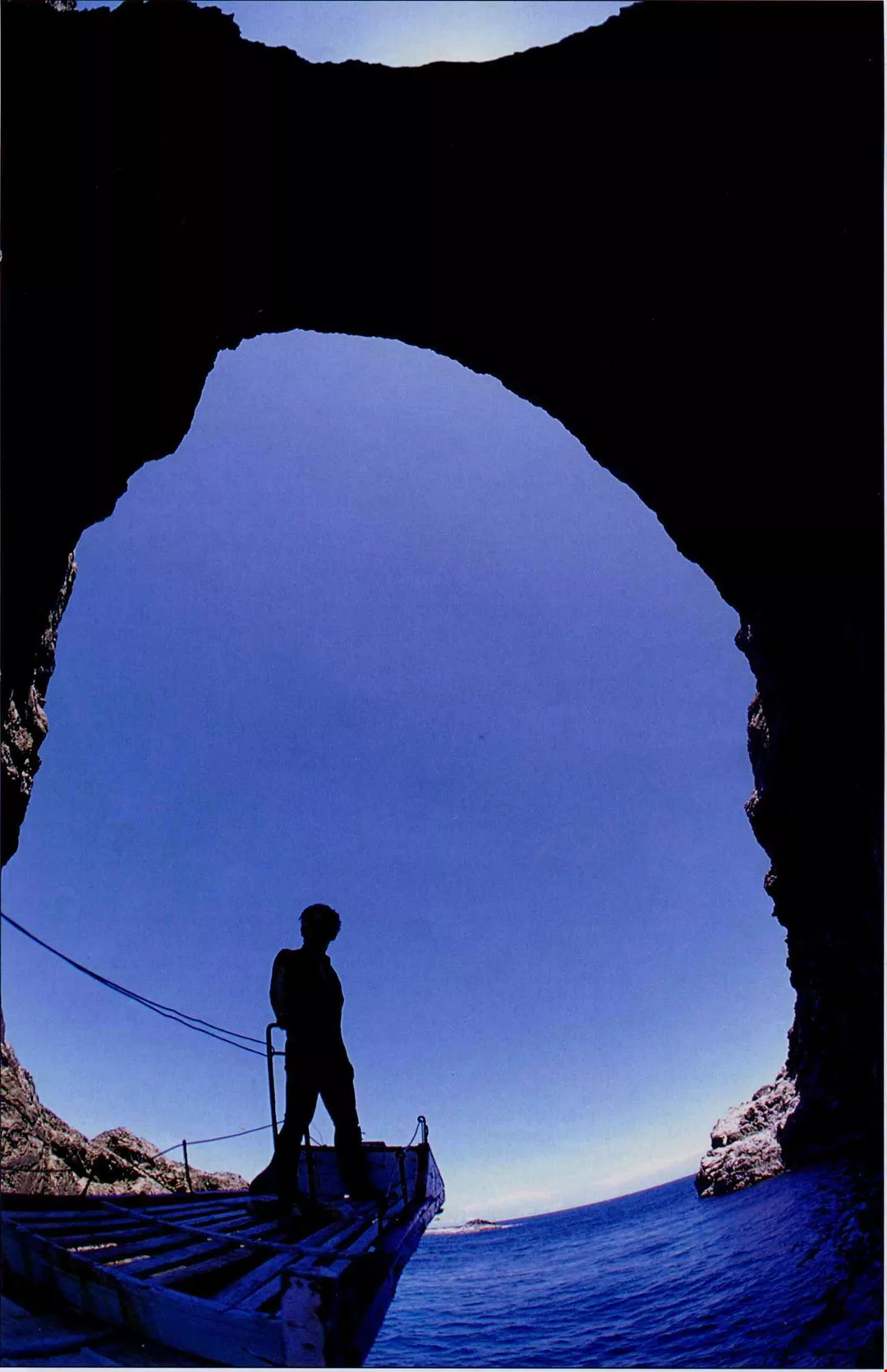
Gateway Rock. If only we show love and respect for the world of nature, the oceans will welcome us.


@List.jpg?w=522&h=410&mode=crop&format=webp&quality=80)


