A Vanishing Breed-The Storytellers of Ilan
Tsai Wen-ting / photos Pu Hua-chih / tr. by David Mayer
March 2000


Scholars of oral tradition have recently come across a gold mine on the banks of Tungshan Creek in Ilan County. It is a living gold mine-the septuagenarian cousins Luo Ah-feng and Chen Ah-mien. Once these two cousins, who cannot read, get rolling, you never know when the stories will stop tripping off their tongues. If you're interested, they are only too happy to regale you with 60 or 70 folk tales and over 200 old adages, folk songs, and riddles. Bewitched by their endless store of entertainment, the scholars who show up on their doorstep never seem to notice as the sun crosses the sky and sinks toward the western horizon. Even Scheherazade, the sultan's bride who steered her husband away from his murderous "black widower" habit by recounting the tales of the Arabian Nights, would be hard put to outperform this vivacious duo.
Ah-feng and Ah-mien are first cousins. They grew up together like sisters, which would not normally be the case in Chinese culture, for the two are related through their mothers. Their maternal grandparents had no son, however, so bridegrooms were taken into the household in order to continue the family line. As children, Ah-feng and Ah-mien herded water buffalo and picked tea leaves together, and they slept in the same bed until they got married.
A life of hard labor
Ah-feng just turned 77 years old over the recent lunar new year, while Ah-mien turned 76. (The Taiwanese traditionally add a year to a person's age not on the anniversary of their birth, but on the lunar new year.) When the two get to telling folk tales and chanting four-line stage rhymes, they display superb powers of recall, and can effortlessly rattle off the lyrics to theatricals that they haven't seen in years. When they find themselves at variance on words or tunes, a spirited argument is sure to ensue. To the delight of their interviewer, they begin to recall the days of their youth.
Says Ah-feng, "We've worked hard all our lives." They grew up in a rural village in a time of scarcity. "We never ate meat, and our bed was just a thin bamboo mat. Our ragged old quilt felt more like a bundle of leaves and twigs, and the sleeping mat was very uncomfortable." In rural households, children were expected to help with the chores. Ah-feng and Ah-mien started working outside the home at age seven or eight. As little girls they usually tended water buffalo and gathered razor grass. While they only weighed about 40 pounds, they were expected to gather two bundles of razor grass in a day, and they always returned home with their hands cut to ribbons. There was no medicine to treat their wounds, so they would just stick their hands in scalding hot water and steel themselves for another day's work.
The story of the turtle
Many stories and folk songs are closely linked to their area of origin. Ah-mien tells us a story about Turtle Island, a famous local landmark that looms a few kilometers offshore. Long, long ago, a Korean pirate came ashore in Ilan and made his way inland past Mt. Taiping and all the way to Lake Chingshui, where he ran across a magic turtle. Taking a fancy to the turtle, he decided to take it back to Korea. Slowly the turtle plodded along behind the pirate. When the pair finally made their way to the mouth of Lanyang River, the turtle surveyed the topography and exclaimed, "If I don't stay here to hold everything in place, people won't be able to live in Ilan." The turtle refused to go any farther, but the pirate beat it with a club, splitting its nose. The turtle then dove into the sea and turned into Turtle Island just offshore from the river's mouth, forever more to stand watch over Ilan.
Hu Wan-chuan, a professor of Chinese literature at Tsinghua University, was the first person in Taiwan to carry out a large-scale, systematic campaign to collect local folklore and interview storytellers. At an academic conference on the need to preserve Taiwan's vanishing folklore, Professor Hu noted that the charm of popular tourist sites is due in large part to the stories connected with them. West Lake in Hangzhou isn't famous just for its beauty, but also for the fact that it was there that Xu Xian met his star-crossed lover, the beautiful Bai Niang-niang (a snake spirit who took a fancy to Xu and changed into human form to marry him). Writers have penned moving descriptions of their love story, and no Chinese can visit the lake without thinking of the fabled romance between man and enchantress. The significance of local folklore, according to Hu, stems from the fact that it "colors our local surroundings with a palette of human sentiment, and makes our lives more meaningful."
Where folklore is born
The first requirement of any storyteller is a good memory. They've got to be able to tell lots of stories from start to finish, and they have to be entertaining. A comprehensive study in mainland China turned up some 10,000 storytellers capable of recounting at least 50 stories, and there were a few prodigies who could tell over 1,000. The many folk tales that they told invariably revealed a lot about local customs and living conditions.
Chen Yi-yuen, an assistant professor in the Chinese department at National Chung Cheng University, has spent more time than anyone working with Ah-feng and Ah-mien, and has compiled an anthology of their stories. The two cousins made a strong impression on Chen the very first time he showed up for a visit. The two old women started by showing Chen and some students around the village. Stopping first to feed the chickens before going out, Ah-feng rattled off a riddle about chickens: "Pointy head and pointy tail. They dump a stinky shit, but no one turns them down at the table." They came across a water buffalo, and out came another riddle. And so it went with a cat and dog. She had a riddle for just about everything.
When the group got to Ah-mien's vegetable plot, the two cousins fired off riddles about white radishes, sugar cane, and day lilies. Just before they got back to Ah-mien's home she challenged them to guess one: "It was a loner in life, but they call on it just about every day now that it's dead. It didn't have a shirt on its back in life, but it has all the clothes it can handle in the afterlife." Answer: the bamboo pole that people use to hang out their laundry. Another riddle: "It walks on its hands, and always keeps to the same old path." Answer: a clock. A longer riddle: "He wears black leather and crosses over hill and dale in search of a mate. Everyone laughs at this little vagabond, but he's just doing what his boss told him to do." Answer: the pig herder that used to be seen roaming from village to village offering the stud services of his boar. With a mischievous grin on her face, Ah-feng launches into a slightly dirty riddle: "He asked her to stay with him. Said he, 'We were meant to stay in pairs, for either of us alone makes a lonely sight. Legs apart now, and I'll show you how it works.'" Answer: chopsticks.
Sometimes the two would ask their visitors to point out things and challenge their hosts to think up a corresponding riddle. Exclaims Chen Yi-yuen with a sigh, "I wonder how much more they've got inside that we just haven't gotten them to tell!"
Stories from the common folk
Explains Professor Chen, "The term 'oral traditions' refers to anonymously authored entertainment passed from one person to the next without the aid of written language. In addition to folk tales, legends, and myths, they also include songs, proverbs, and even works of theater. They often get transformed slightly as they traverse space and time. You could look upon them as a sort of collective creation in which everyone has had a hand." Because oral traditions come from everyday life, the stories and songs reflect our hopes, passions, and disappointments. They show how we live and work. When the Qing-dynasty writer Pu Songling authored Liao Zhai (one of China's best known collections of short stories), he was remembering the stories he had heard from business travelers. The Iliad and the Odyssey were inspired by popular ballads, and Grimm's Fairy Tales were adapted from Rhenish folklore.
These stories and songs were the closest thing to books in times when few learned to read. Oral traditions teach people the rhythm of the seasons and contain a wealth of common sense about how to deal with the vicissitudes of life. Legends about local gods and great heroes of the past contain many a moral lesson for the listener.
There is little that Ah-mien and Ah-feng did not experience of rural labor during their youth. Besides planting rice seedlings, weeding the paddies, and harvesting the grain, they were also expected to help out with the neighbors' harvests, and they often hired themselves out to work in neighboring citrus orchards, sugar cane fields, and tea plantations. Through it all, they would share stories and songs with other hardworking young girls. As they worked their way through their separate patches they would take turns singing songs each time they met up with each other. Sometimes it might be a tea-picking song, at others perhaps something with a moral lesson. At other times they would sing songs full of insults aimed at teapickers on the neighboring hill. Says Ah-feng, "We used to sing all day long. Even when we were feeling down, we'd still walk around singing." The only exception was the rice harvest, for they spent much of the day holding the sickle in their teeth to free up both hands.
Weeding the flooded rice paddies was an especially hard task. After standing in the muck all day, they would often return home with eczema and other skin problems. At home everyone would sit on benches around the kitchen fire, burning leaves and twigs and using the smoke to fumigate their feet. All the while, they entertained themselves by taking turns telling stories. Back in those days, when there was no such thing as television or multimedia entertainment, people could tell folk tales "until the cows came home."
Death is final
Ah-feng's father, Lin Pang-hsien, was an excellent storyteller and a very knowledgeable man. Of him it was said, "You can ask him anything about anything. He even knows how many celestial fairies there are in heaven." He helped interpret the meaning of the frenzied movements of the local shaman boy, and the people in town would often ask him to explain the cryptically worded fortunes handed out at the temples. His interpretations were always delivered in the form of a story. Ah-feng is fond of repeating a version of "Meng Jiang nu and the First Emperor of Qin" that she heard from her father. The story is known to every Chinese school child, but Ah-feng departs considerably from the one known throughout China.
As Ah-feng tells it, a fairy gave the emperor two flowers, one not yet opened and the other in full bloom. The fairy instructed the emperor to give the closed bud to his wife and the other to his mother, but the emperor thought the one in full bloom much more beautiful and so gave it to his wife. Just like the flower, however, his wife soon passed beyond her prime and turned haggard, while his mother's beauty only increased. The emperor fell in love with his mother and asked her to marry him. How can one turn down the emperor? She agreed to his request on the condition that the emperor block off heaven's view of earth. To satisfy her request, the emperor began building the Great Wall.
Countless laborers died in the project, and the dangers involved were well known to all, including young Meng Jiang nu. Just seven days after her marriage, Meng Jiang nu's husband was conscripted into the construction of the wall. After years without word from her husband, Meng Jiang nu set out to find him. At a small shrine, the local Earth God informed her of a spot at the foot of the Great Wall where she would find her husband's bones. Taking up the bones, she began to cry. Lo and behold! Her tears worked a powerful magic. The bones began to acquire flesh, and to form a complete skeleton once again. The Earth God reacted with alarm: "If this man comes back to life, human affairs will be thrown into complete chaos!" Through a bit of scheming, the deity managed to prevent the resurrection. Ever since then the Earth God has been responsible for looking after the bodies of the departed, which is why there is an Earth God at every grave today.
This story tells a tale of steadfast love of a wife for her husband, and reminds us of the inevitability of aging and death. Ah-feng still remembers clearly the day she heard her father tell this story, and the crestfallen face of the woman who had come to him asking about her marriage.
Mental gymnastics and social skills
Ah-Pang, as Ah-feng's father was nicknamed, used to quiz the kids on math problems to be worked out in the head while they worked. "There's a persimmon tree on the mountaintop. Any five persimmons picked from that tree will weigh 1 jin 2 liang, so if you want 180 jin of persimmons, how many are you going to have to pick?" Ah-mien remembers figuring this one out: "Five persimmons weigh 1 jin 2 liang. Ten weigh 2 jin 4 liang. Twenty persimmons weigh 4 and a half jin, and 40 weigh 9 jin. 180 jin is 20 times more than 9 jin, so I'd need to pick 800 persimmons."
In addition to their usefulness as a teaching tool, stories bridged the distance between people. The story of "The Underworld King and Gutong Guizai" is a favorite of Ah-feng and Ah-mien. Gutong Guizai goes on a tour of the nether regions together with the Underworld King, but things get confused and he accidentally re-emerges in the land of the living as a pig. The Underworld King intercedes and has him reincarnated as the son of a rich man, but Gutong Guizai neglects to drink a potion intended to make him forget his former existence. When he starts speaking just three days out of the womb, the frightened rich man hurls the baby to his death.
It isn't just the story itself that makes "Underworld King and Gutong Guizai" such a favorite of the two cousins. The first time they heard it, they were 17 and 18 years old. The two had hired themselves out to do some work at a fruit orchard, where they shared the chores with a bunch of other young girls. The orchard owner's son, hoping to strike up a conversation with the girls, asked them: "Have you ever heard the story about the Underworld King and Gutong Guizai?" A half-century later, the two still relish the blushing happiness of that encounter as if it were yesterday.
Witness to the times
Relations between the sexes have been a subject of fascination at all places and in all times, to be sure. In Huwei Township, Yunlin County, old Chen Hsi-ken is a walking collection of jokes and four-line rhymes that certainly qualify as naughty, though not quite raunchy. Chen received advanced schooling under the Japanese colonial regime and worked at the water conservancy bureau, where his efforts to coordinate water rights and mediate disputes brought him into frequent contact with the local farmers. His ready repertoire of jokes stood him in good stead with the farmers. As the old saying goes, "If farmers don't tell dirty jokes, the crops won't grow." For farmers who spend the greater part of their lives sweating away at grueling field chores, a cup of tea and a dirty joke or two are the best way to forget about one's cares for a while. Chen Yi-yuen points out that "oral traditions are an intimate part of every aspect of everyday life," and adds that for this reason it is not enough just to record stories in written form. You also have to note when and where the storyteller heard each particular story. Once you understand the relationship between a story and the social context from which it springs forth, a story can serve as a witness to its times.
During the Japanese colonial period, for example, life in the countryside was tough. Key food staples were rationed, and people generally went long periods of time without eating meat. For Ah-feng and Ah-mien, mention of the colonial period spurs recollections of the prognostications made by Liu Po-wen 500 years ago. These prophecies have been passed down over generations, and the two cousins declare that they have come true. "When I was little, my grandmother told me one: 'There will be houses, but no one living in them. There will be roads, but no one walking them. The fields will lie fallow, and there will be nine women to every one man.' Now isn't that exactly what it was like during the war? And here's another one they used to say: 'Black ships will fly overhead, and metal wire will speak.' My grandmother never knew what that meant, but it was about airplanes and telephones."
Because there weren't any other children at home to help out with the chores, the two girls' parents kept them at home until they were over 20 years old, which was pushing spinster status by the standards of their day. They didn't get married until after Taiwan reverted to Chinese rule. Each married into a farming family, where the workload was heavy. "They say you're best off not marrying into a farming family because tears will fall like rain and you'll have to make snail shells do for water buckets." Once they had moved off to different communities, they no longer had nearly so many opportunities to share stories and songs.
Storytellers in our midst
Taiwan is a treasure trove of folklore. Apart from such ethnic groups as the aborigines and the early Minnan and Hakka immigrants, there are also more recent immigrants from every part of mainland China. The island presents a virtual microcosm of Chinese oral tradition, but it has only been in the last ten years that anyone has begun to undertake a systematic study of our oral traditions and storytellers. Chen Yi-yuen reports that when he took part ten years ago in the compilation of a book on oral traditions, he discovered that very little information was available concerning Taiwan. To his surprise, the most comprehensive work about Taiwan had actually been published in mainland China.
Life in Taiwan is changing quickly, and our oral traditions are rapidly disappearing. Scholars, recognizing this fact, have begun to hold symposia and conduct surveys of oral traditions in one locality after another. Hu Wan-chuan was the first person active in this field. Working together with county culture centers throughout much of Taiwan, he has trained many people to take part in these surveys, and scholars with an interest in Taiwan's oral histories have now published over 70 books. Groups in Taitung, Ilan, Taipei, Miaoli, Taichung, Chiayi, Yunlin, and even Penghu and Kinmen have completed large and systematic surveys of local oral traditions. They have also interviewed many old storytellers. The group studying oral traditions in Ilan came to focus on Ah-feng and Ah-mien pretty much by accident-their niece Lin Su-chun just happened to be helping with the survey. After running all over the county searching in vain for storytellers, it suddenly occurred to Lin that she had two aunts who always seemed to be ready with a four-liner for every occasion. "It turns out," says Lin, "that the storytellers the academic community is making such a fuss over are just regular people living regular lives. They might very well be people in your family."
1,001 Arabian Nights
Today's parents still tell their children bedtime stories, just like their parents before them. Children enter into the land of dreams accompanied by a colorful cast of characters from "Snow White," "Peter Pan," "Little Red Riding Hood," "Seven Little Sheep," and many other Western fairy tales. That is all well and good, but we're forgetting our own tales-the man-eating tiger in granny's clothing; the scabies-ridden first emperor of the Ming dynasty who ordered peanuts to grow underground; the water ghost who failed in his quest for reincarnation and ended up becoming the god of Chenghuang Temple; the woman who ordered her daughter-in-law to make little human-shaped figures out of bread dough in order to teach how difficult it is to be a proper human being . . . .
After a lively afternoon of non-stop stories and songs, there is a rare lapse in the conversation as we get ready to leave. Ah-mien takes advantage of it to make a request: "As soon as your story is published, I want you to send a copy of it to my grandson. He's a student at Chung Cheng University, and he's the only one in our family who's at all interested in these stories."
p.110
According to local legend, people are only able to live in the Lanyang plain because a "fairy turtle" turned itself into Turtle Island to hold everything in place. A huge collection of folklore creates an emotional tie between the people and the land.
p.111
As children, Ah-mien (in front) and Ah-feng (behind) herded water buffalo and picked tea leaves together, and they slept in the same bed until they got married. They can team up on stories and songs like a pair of practiced professionals.
p.112
Prompted by scholars, old storytellers reel off one story after another, surprising family members who never realized that they had been living all the while with an unusually gifted raconteur in their midst.
p.113
"Pointy head and pointy tail. They dump a stinky shit, but no one turns them down at the table." Can you guess the riddle? Point to anything on the farm-green onions, radishes, chicken, or ducks-and these two old ladies will throw you a riddle about it.
p.115
When Chen Li Chih-mei of Huwei Township (Yunlin County) celebrated her 88th birthday, her sons and daughters took turns telling stories and singing songs. The birthday girl chimed in with four-line rhymes from various Taiwanese theatrical shows. (courtesy of Chen Yi-yuen)
p.115
Chen Yi-yuen, a professor at National Chung Cheng University, met Ah-feng and Ah-mien in the course of his work collecting oral traditions, and the trio struck up a lifelong friendship. Chen often takes students from the Chinese department to visit storytellers around the island.
p.116
Folk tales passed down through generations speak of the pleasures, pain, and aspirations of everyday people.
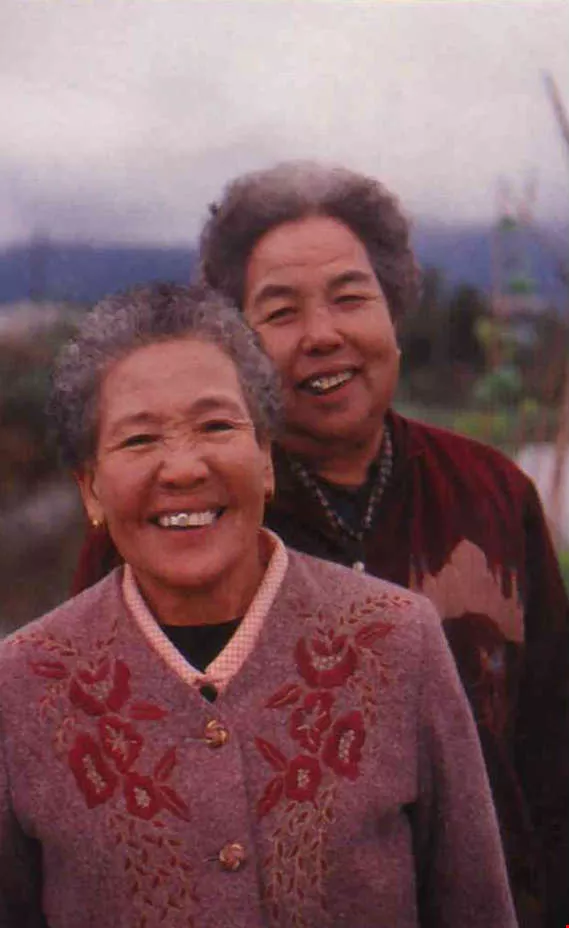
As children, Ah-mien (in front) and Ah-feng (behind) herded water buffalo and picked tealeaves together, and they slept in the same bed until they got married. They can team up on stories and songs like a pair of practiced professionals.
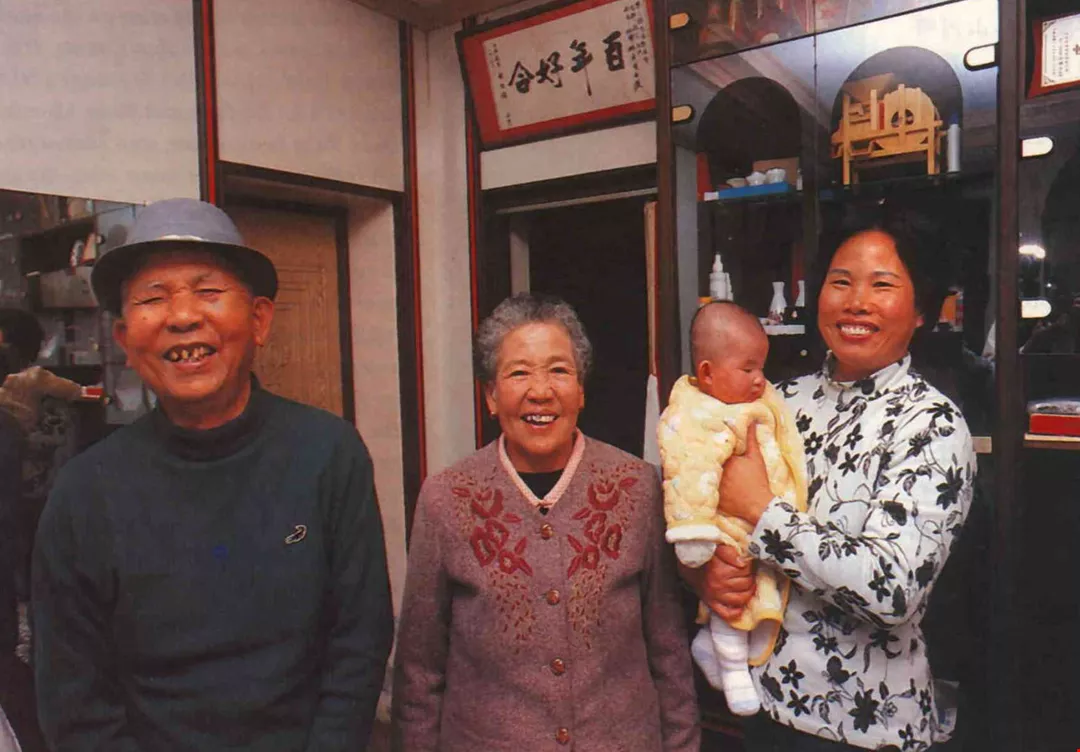
Prompted by scholars, old storytellers reel off one story after another, surprising family members who never realized that they had been living all the while with an unusually gifted raconteur in their midst.
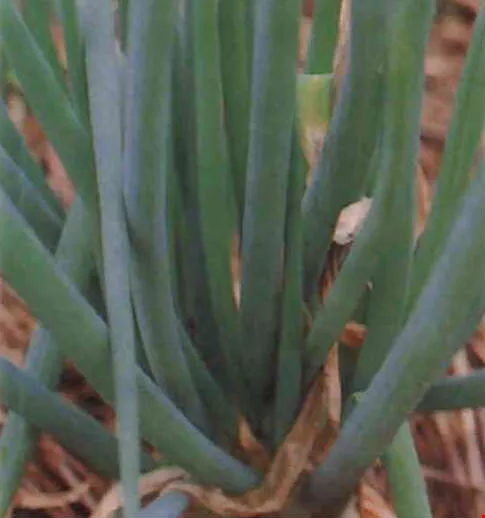
"Pointy head and pointy tail. They dump a stinky shit, but no one turns them down at the table." Can you guess the riddle? Point to anything on the farm-green onions, radishes, chicken, or ducks-and these two old ladies will throw you a riddle about it.
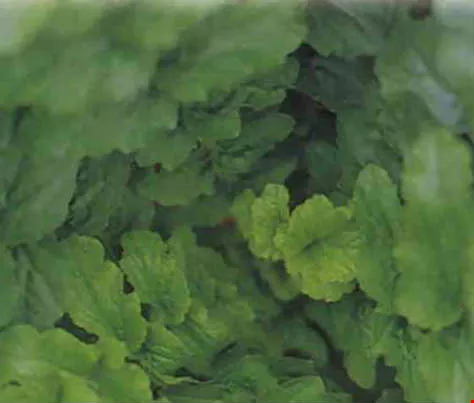
"Pointy head and pointy tail. They dump a stinky shit, but no one turns them down at the table." Can you guess the riddle? Point to anything on the farm-green onions, radishes, chicken, or ducks-and these two old ladies will throw you a riddle about it.
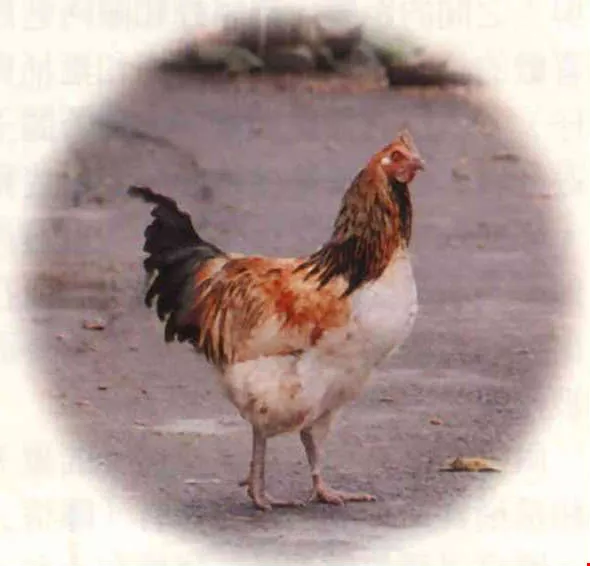
"Pointy head and pointy tail. They dump a stinky shit, but no one turns them down at the table." Can you guess the riddle? Point to anything on the farm-green onions, radishes, chicken, or ducks-and these two old ladies will throw you a riddle about it.
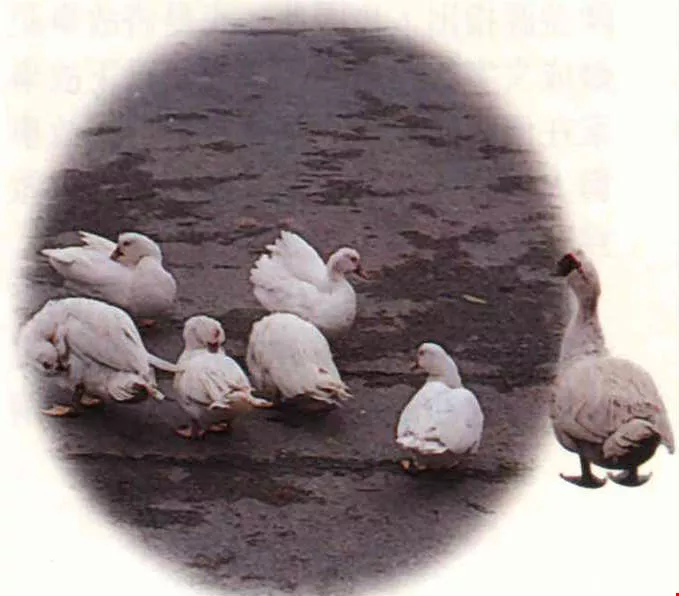
"Pointy head and pointy tail. They dump a stinky shit, but no one turns them down at the table." Can you guess the riddle? Point to anything on the farm-green onions, radishes, chicken, or ducks-and these two old ladies will throw you a riddle about it.
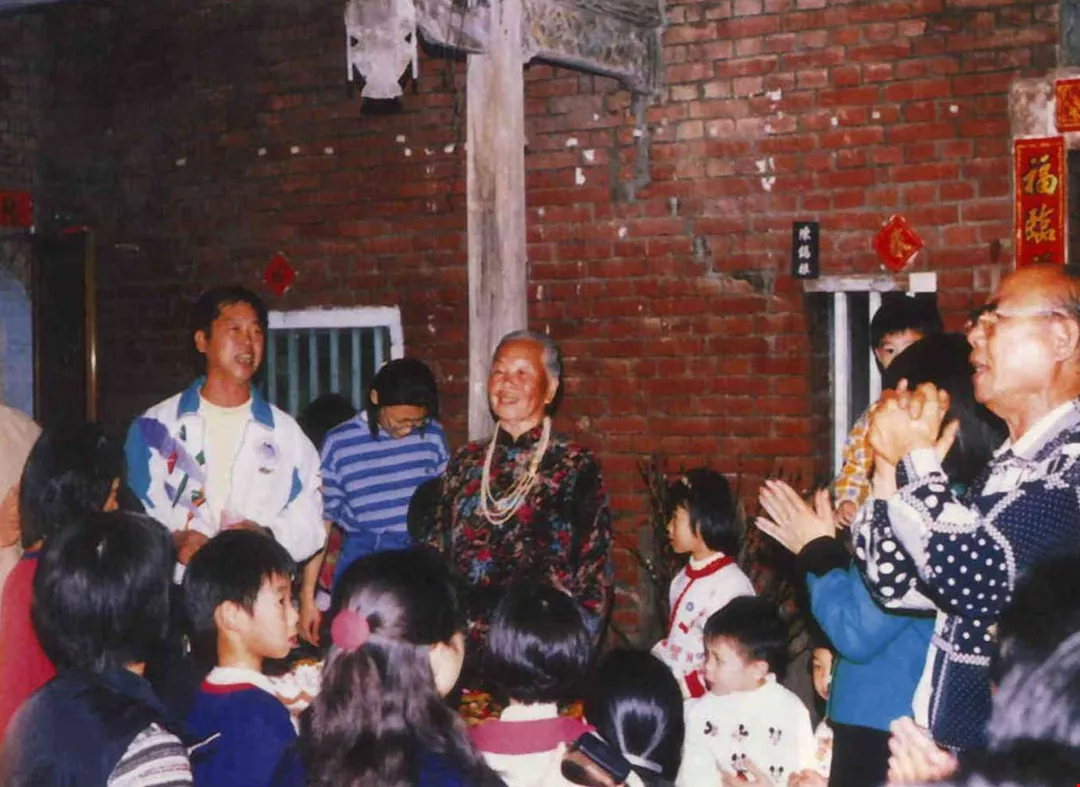
When Chen Li Chih-mei of Huwei Township (Yunlin County) celebrated her 88th birthday, her sons and daughters took turns telling stories and singing songs. The birthday girl chimed in with four-line rhymes from various Taiwanese theatrical shows. (courtesy of Chen Yi-yuen)
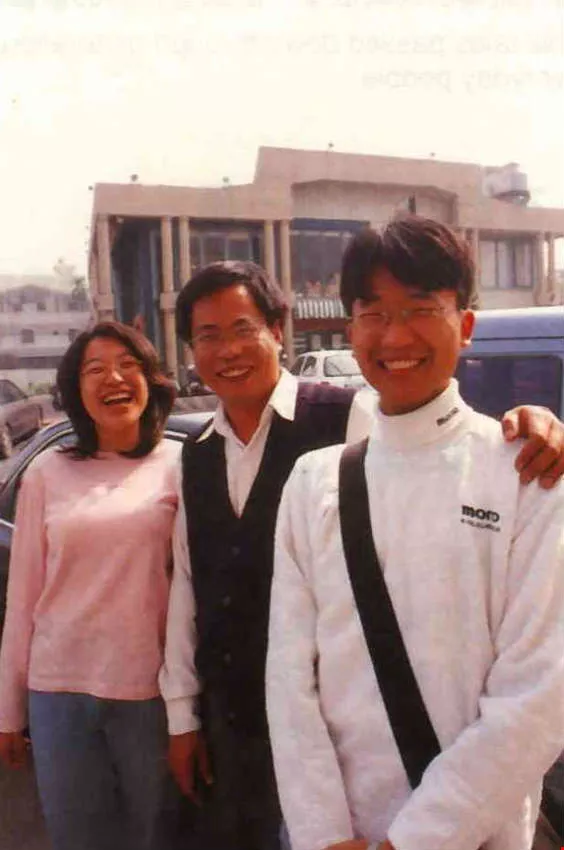
Chen Yi-yuen, a professor at National Chung Cheng University, met Ah-feng and Ah-mien in the course of his work collecting oral traditions, and the trio struck up a lifelong friendship. Chen often takes students from the Chinese department to visit storytellers around the island.
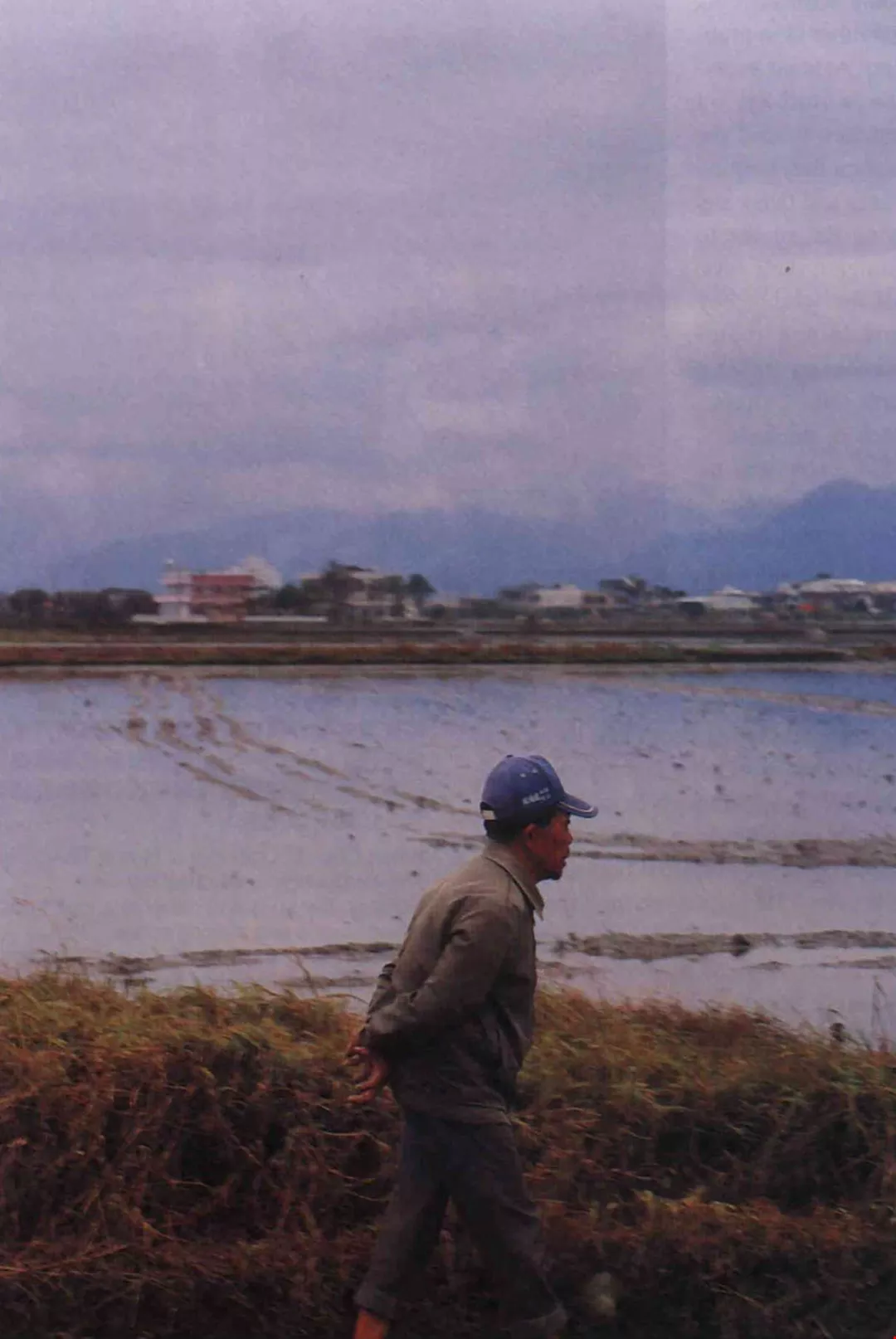
Folk tales passed down through generations speak of the pleasures, pain, and aspirations of everyday people.


@List.jpg?w=522&h=410&mode=crop&format=webp&quality=80)


