From Master to Rookie--Veteran Filmmaker Hsu Chin-liang
Lin Hsin-ching / photos Chuang Kung-ju / tr. by Geoff Hegarty and Sophia Chen
October 2010
Breaking news emerging about new 3D ventures in Taiwan's film industry reveals enormous investments (above NT$1 billion) and highly complex techniques in use (adopting the style of Avatar: live-action + animation). Nezha (working title), the subject of all this excited discussion, is due for release in two years.
The project is still in its preparatory phase, but it is known that it will involve collaboration between Taiwanese film talent currently active in Hollywood (such as the post-production team for Avatar which includes Daniel Chen. Nezha will bring to the screen animation and vivid martial art scenes with tremendous excitement. Technically, it will employ the most advanced motion capture technique. The movements and expressions of animated characters will be first performed by real actors, captured by electronic sensors and then processed through computer software. These extremely "human" movements and expressions are then applied to the animated characters.
A film like this with its massive costs and scale of production, and the very real possibility of having some very famous actors taking part, is a rarity in Taiwan. People are wondering which director would have the courage to launch such an enormous enterprise.
The answer is simple: the great entrepreneur with such enormous confidence in his ability to bring off such a complex 3D venture is not a young techno-warrior, but 67-year-old movie veteran Hsu Chin-liang, who has worked in the Chinese-speaking film and television industry for more than 40 years.

Hsu Chin-liang was born in 1943 in Taipei. He has the reputation of being tough and having never accepted defeat. He suffered from polio which still affects him-he walks with a slight limp, but despite his disabilities, he has never given up his dreams. With a talent for drawing, he successfully entered college at age 18 and enrolled in his first choice of universities, the Department of Fine Arts of National Taiwan Normal University (NTNU). In this period, he was also designing movie posters in his spare time for his uncle, a film distributor.
With excellent academic results in both the theory and practice of art from NTNU, he undertook further study in Italy, at the Rome University of Fine Arts and at a film training centre. During his four years in Europe, apart from learning fluent Italian and Spanish, he was able to broaden his vision of art and aesthetics, as well as gaining an excellent opportunity to make a short film funded by the Italian state broadcaster, Radiotelevizione Italiana.
This short experimental film was called Silent Sword, La Spada Del Gran Silenzio in Italian. It tells the story of two warriors sitting facing each other intently, who are in fact preparing to fight. Curious onlookers quickly surround the protagonists anxious to see blood. Initially, they clamor for action, hoping that the duel will be decided quickly. The warriors, however, remain motionless and keep silence. The crowd gradually loses its patience. Hawkers begin selling, prostitutes search for customers, thieves begin looking for opportunities. In the end the sun sets, the crowds gradually disperse; only the rubbish they have discarded remains. The two warriors sit silently confronting each other while their figures blend into the beautifully desolate sunset.
Silent Sword, a movie full of oriental implications despite its European origins, was Hsu's first try at making his fortune, and gained some very favorable comments. The film even represented Taiwan in the Venice International Film Festival in 1971, winning a nomination for best short film. However, because back then Italy was planning to establish diplomatic relations with China, the Chinese government intervened. Sadly, the film was banned from the cinemas by the festival organizer.
"At that time there was a great deal of media criticism of the festival organizers for the obvious political pressure brought to bear, which resulted in the ban." After this incident, Hsu became disillusioned with the European scene, so he returned to Taiwan.

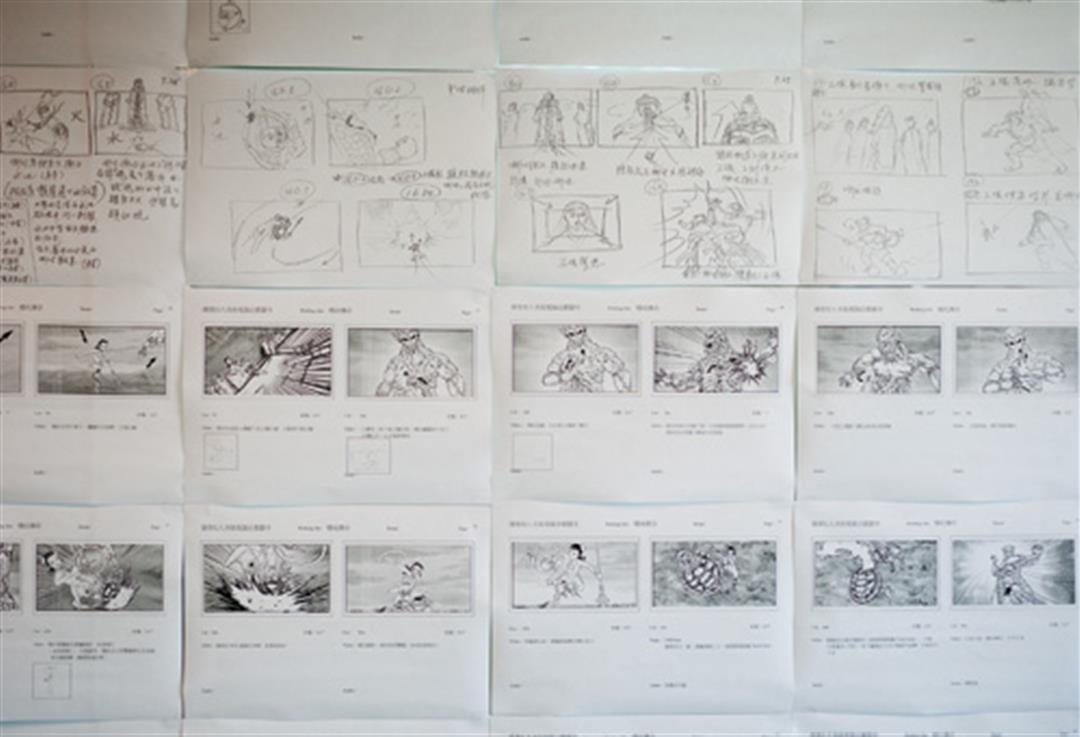
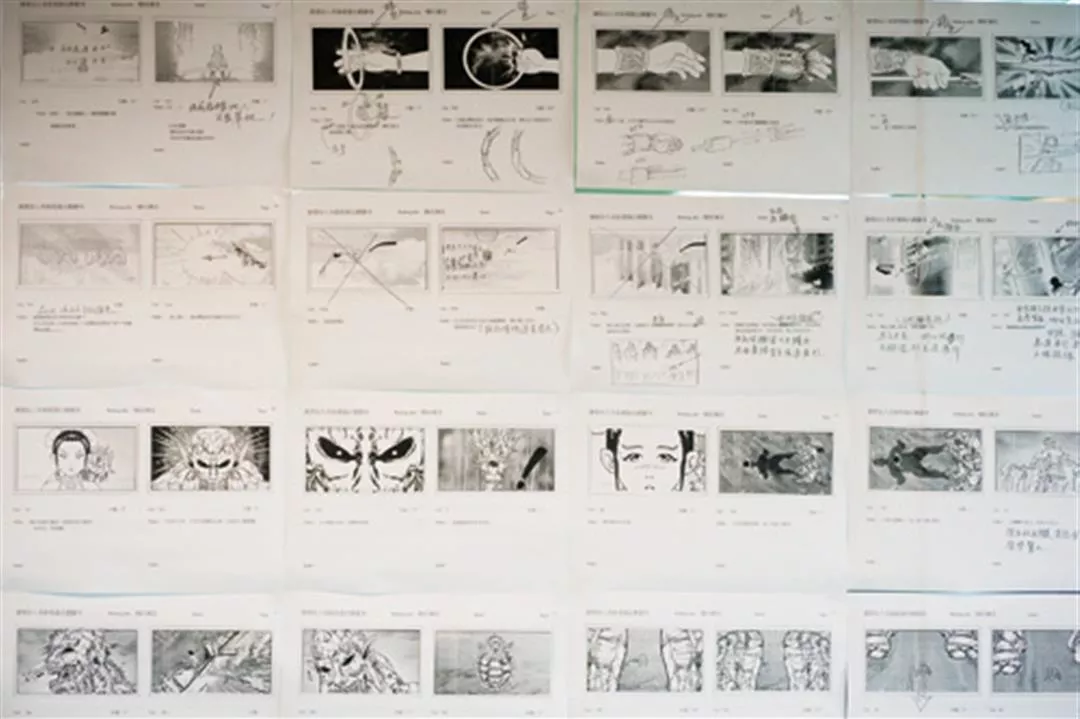
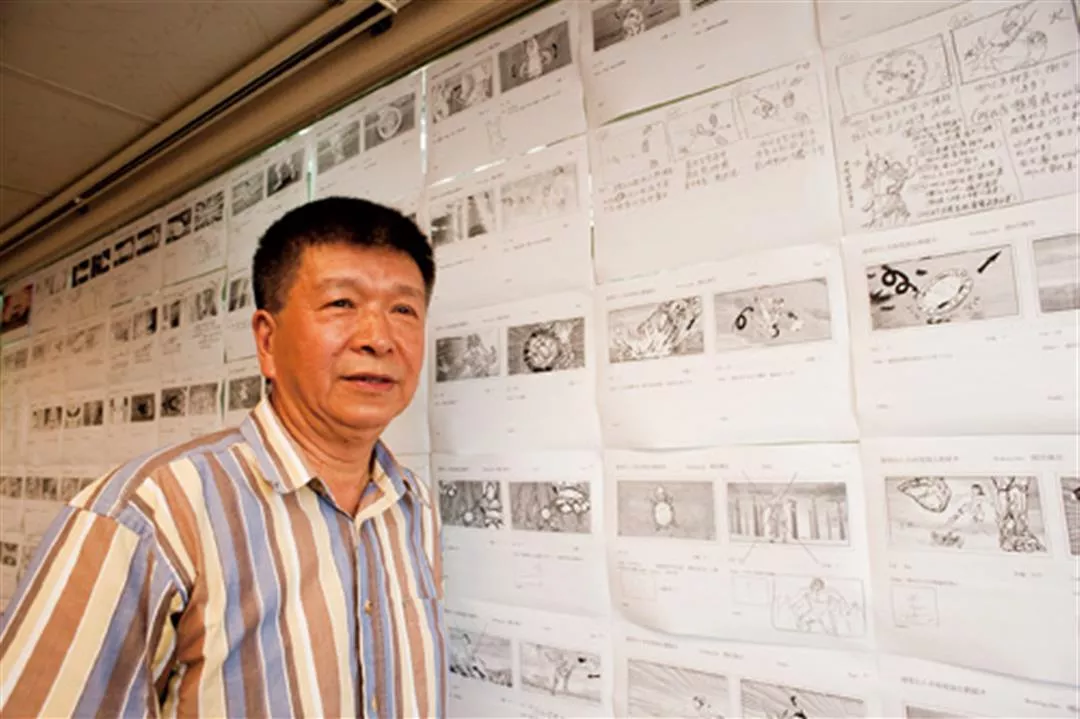
As a fine arts graduate, Hsu is one of the very few Taiwanese directors who can draw an "image storyboard" by hand. In the planning script of the new 3D film Nezha (above), the basic ideas for characters such as Nezha, the Dragon King and other spirit-characters are all creations of his own hand.
After his return home, through help from his family, Hsu's film career began running quite smoothly, achieving some success. He began producing costume dramas and literary films. In fact, he shot a series of well-known masterpieces for Central Motion Picture Corporation (CMPC), including Fury in the Storm, The Life God, Butterfly Valley, The Operations of Spring Wind, The Sun Sets Beyond the Mountains, and Gone with Honor.
The Life God portrays the life of Baosheng Dadi (the Life God, aka the God of Medicine). Hsu experimented by courageously using a virtual unknown with little experience, Terry Hu, as the female lead. Hsu also introduced the western movie-making concept of the "image storyboard." This had a huge impact on Taiwan's film industry because back then they used "continuity scripts," a much simpler technique. The film won three major prizes in the Golden Horse Awards, and assistant director Hou Hsiao-hsien later went on to become one of the major directors of Taiwan's film world.
In addition to the introduction of Terry Hu, Hsu also recruited and promoted Peng Hsueh-fen, the wife of Thomas Wu, later chairman of Taishin Financial Holding Co. She became a star as the result of an interesting series of events. In 1979, a best-selling novel entitled The High School Rebel written by Wu Hsiang-hui, a graduate of Jianguo Senior High School, hit out at Taiwan's rather twisted college entrance-exam system of the time. The novel found great support amongst the community for its radical ideas, so deciding to strike while the iron was hot, Hsu adapted the story into a movie script, keeping the same title. He gave Peng the role as female lead and the film achieved great box-office, rocketing her to stardom.
The 1970s and 80s saw the development of some degree of robustness in Taiwan's domestic film market. In addition to his director role, Hsu had also taken ownership of a film production company and distribution house. This company collaborated with a group of over 10 cinemas to establish the "Phoenix Cinema" chain. As the new theaters needed a lot of material to screen, Hsu invited a number of his producer friends to produce films for him. Initially full of confidence with this venture, in the end it turned out to be the greatest setback of his life.
"I invited 10 producers to make films, but in the end only two films were submitted. Others took the -money and disappeared. I lost something over NT$35 million. Thinking about it, I wonder how much that NT$35 million of 30 years ago would be worth today! I can only blame myself for being too immature-too young to understand people well." Recalling the event brings a great sadness.

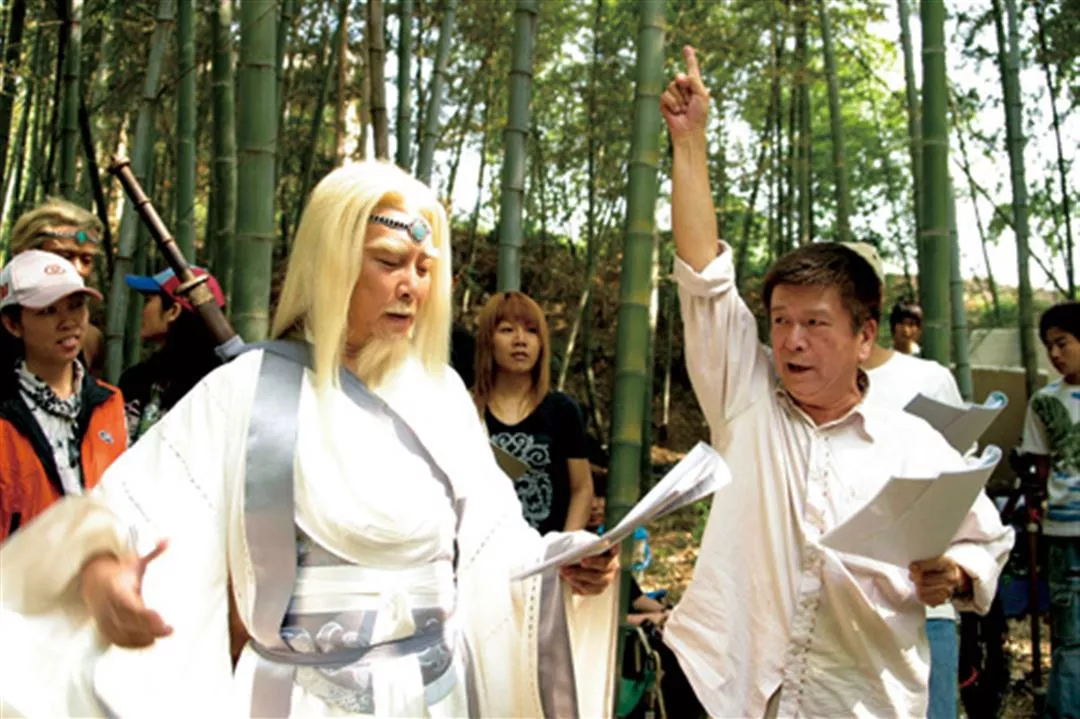
Film veteran Hsu Chin-liang is still active at the cutting edge of filmmaking. The photo shows Hsu and his crew shooting martial arts TV series The Sword and the Chess of Death in Wuxi, China in 2007.
After that blow, he became determined never to go near the film business again. But after a few years in semi-retirement, he restarted his career in television. In 1989, he produced a TV series called The Postman Always Rings the Wrong Bells, with Ba Ge and Regina Tsang in leading roles.
Hsu will argue that because he has a fine arts background, and also because like most artistic people he enjoys innovation, he relished the challenge of filming a diverse range of subjects. He applies the same principle in making TV programs: his The Postman series, for example. Back then Taiwan lacked any of the real-life sitcoms which were at that time very popular abroad. He tried also to focus on what was happening in popular culture: for example the lotto gambling craze, the daily chaos of the national legislature, and the alleged cultural invasion from the US. Daily life also provided a host of silly situations that occur in every family home: a father accidentally soils the toilet seat leading to family turmoil, for example. This sort of thing found great popularity among local audiences.
Hsu's aim was spot-on, as The Postman was extremely popular. A number of sequels were shot, and as a result the postman "rang the bell" four times. The show became a classic still enjoyed today by many of its more nostalgic fans.
After his ventures into comedy, he realized with unique insight that local drama would become the future trend in Taiwan television. Thus, in the 1990s, he produced more than 20 highly praised TV series including Taiwan's Outlaws of the Marsh, The Romance of Taiwan, Taiwan's Robin Hood-Liao Tianding, In Search of New Life, Smile in Tonight's Dream, and A Zu. However, after breaking new ground in making these programs, with the arrival of Japanese and Korean soaps and the emergence of melodramatic Taiwanese shows in super-long series, Hsu had had enough of soap operas. In 2002, he launched Wind and Cloud, a new style of martial arts TV program that used a lot of animated effects.
Quality productionsThe new series, adapted from Feng Yun, the work of famous comic artist Ma Wing-shing from Hong Kong, featured well-known actor Vincent Chiu in one of the leading roles. In order to maintain a high level of professionalism in the animation, Hsu invited a number of Taiwan's leading animation companies, including Digimax and Leader Asia Pacific Creativity Center, along with Shanghai Animation Film Studio, to form a creative team. Each episode cost NT$4 million, the whole production run reaching a record NT$160 million. Fortunately, the series became very popular, and reaped royalties of around NT$240 million from a number of regions including Taiwan, China, Hong Kong, Japan, Korea, Southeast Asia, and Central and South America. This production made something of a small fortune for Hsu.
"This experience taught me one thing: as long as you can tell a story well and create effective and exciting animation, you need have no worries about your investment!"
After the success of Wind and Cloud, Hsu developed enormous enthusiasm for animation, so in 2007 he produced another martial-arts TV series using computer-generated animation, The Sword and the Chess of Death. It also became very popular, and has recently been edited into a two-hour film version to be released in Iran.
After the experiences of Wind and Cloud and The Sword and the Chess of Death, Hsu felt very confident working in the animated genre, so he decided to make a leap into 3D.
Hsu insists that "the opportunity to make money should be kept at home," so the animation team for the film Nezha will be recruited from Taiwanese nationals only, including those resident overseas. One of Taiwan's leading IT companies will provide support for data storage and processing of the film's 3D images. This could be an unprecedented example in Taiwan film-making history: a perfect merging of IT and art. But, he says, it is not appropriate at this stage to release details of which company will be taking part.
Although initial estimates of capital reach NT$1 billion for the film, Hsu assures us, based on his rich experience as a veteran film director, that "if you make quality products, you don't need to worry too much!"
It seems that the veteran Hsu may prove more willing to accept challenges than the younger generation. His innovative 3D masterpiece Nezha is expected with great anticipation.