Water, Water, Everywhere--The National Museum of Marine Biology and Aquarium
Kuo Li-chuan / photos Chuang Kung-ju / tr. by Anthony W. Sariti
October 2007


The earth formed some 4.5 billion years ago, and 3.8 billion years ago the primitive oceans took shape. The oceans, which cover 70% of the earth's surface, were in the past an obstacle to development. But following technological advances in transportation and the rapid development of communications technology, "an ocean apart" is no longer much of a distance. Nevertheless, for Taiwan, which only lifted its policy of prohibiting access to the sea 20 years ago and where ocean-based leisure activity has barely begun, "inner space," as the ocean has been called, is still something unfamiliar and far away.
Taiwan is located on the north rim of the "East Indies" (the Coral Triangle), the earth's most prolific area for marine biodiversity, and at the edge of the planet's largest tectonic plate, the Eurasian Plate. The surrounding ocean geology is complex and offers a diversity of habitats. Its position at the confluence of the Kuroshio Current, the South China Sea and the cold coastal current flowing past Fujian and Zhejiang, as well as its being the meeting ground of the three "large marine ecosystems" of the East China Sea, the South China Sea and the Philippines, have led to the formation of a rich and diverse marine ecology.
Taiwan's first museum of marine biology is located in Checheng, Pingtung County, on the Hengchun Peninsula. It houses cutting-edge equipment, like the "Waters of the World" pavilion with world-leading virtual reality technology, the world's first living coral reef aquarium, the world's tallest aquarium tank, Asia's longest underwater tunnel, and Southeast Asia's biggest single ocean exhibit tank. The doors have been open only seven short years, but the museum already ranks as one of the world's ten largest museums of marine biology.
The origins of the museum, explains its deputy director general, Lin Chung-hsiao, go back to the time when martial law was lifted, the opening of the sea to public access became a topic of debate and various segments of society began to take marine education seriously. Following two years of site visits, in 1989 the Ministry of Education (MOE) officially designated a 93-hectare site in Checheng Township, located within Kenting National Park and representing a rich coral ecosystem, as the location for the National Museum of Marine Biology and Aquarium (NMMBA). The site was originally privately owned, and mostly used for illegal fishponds and unregulated graves. When, through the unflagging work of former township mayor Huang Chun-hai, the townspeople voluntarily allowed the land to be acquired by the government, the project was able to move ahead smoothly.
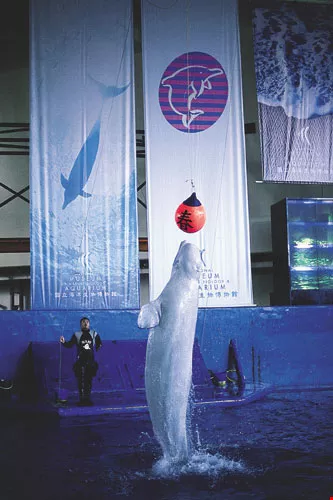
The beluga whales from the Sea of Okhotsk are popular stars of the Coral Kingdom pavilion. They love to sing and are talented performers. During the twice-daily feeding shows the seats are always filled with onlookers.
Cooperation
The NMMBA preparatory office was formally set up in 1991. It took eight years for the first exhibit hall, Waters of Taiwan, to open its doors in February, 2000. In July 2000, after a rigorous selection process, the management of the aquarium department was contracted to Hi-Scene World Enterprise Co., Ltd., the first time a national social education institution was opened up to outside management.
Hi-Scene CEO Yang Ching-nan recalls that in 1999 he learned from the media that the government had decided to have the aquarium privately managed, and at that point the Nan Ren Hu Group, which specialized in resorts and the leisure industry, actively sought the contract. "Broadly speaking, museums are a part of the leisure industry," he says. To meet this totally new challenge, the group recruited widely for talent in biological project management and mechanical and electrical projects.
Yang Ching-nan says optimistically, "Although Taiwanese are generally unfamiliar with the ocean, surrounded by it as they are they have always felt the attraction and the call of the sea very strongly. The NMMBA can play an educative role and one of exploration." In addition, with the southern section of National Highway 3 nearing completion at the time, the number of visitors pouring into Kenting National Park in Hengchun exceeded 4 million per year. Checheng, the home of the NMMBA, was located right on the way to Kenting. With its unique characteristics, the convenient access and the volume of people passing through, the future of the museum looked very bright.
Located on the Hengchun Peninsula, the NMMBA opened its doors seven years ago. Since that time not only has it ranked as one of the world's ten leading marine museums, known for its world-leading breeding techniques and its research and development in virtual reality technology, it has also led the public to span the ancient and modern world, exploring the mysteries of the ocean and its many facets. Pictured is the play pool by the museum entrance.
Taiwan momento
Gazing down at the NMMBA from the Kueishan archaeological site within Kenting National Park, the curved, wave-like rooftops of the museum buildings small and large blend in with the natural surroundings, like wave crests breaking in a never-ending cycle. Fully matching the nature of "water" with the basic attribute of a marine museum, this structure won the 2001 Grand Award of the American Consulting Engineers Council.
Entering the museum complex, one is amazed at the enormous size of the full-scale models of the humpback and sperm whales in the Whale Waterscape exhibit. In the Waters of Taiwan pavilion, models of dolphins and the deep-sea giant octopus hang from the ceiling of the 21-meter-high main hall. To the right of the entrance the visitor is struck by a view of the soaring cliffs and Lungku Waterfall of Kukuan in Taichung County, which suffered great destruction during the earthquake of September 21, 1999.
Chang Cheng-chieh, deputy chief of the museum's guide team, says the main design theme of the museum imitates Taiwan's environment, so during the preparatory stage they took a "cast" of part of the cliffs during the dry season, unwittingly producing a magnificent vista of the Lungku Waterfall before its destruction. This quite appropriately leads visitors into the Waters of Taiwan exhibit, covering Taiwan's natural landscape from the 3,952-meter-high Yushan to the ocean at a depth of 200 meters.
Following the sound of rushing water coming from the waterfall, the visitor enters the pavilion and sees a model of the Chichiawan Creek of the Tachia River, the riverbank coniferous forests and the classic V-shaped river valley of the high mountain river. The representative fish is the Taiwan ku fish (Varicorhinus alticorpus), while the rainbow trout (Oncorhynchus mykiss) stands in for the precious Formosan landlocked salmon (Oncorhynchus masou formosanus), to create a picture of Taiwan's
salmon ecology.
There follows a recreation of the middle reaches of the river in Lovers' Valley at Maolin, Kaohsiung County. The sides of the gently U-shaped valley are fully planted with broadleaved trees and the river is stocked with Taiwan's largest endemic fish species, Spinibarbus hollandi, along with Chinese catfish (Silurus asotus) and giant mottled eel (Anguilla marmorata). Next comes a recreation of the Tsengwen Reservoir. The actual reservoir has a large capacity, still waters and ample food, and contains fish of great size, including black carp (Mylopharyngodon piceus) reaching a size of 1.5 meters, and grass carp (Ctenopharyngodon idella) at 1.2 meters. The disadvantage, however, is that these invasive exotic fish species have no natural enemies, reproduce quickly and, after rapidly replacing the native species, destroy the original ecology and environment. The reservoir also becomes a killer for fish that normally migrate. Because the migration path of the ayu sweetfish (Plecoglossus altivelis) has been cut off by the reservoir, the species' population has plummeted.
Next to the reservoir you can see row upon row of oyster racks. In fish tanks groupers are swimming around. The main theme of this exhibit is the west coast aquaculture industry and its huge impact on Taiwan's ecological environment. Operators have indiscriminately opened up fishponds and destroyed marshy habitats, and have overextracted groundwater leading to problems of land subsidence and seawater encroachment. They have even introduced non-native fish and crustacean species without authorization, wantonly destroying the local ecology. In the end, when nature strikes back, they are the biggest victims.
Leaving the southwest coastal fish ponds, the visitor arrives at the Tanshui River estuary in the north. The unremarkable mudflats not only offer nutrients from both the ocean and the river, the decomposing organic detritus from dead wood and fallen leaves is also a food source for fish, shrimp, crab and shellfish larvae. On the other hand, seepage and runoff from landfills, industrial effluent and residential wastewater have led to serious pollution of the estuary and have made the mudflats fetid.
"Using this example of the serious pollution of the estuary environment, we can use the opportunity to educate visitors who are fond of eating fish. If we allow young fish to mature in this environment and later catch them for eating, in fact it is the people who will suffer," says Chang Cheng-chieh.
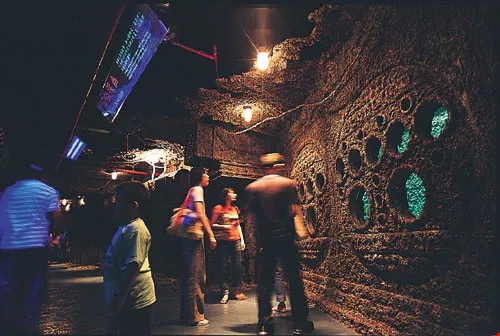
To show the coral reef ecology, the Coral Kingdom pavilion uses a realistic "virtual sunken ship" to demonstrate the importance of "artificial reefs."
Chiachia
In the Waters of Taiwan exhibit there is an ingenious "touching pool" where the public can come into physical contact with the marine life. After touching the wedge sea hare (Dolabella auricularia) the visitor moves on through the "corridor of waves" and in a few short steps feels as though he or she is at the bottom of the sea. Approaching the nearly four-meter underwater tunnel, the visitor can appreciate up close the marine life swimming about on all sides. Turn around, and there is a blacktip reef shark (Carcharhinus melanopterus) who has had his eye on you for some time. A moray eel of the species Cirrimaxilla formosa, tucked away in the rocks, has his fun as he forays out to scare passers-by.
The most popular star of the museum is the world's largest fish--the whale shark (Rhincodon typus). It is housed in Southeast Asia's largest single-exhibit aquarium tank, the "ocean tank," which is four meters high and 16 meters long, and contains 1 million gallons of water. The word "ocean" refers to offshore sea areas with a depth of over 200 meters. The whale shark, popularly called the "bean-curd shark" or "ninny shark" in Chinese, is a gentle giant with a mild temperament. In the wild, it can reach 20 meters in length, and can weigh over 30 tons. It is listed in Appendix II of the Convention on International Trade in Endangered Species (CITES), and thus subject to international trade restrictions.
Assistant technician Hsu Chih-hua, responsible for looking after the whale shark, says that the world's largest fish is a member of the shark family, but is called the "whale shark" because it can grow as large as a whale and is a filter feeder, eating only plankton.
It is worth mentioning that in 2001 Taiwan set up a whale shark catch reporting system and has implemented controls on the overall number of the sharks that can be taken, with a quota being set each year. To stop Taiwan from being branded by the international conservation community as an evil island that eats the whale shark, the Council of Agriculture announced on May 24, 2007 that from 2008 there would be a total ban on taking whale shark.
The museum's first whale shark, Chiachia, was caught by fisherman when it wandered into a fixed cage net off the Hualien coast three years ago. The museum was asked to rescue the fish and moved it to the ocean tank. At the time Japanese aquariums were the only ones in the world to have successfully bred whale sharks in captivity. The museum sent staff to Japan to study how this was done, and also kept a 24-hour watch to record Chiachia's behavior. After several years of effort, Taiwan has become the world's second country successfully to breed the whale shark in an aquarium.
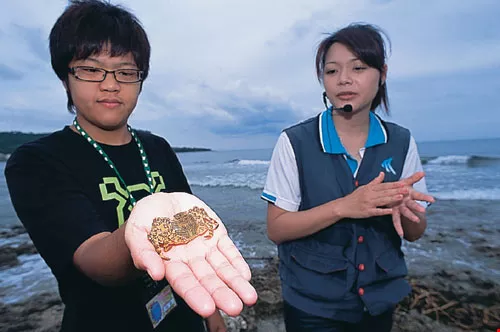
Late last year the owner of private land adjacent to the NMMBA made inappropriate use of the property, causing a large die-off of land crabs living there. Following the incident, the museum used the example to explain land crab ecology to visitors.
Seabed flower garden
When it opened in 2001, the Coral Kingdom pavilion contained the world's first living coral tank. Winding your way down around the column-shaped water tank you can begin your journey through the 84-meter underwater tunnel, the longest in Asia, and appreciate the representation of the magnificent coral world in all its riotous profusion of color inside this 1.5-million-gallon artificial ocean, a world dubbed the "ocean rainforest."
The coral reef is the richest resource in the ecology and the ocean's gene pool. Although the surface area of Taiwan's coral reefs is less than 0.1% of the world's total, the reefs contain one third of the world's coral species. In recent years, however, global warming and the rising ocean temperatures have led to coral bleaching. In addition, the inappropriate development of coastal recreation activities such as jet skiing, as well as overfishing and pollution, have severely damaged the coral ecology. The NMMBA uses these examples to gently remind visitors to "refuse to eat coral reef fish."
Popular stars of the museum are the beluga whales (Delphinapterus leucas) from the Sea of Okhotsk, off the Siberian coast of Russia. Like the whale shark, they are listed in CITES Appendix II. Currently there are about 100,000 belugas in the wild and Russia sets a yearly quota for the legal export of the whales, but the breeding environment requirements and criteria are very strict. To look after the museum's eight pampered guests, in addition to two cooling systems to keep the water temperature at around 18oC, there is a medical team made up of two veterinarians and four professors from the Department of Veterinary Medicine at National Ping Tung University of Science and Technology.
The museum's chief technician, Lin Chieh, says that belugas have an IQ roughly equal to that of a seven- or eight-year-old child. They are both intelligent and mischievous. Singing and spritzing water are their special talents, and at feeding time the best seats in the house are always filled with visitors. The singing of the beluga includes vibrato and screeching, baby sounds, pops and ticking noises. When a cute beluga comes swimming straight at you, don't get excited too early, because in the twinkling of an eye he might spritz you soaking wet.
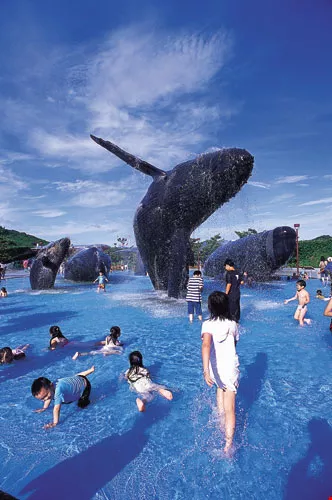
Located on the Hengchun Peninsula, the NMMBA opened its doors seven years ago. Since that time not only has it ranked as one of the world's ten leading marine museums, known for its world-leading breeding techniques and its research and development in virtual reality technology, it has also led the public to span the ancient and modern world, exploring the mysteries of the ocean and its many facets. Pictured is the play pool by the museum entrance.
Waterless aquarium
Time and space constraints, as well as limits imposed by the attrition of the fish species put on display there, are very much felt in the Waters of Taiwan and Coral Kingdom exhibit pavilions. The third exhibit of the museum, Waters of the World, under the guidance of former director general Fang Lee-shing, has moved toward a "waterless" concept to become the world's first 3D virtual aquarium. The overarching themes include "Ancient Oceans," "Kelp Forest," "Deep Sea" and "Polar Seas."
Speaking about the ancient oceans, Fang Lee-shing says evolution is an extremely amazing phenomenon. The living things of today amount to less than 1% of all those that have existed on earth. The remaining 99% we have never been able to see. But using virtual reality we can recreate the ancient ocean so that people can experience firsthand the marine life of hundreds of millions of years ago. Fang stresses that creating digital images of extinct creatures like the ichthyosaur and the trilobite and having them appear online can enhance the dissemination of knowledge and at the same time open up a new model for ocean conservation.
Kuo Ssu-hung, head of virtual reality development at Formosoft, which is handling the Deep Sea virtual reality project, says, "'Virtual reality' uses the computer's enormous real-time processing power to represent both 'existent' and 'non-existent' things as if they were real. Also, the movement and position of visitors are detected by optoelectronic equipment permitting real-time interaction between the virtual marine creatures and those observing them."
Because the environment is modeled so realistically, visitors often have the feeling that they are actually there. In the 4D Ocean Reptile Theater visitors can witness with a shudder ancient sea-dwelling dinosaurs hunting fish that surround them, and timid little children are likely to be scared half out of their wits.
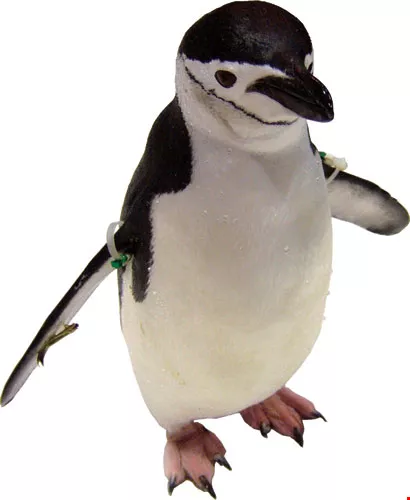
The Kelp Forest exhibit is housed in the world's tallest exhibit tank, which is ten meters high, with a diameter also of ten meters. The glass of the tank is 56 centimeters thick. Inside the tank is kelp from California that in the wild can grow 30 cm a day. The "Polar Seas" exhibit shows different animals that live in the polar environment, and has five penguins from Antarctica and tufted puffins from the Arctic.
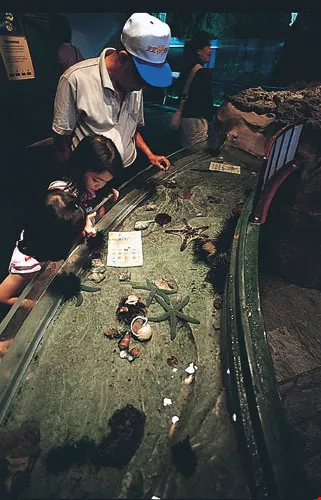
The ingenious "touching pool" in the Waters of Taiwan exhibit gives the public a chance to come into physical contact with marine life.
Seeds of conservation
The NMMBA has been open seven years and its reputation has continually grown, but environmental protection groups still have their doubts. For example, they fear that the museum's presence may lead to pollution of ocean waters in Hengchun and cause local fish stocks to dry up. But deputy director general Lin Chung-hsiao, emphasizes that when the museum was first created two wastewater treatment plants were constructed so that all the wastewater from the museum is recirculated and reused. In addition, although the museum has long had the legal right to make use of a 1,000-hectare area of ocean adjacent to the museum, it has not thus far done so. As a result, this section of ocean has indirectly been protected, reducing a great deal of potential man-made damage.
How can visitors get the greatest value from the museum, which has now surpassed the 10 million visitor mark? Lin suggests people should adopt an attitude of self-enrichment as they visit and not just "look at the flowers from horseback," merely giving the museum a quick once-over. Hi-Scene World Enterprise CEO Yang Ching-nan says that only by making learning about the ocean entertaining can visitors be transported through the ancient and modern world, exploring the mysteries of the ocean and its many facets--and this is the first step in ocean conservation.
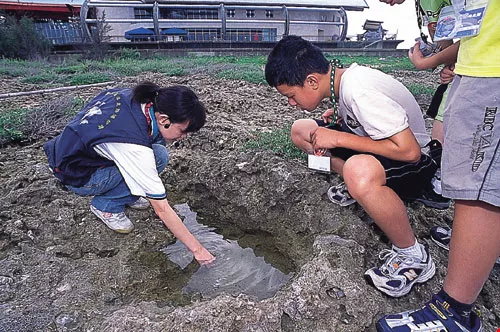
Late last year the owner of private land adjacent to the NMMBA made inappropriate use of the property, causing a large die-off of land crabs living there. Following the incident, the museum used the example to explain land crab ecology to visitors.
Direct booking line: +886-8-8825060 / +886-8-8825678
Address: 2 Houwan Road, Houwan Village, Checheng Township, Pingtung County, Taiwan.
Opening hours: Weekdays: 09:00-18:00
Weekends and holidays: 08:00-18:00
(to 19:00 in summer vacation)
Admission: Full ticket: NT$450; groups over 20: NT$350 per person; discounts: NT$250 per person
Website: http://www.nmmba.gov.tw/
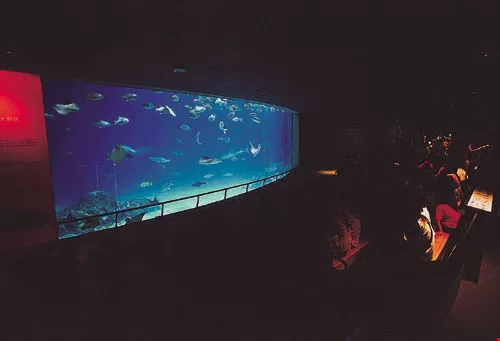
At the "Waters of Taiwan" feeding show employees enter the water in full gear to give the public and understanding of how marine animals hunt for their food.
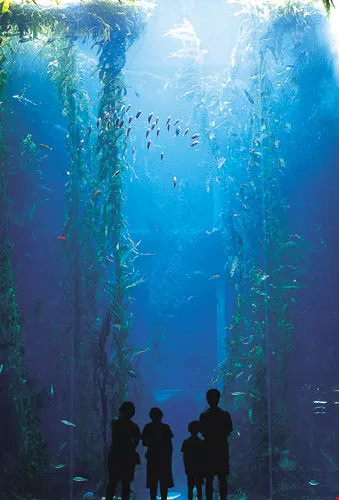
The Waters of the World exhibit that opened in 2006 has the world's tallest exhibit tank, the Kelp Forest. The tank is ten meters tall and ten meters in diameter. Inside it is kelp from California, which can grow 30 centimeters a day in the wild.


@List.jpg?w=522&h=410&mode=crop&format=webp&quality=80)


