A Traffic Jam on the Highway Home?
Elaine Chen / photos Vincent Chang / tr. by Brent Heinrich
September 1994


The employment market is hot and hectic in the height of summer, but people with a high level of education are having difficulties locating a job. Some people blame it on too many expatriates returning from abroad and generating extra competition.
Have the job opportunities for talented citizens who live overseas created a glut of returnees? Many of the government's policies seem to have increased people's suspicions, but there are those who think otherwise. In their opinion, the opportunity to absorb immense talent is a phenomenon that Taiwan has never seen in recent decades. What realities lie behind all these conjectures?
"Have you worked in an enterprise abroad for many years? Would you now like to transfer to the circles of academia and pass on your precious practical experience? This is truly an excellent opportunity. Contact the Preparatory Committee for the National Kaohsiung Institute of Technology, and commence the second spring of your career."
This solicitation ran in the classified section of the Newsletter of Overseas Scholars and Students in February this year. Within half a year after it was published, they received more than 130 letters of reply.
What's even more eye-opening is that this summer National Chung Cheng University's mechanical engineering department had need of three professors, and they received more than 700 letters of application, 90% of them from overseas.
This "war of the PhDs" demonstrates that the wave of returning talents is ever crescendoing; it begins from the United States and cuts straight across the Pacific, heading for Taiwan.
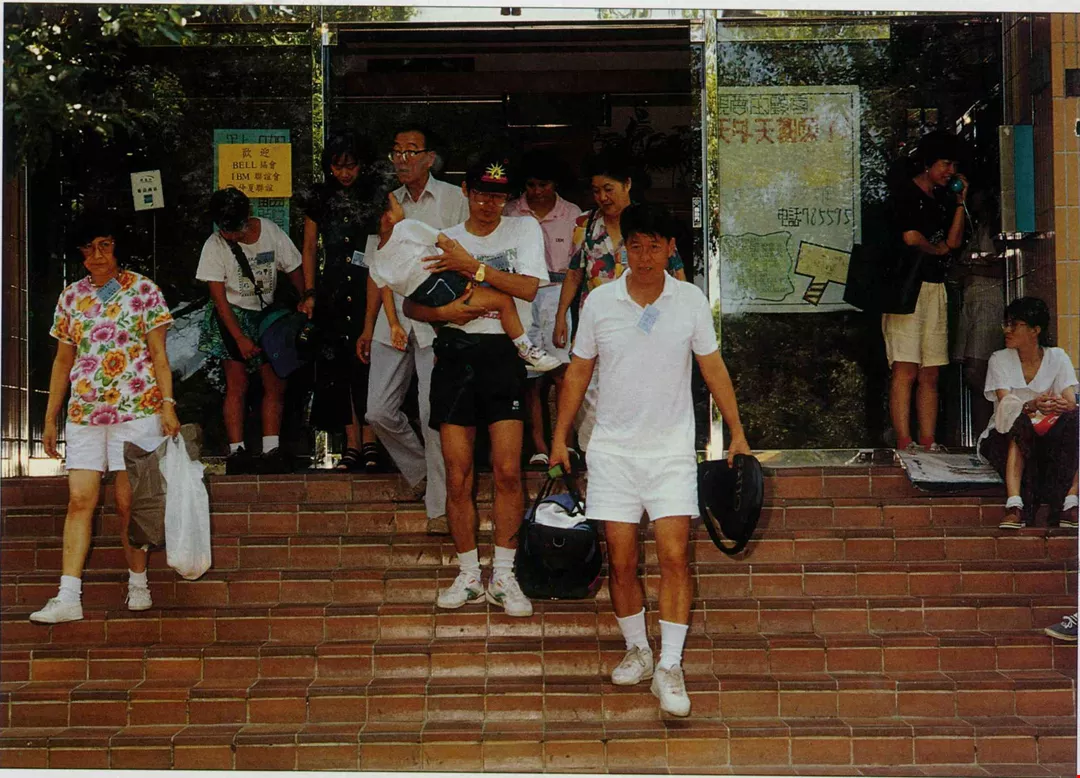
Hsinchu's Science-Based Industrial Park and ITRI have attracted a large flow of expatriates. The people coming from Bell Systems and IBM are quite sufficient to establish social clubs.
Sudden surge in scholarly sorts
According to an estimate by the National Youth Commission, starting from the middle of 1990 about 20,000 Taiwanese living abroad have returned, almost equalling the total of the previous 20 years.
Besides the sharp rise in the number of returnees, there is one more phenomenon worth our attention: In the past, those who came back were young people who had just earned their degrees. Ten years ago, senior citizens began to appear on the scene by invitation. And recently, among the wave of returnees, a large number of professionals in their late 30s or early 40s have arrived, bringing with them several years of experience in America's industrial world.
After those people come back home, some enter schools to assume teaching jobs; some join in research institutes such as the Institute for Information Industry (III) or the Industrial Technology Research Institute (ITRI); and others go to the Science-Based Industrial Park in Hsinchu.
According to the estimate of the industrial park, the number of senior overseas scholars who returned to obtain employment started to rise sharply in 1989. Currently, there are altogether 1000 of them working in the park, while ITRI, also located in Hsinchu, has 800 employees who returned from abroad.
This tallies completely with the National Youth Commission's statistics. According to their follow-up research, in the 1970s and 1980s, people returned mostly to teach at colleges or universities. Starting in the 1990s, the number of people who found jobs in the private sector increased immensely, exceeding the number of those entering academia. Most striking of all is the evidence that last year the number of returnees who started up their own businesses far exceeded the total entering all other sectors of the economy.
Kuo Nan-hung, chairman of the National Science Council, notes that in the past, 90% of Taiwan's overseas students went to the United States, and most of them simply stayed. Generally speaking, those who found teaching positions in universities or worked for government agencies after earning a doctor's degree probably remained at their posts. But those who entered industrial circles were often confronted with three problems: difficulties in getting a promotion, facing discrimination, or being forced to retire ahead of time or laid off in their forties due to economic recession.
The world economic slump reached its nadir in 1991. Although the economy is recovering by increments, the growth rate of industrialized nations remains sluggish at 1.1%. On the other hand, the average unemployment rate in industrialized nations was as high as 8.2% last year, the highest in nine years. Big American corporations such as IBM and GE embarked upon large-scale retrenchment programs.
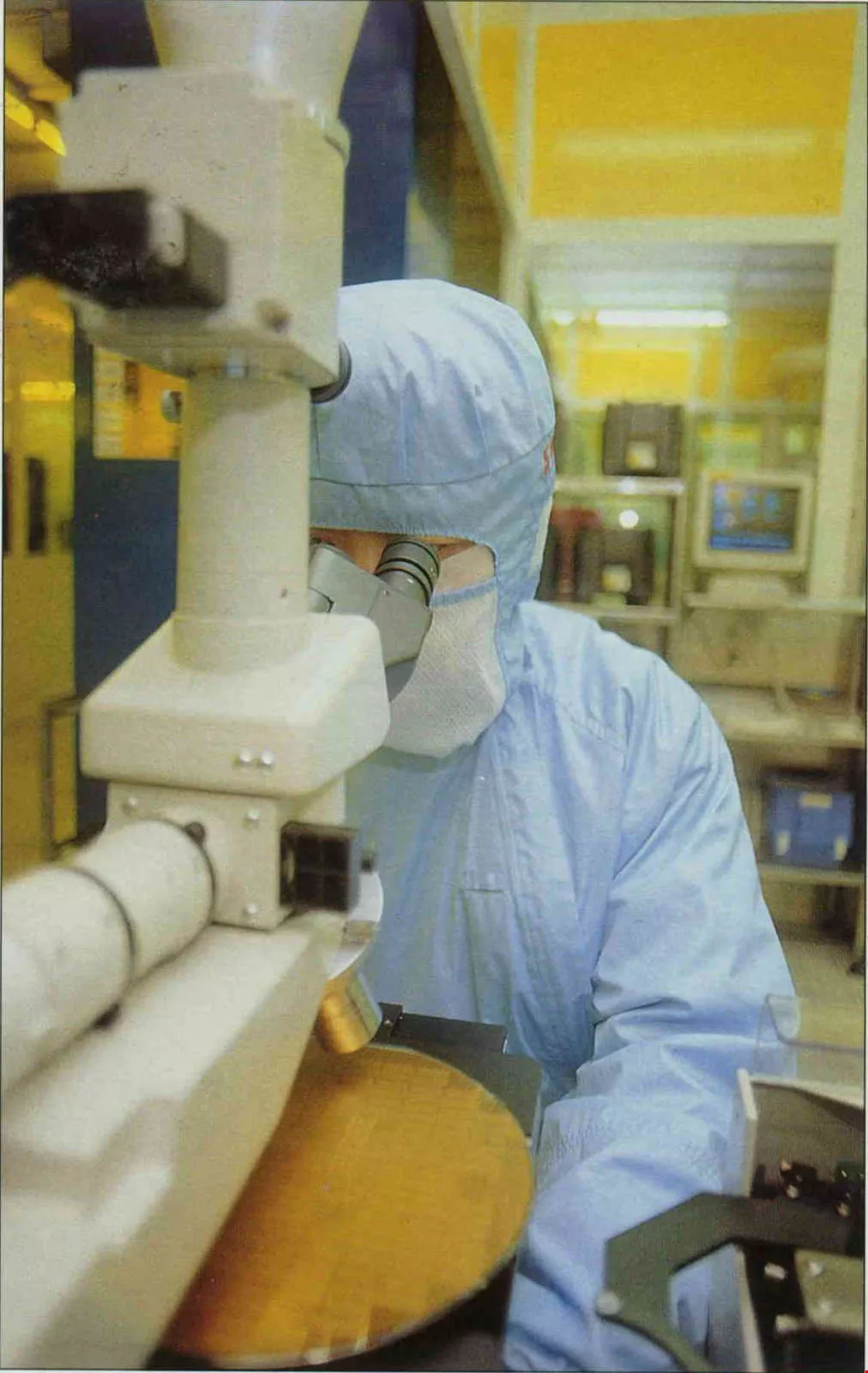
Senior scientists capable of leading large-scale research projects are the personnel that Taiwan still lacks. The photo shows ITRI's submicron laboratory. (photo by Hsueh Chi-kuang)
Flourishing in Formosa
There has been a formidable number of people returning to Taiwan from the US, so much so, in fact, that the past three years has seen the establishment of two social clubs for former expatriates--the Bell System Alumni Association in Taiwan and the Ex-IBMers Club.
Presently there are more that 80 formal members in the Ex-IBMers Club, and including those who have not formally joined, the total is about 200. Dr.Eric G. Lean, general director of ITRI's Optical Electronic Systems, openly admits that the reason so many people have been returning over the past three years is specifically IBM's retrenchment. "Among the returnees, only a few were actually laid off. But the company's shaky situation has bred an anxious consciousness in people and makes them rethink their futures."
Even if they aren't let go, it's typically hard for Chinese to get promoted abroad, so naturally they become more and more depressed. Consequently. many of them, even at the age of 40, begin to consider switching jobs.
Yu Hsiao-cheng, secretary of the Bell System Alumni Association in Taiwan and currently a professor at Chiao Tung University's Institute of Management of Technology, estimates that the alumni's working experience in America mostly falls between seven and ten years. "They can get their pension from Bell after working for seven full years, which is a crucial point." In addition, according to the association's own statistics, it usually takes a Chinese person seven or seven and a half years' working experience in the company to be promoted to supervisor. It only takes a white person around three years. After seven years, if the promotion is not forthcoming, they may "reconsider the whole business."
While they remain overseas struggling against a bias that impedes their professional advancement, they look back at their classmates who stayed in Taiwan, and see them flourishing.
"No one has the wisdom to foretell their own future," sighs Lance Lan, who once worked for AT&T and returned home to take up a position at ITRI's Computer and Communication Research Laboratories. His classmates from National Taiwan University are all doing quite well. K.Y. Lee is already the general manager of the Acer Peripherals corporation; Lee Lin-shan is the director of Academia Sinica's Institution of Information Sciences. His other classmates in the States often say: "Those who stay put in Taiwan all blossom."
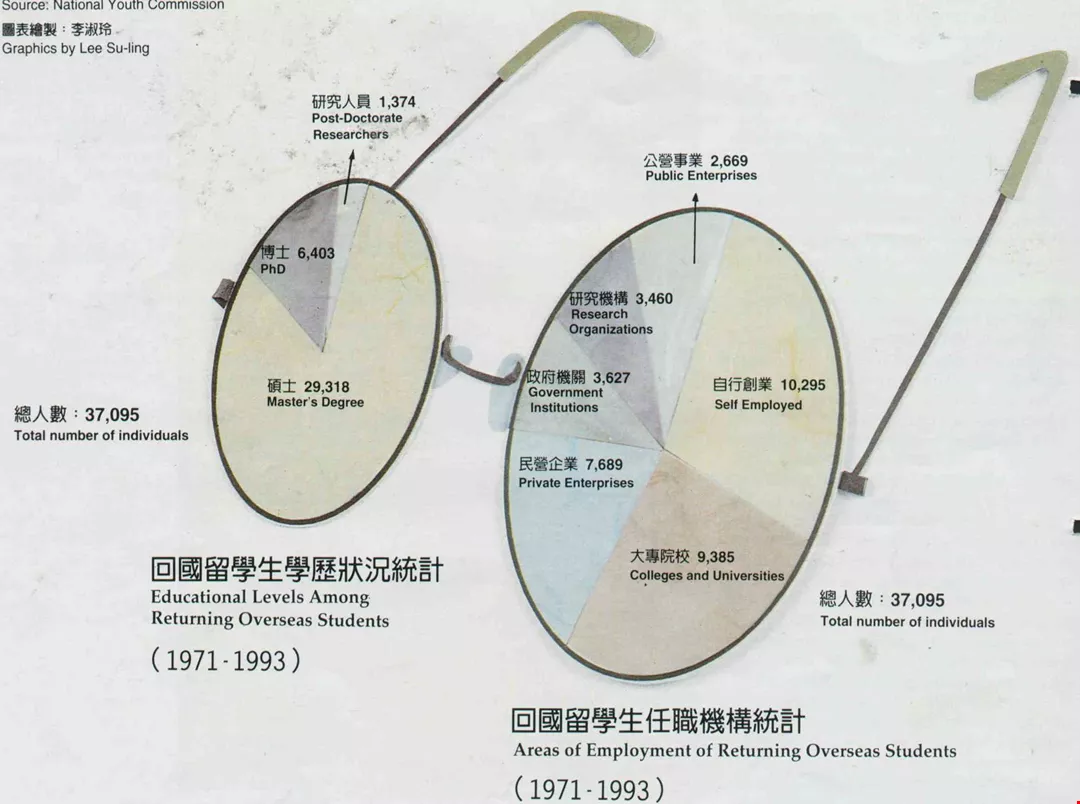
Educational Levels Among Returning Overseas Students(1971-1993) Areas of Employment of Returning Overseas Students (1971-1993)
The market metamorphoses
Just because the treatment one receives differs so much at home and overseas, most people respond with enthusiasm when the chance appears for them to move forward.
Three years ago, when the Six-Year National Development Plan was beginning to pick up real steam, the Ministry of Economic Affairs wanted to invite back highly qualified people from abroad, so they commissioned the Industrial Technology Investment Corporation to lead a team to tour around the US soliciting outstanding personnel. The corporation's project manager Chang Ching-jiunn, who participated in the tour, recalls that every session was very well attended. For instance, over 80 people took part in Dallas. In San Francisco as many as 200 people showed up. The attendees were mostly elite Chinese invited by the local engineers' institute, Yushan Technology Association or government offices abroad.
"The atmosphere in the conference halls was enthusiastic, but also a little reserved. Everybody cherished the same secret thought without sharing it out front," notes Chang Ching-jiunn. This is very understandable. Everyone wanted to return home, but didn't want the word to leak before a deal had already been made. Publicity about affairs of this nature might have ill effects on their current jobs. Therefore, they would leave behind the telephone numbers of the hotels where they were staying, and after the conference ended they would discuss details privately.
A year later, according to the records of the Industrial Technology Investment Corporation, they successfully reintroduced 51 ROC expatriates. Among them, 24 held PhDs, 26 held master's degrees and one held a bachelor's degree. Their working experience spanned from 9 to 23 years. Chang Ching-jiunn comments that to this day they still receive resumes.
"Before, we had to offer a monthly salary of NT$200,000 to fill a position, but now NT$100,000 will do," National Science Council's Division of Central Processing section director Ingshoang Yang notes, describing the employment conditions for high-level personnel in the ROC, which has shifted from a seller's market to a buyer's market.
Chinese in the midst of their productive years with a high level of education usually return home because of economic incentives. Yu Hsiao-cheng explains that in the past people over the age of 40 seldom returned, because at their stage of life the financial pressures of raising children and buying a house are still quite immense. Formerly, salaries in Taiwan were simply too low. Right now salaries are still lower than the US by 30% or 40%, but tax rates are lower as well. And moonlighting opportunities, such as consulting, delivering speeches and writing, are more numerous. There is actually no great economic sacrifice. "lf you come back to Taiwan and start your own business, you even stand a good chance of getting rich!" he says with a chuckle.
Openings fewer and fewer
But this wave of fortysomething professionals returning to Taiwan may gradually diminish, because open positions are no longer available.
The Ministry of Education produced the publication Overview of Expatriate Recruitment for Domestic Education, which estimates that around 250 people are recruited every year, subsidized by the Ministry of Education. The Ministry sets quotas of personnel for each school, and the schools must accept them as first priority. But in recent years, campuses have become more autonomous, and quotas for fulltime teachers have all been filled. Therefore, this procedure was halted during the 1994 fiscal year, but has now been reinstated, although the quota has been lowered to one fifth of the original.
In terms of recruiting teachers, the National Science Council used to have programs such as specially contracting seminar lecturers and subsidizing the short-term teaching sabbaticals of expatriate scholars in Taiwan. These programs have all been abandoned, although they continue to recruit research personnel.
"The true nature of recruiting expatriates has not changed, but the environment has," explains Kuo Nan-hung. Firstly, the budget for science programs has not grown, but applicants have increased. So expatriates are finding it progressively harder to return. The Council is considering improving the situation by giving personnel money diverted from other places, such as funds for purchasing costly instruments. Secondly, there are fewer available positions in universities, so the Council's new procedure is focussed on research. While academia secures only a secondary priority.
Lai Mao-lan, director of the third division of the National Youth Commission, believes that it will be harder and harder in the near future for returned expatriates to find work in public universities or government agencies, such as research institutions. The national government is principally concerned with the immense budget needed for large-scale construction projects and the national health insurance, so most other parts of the budget have been squeezed. Not only has manpower been winnowed to a minuscule elite, even funding for research institutes has been reduced. For example, the Legislative Yuan cut funding for the Industrial Technology Research Institute by more than NT$1 billion. By now nearly all personnel quotas have been frozen.
"The Bell System Alumni Association in Taiwan was established more than two years ago. In the first two years the number of those returning to Taiwan was higher. This year it has noticeably decreased," says Yu Hsiao-cheng.
A private (sector) reception
The market by nature is decided by the laws of supply and demand; little meddling is needed. The personnel market operates under the same logic. This is why, starting in March of this year, the National Youth Commission quit subsidizing airplane tickets for the families of returning scholars and overseas students.
Looking from a more farsighted perspective, "In the past we didn't have those people with practical industrial experience coming back. Given our aim to transform our industry, we can really make use of these people. Having them teach in the science departments of our universities is better than getting young PhDs with no practical experience," says Kuo Nan-hung. There are some talented individuals among them; it would be a pity if we could not take them in.
This is the reason why Vincent Siew of the Council for Economic Planning and Development asked the Ministry of Economic Affairs to solicit talents from abroad. He comments that even if the Japanese are willing to transfer their technology to the ROC, they will only give us things they are ready to phase out. So the most important thing is to rely on ourselves. After decades of higher-educational diaspora, a huge amount of human resources has accumulated in advanced countries. Nowadays, they have a foundation abroad, and they are happy to return. This is the right time for Taiwan to research and develop key technologies. In fact, there are people who have begun doing just this.
Chang Pei-chi, director of the manpower planning department at the Council for Economic Planning and Development, notes that the private sector accounts for almost half of the employment opportunities available to highly educated returning expatriates. This demonstrates that the private sector is capable of absorbing the services of highly educated personnel.
Dr. Victor C.T. Ku, president of Siemens' Taiwan subsidiary, states that optic fibers will be an important product of the future. The Siemens parent company in Germany was largely responsible for developing the first generation of optic fiber technology, and they are very nearly swamped with managing the European system. So they hope that Taiwan will develop the second generation of optic fiber technology to supply the North American and Asian markets. With this particularly in mind, two of their senior managers joined the Industrial Technology Investment Corporation's American recruitment seminar tour.
"What we found are all graduates from the highest class of American schools, equipped with bountiful experience. This is what we dared not even dream of in the past," Victor Ku said joyfully.
Hot opportunities for the nineties
The husband and wife team Bruce Huang and Rachel Weng were recruited back to Taiwan, and now they take charge of software and hardware respectively at Siemen's Taiwan-based product development division. They decided to come back only because they saw how instrumental the optic fiber project would be in establishing technological development in Taiwan. "We are really fortunate to be able to apply our knowledge in our own country." The couple reckons that there is probably no other company in Taiwan which has this kind of unsullied passion to invest in such a large-scale optic fiber telecommunications R&D project.
Nevertheless, for the time being the organizations that are actively seeking out talent from abroad are still high tech corporations and businesses in the science-based industrial park. Those who want to find other avenues for bringing in new talent must cast their eyes to the future. Recently a conference of the Executive Yuan passed the Council for Economic Planning and Development's Human Resources Development Plan, which sets forth a prognosis of the demand for personnel between the years 1994 and 1996, and at the same time offers a forecast of conditions through the year 2000.
The Council for Economic Planning and Development points out that the kind of manpower this country needs the most is personnel to upgrade industry and to help make Taiwan into a regional operations center. Furthermore, in the near future personnel in the agriculture and service industries must be prepared to modify their procedures to accord with GATT regulations.
To create a regional operations center, for example, areas of development in Taiwan with relatively high potential include: product R&D and manufacturing, personnel training, management, air and sea cargo transfer, telecommunications, media enterprises and finance.
In light of the current situation, the country will need professionals skilled in R&D, foreign languages and simultaneous interpretation; people who are possessed of an international perspective and are also familiar with the characteristics of international markets; as well as practical personnel who have a good grasp of such aspects as finance, transportation, and communication in the operation of international business.
Steering clear of collision
"High educational background doesn't equal high-level talent," Chang Pei-chi says. Only a fter along time did he figure out that the high-level personnel cried out for by entrepreneurs are actually "outstanding higher-level technical personnel capable of leadership and rich in experience." This is worlds apart from the garden variety nerd who has just earned his diploma but completely lacks practical experience. He indicates that when it comes to reinvigorating the economy, speedily upgrading industry and establishing Taiwan as a regional operations center, we still lack high-level personnel. But such personnel vacancies can be filled by recruiting resourceful expatriates equipped with practical experience.
"We still need to absorb talents capable of hosting large-scale research projects. We hope that they can retire ahead of time, and return to Taiwan to embark upon a second peak in their career." Kuo Nan-hung expresses that those people usually are professors emeritus at universities. They are doing well, and don't need any modification in their lifestyle. But he thinks he still stands a pretty good chance of convincing them to return home, because if they go on to stay abroad, what they are going to encounter will be the same as before. But if coming back home would provide them the opportunity to create a new high point in their career as well as an acceptable salary, they could probably be persuaded into returning home. For example, among the members of the Academia Sinica there are quite a few who have decided to come back.
Tseng Tien-tzuo, director of the Academia Sinica's Institute of Physics, notes that now is the perfect time for Taiwan to absorb new talents. For the first time in 20 years this long-awaited opportunity has arrived. The government should adjust its policies and shift more funds to taking in new personnel. He pointed out with anxiety that if the government doesn't increase R&D funds, researchers in the country may worry that the returnees are usurping limited resources, and enmity between the two aggregates might form.
The magnetic pull of native soil
This is indeed a problem. Whether the expatriates would produce a negative reaction among those who already live in Taiwan would surely influence whether they can stay on in a stable position and put their knowledge to good use. Following the soaring native consciousness in the country, there are those who view expatriates' dual citizenships with suspicion, wondering whether they will flow back after America's economy recovers.
"There will certainly be those who go back and forth, but at least it won't be lopsided like before," said Eric Lean. Taiwan has a hold on many world class industries. Many people come back to Taiwan not because they really long for the native land, but because of new employment opportunities. In other words, Taiwan is one link in the world market. So in the wave of returning expatriates, there are other people who leave America and go to Singapore or Hong Kong. It depends on where they can find a chance for their career development.
Nevertheless, everyone who has originated from Taiwan has a connection with the native soil which can never be erased. Bruce Huang, for example, reveals that his own self identity is bound up with this land. While they were living abroad, he and his wife often listened to Lim Giong's Taiwanese-language song "March Forward":
I'm going to Taipei to try my luck
People say everything's happening there
Whenever he heard these words, he felt himself on the verge of tears. "People like us who came back won't ever leave again." Rachel Weng says, "When the members of our National Assembly get into fist-fights, even we feel ashamed. We feel that we share in our country's honor and its disgrace."
Aren't these the most valuable assets Taiwan has?
[Picture Caption]
p.15
Nowadays, even one teaching position in a private college triggers up to 100 letters of application.
p.16
Hsinchu's Science-Based Industrial Park and ITRI have attracted a large flow of expatriates. The people coming from Bell Systems and IBM are quite sufficient to establish social clubs.
p.19
Senior scientists capable of leading large-scale research projects are the personnel that Taiwan still lacks. The photo shows ITRI's submicron laboratory. (photo by Hsueh Chi-kuang)
p.20
Educational Levels Among Returning Overseas Students(1971-1993)
Areas of Employment of Returning Overseas Students (1971-1993)


@List.jpg?w=522&h=410&mode=crop&format=webp&quality=80)


