A Voice of Their Own--The Rise of Migrant-Oriented Media
Chen Hsin-yi / photos Hsueh Chi-kuang / tr. by Jonathan Barnard
February 2009
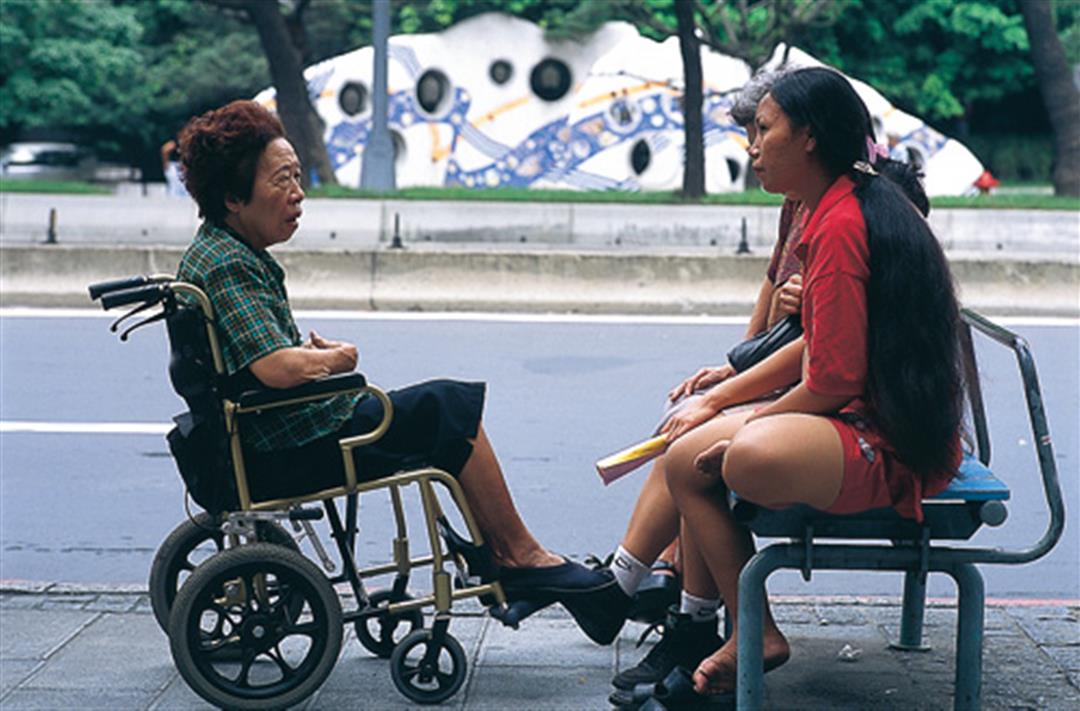
More than 370,000 foreign work- ers and 130,000 spouses from Southeast Asia live, work, and contribute to life in Taiwan. Yet mainstream society has made little effort to understand their backgrounds, languages and cultures.
Interestingly, just when most print media outlets are <withering amid the rise of digital culture, several periodicals aimed at immigrants and foreign workers have been independently established here in recent years, and their numbers and circulations are growing. Tapping into a great wellspring of homesickness among their readers, these publications also add a vital cultural diversity to Taiwan as a whole.
"Today, a friend gave me a copy of Bao Bon Phuong. As I carefully read each page, I grew indescribably happy. The familiar language and sincerity moved me. Despite my best efforts, I couldn't help shedding tears of joy. Now I have an additional companion that will empower me to overcome hardships and frustrations, and will support me all the way to a bright future...." So wrote Bao Bon Phuong reader Nguyen Thi Oanh in a letter published in the paper's first issue.

The weight of homesickness
Lihpao Daily, which is affiliated with Shih Hsin University and has a declared aim of "sparking a many-sided conversation and collectively forging a new educational paradigm," began publishing Bao Bon Phuong, a free monthly, in December 2006. Every month the editorial department receives "an avalanche" of similar letters. Some are written on lined school paper, others on old wrapping paper or calendar pages. Often, the thoughts and reflections overflow, and the writing densely covers both sides of the page. From these letters emerge portraits of unique-yet representative-lives.
Nguyen Thi Xuyen, who is rail thin with ramrod posture, hails from Vietnam's remote Hoa Binh province. Four years ago, she was toiling with her husband in the fields of her home village, but their income wasn't even enough to pay the interest on their bank loan. Then one day an employment agent arrived and told villagers that they "could make VND120 million [about NT$240,000] working in Taiwan as a domestic caregiver for two years." The presentation sent beautiful visions to dance in her head, and after talking it over with her husband, she decided to apply. The two borrowed the equivalent of more than NT$100,000 from relatives for the agent's fee (which is usually paid in installments from the first year's income). Although she was closer to her dream, inside she was overcome with anxiety, worried that the agents would reject her because she weighed only 39 kilos.
As the selection day neared, Nguyen's husband gave her some baggy clothes to wear and a 3.5 kilo iron bar to tie around her waist. Thus weighed down, she went to the initial selection and then to a week of training in Hanoi. All went smoothly, and she was chosen for employment.
Although no one ever asked to weigh her, Nguyen recalls a constant fear of being exposed. "I've never spoken about those experiences before, because I feared that people would laugh at me for the lengths I took to come to Taiwan. Yet if you were to ask: in my whole life what events have left the deepest impression on me? I would answer: it was when I was boldly carrying that iron bar on my body. That and the fate that brought me to Taiwan were the keys to changing my life."

Storytellers
What left the biggest impression on Nguyen Thi Hai, who likewise came from Vietnam to work in Taiwan, was the story of Hong Cam, a girl from her hometown. The old woman that Hong cared for in Taiwan was ill tempered and difficult to serve, and she had driven off her first two caregivers. Calling upon all her patience and determination, Hong was able to endure her days there, but she found herself becoming entangled in the family's internal quarrels. It turned out that the youngest of the woman's three sons was the most filial, and he had been shouldering most of the duty of supporting and caring for her. Recently his business had gone under, and his house was foreclosed on. After several fierce arguments between him and the second son, it was decided that the latter would take over caring for the mother. Hong wanted to change positions to escape the turmoil.
After restraining herself for a long time, she finally told the old woman that she planned to resign. Unexpectedly, the woman grabbed her hand and said: "Please don't go! Could you wait for me to die before looking for another job?" The two of them hugged and sobbed.
Hong told Nguyen that when she left her hometown, "My mother also hugged me and cried like that!" She decided to work for the second son after all, following the old woman to her new home in the countryside. While making a public record of these experiences, Nguyen offered these words of encouragement: "Good and courageous Vietnamese women, you will surely overcome all obstacles to reach ultimate victory!"
Unlike foreign workers, those who leave Vietnam to marry a Taiwanese native face the bittersweet challenges of assimilation. Qiucao, who is one of those "foreign brides," says: "When you marry a foreigner, the language, culture and customs are all different, and resentments are inevitable. In my next life I'd rather just marry a Vietnamese!" On the other hand, Thuy Linh says, "Having decided to marry Taiwanese husbands, we Vietnamese women must work hard to learn what's necessary and do the best we can for our new families. Yet, even though I have a nursing certificate and three years' work experience, as soon as an employer hears that I'm a 'foreign bride,' they are only willing to pay me the same low wages as foreign workers. It's not as if we suffer from great deformities. Why doesn't society treat us fairly?"
When you open Bao Bon Phuong you find that most pages are devoted to readers' letters. A portion of the articles and headlines are translated into Chinese for the benefit of employers or the family members of foreign spouses.
Editor-in-chief Chang Cheng holds that workers from Southeast Asia in a foreign land naturally find themselves desiring what is part of their native cultural realm-whether food, faces, atmosphere, language, music, objects, or living spaces. These are what they are accustomed to, and craving them doesn't necessarily suggest any mistreatment. Rather it points to a longing for a "sense of security" that's hard to put into words. But when there is mistreatment, the sense of security these little comforts provide becomes especially important: "These familiar comforts can not only bolster their determination to persevere in an unkind environment; they can even help them find courage and develop strategies to fight for what they want."

Senior journalist Chang Cheng compares Bao Bon Phuong to the "Web 2.0." Readers are not only the main characters, but they also serve simultaneously as writers and reporters. He is happy to serve as a stepping stone for them to advance their messages far and wide.
Lacking media resources
According to the Ministry of the Interior, over the last 16 years the numbers of Southeast Asians coming to Taiwan as foreign workers and as spouses have increased 30 times. This rapid growth has changed Taiwan's population structure and social environment in significant ways. But unlike countries in Europe and the Americas that have long histories of immigration, the ROC has still not researched and planned comprehensive policies and measures to handle foreign workers and protect their human rights, and the employment services it offers and the assistance it provides in adapting to life in a new land are wholly inadequate. Moreover, relatively few media outlets-print or electronic-have been targeted to these new immigrants.
Previously, apart from Filipinos with English skills who could obtain news of home by reading the foreign-worker pages of the English-language China Post and Taiwan News, other Southeast Asians who wanted to read news in their mother languages had to rely on out-of-date imported periodicals.
Moreover, among the various city and county governments, only Taipei City, Kaohsiung City and Kaohsiung County have published newsletters for foreign workers or spouses in Southeast Asian languages. But several languages are put into the same newsletter, so the feel is more of an official document or government notice rather than of a forum where one's own voice can be heard.
As for radio, in 2000 the Central Broadcasting System began airing hour-long daily programs in Indonesian, Vietnamese and Thai. Content includes information about labor law, home country news, Taiwan news, and music, and, for foreign spouses, information about residency permits, as well as discussions about educational issues and relations with in-laws.
In August of 2005, Thais working to build the Kaohsiung MRT organized protest demonstrations, shocking many. Media investigations discovered that more than 1,700 workers were living in corrugated metal buildings with poor ventilation. Strict controls were put on their bathing, use of phones, and purchases, and their wages were largely being withheld. They were being treated much like "slave labor." The media exposure not only ignited great outrage among the public, but it also prompted investigations and discussions of these issues within the government.
Asoke Srichantr, whose Thai-language radio program was nominated in 2006 for a Golden Bell Award for "social service contribution," recalls how the radio station served to release some of the demonstrators' anger and to placate them. Many Thai workers called to report what they had suffered, and the show worked hard to provide information about legal options and other channels of assistance. Asoke points out that most of the Thai laborers in Taiwan hail from poor villages in Northeastern Thailand. Lacking Chinese and English language skills, they find themselves cut off from information, and also tend to have reserved characters. When they first arrive in Taiwan, most of them feel lonely and homesick. With greater understanding, many employers started to play recordings of the program during lunch or breaks. And many of the workers remain loyal listeners even after they return home or leave to work in another country.

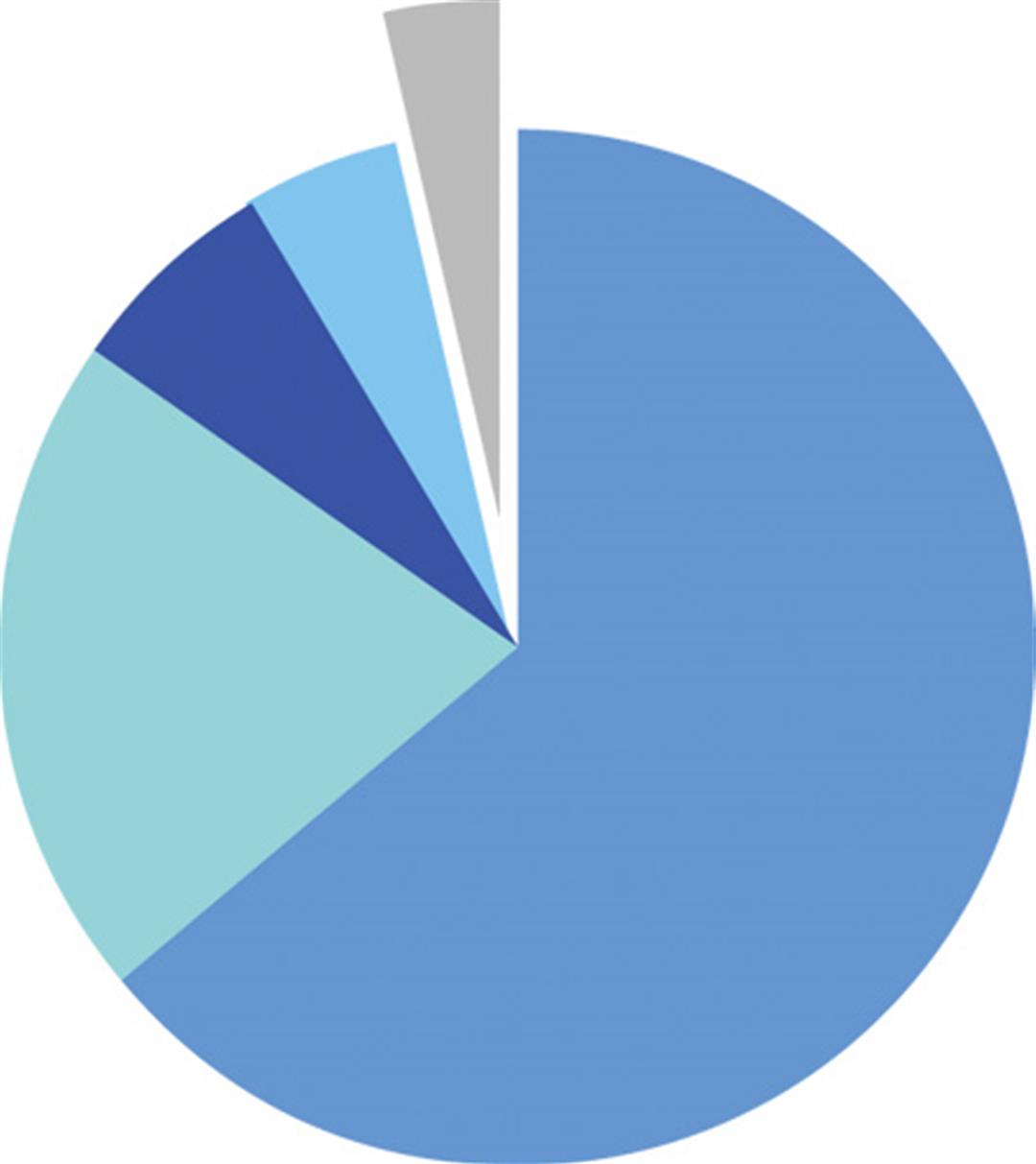
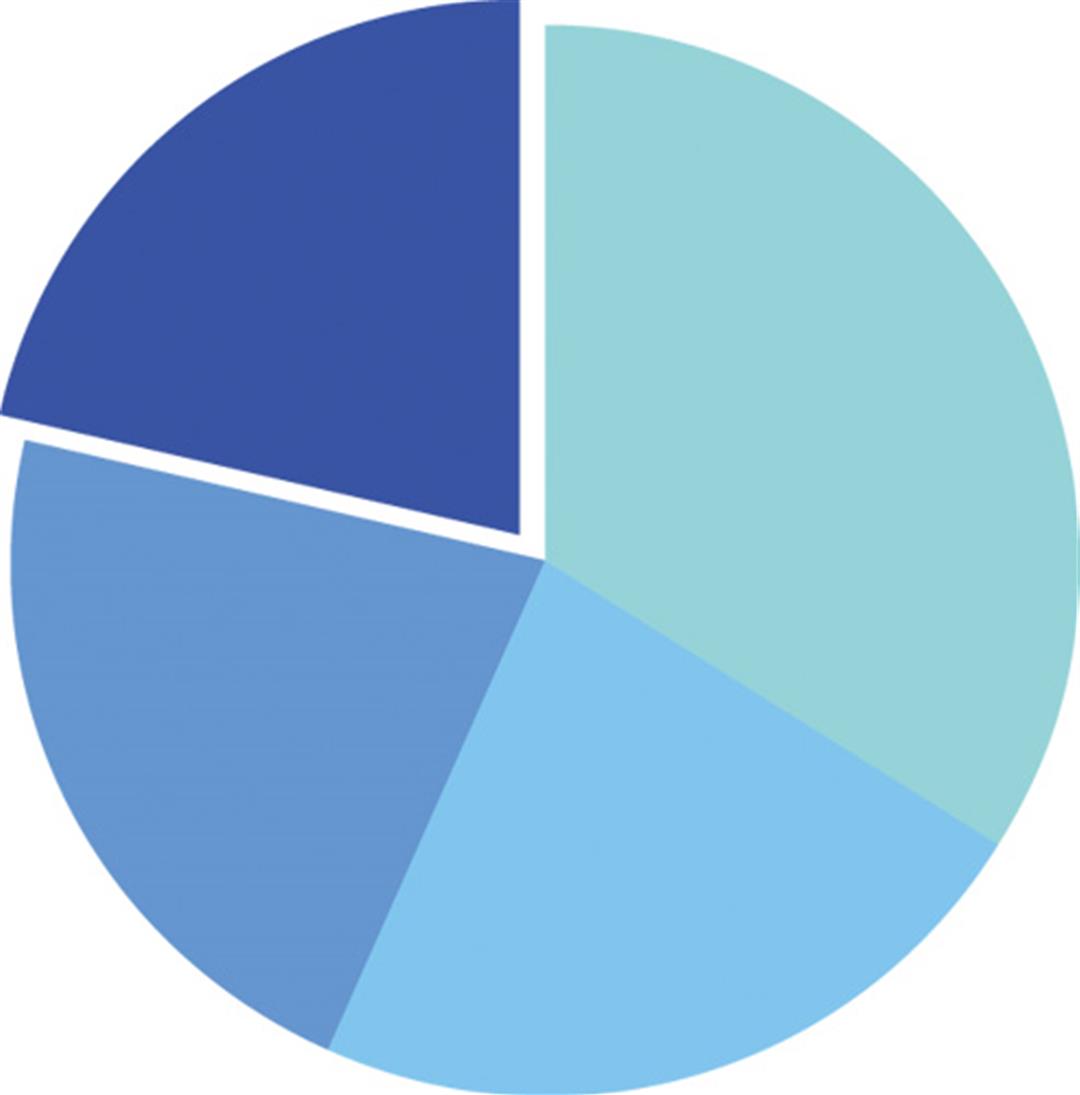
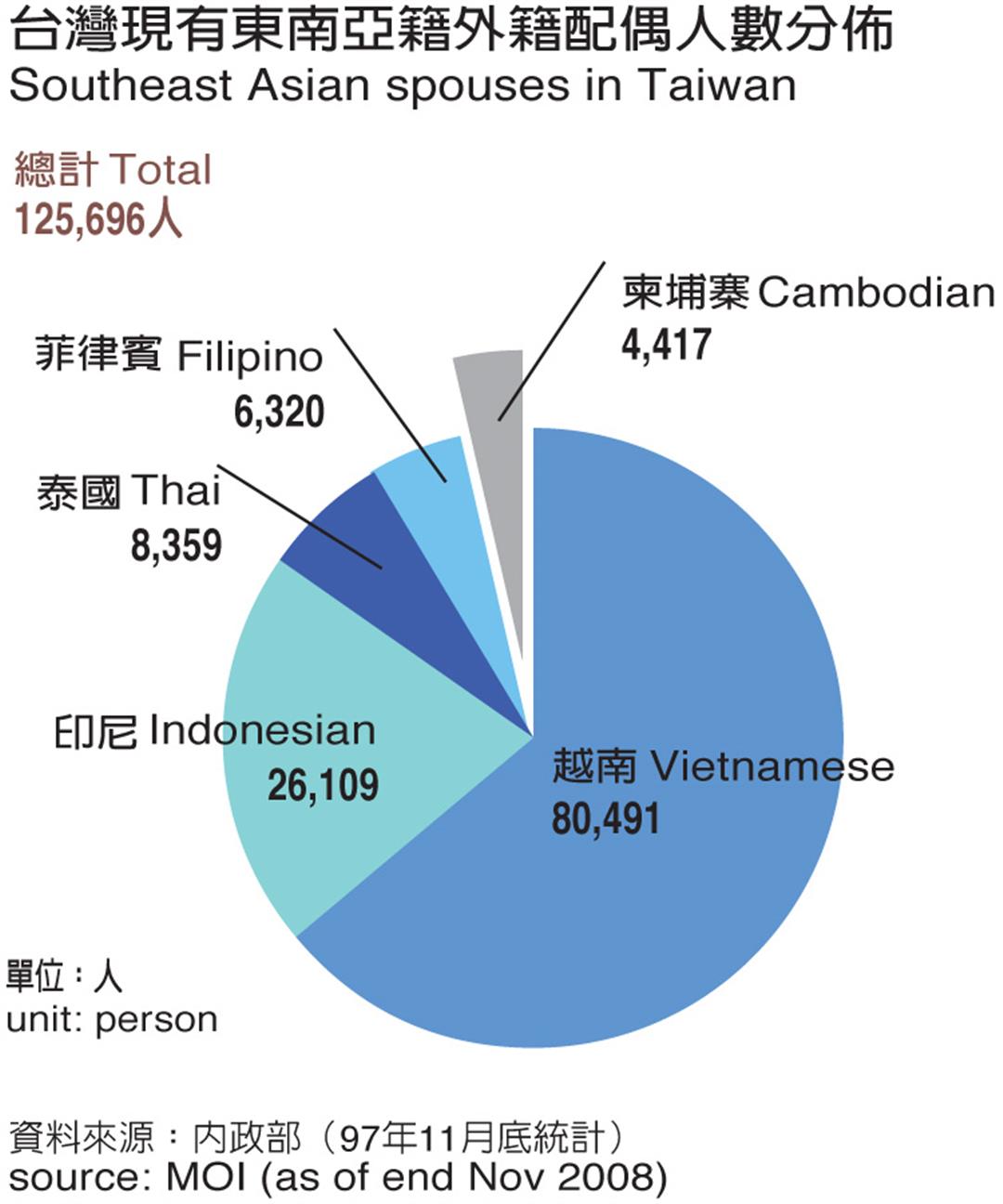
Southeast Asian spouses in Taiwan / source: MOI (as of end Nov 2008)
Helping fellow nationals
Print media outlets that disseminate information and foster communication within these communities didn't appear until two or three years ago. Apart from the aforementioned Bao Bon Phuong which is published by Lihpao Daily, there are also three Filipino papers and four Indonesian papers. A Thai paper didn't arrive until 2008, when Bao Bon Phuong released a Thai edition. The pressruns for these publications range from 3,000 to over 10,000, and most are freebies.
Yet unlike the Central Broadcasting System, these privately owned publications receive no government funding, so the enthusiasm and talents of their founders are even more important.
At the end of 2005, the Filipino housewife Ne Ne Ho, who is married to a Taiwan native, started publishing from her living room with a computer and a fax machine. Her paper-The Migrants-is a monthly with 16 broadsheet pages that includes both English and Tagalog. Ho edits, writes and translates. With a background as an English teacher, and with ample connections after living in Taiwan for 30 years, she is able to provide news of home and a discussion forum for her Filipino compatriots in Taiwan. Thanks to the Internet, she has also been able to hire a reporter and lawyer in the Philippines to write columns for the paper.
Deyantono, an overseas Chinese from Indonesia, has been publishing INTAI, a well-regarded monthly among Indonesian workers in Taiwan, since 2006. He always enjoyed reading and writing articles and essays, but when he came to Taiwan he first worked in import and remittances, and he opened a small general store. He had long-term contact with customers who were foreign laborers in Taiwan, which gave him greater understanding about the situation and needs of these workers in Taiwan. It was his good fortune to be introduced to Tony Thamsir, who used to work at the Central Broadcasting System. Thamsir began volunteering as an editor, and a Taiwanese native who worked at a newspaper also began volunteering his help with layout and production.
Bao Bon Phuong which is backed by Lihpao Daily, has an editor-in-chief who is a native of Taiwan, but three Vietnamese staffers and a group of volunteers are also essential to its operations. Among them is Teacher Shanshan, who has a degree in Chinese from Ho Chi Minh City University of Education. Apart from writing a language instruction column for the paper with the Chinese and Vietnamese side by side, in 2008 she also published a book, Chinese-Vietnamese, Easy Does It, which is a convenient educational tool for speakers of either language who want to learn the other.

Southeast Asian workers in Taiwan / source: CLA (as of end Nov 2008)
Community media
What these Southeast Asian media outlets in Taiwan share in common are close ties to foreign workers and foreign spouses, and a spirit of mutual assistance and support.
The papers rely heavily on word of mouth and are largely distributed in restaurants or general stores run by immigrants, or in other locations that their target readers frequent, such as churches, bus stations, foreign worker information centers, government offices providing immigrant services and so forth. These free periodicals are like retailers' "gift items." Apart from adding to the friendly atmosphere, the papers also give the customers and proprietors things to talk about.
The principal source of income for these periodicals is advertising, including those from retailers, shippers, remitters, travel agents, phone companies, and the government. Deyantono notes that early on INTAI had to "cultivate a thick skin" and push hard for advertisements. But now, with circulation steadily increasing and with one copy being read by over 20 people, the high level of exposure is attracting more than 40 advertisers per issue.
The goal of enlivening the community is important when choosing content. These papers report on news that is important to Southeast Asian immigrants but that mainstream Taiwan media largely ignore. For instance, they gave a lot of coverage to the decision to open up Indonesian elections to voting by resident foreign nationals-beginning with the 2009 presidential and legislative elections. The papers also actively play up "big events" and celebrities within their communities. For instance, in early December 2008 The Migrants devoted a lot of coverage to Filipino boxing king Manny Pacquiao's victory over Oscar De La Hoya, and INTAI reported extensively on Peace Band, a group comprising four Indonesian factory workers that has had frequent engagements in Taiwan.

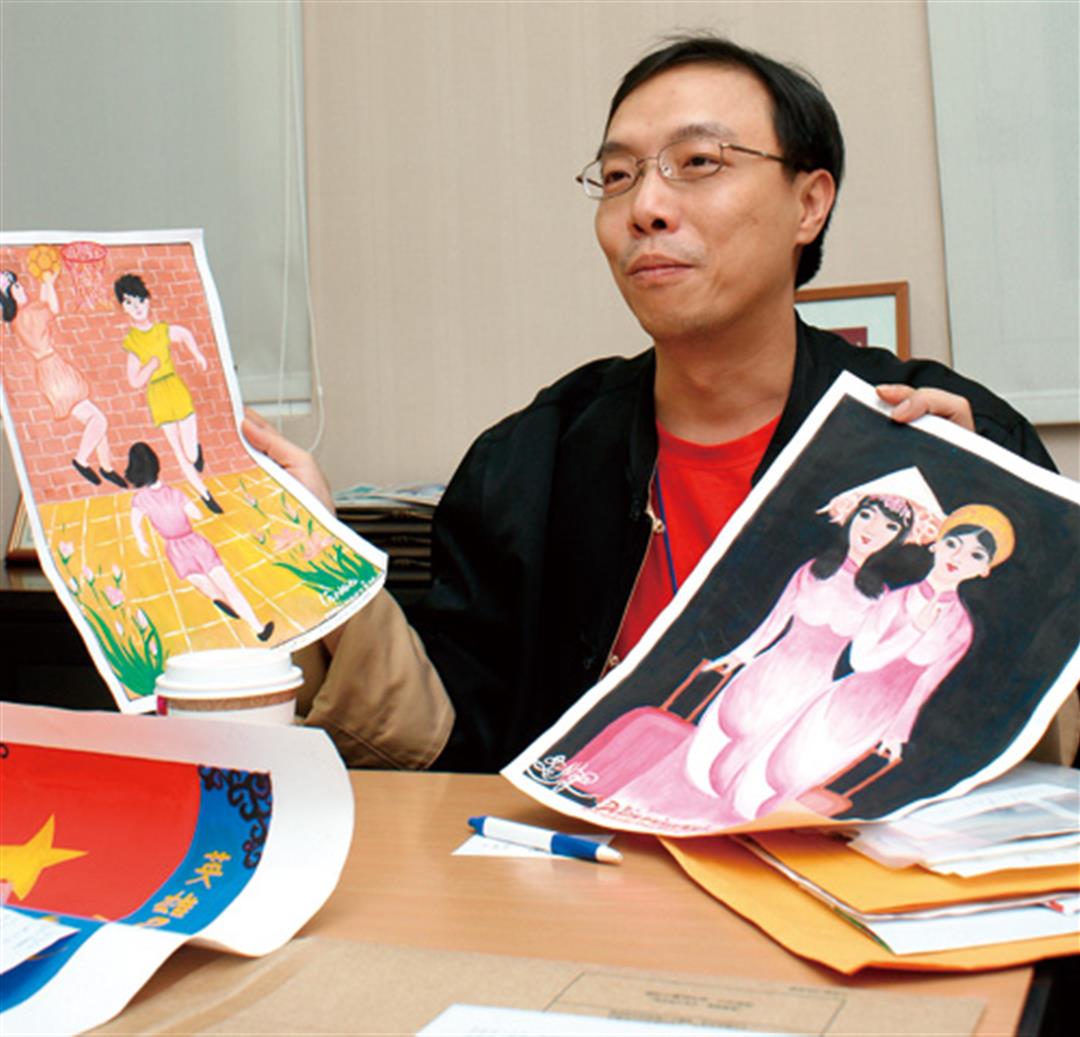
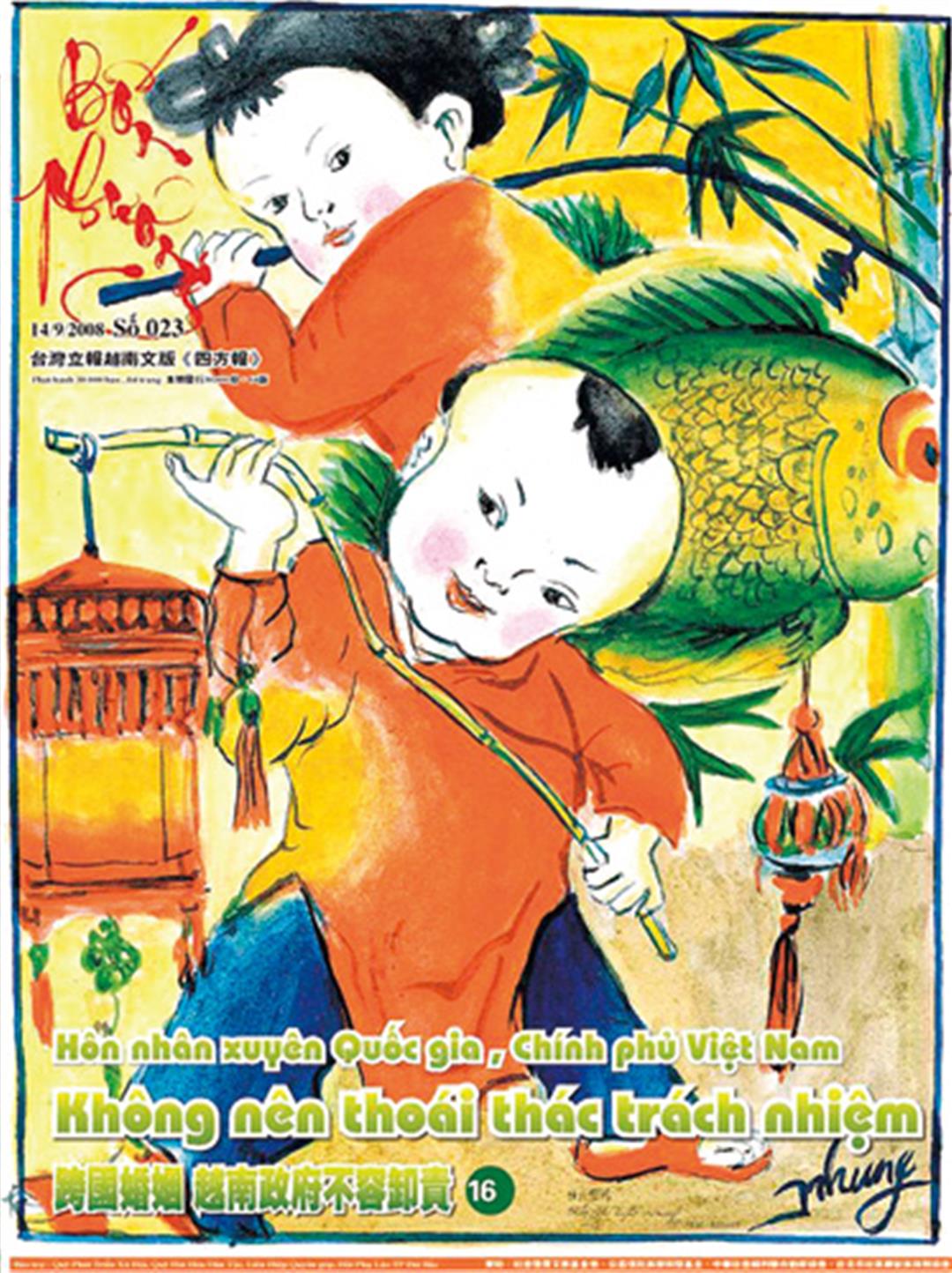
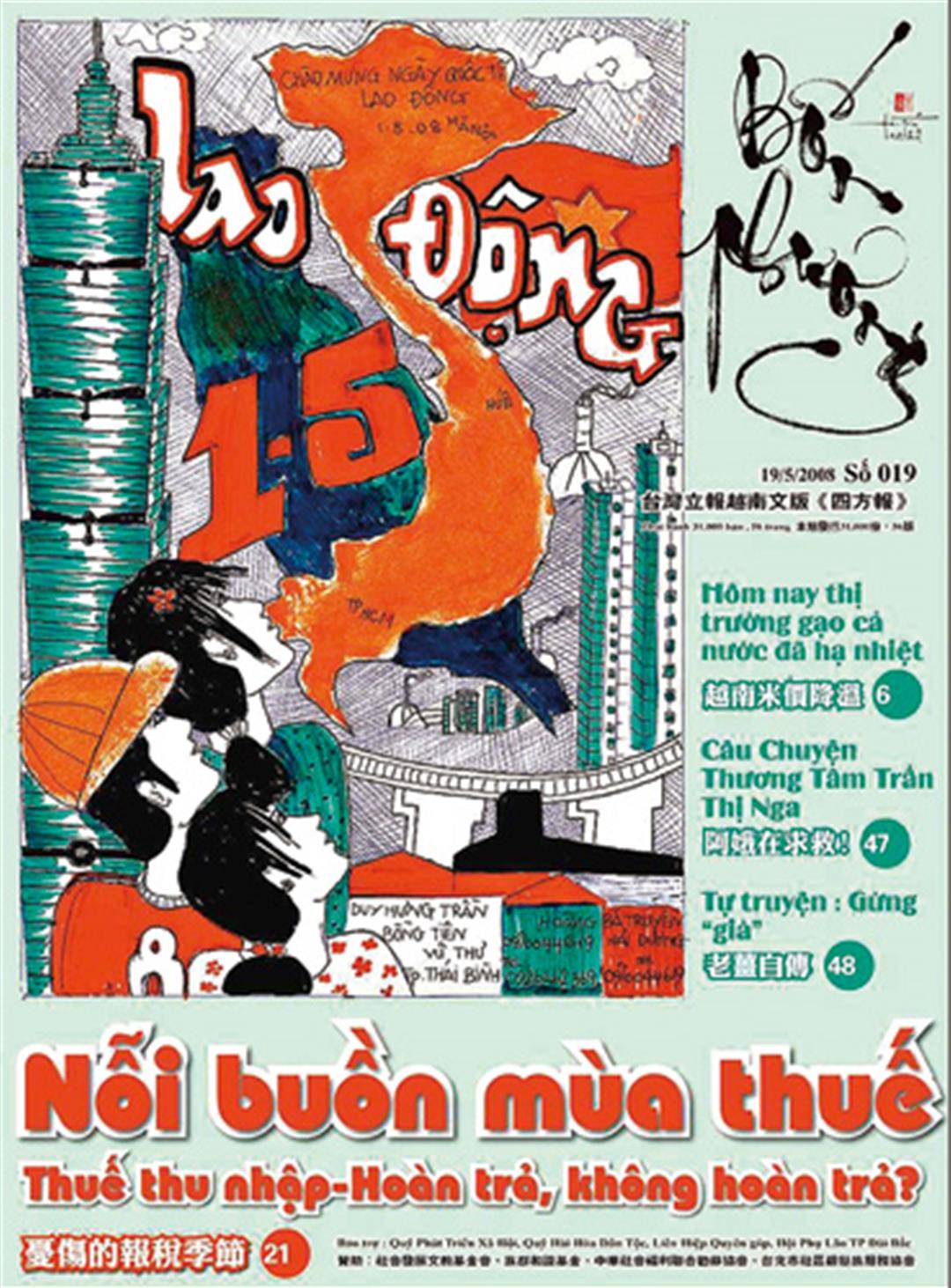
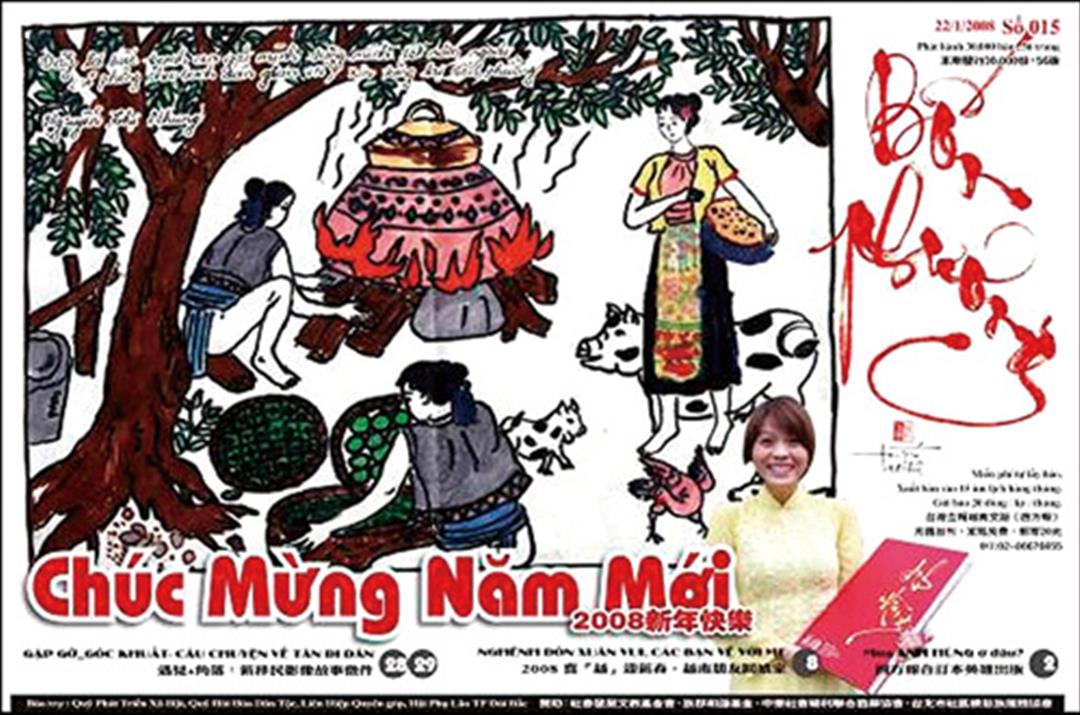
Given a forum to express their opinions, foreign workers and foreign spouses demonstrate a surprising and boundless creativity. Bao Bon Phuong often receives submissions with illustrations from its readers. The illustrations and essays, from left to right, "New Year's" by Nguyen Thi Nhung, "Women's Day" and "Labor Day" by Tran Duy Hung, and "Mid-Autumn Festival" by Tran Thi Tuyet Nhung.
Publishing as a social movement
The rapid growth of magazines oriented toward immigrants and foreign workers bears witness to the power of people taking the initiative. It also highlights how Taiwan society has for so long overlooked and estranged half a million Southeast Asians.
Holding to its founding principle of "speaking on behalf of the disadvantaged," Bao Bon Phuong started mobilizing readers on political issues eight months after its launch. A headline in the June 2007 issue read: "17,280 Fraud! Minimum Wage Raised for All-Except 340,000 Foreign Workers!" The paper called for submissions on the topic and encouraged its Vietnamese worker-readers to call the authorities in protest.
After making those calls, many readers didn't neglect to "report back" to the editor. Reader Tran Thi Luu noted, "Although the receptionist at the Office of the President would only say, 'We will take your opinion under consideration,' we nonetheless have taken the first step. Maybe one day government policy will change as the result of everybody's phone calls!" The paper then raised a call for abolishing the financial requirements for foreign spouses and for protecting foreign workers' rights to days off and vacations. And they invited readers to "have a chat" with the newly appointed director of the Economic and Cultural Office of Vietnam in Taipei. Time and again the paper has brought grassroots democracy into action.
The story "Where Are You? Why Was Running Away Your Only Option?" from the October 2007 issue was particularly controversial. That issue included seven stories exposing the frustrations that drove foreign workers to flee their employers, and it included the phone numbers of several agencies that could provide support. The editors didn't expect that several employers and agents that had subscribed for their workers would subsequently cancel their subscriptions. Wen Xin, the Taiwan correspondent for the Vietnamese paper Tien Phong Daily, criticized Bao Bon Phuong: "Running away is always illegal. Sympathizing with their plight is no different than encouraging them to run. By so doing you also damage the reputation of Vietnamese labor."
Yet, if you examine in detail what these runaways have experienced, you discover that they have often had their pay docked for petty reasons, been overworked for long periods, had their freedom of movement infringed upon, or have even been treated violently. In truth, their treatment is often unbearable, but there is the legal requirement that foreign workers must obtain their employer's consent to change jobs before their contracts expire. Moreover, they will lose the agent's fee and the mandatory savings of up to 17% a month will not be returned if they are dismissed and forcibly deported. Not willing to return home and face their families in shame, these workers turn to underground employment.
"What's called 'running away' is actually just changing jobs!" says Editor-in-Chief Chang Cheng indignantly. "By granting reward money to pursue and capture them, the government only puts their backs up against the wall. Why not put more effort into assisting them to change jobs or exposing unscrupulous agents?"

Given a forum to express their opinions, foreign workers and foreign spouses demonstrate a surprising and boundless creativity. Bao Bon Phuong often receives submissions with illustrations from its readers. The illustrations and essays, from left to right, "New Year's" by Nguyen Thi Nhung, "Women's Day" and "Labor Day" by Tran Duy Hung, and "Mid-Autumn Festival" by Tran Thi Tuyet Nhung.
Welcoming cultural diversity
Six months ago, with the aim of breaking down social barriers and easing convenience for readers, Bao Bon Phuong, which had already topped 30,000 in circulation, started discussions with various convenience store chains about the possibility of moving to the magazine racks inside stores. Yet, with the exception of the OK chain of stores, with which it reached a formal agreement to move onto the racks on January 10, the others refused to make a deal.
Chang Cheng frankly acknowledges that part of his strategy of "cultural struggle" is to bring together disadvantaged immigrants into a powerful movement. After creating a self-supporting media platform, these media outlets should then enter the mainstream, allowing Taiwan natives to see what is impressive about this group of people. That will prompt interest in greater understanding. Taiwan natives will realize that these immigrants not only have feelings, but also have talents and aspirations, and want to read and create publications. It is only because they have so long been denied the right to have their voices heard in the media that they have become invisible people in a foreign land.
Tony Thamsir, who has experience working in different kinds of media, holds that these media outlets with small audiences of immigrants are largely limited to coverage that is "aimed at their own kind" because they find providing adequate coverage of their own community hard enough as it is. He also criticizes the mainstream media for portraying these immigrant groups as "creators of social problems," full of criminals and runaways and functioning to bring down the wages of the native population. The only other coverage will focus on these groups' colorful festivals and celebrations. The sum result is that the media has perpetuated stereotypes about Southeast Asians in Taiwan society.
Kuang Chung-hsiang, assistant professor of communications at Chung Cheng University and the president of Taiwan Media Watch, has a different take on this issue: In an era of globalization where populations are increasingly mobile, far-sighted nations will actively provide special media services for foreign workers and immigrants, he says. They should regard these efforts as "laying the foundations for cultural diversity."
Kuang points out that in Australia, in order to serve immigrant populations from Europe, Asia and Africa, the government throughout the day broadcasts films and programs for these groups on public television, both in the native languages and with English dubbing. The number of programs in each language is set in proportion to the size of the immigrant group's population. Through these television programs, viewers of any ethnicity can quickly gain a sense of the life experiences of these immigrant groups and even an understanding of their cultural values. The broadcasts are helpful in promoting social tolerance and harmony, but even more importantly they provide a powerful means of cultivating a global outlook and a sense of global citizenship.
On the other hand, Taiwan's cultural policies toward foreign spouses are aimed mainly at encouraging them to learn Chinese or at forcing them to take "naturalization tests." And the "short-term guest labor system" that treats foreign workers as belonging to their employers not only creates divisions within society but also runs totally counter to individuals' human rights and the right of assembly.
Lorna Kung is a consultant for the Taiwan International Workers' Association and the executive director of the Scalabrini International Migration Network-Taiwan. She argues that the government should, as soon as possible, formally acknowledge that Taiwan is a multicultural and ethnically diverse place. It should allocate greater resources to deal with that reality, she says, by listing Southeast Asian languages among the choices for "mother language curriculum," by creating special television channels for newly arrived immigrants, and by clearly protecting foreign workers' right to days off and vacations, among other measures. By treating immigrant groups well and helping them reach their full potential, Taiwan society will help itself most of all.
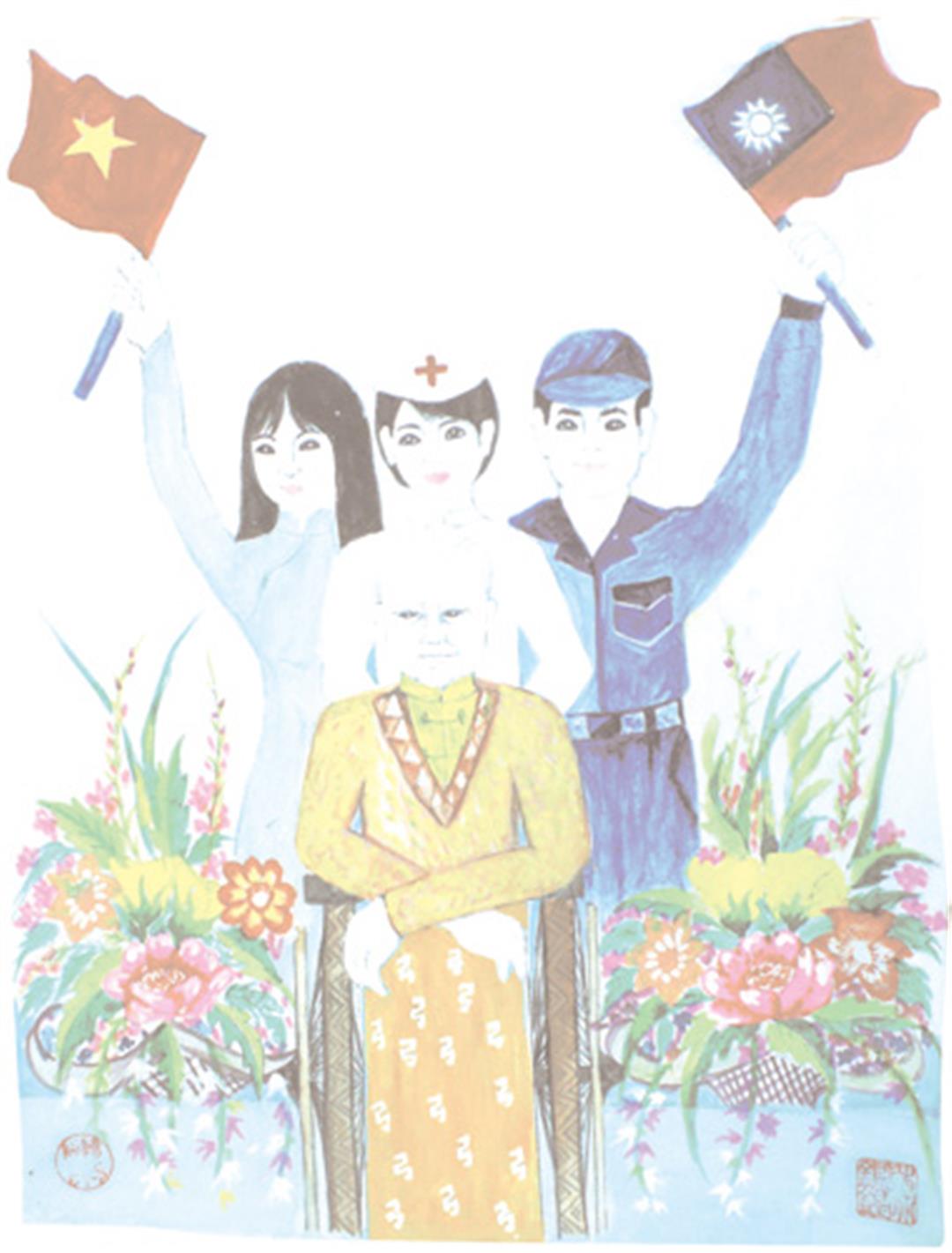
(background pictures) Vietnamese migrant worker Tran Thi Dao's Heroes depicts hardworking workers and immigrants who have left their homeland.
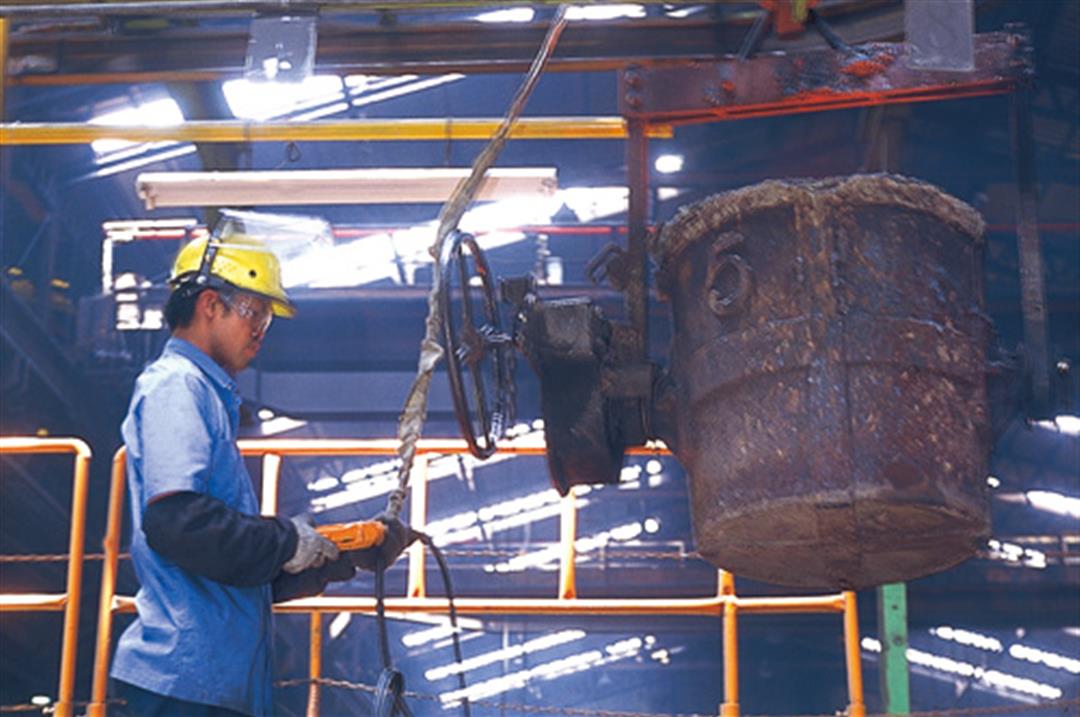


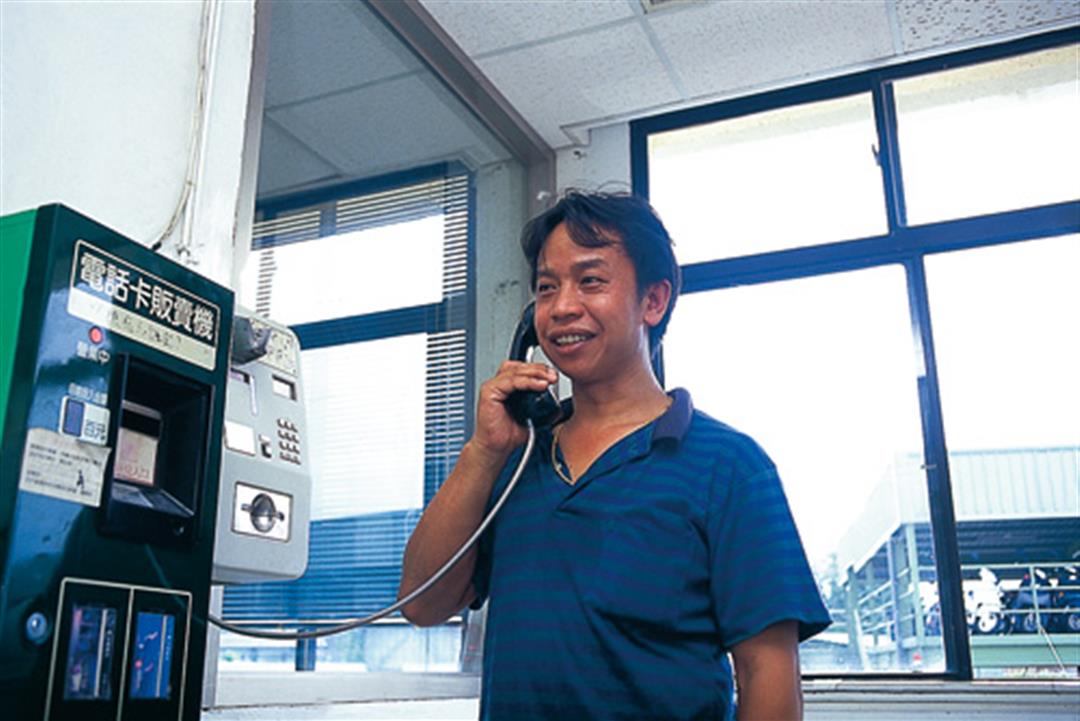
Since 1989, several million foreign workers have come to Taiwan to fill the lowest rungs of the local labor market. They have made major contributions to life here, but mainstream society has largely ignored their voices and denied them their rights. The radio shows and newspapers in Southeast Asian languages that have appeared in recent years represent the first step toward change.
Given a forum to express their opinions, foreign workers and foreign spouses demonstrate a surprising and boundless creativity. Bao Bon Phuong often receives submissions with illustrations from its readers. The illustrations and essays, from left to right, "New Year's" by Nguyen Thi Nhung, "Women's Day" and "Labor Day" by Tran Duy Hung, and "Mid-Autumn Festival" by Tran Thi Tuyet Nhung.
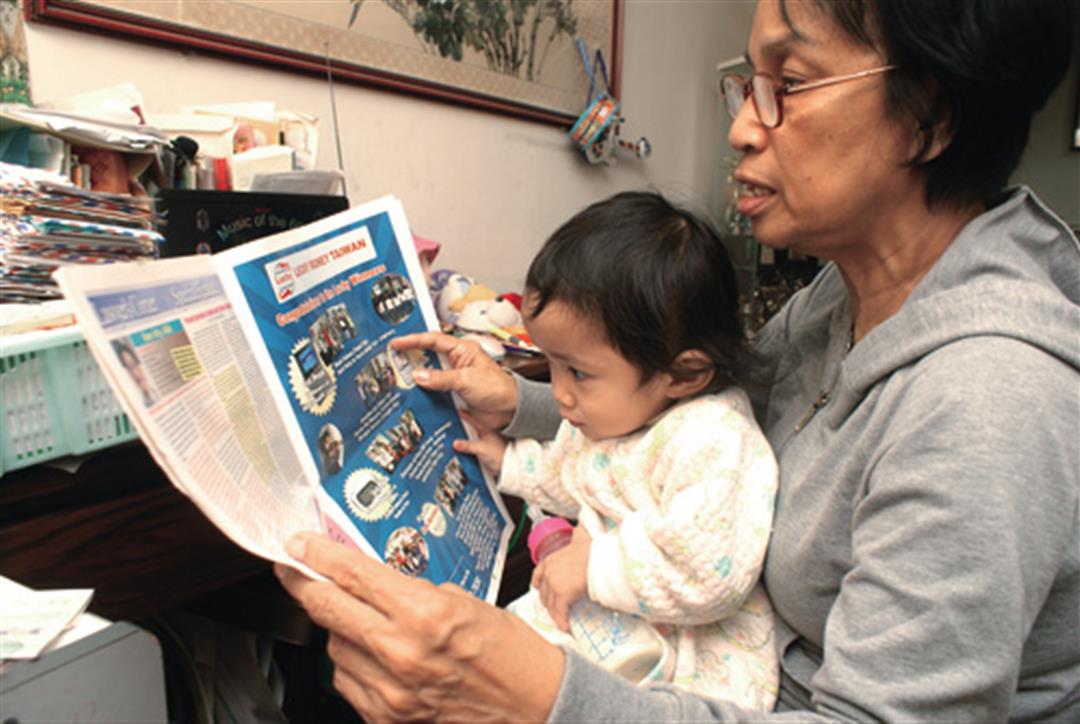
Ne Ne Ho, who hails from the Philippines, publishes The Migrants from her living room. She encourages her fellow nationals in Taiwan to contribute. "Even just a few lines of poetry would be great," she says. "No matter how tired, you've got to exercise your brain. Otherwise you'll go crazy!" She is holding her granddaughter, who, though only one year and ten months old, can already recognize photographs.

Senior journalist Chang Cheng compares Bao Bon Phuong to the "Web 2.0." Readers are not only the main characters, but they also serve simultaneously as writers and reporters. He is happy to serve as a stepping stone for them to advance their messages far and wide.
Since 1989, several million foreign workers have come to Taiwan to fill the lowest rungs of the local labor market. They have made major contributions to life here, but mainstream society has largely ignored their voices and denied them their rights. The radio shows and newspapers in Southeast Asian languages that have appeared in recent years represent the first step toward change.
Southeast Asian spouses in Taiwan / source: MOI (as of end Nov 2008)
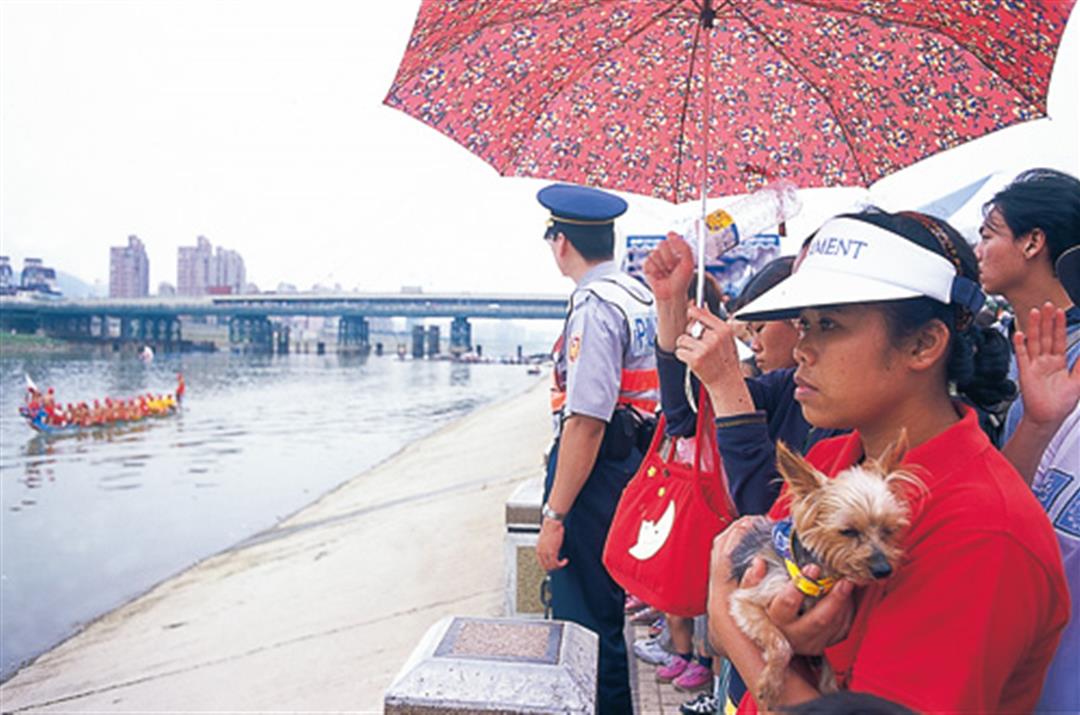
Since 1989, several million foreign workers have come to Taiwan to fill the lowest rungs of the local labor market. They have made major contributions to life here, but mainstream society has largely ignored their voices and denied them their rights. The radio shows and newspapers in Southeast Asian languages that have appeared in recent years represent the first step toward change.
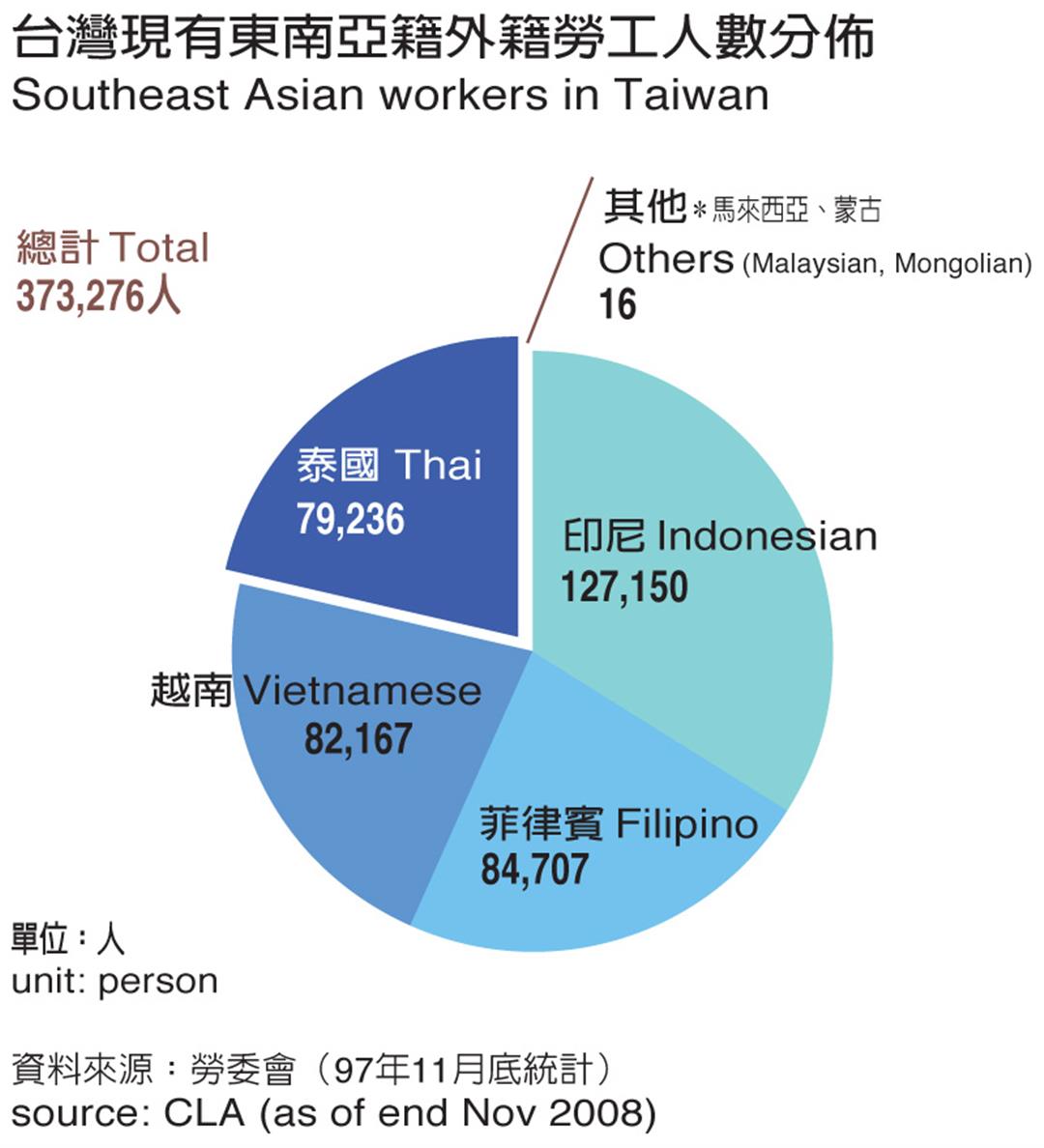
Southeast Asian workers in Taiwan / source: CLA (as of end Nov 2008)
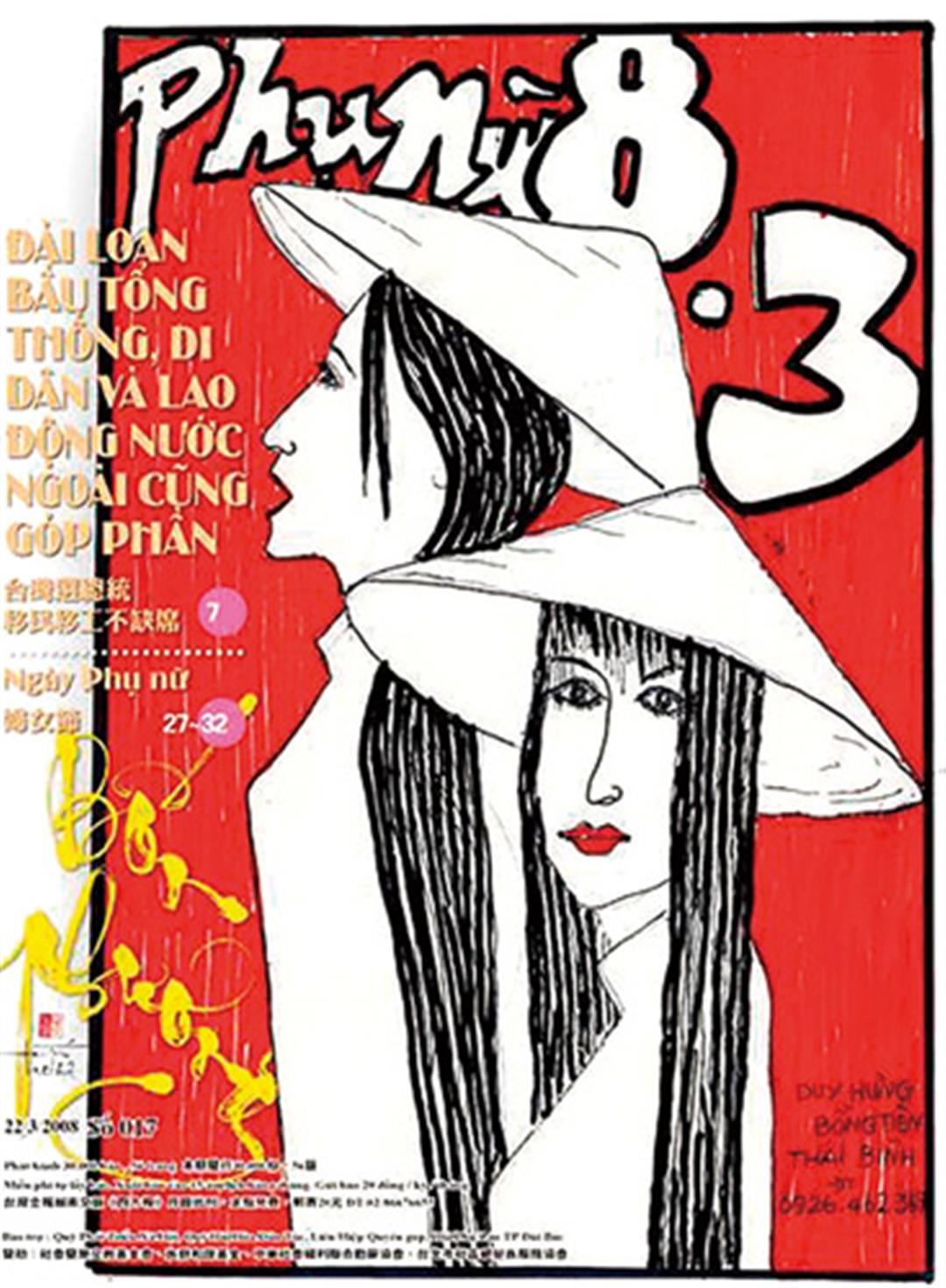
Given a forum to express their opinions, foreign workers and foreign spouses demonstrate a surprising and boundless creativity. Bao Bon Phuong often receives submissions with illustrations from its readers. The illustrations and essays, from left to right, "New Year's" by Nguyen Thi Nhung, "Women's Day" and "Labor Day" by Tran Duy Hung, and "Mid-Autumn Festival" by Tran Thi Tuyet Nhung.