Remembering a Pioneer-Sim Mow-yu Passes On
Xie Shenghui / photos courtesy of Su Qihui / tr. by Geof Aberhart
March 2009
On February 5, 2009, as Malaysia's Chinese community was in the midst of Chinese New Year celebrations, news broke that the community had lost its spiritual leader, Chinese education pioneer Sim Mow-yu, at the age of 97. Fortunately, records of Sim's eventful life had already been stored in a memorial hall where future generations of Malaysian Chinese will be able to learn from the wise example Sim set. Hall founder Huang Yahua and her husband invested their own money and time to record the inspiring story of sacrifice and dedication that was Sim's life, a gesture that is impressive in and of itself.
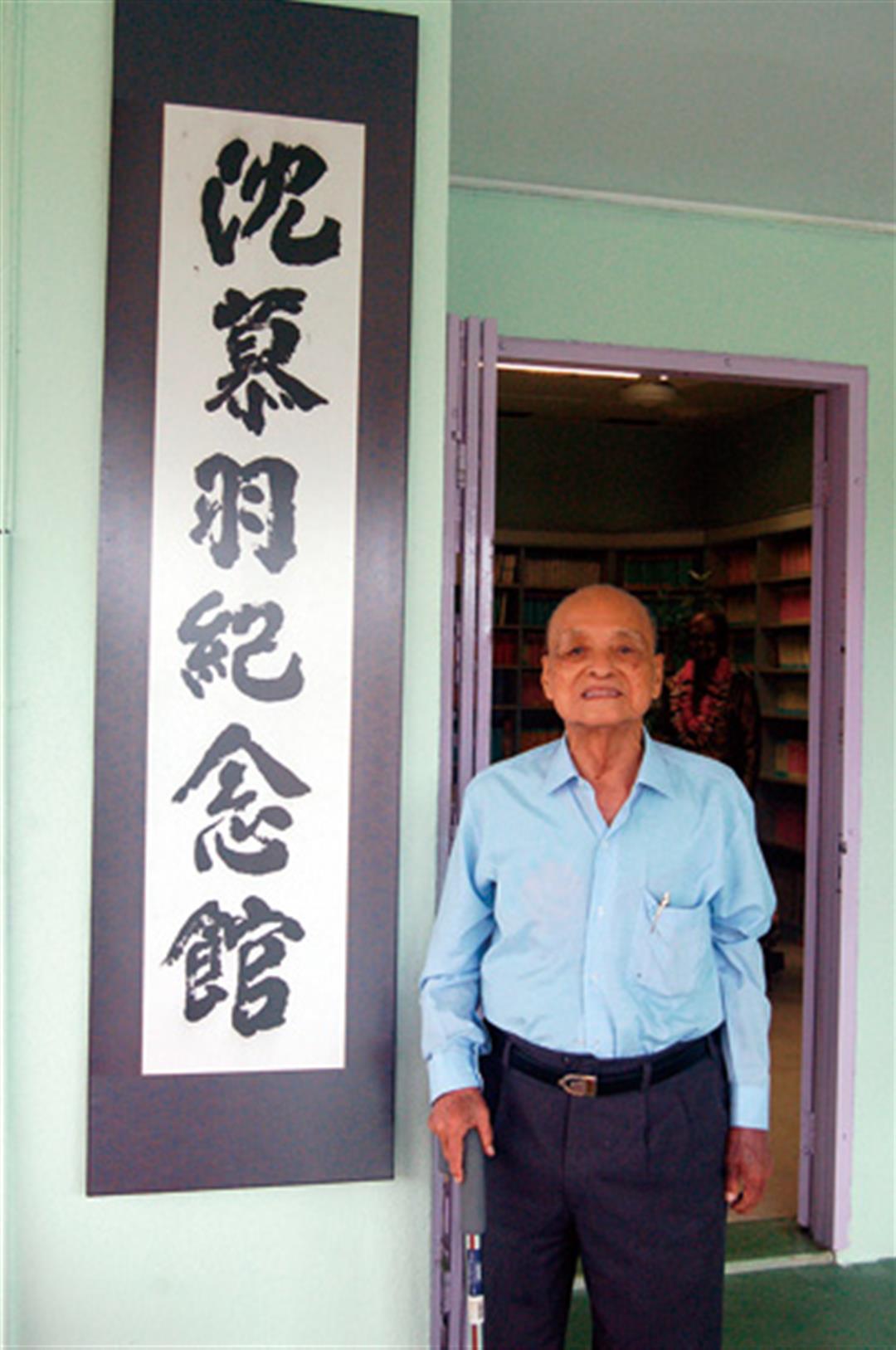
Situated in the town of Gemas in Negeri Sembilan, Malaysia, the Sim Mow-yu Memorial Museum is the first such hall created by individuals, and not by Malaysian Chinese community organizations, to commemorate one man.
The curator of this hall is Huang Yahua, born in 1959 and wife of Su Qihui, a famous businessman and orchard owner. The couple were not acquainted with Sim personally, but are simply admirers of his achievements who started with collecting media clippings about Sim until in 1997 they decided to establish a hall commemorating him. The hall opened in 1997, but wasn't formally named until 2006, after which it began attracting media attention and growing crowds of visitors.

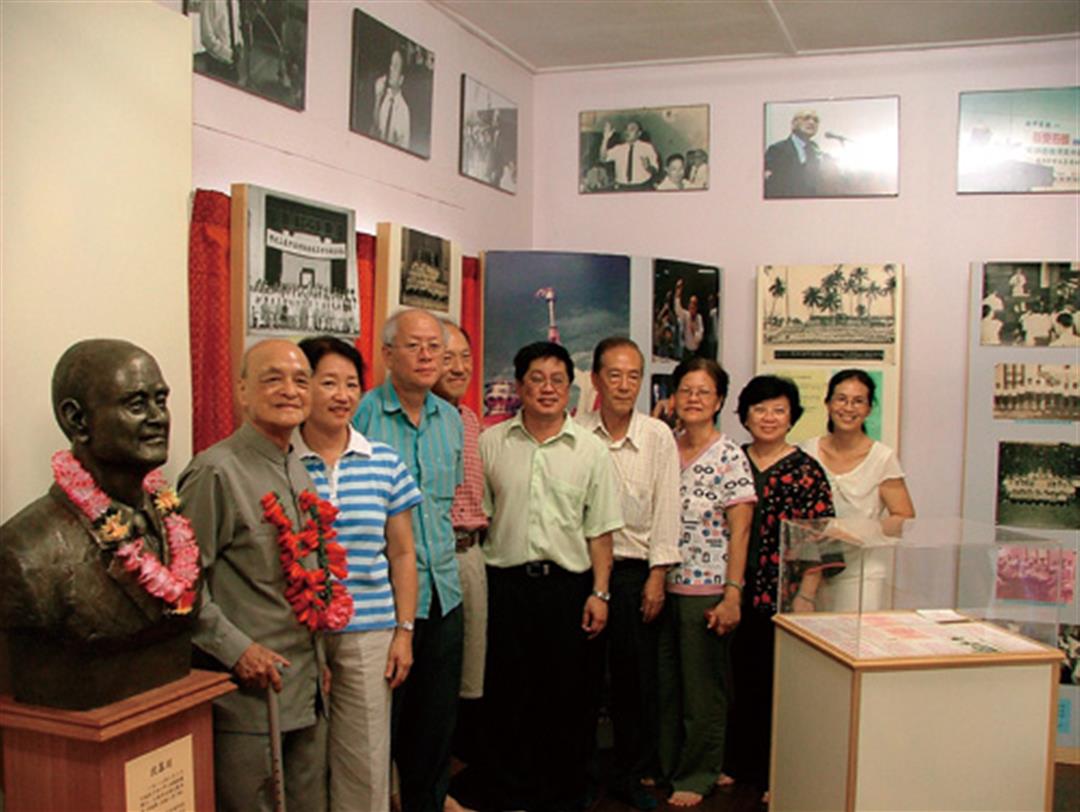
Starting with one newspaper clipping, Huang Yahua (first right) and husband Su Qihui (fifth from right) went from having no knowledge of Sim Mow-yu to opening a memorial museum to commemorate him. Their efforts impressed many, including Sim himself, who donated his diaries to the museum in the hopes that they be left to history.
On the shoulders of giants
The Sim Mow-yu Memorial Museum is housed in two semi-detached houses and boasts a collection of 30,000 books. The information on display comes from newspaper clippings, literary publications, clan hall publications, religious books, letters and awards received by Sim, and calligraphy handwritten by him. The museum also has 2,733 volumes of newspaper clippings, covering topics including current events, literature, health, education, politics, beauty, religion, broadcasting, customs, local records, and history. Visitors can browse these yellowing newsprint articles and see for themselves the events, controversies, hardships, and celebrations the old guard of the Malaysian Chinese community faced on their path to today.
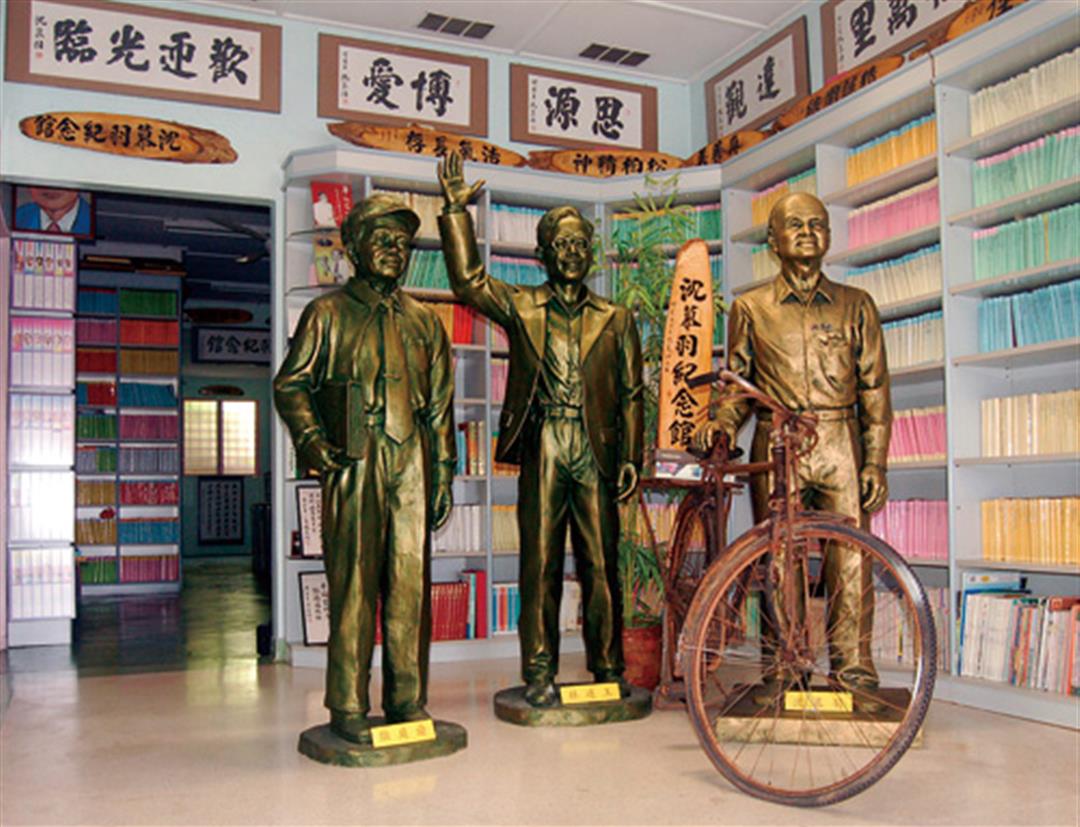
One of the halls of the museum is known as Mingxin Library. The first thing to greet guests to this hall when they enter is a bronze statue of Sim standing solemnly in the main hall, with an old bicycle beside him. Always the educator, Sim was known to many as "Principal Sim." He could often be seen clad in his customary blue shirt astride his bike, tirelessly zipping from place to place to continue the fight for Chinese education in Malaysia. Throughout the museum you can see Principal Sim's calligraphy, most of which is written on wood bought and sanded down by Huang Yahua and others. His calligraphy is vibrant and powerful, in a style so unique it came to bear his name. Across Malacca, the odds are good that any store sign you see was written by Sim.
In the rear part of Mingxin Library is the main exhibition area, where Sim's awards and commendations are on display, including his much-treasured certificate from his time on the Kuomintang Central Committee. One of the biggest draws is shown in a glass exhibition case-the dozens of diaries Sim kept religiously between 1957 and 2008. It is hoped that the diaries can be compiled into an anthology, providing a valuable historical reference for Malaysia's Chinese community.

Born to a family of revolutionaries, Sim Mow-yu was given a name that roughly translates to "paying tribute to Guan Yu," expressing his father's hopes that his son would follow the example of Guan Yu in devoting himself to his country. Sim lived up to that example, leading the life of a scholar and fighting for Chinese-language education for the Malaysian Chinese community. He became an important figure for an entire generation of Malaysian Chinese.
Planting seeds
Mingxin Library was originally Huang Yahua's private residence, but as her collection of books and materials related to Sim grew, she rented a second building to store them in, which is now the memorial museum's Jianxing Library.
Stepping into Jianxing Library, the eyes are greeted by a round stone table, at which Huang sits for a time every day. It is here that Huang heads every morning to organize her collection, cutting, photocopying, and stapling papers.
Sim, a lifelong scholar and personality, accumulated a private book collection that would rival any library and which offers an insight into Sim's broad range of interests. In addition to innumerable magazines and newsletters, the collection includes six tall bookshelves, with titles ranging from The Book of Han and Sima Qian's The Records of the Grand Historian to A Collection of the New Literature of China, from the collected works of Shakespeare to a dictionary of names in Japanese. There is even a copy of A Complete Collection of Practical Couplets.
Before beginning her collection, Huang was an ordinary housewife who knew nothing of the travails of the Chinese education movement and only had a vague idea that Sim was an important figure in that movement. Since getting to know Sim through the clippings, though, she has come to understand the difficult fight Chinese educators had. Getting to know Principal Sim, says Huang, instilled in her a commitment to Chinese education, and she decided to do as much as possible to contribute to the Chinese community.
Huang describes Sim as a man of reason and eloquence. His every move commanded the attention of others, and when he arrived at a destination, people couldn't help but be excited and happy. He had a magnetic personality, and quickly became the center of attention in pretty much any setting, filling those around him with hope and warmth.
Huang believes that among all the major Chinese historical figures in Malaysia, Sim made the greatest and the longest-lasting contributions to the Malaysian Chinese community, and he went through a lot. The Malaysian government has refused to award Sim the title of "National Cultural Figure" as they make a policy of not giving such awards posthumously. Nonetheless over 10,000 people paid their respects at Sim's February 10th funeral, with people lining the streets as his coffin was transported to the cemetery. Sim believed that a person should "lead a life of service and struggle," and he put his belief into practice. Not only has his spirit inspired Huang Yahua, it has also ignited a flame in the Malaysian Chinese community that will be passed down for generations, hopefully setting an example for more to follow in the future.(For more information on Sim's life and achievements, please see the article in our June 2005 Taiwan issue.)