Sun, Seawater, and Culture —The Formula for Taiwanese Salt
Cathy Teng / photos Jimmy Lin / tr. by Geof Aberhart
September 2016
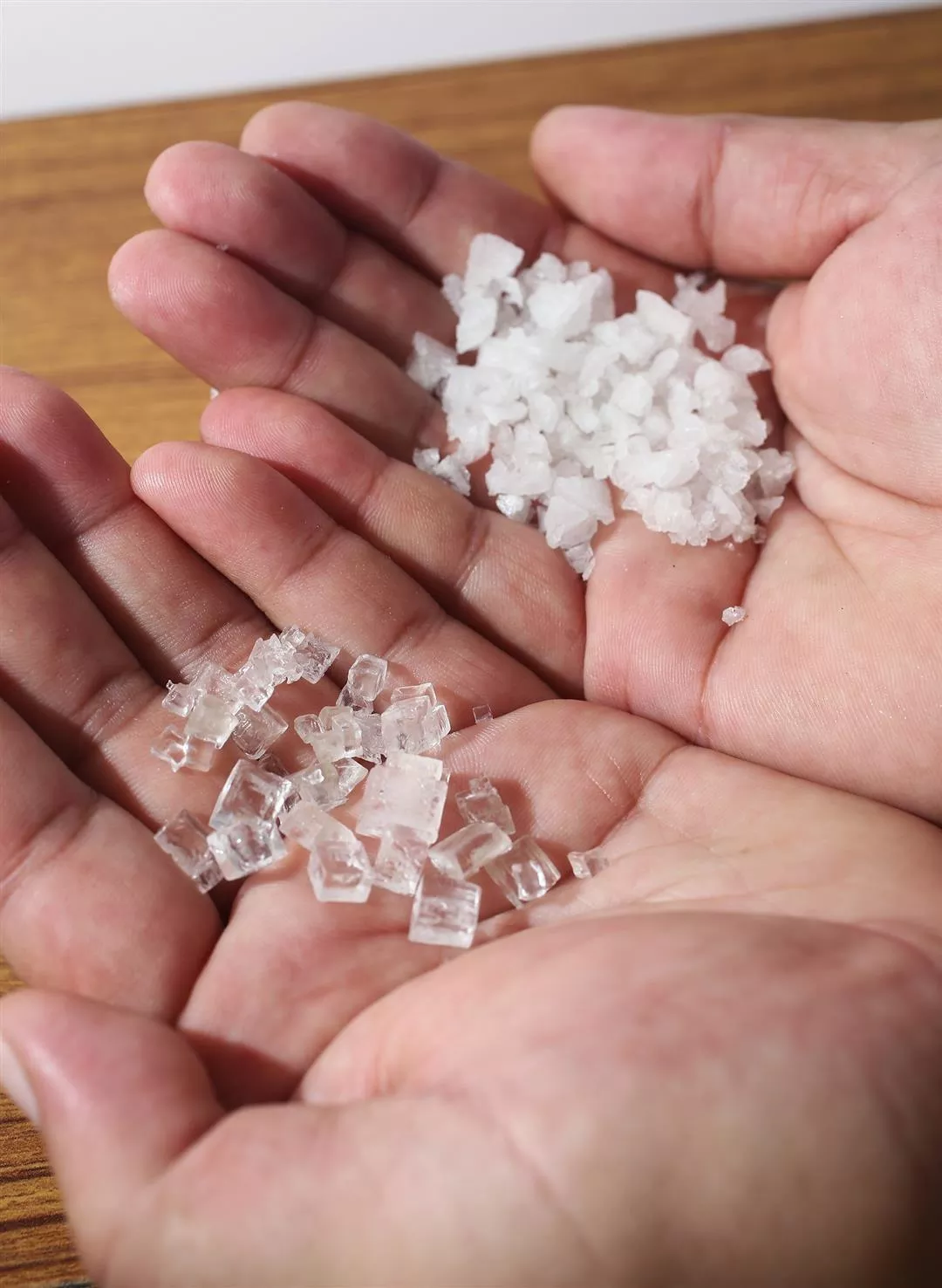
Floating atop the briny crystallizing pond, the fleur de sel looks as delicate as paper. As Tsai Jiung-chiau, director of Chiayi County’s Budai Cultural Association, carefully scoops some of it up fleur de sel from the pond, he explains that these “flowers” bloom only in spring and summer. If it’s warm enough in the early morning, as the surface of the pond greets the sun and wind the thin pyramidal crystals begin to form. The crystals form quickly and contain a relatively high level of moisture, making them cloudy. The salt that forms in winter is known as “frost salt,” because the lower temperatures and reduced sunlight exposure slow down its formation, creating more glittering, clearer crystals with higher mineral content.
“Salt dried in each different season has its own particular style and flavor,” says Tsai. In the nine years since he committed himself to the revitalization of the Zhounan Salt Field, Tsai has seen the saltern produce salt that is not just of high quality, but uniquely Taiwanese. He is striving to make the flavor of salt part of our daily lives and give home chefs more choices in their cooking.

Crystalline “frost salt.”
Resurrecting the fields
The Zhounan Salt Field, in Chiayi County’s Budai Township, was first opened in 1824. For decades it was one of Taiwan’s main salt fields, but in 2001 the Taiwan Salt Industrial Corporation (now Taiyen Biotech) announced its closure for financial reasons. With that announcement, the golden age of Taiwan’s sun-dried salt industry was ushered into history.
Or so it seemed. But while it may have ended as a full-scale industry, it found new life as a cultural and tourist enterprise. Since 2003, at the urging of local cultural groups, many of Taiwan’s salt fields have found new life as part of the burgeoning cultural tourism industry.
In 2008, the Zhounan field was resuscitated by the Budai Cultural Association after lying idle for seven years. One of the biggest proponents of this was Tsai Jiung-chiau, for whom the place had been a childhood haunt. However, by 2008 the people had moved on and nature had started to reclaim the area, which was becoming a playground for wild birds and fish. When it rained, they became ponds; during summer, the lack of rain dried the earth out to the point it started cracking. The soil was loose and unable to retain water, and the earthen embankments that had been built for the salt ponds had fallen apart.
Confronted by all this, Tsai, together with a few old salt workers, had no choice but to roll up their sleeves and pants and get to work reconstructing the ponds, waterways, and embankments using traditional engineering methods. After being rained on and drying out repeatedly for so long, the soil had been denuded of the salt that was once so abundant, and so the team bought 300 tons of salt from Taiyen to restore it. After three years of hard work, the salt fields were once again ready to go into operation.

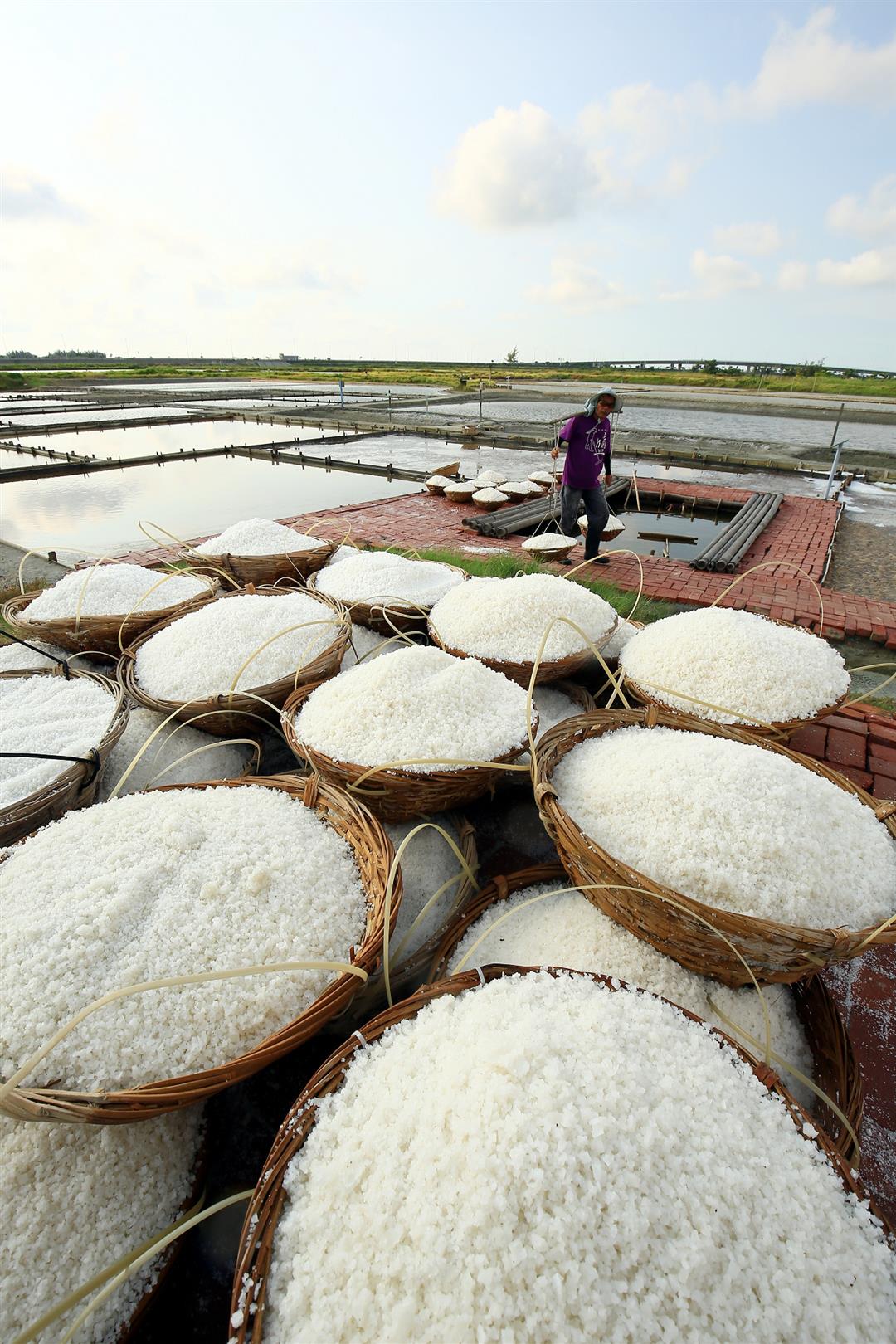
To create a clean, clear sun-dried salt requires not only seawater and sunlight, but also the right land, winds, and techniques, along with hard work.
The formula for salt
Sun-drying salt is a process of two stages: evaporation and crystallization. Seawater has a salt concentration of three degrees Baumé (the Baumé scale is used in chemical engineering to indicate the concentration of minerals in liquids), which means that one liter of seawater has about 30 grams of salt in it. When brine reaches a salinity of 25 to 29 degrees Baumé, the salt (sodium chloride) therein will begin to precipitate out and form crystals.
In principle, this requires a simple process of collecting seawater in pools to let some of the water evaporate off in the sun. But if you encounter a summer with plentiful rainfall, making the most of the time you’ve got for evaporation can be a real test of the saltmaker’s skill.
When salinity reaches 25 degrees Baumé, the brine can be collected and stored in brine pits. These pits, also referred to as “brine banks,” are then emptied into crystallization ponds when the time is right to get the salt crystallizing. These ponds sit for longer periods in the winter, when the crystallization process can take as much as three weeks, as opposed to the one week needed in spring and summer.

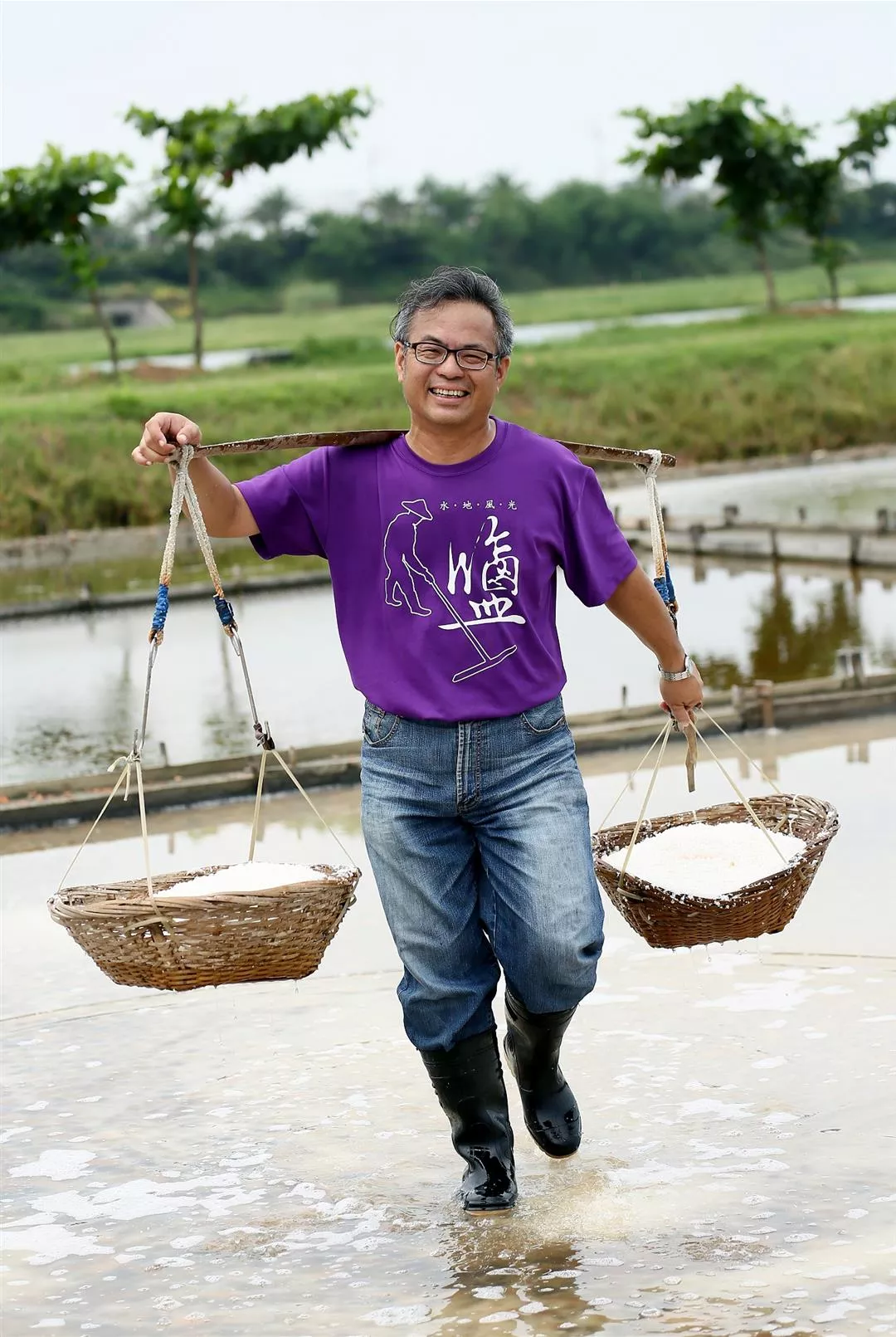
Tsai Jiung-chiau has put plenty of hard effort into the salt fields. He says that collecting the salt they produce is a joy.
Crystallizing the relationship
Taiwan’s humid, rainy climate is not especially suited to salt drying, but past generations developed techniques to work with the environment, setting into motion Taiwan’s 338-year history of sun-drying salt.
Old hands in the salt industry say that to sun salt, you must first sun the water, and to sun the water, you must first sun the earth. In the past, when setting up a salt field, people would make use of the tides to bring in seawater, and then through a series of terraces they would lead that water into the field.
The saltier water, being heavier, tends to sink, and so the briniest water in a brine pit similarly settles at the lower level. Even if you then introduced fresh water, it wouldn’t dilute the solution, which instead would remain in two tiers.
The Zhounan Salt Field uses tiled fields, the tiles helping keep mud out and ensuring the salt collected is relatively clean. On top of that, the glaze on the tiles absorbs short-wave radiation from the sunlight, keeping things warmer and accelerating the crystallization process.

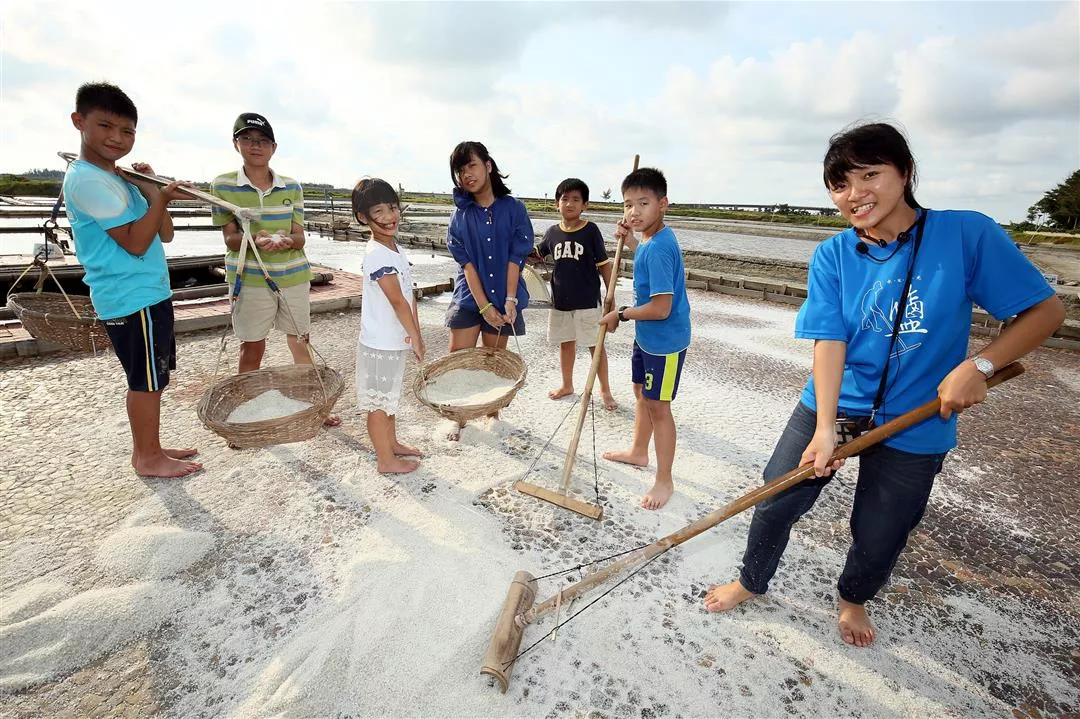
Combining environmental awareness, traditional lifestyles, and salt production, the Zhounan Salt Field not only lets visitors take photos, but also gets guests involved, encouraging them to wade into crystallization pools to feel the rough crystals and collect them themselves.
A test of skill
In the past, sun-drying salt focused on quantity and quality, with the top-quality salt needing to be at least 90% sodium chloride, at most 7% water, and no more than 3% other elements. The “cultural” salt industry, though, is much more focused on showcasing the diverse aspects of the culture of salt production, and so the Zhounan Salt Field has chosen instead to focus on flavor.
Salt workers can control the concentration of the brine, and thus produce salts with different flavors based on mineral content. For example, the iron in seawater precipitates out at a density of five to ten degrees Baumé, while a brine of about 28 to 29 degrees tends to be higher in magnesium. Different minerals affect the taste of the salt differently, with calcium giving a slightly sweet astringency, magnesium a touch of bitterness, and iron and potassium a hint of sourness. When cooking, the different mineral content can create subtle changes in taste, and finding the right combination can really make a meal.
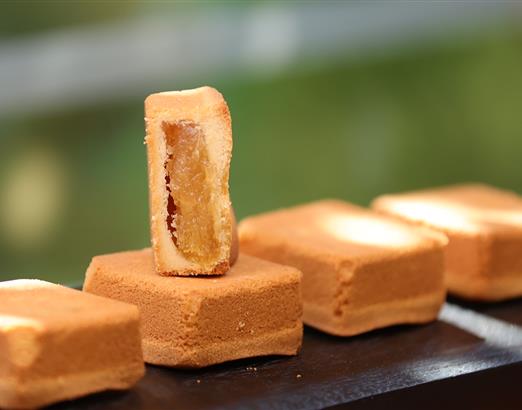
Recently, Zhounan worked with Taichung’s Miyahara Ice Cream to create a new chocolate and two types of cookies. They also partnered with Taiwan Morinaga to create a salty caramel that went on sale in stores around Taiwan.
With obvious glee, Tsai Jiung-chiau picks up some fleur de sel harvested on the afternoon of June 8. He remarks that he was struck by the lines of the crystals and how they glistened in the afternoon sun in the evaporation pool, so he collected them, naming them “3 o’clock on a Summer Afternoon.” Now he hopes to find the right restaurant to work with to develop some delicious dishes with Zhounan’s fleur de sel.

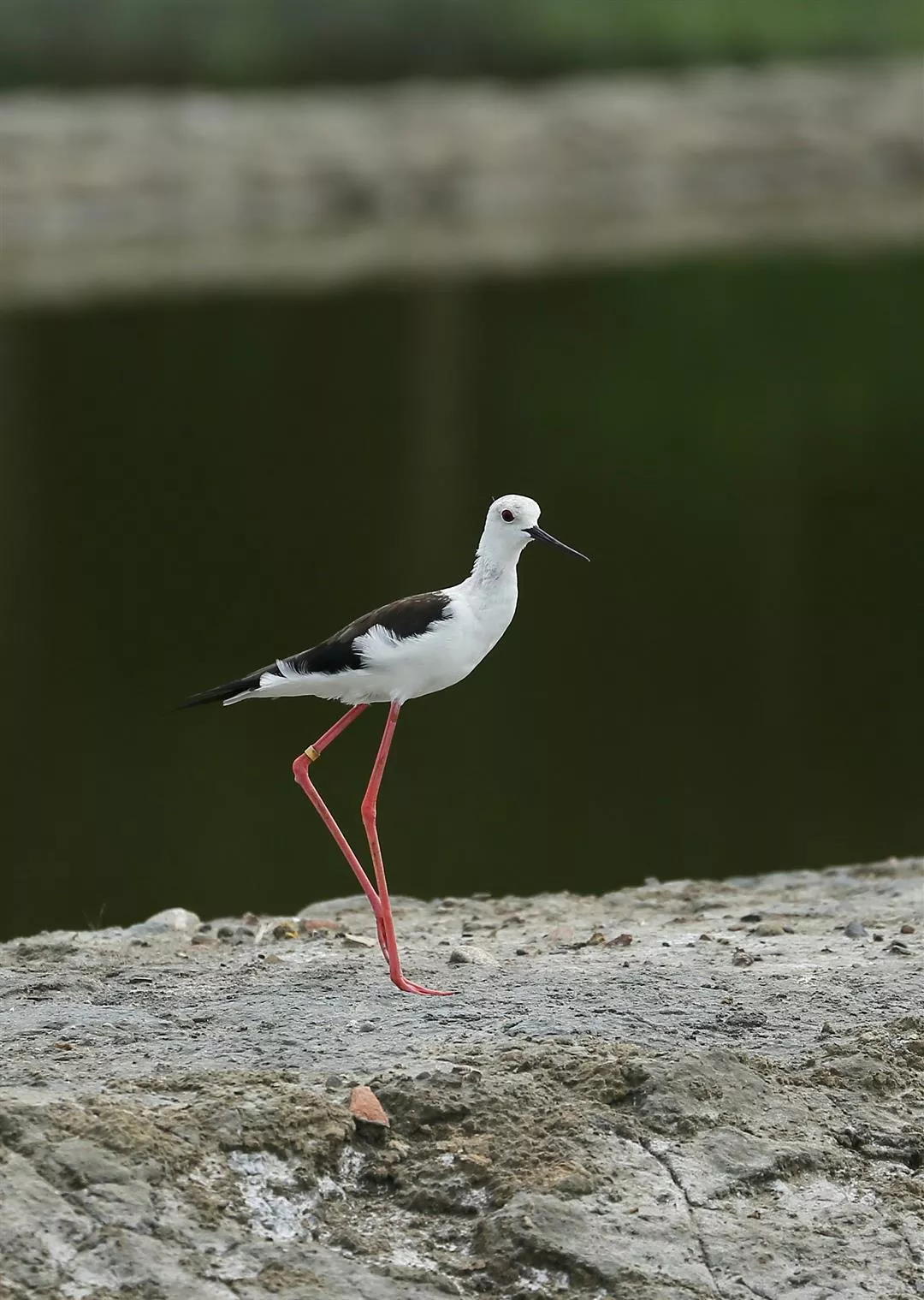
Seemingly clad in white shirt, black jacket and red boots, black-winged stilts are occasional visitors to the Zhounan Salt Field.
A taste of Taiwan
Next year will be the tenth anniversary of the revived Zhounan Salt Field. Tsai remarks that when they started, Tudi Gong, the Earth God, presented them with three tests. First, to successfully use traditional methods in renovating their salt fields; second, to balance productivity with environmental awareness; and third, to create their own unique style.
The first test was passed when they produced their first fleur de sel and “frost salt” in 2014.
Addressing the second, Tsai smiles and gestures into the distance, pointing out a figure that seems to be dressed in a white shirt, black jacket, and red boots—a black-winged stilt checking in, proof of the salt field’s ability to coexist with the area’s natural inhabitants.
The third? That’s coming, as Zhounan works to develop a truly Taiwanese taste over its second decade, says Tsai. His hope is to get Zhounan salt products into the international salt market, to be put to the test by the great chefs of the world to create the perfect match. When that happens, Taiwan’s salt culture will have really gone global.
The combination of earth, water, wind, sun, and people is more than just the core formula for sun-dried salt. When we look at the traditional industries that seem to be all but gone from Taiwan, the restoration of salt production is more than just the preservation of a cultural asset—it embodies a spirit of working together with nature, looking for the right techniques and learning from the wisdom of the past, setting an example for future generations.
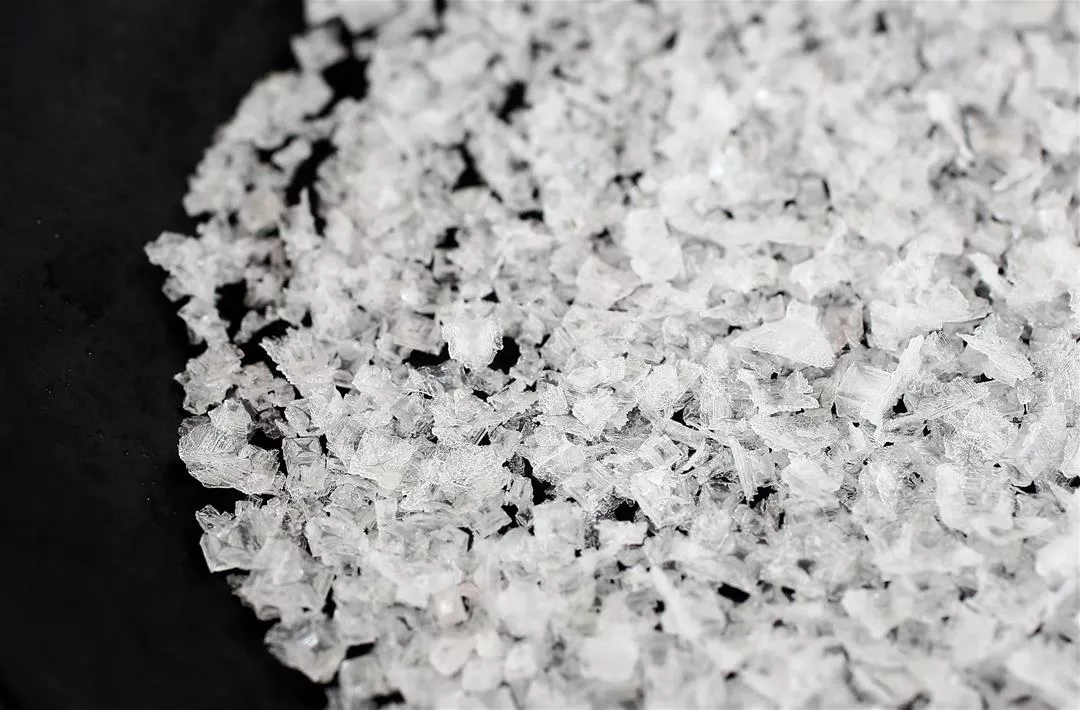
Spring and summer are the seasons when you will see fleur de sel crystallize, with its delicate pyramidal forms.
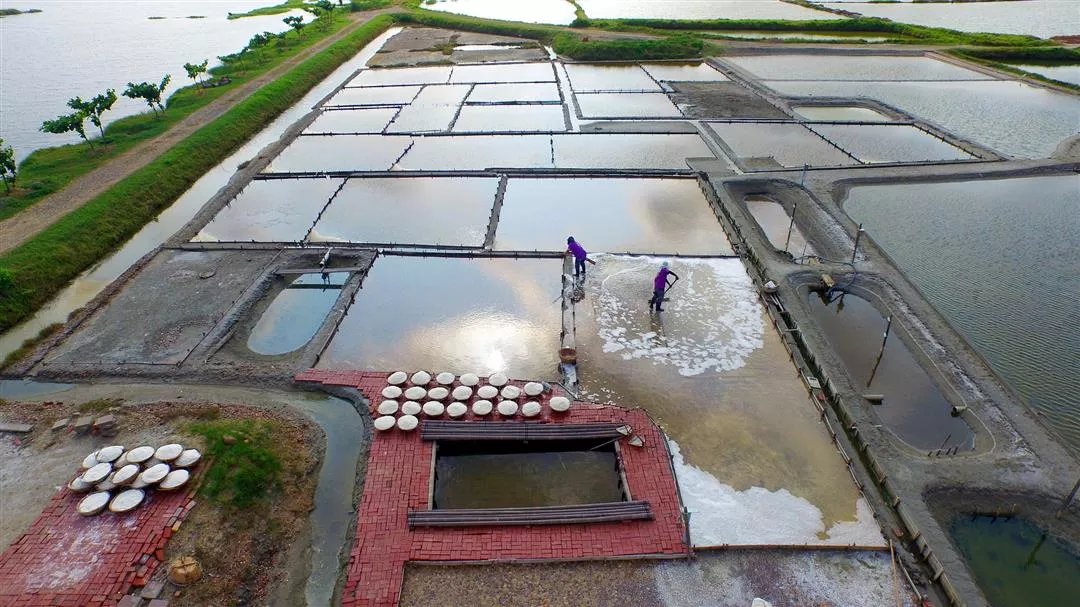
The resurrected Zhounan Salt Field produces salt on just two hectares, choosing to preserve the land and work in harmony with nature rather than chasing production levels.
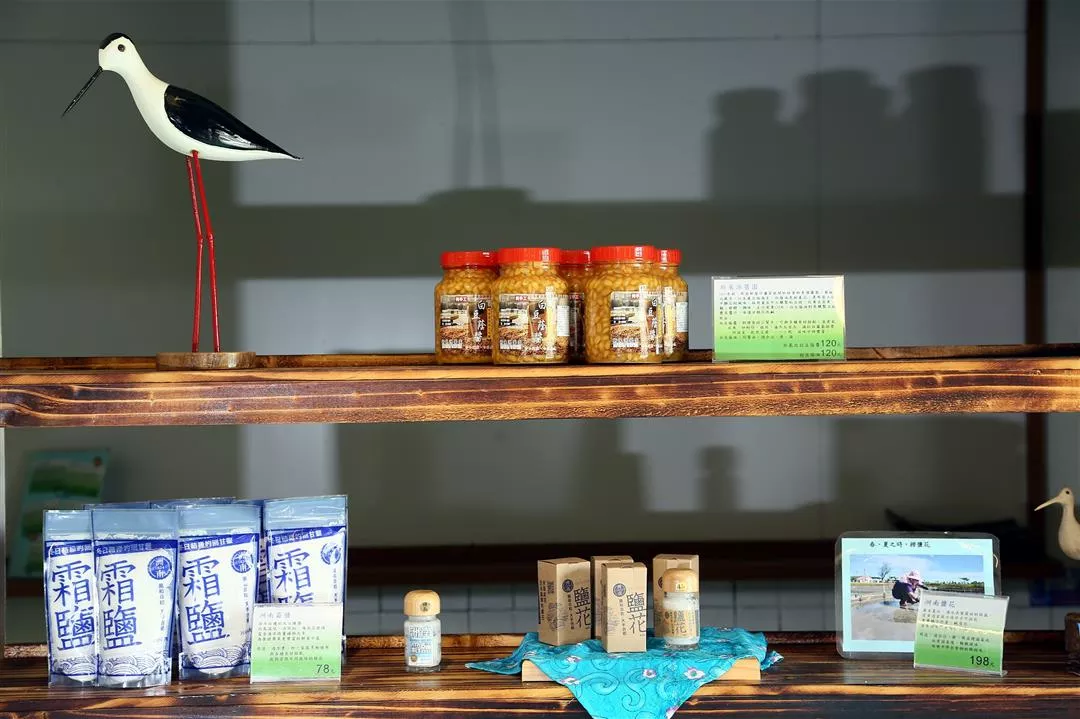
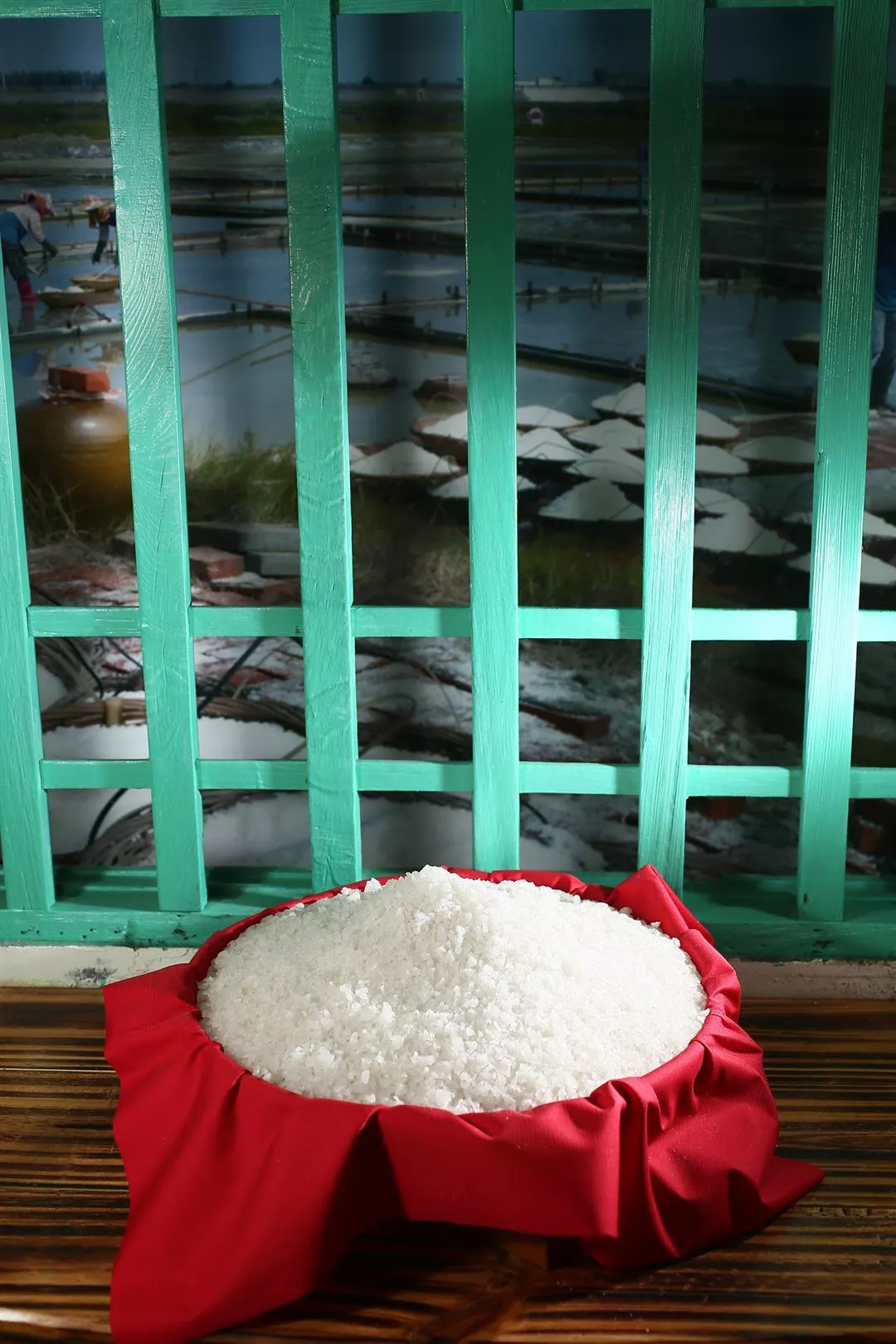
Zhounan Salt Field has focused on creating distinctively Taiwanese flavors of salt to give home chefs a bigger range of options.