The Many Tastes of New Year in Multiethnic Taiwan
Sam Ju / photos Chuang Kung-ju / tr. by Scott Williams
February 2014
Which word do you use for New Year’s cake?
Do you put ham or pickled vegetables in your soup?
How do the Aboriginal calendars differ from the Gregorian and Lunar calendars used by the Han ethnicity?
Why are there so many different ways to celebrate the New Year? Do these different “New Years” have different cultural significances?
We talked to anthropologist Hu Tai-li about these interconnected questions.
Hu Tai-li’s family are waishengren, that is, they came to Taiwan from mainland China in the late 1940s. But when Hu married into a Taiwanese family at the age of 26, she fell in love with the New Year’s traditions of her husband’s rural hometown.
A renowned anthropologist and research fellow with the Academia Sinica’s Institute of Ethnology, Hu is a second-generation waishengren whose father was from Shanghai and whose mother, originally from Jiangxi Province, grew up in Hangzhou. Her father, Hu Wei-yi, made the first Chinese translation of the Book of Mormon.
Hu Tai-li married a man from Liucuo Village in Taichung City’s Nantun District in 1976, then spent two years learning how to transplant, weed, harvest and thresh rice from her elder in-laws. While there, she picked up enough Taiwanese to hold fluent conversations with villagers and conduct fieldwork in the language. She then completed her PhD in anthropology from City University of New York.
Hu has participated in Taiwanese, waisheng, and Aboriginal folk festivals as both a scholar and a daughter-in-law in a rural Taiwanese family, a circumstance that has left her well versed in the New Year’s customs of many of Taiwan’s ethnicities.

Taiwan’s Aborigines have their own New Year’s rituals and customs, observed on their own schedule and imbued with their own significance. If we are to create a truly multicultural society, we must preserve and cherish this kind of diversity.
We began our conversation with Hu talking about Lunar New Year’s specialties.
While Taiwanese cuisine is known for its mixing of elements drawn from China’s eight major regional cuisines, most New Year’s dishes retain their original regional and ethnic characters.
Though Hu’s family left mainland China in 1949 and her parents passed away a few years ago, the family continues to serve up authentic Shanghai-style dishes at the New Year. The meals are a thread linking the family to its mainland roots, one deeply entwined with Hu’s memories of her parents.
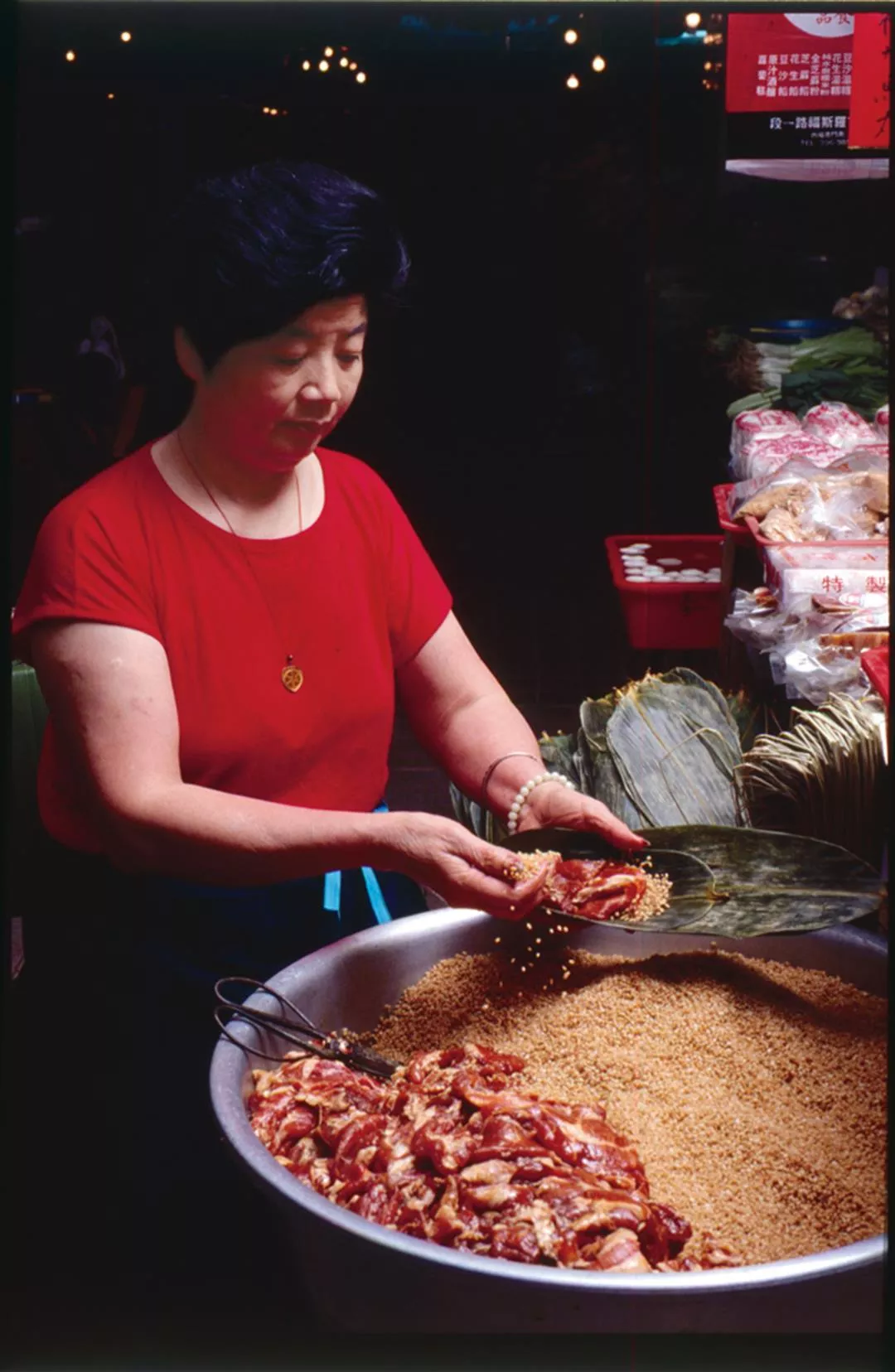
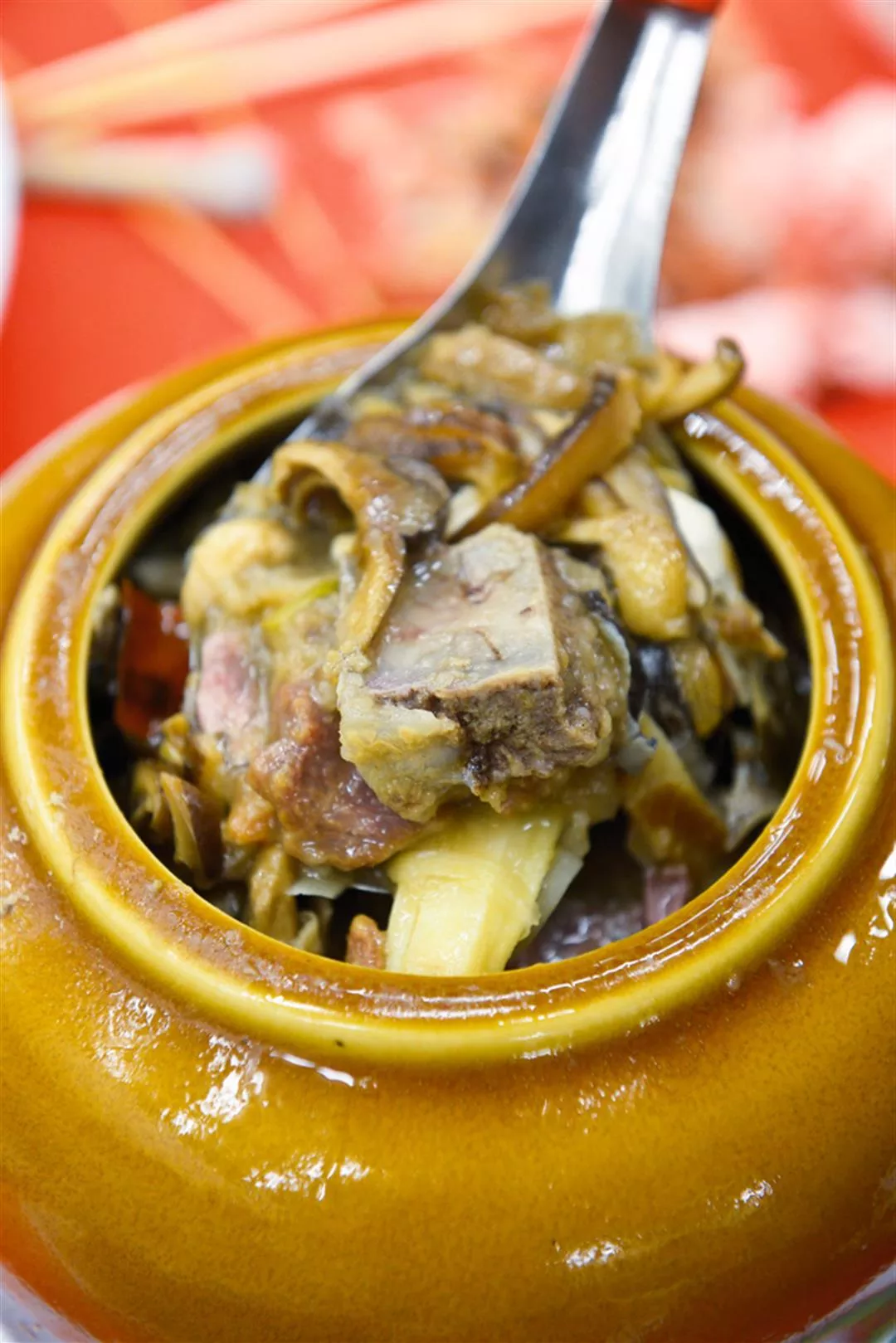
Hu says that Lunar New Year’s meals in her natal home used to include Huzhou-style zongzi (a steamed sticky-rice dumpling), an osmanthus-flavored sponge cake, and yanduxian, a Shanghai-style soup with bamboo shoots and ham.
“My mother used to make her own Huzhou-style zongzi, which were filled with either bean paste or meat,” recalls Hu. This contrasts with Taiwanese households, which typically only eat zongzi during the Dragon Boat Festival. Hu’s memories of the Lunar New Year always include the scent of the bamboo leaves used to wrap the Huzhou-style zongzi she made with her mother.
Most Shanghai-style restaurants offer ready-made osmanthus sponge cakes, making them easy to obtain.
Hu’s family almost always served yellow croaker on Lunar New Year’s Eve because Hu’s father, who passed away in 2008, was particularly fond of the fish. On those occasions when they were unable to get it, they’d serve a hotpot of silver carp head instead.
Shanghai-style flavors remind Hu of her youth, and of wrapping zongzi with her mother in preparation for the New Year.
If Shanghai-style New Year’s dishes provide the foundation for Hu’s memories, rural Taiwanese New Year’s dishes are like extensions added on in later years.

We tend to associate the holidays with home and family. Lunar New Year’s dishes help keep us connected to our hometowns, our parents, and our friends.
Hu spent the first Lunar New Year’s Eve after her marriage with her husband’s family in rural Liucuo Village. She says that although by that time (38 years ago) the village had begun to industrialize, it still preserved its traditional agricultural base. Women ran the households, while the adult men either worked in the city or came back to open small factories.
She says that in those days the Lunar New Year’s holiday was still a big event. You’d see villagers working grindstones, milling rice flour for New Year’s cake. They’d prepare New Year’s dishes that included wild rice stems and leafy greens freshly harvested from local fields. Families usually even raised the chicken they served at the holiday themselves.
“Homemade dishes were definitely among the rural Taiwanese New Year’s traditions,” says Hu.
She adds that fried rice noodles were almost always present on the table, as was mustard-green soup. “I liked them, but they were prepared a bit differently than I was accustomed to.”
Hu praises rural New Year’s dishes for their freshness, the simplicity of their ingredients, and their lack of pretension. For example, her sister-in-law makes sweet New Year’s cake by frying an egg-and-flour dough in brown and refined sugar. Hu says she has to have some every New Year.
“I hardly ever see grindstones in rural areas anymore. Nowadays, villagers rarely make dishes completely from scratch.” Hu has attempted to capture many of Taiwan’s rural traditions on film. The footage of glutinous rice being ground by hand and by machine in her 1997 documentary, Passing Through My Mother-in-Law’s Village, has helped record and preserve a number of traditional techniques.

Though times change, some Lunar New Year’s customs endure, such as that of paying one’s respects to the elders in the family, and giving gifts of money to the youngsters.
As a daughter-in-law in a rural Taiwanese family, Hu no longer views “land” as an abstraction. It has taken on a tangibility that connects her to her in-laws’ ancestors.
On entering her in-laws’ home on her wedding day, she stood in front of the family alter to pray to the ancestors. Then something completely novel to her, it has since become the first thing she does on arriving at her in-laws’ home for her annual New Year’s visit. (Waishengren families don’t typically have ancestral altars in their homes.)
As an anthropologist, Hu also shows her respect for village traditions by participating in temple activities.
During her two years doing fieldwork in the village, she joined the villagers for their boisterous New Year’s Day circuit of the local temples. She says she’ll never forget the experience.
Hu explains that Liucuo Village has one temple and two Earth God shrines. On Lunar New Year’s Day, each family makes the rounds of all three, praying and asking for good fortune in the new year. The nearby Wanhe Temple, built in 1684 as an offshoot of the Meizhou Matsu Temple, is the oldest temple in Taichung, Nantun’s most important religious center, and typically the last stop for locals making their New Year’s Day circuit.
Because of her parents’ religious beliefs, Hu hadn’t experienced this aspect of Taiwanese folk tradition before coming to her in-laws’ home. Liucuo locals also taught her how to slaughter chickens and ducks, and prepare offerings.
After Hu completed her PhD and went to work for the Academia Sinica, she and her husband took up residence in Taipei with her parents. It became their Lunar New Year’s custom to eat their New Year’s Eve family meal in Taipei, then spend the second day of the New Year with her husband’s family in Nantun.
Nowadays, the Wanhe Temple is Hu’s first stop on trips back to Nantun District. She also visits the temple at the Lunar New Year, praying to Tai Sui on behalf of her family and burning incense for a peaceful new year.
“Every culture has its own particular customs,” says Hu. “By picking and choosing among them, we can enrich our lives.”

We tend to associate the holidays with home and family. Lunar New Year’s dishes help keep us connected to our hometowns, our parents, and our friends.
Hu also observes that the same customs are sometimes observed differently by Taiwanese and waishengren families. She adds that as long as the interpretations are positive, each side can learn from the other.
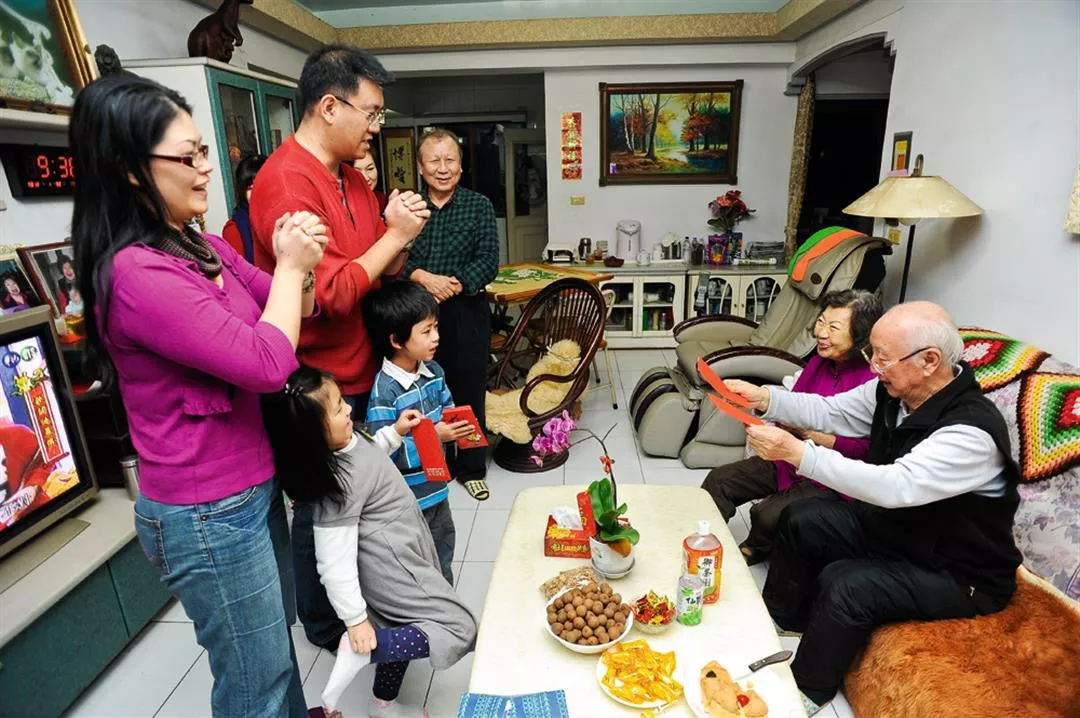
Monetary gifts given at the Lunar New Year are a case in point. In waishengren families, parents and other members of the older generations typically give money to family members who have not yet reached adulthood. But Hu has found that this custom has been turned around in rural Taiwanese households, where it is members of the younger generation who have begun earning their own money who make gifts to their elders. These younger family members are virtually certain to give monetary gifts to their parents at the Lunar New Year.
In other words, young people from rural families are expected to give money to their parents as an expression of filial respect. Hu approved of the idea and decided to introduce it into her own natal family: when her parents were alive, she and her husband gave them a fat “red envelope” at every Lunar New Year.
Hu also addressed the significance of the New Year to Taiwan’s Aborigines. Interestingly, the Amis village of Tafalong in Guangfu Township, Hualien County, has adopted the very Han Chinese custom of having every household in the village set off fireworks at once to celebrate Lunar New Year’s Eve.
“Just like everyone else who works far from home, Taiwan’s Aborigines head home to be with their families at the Lunar New Year,” says Hu. “But they are equally aware that the holiday isn’t their own New Year, but the Han Chinese one.”

We tend to associate the holidays with home and family. Lunar New Year’s dishes help keep us connected to our hometowns, our parents, and our friends.
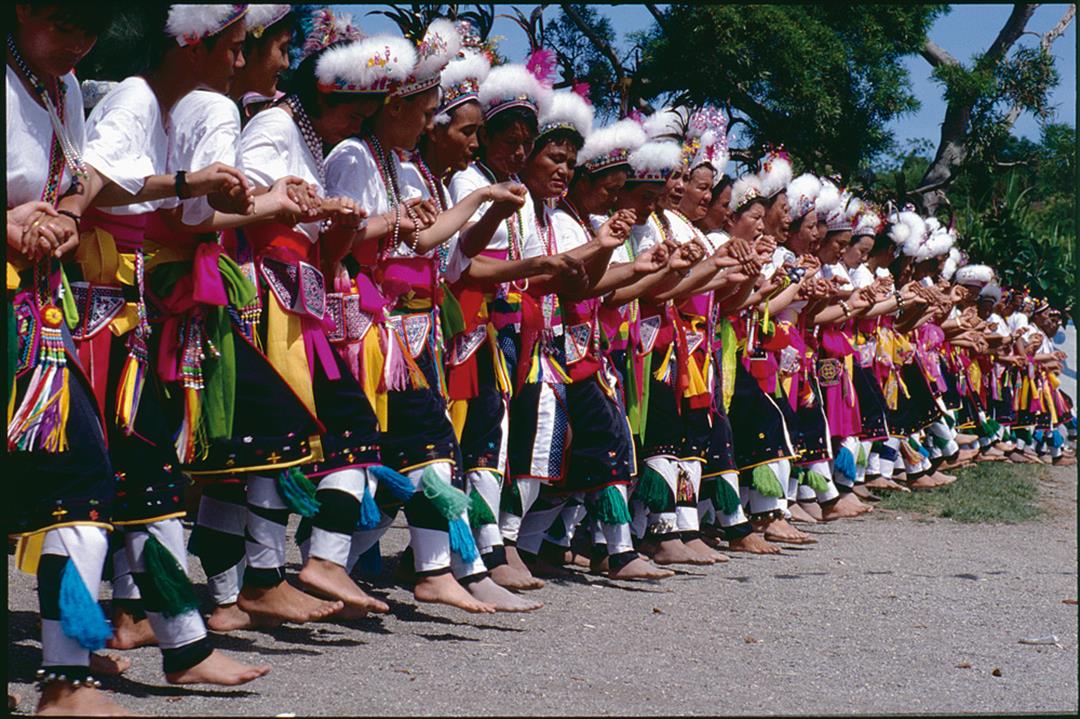
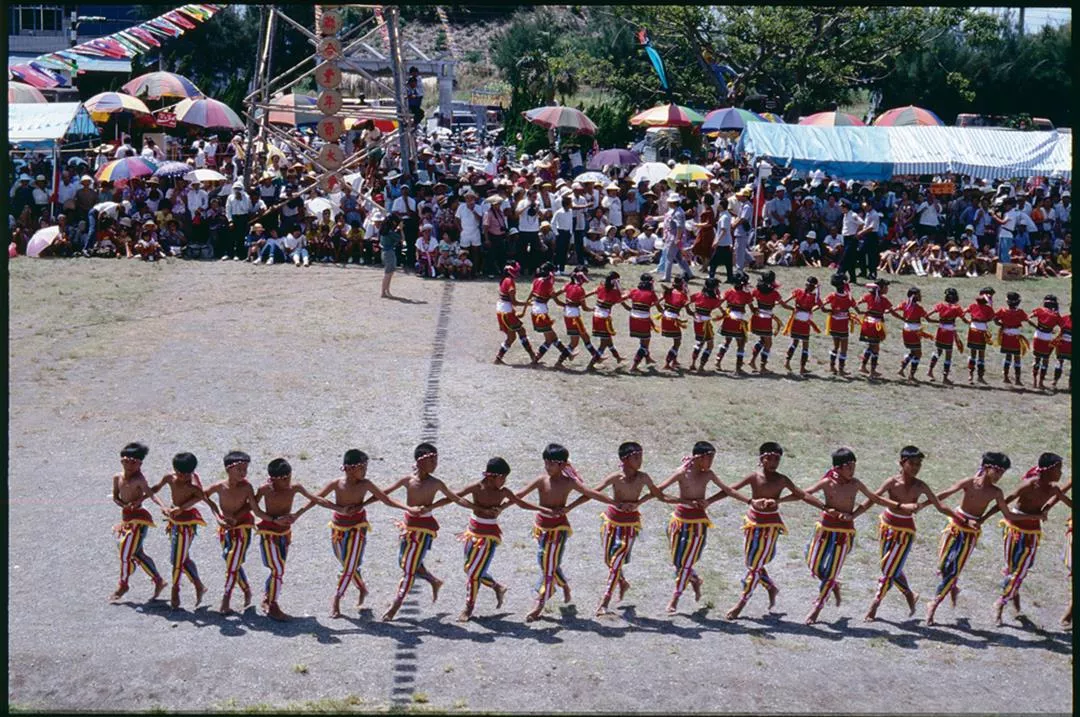
Hu says that Taiwan’s Aborigines use a series of festivals to wrap up the old year and kick off the new. The Amis Ilisin is a case in point.
While Han Chinese often refer to Ilisin as a “harvest festival” because it seems to welcome the harvest, Hu says this is a misnomer.
She explains that the Amis have rituals and festivals specifically for the harvest, and that these have nothing to do with the New Year. The turning of the year occurs some time after the harvest. Because Ilisin, the Amis’ biggest festival, celebrates this turning, it is more correctly understood as a New Year’s festival.
Moreover, the festival involves much more than the singing and dancing that ethnic Chinese associate with it. These do indeed comprise a part of it, but Hu stresses that what gives them significance is their links to traditional religion and social structure.
Different Aboriginal peoples celebrate different New Years through festivals that each have their own schedule, form, and cultural significance. Hu offers the Puyuma people as an example. Their New Year’s festival takes place between late December and early January. Its most important ceremony is Mangayau (the Hunting Festival, the coming of age ceremony for young men), which follows Vasivas (the Monkey Festival).
Hu explains that during Mangayau young men must go into the mountains to be trained to hunt and live in the wild. When they come back to their villages, they visit families who have lost family members in the preceding year, singing and dancing to alleviate the sorrow the families feel, and enheartening them so they can start the new year afresh.
Chinese culture and commercial society have left Aboriginal New Year’s festivals with little space in which to exist. Over the last few decades, tribespeople who recognize the threat have continually urged young people to help preserve their culture and traditions.
In the song “Missing the New Year’s Festival,” the Puyuma musician Baliwakes writes: “I work far from home / And rarely see my parents and friends / But I’ll never forget the warmth of being with family / Of my mother putting a fresh floral wreath on me / To dress me up for the village dances.”
Taiwan has a diverse, multiethnic society that has forged a consensus on its living community. But we don’t want this process of integration to create a uniform culture. If we are to be truly multicultural, we must instead affirm and preserve the unique aspects of all our various ethnicities’ cultures.
We should emulate Hu Tai-li, falling in love with the Lunar New Year’s dishes of her rural Taiwanese in-laws while still treasuring the Huzhou zongzi of her waishengren upbringing and the memories they recall of her deceased parents. We can also find inspiration in Baliwakes’ song of a young man working far from home recalling the floral wreath his mother made for him to wear during the New Year’s festival of remembrance.
The New Year is more than just a time of exuberant celebration. If we choose to look a little more closely, we can discover in it a new appreciation and respect for ethnicities and cultures other than our own.
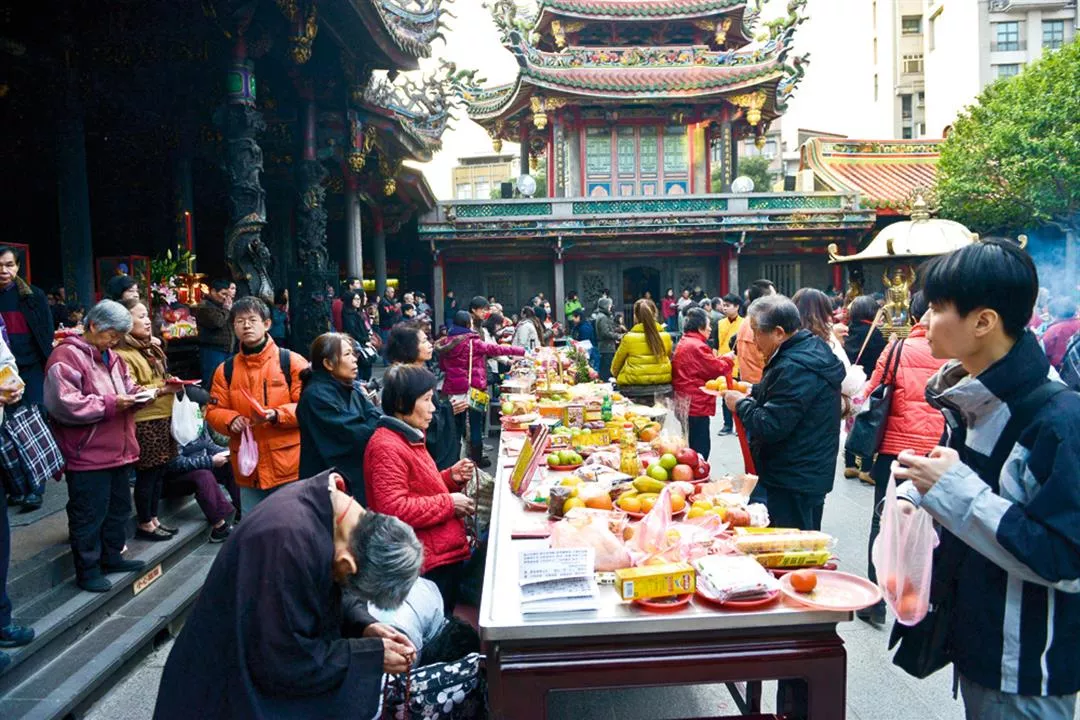
Going to a temple to pray for good fortune on the first day of the new year is an important Taiwanese custom. The photo shows Taipei’s Longshan Temple.
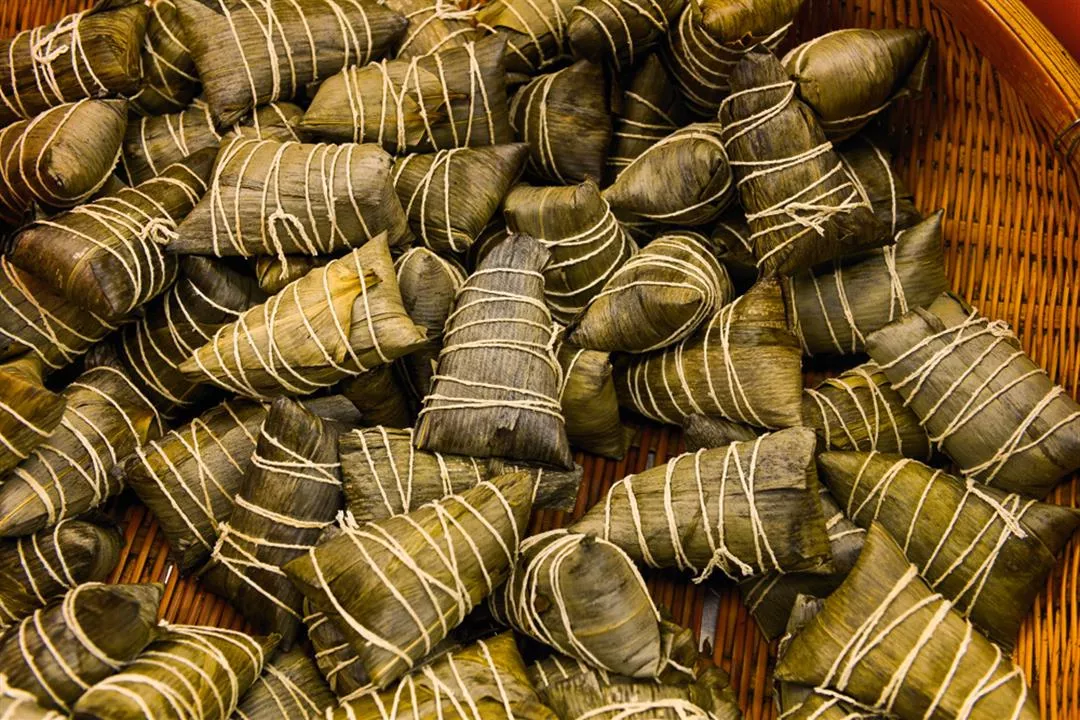
We tend to associate the holidays with home and family. Lunar New Year’s dishes help keep us connected to our hometowns, our parents, and our friends.
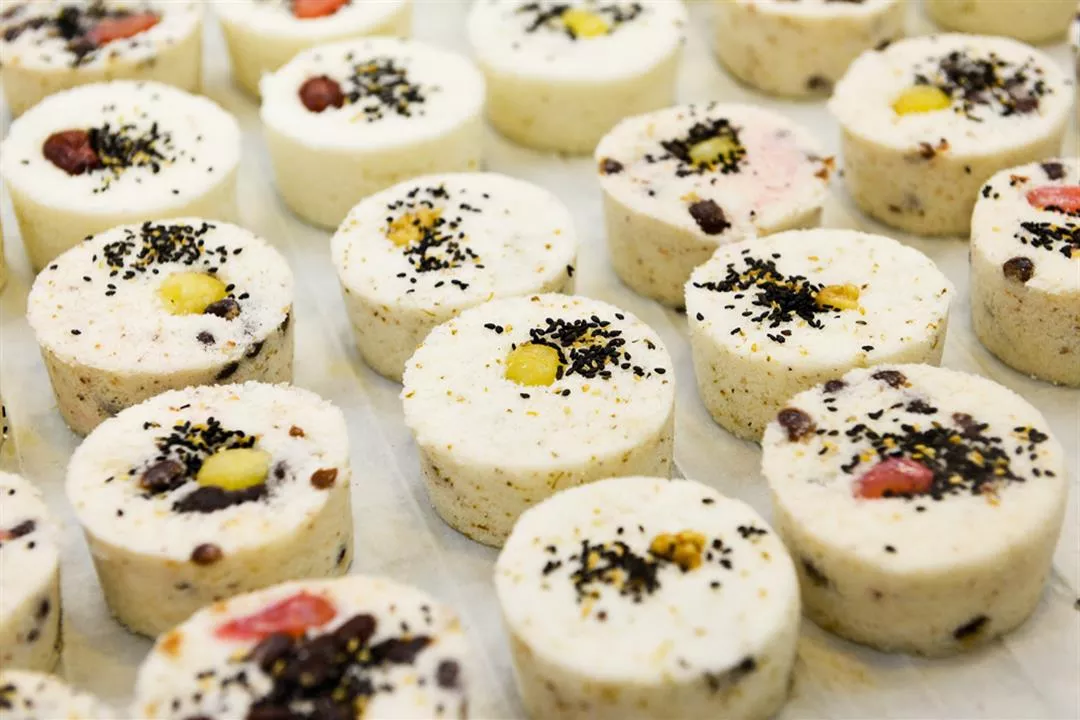

We tend to associate the holidays with home and family. Lunar New Year’s dishes help keep us connected to our hometowns, our parents, and our friends.