Justice and Equity?Senior High School Admission Reform
Chang Chiung-fang / photos Chuang Kung-ju / tr. by Geoff Hegarty and Sophia Chen
May 2011
The disappearance of traditional ways of doing things has gained some degree of acceptance in Taiwan in recent years, and the idea of multi-track high-school entrance is also gaining popularity. For many years the joint entrance exam has been the only path to senior high school. Then the government opened up the "Second Way." Recently however, an open admissions program has been introduced which effectively exempts students from having to do an entrance exam. It's quite a radical reform and is expected to bring dramatic change to Taiwan's high schools.
While the implementation of the open admission policy and compulsory 12-year education plan is just around the corner, many key issues remain unresolved. For example, what percentage of students will benefit under the open admissions program, and how do senior high schools enroll students? The new policy hasn't reduced pressure on parents and students-in fact they feel confused by this changeable and uncertain policy. Many feel a bit like lab rats-the objects of government experimentation.
Education is of vital and lasting importance for the people and the nation, so any educational reform affects not only the students and their parents, but is also significant to the development and enhancement of a strong nation. So reform must be appropriate and decisive.
The current pathways between junior and senior high have long been regarded as an issue. Wu Chyi-in, a researcher in the Institute of Sociology, Academia Sinica, points out that if this narrow gateway were made more open and easier to traverse, Taiwan's education problems could be more effectively resolved.
But what is the best way of clearing the pathways with the current changes in progress?
Lin Wen-hu, vice president of the National Alliance of Parents Organizations, argues that in the past students' futures were determined simply by a narrow measure of their academic performance in particular areas. This is similar to determining their destiny by measuring their height-both methods are unfair. "Many students have suffered significant disadvantage by such a narrow measure."

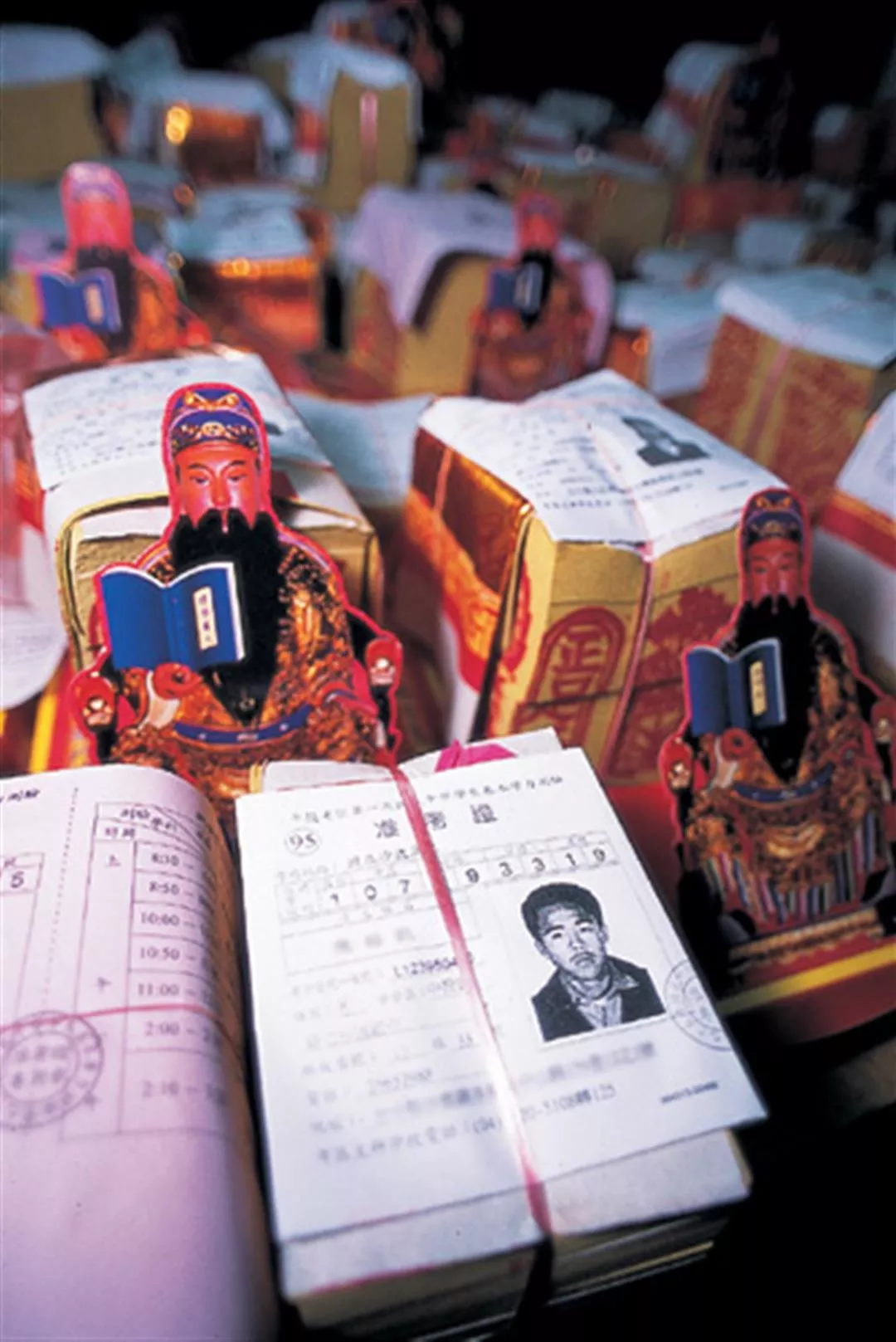
An entrance exam may determine a young person's entire future. While most study very hard to prepare for exams, divine assistance is always welcome. At exam time, Wenchang Jun (the Chinese god of literature) is a popular object of worship.
To achieve the goal of 12-year compulsory education, the Ministry of Education (MOE) set six core guidelines: keeping students' welfare as the focus, emphasizing multi-tracking and matching students to schools, encouraging students to choose their nearest school, ensuring the rights of disadvantaged students, adopting admission methods according to the needs of particular school districts, and a gradual and flexible implementation. In 2001 the MOE adopted the multi-track admissions program (including recommendations, applications, and register-and-distribution), but since then student discontent has remained high and the program seems to lack equity. Many have raised doubts about its effectiveness, and some even believe it might be better to restore the old system of joint entrance exams.
In 2009 the MOE began expanding the open admissions program (OAP) for academic high schools, vocational schools and five-year junior colleges. A three-year trial open admissions program has been launched, with gradual increases in numbers of students catered for under the program, and preparation for full implementation of the OAP.
The percentage of students covered by the OAP has increased around 10% to 35% this year, and further rises to between 40% and 70% are expected next year. When 12-year compulsory education is fully implemented in 2014, about 70% of students will be able to enter academic high school, vocational school or five-year junior college under the program. The other 30% will still have to take entrance examinations held independently by either local governments or superior schools.
Lin Wen-hu points out that the number of pathways for entering university has also been increased. Prestigious universities have offered 10% of their places for students under the Multiple Stars Program, so some students from more remote areas will have the opportunity to attend those universities. In addition, because of these changes, it has become less important for students to compete intensely to gain entry to the best high school. "When these doors are fully open, ranking for second and third-tier high schools will gradually fade out, and students will have more choices."

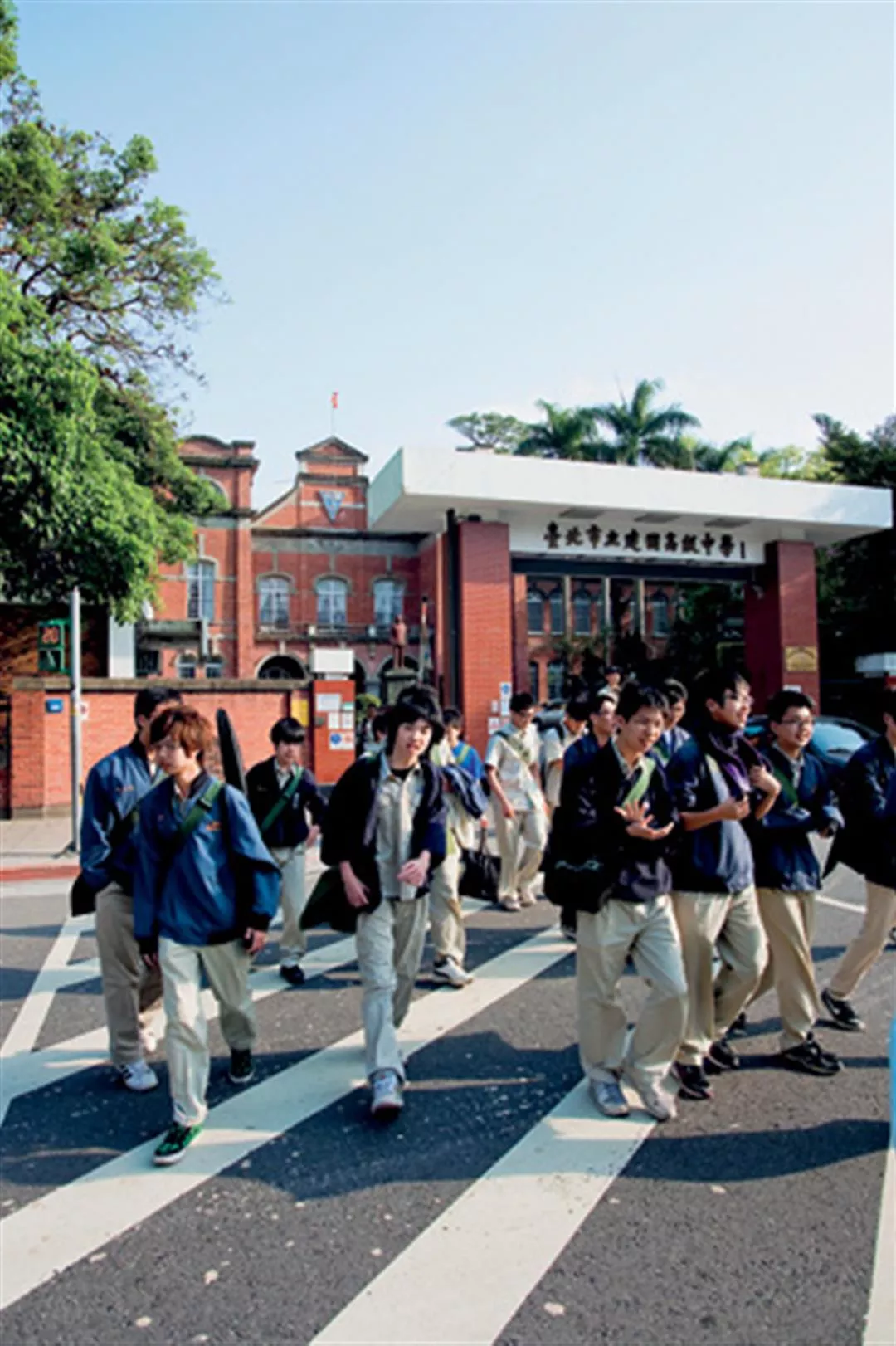
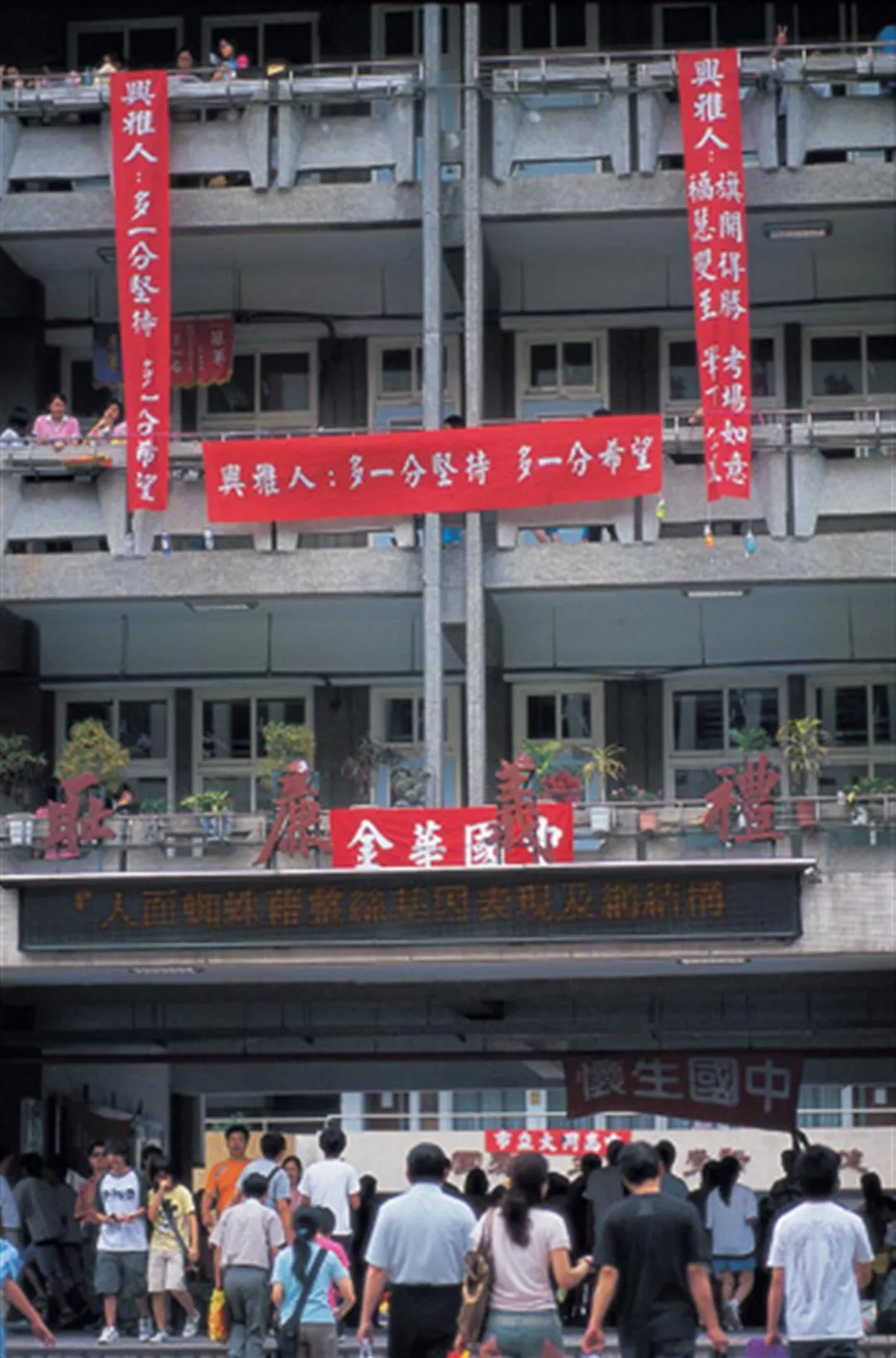
Whether Jianguo Senior High School continues as a superior school or becomes specialized, entry remains difficult.
Most parents agree with the educational goals, direction and practice of the education authority. Lin is no different. However, outcomes in practice have only reached 50% to 80% of the goal, whether from Taipei City's North Stars Program, New Taipei City's New North Stars Program or Kaohsiung's Happy Study Program.
Students and parents have mixed feelings about the OAP. Open admission is not easy to achieve, and varied comparison and ranking methods are not always fair and reasonable.
Will open admission be good or bad for students? The answer may depend on the different individuals more than anything. However, the number of places under the OAP offered by each senior high school has been relatively low this year. Opportunities for entering high school through the OAP in practice are few and far between. Students have been given the impression that anyone who chooses this path will be able to get a place in a good high school, yet no one can be sure that they will get in at all!
Taipei City's North Stars Program, an idea borrowed from the university-level Multiple Stars Program, is now in its second year after being introduced in 2010. Its aim is to remove any favoritism for superior junior high school entry, to balance educational resources and to encourage students to enroll in senior high schools that are physically close to home. In 2010, a total of 33 senior high schools participated in enrolment through the program, but only 10 students from each junior high could be recommended for senior high school entry. As a result, many less well known senior high schools were unable to attract students. This year the number of recommended students has been increased, and each junior high can recommend one student to each of the 62 senior high schools that are participating. However, the senior high schools are not offering many places. So there's no guarantee that the recommended students will be admitted, and comparison and ranking methods will remain necessary in the selection process.
For example, Jian-guo High School in Tai-pei City, which has always been the first choice for many students, offered 56 places for this year's North Stars Program. If the 89 junior high schools in Tai-pei City each recommend one student to Jianguo, it means that 33 students will miss out on a place.
Competition for a place in a superior high school is overwhelming. To win admission in some, students' scores in seven fields from Chinese, English, math, science and technology, art and humanities, health and sports to integrated activities, are sequentially compared and ranked in the selection process.

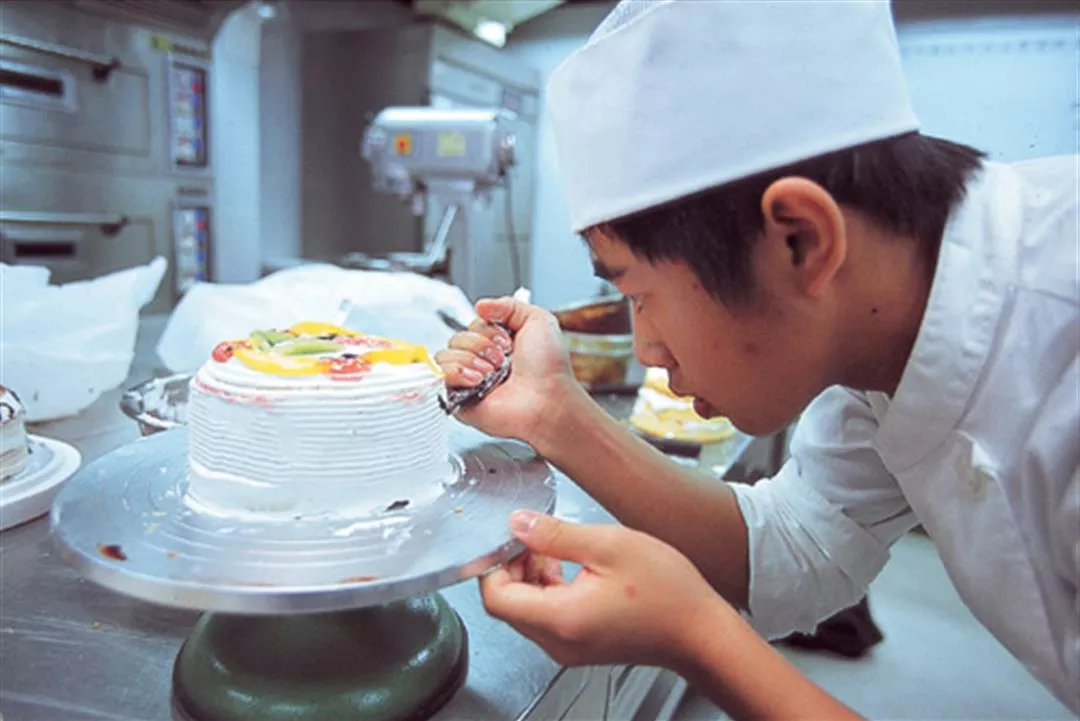
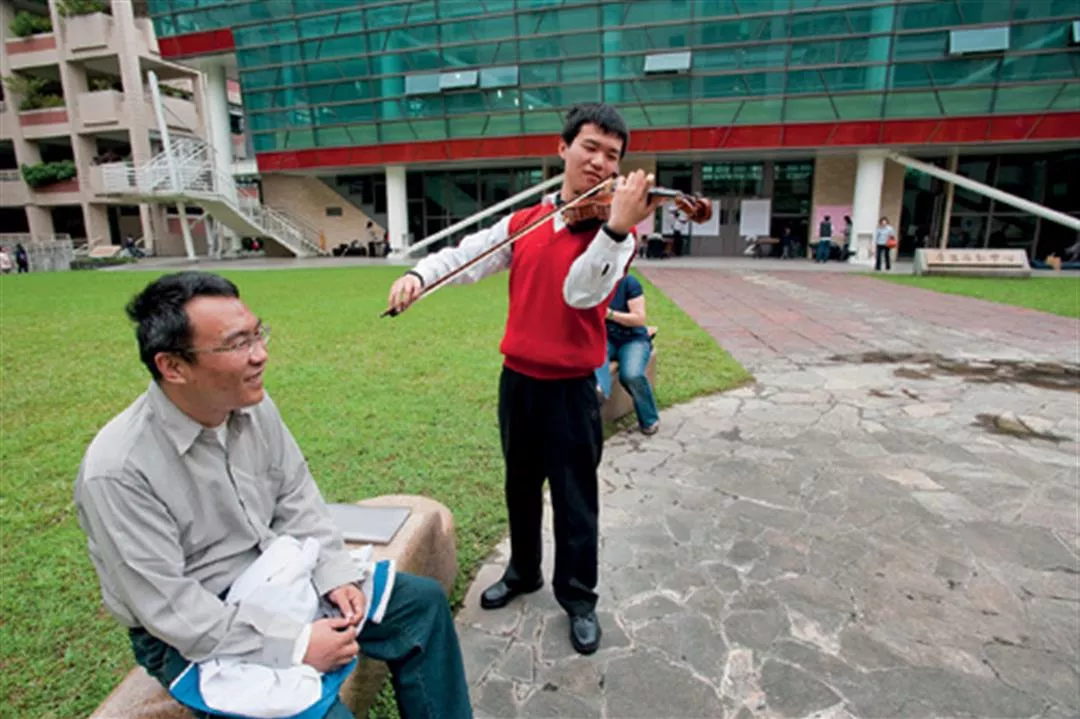
Different types of vocational high schools call for students with different talents. At Kaiping Culinary School, Chinese, English and math skills are less important than other integrated abilities.
In 2011, the Expanded Open Admissions Program in Kee-lung, Tai-pei City and New Tai-pei City is being run for the first time, expecting to recruit 17,954 students. With a total of 31,307 applications, the average admission rate is 57.34%. Because the application process is open with no "one student from one school" restriction, entering a public academic senior high under this program is more competitive than through Tai-pei City's North Stars Program. Li-shan High School, for example, offered 15 places, yet it has received 119 applications, making for a recruitment rate of about 12%.
Comparison and ranking in the first round are based on the applicant's academic performance ranking in junior high. In the second round, performance in international, national or regional competitions is assessed and extra points added to their totals.
As a result, some parents believe that admission through the OAP is more competitive than entrance examinations. In other words, students not only have to do well in all the tests held in junior high, but they also have to participate in various competitive events organized by regional education authorities in order to gain extra points. This is even more difficult than preparation for the Basic Competency Test (BCT).

Pushing that little bit harder may just bring you the success you need. In order to achieve a place in their ideal high school, students have to pass the Basic Competence Test, competing with their peers in academic skills and stamina.
Open admission has in fact been criticized as "a hundred tests for high-school entry" because the use of so many assessment criteria makes it appear contrary to the concept of open admission.
Open admission should be just that, with no extra conditions for senior high school admission, but this year restrictions have been set in both Taipei City and New Taipei City. Applicants must be ranked in the top 40% of a junior high school in order to apply for a place in an academic senior high, and in the top 50% to apply for vocational senior high.
"Open admission shouldn't exclude students who have below-average academic performance," says Lin. Yet academic senior highs set a threshold of 40% with bonus points from winning various contests. These restrictions are really unacceptable, he argues. In the past, students with a percentage ranking (PR) under 50 who didn't take the Basic Competency Test would still have an opportunity to enroll in private senior high schools. However, after the establishment of thresholds for the open admission program, those students have lost that opportunity.
In this regard, Tai-pei education commissioner -Kang -Tzong--huu says that when the OAP was implemented, because not many places were offered, thresholds were set to limit the number of students entering the program. "Because demand exceeded supply, we couldn't help but do this to prevent even more students from feeling disappointed."
Another problem is that, while the various selection criteria used by different cities and counties seem reasonable, there are a number of disadvantages and vulnerabilities to each.
Taipei City has adopted selection criteria based on a student's average score from seven learning areas, taken from the average of the three best semester scores of the first five semesters in junior high. New Tai-pei City's criteria are based on an average score of nine monthly tests, chosen from a total of 15. Criteria adopted in Kao-hsiung City compare students' fifth-semester scores, then use their fourth and third-semester scores as tiebreakers.
Each method has its own strengths and weaknesses, and may result quite different outcomes. Ke Ming-shu, academic director at Li-shan High School, notes that ranking criteria which take average scores from seven study areas could end up recruiting more female students than boys. At Li-shan, for example, only two boys were admitted among the 15 places. He puts this anomaly down to the fact that girls usually do their homework more conscientiously, so they tend to gain better results for regular assessments.
-Huang Rong-shen, president of the parents' association at Ming-hu Junior High School, believes that using students' school grades as ranking and selection criteria for applicants under the OAP will not reduce pressure on students. To the contrary, it increases the number of unknowns, and may open the door to the improper manipulation of students' school performance reports. In particular, the problem of establishing a reliable assessment standard has not yet been solved, introducing a further possible source of controversy related to the equality of scoring across classes and schools.
Chan Cheng-tao, a teacher and former member of the Review Committee for the Senior High School Admission System, points out that the OAP just means that students don't need to take the BCT, but this doesn't necessarily free them from other forms of academic assessment. The use of a student's academic performance, whether semester results or monthly test scores, as selection criteria is simply not a very fair system, and shouldn't be adopted.

This year there are seven categories in Taipei City's open admissions program, one of which is for gifted art students. Outside the practical entrance exam venue at Hsin Tien Senior High School, a student is making the most of a final opportunity to brush up.
"Moving away from comparing students' school grades is basically the ultimate goal of open admission." Lin points out that at present only about 270,000 students enter senior high schools, and the number will drop to below 200,000 within five years. The large numbers experienced in the past of 300,000-400,000 students entering senior high will soon become merely a page in history, so we need to start thinking differently. "When supply exceeds demand, why should we worry about ranking? The point is that every-one should be able to enter a senior high school."
Lin Ching-sung, vice president of the National Teacher's Association, says that moving away from comparing students' grades, and getting rid of thresholds, are the ultimate goals of the OAP. But it may be initially difficult to gain acceptance for such new concepts. "Will the public accept them?" asks Lin. New ideas need time.
In recent years, some community senior highs have achieved sensational academic performance, and their quality is not at all inferior to that of the superior schools. This represents a ray of hope for open admissions. Last year, for example, four community senior highs in Tai-pei City-Da-tong, Zhong-lun, Li-shan and Da-zhi-were listed in the top 20 of the national ranking for university admission. In addition, admission scores based on the BCT measured between community senior highs show little variation, with only one or two points difference-some schools even have the same PR score.
Kang Tzong-huu points out that the resources, equipment and teachers' qualifications of senior high schools in Tai-pei City show only minor differences. Some have seen a significant increase in the number of students from their local regions. "People increasingly feel that it is silly to choose a senior high school whose admission score is only one or two points higher, but is much further away."
12-year compulsory educationWhether developing community senior high schools or the OAP, ul-ti-mately the aim is to achieve full implementation of 12-year compulsory education by 2014.
Two problems need to be solved in promoting 12-year compulsory education: one is the gap in tuition fees between public and private senior high schools; the other is choosing an appropriate system of senior-high admission. The former has been solved to some extent starting last year. Families with an annual household income below NT$1,140,000 pay the same fees for their children to attend private senior high as they would to attend a public school.
As for open admission, the problem remains unsolved. It seems that how school districts are delineated is the key to success for the OAP.
The Ministry of Education is planning open admission school districts, considering a plan based on county and city administrative districts, residential areas, and convenience of transport. However, if too many students apply to a senior high in a particular district, how should the school select its candidates? That issue hasn't yet been resolved. Some suggest that the College Entrance Examination Center should design a set of simple assessments to test and select applicants; others argue for the use of students' school grades as selection criteria; still others suggest using some sort of lottery draw. As yet, there is no clear answer.
But Kang disagrees with the suggestion of lottery methods. He says that "education and chance do not mix." When we really need some way of selecting students, the most likely way would be to use students' school grades, or perhaps the senior high schools could set up their own selection criteria.
Superior senior high?The OAP has been under continuous revision since the policy was first implemented. Taipei City, where most superior senior high schools are situated, is more likely to be affected by future revisions.
Kang says that meetings have been planned, inviting education authorities from New Taipei City and Keelung City to discuss the issue. The plan is to integrate all existing admission programs, including those organized by the three authorities independently or cooperatively. Basically, community senior highs will expand the number of students recruited under the OAP. However, places for the top three senior high schools still need careful consideration.
In fact, in order to fulfill the goal of 12-year compulsory education, the MOE has been promoting various programs to upgrade the quality of community senior high schools: Quality Senior High Schools, and Equal Senior High Schools (the latter is designed to balance the number of senior highs across school districts). As for the few senior highs that maintain entrance exams, they have a so-called Specialized Senior High School Admission Program.
In the age of the joint entrance exam, superior senior highs had no need to worry about marketing themselves, and were able to easily attract elite students. However, after 12-year compulsory education is imple-mented, even superior schools will need to do some marketing, displaying their brand in order to maintain their star quality.
Since 2009, some senior high schools, including Jian-guo, the Affiliated Senior High School of National Taiwan Normal University, the National Experimental High School at Hsin-chu Science Park, Tai-chung First Senior High, Tai-nan First Senior High, and Kao-hsiung, have cooperated with universities. They have invited university lecturers to teach in schools, establishing elite science classes. In August this year, a further three senior high schools, including Wu-Ling (in Tao-yuan), Chang-hua and -Chiayi, are planning to participate in a similar scheme.
Xu Jian-guo, acting principal of Jian-guo High School, points out that one critical role of education is to foster national academic talent, so the pursuit of equality in education must take into account the possible impact on the development of individual students' potential ability. "Is every school capable of fostering the talent of gifted students?" "Can every school deal adequately with gifted students?" These are questions that need to be carefully considered.
According to Xu's plan, in addition to offering 10% of student places under the OAP, Jianguo will run specialized classes including mathematics, humanities and social studies, science, sports, and international study (for students who may want to study abroad in the future). The school will recruit "gifted" students instead of those with merely outstanding academic performance. Because student numbers in general are predicted to decrease sharply in the future due to falling birthrates, and also because of the limited number of gifted students, the school is planning to cut future enrollments from 31 classes in one grade to 18-21 classes, purely in order to be able to focus on recruiting gifted students.
Free from BCT?If open admission only means being free of the BCT, then education minister Wu Ching-ji was correct when he said in the Legislative Yuan that after the full implementation of 12-year compulsory education, the BCT would become decreasingly important, and would probably eventually be abolished.
However, Lin Wen-hu says that since 2001, BCT results have functioned as a sort of student report card pro-vided to parents by the Ministry of Education, so the test shouldn't be abolished. Otherwise, how will parents be able to measure their children's results against others? "BCT is the victim. We cannot blame the system and then try to eliminate it." Lin stresses that BCT was originally designed as a basic abilities test, but has been misappropriated as a measurement for further studies.
Whether BCT lives or dies, for most students and parents, may not be the key issue; it is also too early to judge whether open admission will change the current educational situation for junior high schools. To the contrary, it is rather the direction and apparent uncertainty of education policy which is perplexing both students and parents-many are unsure which way to turn.
Education is the driving force that provides opportunities for those from lower socioeconomic groups to better themselves, so the provision of equal educational opportunity is a basic need. At present, disputes about the equity and justice of the OAP are ongoing. Will the ultimate goal of freedom from entrance exams be achieved when 12-year compulsory education becomes a reality? The Teacher's Association's Lin Ching-sung says that this will happen only if we get rid of the old system through which students were able to gain places in superior high schools and ultimately enter a top-ranked university.