Igniting an Industry--Wang Film Productions and Fire Ball
Chang Shih-lun / photos Yang Hung-hsi / tr. by Geof Aberhart
November 2005


Summer vacation is home to the hardest-pitched battles in the movie industry. In the past, the market has always been flooded with Hollywood cartoons, but this year a Taiwanese one--Fire Ball--took up the fight. While typhoons battered Taiwan, Fire Ball still managed to make box-office earnings of over NT$10 million, a remarkable performance.
But many people may not realize that Fire Ball is a fully "Made in Taiwan" production. In fact, many of the Taiwanese animators involved had worked on such well-known Hollywood productions as Disney's Mulan and The Lion King.
The producer, Wang Film Productions, has a 27-year history in animation, and is one of the world's top animation studios. Years of toil have seen the company gradually earn a good reputation as a part of Hollywood's division of animation labor. Unsatisfied with just working for others, WFP finally decided to step out from the shadows, releasing this fully self-produced work this year as part of their planned progression from contract work to full independence.
Wang Film Productions was one of the earliest contract animation firms in Asia to take on work from America, and over the past quarter century has grown into one of the world's biggest studios. But with the release of their big-budget, self-produced picture Fire Ball, they have started in a new direction, and one that they hope to continue moving further in each year. This picture marked the start of their shift from simply doing contract animation and design work for foreign companies, to creating their own brand.
Recognized as a leader in the field of contract animation, WFP has since its inception spent most of its time working behind the scenes, not creating much of a brand image for itself. With developments in 3D animation software in recent years, the barriers to entry to the contract animation industry have lowered tremendously, forcing WFP into competition with newcomers from China and Southeast Asia. This has impacted the company's profits. Aside from this, with an in-house production the studio gets all the box office takings and controls copyright and merchandising, so for any company wanting to move up in the animation industry, moving to self-production is a necessary step.
James Wang, the man in charge of WFP, says that at the moment the company is in an important period of transition. He uses the following vivid metaphor for their decision: "In the past, we were like someone's chef--the customer would tell us what kind of meal they wanted, and we'd cook it up. But with such good culinary skills, why weren't we running our own restaurant?" WFP never had its own iconic piece of work, and while the contract production industry was stable, all of the post-release profits were swallowed up by the contracting company overseas, "although we were never entirely convinced it had to be that way." And so, with a burst of determination, Taiwan's nearly-70-year-old godfather of animation decided it was time to head for the drawing board.
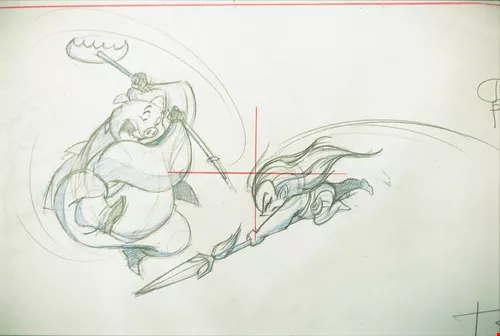
Original hand-drawn sketches from Fire Ball. After these sketches are completed, the animators use them as the foundation for creating the frames of the animation, making the characters come to life on the screen.
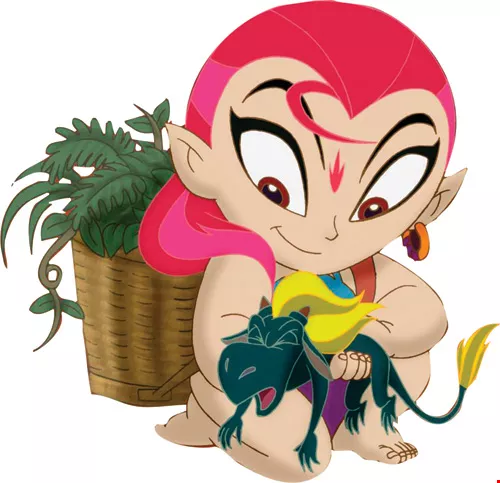
Fire Ball, which hit screens this summer vacation, is based on a part of the novel Journey to the West. The movie focuses on the friendship between and adventures of the Monkey King and Fire Ball, and is WFP's first foray into producing a series of its own.
Production spanned three years and cost a total of NT$150 million, including a subsidy of NT$15 million from the Government Information Office and a loan of NT$50 million from the Industrial Development Bureau of the Ministry of Economic Affairs. Since its release in August, the film has taken over NT$10 million, making it the third-highest-earning Taiwanese film of the year, currently beaten only by Tsai Ming-liang's The Wayward Cloud and Leste Chen's The Heirloom.
Director Wang Tung, younger brother of WFP boss James Wang, had previously released two films, Strawman and Hill of No Return, to excellent reviews. He retired from the world of film in 2002, disillusioned with the decline in the local film industry, like his brother. But then the two decided to join forces and make a change, so Wang Tung brought his years of experience in film to WFP and took up a position as producer and director, responsible for setting WFP on the road to self-sufficiency.
The big difference between contract work and self-production is production time--with the former, the script and characters have already been set by the contracting company, so a single film can take as little as six months to complete; however, the profits for the work are small. But for a self-produced work like Fire Ball, where the company is involved in every step from concept and planning through production and marketing, work can take more than three years, and the funds required can be over NT$100 million. It's a high-risk undertaking, but if the marketing is handled well, the profits and brand recognition that can be built through this kind of work leave contract work for dead.
For WFP's first attempt at a high-cost self-produced film, the story theme and aesthetic style were carefully chosen. Wang Tung says that they chose Journey to the West as a source because the stories therein have fighting, mythology, and an exotic feel, "and with these kinds of elements you don't have to focus so much on internal drama, making them more suitable for animation. Plus it's not hamstrung by cultural differences, so there's no need to spend time on explanatory stuff, making it easier to sell abroad." And with the "China fever" that's been sweeping the globe in recent years, Fire Ball has already got one foot in the international door.
However, Wang Tung's previous films were marked by their careful, deliberate pacing and realistic, intricate depictions of repressed emotion of the common man, so directing a cartoon like this was a major break from his past style. "The story didn't need to be too deep, and the pacing was quick, the action exaggerated, the language youthful, and the style modern and international. These were the biggest differences between my old work and Fire Ball," says Wang Tung.
WFP chairman James Wang is one of the godfathers of animation. Since founding his company in 1978 he has nurtured a number of talented artists and helped make Taiwan a world leader in contract animation production. But his real dream is to build WFP into a globally recognized brand before his retirement.
Wang Tung believes the studio set the bar high for his first foray into directing animation. The animators were masterful, "but the thing was comparatively lacking creativity and drama. The storytelling potential was a bit weak." And so he would often be down on the floor himself, acting out the various postures, poses, and fighting moves of Fire Ball and Monkey King, helping the keyframe artists, with their top-grade work and rich experience, see exactly what kind of spirit he was looking for.
"Keyframing" is the core of animation; it refers to a stage in the animation process wherein a few vital, difficult-to-draw frames which are key to the performance and personality of a character are drawn. For example, in Fire Ball, the title character's characteristic stance and expressions, or key points in the movement of Fire Ball's limbs, would be drawn in detail. This generally requires high levels of skill and experience to be able to really get the spirit of the character to show through, and the importance of succeeding at this is part of why they're known as "key" frames.
The artists involved in animation work are generally divided into two groups--keyframers and animators. Keyframers provide the spirit of the characters and their numbers determine whether the company as a whole is up to scratch. WFP currently hires over 100 keyframers, each of them with at least ten years' experience in the field. They are WFP's most important asset, and the one the company is most proud of.
In their former contract production model, the foreign contractors would first design and create the models and story, and then pass these on to WFP's keyframers to craft frames of important moments in the story. Then the rest would be handed on to the animators for completion. Now WFP has studios in Taiwan (Taipei), China (Suzhou), and Thailand (Bangkok), hiring over 600 professional artists, creating a comprehensive production network. After the primary inking has been completed in Taipei, the project is then transferred to Suzhou and Bangkok, where the less involved coloring and in-betweening are completed.
James Wang says that although 3D animators are becoming more and more commonplace, WFP's years of hard graft in the contract animation world has nurtured a stable of outstanding keyframers and talented artists. This, combined with their careful allocation of work, has given them the capital to build a major brand for themselves.
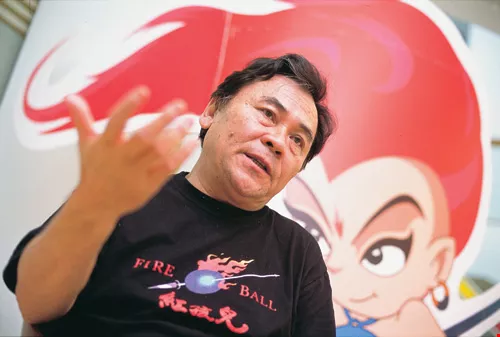
Experienced local director Wang Tung turned his attentions to animation as the director of Fire Ball, showing a determination to reach the top of this new career path.
The life cycle of animation is long, its marketing channels broad, and its profit models many and varied. WFP has gone all out in its efforts to market the film and close the gap between themselves and the youth. Aside from putting out merchandise like notebooks, puppets, and pogs, they also recruited big names like Aya, Mayday, Yang Kuei-mei, and Peng Chia-chia to do voice work for the film. Working with schools, they were also able to organize a number of "Fire Ball Animation Tours," showing kids around the WFP studios to see for themselves what goes into making cartoons.
Thanks to this marketing onslaught, Fire Ball easily became the star of the summer vacation season. By the time it had slipped from theaters in Taiwan, distribution rights for Asia had been snapped up for a sizable sum, with Rupert Murdoch's Star Television group buying broadcast rights for the next five years. Looking at the overall picture, the film has already provided a 60% return on investment, and negotiations over European and American rights are going smoothly; for example, other than the need for dubbing, it's almost ready to go for Germany. WFP also plans to produce follow-up products, like a television series, in the hopes of realizing the unlimited profit potential for Fire Ball.
James Wang says proudly, "In the past, our studios served the whole world. Now that we're creating our own brand, of course we're aiming to get the whole world onto it!" Confidently, Wang Tung adds, "This film will definitely take of NT$100 million in profits in the next five years." It looks like Fire Ball's set to ignite the globe.
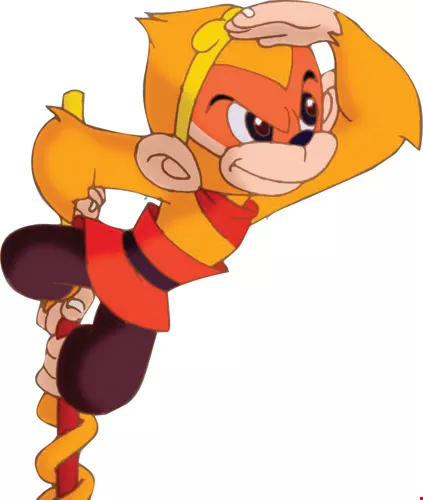
Fire Ball combines 2D and 3D animation in the hopes of bringing together modern and traditional, Eastern passion and Western cartooning.
Despite the film's excellent box office showing, Fire Ball has garnered reviews at two extremes. Some say the film is too similar to American cartoons, that it lacks a unique style and the characters aren't particularly deep. To this, James Wang straightforwardly responds with an admission the film has room for improvement. "For a high-spec piece of animation, three years is too much of a rush, and we were a bit short of funds, so I wouldn't say we're entirely satisfied with the outcome."
Wu Wei-chang, a senior WFP director, also notes that this is, after all, WFP's first production entirely done in-house, so of course they'll use what the audience is most familiar with and the style they're most acquainted with. Their target audience, too, is relatively young. They've gone with a strategy of "first getting settled, then getting stylish."
Wang Tung notes that in the 1980s Taiwan was swept by a "new cinema" fad, and that over years of hard work, the industry was gradually able to develop their own cinematic language and aesthetic. "WFP's own productions are only getting started. We need time to be able to mold our own style."
In the wake of Fire Ball, WFP's second film will be a cartoon telling the tale of Lin Wang the elephant, starting in the jungles of Austronesia during World War II. With the historical and emotional depth available in this story, the studio hopes to be able to bring in an audience covering a broader age range and start to open up the Southeast Asian market. In terms of artistic style, they plan to try a combination of 2D and 3D methods, tying it together with a traditional Chinese ink style, with the ultimate goal of creating WFP's own animation aesthetic and finally breaking away from imitating Hollywood.
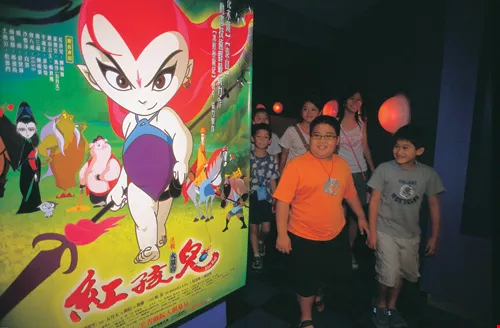
Fire Ball hit screens around Taiwan during the summer vacation, drawing in kids in huge numbers and taking over NT$10 million at the box office, making it one of the top domestic movies of the year.
In their move from contract work to their own brand, James Wang admits, Wang Film Productions' finances haven't been as good as they used to be. Nor is the company's income as stable as when they were entirely contract-based. As the head of the company, Wang is frequently busy dealing with financial matters.
Despite looking a bit exhausted, this old cartoonist is continuing this unfinished battle, because "this is a necessary change. We're already too late getting off the mark." The Chinese already have a rich culture of storytelling, all that's lacking is a stage. "So we've decided to build our own stage, to give the Taiwanese people a place to shine. We may be tired, but we have to fight on!"
The ultimate dream for WFP is to produce a truly multinational, large-scale film, Marco Polo, working with the best Europe and America have to offer and giving the technical skills of WFP a huge boost. "We need to show the West that we here in Asia still have that same courage, strength, and spirit that Marco Polo saw in his travels."
The younger Wang currently not only works for WFP, but also serves as chairman of the annual Golden Horse Festival panel. "I may have retired from the Central Motion Picture Corporation, but it's still a tiring life." But past the tiredness, he remembers when the two brothers where young, back in the 1960s, when they were "poor, but with promise." Back in that knowledge-thirsty era, people mustered their spirits to forge ahead, and absolutely everything seemed possible
Wang Tung sums up the brothers' mantra during their struggles thus: "Less talk, more action--results are what matters!" In that moment, these old hands look like they've been possessed by the spirit of their own youthful, fearless Fire Ball, wanting to go a few more rounds in the ring before retiring from the fight with honor. "We just need to summon the hardworking spirit of the 60s again and Taiwan will have a brighter future," says Wang, his fighting spirit shining through.
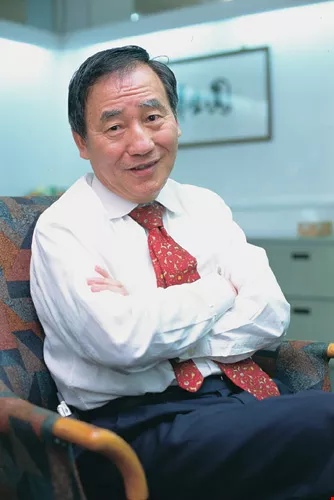
WFP chairman James Wang is one of the godfathers of animation. Since founding his company in 1978 he has nurtured a number of talented artists and helped make Taiwan a world leader in contract animation production. But his real dream is to build WFP into a globally recognized brand before his retirement.
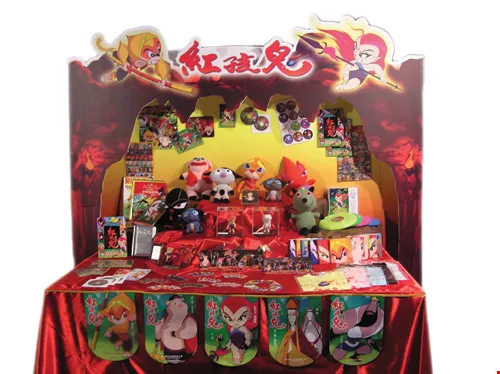
To promote Fire Ball, WFP issued a range of cute merchandise items to try and get interest as high as possible.
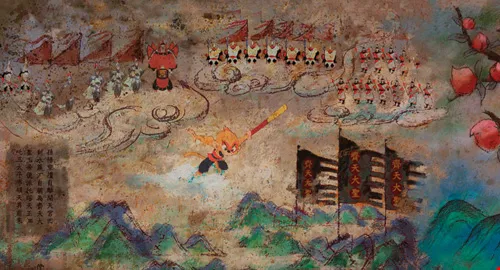
Fire Ball combines 2D and 3D animation in the hopes of bringing together modern and traditional, Eastern passion and Western cartooning.
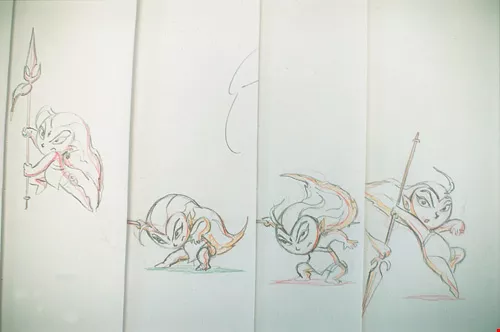
Original hand-drawn sketches from Fire Ball. After these sketches are completed, the animators use them as the foundation for creating the frames of the animation, making the characters come to life on the screen.
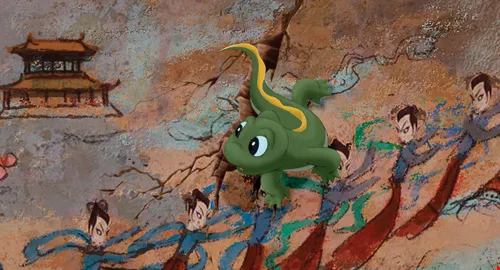
Fire Ball combines 2D and 3D animation in the hopes of bringing together modern and traditional, Eastern passion and Western cartooning.
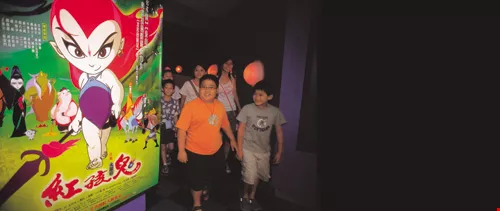
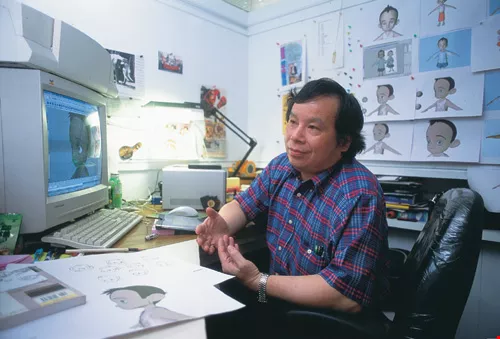
About ten years ago WFP started working with computer graphics. Technology director Wu Wei-chang says that in the past, hand-drawn animation led to calluses, but today using the mouse for it all can lead to carpal tunnel syndrome. At the back is a production design for WFP's upcoming movie Lin Wang.


@List.jpg?w=522&h=410&mode=crop&format=webp&quality=80)


@List.jpg?w=522&h=410&mode=crop&format=webp&quality=80)
